



Succession, the Montessori preschool version. “We’ll go full… fucking… duck-duck-goose!”

Advertise here with Carbon Ads
This site is made possible by member support. 💞
Big thanks to Arcustech for hosting the site and offering amazing tech support.
When you buy through links on kottke.org, I may earn an affiliate commission. Thanks for supporting the site!
kottke.org. home of fine hypertext products since 1998.
Beloved by 86.47% of the web.
Entries for November 2021
One Month of the Sun
Seán Doran took 78,846 frames of data compiled by the Solar Dynamics Observatory over the course of a month and made this absolutely fantastic time lapse of the Sun slowly rotating and burning and flaring. Put this on the biggest, high-resolution screen you can and pretend you’re in the solar observation room of the Icarus II in Sunshine.
See also A Decade of Sun and Gorgeous Time Lapse of the Sun. (via colossal)
One of my all-time favorite online things is someone anonymously posting an iconic Henri Cartier-Bresson photo to Flickr and unaware commenters ripping it apart. “If this is a planned shot, it just didn’t come out right.”
The CDC and FDA approved Moderna and Pfizer Covid booster shots for everyone over 18. Go get your shot if you’re eligible!
A lovely series of drawings and observations by @edithzimmerman of the first few weeks with her newborn daughter. “Rarely have words felt so insufficient.”
Blonde Drawings



CJ Hendry has done a series of photorealistic drawings of hair called BLONDE. You can see some of the work in progress on her Instagram and see it in person in NYC Dec 10-12. Love these. (via @downtown.collective)
The Voice Break Choir
Puberty is tough on everyone but for members of boys’ choirs, it can be especially hard. When their voices start to crack, an instrument that they’ve spent years tuning and perfecting is suddenly thrown all out of whack, shifting from soprano to alto or even bass in a matter of months. Their once-reliable voices become irregular, they don’t know where they are going to settle, and once they finally do, they almost have to learn how to sing all over again.
Often teen boys will quit singing in the choir when their voices crack, but the Stockholm Boys’ Choir works with boys going through these changes, empowering them to perform while they wait for their voices to develop, an essential intermediate step between the high notes of the boys’ choir and the deeper tones of the mens’ choir. In many ways, these challenges mirror the larger struggles of puberty.
“We really thought it was a good metaphor for this time in life,” Holmqvist said. In the film, the choristers perform songs with lyrics derived from their own interviews in the documentary, in which they bare their young souls. “Maybe I’m just weird. / Is there something wrong with me?” the fourteen-year-old Dan sings, worried about his lack of interest in the soccer his classmates play. “I just like other things, / Like drawing figures.”
He’s not alone in his doubts. “I don’t think I’m a typical boy,” Ludwig says, also fourteen, in an interview. “Right now, at this age, I’m hanging around more with girls, since they’re easier to talk to.” The fifteen-year-old Andrey, on the other hand, can’t bring himself to ask out the girl he longs to take to prom. “If she turns me down, everyone will laugh at me,” he frets.
This is a lovely little film.
Nice review by @MKBHD of the R1T, Rivian’s new compact EV pickup truck. Looks interesting but I had a nice chuckle at all the extra storage spots and literal optional kitchen sink.
On Janet Jackson’s Super Bowl wardrobe malfunction. “When a woman’s body and sexuality were violated, the person to blame was the woman, especially if she was a woman of color. She brought it on herself by having a body.”
A Humpback Whale Saved My Life
In this video, whale scientist Nan Hauser tells the story about how a humpback whale she was swimming with saved her from what she calls “the largest tiger shark I’ve ever seen”. It turns out this is not atypical behavior for humpbacks — they’re one of the nicest animals in the sea or on land and have been known to rescue animals from other species from predators.
First-person accounts of animals saving other animals are rare. Robert Pitman, a marine ecologist with the US National Oceanic and Atmospheric Administration, describes a pivotal encounter he witnessed in Antarctica in 2009. A group of killer whales washed a Weddell seal they were attacking off an ice floe. The seal swam frantically toward a pair of humpbacks that had inserted themselves into the action. One of the huge humpbacks rolled over on its back and the 180-kilogram seal was swept up onto its chest between the whale’s massive flippers. When the killer whales moved in closer, the humpback arched its chest, lifting the seal out of the water. And when the seal started slipping off, the humpback, according to Pitman, “gave the seal a gentle nudge with its flipper, back to the middle of its chest. Moments later, the seal scrambled off and swam to the safety of a nearby ice floe.”
Is this behavior in humpbacks altruistic or even compassionate? Or is it “just” instinct?
So are humpbacks compassionate? Scientists, Sharpe tells me, shy away from using the same descriptors we use for humans. “What is exciting about humpbacks is that they are directing their behavior for the benefit of other species,” he says. “But there’s no doubt there are important differences between human compassion and animal compassion.” When I pose the same question to Pitman he concurs. “No editor is going to let me use the word compassion. When a human protects an imperiled individual of another species, we call it compassion. If a humpback whale does so, we call it instinct. But sometimes the distinction isn’t all that clear.”
Some Stories About Legendary Designer Paul Rand
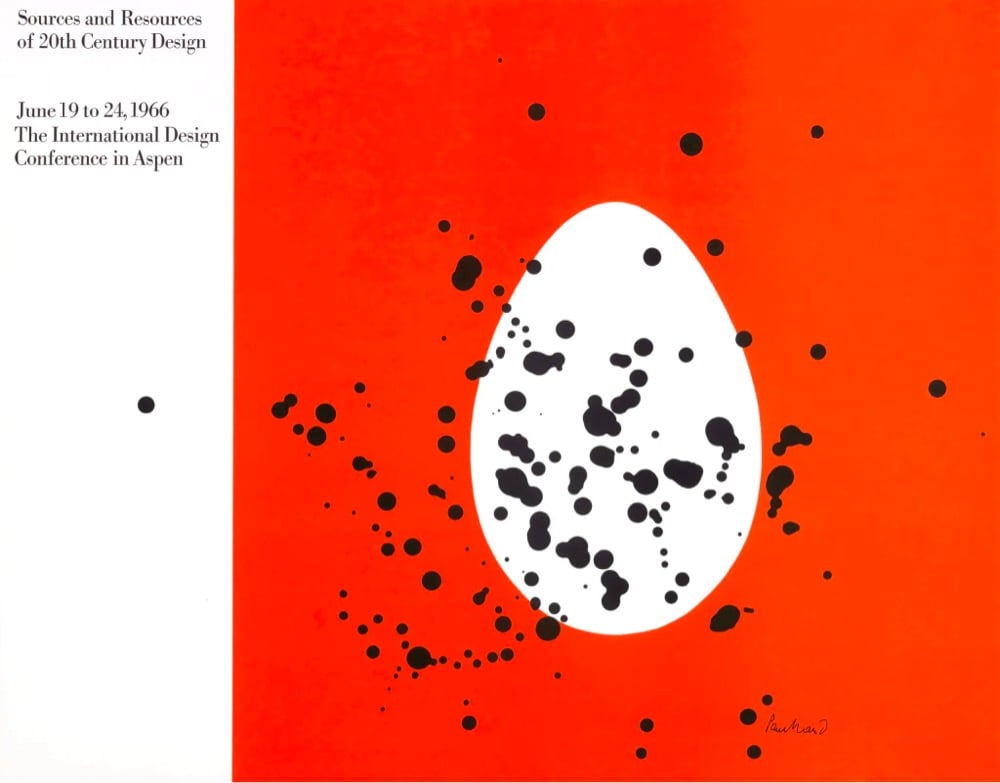
Once upon a time, Jayme Odgers was the assistant to Paul Rand, the legendary Modernist designer who designed some of corporate America’s most iconic logos (IBM, Westinghouse, NeXT, UPS, ABC). Odgers recently shared some stories of what it was like to work with Rand.
One of the most fascinating aspects of Paul Rand’s thinking is that he didn’t believe in endlessly coming up with idea after idea, exhausting all possibilities, which typically eats up one-third of a design budget. He believed ideas are virtually endless-where does one stop anyway? He told me all you need is one good idea — and not all ideas have to be award-winners. A graphic designer needs only to be a professional and offer a professional solution. Easier said than done.
On smaller projects like the Bollingen book jacket and the Aspen poster, Paul simply knocked them out in whiz-bang fashion. With larger projects like creating a logo/mark or branding system, Paul would take that “one decent idea,” then spend the next six months and 100% of the budget refining that single idea to its most perfect visual form and content. There were no sketches, no meetings with the client, no midway reviews, just the most serious investigation, development and design resolution of an idea imaginable.
These stories verge on the hagiographic, but they’re still fun & instructive to read. And the idea that obsessives are difficult to work for comes through anyway. (via @drudesign)
Objects
Objects is a film about the type of person who holds onto things as “a way to keep a treasured record of their lives”. The trailer is embedded above and here is a statement from filmmaker Vincent Liota:
The idea to make Objects came from a phone conversation I had back in 2014 with a long-time friend and collaborator, Robert Krulwich.
We mused about how we had saved objects for years that seemed precious to us, yet had no intrinsic value. Often, we came to own these things accidentally… mementos from an important moment in our lives or objects that evoke a time shared with a loved one. Over the years, these objects gained great significance; some we had each held onto for many decades. To us ‘keepers’ this seemed… natural.
Of course, not everyone shares this quirk. Take both our spouses, who do not hold onto things from the past. For them, objects simply have no resonance or meaning.
Why? What was it that made certain things so important to some people?
Objects is available to stream online at DOC NYC until November 28.
While I’m much more of a person who does not want a lot of possessions, I have keeping tendencies as well — old photos, favorite books I read to my kids when they were tiny, postcards from friends, 90s internet swag, the computer I built the first version of kottke.org on, and nearly every drawing, sculpture, and painting my kids have ever made for me, not to mention keeping online and public every single post I’ve made on kottke.org since March 1998. (via rob walker)
Nice review by @mariabustillos of Bourdain: The Definitive Oral Biography as well as an interview with its author, Laurie Woolever. “It seems clearer to me than ever that the real Bourdain never appeared on TV, and few ever knew him.”
Planktonium
Planktonium is a beautiful short film about the microscopic world of plankton, the tiny sea creatures that form the foundation to sustain all life on Earth.
Phytoplankton (small plant-like cells) are producing half of all oxygen on earth by photosynthesis, like plants and trees do on land. Zooplankton are forming the base of the food chain of aquatic life. Plankton are also playing an important part in the global carbon cycle. The plankton are threatened by climate change, global warming and acidification of the oceans.
The abridged version is embedded above; the full 15-minute film is available to stream/download on Vimeo.
The Infinity Saga: a fan-edit of “every MCU movie from Iron Man to Endgame cut into chronological scene order”. It’s 50 hours long.
Don’t Look Up
Somehow, I missed the teaser trailer for Don’t Look Up a couple months back, but the official trailer just came out yesterday. Directed by Adam McKay (The Big Short, Vice) and starring Leonardo DiCaprio & Jennifer Lawrence (and Meryl Streep, Jonah Hill, Mark Rylance, Cate Blanchett, Tyler Perry, and Timothée Chalamet), Don’t Look Up is a comedy about what happens when scientific fact (in the form of a planet-killing comet) slams into the fantasy worlds of politics and entertainment media. Just because you can’t spin Newton’s laws of motion doesn’t mean you can’t try!
Nothing, absolutely nothing whatsoever, about this movie is related to current events, nope, no sir. *sobbing intensifies* (I love disaster movies and will 100% see this even though it will probably be completely enraging.)
Why Health-Care Workers Are Quitting in Droves. “About one in five health-care workers has left medicine since the pandemic started.”
Where the Rich Use Public Transportation…
I ran across this quote while reading about what makes Tokyo work as a city:
A developed country is not a place where the poor have cars. It’s where the rich use public transportation.
It’s a great quote and the piece attributes it to the former mayor of Bogotá, Colombia, Gustavo Petro. But he never said it (even though the vast majority of the results on Google say he did). The original quote (from 2012) is from another former mayor of Bogotá, Enrique Peñalosa, and it reads:
Una ciudad avanzada no es en la que los pobres pueden moverse en carro, sino una en la que incluso los ricos utilizan el transporte público.
That roughly translates in English to:
An advanced city is not one where the poor can get around by car, but one where even the rich use public transportation.
Peñalosa, who made public transportation a central issue during his two terms as mayor, provided his own English translation in a 2013 TEDTalk:
An advanced city is not one where even the poor use cars, but rather one where even the rich use public transport.
I’m not sure if Peñalosa ever actually said the exact quote at the top of the post. The misattribution to Petro seems to stem from a tweet that went viral in 2012, an episode that foreshadowed how easily pithy information spreads on social media but also how difficult it is to correct misinformation once it’s out there. I expect this post to do almost nothing to change that, but one must tilt at one’s windmills.
I’ve Heard You Have Some Questions About the New University My Friends and I Are Starting. Reader, I chortled.
How Bowling Balls Are Made
I have been a fan of how things are made videos since my Mister Rogers and Sesame Street days, so I was not expecting to be so surprised watching the video above about how bowling balls are made. It’s a ball — how complicated could it be? Well, it turns out that modern bowling balls contain an asymmetric weight block in the middle that looks a little like a car’s starter. Weird, right?
As I started to wonder why it would be advantageous to include such a lopsided core in a ball you want to roll predictably down a lane, I noticed YouTube’s algorithm doing its job in recommending that I watch Veritasium’s recent video on How Hidden Technology Transformed Bowling, which totally explains the wonky weight block thing:
The weight blocks are wonky in a precise way. They’re designed to cause the ball to contact the lane over more of the surface of the ball, giving it more traction once it hits the unoiled part of the lane, which is desirable for expert bowlers looking for a wicked hook. So cool! (thx, mick)
Update: Brendan Koerner wrote a piece for Wired several months ago about Mo Pinel, who revolutionized bowling with the asymmetric cores described in the video above.
Pinel toured Faball’s factory and examined a freshly made core that the company used in its Hammer brand. It had a symmetrical and unexciting shape — the center looked like a lemon, and there were two convex caps of equal size on either side. In a moment that has now passed into ball-design legend, Pinel grabbed the core, which was still soft because the polyester had yet to cure, and sliced off the ends with a palette knife. Then he smooshed the caps back on into positions that were slightly askew, so that the contraption now looked like a Y-wing fighter from Star Wars.
The ball that contained this revamped core, the Hammer 3D Offset, would become Pinel’s signature achievement. “That ball sold like hotcakes for three years, where the average life span of a ball was about six months,” says Del Warren, a former ball designer who now works as a coach in Florida. “They literally couldn’t build enough of them.” In addition to flaring like few other balls on the market, the 3D Offset was idiot-proof: The core was designed in such a way that it would be hard for a pro shop to muck up its action by drilling a customer’s finger holes incorrectly, an innovation that made bowlers less nervous about plunking down $200 for a ball.
(via @danhwylie)
Would 100% watch this movie. Indi Jones and the Looted Statuary.
Winners of the 2021 Natural Landscape Photography Awards
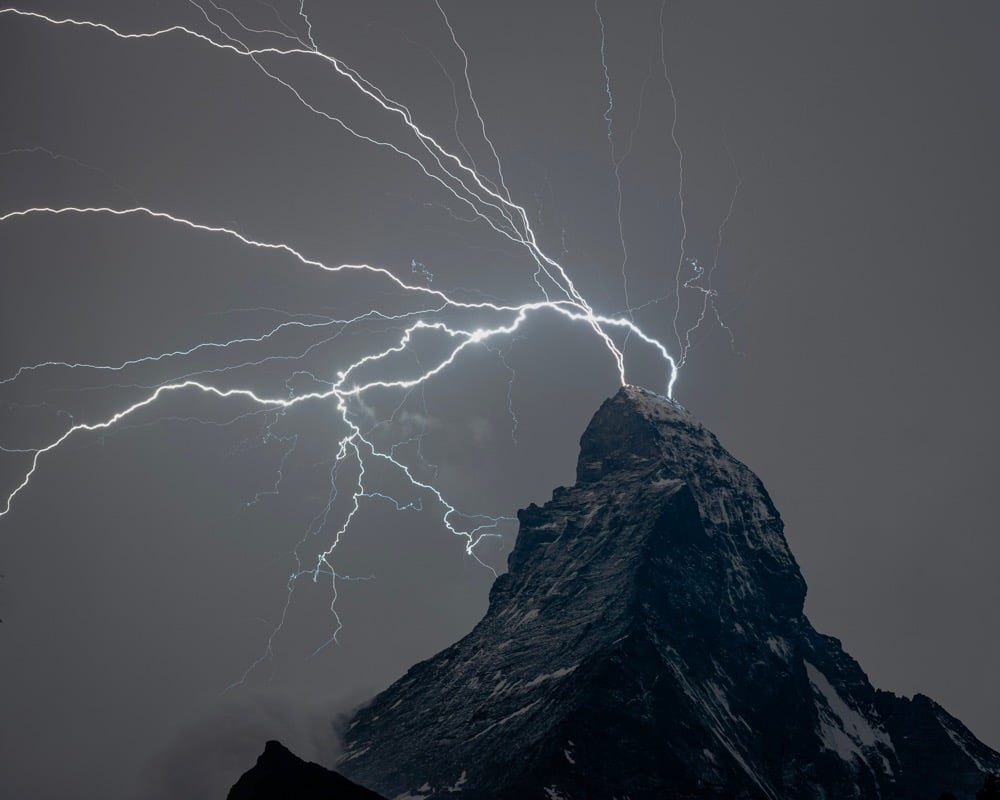



After sorting through 13,000 photographs submitted by over 1300 photographers from all over the world, the winners of the very first Natural Landscape Photography Awards have been announced. A few of my favorite winners are embedded above; from top to bottom, Paul Hammett, Antonio Fernandez, Hans Strand, and Tobias Richter. Hammett’s shot of lightning striking the Matterhorn took 30 minutes of patience to capture:
Setting up my tripod as thunder boomed around me, hopes of getting an image turned to excitement as the storm moved over the Matterhorn.
I was briefly frustrated trying to nail focus and settings in the dark. Occasional flashes of nearby lightning helped me recompose, refine focus and adjust settings. But I cursed each of them as a missed opportunity to get a shot. Once happy with the camera set up, I could take time to fire off numerous 10 second exposures and just watch the show.
Each lightning strike gave me the shivers. When these two hit the summit, I knew I had something special in the camera.
(via colossal)
Americans Need to Learn to Live More Like Europeans. “The U.S. economy could be healthier if it were less reliant on consumption.”
How People Live in the Coldest Place on Earth
YouTuber Kiun grew up in Yakutia, a region of Siberia that is known for having some of the coldest weather on Earth (we’re talking -40°F on a warm day). In this video, she talks about what daily life is like there, including details about the open-air markets (meat & fish stay naturally frozen) and having a car (owners basically have to keep them running all winter). From a Wired article about Yakutia:
Here arctic chill is simply a fact of life, something to be endured. People develop a variety of tricks to survive. Most people use outhouses, because indoor plumbing tends to freeze. Cars are kept in heated garages or, if left outside, left running all the time. Crops don’t grow in the frozen ground, so people have a largely carnivorous diet — reindeer meat, raw flesh shaved from frozen fish, and ice cubes of horse blood with macaroni are a few local delicacies.
See also Visiting the Coldest City in the World and A Photographic Window into the Remote Siberian Territory of Yakutia.
100 Things We’ve Lost to the Internet
In her recent book, New York Times Book Review editor Pamela Paul catalogs some of the things we have lost because of our move to networked digital realms over the past 25 years.
Whatever our emotional response to this departed realm, we are faced with the fact that nearly every aspect of modern life now takes place in filtered, isolated corners of cyberspace — a space that has slowly subsumed our physical habitats, replacing or transforming the office, our local library, a favorite bar, the movie theater, and the coffee shop where people met one another’s gaze from across the room. Even as we’ve gained the ability to gather without leaving our house, many of the fundamentally human experiences that have sustained us have disappeared.
In adapted excerpts from the book, Paul covers filing cabinets, bad photos, and a list of things like privacy, cursive, and the ability to ignore people.
A Secret History of Monopoly. The original inventor of the game, Lizzie Magie, was written out of the story by Parker Brothers because of her anti-capitalist views.
Julia: A Documentary Film About Julia Child
Directed by Betsy West & Julie Cohen (who previously did RBG), Julia is a documentary film that chronicles the life of Julia Child, perhaps the first and still most famous celebrity chef.
Using never-before-seen archival footage, personal photos, first-person narratives, and cutting-edge, mouth-watering food cinematography, the film traces Julia Child’s surprising path, from her struggles to create and publish the revolutionary Mastering the Art of French Cooking (1961) which has sold more than 2.5 million copies to date, to her empowering story of a woman who found fame in her 50s, and her calling as an unlikely television sensation.
The film opened in theaters a couple of weeks ago and is getting great reviews (98% on Rotten Tomatoes).
Craig Mod is taking another long walk around Japan and documenting it for us, chunking it up into short stints in 10 cities around the country. “I like big walks with strange rules.”
Shimmering Bees
As a defense against predators like hornets, these wild bees flick their bodies in unison, creating these mesmerizing and shimmering waves that ward the hornets off. Watch the video…it’s a wild effect.
In the PLoS ONE study, Gerald Kastberger and colleagues focused on the shimmering behavior in giant honeybees, the intriguing, docile, nest-based trait reminiscent of the Mexican waves seen in football stadiums. It was previously known that shimmering was evoked by visual stimuli of predators-particularly hovering wasps. This highly coordinated response aligns hundreds of colony members and displays a remarkable capacity of fast communication within a society, unique in the animal kingdom.
When a giant honeybee colony shimmers, it has two potential addressees: firstly, its nest mates, which coordinate themselves to participate in the shimmering, and which possibly become aroused or alarmed. The authors posit that the members of the group, which are assembled in the dense networks of a “bee curtain” on both sides of the comb, continuously produce and receive information about the state of the colony, reflecting its day-to-day business of foraging, reproduction, reorganization and defensive actions (such as shimmering). Secondly, the potential predators such as wasps and mammals are targeted — these are thought to be influenced by the dynamic visual cues of shimmering.
Teaser trailer for the new Downton Abbey movie (out in March 2022). Always down to spend some time with the Crawley family.
The Beauty of Denis Villeneuve’s Films
Dune. Arrival. Blade Runner 2049. Sicario. The films of director Denis Villeneuve are filled with incredible cinematography. Some of the best shots are showcased in this 6-minute video accompanied by the haunting strains of Max Richter.
This is from a YouTube channel called The Beauty Of, which has many similar videos featuring the cinematography of movies, TV shows, and video games. Like Studio Ghibli movies, If Beale Street Could Talk, The Wire, Peter Jackson’s The Lord of the Rings films, and The Queen’s Gambit.
Socials & More