
This site is made possible by member support. 💞
Big thanks to Arcustech for hosting the site and offering amazing tech support.
When you buy through links on kottke.org, I may earn an affiliate commission. Thanks for supporting the site!
kottke.org. home of fine hypertext products since 1998.
Beloved by 86.47% of the web.
Entries for October 2020
Paintings by Fire Ants
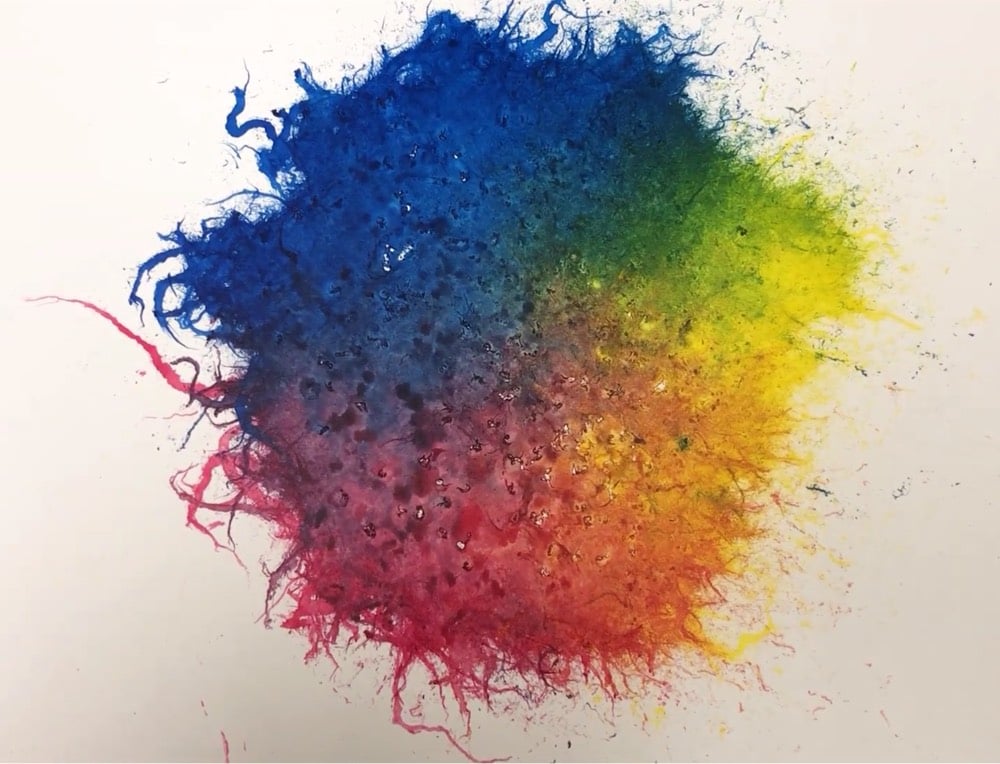
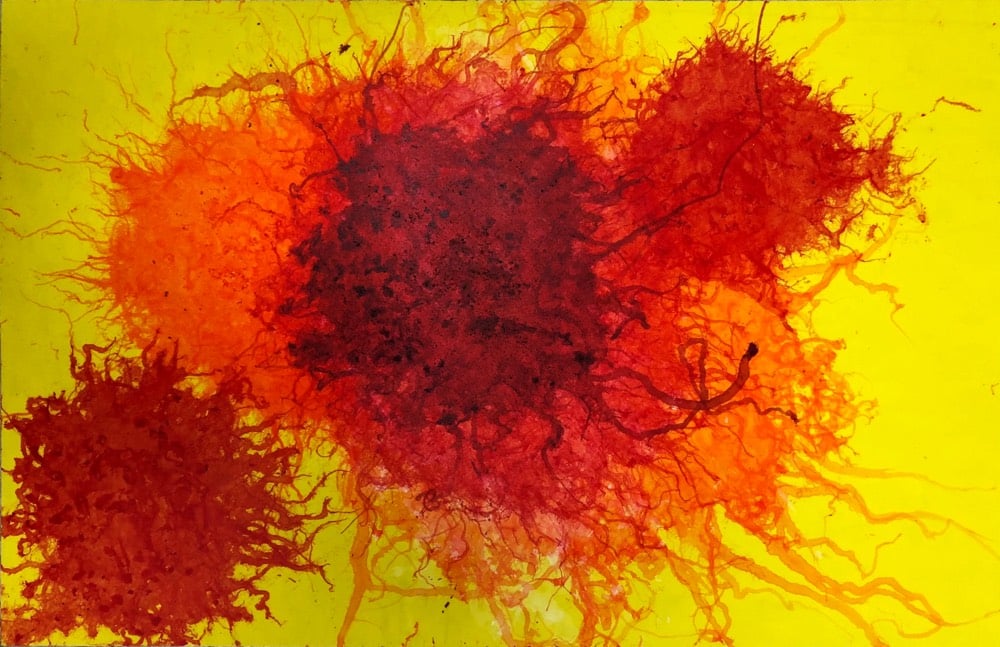
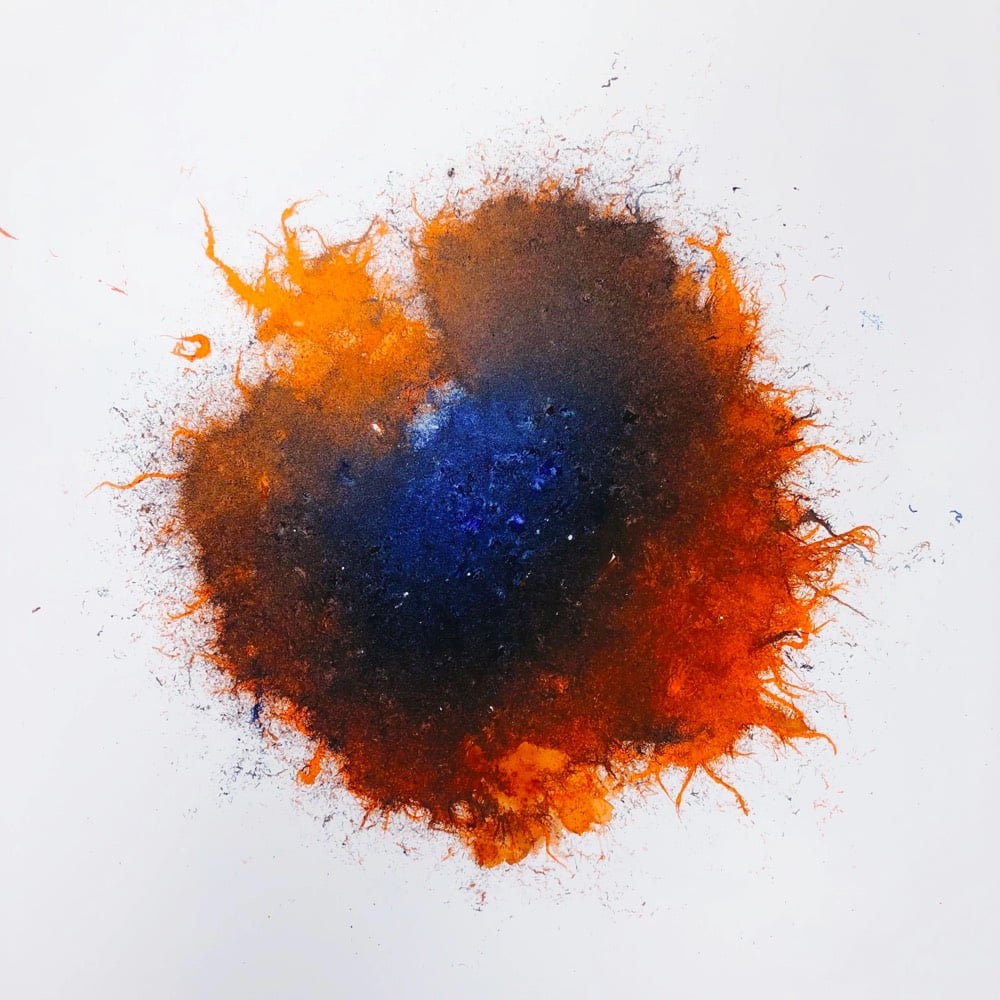
Ants use pheromone trails to signal to other ants to follow them to food or other desirable destinations. Inspired by this, entomology graduate student Horace Zeng dropped some of the fire ants he uses in his research into some paint pooled on canvases and watched them disperse, leaving behind these colorful patterns. Here’s a video of the ants doing their thing:
Kiss List: Writer/artist Galen Beebe kept track of every person she’s kissed and graphed the results & attributes of those encounters in a bunch of different ways, e.g. “my enjoyment level / how long I’d known them”.
Copaganda: The Biased Portrayal of Police in TV & Movies
YouTube channel Skip Intro is making a series of videos about copaganda, which Wikipedia defines as “the phenomenon in which news media and other social institutions promote celebratory portrayals of police officers with the intent of swaying public opinion for the benefit of police departments and law enforcement”. The introductory video embedded above introduces the concept and tracks the history of how police have been portrayed on TV in the movies. Two subsequent videos take a closer look at two contemporary police shows: Blue Bloods and Brooklyn Ninety-Nine.
See also Dan Taberski’s excellent podcast Running From COPS, which covers some of the same ground as the video series. (thx, david)
Update: Jacqui Shine wrote about the influence Dragnet had on how many Americans perceived the police: ‘Dragnet’ was straight up LAPD propaganda, on national TV for years.
When we see a cop on TV, we’re seeing the legacy of Dragnet. Everything we think we know about crime and law enforcement — and everything we believe about the police — bears the imprint of the show. It did no less than fashion the idea of modern policing in our cultural imagination. And, as viewers were reminded each week, all of it was true. But what most of us don’t know is that Dragnet was also calculated propaganda: the Los Angeles Police Department did far more than provide technical assistance, essentially co-producing the show.
Dr. Fauci: Earliest We’ll Be “Back to Normal” Is the End of 2021
A few weeks ago during the Q&A session after his lecture for MIT’s online biology class about the pandemic, Dr. Anthony Fauci shared his expert opinion on when things might return to “normal” in the US. Here was my paraphrased tweet about it:
With a very effective vaccine ready in Nov/Dec, distributed widely, and if lots of people take it (i.e. the best case scenario), the earliest we could return to “normal life” in the world is the end of 2021.
At the New Yorker Festival earlier in the week, Michael Specter asked him about a return to normalcy and Fauci elaborated a bit more on this timeline (starts ~10:22 in the video).
When are we gonna get back to something that closely resembles, or is in fact, normal as we knew it?
We’re already making doses, tens and hundreds of millions of doses to be ready, first at least, in graded numbers at the end of the year in November/December. By the time we get to April, we likely will have doses to be able to vaccinate anybody who needs to be vaccinated. But logistically by the time you get everybody vaccinated, it likely will not be until the third or even the beginning of the fourth quarter of 2021.
So let’s say we get a 70% effective vaccine, which I hope we will get, but only 60% of the people get vaccinated. There are going to be a lot of vulnerable people out there, which means that the vaccine will greatly help us to pull back a bit on the restrictions that we have now to maintain good public health, but it’s not going to eliminate things like mask wearing and avoiding crowds and things like that.
So I think we can approach normality, but I don’t think we’re going to be back to normal until the end of 2021. We may do better than that; I hope so but I don’t think so.
Leaving aside what “normal” might mean and who it actually applies to,1 there’s some good news and bad news in there. The good news is, they’re already producing doses of the vaccine to be ready if and when the phase 3 trials are successful. Ramping up production before the trials conclude isn’t usually done because it’s a waste of money if the trials fail, but these vaccines are so critical to saving lives that they’re spending that money to save time. That’s great news.
The bad news is that we’re not even halfway through the pandemic in the best case scenario. We’re going to be wearing masks in public for at least another year (and probably longer than that). Large gatherings of people (especially indoors) will continue to be problematic — you know: movie theaters, concerts, clubs, bars, restaurants, schools, and churches — and folks staying within small pods of trusted folks will likely be the safest course of action.
A change in national leadership in both the executive branch and Senate could change the outlook for the better. We could get some normalcy back even without a vaccine through measures like a national mask mandate/distribution, a real national testing & tracing effort, taking aerosol transmission seriously, and easing the economic pressure to “open back up” prematurely. We’re never going to do as well as Vietnam or Taiwan, but I’d settle for Greece or Norway.
Update: In an interview posted yesterday, Johns Hopkins epidemiologist Dr. Caitlin Rivers gives her best guess at a return to normalcy:
Topol: When do you think we’ll see pre-COVID life restored?
Rivers: I wish I knew. I’m thinking toward the end of 2021. It’s really hard to say with any certainty. We should all be mentally prepared to have quite a bit ahead of us.
It’s America. If we know anything by now about this country, it’s that access to healthcare and economic opportunity is going to apply unevenly to the people who live here. For instance, it’s likely that Black & brown communities, which have been disproportionately affected by the pandemic, may face difficulty in getting access to vaccines compared to wealthier, predominantly white communities.↩
Song 2 by Blur but Nintendo’s Mario Does the “Woo Hoos”
Today’s good, clean, uncomplicated fun is right here in the form of this video - it does what it says on the tin.
See also the melodica version of the “welcome to Jurassic Park” scene. (via laura olin’s newsletter)
Update: I knew there was some similar M83 thing that I’d seen recently and was forgetting about: Midnight City but with Nelson Muntz laughing. (via @dansays)
This statement from the editors of the New England Journal of Medicine is lukewarm. I guess we’re supposed to assume they are talking about the White House? (And Senate?) Name names, folks…don’t beat around the bush.
Accidentally Wes Anderson, the Book

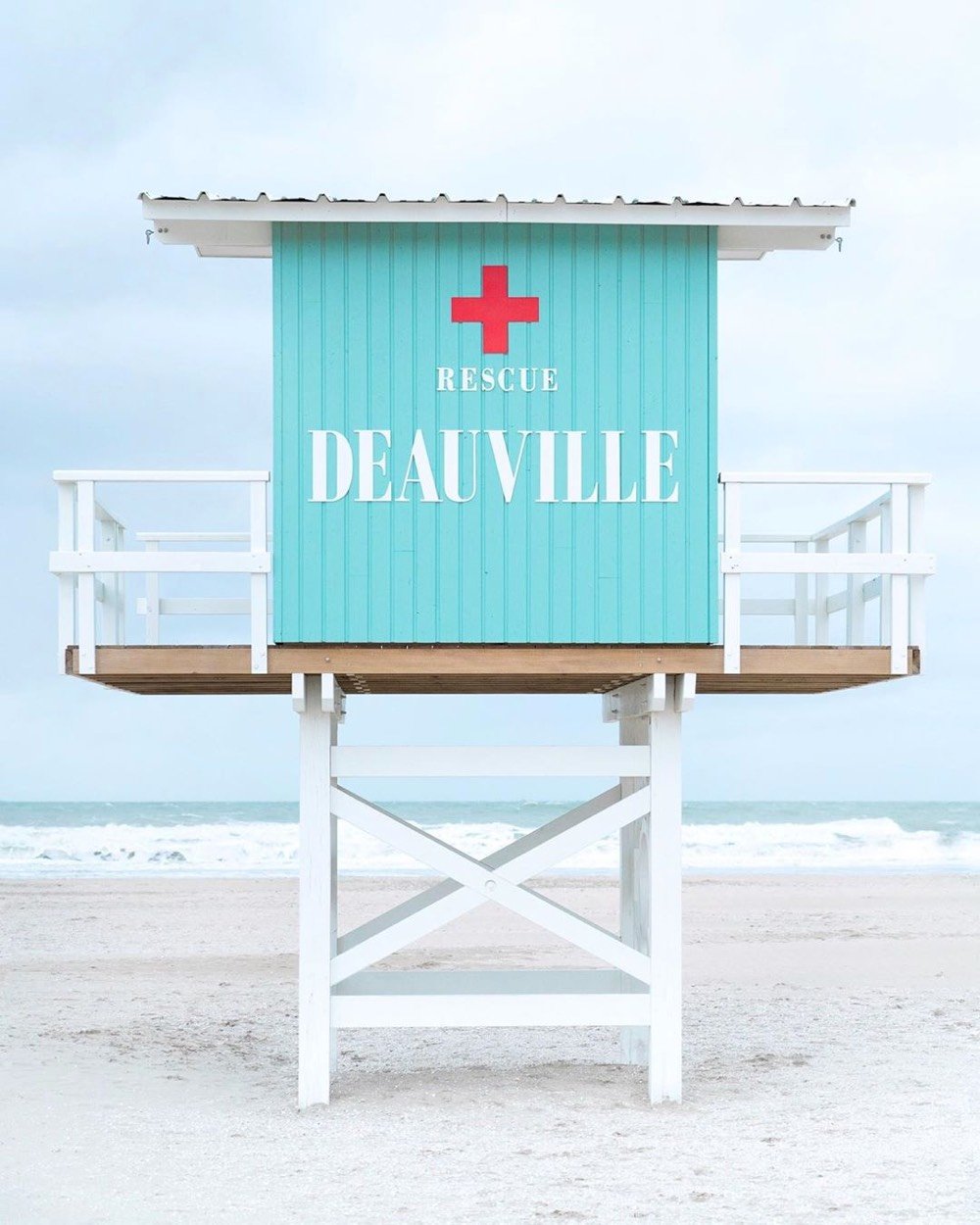
Inspired by the symmetry and color palettes of Wes Anderson’s movies, the Instagram account Accidentally Wes Anderson has been collecting and featuring photos from folks all over the world that wouldn’t look out of place in The Royal Tenenbaums or The Grand Budapest Hotel. The creators have turned it into a new book called Accidentally Wes Anderson, which features many of the best contributions from the account. It sounds like it’s kind of a travel book, a visually oriented Atlas Obscura.
Now, inspired by a community of more than one million Adventurers, Accidentally Wes Anderson tells the stories behind more than 200 of the most beautiful, idiosyncratic, and interesting places on Earth. This book, authorized by Wes Anderson himself, travels to every continent and into your own backyard to identify quirky landmarks and undiscovered gems: places you may have passed by, some you always wanted to explore, and many you never knew existed.
And while we’re here, I picked out a few of my recent favorites from their Instagram:


“100,000 Stars is an interactive visualization of the stellar neighborhood.” Super fun/informative and I love this playful warning: “Please do not use this visualization for interstellar navigation.”
Werner Herzog’s Entertaining Answer to “How Many Languages Do You Speak?”
This clip of an off-screen interviewer asking film director Werner Herzog how many languages he speaks and then Herzog answering is only slightly more than 90 seconds long, but it’s a masterclass in how to tell an entertaining story. He playfully misdirects at first and then just goes from there.
I do understand French but I refuse to speak it. It’s the last thing I would ever do. You can only get some French out of me with a gun pointed at my head.
The Science Is In: Wear. A. Mask!
Back in June, in a post called Jesus Christ, Just Wear a Face Mask!, I presented a bunch of evidence and arguments for wearing face masks to prevent the spread of Covid-19. Even then it was pretty clear that masks were working. In piece published by Nature yesterday, Lynne Peeples summarizes what the data and science currently says about the effectiveness of wearing face masks. Here is her one-sentence summary:
To be clear, the science supports using masks, with recent studies suggesting that they could save lives in different ways: research shows that they cut down the chances of both transmitting and catching the coronavirus, and some studies hint that masks might reduce the severity of infection if people do contract the disease.
And importantly, even ardently pro-mask scientists agree that masks should be worn in conjunction with taking other precautions: limiting large gatherings, maintaining distance, limiting the time you spend indoors with others, etc.
A recent study shows that people adhering to an intermittent fasting diet didn’t lose more weight (statistically speaking) when compared to those in a control group. “People in clinical trials [tend] to lose weight no matter what you do.”
Everyone I know is either drinking more these days or has stopped drinking. If you’re in the latter category (or would like to be), check out Good Drinks, a new book of alcohol-free cocktails recipes from Julia Bainbridge.
The Alvin and the Chipmunks Version of Koyaanisqatsi
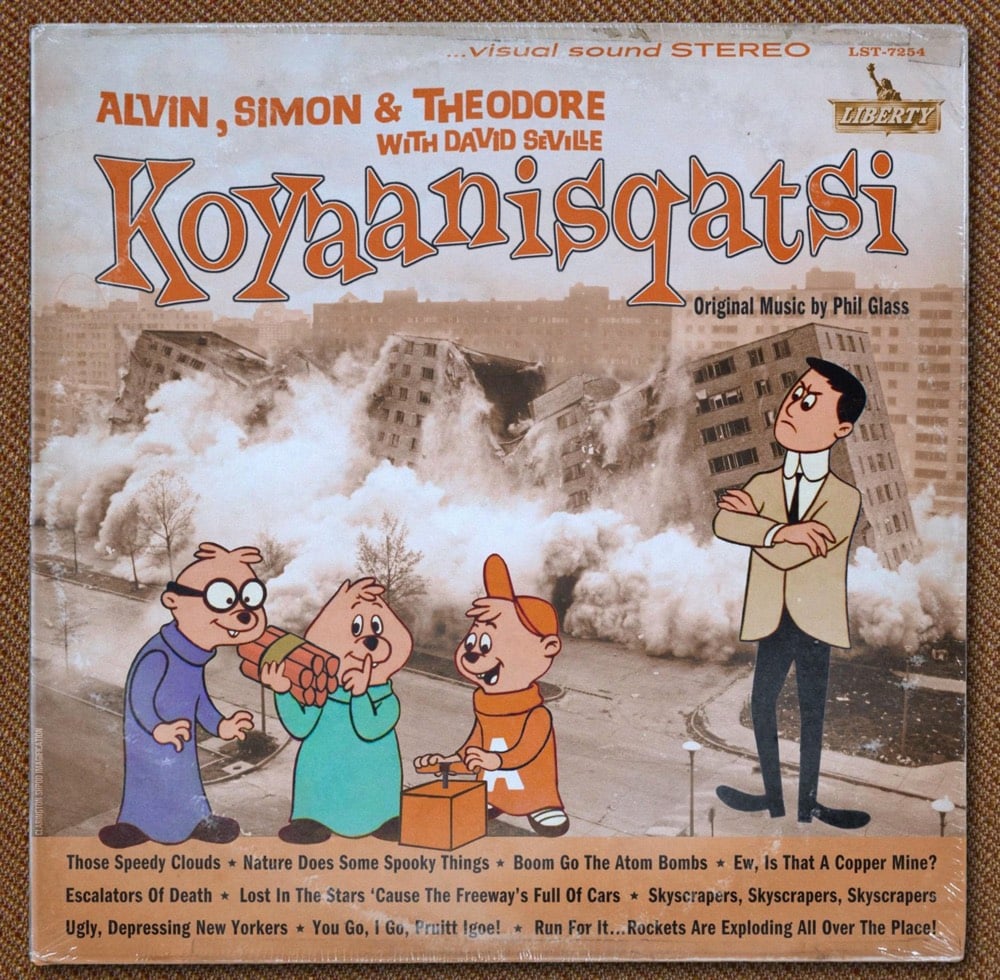
This album cover was tweeted out the other day by Philip Glass’s official account with no additional comment. What really makes it IMO is the song titles listed at the bottom of the cover: Those Speedy Clouds, Escalators of Death, Run For It…Rockets Are Exploding All Over the Place!
I tried to track down who made this, but the only other instance I could find online was on Philip Glass’s Instagram exactly one year ago. Koyaanisqatsi is a serious work of art — it’s refreshing to see how playful Glass is about its representation. You could imagine other artists/musicians not being so chill about it.
Update: Aha, designer Cris Shapan made this. (via @jdpbbank)
Update: Here’s a short snippet of what this album might sound like.
Interesting to see the CRISPR Nobel go to Charpentier & Doudna over George Church & Feng Zhang – the two groups have been jockeying for invention credit for years. But Nobels can only be shared by a max of 3 people.
The Winners of the 2020 Drone Photo Awards

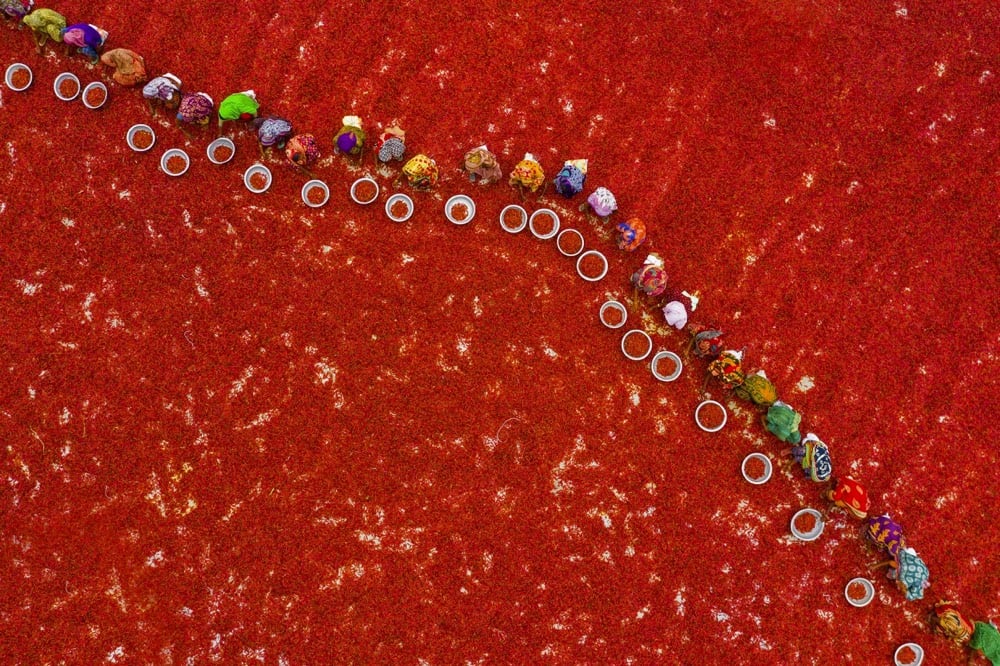

Lots of good aerial photography in the 2020 Drone Photo Awards in several categories (abstract, urban, people, nature, wildlife). Photos above by Paul Hoelen, Azim Khan Ronnie, and Paul McKenzie.
In the US, women (especially married women) are faring worse in the recession than men. “Married women lost almost 1 million jobs last month. (Single men gained 1.2 million.)”
Erno Rubik’s New Book on “the Imperfect Science of Creation”
Erno Rubik recently wrote what sounds like a delightfully unorthodox autobiography/memoir about his invention of the Rubik’s Cube and his philosophy about creativity.
In Cubed, Rubik covers more than just his journey to inventing his eponymous cube. He makes a case for always being an amateur-something he has always considered himself to be. He discusses the inevitability of problems during any act of invention. He reveals what it was like to experience the astonishing worldwide success of an object he made purely for his own play. And he offers what he thinks it means to be a true creator (hint: anyone can do it). Steeped in the wisdom and also the humility of a born inventor, Cubed offers a unique look at the imperfect science of creation.
Even the structure of the book is odd. From a review of the book in the NY Times by Alexandra Alter:
“On the way to trying to understand the nature of the cube, I changed my mind,” Rubik said. “What really interested me was not the nature of the cube, but the nature of people, the relationship between people and the cube.”
Reading “Cubed” can be a strange, disorienting experience, one that’s analogous to picking up and twisting one of his cubes. It lacks a clear narrative structure or arc — an effect that’s deliberate, Rubik said. Initially, he didn’t even want the book to have chapters or even a title.
“I had several ideas, and I thought to share this mixture of ideas that I have in my mind and leave it to the reader to find out which ones are valuable,” he said. “I am not taking your hands and walking you on this route. You can start at the end or in the middle.”
I’ve never learned how to solve one without consulting a book, but like many people who grew up in the 80s, I’ve always been captivated by the Rubik’s Cube. It’s both simple and endlessly complex and can somehow be solved in under 3.5 seconds now. It’s exactly the type of thing that could only have been invented by an amateur in his spare time and who still wonders about it almost 50 years later. (via austin kleon)
10 things you need to know to stop a coup. “5. Focus on widely shared democratic values, not on individuals.”
The trailer for Iron Mask. An action movie starring a 66-year-old Jackie Chan and a 73-year-old Arnold Schwarzenegger? Sure, why not.
Representing Covid-19 Deaths, 20,000 Empty Chairs Face the White House

On Sunday in Washington DC, a group called Covid Survivors for Change set up 20,000 chairs in front of the White House to represent the 210,000 people who have died from Covid-19 in the United States.1 Each chair represents about 10 people who have died and their collective emptiness represents both the loss felt by the families & loved ones of those who have died and the feckless, hollow response of the federal government to the suffering.
I’m going to point out once again that whenever you see a number in the media for Covid-19 deaths, that’s the official count. But if you look at the excess mortality in the United States during the period in question, the true death toll is significantly higher. “For example, the US suffered some 260,000 more deaths than the five-year average between 1 March and 16 August, compared to 169,000 confirmed COVID-19 deaths during that period.”↩
David Attenborough: A Life on Our Planet
Now streaming on Netflix, David Attenborough: A Life on Our Planet, a documentary about the 94-year-old broadcaster, naturalist, and international treasure.
In this unique feature documentary, titled David Attenborough: A Life On Our Planet, the celebrated naturalist reflects upon both the defining moments of his lifetime and the devastating changes he has seen. Coming to Netflix October 4 2020, the film addresses some of the biggest challenges facing life on our planet, providing a snapshot of global nature loss in a single lifetime. With it comes a powerful message of hope for future generations as Attenborough reveals the solutions to help save our planet from disaster.
In the trailer (embedded above), Attenborough says “I had the most extraordinary life. It’s only now that I appreciate how extraordinary.” In saying that, he’s speaking not only as a living legend whose long career in television and science has brought him nearly universal acclaim, but also as someone who can look back and see how recognizably and thoroughly the Earth has changed during his lifetime. The depletion of animal populations, the changing climate, the shifting habitats — he’s witnessed firsthand how much humans have fucked up the planet. We should listen to his testimony and suggestions for fixing what he calls “our greatest mistake”. I hope it’s not too late.
Xi’an Famous Foods Cookbook!

I moved away from NYC more than four years ago, and I still think about Xi’an Famous Foods all the time. I miss going there and pondering the make-up of the mind-bendingly delicious sauces they ladled out onto their hand-pulled noodles — “What the hell is in here that makes it taste so good?” Xi’an is one of my favorite restaurants, but with the pandemic and all, the last time I ate there was nearly an entire year ago. So it’s not an understatement to say that I’m overjoyed to see that they are coming out with a cookbook: Xi’an Famous Foods: The Cuisine of Western China, from New York’s Favorite Noodle Shop .
CEO Jason Wang divulges the untold story of how this empire came to be, alongside the never-before-published recipes that helped create this New York City icon. From heavenly ribbons of liang pi doused in a bright vinegar sauce to flatbread filled with caramelized pork to cumin lamb over hand-pulled Biang Biang noodles, this cookbook helps home cooks make the dishes that fans of Xi’an Famous Foods line up for while also exploring the vibrant cuisine and culture of Xi’an.
Lemme just highlight the most important part of that paragraph: never-before-published recipes. YESSSSS. The cookbook is coming out next week, but you can pre-order it now from Bookshop.org and Amazon.
The Case for Dumping the Electoral College. “It effectively dilutes the votes of African-Americans, Latinos, and Asian-Americans, because they live disproportionately in populous states.”
Ella Fitzgerald, The Lost Berlin Tapes
In 1962, Ella Fitzgerald performed a show in Berlin, just two years after the famous performance that earned the jazz great two Grammys for masterfully butchering the lyrics to Mack the Knife. The recording for the ‘62 Berlin show was presumed lost until it was recently rediscovered in the archive of a record executive.
Early this year, Mr. Field and Ken Druker, a vice president at Verve — which survives today under the auspices of Universal Music Group — were digging through a rediscovered trove of live recordings that Granz had stashed away decades ago. They came across an apparently untouched reel-to-reel, with yellowed Scotch tape still holding the box shut, featuring a concert Fitzgerald had given in Berlin two years after that first famous outing.
Upon inspection, they found that recordings had been made in both mono and stereo — a rare stroke of luck. They listened, and the quality was excellent. Using a new engineering software that allowed him to more precisely isolate the instruments and Fitzgerald’s voice, Mr. Field filled out the low end and brought her singing to the front.
The result of their discovery is The Lost Berlin Tapes, now available in stores and various streaming plaforms. Here’s Fitzgerald singing Mack the Knife from that performance:
And the whole album on Spotify:
(via @tedgioia)
Like Humans, Crows Can “Ponder the Content of Their Own Minds”
A recent study that looked at the brain patterns of crows when performing tasks found evidence that they “know what they know and can ponder the content of their own minds”, an attribute that was previously thought to exist only in humans and some monkeys.
The birds were aware of what they subjectively perceived, flash or no flash, correctly reporting what their sensory neurons recorded, Nieder told STAT. “I think it demonstrates convincingly that crows and probably other advanced birds have sensory awareness, in the sense that they have specific subjective experiences that they can communicate,” he said. “Besides crows, this kind of neurobiological evidence for sensory consciousness only exists in humans and macaque monkeys.”
(via kottke ride home)
Reddit’s “Am I the Asshole?” forum reveals the casual sexism of the American male. “Sexism has fully lulled them into a sense of moral superiority that blinds them to their own explicitly terrible behavior.”
One of President John Tyler’s Two Living Grandsons Just Died
Last weekend, Lyon Gardiner Tyler Jr. died at the age of 95. Remarkably, Lyon was the grandson of John Tyler, the 10th President of the United States. His brother Harrison Ruffin Tyler is still alive. Here’s what I wrote about the Tylers back in 2012:
John Tyler was the 10th President of the United States. He was born in 1790 and took office in 1841. His son, Lyon Gardiner Tyler, was born in 1853, when Tyler was 63 years old. In turn, Lyon had six children with two different wives, two of whom were Lyon Gardiner Tyler, Jr. and Harrison Ruffin Tyler (born 1924 & 1928 respectively, when Lyon Sr. was in his 70s).
John Tyler was born barely a year into George Washington’s first term and undoubtably met and even worked with some of the nation’s earliest political figures, including Thomas Jefferson and John Quincy Adams. Amazing to think that just three generations of the same family stretch almost all the way back to the founding of our country. It underscores just how young the United States is — after all, the last person to receive a Civil War pension just died back in June. You can check out more examples of The Great Span phenomenon here.
Totally Under Control
In secrecy over the past several months, filmmaker Alex Gibney has been making a documentary film about the US government’s response to the Covid-19 pandemic called Totally Under Control. He and co-directors Ophelia Harutyunyan and Suzanne Hillinger interviewed “countless scientists, medical professionals, and government officials on the inside” to produce the film.
Academy Award-winning filmmaker Alex Gibney, directing with Ophelia Harutyunyan and Suzanne Hillinger, interrogates this question and its devastating implications in Totally Under Control. With damning testimony from public health officials and hard investigative reporting, Gibney exposes a system-wide collapse caused by a profound dereliction of Presidential leadership.
Gibney previously directed Enron: The Smartest Guys in the Room, Going Clear, and Zero Days (all excellent documentaries). The film comes out in theaters on October 13 and on Hulu on October 20.
How to Protect Yourself from the Aerosol Spread of Covid-19
A group of scientists who believe that WHO and the CDC are being too slow in acknowledging the role of aerosol transmission in spreading Covid-19 have written up a Google Doc of advice for the public: FAQs on Protecting Yourself from COVID-19 Aerosol Transmission.
The goal of these FAQs is to provide information to the general public in an efficient manner about how to prevent aerosol transmission of COVID-19, with the hope that this will allow more informed decision making by individuals or organizations. All of this information has been posted in Twitter and other forums, but can be difficult to find. Having multiple experts working together, and having the ability to update this information also improves its quality. These FAQs represent our best understanding at this time, and should always be similar or more stringent than information provided by CDC, WHO, and most regional & local health authorities. If your authority has a more stringent guideline than discussed here, follow that more stringent guideline.
The group was organized by chemist Jose-Luis Jimenez, who has been studying aerosols for 20 years. You may remember Jimenez from his excellent piece in Time magazine, where he used the analogy of smoke to explain aerosol transmission. Here’s a snippet from the FAQ, highlighting something I’ve been concerned about lately: people wearing face shields instead of masks and employees in stores not wearing masks behind plexiglass shields:
7.13. Are face shields and masks interchangeable?
No, face shields do not offer much protection against aerosols (also see this video), while masks do. Face shields are good for blocking ballistic droplets released by the wearer or that might fly into the wearer’s face when close to others. Face shields are considered a supplement to masks for partial eye protection (but less useful than closed glasses, as discussed above), but not a substitute for them.
7.14. Are plexiglass barriers helpful?
Plexiglass barriers are generally useful to avoid direct droplet infection and direct aerosol transmission whenever people are in close proximity and distance cannot be kept. Therefore, it is recommended to use them as a direct transmission suppression tool at such places, such as a supermarket checkout.However, as aerosols follow the air movements indoors, the protective effects of the plexiglas barriers against aerosols will be limited. Plexiglas barriers alone are not a sufficient approach to protect against aerosol transmission. Their installation alone cannot protect against indoor aerosol transmission and should not be regarded as safe and sufficient protection.
MIT Technology Review’s Charlotte Jee interviewed Jimenez about the FAQ document.
We update the document all the time. We’re effectively having to be a little WHO or CDC. We’re saying the things that they should be saying. This is frustrating, but it’s the situation we find ourselves in. These organizations have been flat-out refusing to consider if aerosol transmission is important, which leaves people unprotected. So we feel it’s our duty to communicate directly with the public.
Right now, in my opinion as someone who has done a ton of reading about Covid-19, the most best accessible information on how individuals and societies can protect themselves and others during the pandemic (and why) is available in Jimenez’s Time article, Aaron Carroll’s NY Times piece about how to think about risk management, Zeynep Tufekci’s piece in the Atlantic about dispersion and superspreading, and now this Google Doc by Jimenez et al.
It’s looking like Saturday’s White House event introducing Amy Coney Barrett as the SCOTUS nominee was a superspreader event. At least 5 people who were there have tested positive for Covid-19. (scroll up in thread…)
Trailer for The Witches, an adaptation of the Roald Dahl book directed by Robert Zemeckis and starring Octavia Spencer, Anne Hathaway, Stanley Tucci, and Chris Rock. Premiering on HBO Max on Oct 22.
The Songs of 1990-1999
After creating a series of music video mixes for the entire decade of the 80s (and 1979), the Hood Internet is back to take us through the 90s. Their first video, on 1990, features 60 different songs in only 3.5 minutes and is embedded above.
1990 was my last year of high school, so this is a total memory bomb for me. I listened to a lot of C & C Music Factory, Divinyls, DJ Jazzy Jeff & The Fresh Prince, En Vogue, Madonna, Mariah Carey, MC Hammer, Roxette, Salt-n-Pepa, Sinéad O’Connor, Whitney Houston, and missed whole scores of much cooler music that was unavailable to me because I lived in the middle of nowhere where the listening choices were country, heavy metal, or top 40. It’s an understatement to say that college was very musically eye-opening for me.
Update: Here are the installments from 1991, 1992, and 1993. Right into my college years and so hugely nostalgic.
Update: Here’s their 34-minute megamix of 600 songs from 1990-1999.
This playlist on Soundcloud has each year’s mix from 1975-1999 and there are also yearly playlists of all the songs used for these mixes on Spotify (scroll down to “Artist Playlists”).
“This Overlooked Variable Is the Key to the Pandemic”
Zeynep Tufekci says that we are paying too much attention to the R value of SARS-CoV-2 (basically the measure of its contagiousness) and not nearly enough attention to the k value (“whether a virus spreads in a steady manner or in big bursts, whereby one person infects many, all at once”).
There are COVID-19 incidents in which a single person likely infected 80 percent or more of the people in the room in just a few hours. But, at other times, COVID-19 can be surprisingly much less contagious. Overdispersion and super-spreading of this virus is found in research across the globe. A growing number of studies estimate that a majority of infected people may not infect a single other person. A recent paper found that in Hong Kong, which had extensive testing and contact tracing, about 19 percent of cases were responsible for 80 percent of transmission, while 69 percent of cases did not infect another person. This finding is not rare: Multiple studies from the beginning have suggested that as few as 10 to 20 percent of infected people may be responsible for as much as 80 to 90 percent of transmission, and that many people barely transmit it.
We’ve known, or at least suspected, this about SARS-CoV-2 for awhile now — I linked to two articles about superspreading back in May and June — but Tufekci says we have not adjusted our thinking about what that means for prevention. We should be avoiding superspreading environments/events (“Avoid Crowding, Indoors, low Ventilation, Close proximity, long Duration, Unmasked, Talking/singing/Yelling”), doing backwards contact tracing, and rapid testing.
In an overdispersed regime, identifying transmission events (someone infected someone else) is more important than identifying infected individuals. Consider an infected person and their 20 forward contacts-people they met since they got infected. Let’s say we test 10 of them with a cheap, rapid test and get our results back in an hour or two. This isn’t a great way to determine exactly who is sick out of that 10, because our test will miss some positives, but that’s fine for our purposes. If everyone is negative, we can act as if nobody is infected, because the test is pretty good at finding negatives. However, the moment we find a few transmissions, we know we may have a super-spreader event, and we can tell all 20 people to assume they are positive and to self-isolate-if there is one or two transmissions, it’s likely there’s more exactly because of the clustering behavior. Depending on age and other factors, we can test those people individually using PCR tests, which can pinpoint who is infected, or ask them all to wait it out.
Part of the problem is that dispersion and its effects aren’t all that intuitive.
Overdispersion makes it harder for us to absorb lessons from the world because it interferes with how we ordinarily think about cause and effect. For example, it means that events that result in spreading and non-spreading of the virus are asymmetric in their ability to inform us. Take the highly publicized case in Springfield, Missouri, in which two infected hairstylists, both of whom wore masks, continued to work with clients while symptomatic. It turns out that no apparent infections were found among the 139 exposed clients (67 were directly tested; the rest did not report getting sick). While there is a lot of evidence that masks are crucial in dampening transmission, that event alone wouldn’t tell us if masks work. In contrast, studying transmission, the rarer event, can be quite informative. Had those two hairstylists transmitted the virus to large numbers of people despite everyone wearing masks, it would be important evidence that, perhaps, masks aren’t useful in preventing super-spreading.
The piece is an important read and interesting throughout: just read the whole thing.
Socials & More