The thing about going out into the badlands of Alberta and riding your bicycle off the side of the mountain and doing flips where you kick your legs out and such, is the flips isn’t really the hardest part here. The hard part is making it look as great and stylish as Brandon Semenuk does here in Afterlife.
The first “caremongering” group was set up by Mita Hans with the help of Valentina Harper and others. Valentina explained the meaning behind the name.
“Scaremongering is a big problem,” she tells the BBC. “We wanted to switch that around and get people to connect on a positive level, to connect with each other.
“It’s spread the opposite of panic in people, brought out community and camaraderie, and allowed us to tackle the needs of those who are at-risk all the time — now more than ever.”
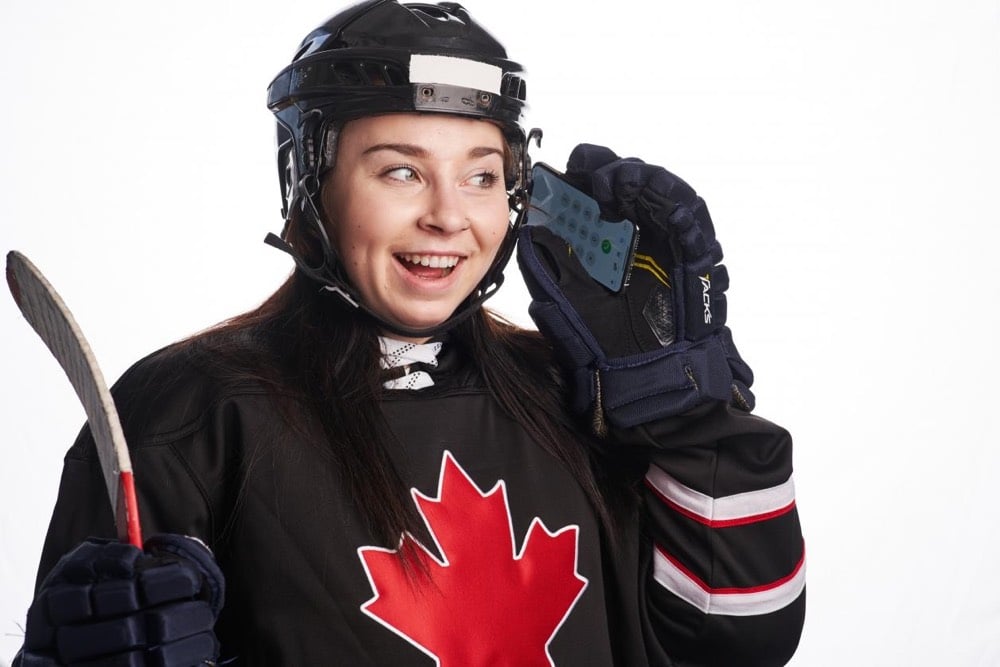
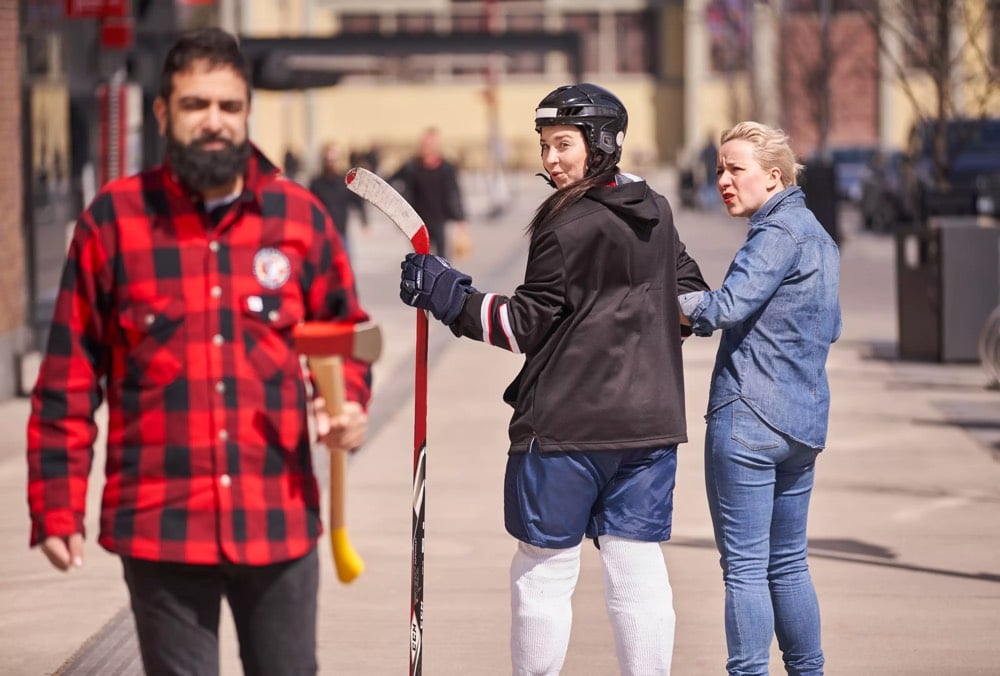
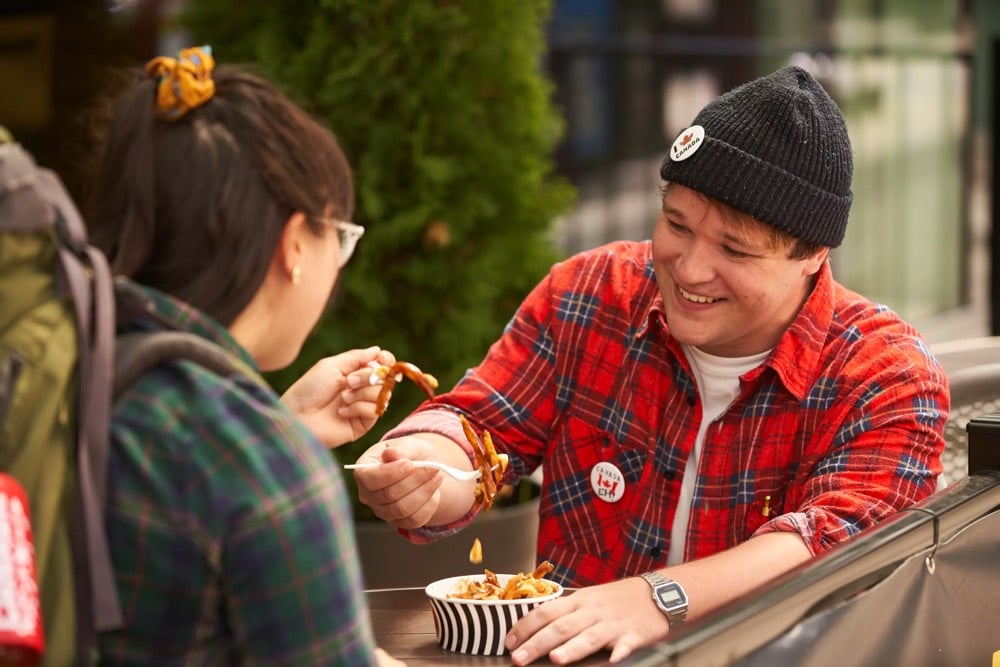
Cira, the organization that manages the .ca top-level domain, is offering a free stock photo library featuring typically Canadian scenes, like “lumberjack and hockey player discuss quarterly numbers” (above). They also have their version of the distracted boyfriend photo (“hockey player checks out lumberjack while woman in Canadian tuxedo looks on in disbelief”):
In a move certain to impact jokes about Canadian stereotypes for years to come, our neighbors to the north are jettisoning the penny. One hopes the United States co-opts this move, because it will be as good for us as Michael J. Fox, Wayne Gretzky, and poutine.
Most of them, like Colby, say they joined the military in part out of patriotism. “I thought Iraq had something to do with 9/11,” Colby says, “that they were the bad guys that attacked our country.” But unlike Hinzman, most did not apply for conscientious-objector status. They tend to say they aren’t opposed to all wars in principle — just to the one they were ordered to fight. It wasn’t until Colby arrived in Iraq that he started to see the conflict as “a war of aggression, totally unprovoked,” he says. “I was, like, ‘This is what my buddies are dying for?’
The Canadian government will soon decide whether or not to let those soldiers apply for citizenship on the basis that the conflict in Iraq is “a war not sanctioned by the United Nations”.
And how much oil is there? Estimates bounced around for years until 1999, when Alberta got serious about determining its potential. Based on data from 56,000 wells and 6,000 core samples, the Energy and Utilities Board (EUB) came up with an astonishing figure: The amount of oil that could be recovered with existing technology totalled 175 billion barrels, enough to cover U.S. consumption for more than 50 years. With the new math, Canada slipped quietly into second place behind Saudi Arabia’s 265 billion barrels in oil reserves, followed by Iran and Iraq.




Stay Connected