kottke.org posts about video
Black holes are the largest single objects in the universe, many times larger than even the biggest stars, and have no upper limit to their size. But practically, how big is the biggest, heaviest black hole in the universe? (A: More massive than the entire Milky Way.)
The largest things in the universe are black holes. In contrast to things like planets or stars they have no physical size limit, and can literally grow endlessly. Although in reality specific things need to happen to create different kinds of black holes, from really tiny ones to the largest single things in the universe. So how do black holes grow and how large is the largest of them all?
Videos about space are where Kurzgesagt really shines. I’ve seen all their videos about black holes and related objects, and I always pick up something I never knew whenever a new one comes out. This time around, it was quasistars and the surprisingly small mass of supermassive black holes located at galactic centers compared to the galaxies themselves.


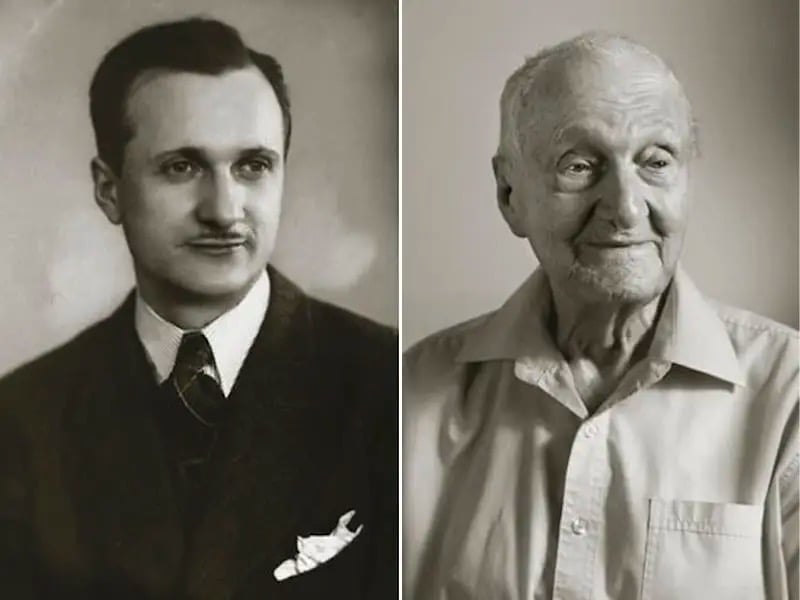
For his Faces of Century project, photographer Jan Langer made portraits of Czech people who are 100+ years old that mimic the style of photos of those same people 70 or 80 years before. If you click on the ⓘ below each pair of photographs, you can read a short biography of each person. All of these folks lived through two world wars, the Cold War, the space age, the computer age, and so much more. Incredible. (via life is so beautiful)
I was 16 years old on the day the Berlin Wall fell. I remember coming home from school that day and watching the events unfold on television, completely shocked at how quickly it had all happened. Politics & protests had been pushing the Eastern Bloc countries toward more openness for years, but before watching this video, I’d never heard that the catalyst for that world-changing event was a short mistaken statement at the end of an otherwise boring press conference. From the BBC:
East German leaders had tried to calm mounting protests by loosening the borders, making travel easier for East Germans. They had not intended to open the border up completely.
The changes were meant to be fairly minor — but the way they were delivered had major consequences.
Notes about the new rules were handed to a spokesman, Günter Schabowski — who had no time to read them before his regular press conference. When he read the note aloud for the first time, reporters were stunned.
“Private travel outside the country can now be applied for without prerequisites,” he said. Surprised journalists clamoured for more details.
Shuffling through his notes, Mr Schabowski said that as far as he was aware, it was effective immediately.
In fact it had been planned to start the next day, with details on applying for a visa.
But the news was all over television — and East Germans flocked to the border in huge numbers.
How did the Berlin Wall fall? Two ways. Gradually, then suddenly.
In this video, Tomorrow’s Build takes a look at the $7 billion flood defense system that was built to protect Venice, Italy from increased flooding due to climate change. They detail how the system was built, how well it works, how it compares with other defense systems, the challenges associated with keeping it working, and how well this sort of defense system might work for other coastal cities (NYC, SF, Sydney).
Here’s the thing about humans: they will danceify every possible activity — and canoeing is no exception.
American Freestyle canoeing is the art of paddling a canoe on flat water with perfect control of its movements. The canoe is usually leaned over to the side to help the boat turn sharply and efficiently and paddle strokes are taken on either side of the canoe depending on the individual move. Balance, paddle placement and turn initiation are a few keys to this control. Since the movements seem dance-like, some practice this art timed to music, which is the ultimate in control.
The vest & bow tie, the choice of music (The Lady in Red by Chris de Burgh), his control of the canoe — it’s all perfect.
See also It’s Reflective Fjord Season, Watch As a Master Woodworker Turns a Giant Log into an Elegant Dugout Canoe, and Kayaking Down a Drainage Ditch. (via life is so beautiful)
For his video series for Eater, Daniel Geneen took a tour of the Lodge Cast Iron factory in South Pittsburg, Tennessee to see how cast iron skillets are made.
While all of this is happening, molds for pans are being made out of fine, pliable sand that’s compressed in massive machines. The ladles pour the molten metal into these molds. Once the metal is poured and cooled, the sand molds get placed into a shake-out machine that shakes the sand away from the pan, and then into an enormous drum to shake off the rest. The pans are finally put on a giant conveyor belt to be sorted and inspected. Any pans that are not up to muster get thrown back into the original scrap heap to be melted down again and remade into another pan.
In comparison, here’s how Borough Furnace makes their cast iron pans by hand in their much smaller workshop:
Very similar process, down to the sand molds, just on a much smaller and more hands-on scale.
Among Giants is a short documentary about a group of activists who lived in the trees of a Humboldt County redwood forest for four years in order to stop logging in the area.
Risking injury and incarceration, an environmental activist disrupts the clear-cutting of an ancient redwood grove by sitting on a tiny platform a hundred feet up in the tree canopy. Already three years into the tree-sit when filming begins, AMONG GIANTS blends vérité cinematography with intimate personal reflection to create a vivid picture of life in the trees and the unwavering dedication of the activists.
The activists’ tree-sit was successful — 1000 acres of the redwood forest were transferred to a public trust to create the McKay Community Forest. (via the morning news)
Before this morning, I had never heard of Lusia Harris and now she’s one of my favorite basketball players. Playing in the 1970s, before the enforcement of Title IX in athletics, the 6’3” Harris dominated in high school, led a small university to three consecutive national basketball championships in the first 5 years of the program (while averaging 25.9 points and 14.5 rebounds per game), scored the first basket in Olympics women’s basketball history, is the only woman ever officially drafted by an NBA team, and was inducted into the National Basketball Hall of Fame. And those aren’t even her proudest achievements — you’ll have to watch the video for that.
For an electrifying young basketball player on the national stage, success often comes with a lucrative professional contract and brand deals — but Harris’s moment came in the 1970s, decades before the W.N.B.A. was founded, when few opportunities were available to female athletes interested in pursuing a professional career. In Ben Proudfoot’s “The Queen of Basketball,” Harris tells the story of what happens when an unstoppable talent runs out of games to win.
This video is part of the NY Times’ Almost Famous series, which also includes stories about radio astronomer Jocelyn Bell Burnell and actress/singer Kim Hill.
Here’s a description of what the machine featured in this video does: “The HD Video Feedback Kinetic Sculpture creates fractals and organic-looking images in real-time, without a computer: this is old-school video feedback.” But just watch the video for the full effect — this thing produces some amazing imagery.
This is part sculpture, part performance art, and may make the most complex video feedback ever created, using three cameras, two video switchers, a sheet of beam-splitter glass, and an HDMI input from a phone or live video feed.
Much like a musical instrument, the operator at the helm of this device plays it, but instead of making sounds, makes entire worlds, spirals within spirals, loops within loops, galaxies, classical fractal imagery and primordial organisms, leaves, trees, and insects. It really is the God machine.
This video from Vox takes a look at how Taiwan avoided a Covid-19 outbreak for more than a year (and kept total deaths to just 7 in 2020 in a country of 23.6 million) while residents were mostly able to go about their normal lives. The video features photojournalist Ed Ou, who underwent a mandatory 14-day quarantine when he traveled to Taiwan last year. Ou had this to say after spending time in Taiwan, doing normal things without lockdowns or restrictions:
This was an alternate universe of what America, and the rest of the world, had seen all year. The Taiwanese people had been able to just live their lives, as if nothing had happened. Like, to me, that’s freedom.
After more than a year of almost no cases, Taiwan experienced its first Covid-19 outbreak in May (after relaxing their quarantine rules and, presumably, the rise of the delta variant) but has since gotten it under control. Other countries that had been successful in controlling the virus until recently — like Vietnam, Thailand, and Mongolia — are also seeing outbreaks now. When the rest of the world is teeming with the virus, it becomes more likely over time that even the most organized and protected systems are going to be vulnerable.
Using dozens of bot accounts, The Wall Street Journal did an investigation and determined that TikTok’s algorithm needs only one piece of information to determine what you want to watch: the amount of time you spend watching individual videos. Observing your watch time and rewatching is enough for them to fill your “For You” page with recommended videos that are right in your wheelhouse after just an hour or two. That this happens so quickly and completely — 90-95% of what users see on TikTok is algorithmically determined — leads to users going down narrow-interest rabbit holes that can be dangerous, e.g. if someone’s Covid interest turns into anti-vax QAnon crap or sadness turns into video after video about depression or harming yourself.
As someone who built an entire web app that collected people’s social media likes/faves, this focus on a single signal is fascinating. API limitations and rate limits on the number of requests would keep you from building a service with a TikTok-like algorithm for Twitter or Instagram that used likes as the only signal for whether to show someone a piece of content or not, but if you could, I bet it would be amazing.
Car warning sounds urging drivers to buckle up or turn off the headlights can be quite unpleasant to listen to. So Nissan teamed up with sound designers at Bandai Namco, the gaming company known for Pac-Man and Tekken, to replace those warning noises with something more musical.
I had a car once that beeped really sharply and loudly whenever the temperature dropped to 37°F as a warning for potential slippery roads and it scared the shit out of me every time. As someone who is sensitive to sound, I applaud efforts like these to make non-emergency sounds less jarring. (via rob walker (again))
Since 2001, performance art group Improv Everywhere have been staging events in public, aiming to “surprise and delight random strangers through positive pranks”. Their latest endeavor takes place in NYC, perhaps the best place on Earth for exposing random strangers to positive pranks. A man in an orange vest places a “Stand Here for Dance Party” sign on the ground and then walks away. A brave soul steps onto the sign and, well, you might guess what happens next.
I found this via Rob Walker’s newsletter about his book, The Art of Noticing. I love what he wrote about it:
Now that you’ve seen it, you know that once someone did stand on the decal, a squad of Improv Everywhere operatives, with boom boxes and impressive dance moves, converted the public space into (as promised) an open-air dance party. Very fun.
But here’s what makes this work: Not just the planning and the expert performers and the slick choreography and the clever subversion of social-distance design. None of that matters unless somebody stands on the decal. What activates this entire operation is curiosity.
He continues, describing the woman who gets the party started:
This woman is my hero! I love everything about her, her body language, her openness, the thrilling sense she radiates that anything could happen and she’s up for it. And if you’ve watched the video, you know that she in fact unleashed an experience that she (and many strangers nearby) will never forget.
What’s not in the video, but we know is true, is some huge majority of people not even noticing, or actively ignoring, the invitation to an impromptu, on-the-spot dance party. As always, attention is the first step.
Curiosity. Attention. There are those words again, the universe trying to tell me something.
In this collaboration between musician and filmmaker John Boswell (aka melodysheep) and the sound podcast Twenty Thousand Hertz, we get to listen to some of the actual and theoretical sounds of space, from what the Sun would sound like if space weren’t a vacuum (we’d hear it as loud as a jackhammer on Earth) to the sound of the Universe just after the Big Bang to thunder in the thick atmosphere of Venus to dreamlike piano music on Mars.
Floating in the silent void of space are trillions of islands of sound, each with their own sonic flavor — some eerily familiar, some wildly different than Earth’s. And even space itself was once brimming with sound.
This short film takes you on a journey back in time and to the edge of our solar system and beyond, to discover what other worlds of sound are lurking beyond Earth’s atmosphere. You won’t believe your ears :)
This is really well done, which isn’t surprising considering Boswell did the excellent Timelapse of the Future video a few years back. The soundtrack to The Sounds of Space video is available on Bandcamp. (via aeon)
In this video, The Snoopy Show storyboard artist Krista Porter and Apple’s Anthony Jackson show us how to draw yourself as a Peanuts character. Once you get past all of the Apple synergy stuff (Pages! Pencil! Apple TV+!), this is actually pretty neat and you can obviously do it with any device/app or even pencil & paper. They’ve even included a PDF of drawing references to make it easier.
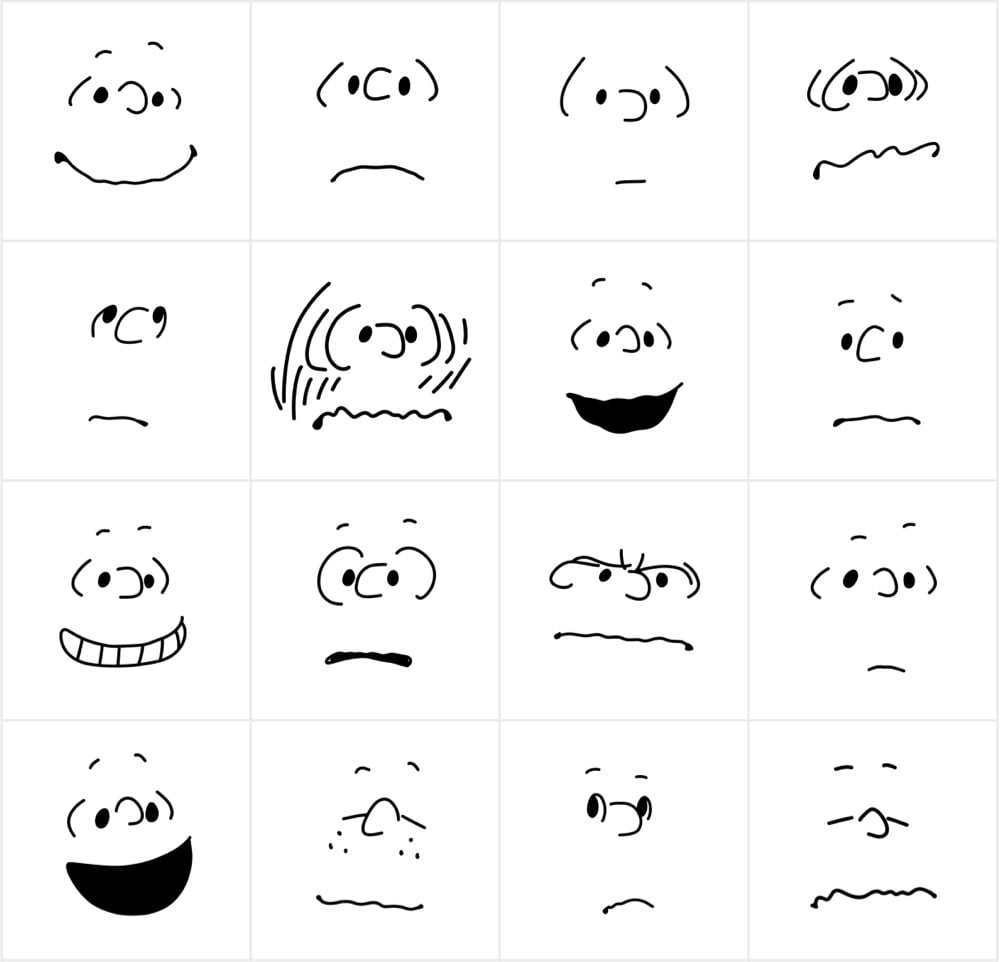
See also Watch Charles Schulz Draw Charlie Brown — it takes him about 35 seconds. (via print)
Using a small quantity of tritium (a radioactive isotope of hydrogen) and a pair of solar panels, Ian Charnas built a nuclear powered portable game system (a knock-off Game Boy) that is capable of playing Tetris. The tritium puts out an incredibly small amount of energy, so the system uses tiny but incredibly efficient batteries that were able to power the game for an hour after charging for two months.
If you’re interested, Charnas is raffling the nuclear game system to benefit Chernobyl Children International. (via @pomeranian99)
Inspired by the Apollo 11 moon landing, musician & poet Gil Scott-Heron wrote a spoken word poem called Whitey on the Moon. You can hear him recite it in the video above; here are the first few lines:
A rat done bit my sister Nell.
(with Whitey on the moon)
Her face and arms began to swell.
(and Whitey’s on the moon)
I can’t pay no doctor bill.
(but Whitey’s on the moon)
Ten years from now I’ll be paying still.
(while Whitey’s on the moon)
Back in 2011, shortly after Scott-Heron’s death, Alexis Madrigal wrote a short appreciation of the poem:
Let me just say that his track, “Whitey on the Moon,” changed the way I thought about the space race forever. It anchored the flight into the heavens, tethering it to the persistence of racial inequality, and pulling it out of the abstract, universal realm in which we like to place our technical achievements. Though I still think the hunger for the technological sublime crosses racial boundaries, it destabilized the ease with which people could use “our” in that kind of sentence. To which America went the glory of the moon landing? And what did it cost our nation to put whitey on the moon?
Well, this is really quite odd. A group of scientists discovered that if they cool ordinary oily droplets floating in water down to around 2-8°C, they change shape, grow tentacles, and propel themselves around like tiny little sci-fi creatures.
Some of the particles’ facets grow while other shrink, producing a variety of geometrical forms such as kites, isosceles triangles and spiked tetrahedra. Then, from some of the sharp corners emerge tentacle-like strands, as if being extruded from a nozzle. As they grow, the strands bend into undulating shapes — and the droplets start to swim, propelled through the fluid by the tentacles’ extension.
This reading of an excerpt of Andri Snær Magnason’s On Time and Water is a beautiful illustration of the idea of the Great Span.
Imagine that, 262 years. That’s the length of time you connect across. You’ll know the people who span this time. Your time is the time of the people you know and love, the time that molds you, and your time is the time of the people you will know and love, the time that you will shape. You can touch 262 years with your bare hands. Your great grandma taught you, you will teach your great granddaughter, you can have a direct impact on the future right up to the year 2186. Imagine that.
(via @robertsharp59)
On his Art History School YouTube channel, Paul Priestley gives a short but thorough overview of the life and work of pioneering abstract artist Hilma af Klint.
Hilma af Klint shared an interest in the spiritual with the other pioneers of abstract art including Wassily Kandinsky, Kazimir Malevich, and Piet Mondrian. And like Hilma af Klint many were drawn to Theosophy, which opened a route towards a new world of spiritual reality, rather than merely depicting visual impressions of the world around them.
Had she not kept her abstract work secret she would surely have held the accolade of producing the world’s first abstract paintings. Instead, Kandinsky’s paintings of 1911 would, until recently, come to be recognised as the first abstract works of art.
(via open culture)
During a Tonight Show appearance in 1978, Johnny Carson asked Carl Sagan about the scientific accuracy of Star Wars. Sagan replied:
The 11-year-old in me loved them but they could have made a better effort to to do things right. A lot of different aspects of things — Star Wars starts out saying it’s on some other galaxy and then you see there’s people. Starting in scene one there’s a problem, because human beings are the result of a unique evolutionary sequence based upon so many individually unlikely random events on the Earth.
In fact, I think most evolutionary biologists would agree that if you started the Earth out again and just let those random factors operate you might wind up with beings that are as smart as us and as ethical and artistic and all the rest, but they would not be human beings. That’s for the Earth. So in another planet, different environment, very unlikely to have a human being. It’s extremely unlikely that there would be creatures as similar to us as as the dominant ones in Star Wars.
And a whole bunch of other things: they’re all white. The skin of all the humans in Star Wars, oddly enough, is like this. And not even the other colors represented on the Earth at present, much less greens and blues and purples and oranges.
Carson pushes back slightly at this point: “They did have the scene of Star Wars with a lot of strange characters.” But Sagan persists:
Yeah, but none of them seem to be in charge of the galaxy. Everybody in charge of the galaxy seemed to look like us. And I thought it was a large amount of human chauvinism.
Sagan also complained about Han Solo’s boast of doing the Kessel Run in less than 12 parsecs. According to the script, this was an “obvious” lie on Han’s part to make his ship sound impressive, so Sagan missed that. But then, post-Lucas, the Kessel Run was explained in Solo: A Star Wars Story as a distance shortcut and not an elapsed completion time, so…. (via digg)
I posted about the 2021 Audubon Photography Awards earlier today, but I wanted to highlight Bill Bryant’s award-winning clip of a red-tailed hawk. The hawk is hunting, floating on the wind searching for small prey, its head perfectly still while its body stabilizes around it. I could watch this clip on repeat for the rest of the day…so cool!
This is not just a thing that hawks do — see also This Owl Will Not Move His Head and The Eerie Stillness of Chicken Heads. Birds: nature’s steadycams.
This cover of the Rolling Stones’ (I Can’t Get No) Satisfaction by PJ Harvey and Bjork at the 1994 Brit Awards is kind of amazing — I’d never seen this before. The duet is a slow burn, but it really gets there in the end. BTW, this was the same night that Elton John and RuPaul performed Don’t Go Breaking My Heart together. (via @brianmcc)
Filmmaker James Robinson has an eye condition he calls “whale eyes” that causes him to see differently than (and look differently to) most people. In this short film, he makes a plea to “normal” people for acceptance of his and others’ differences.
But his video is also an essay on seeing, in the deeper sense of the word — seeing and being seen, recognition and understanding, sensitivity and compassion, the stuff of meaningful human connection.
In a society that does a lousy job of accommodating the disabled, Mr. Robinson appeals for more acceptance of people who are commonly perceived as different or not normal.
“I don’t have a problem with the way that I see,” he says. “My only problem is with the way that I’m seen.”
This is an animation of how quickly an object falls 1 km to the surfaces of solar system objects like the Earth, Sun, Ceres, Jupiter, the Moon, and Pluto. For instance, it takes 14.3 seconds to cover that distance on Earth and 13.8 seconds on Saturn.
It might be surprising to see large planets have a pull comparable to smaller ones at the surface, for example Uranus pulls the ball down slower than at Earth! Why? Because the low average density of Uranus puts the surface far away from the majority of the mass. Similarly, Mars is nearly twice the mass of Mercury, but you can see the surface gravity is actually the same… this indicates that Mercury is much denser than Mars.
(via @thekidshouldsee)
John Oliver’s HBO show is on hiatus for the summer, but he really wanted you to know some facts about the many species of amazing octopuses out there (and why it is “octopuses” and not “octopi”).
See also My Octopus Teacher and A Dreaming Octopus Changes Color.
Ok I know you’ve probably seen the teaser trailer for season 3 of Succession by now but I was away and missed it so we’re all going to watch it together mmm’kay? New season starts “this fall”, whatever that means. I guess that’s enough time for a rewatch of the first two seasons?
For more than 21 years, Noah Kalina has taken a photograph of himself. Periodically, he makes video compilations of the photos — you’ve probably seen them here or elsewhere. For his latest video, he’s collaborated with Michael Notter (visuals) and Paul O’Mara (sound) on a video called 7777 Days.
In a first step, Michael used the machine learning library dlib (http://dlib.net/) and some custom Python code to detected in each of Noah’s photos 5 face landmarks (i.e. both eyes, the nose and the two corners of the mouth). These landmarks were then used to align the faces in all photos, so that the eyes and corner of the mouth were horizontally oriented and always an equal distance apart. After that, some small image intensity correction were applied to make very dark images a bit brighter and very bright ones a bit darker. This was followed by an upscaling of all images (where needed) to a 4K resolution.
The result is a 2-minute video (reminiscent of Jason Salavon’s work) that spans half of Kalina’s life — in the video he ages 2 months every second and 10 years a minute.
Update: Kalina and Notter explain how this video came about and how it was made.
In collaboration with Jun Takahashi, Thom Yorke has released a “Very 2021” remix of his band’s iconic Creep. Slow and reverby, the singer’s perhaps-least-favorite Radiohead song takes on new life for this (second?) oddest of years. On first listen, I like but maybe don’t love this version, but some of the YT comments are worth reading:
Can’t believe Thom Yorke finally collaborated with Radiohead. Two of my favorite artists making a song together
Thom has went so far into artistic discovery he looped back on himself. It’s like post-post-irony, but musically
I can’t believe Thom made a doomer wave version of his own fucking song
Thom nailed this one, he sounds just like the originals singer!
You can find the song on a variety of platforms.
Hermit Nicolas Cage goes on a crusade to find the person who kidnapped his truffle-hunting pig? Yes, please. (This is going to be terrible, right? Or fantastic? No in-between I’m guessing. Would make an interesting triple feature with The Truffle Hunters .)
Newer posts
Older posts




Socials & More