kottke.org posts about science
On March 10, Tomas Pueyo published a widely read and praised article called Coronavirus: Why You Must Act Now. Yesterday, in the wake of the Imperial College paper and the criticism of it, Pueyo has published a second article: Coronavirus: The Hammer and the Dance. I urge you to read it — it’s sobering yet hopeful. A summary:
Strong coronavirus measures today should only last a few weeks, there shouldn’t be a big peak of infections afterwards, and it can all be done for a reasonable cost to society, saving millions of lives along the way. If we don’t take these measures, tens of millions will be infected, many will die, along with anybody else that requires intensive care, because the healthcare system will have collapsed.
As the title indicates, Pueyo and his collaborators are suggesting an approach that combines initial aggressive action followed by a longer period of efficient vigilance. First comes the Hammer — we use aggressive measures for weeks, giving our healthcare system time to ramp up & scientists time to research the hell out of this thing and for the world’s testing capability to get up to speed.
And then we Dance.
If you hammer the coronavirus, within a few weeks you’ve controlled it and you’re in much better shape to address it. Now comes the longer-term effort to keep this virus contained until there’s a vaccine.
This is probably the single biggest, most important mistake people make when thinking about this stage: they think it will keep them home for months. This is not the case at all. In fact, it is likely that our lives will go back to close to normal.
But, here’s how the Dance works:
How come South Korea, Singapore, Taiwan and Japan have had cases for a long time, in the case of South Korea thousands of them, and yet they’re not locked down home?
In this video, the South Korea Foreign Minister explains how her country did it. It was pretty simple: efficient testing, efficient tracing, travel bans, efficient isolating and efficient quarantining.
That way, most people aren’t locked down, just those who need to be — the sick, the people who have been with those who have gotten sick, etc. Most people can go back to work, back to fairly normal routines.
I call the months-long period between the Hammer and a vaccine the Dance because it won’t be a period during which measures are always the same harsh ones. Some regions will see outbreaks again, others won’t for long periods of time. Depending on how cases evolve, we will need to tighten up social distancing measures or we will be able to release them. That is the dance of R: a dance of measures between getting our lives back on track and spreading the disease, one of economy vs. healthcare.
This piece in the Atlantic, This Is How We Can Beat the Coronavirus by Aaron E. Carroll & Ashish Jha, advocates for essentially the same approach.
We can create a third path. We can decide to meet this challenge head on. It is absolutely within our capacity to do so. We could develop tests that are fast, reliable, and ubiquitous. If we screen everyone, and do so regularly, we can let most people return to a more normal life. We can reopen schools and places where people gather. If we can be assured that the people who congregate aren’t infectious, they can socialize.
We can build health-care facilities that do rapid screening and care for people who are infected, apart from those who are not. This will prevent transmission from one sick person to another in hospitals and other healthcare facilities. We can even commit to housing infected people apart from their healthy family members, to prevent transmission in households.
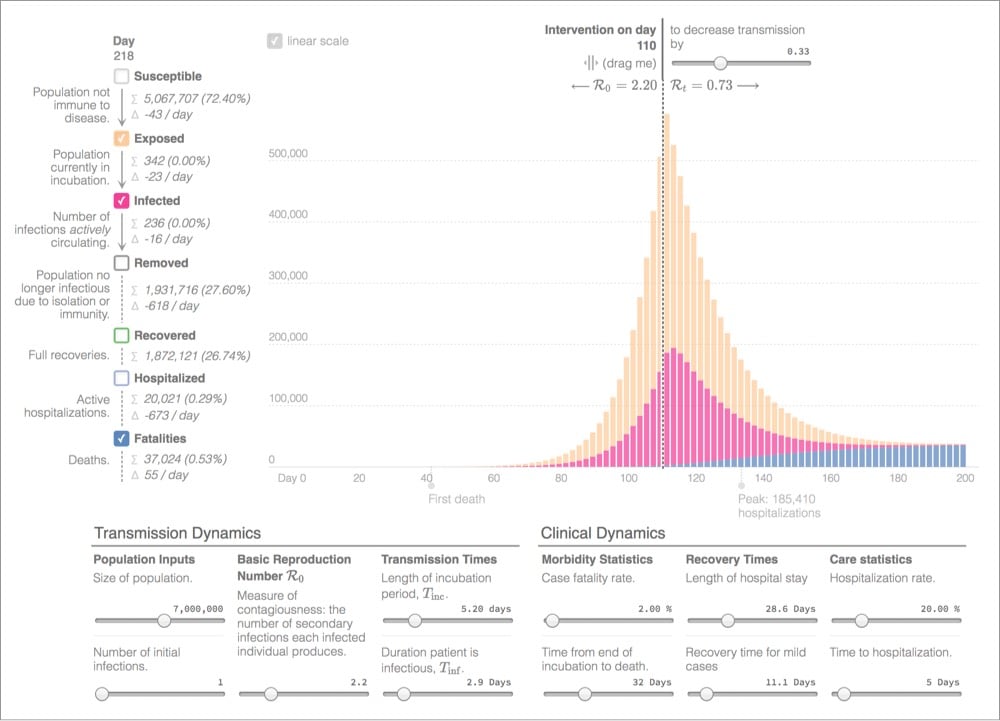
By manipulating values like R0, incubation time, and hospitalization rate with this this epidemic graphing calculator, you really get a sense of how effective early intervention and aggressive measures can be in curbing infection & saving lives in an exponential crisis like the COVID-19 pandemic.
This morning Kurzgesagt released their video about COVID-19 that they’ve been working on for a week, and it is excellent, particularly the first part where they explain exactly what the SARS-CoV-2 virus does to a human body and why it can be so dangerous. I hadn’t heard that described before, especially in such relatively simple terms.
The virus has not caused too much damage yet, but corona is now going to release a real beast on you: your own immune system. The immune system, while there to protect you, can actually be pretty dangerous to yourself and needs tight regulation. And as immune cells pour into the lungs to fight the virus, corona infects some of them and creates confusion. Cells have neither ears nor eyes — they communicate mostly via tiny information proteins called cytokines — nearly every important immune reaction is controlled by them. Corona causes infected immune cells to overreact and yell bloody murder. In a sense, it puts the immune system into a fighting frenzy and sends way more soldiers than it should, wasting its resources and causing damage.
Kurzgesagt always provides a list of scientific sources used to produce their videos, and the one for this video is particularly extensive and they are going to keep it updated.
Update: For more information on the coronavirus itself, SARS-CoV-2, see Ed Yong’s piece in the Atlantic and How the Coronavirus Could Take Over Your Body (Before You Ever Feel It) from New York magazine.
One of the key shortages in areas overwhelmed by COVID-19 patients (like Italy) is ventilators in hospitals. COVID-19 is a respiratory illness and respirators are essential in treating patients with acute symptoms. In the US and other countries, experts are warning of ventilator shortages and manufacturers say it will be difficult to ramp up production quickly enough to meet demand. So healthcare providers are looking for other solutions.
One potential solution is modifying ventilators to work for more than one person at a time. Based on feasibility research published in 2006, the simple technique uses inexpensive parts that hospitals already have on hand to modify machines to work with 4 patients at a time (with important caveats). One of the authors of that research paper, Dr. Charlene Babcock, explains how to hack the ventilators in this video:
Some notes from the video:
- The initial study used test lungs (not actual humans)
- You need to make sure the lung size and resistance of all four patients hooked up to a single ventilator are the same. No mixing adults and kids, for instance.
- Make sure the ventilator tubes leading to and from the patients are all the same length.
- This technique has been used successfully in the field, during the aftermath of the 2017 Las Vegas shooting.
- They did not investigate cross-contamination effects, so you have to make sure all the patients connected to one machine are COVID-19 patients in order to mitigate the risk.
In closing, Babcock says:
Now here’s my disclaimer. This is off-label use of the ventilator. The ventilator is made for one person and I’m using it here in a simulation of four patients. I always hope that you would never need to use it in this way, but you can never predict what’s going to happen in a disaster. And if it was me and I had four patients and they all needed intubation and I only had one ventilator, I would simply have a shared discussion meeting with all four families and say “I could pick one to live or we could try to have all four live”. But this is clearly off-label and likely would only be used in dire circumstance, which we may see with COVID-19.
Other people are working on designing and deploying open source ventilators and ventilators made from parts of other machines. All this reminds me of that scene in Apollo 13 where NASA engineers design a modified CO2 scrubber using only parts available on the spacecraft. A similar “failure is not an option” spirit might be called for in this case as well.
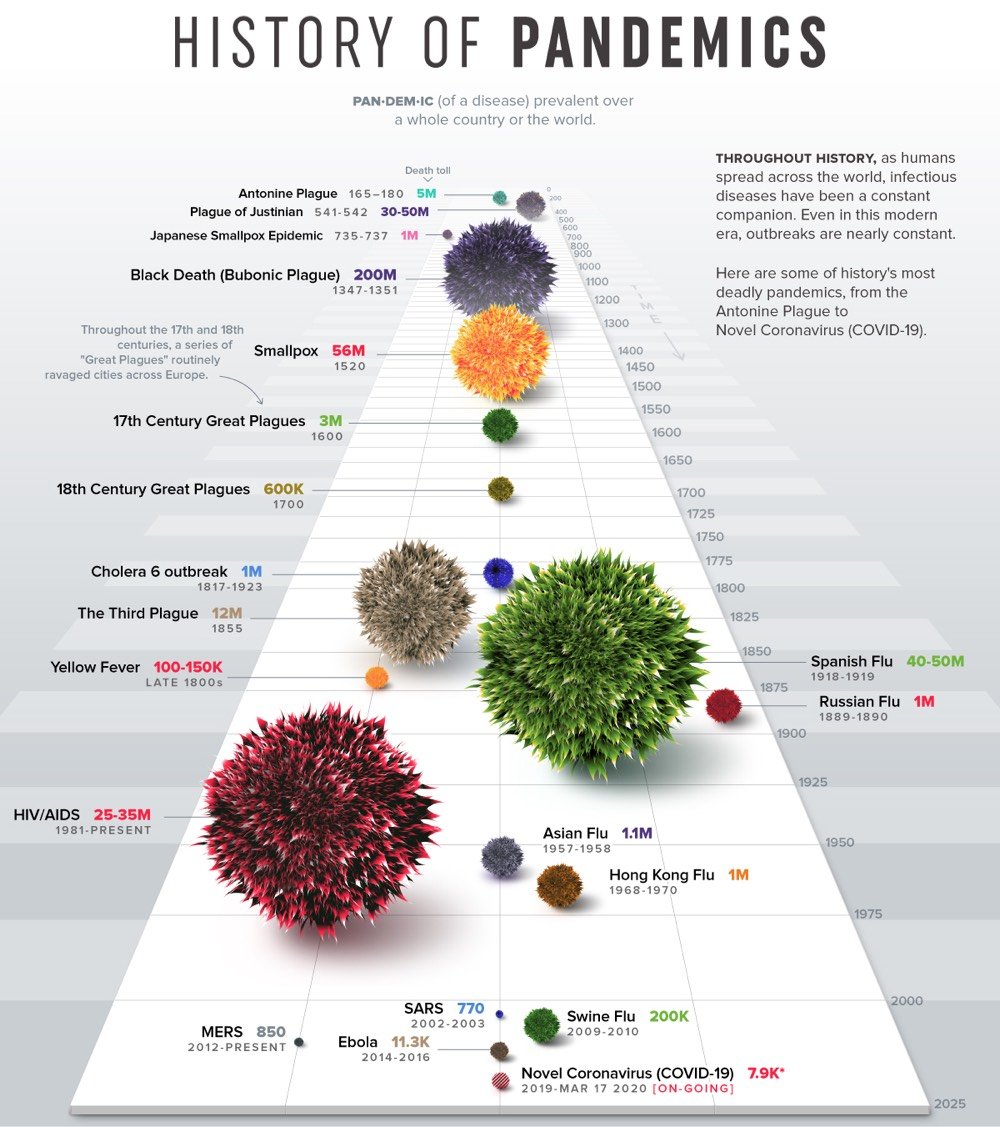
From Nicholas LePan, Visualizing the History of Pandemics.
The practice of quarantine began during the 14th century, in an effort to protect coastal cities from plague epidemics. Cautious port authorities required ships arriving in Venice from infected ports to sit at anchor for 40 days before landing — the origin of the word quarantine from the Italian “quaranta giorni”, or 40 days.
One of the first instances of relying on geography and statistical analysis was in mid-19th century London, during a cholera outbreak. In 1854, Dr. John Snow came to the conclusion that cholera was spreading via tainted water and decided to display neighborhood mortality data directly on a map. This method revealed a cluster of cases around a specific pump from which people were drawing their water from.
While the interactions created through trade and urban life play a pivotal role, it is also the virulent nature of particular diseases that indicate the trajectory of a pandemic.
One of my big takeaways from the Tracking Infectiousness section of the piece is: holy shit, look at how contagious measles is! An R0 of 16! (The common flu is about 1.5 and ebola is 2.0.) And people want to keep their children from getting vaccinated for this?!
Note: I feel the need to add a disclaimer to this post. This was a really hard thing to read for me and it might be for you too. It is a single paper from a scientific team dedicated to the study of infectious diseases — it has not been peer reviewed, the available data is changing every day (for things like death rates, transmission rates, and potential immunity), and there might be differing opinions & assumptions by other infectious disease experts that would result in a different analysis. Even so, this seems like a possibility to take seriously and I hope I’m being responsible in sharing it.
This is an excellent but extremely sobering read: Impact of non-pharmaceutical interventions (NPIs) to reduce COVID19 mortality and healthcare demand, a 20-page paper by the Imperial College COVID-19 Response Team (and a few other organizations, including the WHO Collaborating Centre for Infectious Disease Modelling).
The paper is technical in nature but mostly written in plain English so it’s pretty readable, but here is an article that summarizes the paper. It discusses the two main strategies for dealing with this epidemic (mitigation & suppression), the strengths and weaknesses of each one, and how they both may be necessary in some measure to best address the crisis. For instance, here’s a graph showing the effects of three different suppression scenarios for the US compared to critical care bed capacity:
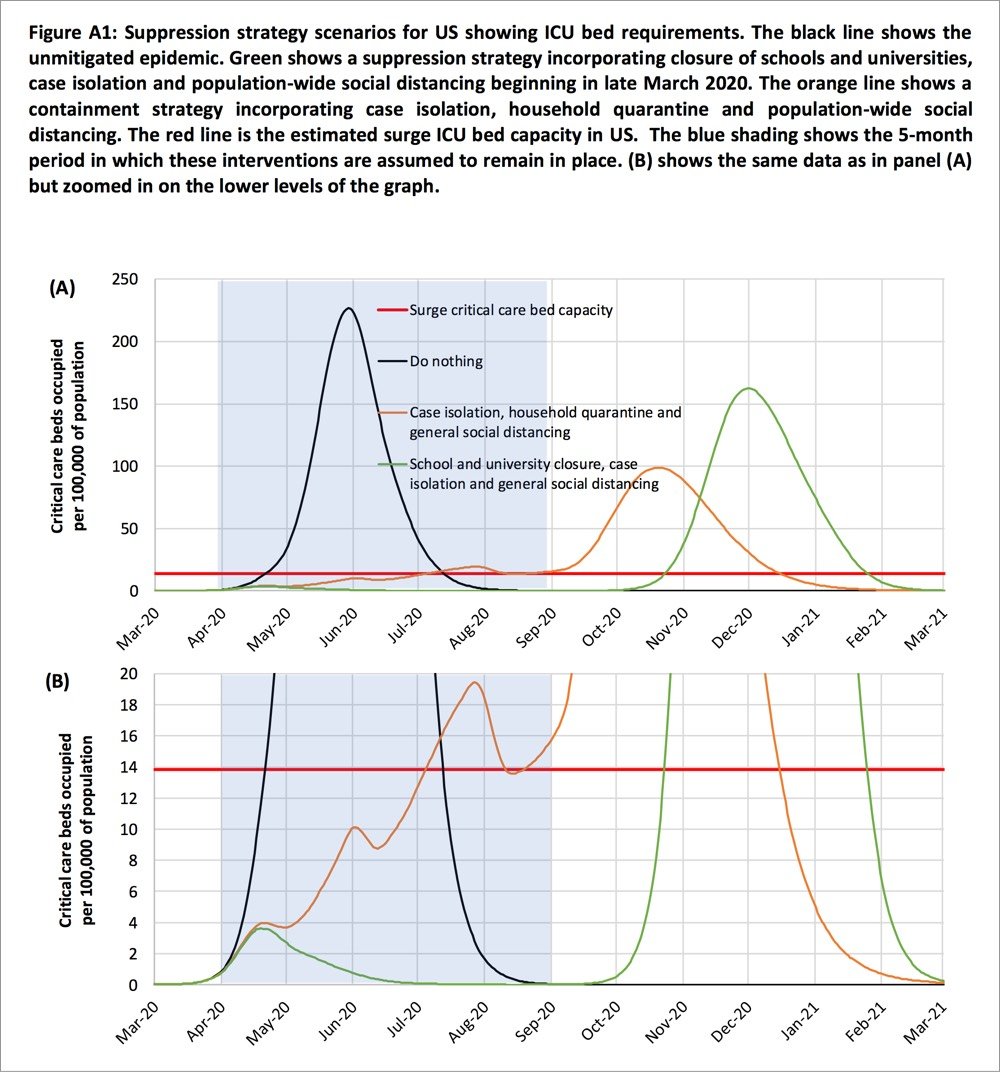
Two fundamental strategies are possible: (a) mitigation, which focuses on slowing but not necessarily stopping epidemic spread — reducing peak healthcare demand while protecting those most at risk of severe disease from infection, and (b) suppression, which aims to reverse epidemic growth, reducing case numbers to low levels and maintaining that situation indefinitely. Each policy has major challenges. We find that that optimal mitigation policies (combining home isolation of suspect cases, home quarantine of those living in the same household as suspect cases, and social distancing of the elderly and others at most risk of severe disease) might reduce peak healthcare demand by 2/3 and deaths by half. However, the resulting mitigated epidemic would still likely result in hundreds of thousands of deaths and health systems (most notably intensive care units) being overwhelmed many times over. For countries able to achieve it, this leaves suppression as the preferred policy option.
We show that in the UK and US context, suppression will minimally require a combination of social distancing of the entire population, home isolation of cases and household quarantine of their family members. This may need to be supplemented by school and university closures, though it should be recognised that such closures may have negative impacts on health systems due to increased absenteeism. The major challenge of suppression is that this type of intensive intervention package — or something equivalently effective at reducing transmission — will need to be maintained until a vaccine becomes available (potentially 18 months or more) — given that we predict that transmission will quickly rebound if interventions are relaxed. We show that intermittent social distancing — triggered by trends in disease surveillance — may allow interventions to be relaxed temporarily in relative short time windows, but measures will need to be reintroduced if or when case numbers rebound. Last, while experience in China and now South Korea show that suppression is possible in the short term, it remains to be seen whether it is possible long-term, and whether the social and economic costs of the interventions adopted thus far can be reduced.
If you missed the scale on the graph (it extends until March 2021) and the bit in there about closures, quarantine, and self-distancing measures needing to remain in place for months and months, the authors repeat that assertion throughout the paper. From the discussion section of the paper:
Overall, our results suggest that population-wide social distancing applied to the population as a whole would have the largest impact; and in combination with other interventions — notably home isolation of cases and school and university closure — has the potential to suppress transmission below the threshold of R=1 required to rapidly reduce case incidence. A minimum policy for effective suppression is therefore population-wide social distancing combined with home isolation of cases and school and university closure.
To avoid a rebound in transmission, these policies will need to be maintained until large stocks of vaccine are available to immunise the population — which could be 18 months or more. Adaptive hospital surveillance-based triggers for switching on and off population-wide social distancing and school closure offer greater robustness to uncertainty than fixed duration interventions and can be adapted for regional use (e.g. at the state level in the US). Given local epidemics are not perfectly synchronised, local policies are also more efficient and can achieve comparable levels of suppression to national policies while being in force for a slightly smaller proportion of the time. However, we estimate that for a national GB policy, social distancing would need to be in force for at least 2/3 of the time (for R0=2.4, see Table 4) until a vaccine was available.
I absolutely do not want to seem alarmist here, but if this analysis is anywhere close to being in the ballpark, it seems at least feasible that this whole thing is going to last far longer than the few weeks that people are thinking about. The concluding sentence:
However, we emphasise that is not at all certain that suppression will succeed long term; no public health intervention with such disruptive effects on society has been previously attempted for such a long duration of time. How populations and societies will respond remains unclear.
The paper is available in several languages here.
Update: Here is a short review of the Imperial College paper by Chen Shen, Nassim Nicholas Taleb, and Yaneer Bar-Yam. The important bit:
However, they make structural mistakes in analyzing outbreak response. They ignore standard Contact Tracing [2] allowing isolation of infected prior to symptoms. They also ignore door-to-door monitoring to identify cases with symptoms [3]. Their conclusions that there will be resurgent outbreaks are wrong. After a few weeks of lockdown almost all infectious people are identified and their contacts are isolated prior to symptoms and cannot infect others [4]. The outbreak can be stopped completely with no resurgence as in China, where new cases were down to one yesterday, after excluding imported international travelers that are quarantined.
If I understand this correctly, Shen et al. are saying that some tactics not taken into account by the Imperial College analysis could be hyper-effective in containing the spread of COVID-19. The big if, particularly in countries like the US and Britain that are acting like failing states is if those measures can be implemented on the scale required. (thx, ryan)
Update: The lead author of the Imperial College paper, Neil Ferguson, has likely contracted COVID-19. From his Twitter acct:
Sigh. Developed a slight dry but persistent cough yesterday and self isolated even though I felt fine. Then developed high fever at 4am today.
Ferguson says he’s still at his desk, working away.
Update: The pair of articles I linked to in this post are excellent and you should read them after reading the Imperial College paper.
Strong coronavirus measures today should only last a few weeks, there shouldn’t be a big peak of infections afterwards, and it can all be done for a reasonable cost to society, saving millions of lives along the way. If we don’t take these measures, tens of millions will be infected, many will die, along with anybody else that requires intensive care, because the healthcare system will have collapsed.
This is from a few days ago, but because the United States is a couple of weeks behind Italy in addressing the COVID-19 pandemic, what was happening there then might still be in our future if we don’t take (seemingly unreasonable but actually entirely reasonable) precautions. From Yascha Mounk’s The Extraordinary Decisions Facing Italian Doctors:
The authors, who are medical doctors, then deduce a set of concrete recommendations for how to manage these impossible choices, including this: “It may become necessary to establish an age limit for access to intensive care.”
Those who are too old to have a high likelihood of recovery, or who have too low a number of “life-years” left even if they should survive, would be left to die. This sounds cruel, but the alternative, the document argues, is no better. “In case of a total saturation of resources, maintaining the criterion of ‘first come, first served’ would amount to a decision to exclude late-arriving patients from access to intensive care.”
In addition to age, doctors and nurses are also advised to take a patient’s overall state of health into account: “The presence of comorbidities needs to be carefully evaluated.” This is in part because early studies of the virus seem to suggest that patients with serious preexisting health conditions are significantly more likely to die. But it is also because patients in a worse state of overall health could require a greater share of scarce resources to survive: “What might be a relatively short treatment course in healthier people could be longer and more resource-consuming in the case of older or more fragile patients.”
Mounk continues:
My academic training is in political and moral philosophy. I have spent countless hours in fancy seminar rooms discussing abstract moral dilemmas like the so-called trolley problem. If a train is barreling toward five innocent people who are tied to the tracks, and I could divert it by pulling the lever, but at the cost of killing an innocent bystander, should I do it?
Part of the point of all those discussions was, supposedly, to help professionals make difficult moral choices in real-world circumstances. If you are an overworked nurse battling a novel disease under the most desperate circumstances, and you simply cannot treat everyone, however hard you try, whose life should you save?
Despite those years of theory, I must admit that I have no moral judgment to make about the extraordinary document published by those brave Italian doctors. I have not the first clue whether they are recommending the right or the wrong thing.
I have been rewatching The Good Place with my kids (they love it), and all of the moral philosophy stuff underpinning the show has taken on a greater meaning over the last week or two.
Over the past week or so, echoing public health officials & epidemiologists, I’ve been trying to illustrate the often counterintuitive concept of exponential growth that you see in an epidemic and how flattening the curve can help keep people healthy and alive. But I think people have a hard time grasping what that means, personally, to them. Like, what’s one person in the face of a pandemic?
Well, epidemiologist Britta Jewell had a similar thought and came up with this brilliantly simple graph, one of the best I’ve seen in illustrating the power of exponential growth and how we as individuals can affect change:
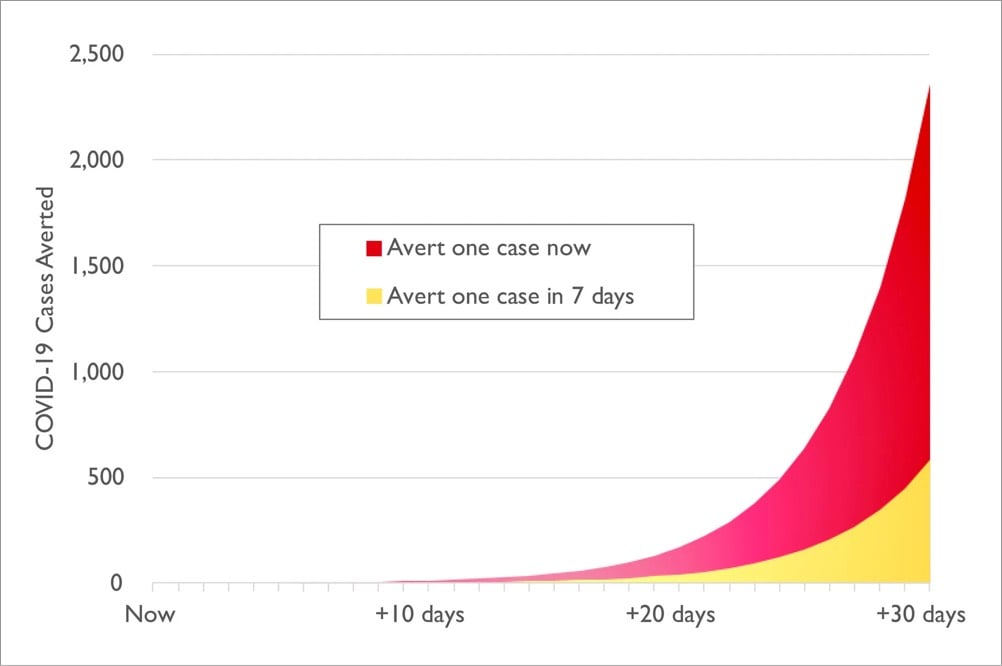
Jewell explains a bit more about what we’re looking at:
The graph illustrates the results of a thought experiment. It assumes constant 30 percent growth throughout the next month in an epidemic like the one in the U.S. right now, and compares the results of stopping one infection today — by actions such as shifting to online classes, canceling of large events and imposing travel restrictions — versus taking the same action one week from today.
The difference is stark. If you act today, you will have averted four times as many infections in the next month: roughly 2,400 averted infections, versus just 600 if you wait one week. That’s the power of averting just one infection, and obviously we would like to avert more than one.
So that’s 1800 infections averted from the actions of just one person. Assuming a somewhat conservative death rate of 1% for COVID-19, that’s 18 deaths averted. Think about that before you head out to the bar tonight or convene your book group as usual. Your actions have a lot of power in this moment; take care in how you wield it.
Coronavirus, social distancing, exponential growth, flatten the curve, pandemic, immunocompromised — those are just some of the concepts related to COVID-19 we have had to come up to speed on over the last few weeks. We should add the “paradox of preparation” to that list.
The paradox of preparation refers to how preventative measures can intuitively seem like a waste of time both before and after the fact. Most of us don’t stop brushing our teeth because the dentist didn’t find any cavities at our most recent checkup, but with larger events that have effects more difficult to gauge (like COVID-19, climate change, and Y2K), it can be hard to spur people to action. From Chris Hayes:
A doctor I spoke to today called this the “paradox of preparation” and it’s the key dynamic in all this. The only way to get ahead of the curve is to take actions that *at the time* seem like overreactions, eg: Japan closing all schools for a month with very few confirmed cases.
That was in response to Dr. James Hamblin:
The thing is if shutdowns and social distancing work perfectly and are extremely effective it will seem in retrospect like they were totally unnecessary overreactions.
Epidemiologist Mari Armstrong-Hough made a similar point earlier on Twitter:
You won’t ever know if what you did personally helped. That’s the nature of public health. When the best way to save lives is to prevent a disease rather than treat it, success often looks like an overreaction.
Preparation, prevention, regulations, and safeguards prevent catastrophes all the time, but we seldom think or hear about it because “world continues to function” is not interesting news. We have to rely on statistical analysis and the expert opinions of planners and officials in order to evaluate both crucial next steps and the effectiveness of preparatory measures after the fact, and that can be challenging for us to pay attention to. So we tend to forget that preparation & prevention is necessary and discount it the next time around.
The good news is that while unchecked epidemics grow exponentially, another thing that can also spreads exponentially is behavioral norms. The basic expert advice on how we can slow the spread of COVID-19 in our communities is pretty unambiguous — wash your hands, don’t touch your face, maintain social distance, self-quarantine, etc. — and so is the huge potential impact of those precautions on the number of people who will get infected and die. To help overcome the paradox of preparation, let’s continue to spread the word about what the experts are urging us to do. Because if we don’t, there might be a lot fewer of us around in a month or two.
Update: In the same vein, Vaughn Tan writes:
This means that any effective actions taken against coronavirus in the few days before the epidemic curve shoots upward in any country will always look unreasonable and disproportionate.
By the time those actions look reasonable and appropriate, they will be too late.
And Now Is the Time to Overreact Ian Bogost in the Atlantic:
The idea that an extreme reaction, such as closing schools and canceling events, might prove to be an overreaction that would look silly or wasteful later outweighs any other concern. It can also feel imprudent; just staying home isn’t so easy for workers who depend on weekly paychecks, and closing is a hard decision for local companies running on thin margins. But experts are saying that Americans can’t really over-prepare right now. Overreaction is good!
It’s hard to square that directive with the associations we’ve built up around overreactions. Ultimately, overreaction is a matter of knowledge-an epistemological problem. Unlike viruses or even zombies, the concept lives inside your skull rather than out in the world. The sooner we can understand how that knowledge works, and retool our action in relation to its limits, the better we’ll be able to handle the unfolding crisis.
Michael Specter writing about America’s weakened public-health system for the New Yorker:
Few people have trouble understanding the purpose of public education or public housing: they are tangible programs that, at least in theory, are designed to improve our lives. Public-health accomplishments, however, are measured in an entirely different way: success is defined by what is prevented, not by what is produced. This creates an odd psychological dynamic.
When public-health programs are successful, they are invisible, and what is invisible is almost always taken for granted. Nobody cheers when they remain untouched by a disease that they hardly knew existed. That makes it easy for shortsighted politicians to deny long-term realities. And that is what they almost always do.
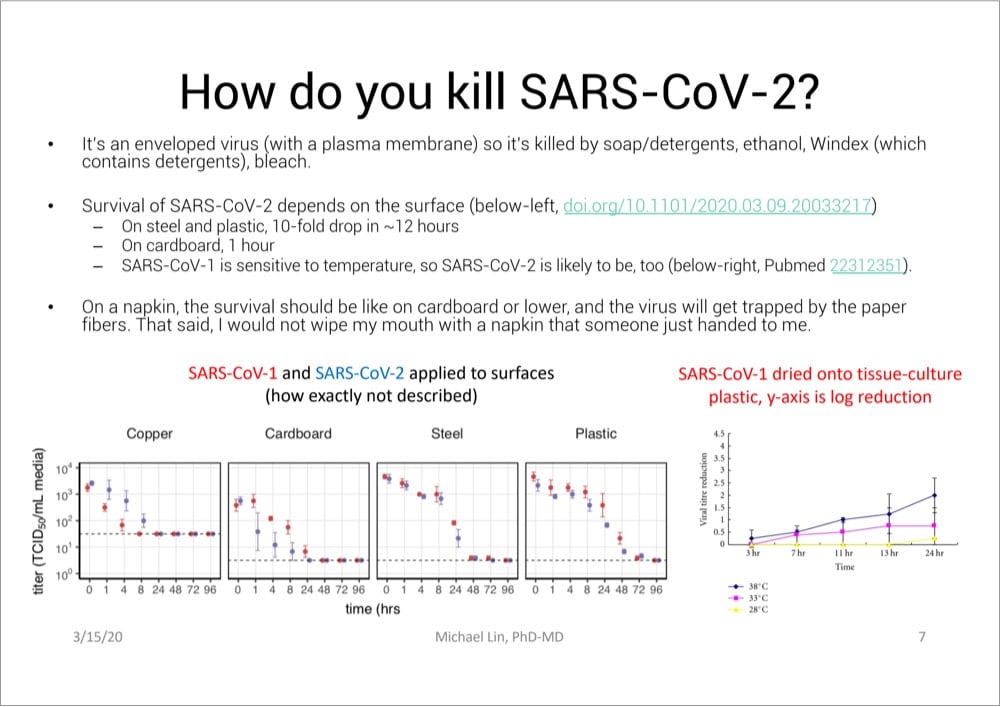
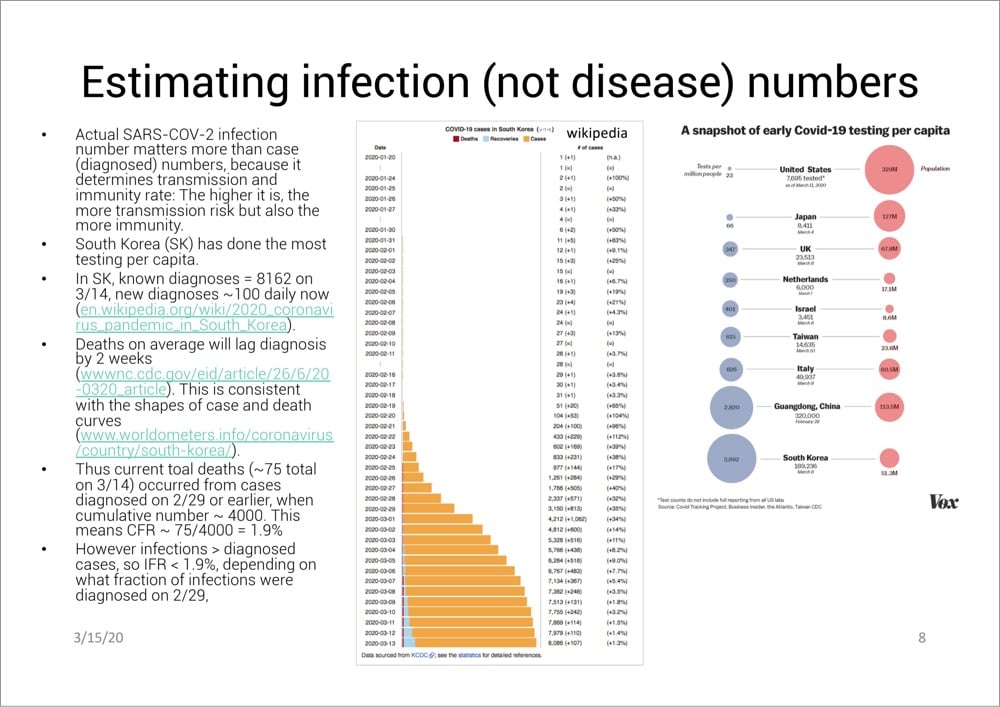
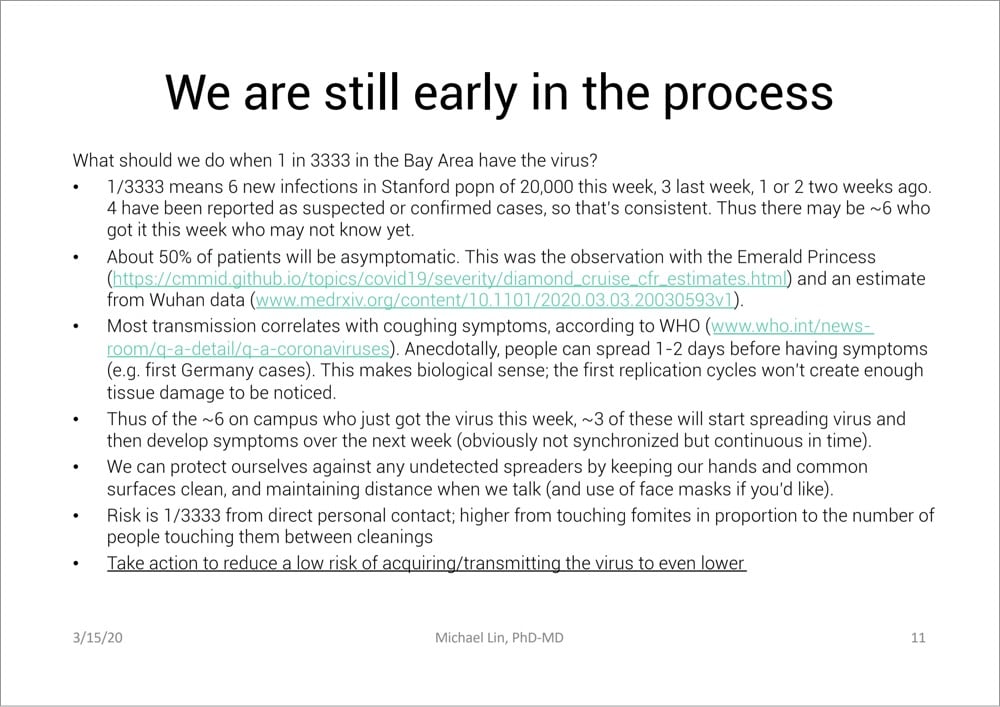
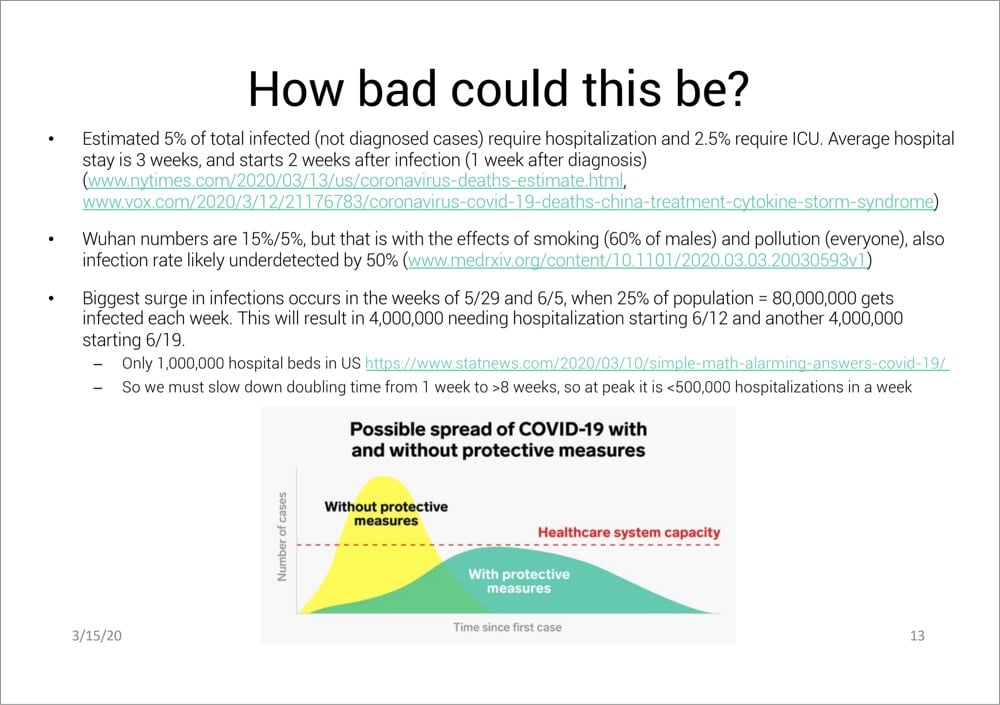
From Stanford professor of neurobiology and bioengineering Michael Lin, this is an excellent 31-page PDF presentation (Slideshare) on what we know about COVID-19 so far and how to deal with it, with extensive references to the latest research (as of 3/15). I’m going to include a few of the most interesting and important slides right here, but do read the whole thing — it is very informative.
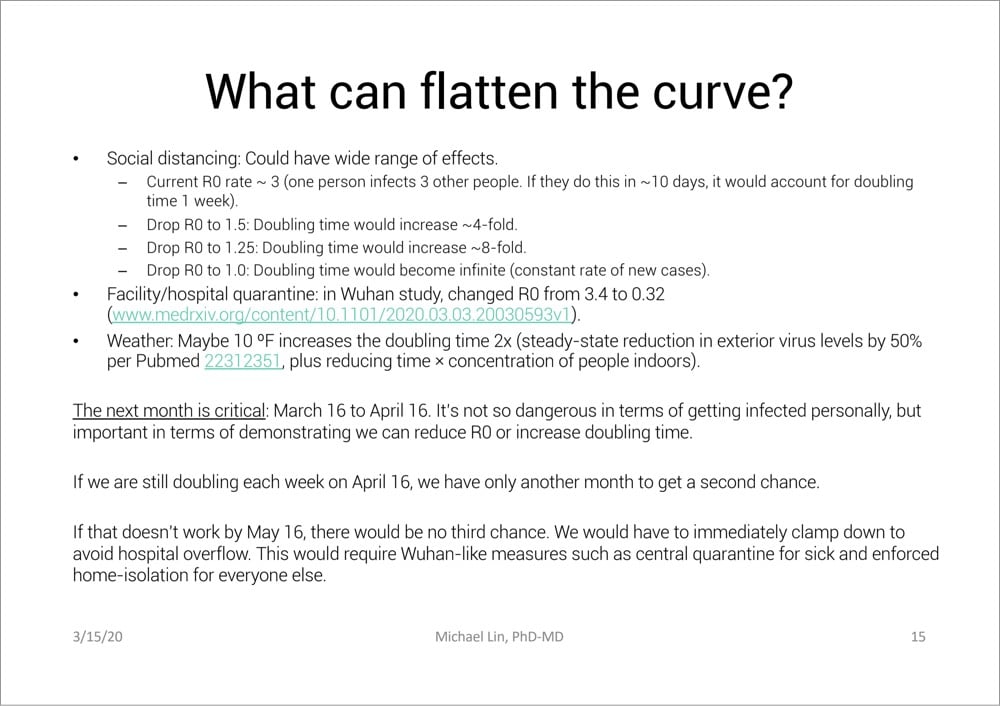
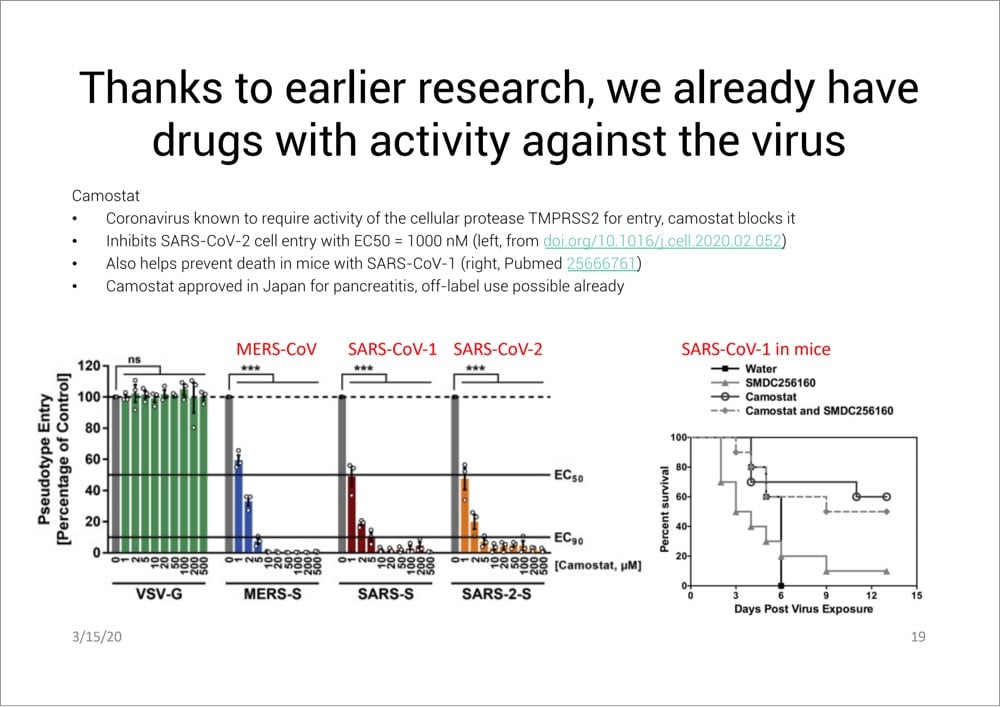
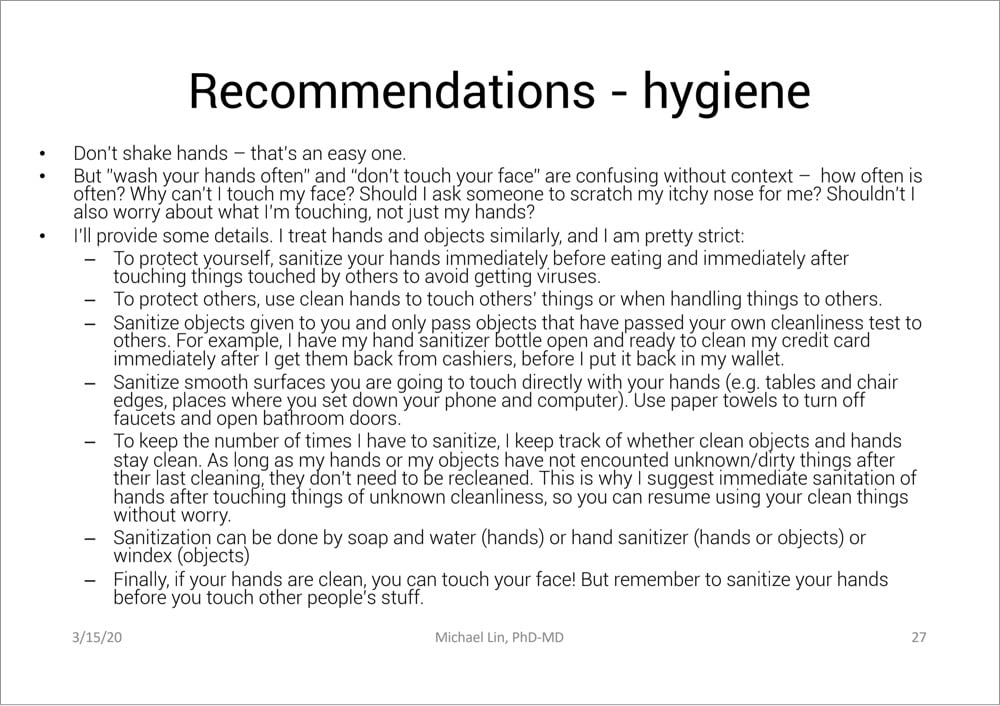
And here are a few other quotes I pulled out:
Compare to Spanish flu of 1917-1918: Cumulative infection rate 27%, IFR 2%. Spanish flu might have higher IFR than COVID-19, but medical care was much worse then (no ventilators, no drugs). In reality COVID-19 is likely the more severe disease. In any case, Spanish flu was devastating.
Large meetings that bring people from around the country are obviously a big risk. Large numbers of people who might breath the same air and touch the same things (e.g. at Biogen meeting, attendants used the same serving utensils at a buffet, and 70 got infected)
If you are young, the worry is more about transmitting virus to older people than about yourself.
Death rates will lag infection rates by 3-4 weeks (2 weeks from diagnosis but that’s 1 week from infection time on average with current testing practices)
Read Lin’s entire presentation here.
Social distancing has been recommended by epidemiologists and public health officials as a way to slow the spread of COVID-19, flatten the curve, and save lives. Avoiding rock concerts and sporting events is easy, but what about going to the grocery store or visiting with a friend? The Atlantic’s Kaitlyn Tiffany talked to a number of public health experts about The Dos and Don’ts of ‘Social Distancing’.
Q: Should I be avoiding bars and restaurants?
Cannuscio: People should avoid gathering in public places. People should be at home as much as possible. The measures that have worked to get transmission under control or at least to bend the curve, in China and South Korea, have been extreme measures to increase social distancing.
Q: Should I stop visiting elderly relatives?
Cannuscio: I think if we are fortunate enough to live near our elders and we get into the mode of seriously isolating our own families, then one person should be designated to go and visit. If we’re not in a situation where we can truly limit our own social contact, then we will be putting that elder at risk by going to visit.
In my estimation, the answers that Carolyn Cannuscio, of Penn’s Center for Public Health Initiatives, gives are the ones to follow. Dr. Asaf Bitton’s advice is even stricter:
2. No kid playdates, parties, sleepovers, or families/friends visiting each other’s houses and apartments.
This sounds extreme because it is. We are trying to create distance between family units and between individuals. It may be particularly uncomfortable for families with small children, kids with differential abilities or challenges, and for kids who simply love to play with their friends. But even if you choose only one friend to have over, you are creating new links and possibilities for the type of transmission that all of our school/work/public event closures are trying to prevent. The symptoms of coronavirus take four to five days to manifest themselves. Someone who comes over looking well can transmit the virus. Sharing food is particularly risky — I definitely do not recommend that people do so outside of their family.
They both rightly talk about how the early actions we take will end up having a big impact in limiting the damage. (Check out this video about epidemics & exponential growth if you haven’t already.) Singapore, Hong Kong, Taiwan, and other places were able to nip the epidemic in the bud in part because of aggressive social distancing practices.
According to an ongoing investigation at The Atlantic, the US has tested only about 14,000 people for COVID-19 so far (a stat CDC data seems to confirm). 14,000 out of 330 million people. Olga Khazan writes about the four main reasons why the US is so behind in testing for the virus.
Interviews with laboratory directors and public-health experts reveal a Fyre-Festival-like cascade of problems that have led to a dearth of tests at a time when America desperately needs them. The issues began with onerous requirements for the labs that make the tests, continued because of arcane hurdles that prevented researchers from getting the right supplies, and extended to a White House that seemed to lack cohesion in the pandemic’s early days. Getting out lots of tests for a new disease is a major logistical and scientific challenge, but it can be pulled off with the help of highly efficient, effective government leadership. In this case, such leadership didn’t appear to exist.
Here’s another take on the problem from a few days ago in the NY Times.
The US has bungled the situation so badly that a pair of Chinese foundations announced this morning that they were donating 500,000 testing kits and 1 million masks to the US. Last month in my Asian travelogue, I wrote that my main observation after spending three weeks in Asia was: “America is a rich country that feels like a poor country”. That we have to rely on foreign aid in situations like this is a good example of what I was referring to.
The number one recommendation on the list of protective measures for COVID-19 from both WHO and the CDC is to regularly wash your hands. The CDC in particular recommends hand-washing over using hand sanitizer.
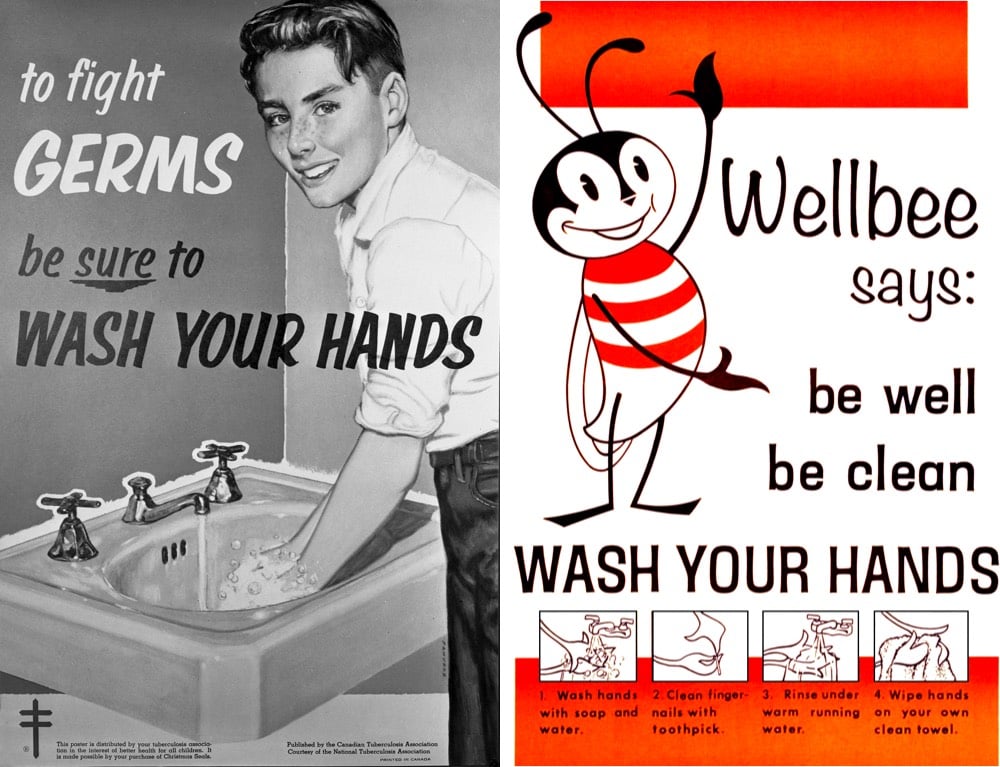
Vox recently talked with chemistry professor Palli Thordarson about why washing with soap is so effective when dealing with coronaviruses.
The soap takes care of the virus much like it takes care of the oil in the water. “It’s almost like a crowbar; it starts to pull all the things apart,” Thordarson says.
One side of the soap molecule (the one that’s attracted to fat and repelled by water) buries its way into the virus’s fat and protein shell. Fortunately, the chemical bonds holding the virus together aren’t very strong, so this intrusion is enough to break the virus’s coat. “You pull the virus apart, you make it soluble in water, and it disintegrates,” he says.
Then the harmless shards of virus get flushed down the drain. (And even if it the soap doesn’t destroy every virus, you’ll still rid them from your hands with soap and water, as well as any grease they may be clinging to.)
And why do you need to wash for 20 seconds? Because that gives soap time to do its work.
First off, your skin is wrinkly, and it takes time for soap to penetrate into all the tiny folds and demolish the viruses that lurk within. Then the soap needs a few moments to do its chemical work. “You do need a bit of time for all the soap to interact back and forth with the virus particle,” he says. Twenty seconds should do the trick just fine.
See also Why Soap Works from the NY Times, which explains why soap & water is better than hand sanitizer in these cases:
On the whole, hand sanitizers are not as reliable as soap. Sanitizers with at least 60 percent ethanol do act similarly, defeating bacteria and viruses by destabilizing their lipid membranes. But they cannot easily remove microorganisms from the skin. There are also viruses that do not depend on lipid membranes to infect cells, as well as bacteria that protect their delicate membranes with sturdy shields of protein and sugar. Examples include bacteria that can cause meningitis, pneumonia, diarrhea and skin infections, as well as the hepatitis A virus, poliovirus, rhinoviruses and adenoviruses (frequent causes of the common cold).
Update: Thordarson also wrote an article for The Guardian on how effective soap is at killing coronavirus.
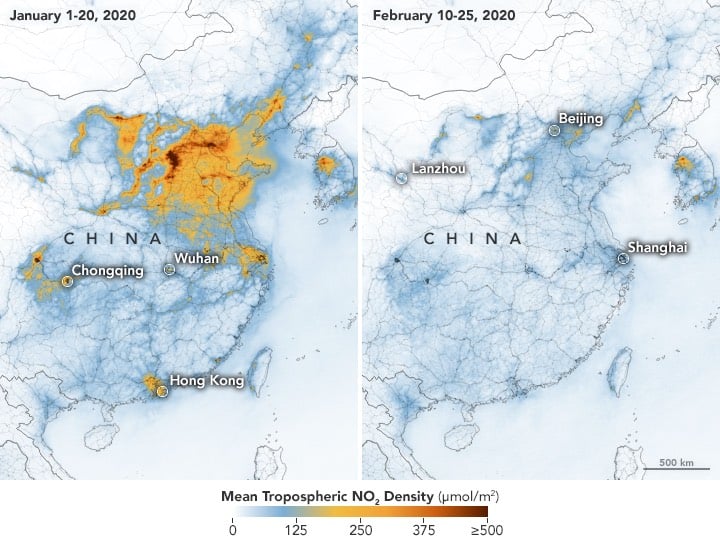
Stanford professor Marshall Burke, who does research on the social and economic impacts of environmental change, wrote a post about how the decrease in economic activity in China due to COVID-19 quarantine and other countermeasures resulted in a significant drop in air pollution, which Burke estimates will save more lives than deaths caused by COVID-19.
Putting these numbers together [see table below for details] yields some very large reductions in premature mortality. Using the He et al 2016 estimates of the impact of changes in PM on mortality, I calculate that having 2 months of 10ug/m3 reductions in PM2.5 likely has saved the lives of 4,000 kids under 5 and 73,000 adults over 70 in China. Using even more conservative estimates of 10% reduction in mortality per 10ug change, I estimate 1400 under-5 lives saved and 51700 over-70 lives saved. Even under these more conservative assumptions, the lives saved due to the pollution reductions are roughly 20x the number of lives that have been directly lost to the virus.
And his conclusion is not that viral pandemics are a net positive for the world (you will see people naively arguing this, siding a little too closely with a snapping Thanos for my comfort) but that situations like this remind us, as Burke summarized on Twitter: “the way our economies operate absent pandemics has massive hidden health costs”:
But it seems overall incorrect and foolhardy to conclude that pandemics are good for health — and again I emphasize that the effects calculated above are just the health benefits of the air pollution changes, and do not account for the many other short- or long-term negative consequences of social and economic disruption on health or other outcomes. But the calculation is perhaps a useful reminder of the often-hidden health consequences of the status quo, i.e. the substantial costs that our current way of doing things exacts on our health and livelihoods.
Graphic above via NASA.



The Valdivia Expedition, led by German marine biologist Carl Chun in 1898-1899, was the first time humans had explored the ocean depths below 500 fathoms. What they found changed our conception of the oceans. The results, in the form of 24 volumes of text and illustrations, took decades to be published. Among the volumes was The Cephalopoda, published in 1910 and filled with colorful hand-illustrated drawings of octopuses and squid, courtesy of the Biodiversity Heritage Library.
I found this on Brain Pickings, which identifies the illustrator as Friedrich Wilhelm Winter, a credit I couldn’t find in the actual book itself. They’re also selling some of the illustrations as prints, like this one of the octopus featured above.
There are certain links I’ve posted here that I think about more often than others. One that I think a lot about — weekly at least — is Emma Young’s story for Mosaic about Iceland’s very successful program that’s steered the nation’s teens away from drug and alcohol abuse. At the center of the Icelandic strategy is an insight by psychologist Harvey Milkman about a strategy of replacing substance and other unhealthy addictions with healthier natural highs:
At Metropolitan State College of Denver, Milkman was instrumental in developing the idea that people were getting addicted to changes in brain chemistry. Kids who were “active confronters” were after a rush — they’d get it by stealing hubcaps and radios and later cars, or through stimulant drugs. Alcohol also alters brain chemistry, of course. It’s a sedative but it sedates the brain’s control first, which can remove inhibitions and, in limited doses, reduce anxiety.
“People can get addicted to drink, cars, money, sex, calories, cocaine — whatever,” says Milkman. “The idea of behavioural addiction became our trademark.”
This idea spawned another: “Why not orchestrate a social movement around natural highs: around people getting high on their own brain chemistry — because it seems obvious to me that people want to change their consciousness — without the deleterious effects of drugs?”
BTW, this is a somewhat controversial view but it has always made sense to me for those with mild addictions or depression. Speaking strictly for myself, I’ve found that when healthier alternatives are available to me (spending time with family & friends, exercise, exploring, reading a good book), I spend a lot less time mindlessly doing things that give me the same sort of brain buzz but which I don’t consider positive or worthwhile (drinking alcohol, watching TV, eating poorly, and especially reloading Instagram over and over again like a lab rat slapping that lever to get more cocaine).
But back to Iceland. By giving teens access to more healthy activities, getting parents more involved in their children’s lives, implementing curfews, and administering annual surveys, the country has made great strides over the past two decades:
Today, Iceland tops the European table for the cleanest-living teens. The percentage of 15- and 16-year-olds who had been drunk in the previous month plummeted from 42 per cent in 1998 to 5 per cent in 2016. The percentage who have ever used cannabis is down from 17 per cent to 7 per cent. Those smoking cigarettes every day fell from 23 per cent to just 3 per cent.
The way the country has achieved this turnaround has been both radical and evidence-based, but it has relied a lot on what might be termed enforced common sense. “This is the most remarkably intense and profound study of stress in the lives of teenagers that I have ever seen,” says Milkman. “I’m just so impressed by how well it is working.”
Young did a follow-up last year about the expansion of the program into other areas of the world.
Even though larger animals like elephants and blue whales have up to 100 billion more cells than humans in their bodies — and therefore many more chances for harmful mutations to develop — they are much more immune to cancer. This is called Peto’s paradox the subject of Kurzgesagt’s latest video. Scientists aren’t sure why this happens, but one hypothesis is that in order to have grown so large, the evolutionary process that resulted in these animals provided built-in defenses against cancer that other animals didn’t need. Further reading on the topic is available here.
Universe Sandbox is a interactive space & gravity simulator that you can use to play God of your own universe.
You can create star systems: “Start with a star then add planets. Spruce it up with moons, rings, comets, or even a black hole.” You can collide planets and stars or simulate gravity: “N-body simulation at almost any speed using Newtonian mechanics.” You can model the Earth’s climate, make a star go supernova, or ride along on space missions or see historical events.
I found Universe Sandbox after watching this video about what would happen if the Earth got hit by a grain of sand going 99.9% the speed of light (spoiler: not much). This game/simulator/educational tool is only $30 but I fear that if I bought it, I would never ever leave the house again.
Ariel Waldman and her microscopes spent five weeks in Antarctica investigating the microbes that live in the seas, lakes, and glaciers. One of the outcomes of the trip is Life Under the Ice, a website that showcases some of the tiny critters, plants, and miscellaneous things she found.
Typically when we think about Antarctica, we think of a place that’s barren and lifeless… except for a few penguins. But Antarctica should instead be known as a polar oasis of life, host to countless creatures that are utterly fascinating. They’ve just been invisible to us — until now. Life Under the Ice enables anyone to delve into the microscopic world of Antarctica as an explorer; as if you had been shrunk down and were wading through one large petri dish of curiosities.
Ahhh, look at this tardigrade at 20X magnification:
The tardigrade was found while extremophile hunting on a glacier.
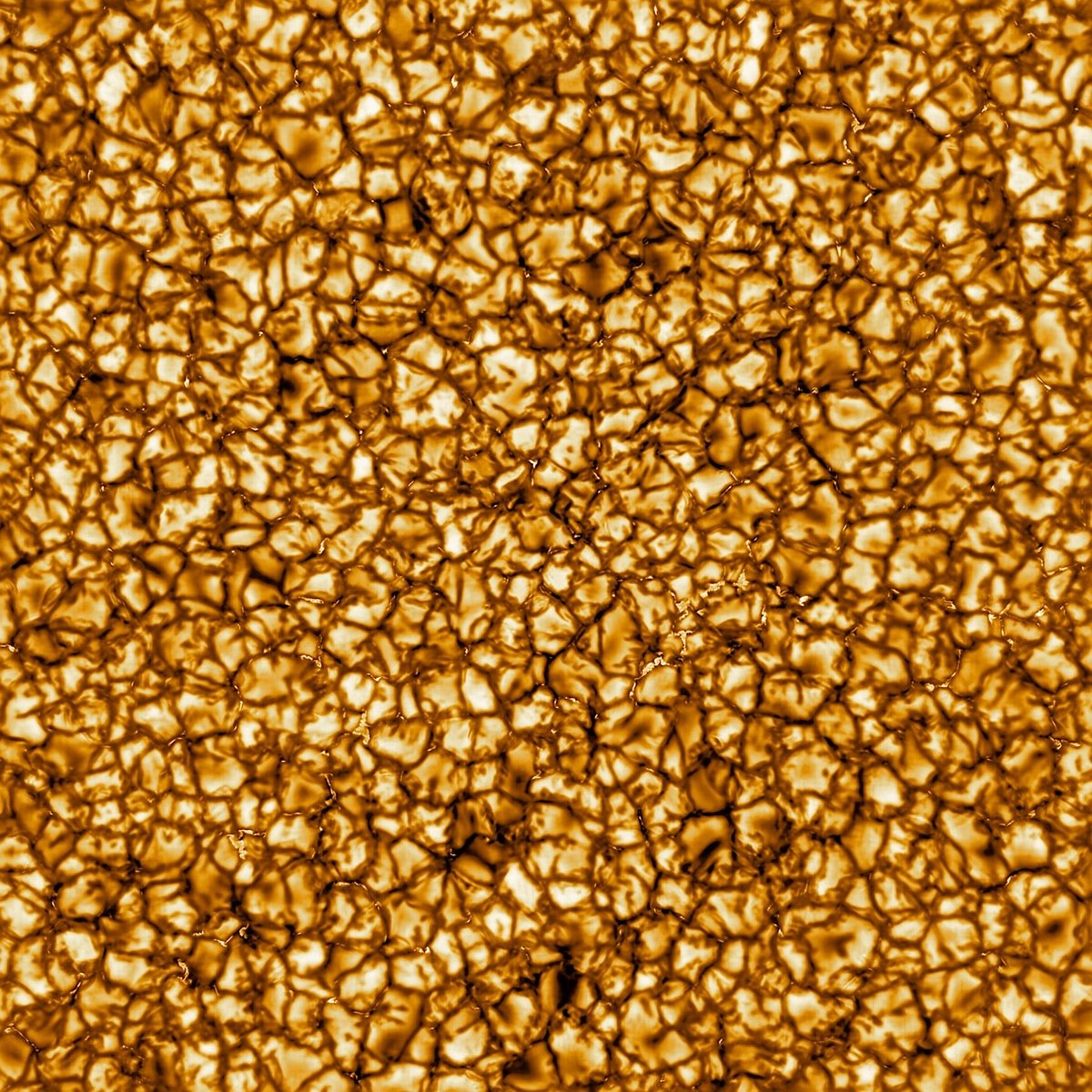
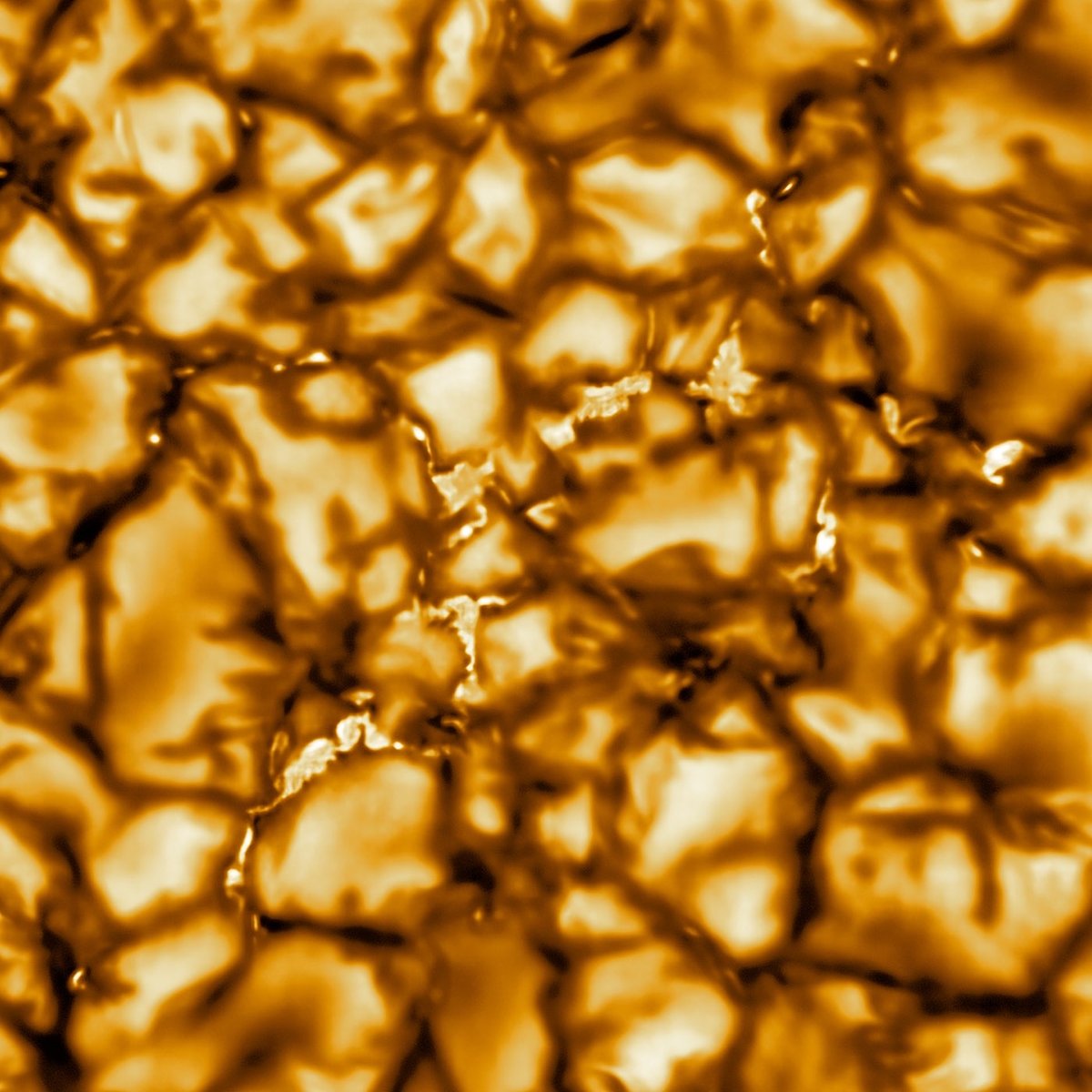
The National Science Foundation has just released the very first images of the Sun taken with the new Inouye Solar Telescope in Hawaii. They are the highest resolution images ever taken of the Sun’s surface, showing three times more detail than was possible using previous imaging techniques. Those cells you see in the image…they’re each about the size of Texas.
Building a telescope like this is not an easy task — there’s a lot of heat to deal with:
To achieve the proposed science, this telescope required important new approaches to its construction and engineering. Built by NSF’s National Solar Observatory and managed by AURA, the Inouye Solar Telescope combines a 13-foot (4-meter) mirror — the world’s largest for a solar telescope — with unparalleled viewing conditions at the 10,000-foot Haleakala summit.
Focusing 13 kilowatts of solar power generates enormous amounts of heat — heat that must be contained or removed. A specialized cooling system provides crucial heat protection for the telescope and its optics. More than seven miles of piping distribute coolant throughout the observatory, partially chilled by ice created on site during the night.
Scientists have released a pair of mesmerizing time lapse videos as well, showing ten minutes of the roiling surface of the Sun (wide angle followed by a close-up view) in just a few seconds:
The Daniel K. Inouye Solar Telescope has produced the highest resolution observations of the Sun’s surface ever taken. In this movie, taken at a wavelength of 705nm over a period of 10 minutes, we can see features as small as 30km (18 miles) in size for the first time ever. The movie shows the turbulent, “boiling” gas that covers the entire sun. The cell-like structures — each about the size of Texas — are the signature of violent motions that transport heat from the inside of the sun to its surface. Hot solar material (plasma) rises in the bright centers of “cells,” cools off and then sinks below the surface in dark lanes in a process known as convection. In these dark lanes we can also see the tiny, bright markers of magnetic fields. Never before seen to this clarity, these bright specks are thought to channel energy up into the outer layers of the solar atmosphere called the corona. These bright spots may be at the core of why the solar corona is more than a million degrees!
Man, I hope we get some longer versions of these time lapses — I would watch the hell out of one that ran for 10 minutes. (via moss & fog)
In this video from Wired’s 5 Levels series, NASA astronomer Varoujan Gorjian explains the concept of black holes to five different people, ranging from a five-year-old to a college student to a Caltech astrophysicist.
A research astronomer at NASA’s Jet Propulsion Laboratory, Grojian specializes in — and I’d just like to pause here to emphasize that this is the official title of his research group at JPL — the structure of the universe. Which means the guy not only knows about event horizons and gravitational lensing but stuff like tidal forces (what!), x-ray binaries (hey now!), and active galactic nuclei (oh my god!). Seriously, the guy’s knowledge of black holes is encyclopedic.
Gorjian lost me somewhere in the middle of his conversation with the grad student.
In this video, the visual effects artists at Corridor Crew help us visualize just how small atoms are and how large the universe is. For instance, if you imagine an atom being the size of a tennis ball, blood cells would be as large as a small town and a penny would be almost precisely the diameter of the Earth. This is like a deconstructed & remixed Powers of Ten. (via digg)
In this episode of Kurzgesagt, they’re talking about building engines powerful enough to move entire stars, dragging their solar systems along with them.
At some point we could encounter a star going supernova. Or a massive object passing by and showering earth with asteroids.
If something like this were to happen we would likely know thousands, if not millions of years in advance. But we still couldn’t do much about it.
Unless… we move our whole solar system out of the way.
Kurzgesagt did something interesting for this one. Instead of relying on already available sources, they commissioned physicist Matthew Caplan to write a paper about a novel stellar engine design, a massive contraption that could theoretically move the solar system a distance of 50 light years over 1 million years.
Stellar engines, megastructures used to control the motion of a star system, may be constructible by technologically advanced civilizations and used to avoid dangerous astrophysical events or transport a star system into proximity with another for colonization.
Is this the first scientific paper published in a peer-reviewed journal commissioned by a YouTube channel? The 2019 media landscape is wild.
Prompted by this Facebook post, I have been reading about astrophysicist Cecilia Payne-Gaposchkin, who should be more widely known than she is. From a piece last year in Cosmos:
Cecilia Payne, born on May 10, 1900, in Wendover, England, began her scientific career in 1919 with a scholarship to Cambridge University, where she studied physics. But in 1923 she received a fellowship to move to the United States and study astronomy at Harvard. Her 1925 thesis, Stellar Atmospheres, was described at the time by renowned Russian-American astronomer Otto Struve as “the most brilliant PhD thesis ever written in astronomy”.
In the January, 2015, Richard Williams of the American Physical Society, wrote: “By calculating the abundance of chemical elements from stellar spectra, her work began a revolution in astrophysics.”
Even though she completed her studies at Cambridge, she was not awarded a degree because the university did not give degrees to women. That’s when she decided to move to the US, where Harvard offered greater educational opportunities and a “collection of several hundred thousand glass photographs of the night sky” that Payne-Gaposchkin was uniquely qualified to analyze.
Miss Payne applied the new theories of atomic structure and quantum physics to her analysis of stellar spectra. No one at the Harvard Observatory had yet attempted such an investigation, as no one there possessed the necessary background. She, in contrast, had learned the complex architecture of the “Bohr atom” directly from Niels Bohr, winner of the 1922 Nobel Prize in physics. She had also followed the work of Indian physicist Meg Nad Saha of Calcutta, the first person to link the atom to the stars. Saha maintained that the line patterns in stellar spectra differed according to the temperatures of the stars. The hotter the star, the more readily the electrons of its atoms leaped to higher orbits. With sufficient heat, the outermost electrons broke free, leaving behind positively charged ions with altered spectral signatures.
Building on Saha’s base, with insights gained from a couple of her professors in England, Miss Payne selected specific spectral lines to examine. Then she estimated their intensities in hundreds of stellar spectra. Element by element she gauged, plotted, and calculated her way through the plates to take the temperatures of the stars.
Her groundbreaking work on spectra, laid out in her Ph.D thesis published when she was just 25, puts Payne-Gaposchkin in the same league as some other physics heavy hitters.
Her discovery of the true cosmic abundance of the elements profoundly changed what we know about the universe. The giants — Copernicus, Newton, and Einstein — each in his turn, brought a new view of the universe. Payne’s discovery of the cosmic abundance of the elements did no less.
Sometimes it doesn’t feel like cats are particularly domesticated, but as this PBS video explains, humans have actually domesticated cats two separate times, once in southwest Asia ~10,000 years ago and in Egypt ~3500 years ago. They were probably tamed by being around human settlements for the source of food. This is the commensal pathway to domestication, one of the three major pathways followed by most domesticated animals.
The commensal pathway was traveled by vertebrates that fed on refuse around human habitats or by animals that preyed on other animals drawn to human camps. Those animals established a commensal relationship with humans in which the animals benefited but the humans received no harm but little benefit. Those animals that were most capable of taking advantage of the resources associated with human camps would have been the tamer, less aggressive individuals with shorter fight or flight distances. Later, these animals developed closer social or economic bonds with humans that led to a domestic relationship.
Dogs were probably domesticated through this pathway as well — see Neil deGrasse Tyson’s explanation from Cosmos of how wolves evolved into dogs.
And I love any post about cats because it’s an excuse to revisit one of my favorite short talks ever, in which Kevin Slavin suggests that cats have had a hand in domesticating humans for the purpose of sharing funny cat videos online, thus spreading pro-cat propaganda across the globe.
Planetary scientist James O’Donoghue made this cool little visualization of the rotation speeds of the planets of the solar system. You can see Jupiter making one full rotation every ~10 hours, Earth & Mars about every 24 hours, and Venus rotating once every 243 days. He also did a version where all the planets rotate the same way (Venus & Uranus actually rotate the other way).
See also O’Donoghue’s visualizations of the speed of light that I posted back in January.

This is a photo of several ice crystal halos around the Sun taken by Michael Schneider in the Swiss Alps with an iPhone 11 Pro. It. Is. Absolutely. Stunning. I can barely write more than a few words here without stealing another peek at it. According to Schneider’s post (translated from German by Google), this display developed gradually as he waited for a friend as some icy fog and/or clouds were dissipating at the top of a Swiss ski resort and he was happy to capture it on his new phone.
Using this site on atmospheric optics, Mark McCaughrean helpfully annotated Schneider’s photo to identify all of the various halos on display:
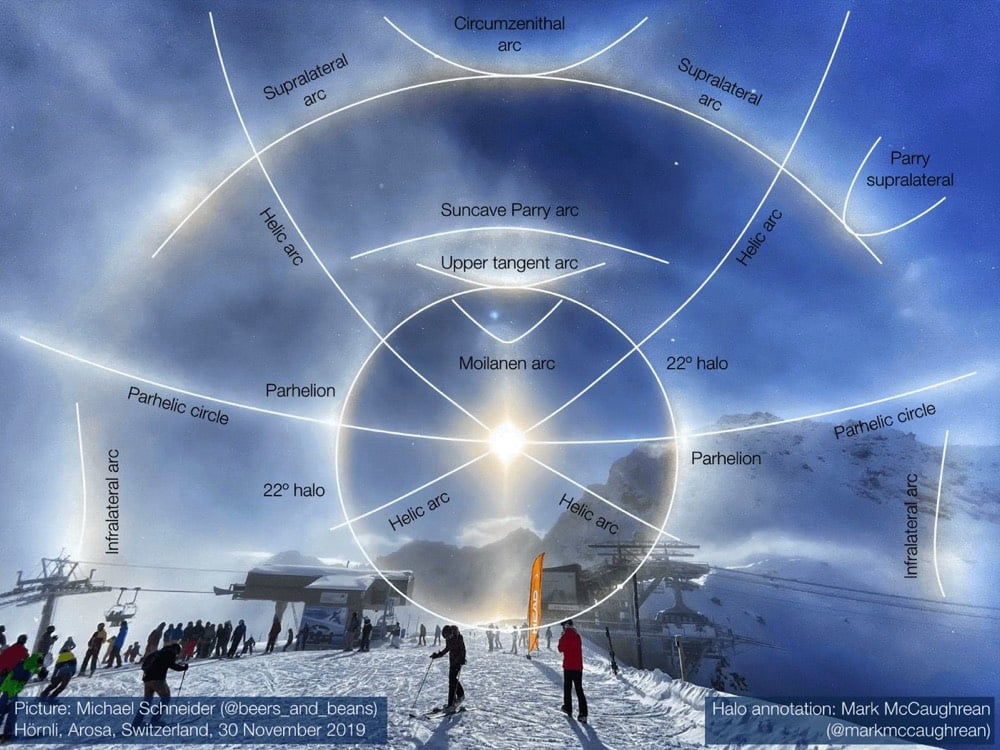
Displays like this are pretty rare, but Joshua Thomas captured a similar scene in New Mexico a few years ago and Gizmodo’s Mika McKinnon explained what was going on.
Ice halos happen when tiny crystals of ice are suspended in the sky. The crystals can be high up in cirrus clouds, or closer to the ground as diamond dust or ice fog. Like raindrops scatter light into rainbows, the crystals of ice can reflect and refract light, acting as mirrors or prisms depending on the shape of the crystal and the incident angle of the light. While the lower down ice only happens in cold climates, circus clouds are so high they’re freezing cold any time, anywhere in the world, so even people in the tropics mid-summer have a chance of seeing some of these phenomena.
Explaining the optics of these phenomena involves a lot of discussing angular distances.
So so so so cool.



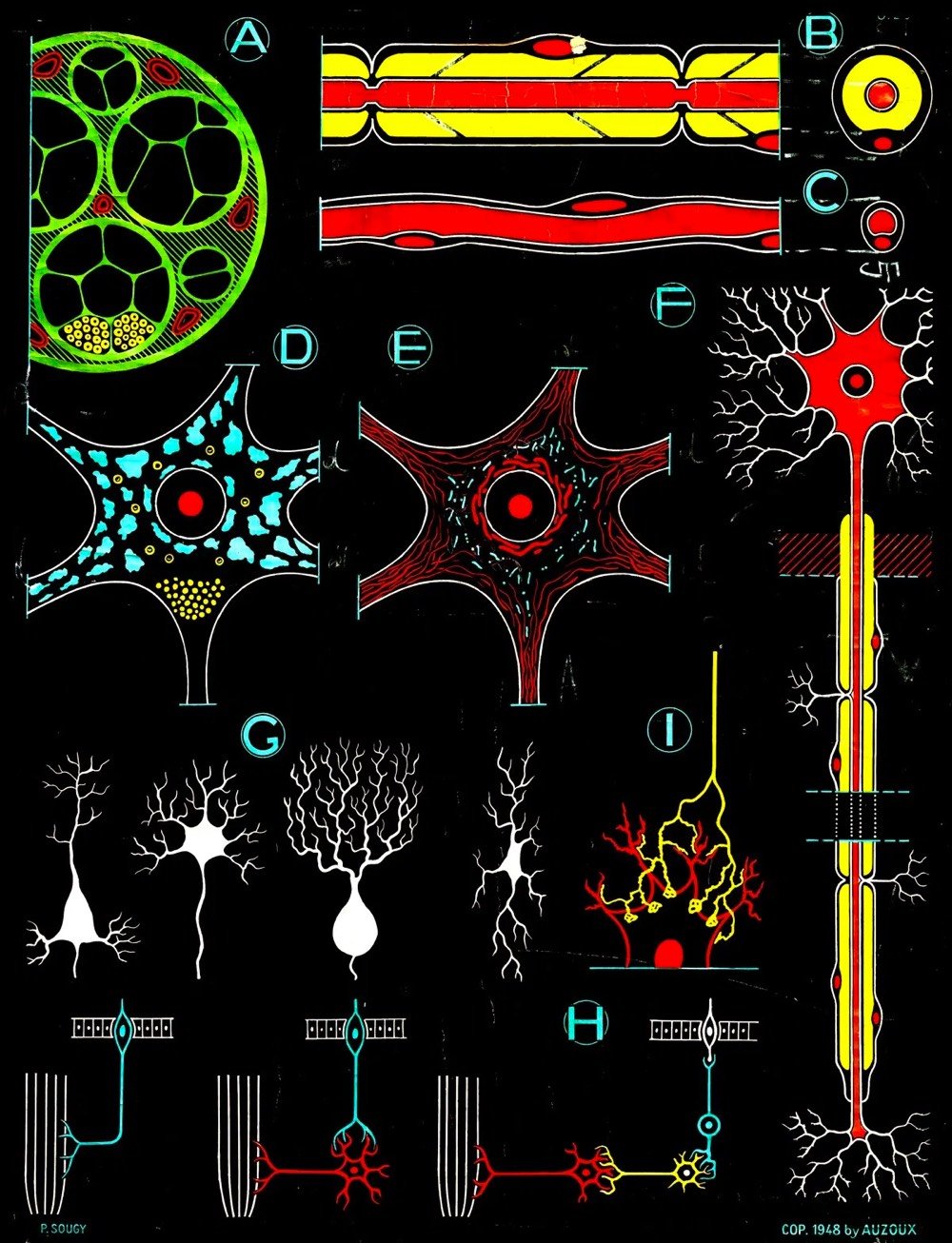
A flea market find by a friend spurred Maria Popova to rediscover and restore Paul Sougy’s mid-century educational illustrations of plants, animals, and the human body.
In the 1940s, Paul Sougy — a curator of natural history at the science museum of the French city of Orléans, and a gifted artist — was commissioned by the estate of the pioneering 18th-century French naturalist and anatomist Louis Thomas Jérôme Auzoux to create a series of illustrations based on Auzoux’s work, to be used in textbooks, workbooks, transparencies, and large-scale educational charts for classroom walls.
Lovely work. The restored illustrations are available as prints — just click on any of the images in the post or visit Popova’s Society6 shop. A portion of the proceeds go to benefit The Nature Conservancy.
As detailed in this Scientific American article by Erik Olsen, engineer and oceanographer Derya Akkaynak has devised an algorithm that “removes the water from underwater images” so that photos taken underwater have the color and clarity of photos taken in air. She calls the algorithm “Sea-thru”.
Sea-thru’s image analysis factors in the physics of light absorption and scattering in the atmosphere, compared with that in the ocean, where the particles that light interacts with are much larger. Then the program effectively reverses image distortion from water pixel by pixel, restoring lost colors.
One caveat is that the process requires distance information to work. Akkaynak takes numerous photographs of the same scene from various angles, which Sea-thru uses to estimate the distance between the camera and objects in the scene — and, in turn, the water’s light-attenuating impact. Luckily, many scientists already capture distance information in image data sets by using a process called photogrammetry, and Akkaynak says the program will readily work on those photographs.
The paper says the process “recovers color” and in the video above, Akkaynak notes that “it’s a physically accurate correction rather that a visually pleasing modification” that would be done manually in a program like Photoshop.
Newer posts
Older posts




Socials & More