kottke.org posts about science
As part of his True Facts series about the natural world, Ze Frank explains all about slime molds, which are super interesting! Slime molds can efficiently solve mazes, plan efficient train routes, adapt to changing conditions, and learn from each other.
See also many beautiful photos of slime molds.
Writing for The Atlantic, Sarah Zhang details how some people taking Ozempic for weight loss are reporting that the drug has also curbed their addictive impulses (to drink, to shop, to smoke).
Earlier this year, she began taking semaglutide, also known as Wegovy, after being prescribed the drug for weight loss. (Colloquially, it is often referred to as Ozempic, though that is technically just the brand name for semaglutide that is marketed for diabetes treatment.) Her food thoughts quieted down. She lost weight. But most surprisingly, she walked out of Target one day and realized her cart contained only the four things she came to buy. “I’ve never done that before,” she said. The desire to shop had slipped away. The desire to drink, extinguished once, did not rush in as a replacement either. For the first time — perhaps the first time in her whole life — all of her cravings and impulses were gone. It was like a switch had flipped in her brain.
Not everyone experiences these effects, but there’s enough anecdotal evidence at this point that scientists are interested and investigating.
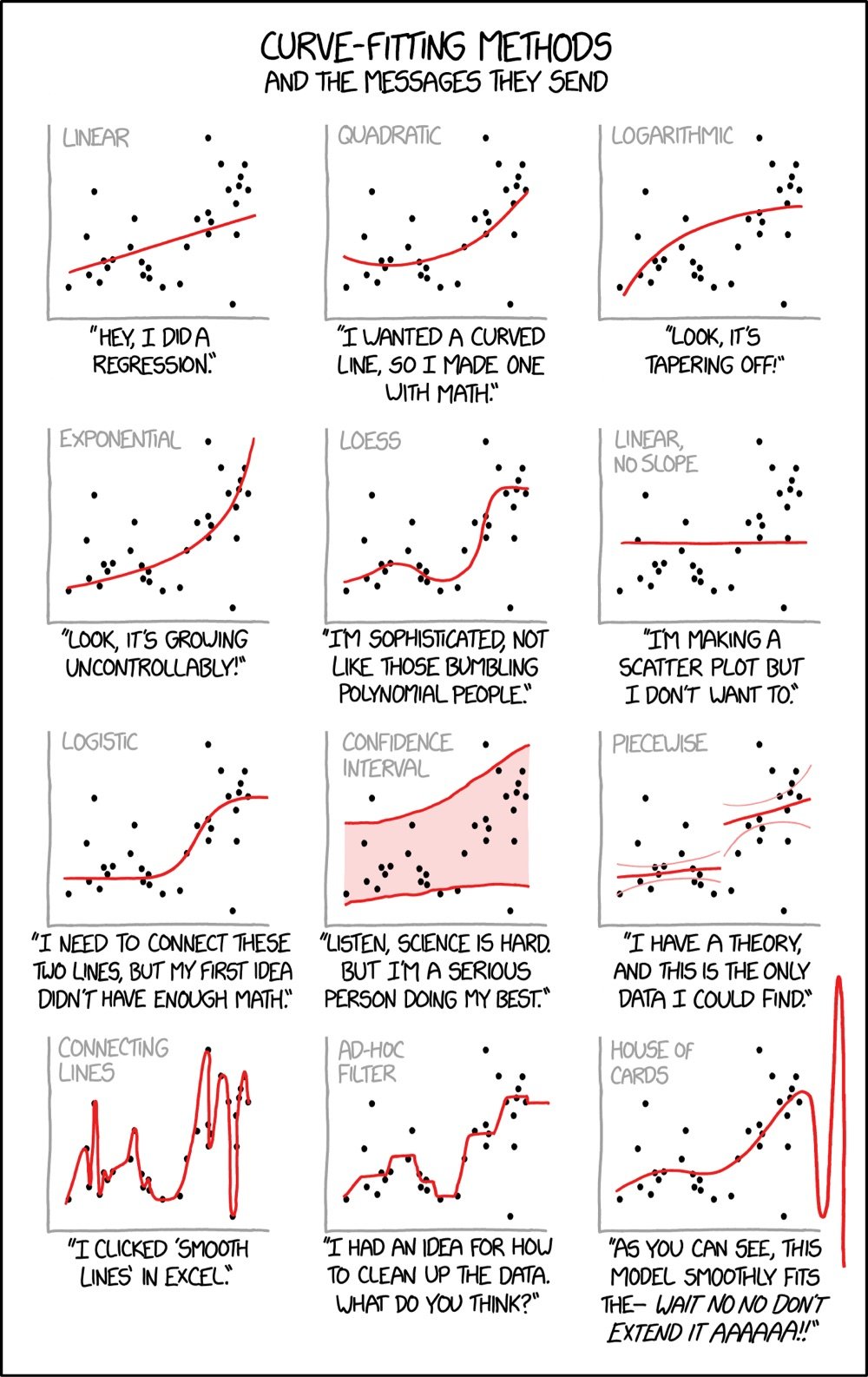
From XKCD, Curve-Fitting Methods and the Messages They Send. Ahhhh, this takes me back to my research days in college, tinkering with best fits and R-squared values…
From The Atlantic, 23 Pandemic Decisions That Actually Went Right, the result of interviews with more than a dozen pandemic experts.
17. Basic research spending matters. The COVID vaccines wouldn’t have been ready for the public nearly as quickly without a number of existing advances in immunology, Anthony Fauci, the former head of the National Institute of Allergy and Infectious Diseases, told us. Scientists had known for years that mRNA had immense potential as a delivery platform for vaccines, but before SARS-CoV-2 appeared, they hadn’t had quite the means or urgency to move the shots to market. And research into vaccines against other viruses, such as RSV and MERS, had already offered hints about the sorts of genetic modifications that might be needed to stabilize the coronavirus’s spike protein into a form that would marshal a strong, lasting immune response.
This short animation from NASA shows the sizes of some of the supermassive black holes that feature at the center of galaxies. Some are relatively small:
First up is 1601+3113, a dwarf galaxy hosting a black hole packed with the mass of 100,000 Suns. The matter is so compressed that even the black hole’s shadow is smaller than our Sun.
While others are much larger than the solar system…and this isn’t even the biggest one:
At the animation’s larger scale lies M87’s black hole, now with a updated mass of 5.4 billion Suns. Its shadow is so big that even a beam of light — traveling at 670 million mph (1 billion kph) — would take about two and a half days to cross it.
From Kurzgesagt, this video is a good overview of the arms race going on in all human bodies between cancer cells and the defenses developed by our immune systems over the years.
Somewhere in your body, your immune system just quietly killed one of your own cells, stopping it from becoming cancer, and saving your life. It does that all the time. The vast majority of cancer cells you develop will be killed without you ever noticing. Which is an incredibly hard job because of what cancer cells are: parts of yourself that start to behave as individuals even if it hurts you.
What is cancer and how does your body kill it all the time?
In this video in their ongoing series on the climate crisis and how to fix it, Vox looks at the pros and cons of solar geoengineering (aka using artificial means to reflect sunlight in order to cool the Earth).
The climate change crisis has become so dire that we’re being forced not only to think of ways to curb emissions and mitigate greenhouse gases, but of ways to adapt to our current situation to buy ourselves more time.
One of those technologies is called solar geoengineering. It happens in nature when huge volcanic eruptions cover the stratosphere with ash: That ash forms a layer that reflects sunlight and cools the planet underneath. Solar geoengineering takes advantage of that principle, using different scientific methods to make the planet more reflective overall. The problem is, deploying it would require messing with our very complicated climate on a massive scale, and many scientists don’t think the risks are worth it.
I saw this video on the front page a YouTube a couple of weeks ago and ignored it. Like, of course water can solve a maze, next! But then it got the Kid Should See This seal of approval so I gave it a shot. It turns out: water can solve a maze…but specifics are super interesting in several respects. Steve Mould, who you may remember from the assassin’s teapot video not too long ago, built four mazes of different sizes and shapes, each of them useful for demonstrating a different wrinkle in how the water moves through a maze. Recommended viewing for all ages.
From Kurzgesagt, an accessible explanation of what happens to the human body when you get sick.
Your brain activates sickness behavior and reorganizes your body’s priorities to defense. The first thing you notice is that your energy level drops and you get sleepy. You feel apathetic, often anxious or down and you lose your appetite. Your sensitivity to pain is heightened and you seek out rest. All of this serves to save your energy and reroute it into your immune response.
They also reveal the best way to boost your immune system to protect yourself against disease. I don’t want to spoil it but it’s vaccines. Vaccines are one of the best things humans have ever invented.
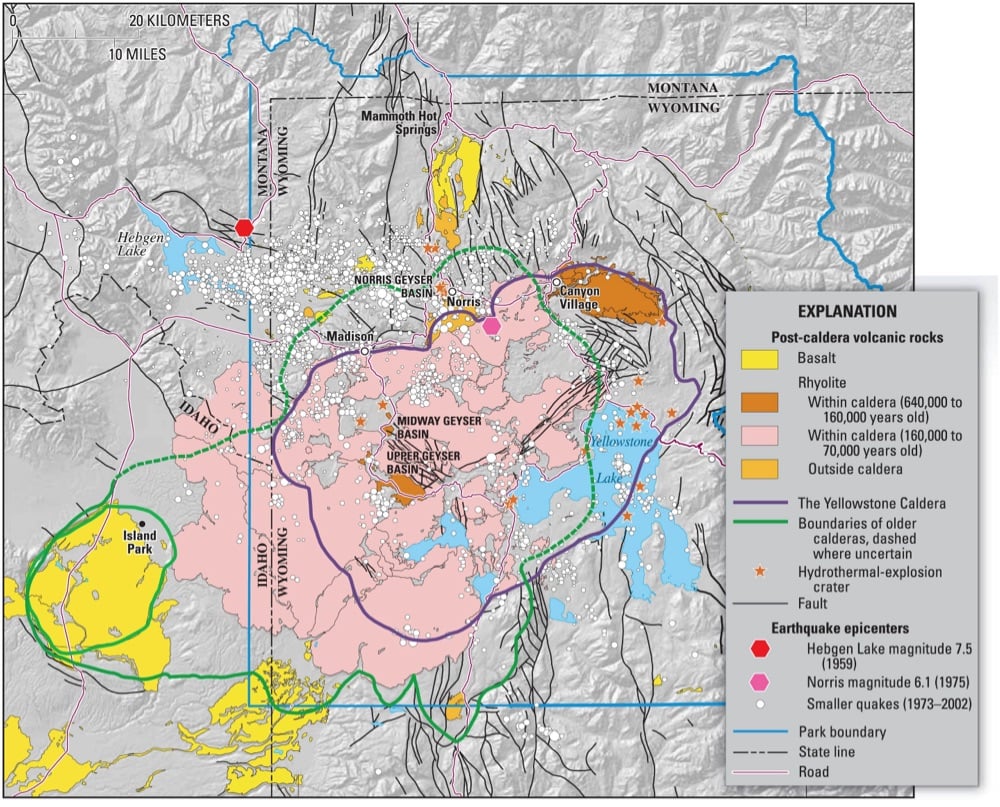
The first few sentences of the abstract for this paper from the scientific journal Renewable Energy contain a twist in the middle that’s worthy of M. Night Shyamalan:
The USA is confronted with three epic-size problems: (1) the need for production of energy on a scale that meets the current and future needs of the nation, (2) the need to confront the climate crisis head-on by only producing renewable, green energy, that is 100% emission-free, and (3) the need to forever forestall the eruption of the Yellowstone Supervolcano. This paper offers both a provable practical, novel solution, and a thought experiment, to simultaneously solve all of the above stated problems.
If you don’t know about the supervolcano lurking under Yellowstone National Park, now’s your chance to learn more. Here’s Bill Bryson from his book A Short History of Nearly Everything:
Yellowstone, it turns out, is a supervolcano. It sits on top of an enormous hot spot, a reservoir of molten rock that rises from at least 125 miles down in the Earth. The heat from the hot spot is what powers all of Yellowstone’s vents, geysers, hot springs, and popping mud pots. Beneath the surface is a magma chamber that is about forty-five miles across — roughly the same dimensions as the park — and about eight miles thick at its thickest point. Imagine a pile of TNT about the size of Rhode Island and reaching eight miles into the sky, to about the height of the highest cirrus clouds, and you have some idea of what visitors to Yellowstone are shuffling around on top of. The pressure that such a pool of magma exerts on the crust above has lifted Yellowstone and about three hundred miles of surrounding territory about 1,700 feet higher than they would otherwise be. If it blew, the cataclysm is pretty well beyond imagining. According to Professor Bill McGuire of University College London, “you wouldn’t be able to get within a thousand kilometers of it” while it was erupting. The consequences that followed would be even worse.
Back to the paper. The authors are proposing to generate massive amounts of energy from the supervolcano — “well over 11 Quadrillion Watt hours of electrical energy” per year:
Through a new copper-based engineering approach on an unprecedented scale, this paper proposes a safe means to draw up the mighty energy reserve of the Yellowstone Supervolcano from within the Earth, to superheat steam for spinning turbines at sufficient speed and on a sufficient scale, in order to power the entire USA. The proposed, single, multi-redundant facility utilizes the star topology in a grid array pattern to accomplish this. Over time, bleed-off of sufficient energy could potentially forestall this Supervolcano from ever erupting again.
I mean, this actually sounds like a great idea if it could be done safely, without ruining the park and, you know, accidentally blowing shit up. As of 2016, Iceland generated 65% of its energy from geothermal sources — the US could certainly stand to lean more on geothermal.
The assassin’s teapot is certainly an eye-catching name for pottery, but there’s also an interesting bit of physics going on here. The teapot in question has two separate chambers for holding liquid, and the flow out of the pot from each chamber can be controlled by covering or uncovering small holes located on the handle. So, as the legend goes, a would-be assassin could pour themselves a perfectly fine drink from one chamber and then pour a poisoned drink to their prey from the other chamber, just by discreetly covering and uncovering the proper holes with their fingers. As the video explains, the mechanism here has to do with surface tension and air pressure.
You can get your own assassin’s teapot right here.
In the last several months, semaglutide, a drug originally developed to help manage type 2 diabetes, has been in the news for its “breakthrough” weight loss abilities. This video from Vox is a good overview of what the drug does and the interest & controversy around it.
Both Ozempic and Wegovy, Ozempic’s counterpart approved specifically for weight loss by the FDA, are brand names of a drug called semaglutide. Semaglutide is one of several drugs that mimics a crucial digestive hormone called glucagon-like peptide 1, or GLP-1. It amplifies a process our bodies perform naturally.
GLP-1 is released in our intestines when we eat, and there are receptors for the hormone in cells all over the body. In the pancreas, GLP-1 promotes the production of insulin and suppresses the production of glucagon. This helps insulin-resistant bodies, like those with type 2 diabetes or obesity, manage blood sugar levels. In the stomach, GLP-1 slows gastric emptying, extending the feeling of being full. In the brain, GLP-1 suppresses appetite, which also promotes satiety and curbs hunger, so we eat less.
Jia Tolentino wrote a long piece about semaglutide for the New Yorker this week: Will Ozempic Change How We Think About Being Fat and Being Thin?
But, as I kept reminding Ozempic-curious friends, these medications were designed for chronic conditions, obesity and diabetes. For people who are dealing with those conditions, Ozempic appears to create a path toward a healthy relationship to food. For those who aren’t, it might function more like an injectable eating disorder. As the side effects make clear, it’s not a casual thing to drastically alter your body’s metabolic process, and there is no large-scale data about the safety of these drugs when taken by people who are mainly interested in treating another chronic condition, the desire to be thin.
Julia Belluz wrote a piece for Vox on Obesity in the age of Ozempic and Eric Topol wrote about The New Obesity Breakthrough Drugs.
Update: In the shuffle of the last few months, I’d missed reading Paul Ford’s piece about “the post-hunger age”, A New Drug Switched Off My Appetite. What’s Left?
I can see my anxiety mirrored in the wave of reactions starting to appear — op-eds, TV segments, people explaining why it’s good, actually, that the vast majority of those using this drug lose a quarter of their body weight. On social media, fat activists are pointing out that our lives were worthy even without this drug. The wave of opinion will not crest for years.
And that’s fair because this is new — not just the drug, but the idea of the drug. There’s no API or software to download, but this is nonetheless a technology that will reorder society. I have been the living embodiment of the deadly sin of gluttony, judged as greedy and weak since I was 10 years old-and now the sin is washed away. Baptism by injection. But I have no more virtue than I did a few months ago. I just prefer broccoli to gloopy chicken. Is this who I am?
Even outside the context of drugs, I find the tension between accepting who you are versus trying to change some behavior you find unappealing is challenging to navigate — it’s something that comes up in therapy a lot. (thx, anil)
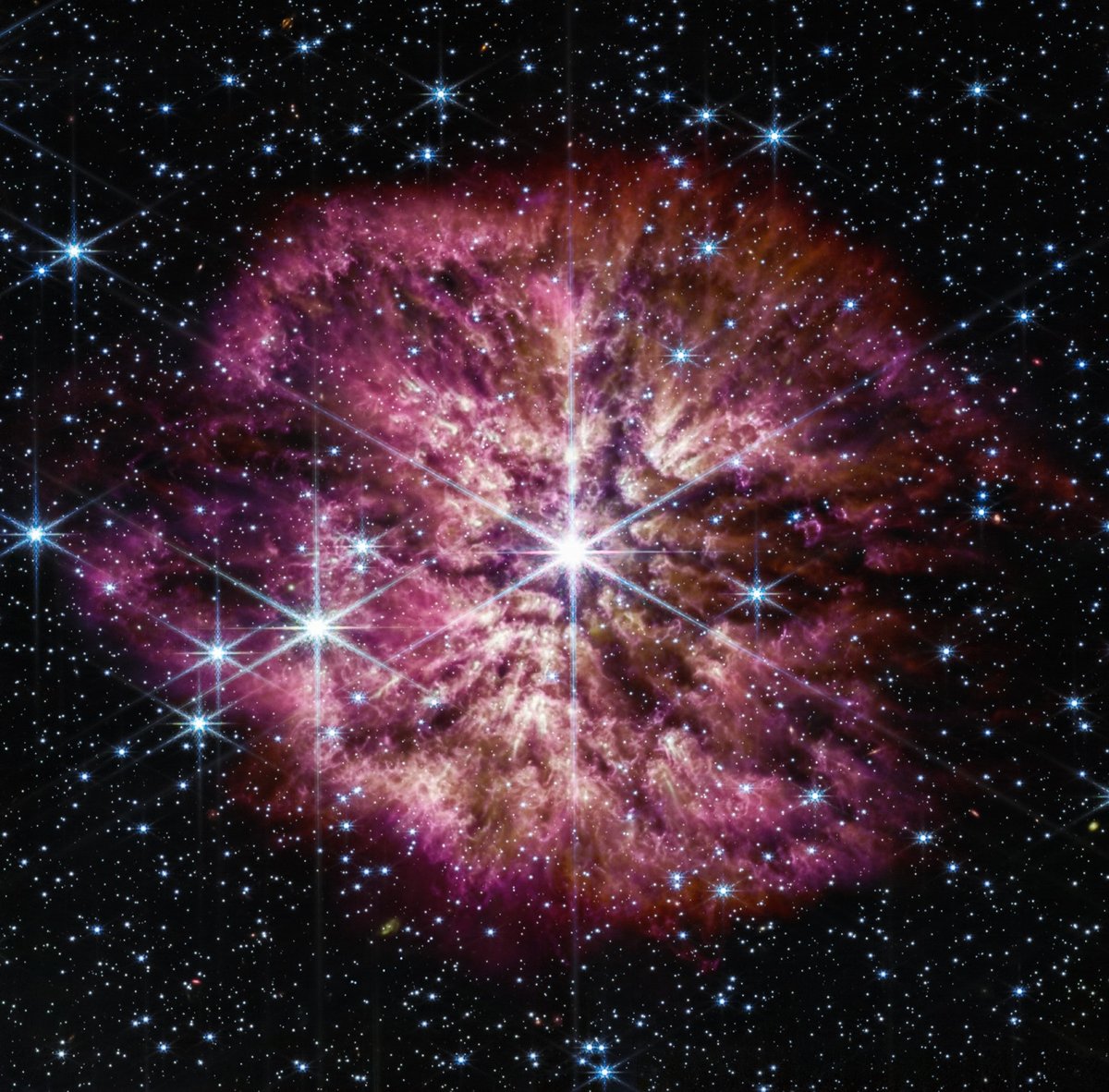
Folks, I told you that this was going to become a JWST fan blog and if you didn’t hear me the first time, consider yourself notified. NASA’s newest space telescope is still stretching its legs, but even back in its early days last summer, it captured this breathtaking near-infrared and mid-infrared image of a star preparing to go supernova.
The 10 light-years-wide nebula is made of material cast off from the aging star in random ejections, and from dust produced in the ensuing turbulence. This brilliant stage of mass loss precedes the star’s eventual supernova, when nuclear fusion in its core stops and the pressure of gravity causes it to collapse in on itself and then explode.
Images like these are useful for studying dust, which sounds a little boring but actually is fascinating (italics mine):
The origin of cosmic dust that can survive a supernova blast and contribute to the universe’s overall “dust budget” is of great interest to astronomers for multiple reasons. Dust is integral to the workings of the universe: It shelters forming stars, gathers together to help form planets, and serves as a platform for molecules to form and clump together — including the building blocks of life on Earth. Despite the many essential roles that dust plays, there is still more dust in the universe than astronomers’ current dust-formation theories can explain. The universe is operating with a dust budget surplus.
Currently imagining a sci-fi office dramedy about the dust budget surplus — someone over at HBO Max or Apple+ get on this.
If you live in any sort of winter climate, you have, at one time or another, wrestled with the two great mysteries of cold weather life:
1. Why does 50°F in the fall make you want to bundle up while 50°F in the spring makes you want to go for a walk in short sleeves?
2. Why the hell do kids wear shorts during the winter or go without coats when it’s literally freezing out? Like seriously, what the hell?
This short video answers both questions with one magical substance: brown fat.
55 degrees in the summer feels colder than 55 degrees in the winter. And 55 degrees as an adult likely feels colder than 55 degrees as a kid. But it’s not just a feeling. It all has to do with how our bodies use fat - specifically brown fat, a lesser-known type of fat that can produce roughly 300 times more heat than any other tissue in the body.
Brown fat isn’t the type of fat that adds to our weight (that’s white fat). Brown fat has the sole purpose of being burnt for heating the body, and it’s extremely effective at that. It only appears in specific parts of the body: around the neck, spine, heart, and kidneys. (It clumps around major blood vessels, in order to warm the blood as it passes through the body.)
In brief: 1. We have more brown fat in the spring, and 2. Kids have more brown fat in their bodies than adults. Cool! (har har)
You may have seen the online kerfuffle a few weeks ago about a study that was released recently that indicated that there was no evidence that masks work against respiratory illnesses (see Bret Stephen’s awful ideologically driven piece in the NY Times for instance). As many experts said at the time, that’s not what the review of the studies actually meant and the organization responsible recently apologized and clarified the review’s assertions.
In a typically well-argued and well-researched piece for the NY Times, Zeynep Tufekci explains what the review actually shows and why the science is clear that masks do work.
Scientists routinely use other kinds of data besides randomized reviews, including lab studies, natural experiments, real-life data and observational studies. All these should be taken into account to evaluate masks.
Lab studies, many of which were done during the pandemic, show that masks, particularly N95 respirators, can block viral particles. Linsey Marr, an aerosol scientist who has long studied airborne viral transmission, told me even cloth masks that fit well and use appropriate materials can help.
Real-life data can be complicated by variables that aren’t controlled for, but it’s worth examining even if studying it isn’t conclusive.
Japan, which emphasized wearing masks and mitigating airborne transmission, had a remarkably low death rate in 2020 even though it did not have any shutdowns and rarely tested and traced widely outside of clusters.
David Lazer, a political scientist at Northeastern University, calculated that before vaccines were available, U.S. states without mask mandates had 30 percent higher Covid death rates than those with mandates.
Randomized trials are difficult to do with masks and are not the only way to scientifically prove something. I’m hoping for an update that the entire premise of that Stephens piece is incorrect and will be removed from the Times’ website, but I don’t think it’s going to happen.
Newer posts
Older posts



Socials & More