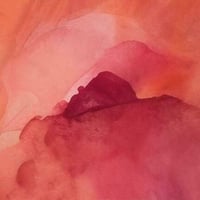
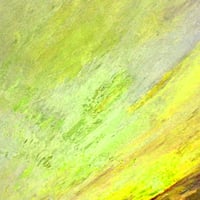

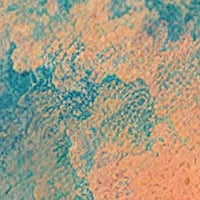
Ed Fairburn’s map portraits


Colossal notes that artist Ed Fairburn has produced a bunch of new work (previously). Love these.

This site is made possible by member support. 💞
Big thanks to Arcustech for hosting the site and offering amazing tech support.
When you buy through links on kottke.org, I may earn an affiliate commission. Thanks for supporting the site!
kottke.org. home of fine hypertext products since 1998.
Beloved by 86.47% of the web.
Colossal notes that artist Ed Fairburn has produced a bunch of new work (previously). Love these.
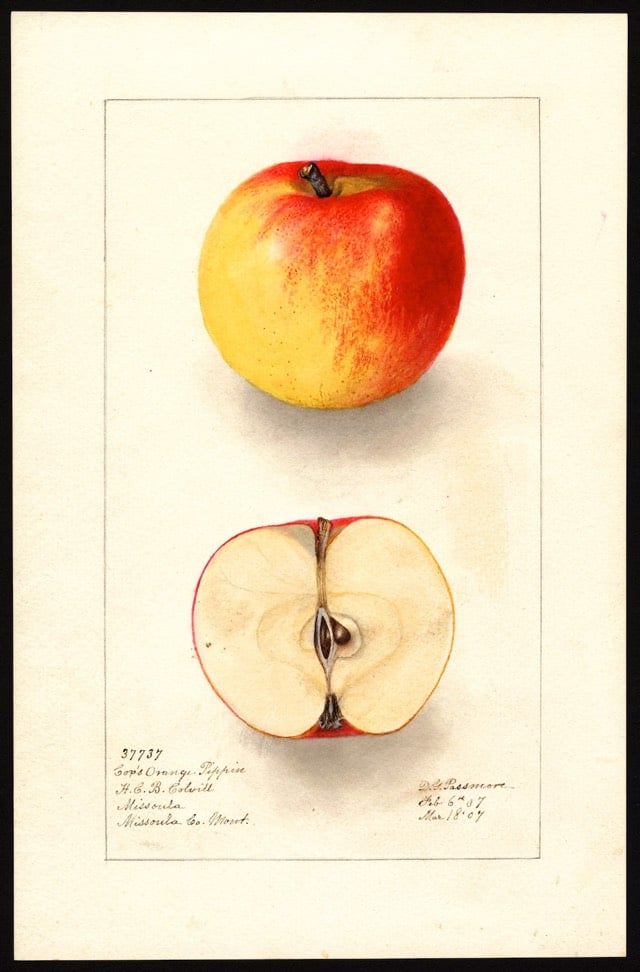
The U.S. Department of Agriculture’s National Agricultural Library contains around 3800 watercolor paintings, lithographs, and drawings of different apple varieties, most of which you will not find at the typical American grocery store. They also have another 3500 images of other fruits and nuts. (via slate)
Update: Until recently, the high-resolution images from this collection were not freely available to the public. After some agitation by Parker Higgins of the EFF, the Department of Agriculture decided to post high-res JPGs of each painting for free download. Higgins recently gave a talk about how it went down. This is a good example of the value of the public domain (and activists like Higgins)…without those images being available, neither Slate or I would have written about the collection, and who knows what someone who read them will do with that information. Maybe nothing! But maybe something cool! It’s worth putting it out there to find out…governments should be in the business of increasing the possibility space of their citizens. (via @stvnrlly)

Operating under the name of Zolloc, Hayden Zezula makes all sorts of cool, creepy, lovely, trippy animated GIFs. This one is my favorite. (via ignant)
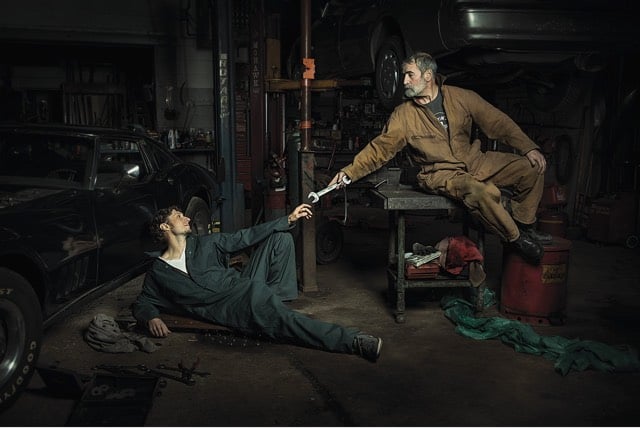
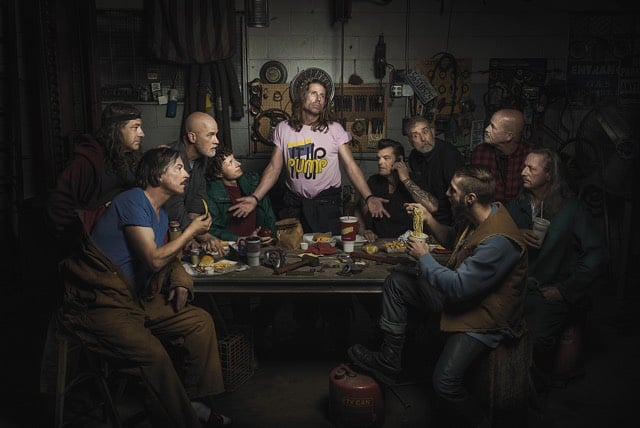
From photographer Freddy Fabris, The Renaissance Series, photographs of auto mechanics posed in the style of Renaissance paintings. (via colossal)
The Joy of Painting, hosted by Bob Ross, ran for 11 years on public television for a total of more than 400 episodes. The very first episode ever broadcast was just uploaded to Ross’ YouTube channel.
Gene Kogan used some neural network software written by Justin Johnson to transfer the style of paintings by 17 artists to a scene from Disney’s 1951 animated version of Alice in Wonderland. The artists include Sol Lewitt, Picasso, Munch, Georgia O’Keeffe, and van Gogh.
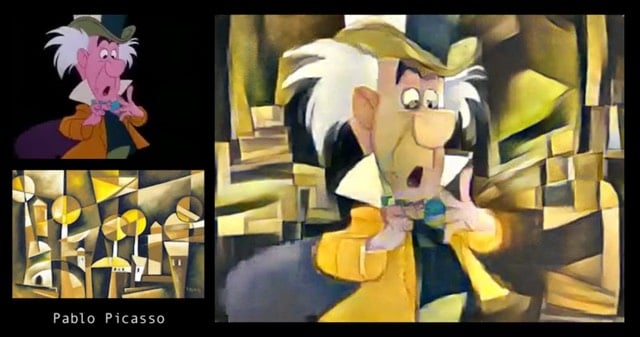
The effect works amazingly well, like if you took Alice in Wonderland and a MoMA catalog and put them in a blender. (via prosthetic knowledge)
From 1915, a short film of Claude Monet painting one of his series of Water Lilies paintings. Monet created about 250 oil paintings depicting the lilies and other flowers in his flower garden at Giverny.
Open Culture has posted a few other videos of old masters at work and at leisure, including Edgar Degas, Auguste Renoir, and Auguste Rodin.
The Nerdwriter takes on Children of Men, specifically what’s going in the background of Alfonso Cuarón’s film, both in terms of references to other works of art & culture and to things that push the plot along and contribute to the tone and message of the film.
[This is NSFW.] Artist Hilde Krohn Huse needed a minute or two of film of herself hanging naked upside down from a tree branch for a project she was working on. But when the rope tightened around her ankle too much, things went a little wrong.
My first thought was, “OK, you’ve fucked up, Hilde, but let’s try to get you out of this so nobody needs to know.” I hauled myself up, hand over hand, until I was swinging horizontally, just below the branch, and tried to yank my foot free.
It was hopeless. Righting myself, I put my free foot back on the ground to rest for a moment, then tried again, pulling myself up and fighting, puppet-like, against my bonds. My left foot, taking my weight in the lowest noose, started to spasm and I knew my strength wouldn’t hold out. But my pride was still uppermost — the idea of having to draw the attention of others to my humiliating plight still seemed unthinkable. I was losing strength, but full of adrenaline, my face dragging along the woodland floor, leaving me spitting twigs.
As any good artist would, Huse turned her ordeal into an art piece in the form of the 11 minutes of video shot before her camera shut off:
The eruption of Mount Tambora in Indonesia in 1815 was the most powerful volcanic eruption in recorded history. According to Tambora: The Eruption That Changed the World by Gillen D’Arcy Wood, the eruption affected the world’s weather for at least three years, inspired artists & writers, triggered famine, contributed to the world’s cholera epidemic, and altered economic systems all over the world.
Here, Gillen D’Arcy Wood traces Tambora’s global and historical reach: how the volcano’s three-year climate change regime initiated the first worldwide cholera pandemic, expanded opium markets in China, and plunged the United States into its first economic depression. Bringing the history of this planetary emergency to life, Tambora sheds light on the fragile interdependence of climate and human societies to offer a cautionary tale about the potential tragic impacts of drastic climate change in our own century.
William Broad reviewed the book recently for the NY Times.
The particles high in the atmosphere also produced spectacular sunsets, as detailed in the famous paintings of J.M.W. Turner, the English landscape pioneer. His vivid red skies, Dr. Wood remarked, “seem like an advertisement for the future of art.”
The story also comes alive in local dramas, none more important for literary history than the birth of Frankenstein’s monster and the human vampire. That happened on Lake Geneva in Switzerland, where some of the most famous names of English poetry had gone on a summer holiday.
The Tambora eruption must have also unleashed quite a racket, perhaps louder than Krakatoa’s loudest sound in the world.
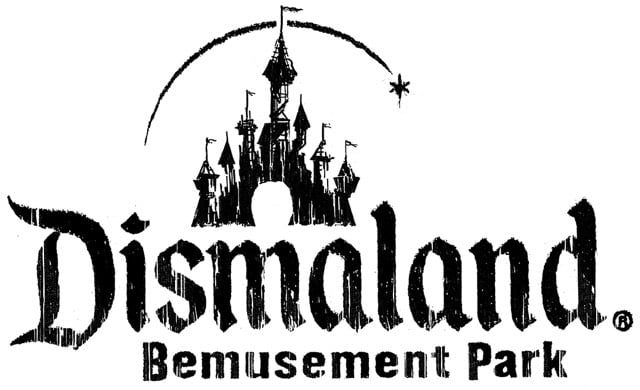
Banksy has opened an apocalyptic theme park called Dismaland in an abandoned resort in an English coastal town, Weston-super-Mare.
Are you looking for an alternative to the sugar-coated tedium of the average family day out? Or just somewhere a lot cheaper? Then this is the place for you. Bring the whole family to come and enjoy the latest addition to our chronic leisure surplus…
The entrance fee is £3 and the park will be open for five weeks. Colossal has the scoop, including a list of artists who contributed art to the park, er, show.
A demented assortment of bizarre and macabre artworks from no less than 50 artists from around the world including Damien Hirst, Bill Barminski, Caitlin Cherry, Polly Morgan, Josh Keyes, Mike Ross, David Shrigley, Bäst, and Espo. In addition, Banksy is showing 10 artworks of his own.
Colossal’s own Christopher Jobson curated the park’s short film program. Congrats! (Also, super jealous!)
Update: For a closer look at the park, check out the trailer:
Photographer Clayton Cubitt started a project in 2012 called Hysterical Literature. In each of the project’s resulting videos, a female participant is filmed from the waist up reading a story of her choosing while she is stimulated to orgasm with a vibrator by Cubitt’s partner, Katie James. His first subject was adult film star Stoya; her thoughts on the experience are here.
Vanity Fair recently sent writer Tony Bentley to participate in an HL session. Her reading choice? The Portrait of a Lady by Henry James.
With Katie now in position under the table, takeoff is imminent and the stakes are high: the sessions are a one-shot deal, no retakes, and no editing of the footage after the fact. It was not lost on me that a perfect triangulation between Clayton (auteur, cameraman), Katie (Hitachi artist), and me (the canvas) was in play, and it mirrored my internal mixture of curiosity, exhilaration, and stage fright. I couldn’t help wondering if this adventure qualified as having a threesome with two strangers. But soon enough such intellectualizing sexualizing was rendered naught.
“Rolling,” says Clayton, and everything instantly disappeared except the book in my hands and the words on the page. The world was out and I was on.
By the time I’d read two pages, I was struggling mightily to keep my countenance. “She spent half her time in thinking of beauty, bravery and mag-nan-nnn-im-im-ity…”
There’s no nudity in the videos, but you might still find them NSFW.
A painting of fruit done by Giovanni Stanchi sometime in the mid 1600s shows that the watermelon has changed somewhat in the intervening 350 years.

That’s because over time, we’ve bred watermelons to have the bright red color we recognize today. That fleshy interior is actually the watermelon’s placenta, which holds the seeds. Before it was fully domesticated, that placenta lacked the high amounts of lycopene that give it the red color. Through hundreds of years of domestication, we’ve modified smaller watermelons with a white interior into the larger, lycopene-loaded versions we know today.
(via @robinsloan)
I had no idea Ol’ Dirty Bastard and medieval paintings had something in common. One of ODB’s AKAs was also the reason why babies in medieval paintings looked like ugly middle-aged men: Big Baby Jesus.
I mean, this baby looks like he wants to tell you that a boat is just a money pit.
Artist Sam Van Aken is using grafting to create trees that bear 40 different kinds of fruit. National Geographic recently featured Van Aken’s Tree of 40 Fruit project:
The grafting process involves slicing a bit of a branch with a bud from a tree of one of the varieties and inserting it into a slit in a branch on the “working tree,” then wrapping the wound with tape until it heals and the bud starts to grow into a new branch. Over several years he adds slices of branches from other varieties to the working tree. In the spring the “Tree of 40 Fruit” has blossoms in many hues of pink and purple, and in the summer it begins to bear the fruits in sequence — Van Aken says it’s both a work of art and a time line of the varieties’ blossoming and fruiting. He’s created more than a dozen of the trees that have been planted at sites such as museums around the U.S., which he sees as a way to spread diversity on a small scale.
(via colossal)
Socials & More