kottke.org posts about art
Paul Cezanne’s The Large Bathers is the subject of the second video in The Nerdwriter’s series, Understanding Art. (The first was on Jacques-Louis David’s The Death of Socrates.)
The Large Bathers is part of a series of similar paintings by Cezanne. The one used in the video is housed at the Philadelphia Museum of Art:

Other pieces include those from (top to bottom) The National Gallery, The Art Institute of Chicago, and The Barnes Foundation:


The Met recently cleaned and repaired a 1660 painting by Charles Le Brun called Everhard Jabach and His Family. It took ten months of painstaking work, as this video shows:
Colossal has some before-and-after shots of the painting.
Lee John Phillips is attempting to draw every single item in his late grandfather’s tool shed.


You can follow his progress on Instagram.
Randall Rosenthal makes amazingly realistic wooden sculptures of everyday objects like newspapers, legal pads, baseball cards, and kitchen scenes. He carves each of his sculptures out of a single block of wood. So, this is carved entirely out of wood:

And so is this:

And this too:

And here’s a look at that last sculpture in progress:

(via @pieratt)
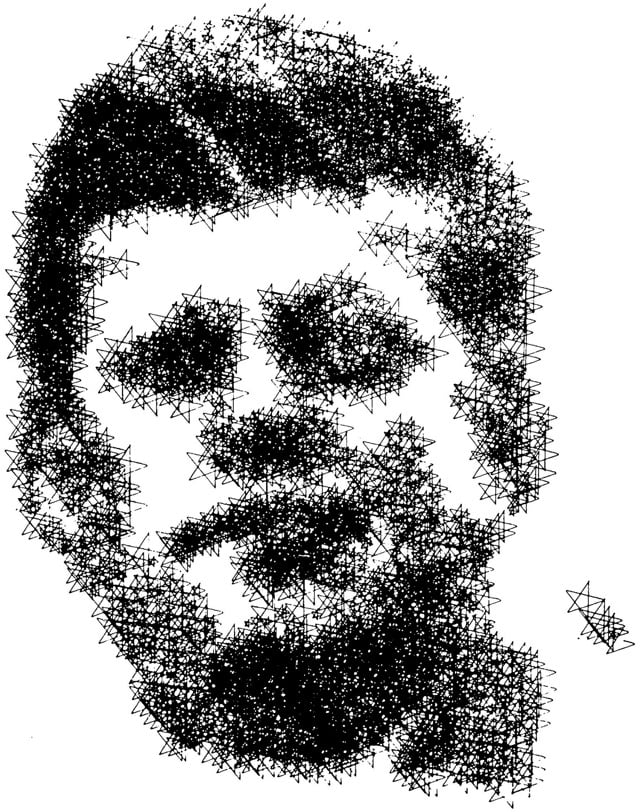
From the August 1968 issue of Computers and Automation magazine, the results of their Sixth Annual Computer Art Contest (flip to page 8).
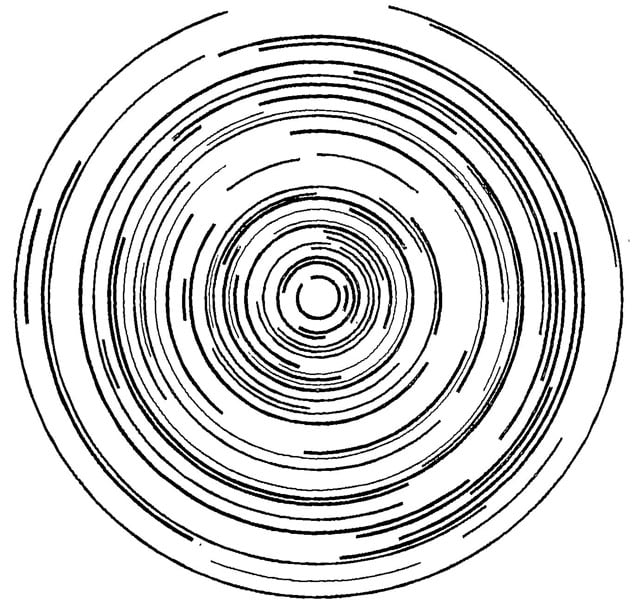
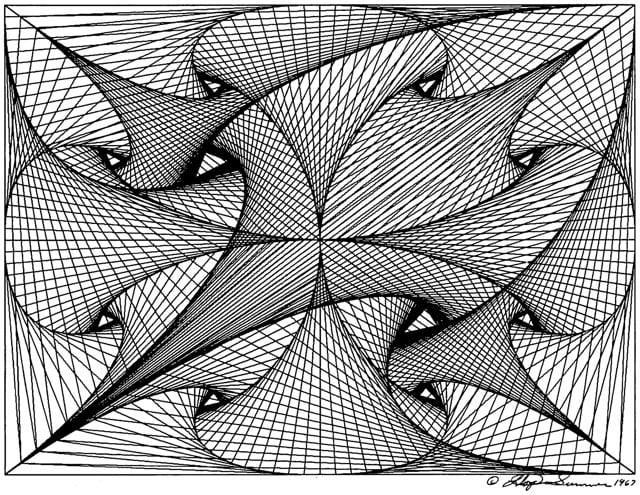
It’s also worth paging through the rest of the magazine just for the ads.
Update: Looks like The Verge saw this post and did a followup on the history of the Computer Art Contest.
In any given issue, Computers and Automation devoted equal time to the latest methods of database storage and grand questions about the future of their “great instrument,” but the Computer Art Contest was soon a regular event. A look back through old issues of the journal (available at Internet Archive) shows how the fledgling discipline of computer art rapidly evolved. At the time, computers were specialized tools, most commonly used by individuals working in research labs, academia, or the military — and this heritage shows. Both the first and second prizes for the inaugural 1963 competition went to designs generated at the same military lab.
The Venus de Milo’s arms are lost to history but that hasn’t stopped historians and scholars wondering what exactly she was doing with them when the statue was carved. In order to test out a theory that Venus was spinning thread, Virginia Postrel hired designer and artist Cosmo Wenman to construct a 3D model of Venus de Milo.


Artificial Killing Machine is an art installation that listens to a public database on US military drone strikes. When there’s a strike, a cap gun fires for every death.
This time based work accesses a public database on U.S. military drone strikes. When a drone strike occurs, the machine activates, and fires a children’s toy cap gun for every death that results. The raw information used by the installation is then printed. The materialized data is allowed to accumulate in perpetuity or until the life cycle of either the database or machine ends. A single chair is placed beneath the installation inviting the viewers to sit in the chair and experience the imagined existential risk.
The goal of the project is to breathe humanity back into data:
When individuals are represented purely as statistical data, they are stripped of their humanity and our connection to them is severed. Through the act of play and the force of imagination, this project aims to reconnect that which has been lost.
(via prosthetic knowledge)

MoMA has announced that they’ve acquired the Rainbow Flag for their permanent collection. The flag has been a symbol of the LGBT community around the world since its creation in 1978. As part of the acquisition, MoMA Curatorial Assistant Michelle Millar Fisher interviewed the man who designed the flag, artist Gilbert Baker.
And I thought, a flag is different than any other form of art. It’s not a painting, it’s not just cloth, it is not a just logo — it functions in so many different ways. I thought that we needed that kind of symbol, that we needed as a people something that everyone instantly understands. [The Rainbow Flag] doesn’t say the word “Gay,” and it doesn’t say “the United States” on the American flag but everyone knows visually what they mean. And that influence really came to me when I decided that we should have a flag, that a flag fit us as a symbol, that we are a people, a tribe if you will. And flags are about proclaiming power, so it’s very appropriate.
So the American flag was my introduction into that great big world of vexilography. But I didn’t really know that much about it. I was a big drag queen in 1970s San Francisco. I knew how to sew. I was in the right place at the right time to make the thing that we needed. It was necessary to have the Rainbow Flag because up until that we had the pink triangle from the Nazis — it was the symbol that they would use [to denote gay people]. It came from such a horrible place of murder and holocaust and Hitler. We needed something beautiful, something from us. The rainbow is so perfect because it really fits our diversity in terms of race, gender, ages, all of those things. Plus, it’s a natural flag — it’s from the sky! And even though the rainbow has been used in other ways in vexilography, this use has now far eclipsed any other use that it had…
Update: Baker died at his home on March 30, 2017. He was 65 years old.
Mr. Baker replicated his flag dozens of times over the years. He crafted a mile-long banner to parade down Fifth Avenue in Manhattan, and he sent flags around the world in support of gay rights protests. He sewed the rainbow flag used in the movie “Milk,” along with a new flag for this year’s television miniseries “When We Rise.”
“I remember the most fabulous queen I’d ever seen in my life shows up in sequins with a sewing machine in his arms, and he insisted on creating that flag exactly the same way he’d created it then,” said Dustin Lance Black, who wrote “Milk” and wrote and directed “When We Rise,” which was based on Jones’ memoir of the same name.
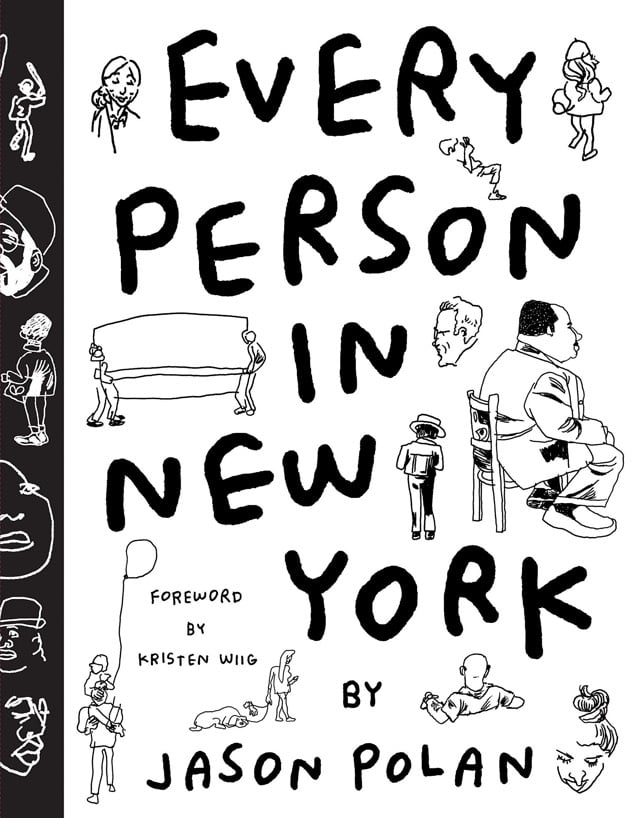
Jason Polan has turned his long-term project to draw each and every person in New York into a book coming out in August. As a long-time Polan fan, I’m looking forward to this.
Christoph Niemann’s Sunday Sketches are typically great, but this one from last Sunday really grabbed my attention:
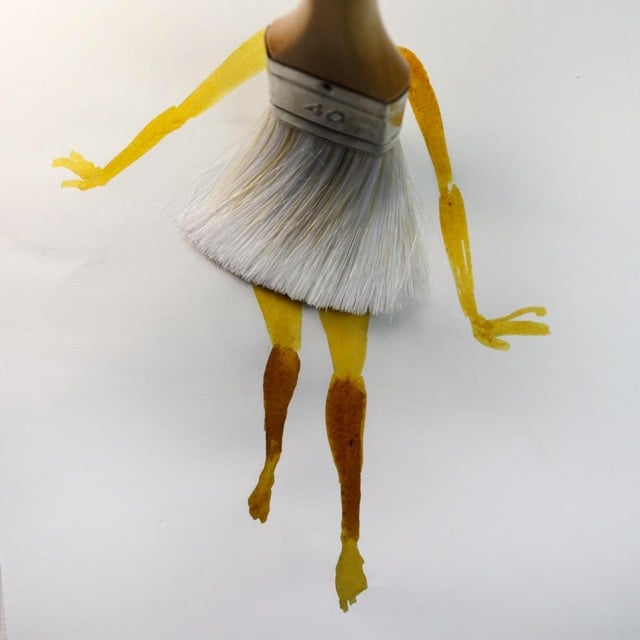
So good. I am also a sucker for this one:

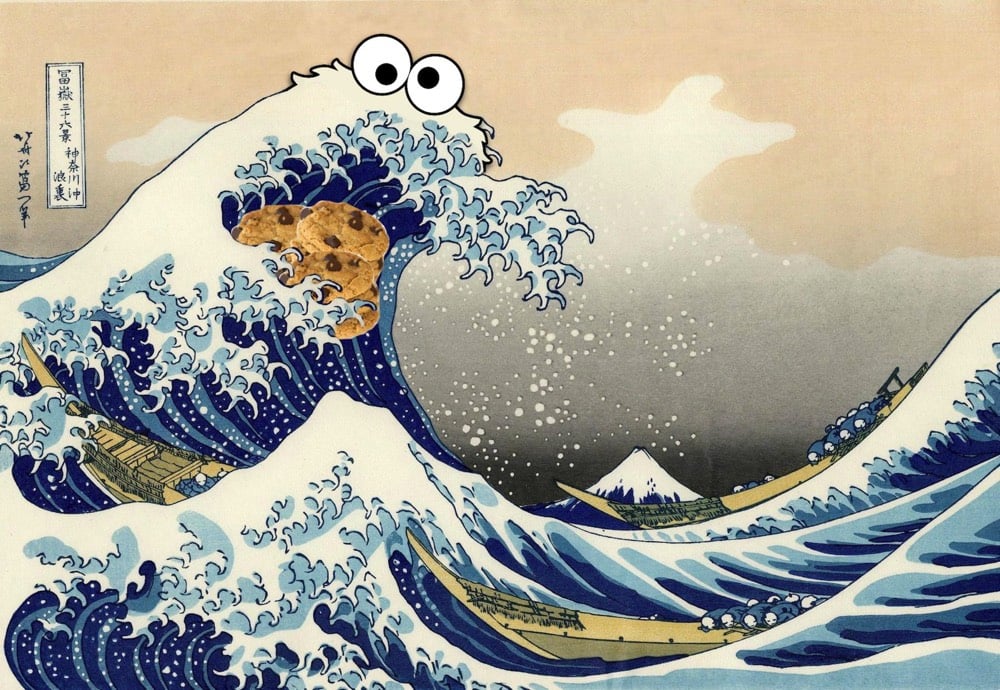
Magisterial. The Great Wave off Kanagawa by Katsushika Hokusai, modified by Reddit users Put_It_All_On_Red and photosonny. (via @craigmod)

Director and choreographer Wayne McGregor, artist Olafur Eliasson, music producer Jamie XX (new album!), and dancers from the Paris Opera Ballet are collaborating on a contemporary ballet performance based on Jonathan Safran Foer’s Tree of Codes.
Award-winning choreographer Wayne McGregor’s groundbreaking practice embraces dance, science, film, music, and technology to generate intriguing, expansive works. For Tree of Codes, McGregor is collaborating with artist Olafur Eliasson and producer/composer Jamie xx to create a contemporary ballet. Eliasson’s large-scale projects, including The New York City Waterfalls and The weather project at the Tate Modern, have captured the attention of audiences worldwide. Mercury Prize-winning Jamie xx blurs the boundaries between artist and audience in sonic environments like the one he created with his band, The xx, at the Armory in 2014.
Triggered by Jonathan Safran Foer’s Tree of Codes (an artwork in the form of a book which was in turn inspired by Street of Crocodiles by Bruno Schulz), this new, evening-length work features a company of soloists and dancers from the Paris Opera Ballet and Company Wayne McGregor.
Two performances are planned so far: at the Manchester International Festival (July 2-10) and the Park Avenue Armory (Sept 14-21). (thx, michelle)
Britney Wright takes photos of food arranged in size and color gradients.

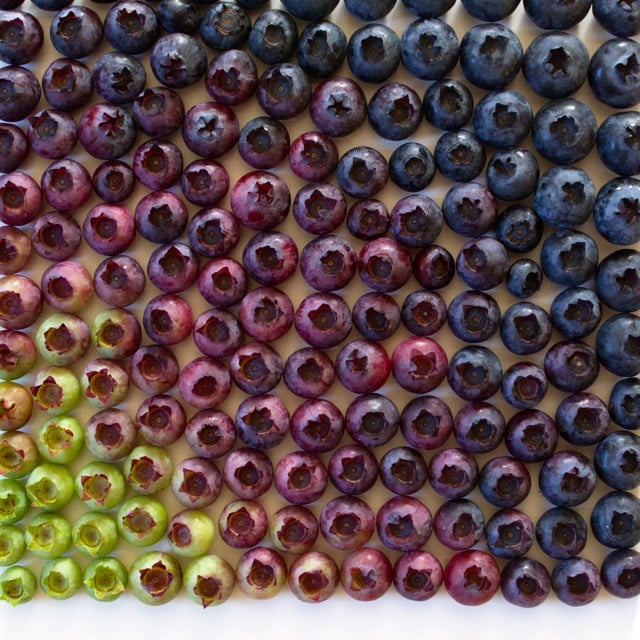
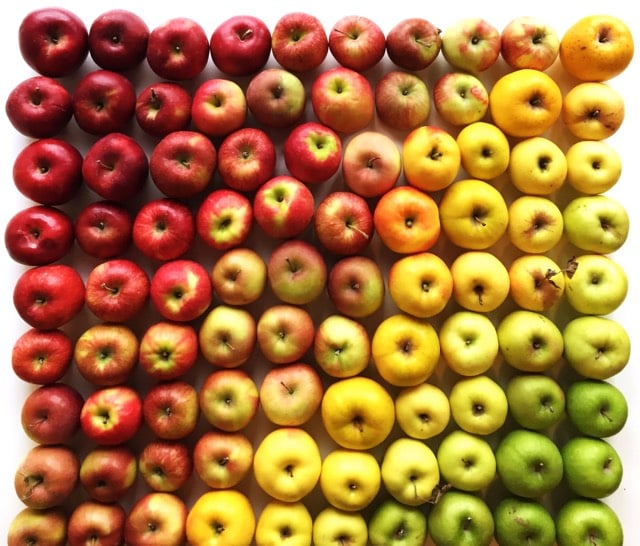
Follow Wright on Instagram and buy her prints.
From Sarah Urist Green of The Art Assignment (and former curator of contemporary art at the Indianapolis Museum of Art), The Case for Andy Warhol, in which Green discusses Warhol’s importance as an artist.
Like Jay Z but far earlier, he understood that to be an artist in a market economy meant not being “a businessman” but being “a business, man”. And he turned himself into a globally recognized brand.
Alexey Kondakov takes figures from classical paintings, places them in contemporary scenes, and posts the results on Facebook. Think of cherubs riding the subway, that sort of thing.
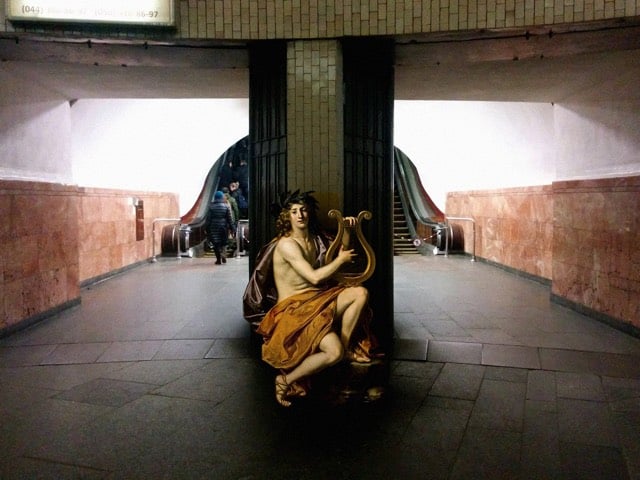
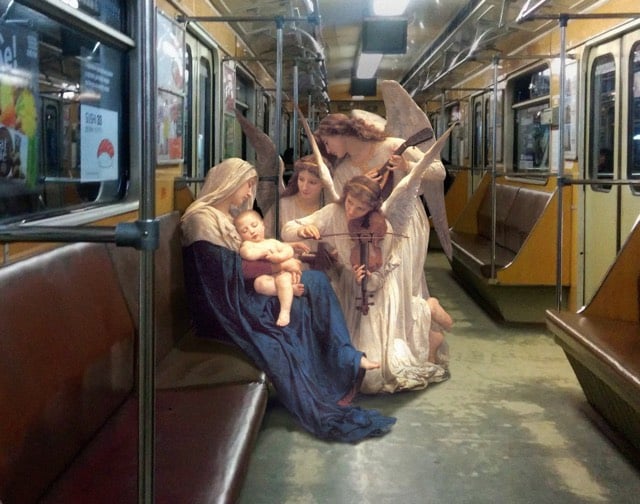
(via colossal)
Newer posts
Older posts



Socials & More