kottke.org posts about art
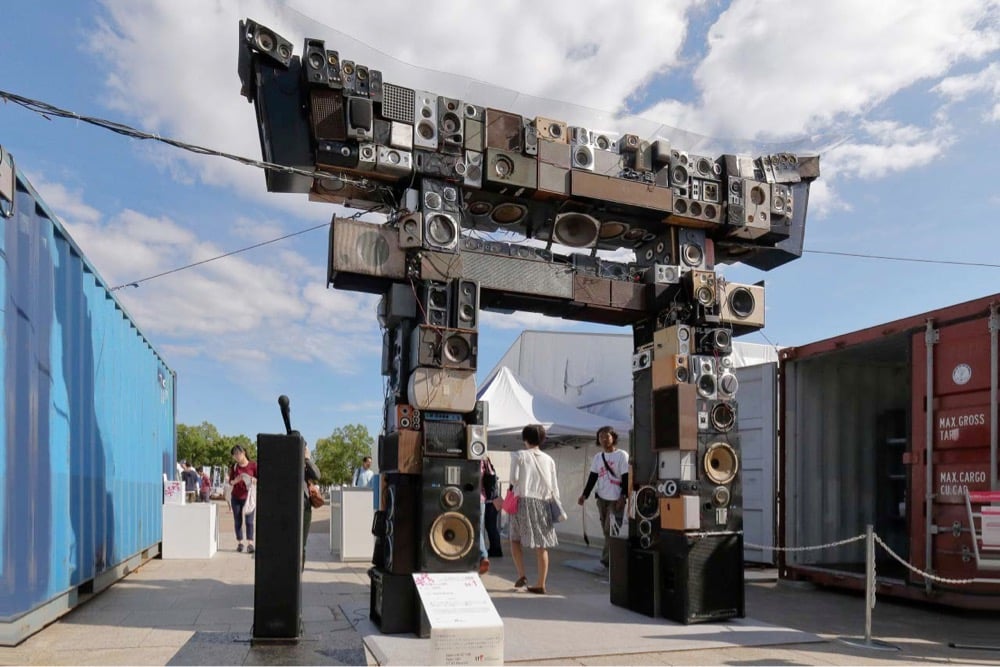
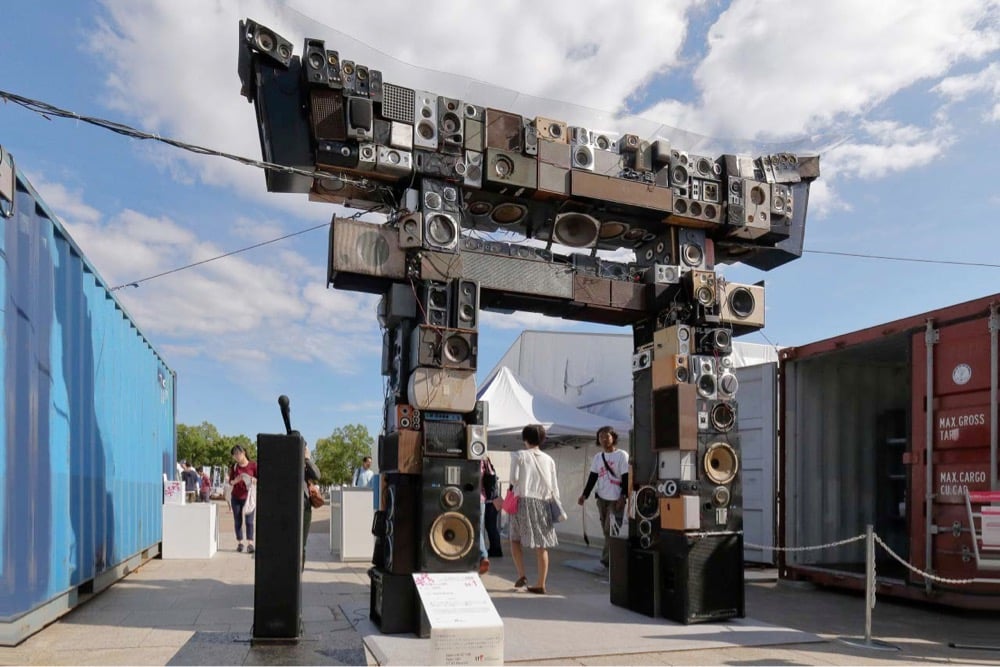
For the Kobe Biennale held in Kobe, Japan in 2016, sculptor Benoît Maubrey created a traditional Japanese torii gate out of speakers and a bunch of inputs (Bluetooth, line-in, even an 8-track). Using microphones or their phones, passersby could connect to the torii to play music or sounds, talk to each other over the mics, or sing karaoke. The structure was later relocated to Kamiyama. Maubrey has made several similar artworks; here’s what he says about his work:
Artistically I use loudspeakers much in the same way that a sculptor uses clay or wood: as a modern medium to create monumental artworks with the added attraction that they can make the air vibrate (“sound”) around them and create a public “hotspot”.
The audio part of my sculptures is also site-specific and flexible: in all my work the sound level is controllable and the interactivity is regulated via a mixing board (a bell tower or pendulum clock also make sound).
Participation: according to the sculpture site and purpose my sculptures can be equipped with a microphone (self expression), Bluetooth receivers (individuals can play their own tunes music), telephone answering machines (people can call and express themselves Live), radio receivers (for low-level cosmic white noise that sound like whispering pines), and “audio” twitter that allows people to send phonic messages. In some cases the whole system can be used as a PA system for announcements, concerts, open mike sessions, and DJ events.
The set design of The Andy Griffith Show is perhaps an odd place to start when talking about 19th century French painter Jean-François Millet, but this video hits its stride when Salvador Dali enters the picture. After viewing, you can read more about Millet’s painting The Angelus.
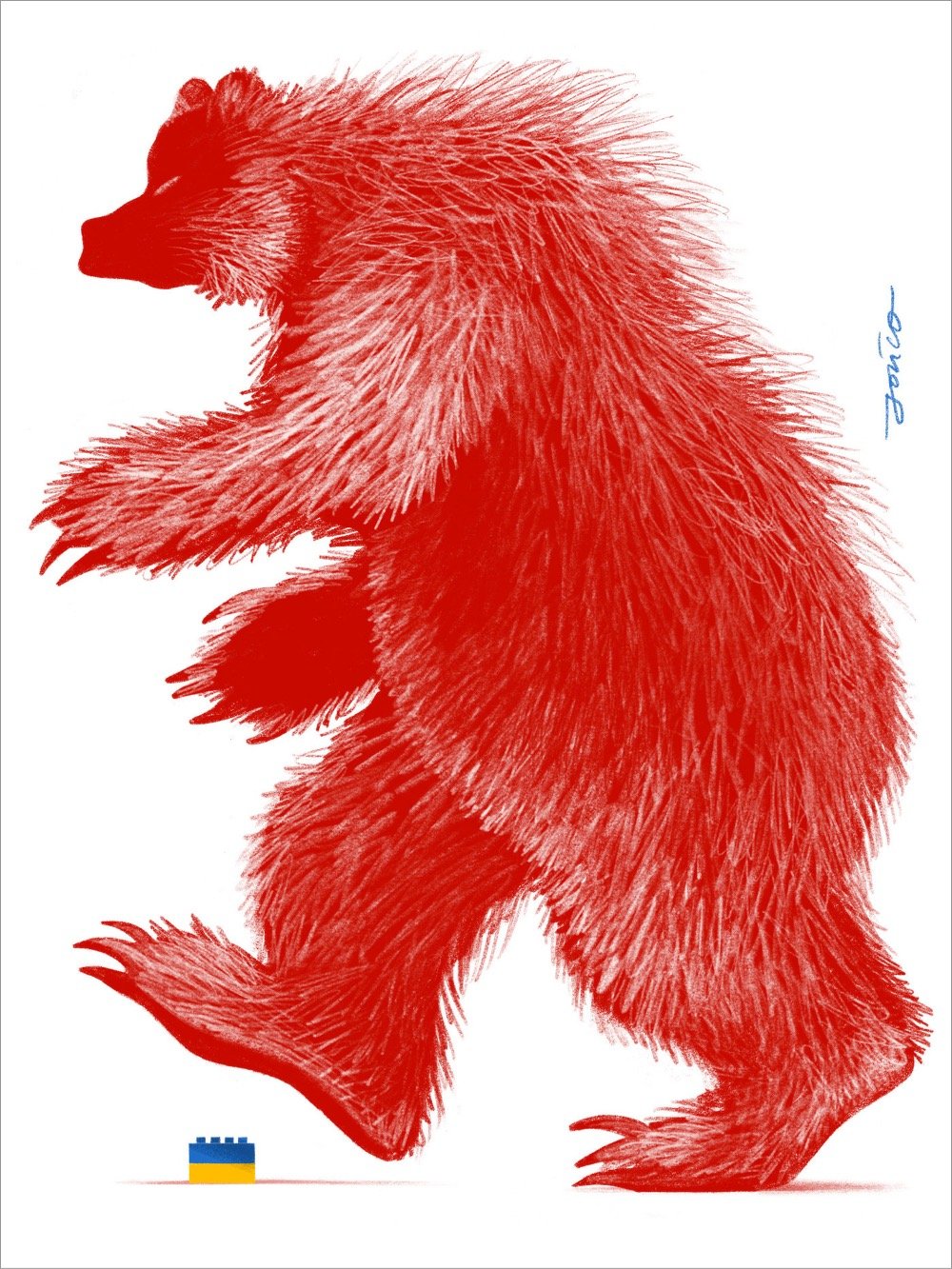
An absolutely fantastic poster by Polish illustrator Paweł Jońca of a giant red Russian bear about to step on a small Ukrainian flag made of Lego bricks. A printable digital download of this poster is available “by paying ANY amount” with all proceeds going to humanitarian aid for Ukraine (specifically to Polska Akcja Humanitarna).
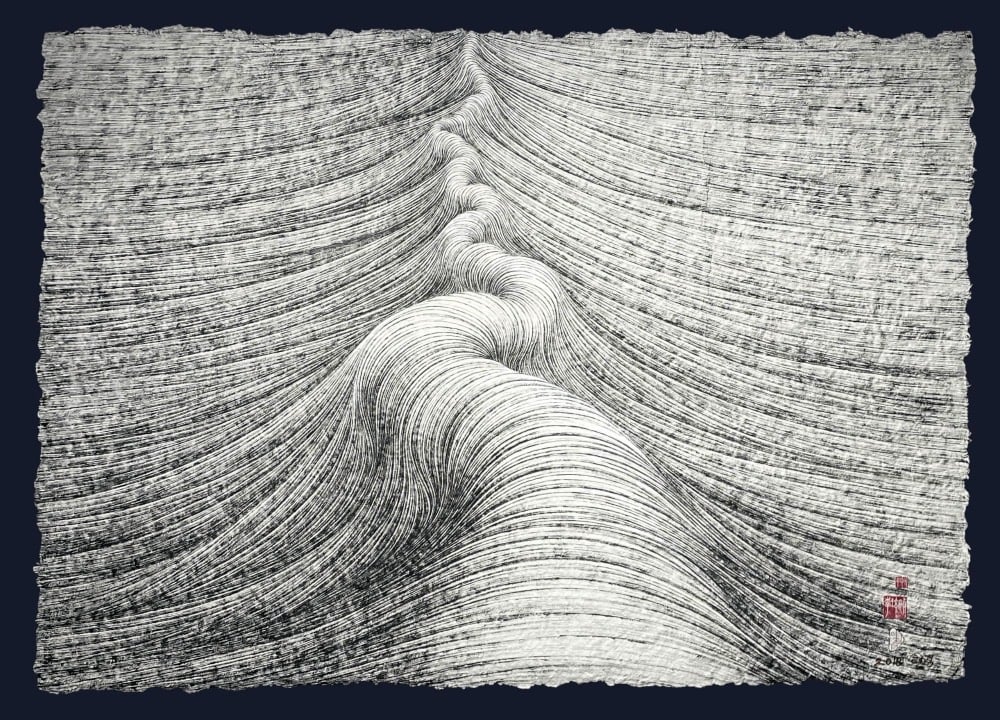
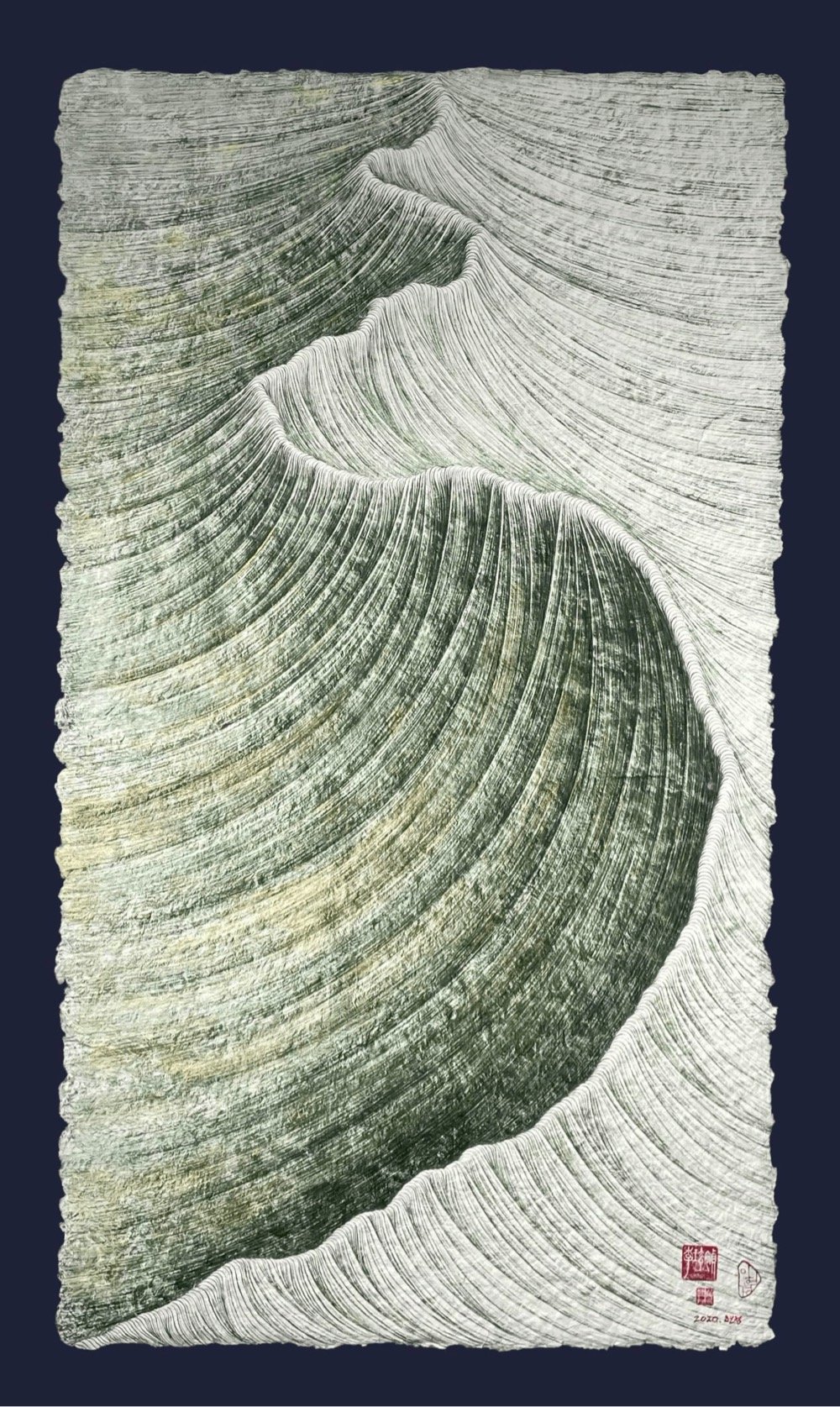
Love these swirling, swooping relief landscapes from Korean artist Lee Hyun-Joung. (via colossal)
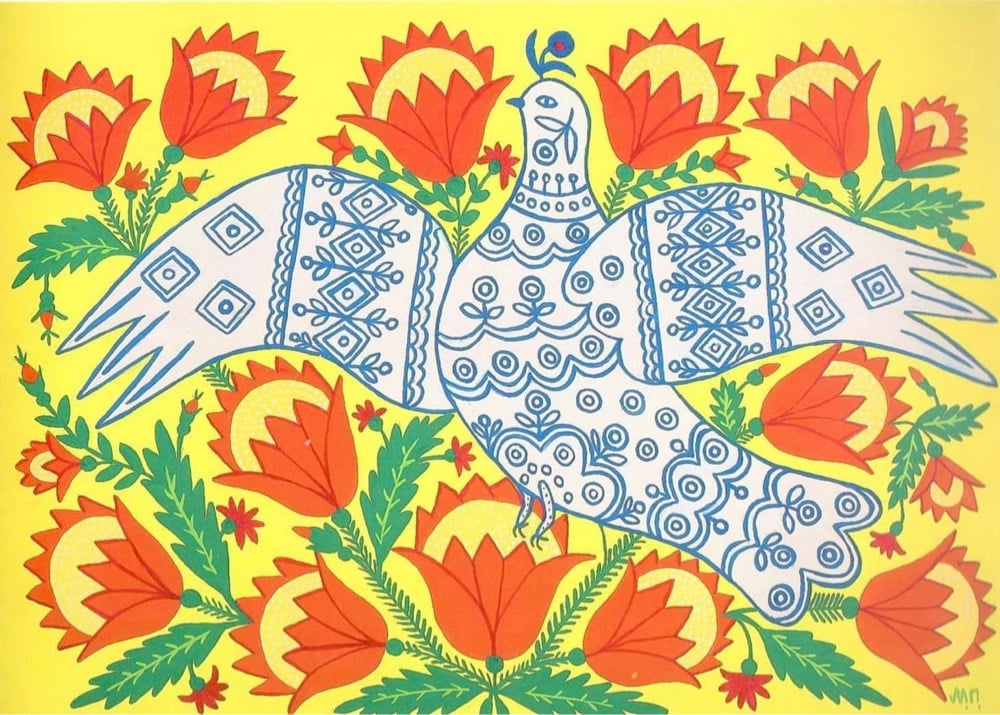
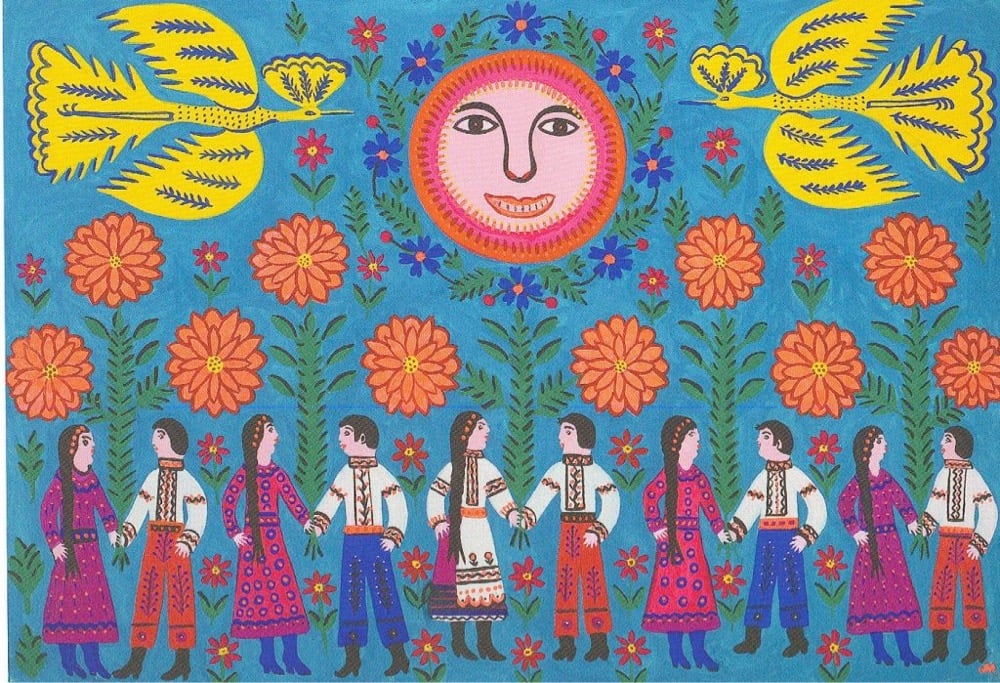
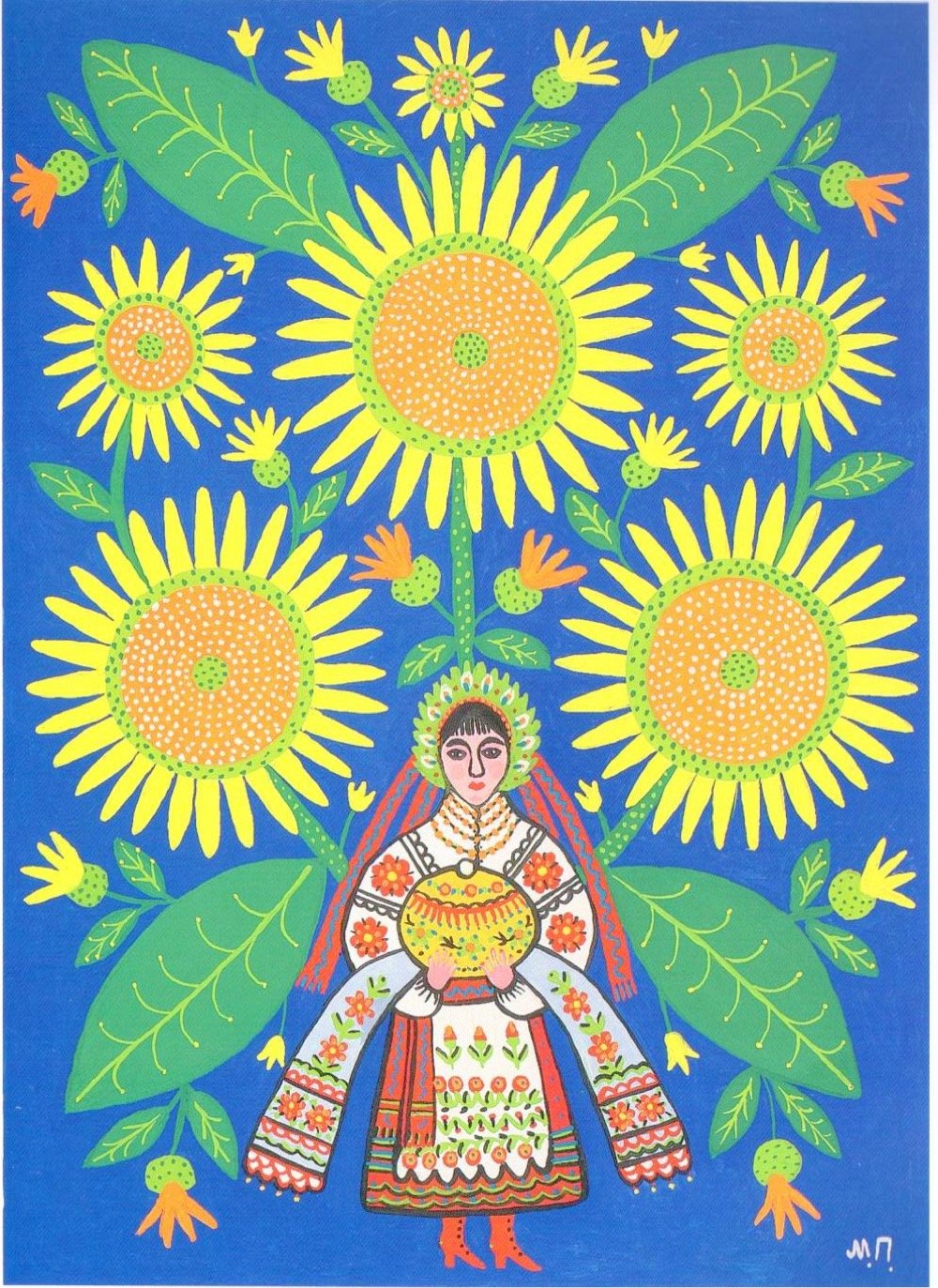
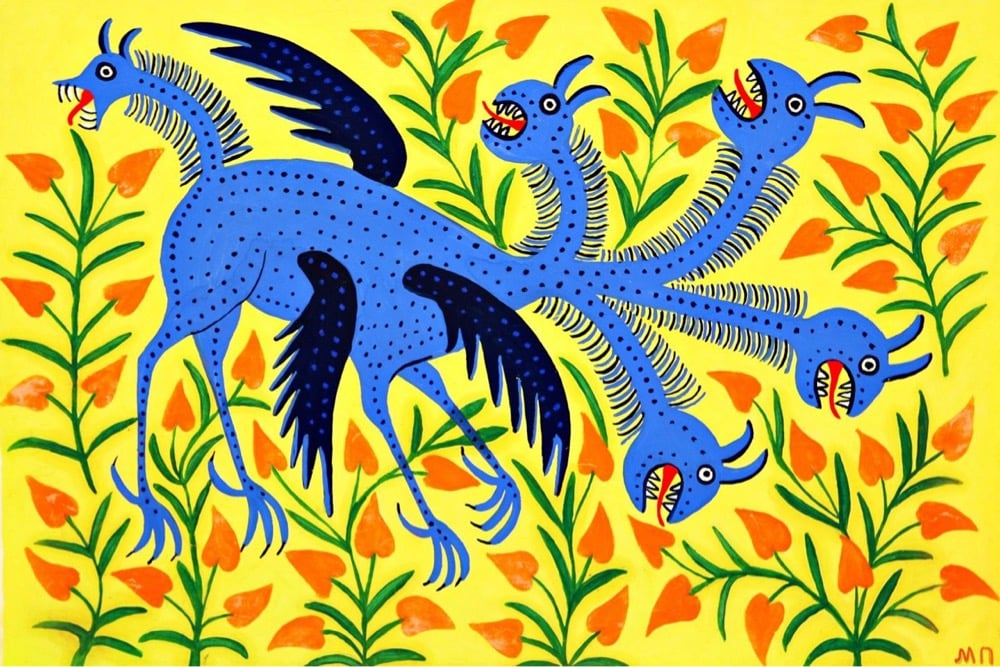
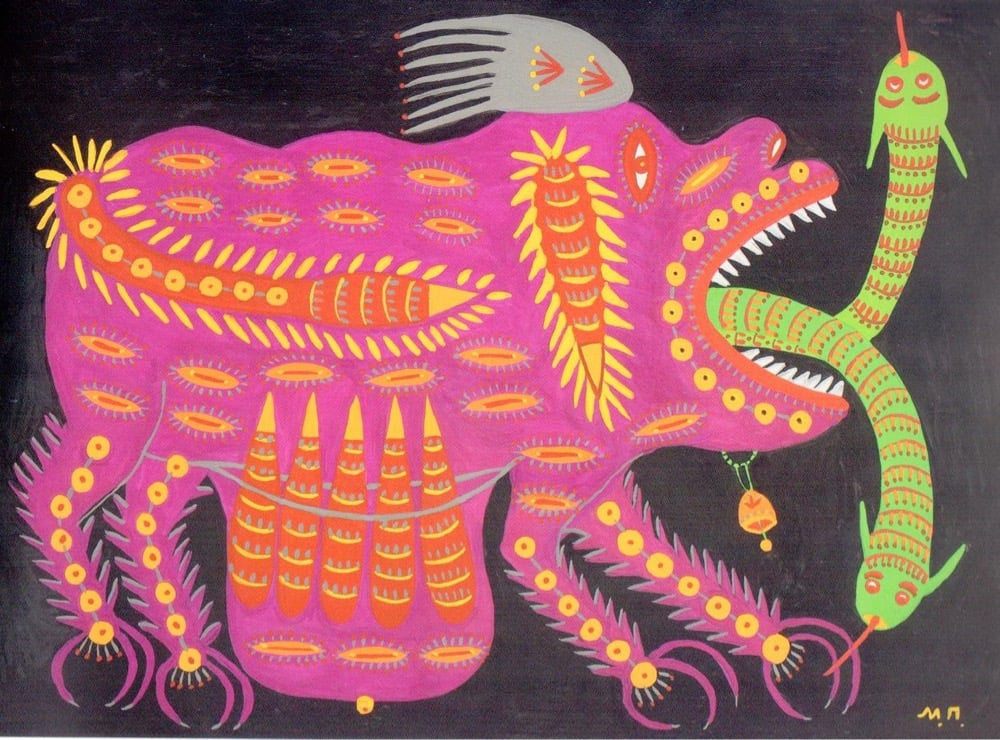
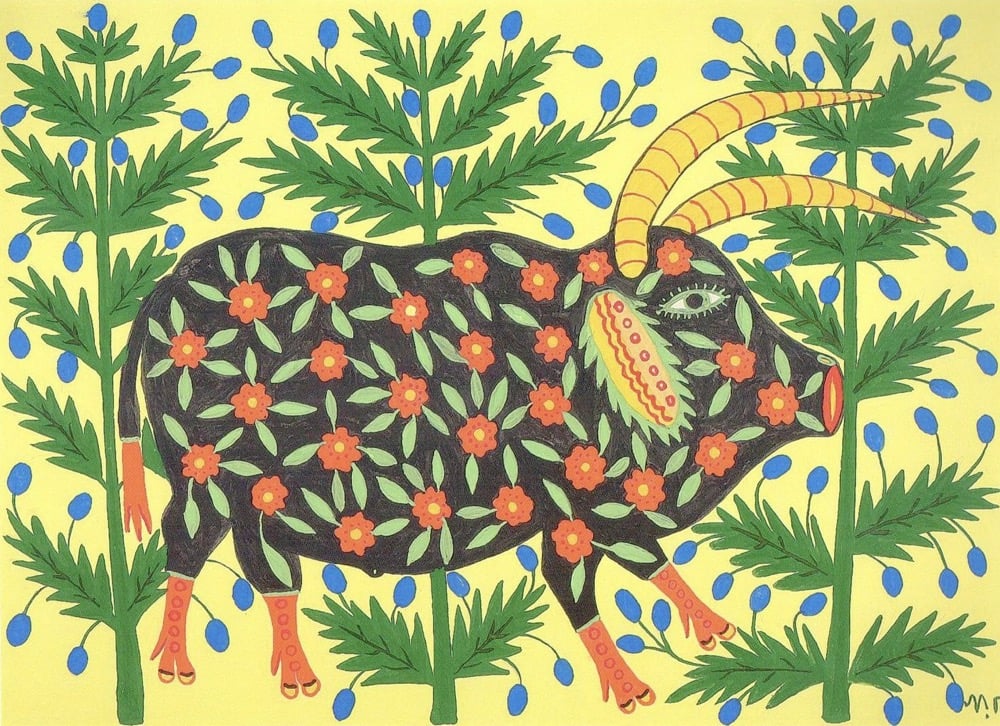
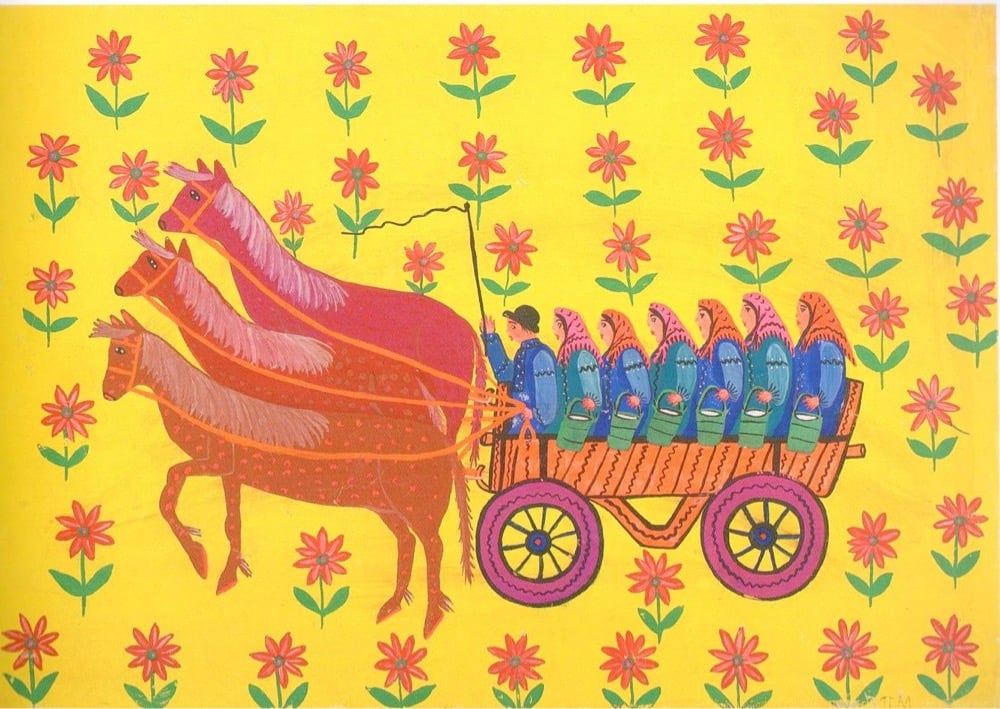
Maria Prymachenko is one of Ukraine’s best-known artists. Known for her colorful, expressive, and “primitive” style, Prymachenko won a gold medal for her work at the 1937 World’s Fair in Paris and Pablo Picasso is said to have remarked “I bow down before the artistic miracle of this brilliant Ukrainian” after seeing her work. Prymachenko’s paintings featured animals (both real & fantastical), everyday Ukrainian people, food & agriculture, and themes of war & peace.
Earlier this week, the Ministry of Foreign Affairs of Ukraine announced that the Ivankiv Historical and Local History Museum had been burned in the Russian invasion and that 25 works by Prymachenko had been lost. Luckily, according to the Ukrainian Institute, local residents were able to save the paintings.
You can find more of Prymachenko’s work below and at WikiArt.

From former Nintendo art director Takashi Maeda, a collection of very abstract pixel art that’s free to download and use. (via @presentcorrect)


These striking portraits are by Ghanaian artist Foster Sakyiamah. You can check out more of his work on Instagram.


During the course of battling salivary gland tumors over many years, photographer and artist Rubén Álvarez discovered hematopoiesis (the process by which blood cells & blood plasma are formed in the body) as a possible treatment option. The treatment didn’t end up being applicable to his situation, but the process became the inspiration for a very personal project called Haematopoiesis.
This project was inspired by my very personal experiences so I discovered the Hematopoiesis process, while I was looking for treatments for more than 15 pleomorphic adenomas that were located around my head and neck. I went through several surgeries to remove them and reconstruct my facial nerve, as well as almost thirty radiotherapy sessions to prevent these adenomas to appear again.
Álvarez used paint, ferrofluid, and magnets to produce his interpretation of the actual hematopoiesis process. (via moss & fog)


A partnership of three institutions — the Philadelphia Museum of Art, the Association Marcel Duchamp, and the Centre Pompidou — has just launched the Marcel Duchamp Research Portal, which houses almost 50,000 images and 13,000 documents related to the life and work of Marcel Duchamp.


The Wageningen University & Research houses a collection of almost 1200 drawings of the root systems of trees, grasses, crops, shrubs, weeds, flowers, and other plants. These drawings were done of plants in Europe, mostly in Austria, over a period of 40 years and are a wonderful combination of scientifically valuable and aesthetically pleasing.
Great Art Explained is one of my recent favorite YouTube channels (see The Mona Lisa, Hokusai’s The Great Wave Off Kanagawa, Michelangelo’s David, and Starry Night, all fascinating) and host James Payne, along with Joanne Shurvell, are now doing a related series on Great Art Cities Explained. They tackled London first and have moved onto Paris, where they feature three of the city’s lesser known museums that were originally art studios: those of Eugène Delacroix, Suzanne Valadon, and Constantin Brancusi.
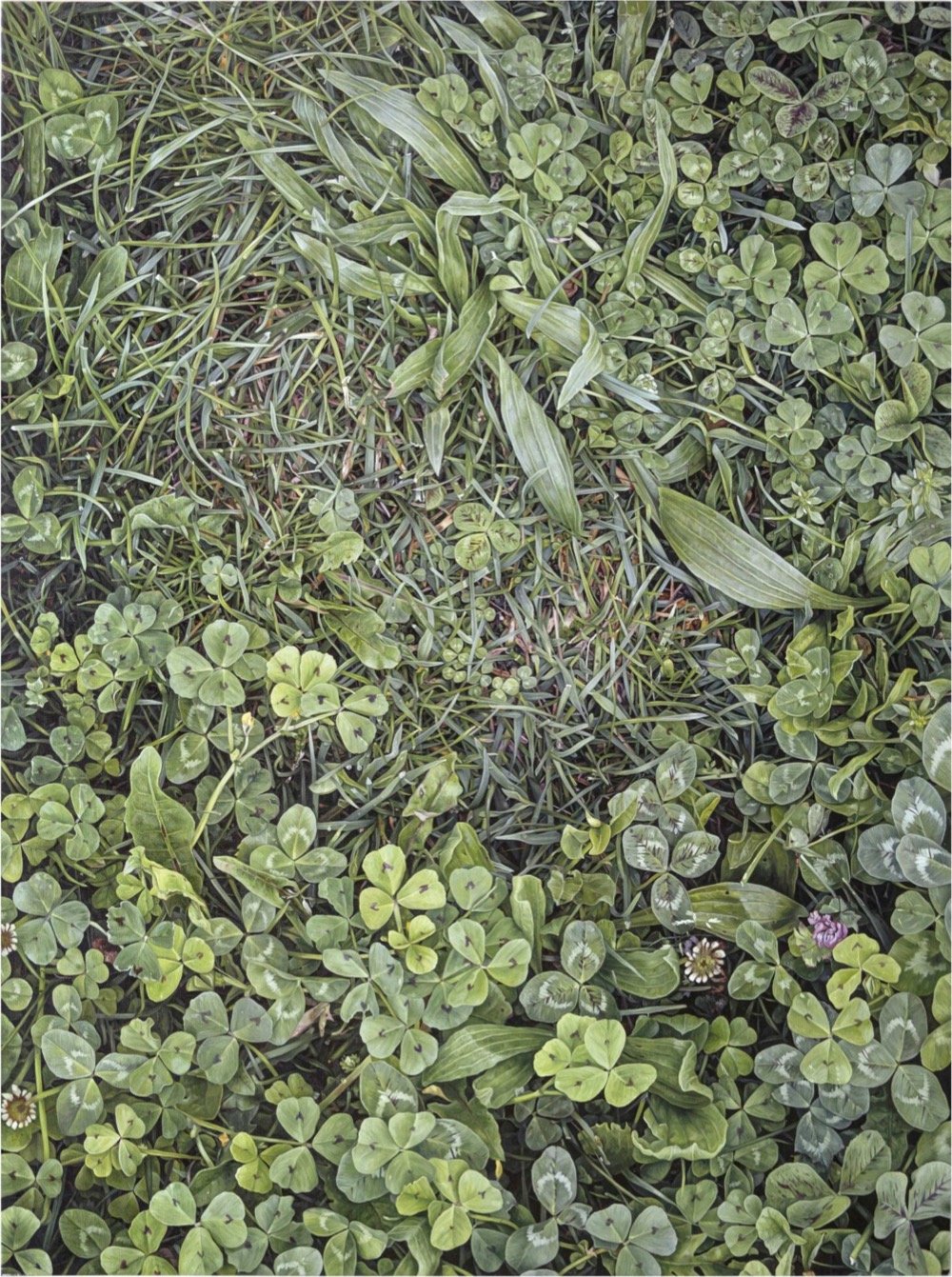
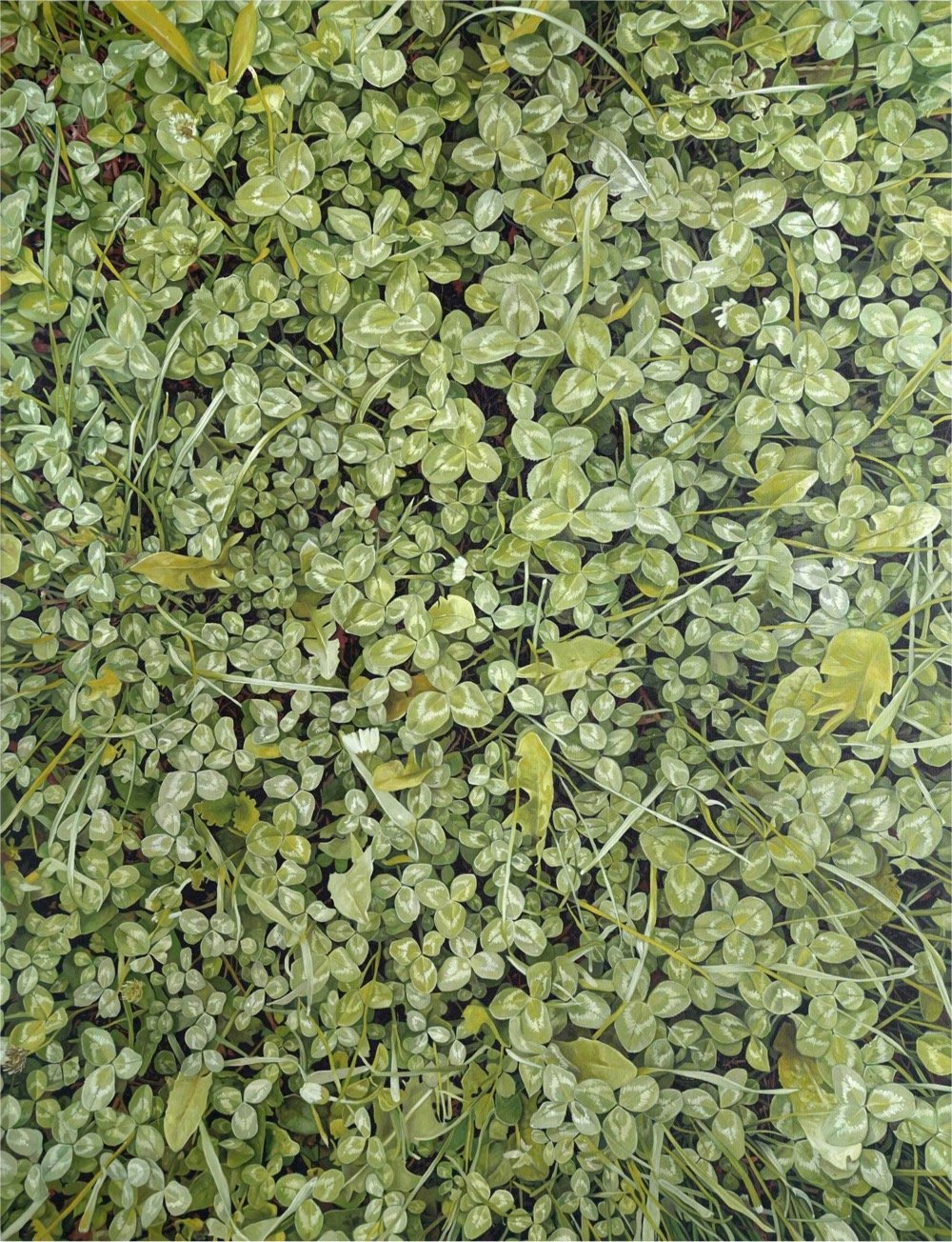
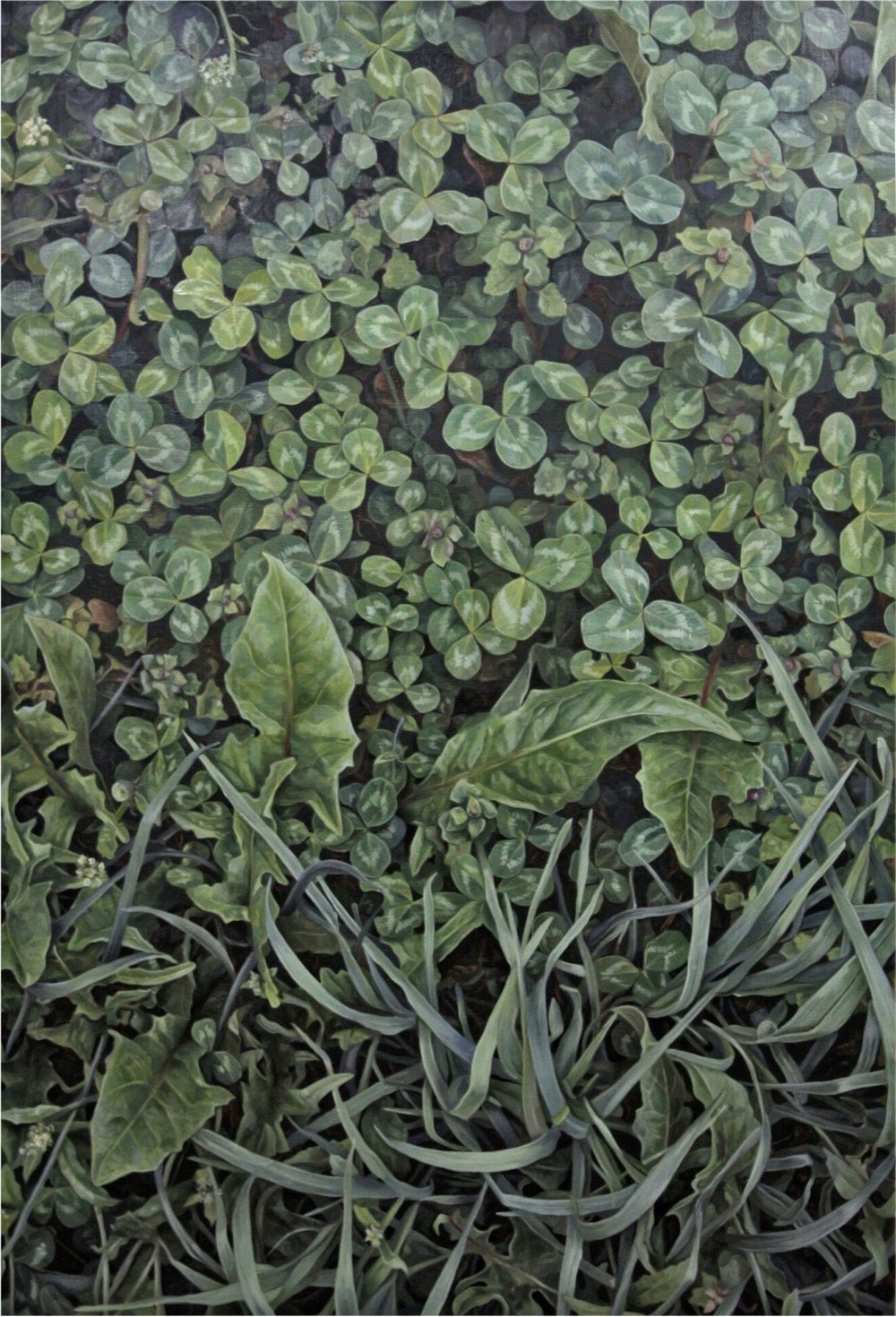
Why am I showing you these photos of lush, grassy, leafy plants? Because they are actually meticulously constructed hyperrealistic paintings of lush, grassy, leafy plants by Serbian artists Jelena and Aleksandar Paunkovic. The couple have been inspired by their verdant surroundings (I mean, just look at this) to produce these paintings:
From the big city we moved our studio near the mountain Kosmaj where we started with the production of paintings. We throw plastic bags out of everyday life and instead of them we made our canvas bags that still serve us today. We establish our own small garden, and started producing our natural non-hybrid food. We started composting organic food residues which we will use later as a soil that is rich in ingredients that will help other plants during growth. We meet new people and come to incredible information and knowledge. There will be more about that and other topics on our blog. When we harvested our first fruits after two months, there was no end to our happiness. For a moment we went back to our childhood, we remembered growing up, beautiful moments, and we had the privilege of feeling like a kids again.
With the pleasure of contact with plants, we discovered that we love hiking, but not for the reason of conquering the peaks, they are free and there is nothing to conquer. They can teach us that what we see there should be respected. All the paintings we create are created on those places. Each tour on new mountain, or visiting new environment, becomes material that will later serve us in the studio as a sketch for a new painting. We have found a way to bring the nature to a home or gallery and hang it on the wall to serve as a reminder that we need to think more about how our modern lifestyle affects the environment.
You can follow their progress on Instagram or order prints of their work. (via colossal)
In an artwork commissioned by the Guggenheim Museum called Can’t Help Myself, Sun Yuan and Peng Yu designed a robotic arm that is designed to keep a blood-colored liquid from straying too far away.
Placed behind clear acrylic walls, their robot has one specific duty, to contain a viscous, deep-red liquid within a predetermined area. When the sensors detect that the fluid has strayed too far, the arm frenetically shovels it back into place, leaving smudges on the ground and splashes on the surrounding walls.
Sounds a bit like everyone trying to do everything these days. This artwork has been popular on TikTok because people are empathizing that the machine is slowing down.
“It looks frustrated with itself, like it really wants to be finally done,” one comment with over 350,000 likes reads. “It looks so tired and unmotivated,” another said.
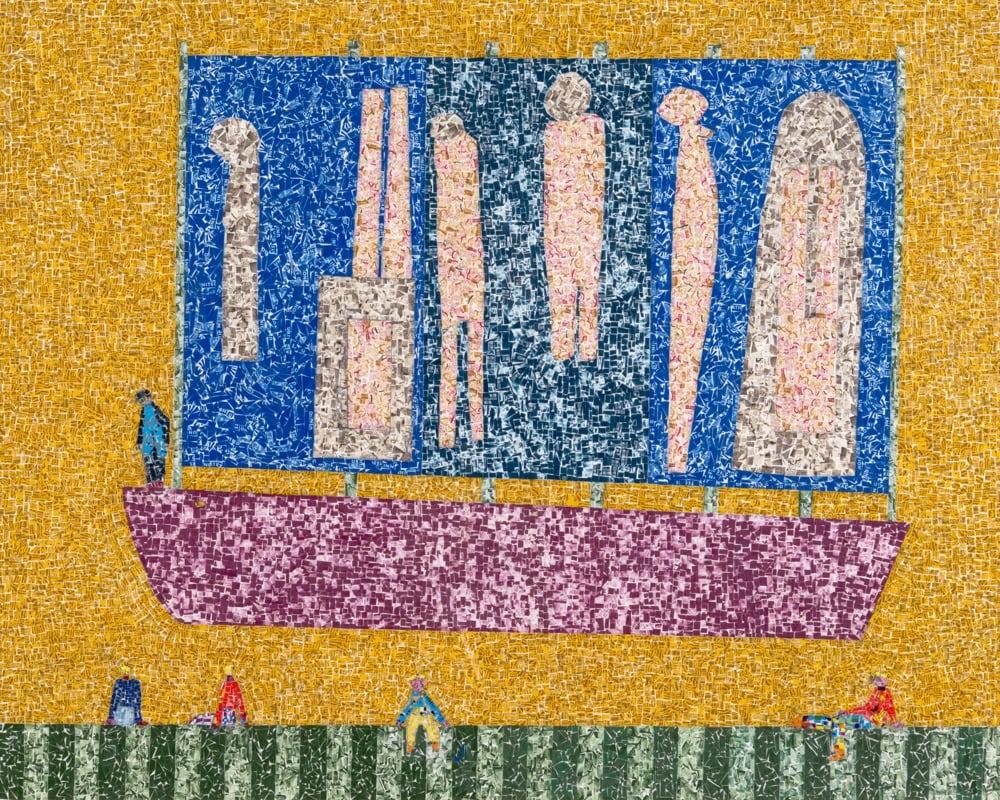
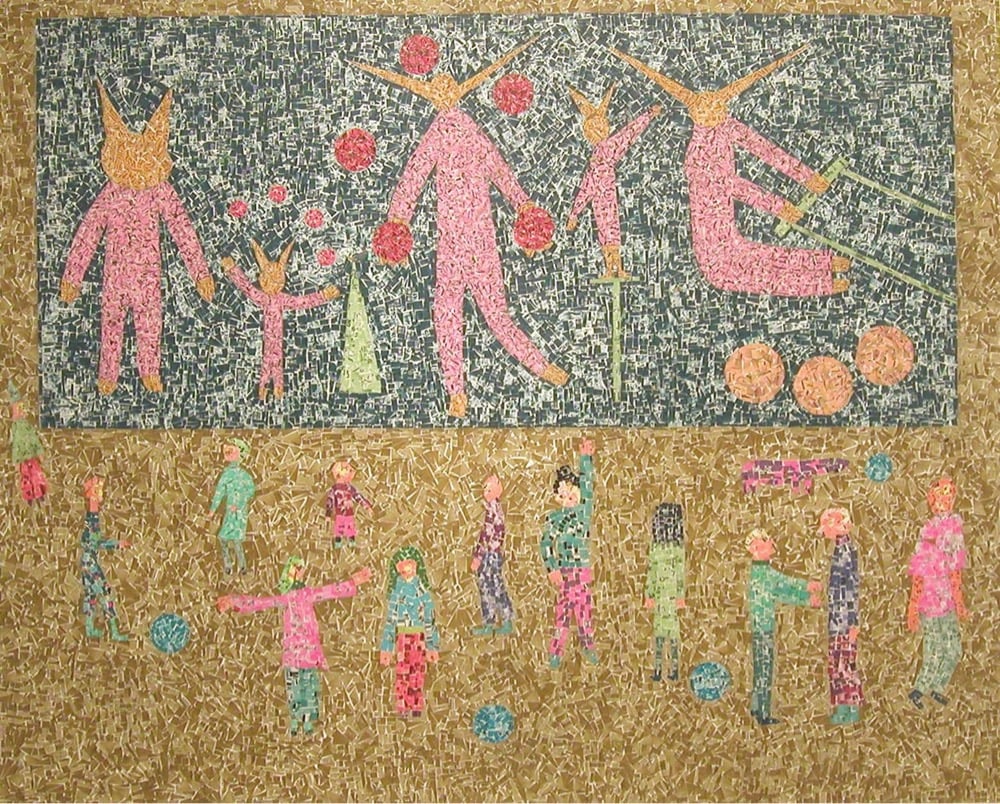
Artist Paul Edlin used tiny fragments of postage stamps to create these beautiful abstract collages. Here’s closeup of the top image where you can see the fragments more clearly:
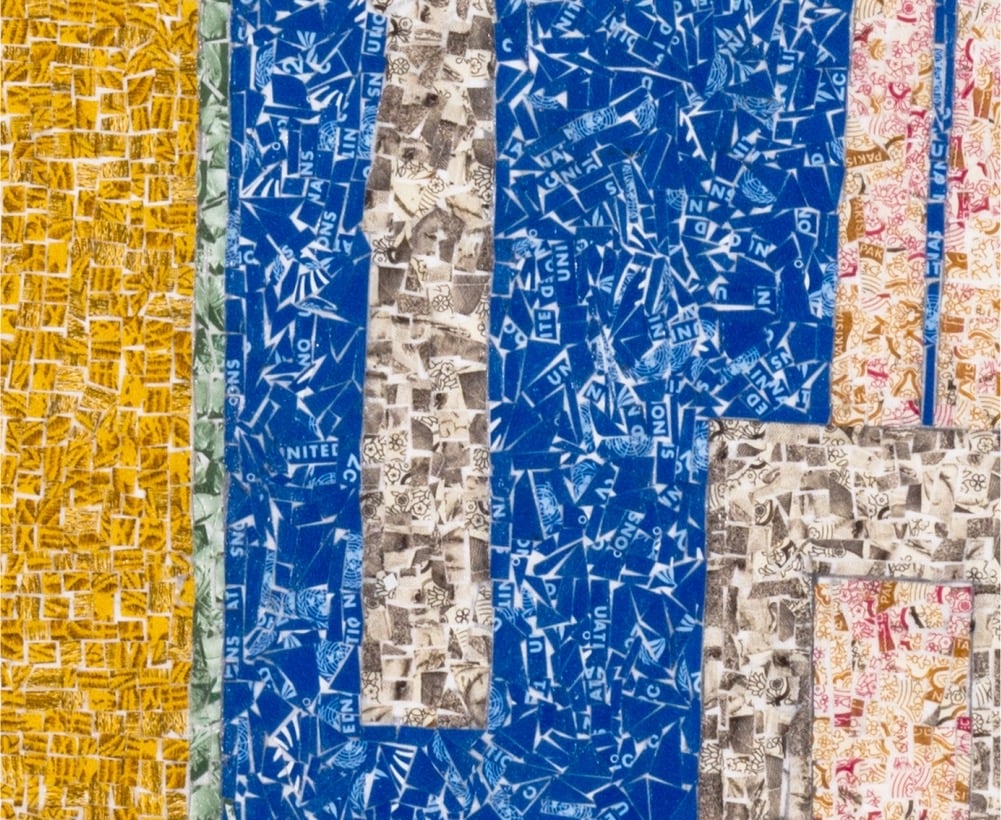
(thx, philip)
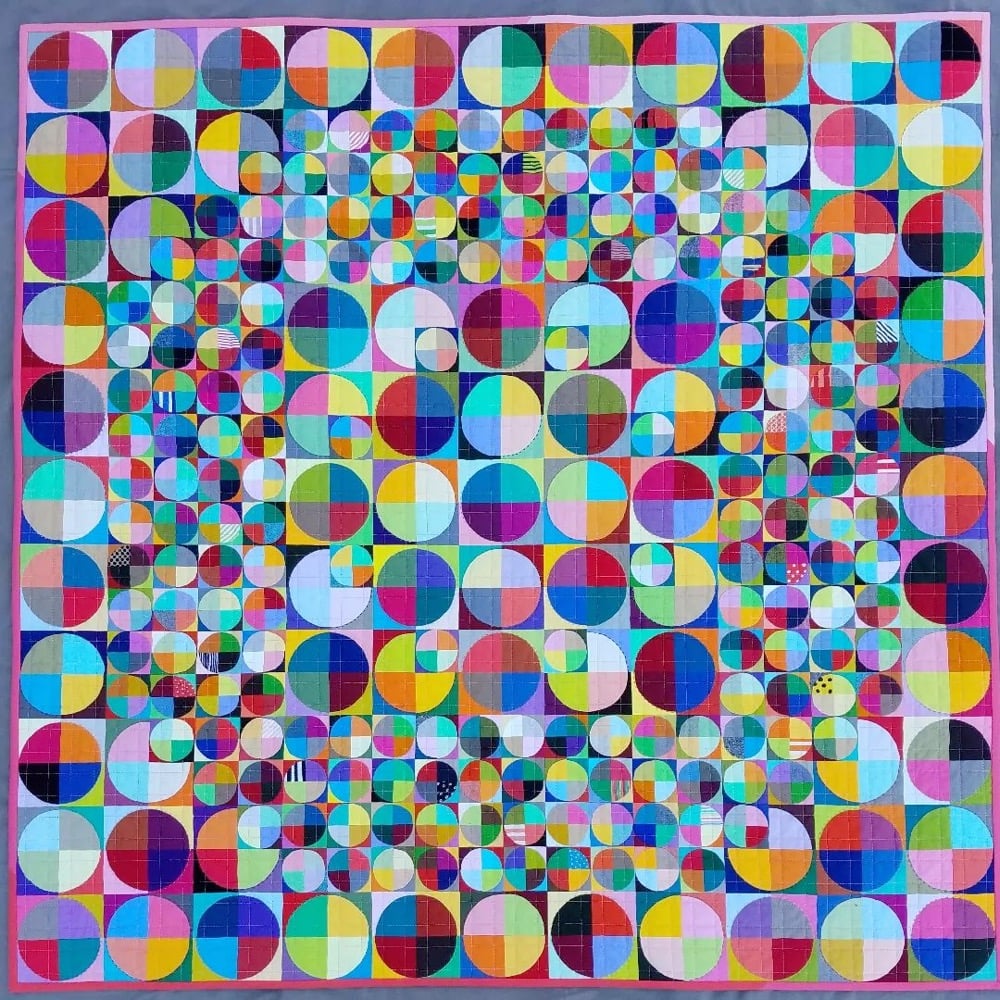
Oh I love the look of this quilt made by Marla Varner of Penny Lane Quilts. Here’s a closer look:
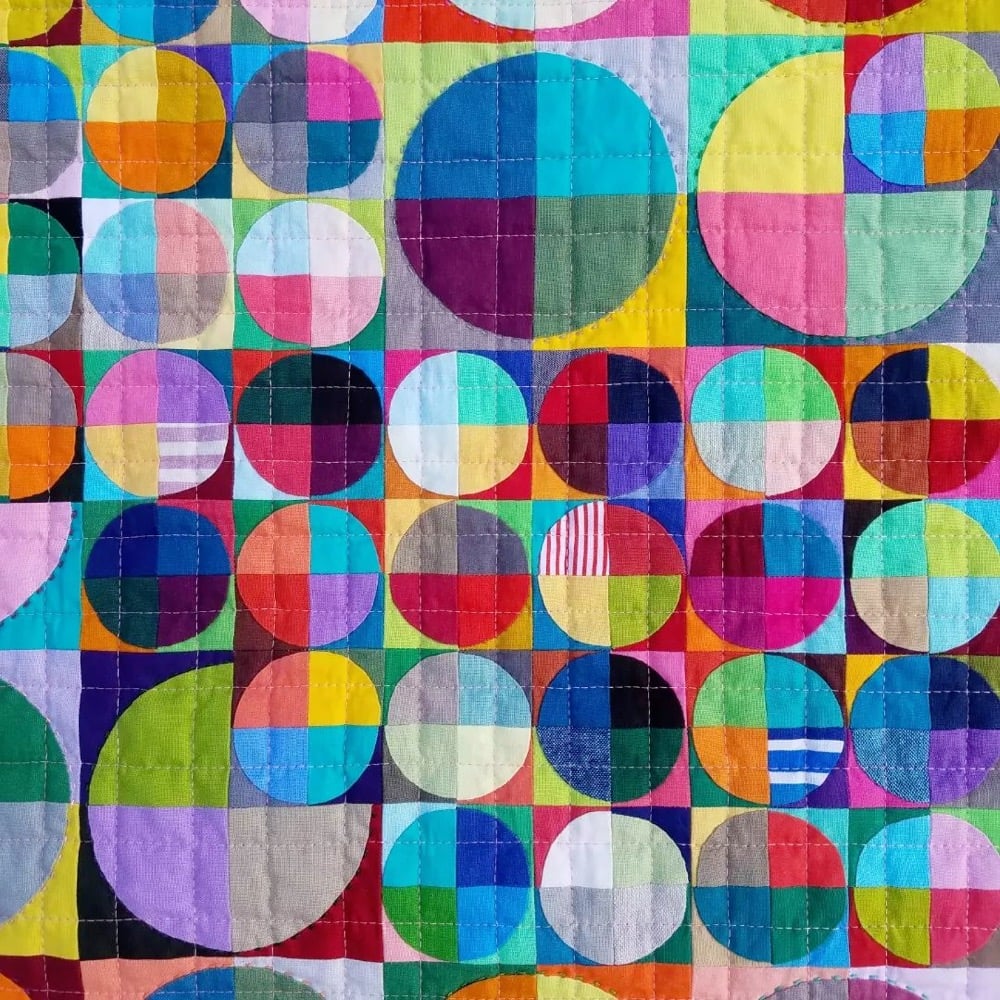
The colors and pattern are just perfect. You can check out several of her other large quilts on her website or on Instagram. (via austin kleon)
Newer posts
Older posts

Socials & More