kottke.org posts about art
Noh is a classical Japanese art of dramatic dance that’s been performed since the 14th century. The masks worn by characters are an art form in themselves, and in this video, an expert craftsperson carves a noh mask out of a single block of Japanese cypress and then paints it with pigments made from crushed seashells.
I love the look of the rough texture of the mask when she’s about halfway through, before she smoothes it out with the paint — it’s like IRL low-poly. But the detail of the finished product is incredible.
See also How to Carve Marble Like Italian Master Donatello. (via open culture)
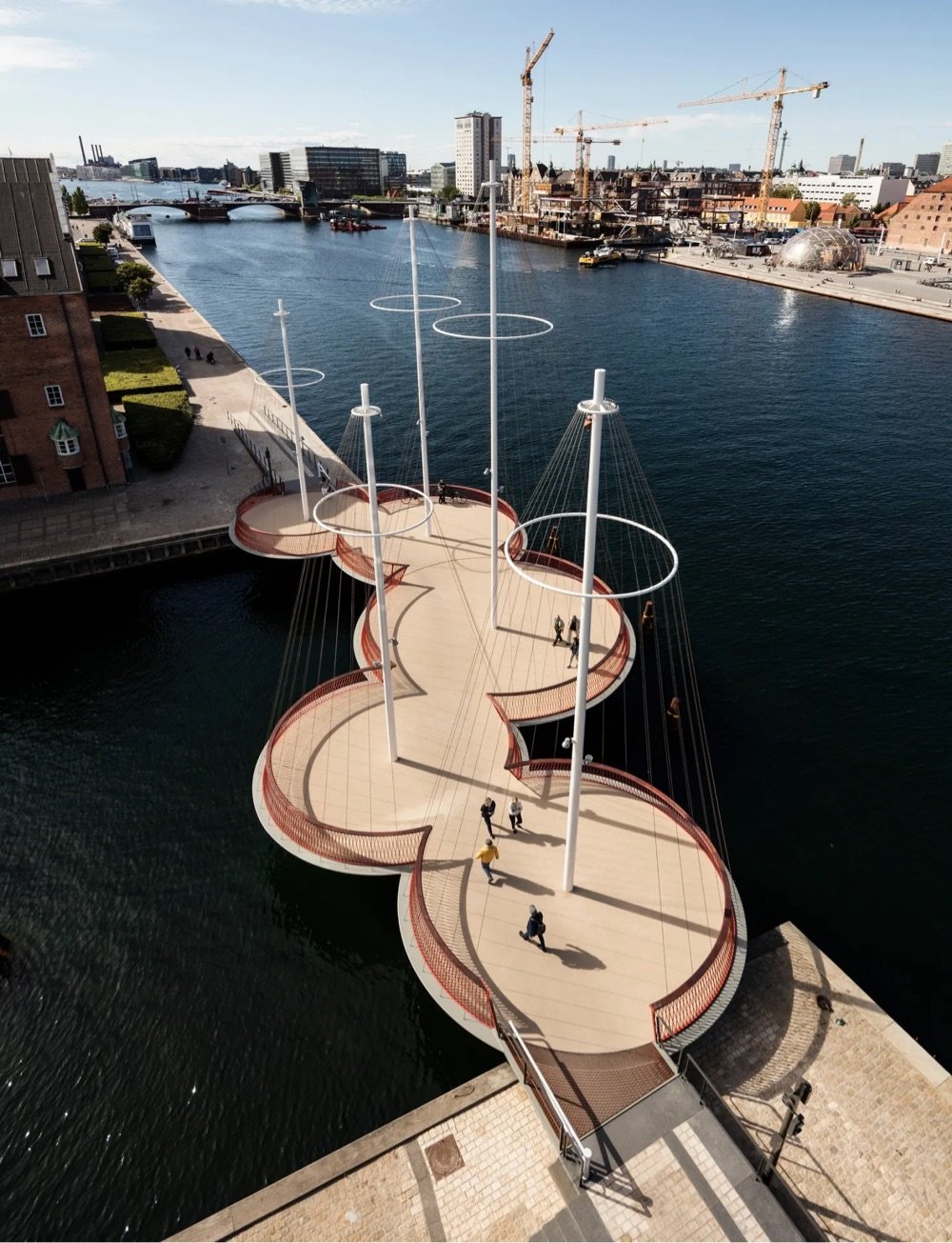
In 2015, artist Olafur Eliasson designed the Circle Bridge (Cirkelbroen) to span a canal in central Copenhagen. The pedestrian bridge was designed to slow people down a bit:
The bridge is made of five circular platforms, and it contributes to a larger circle that will form a pedestrian route around Copenhagen Harbour, where people — cycling, running, walking — can see the city from a very different perspective. As many as 5,000 people will cross this bridge each day. I hope that these people will use Cirkelbroen as a meeting place, and that the zigzag design of the bridge will make them reduce their speed and take a break. To hesitate on our way is to engage in bodily thought. I see such introspection as an essential part of a vibrant city.
Small boats can travel easily under the bridge but a section of the bridge also swings gracefully away to let larger boats pass. (via greg allen)


Using colorful wooden blocks cut at different angles, Timur Zagirov makes pixel-log 1 representations of famous artworks by Vermeer, van Gogh, and Leonardo. You can check out his work on Instagram or at Stowe Gallery. (via moss & fog)
Hardware engineer Mohit Bhoite designs functional little desktop bots like this thermometer and this internet-connected weather display:


These are adorable…there’s no other way to describe them. You can check out more of Bhoite’s sculptures on his website or on Instagram. (via core77)
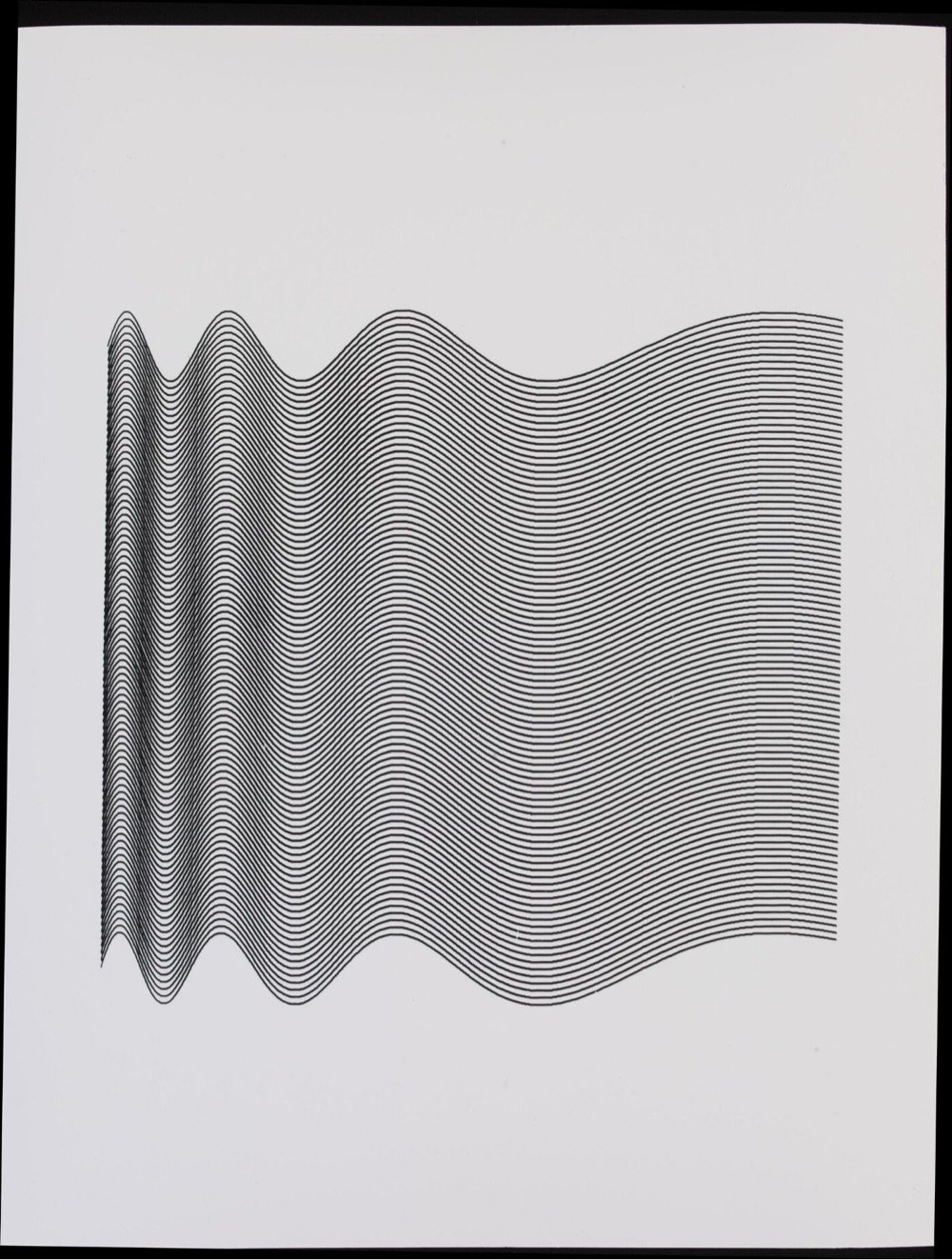
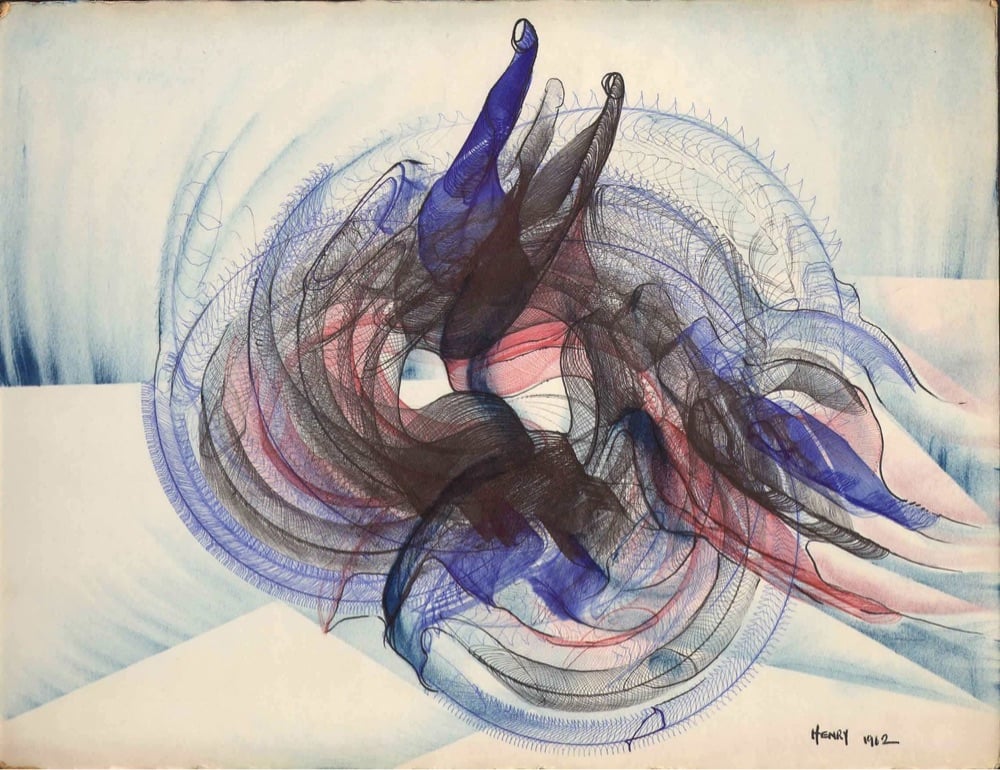
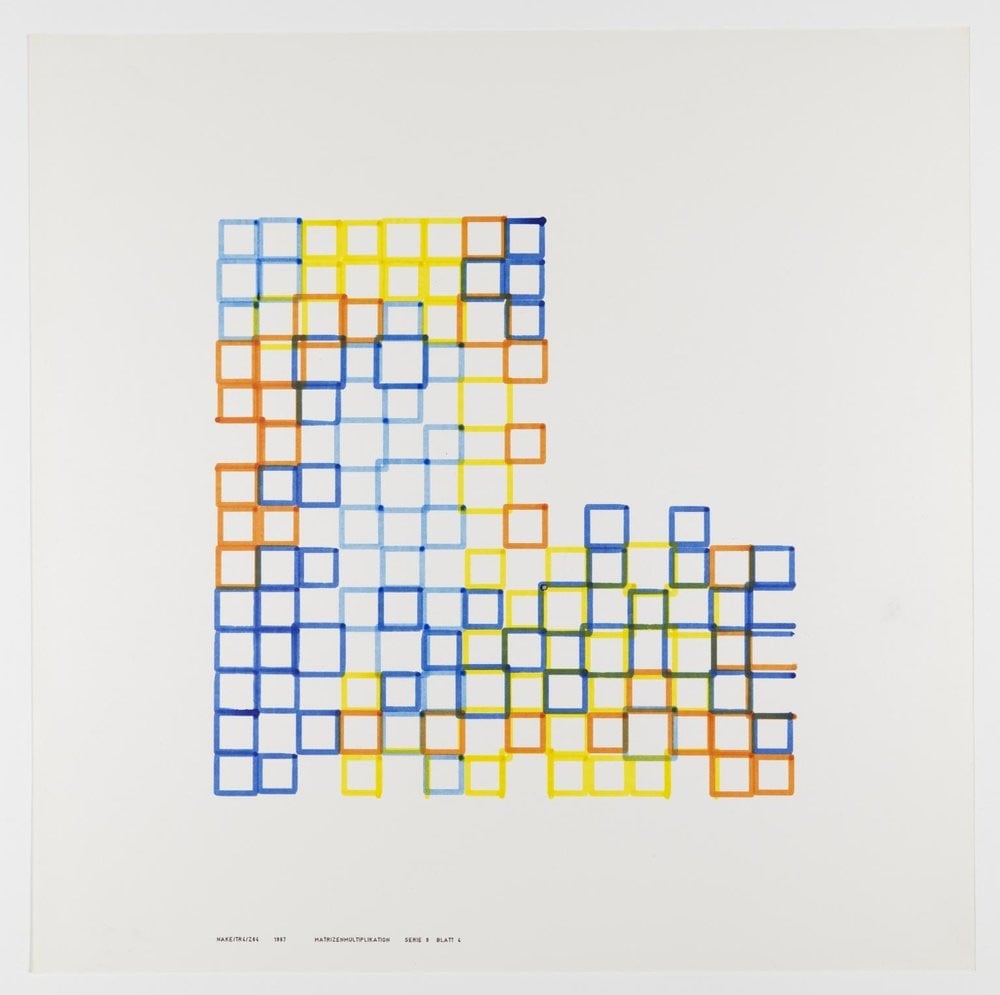
Artist Amy Goodchild recently published an engaging article about the earliest computer art from the 50s and 60s.
My original vision for this article was to cover the development of computer art from the 50’s to the 90’s, but it turns out there’s an abundance of things without even getting half way through that era. So in this article we’ll look at how Lovelace’s ideas for creativity with a computer first came to life in the 50’s and 60’s, and I’ll cover later decades in future articles.
I stray from computer art into electronic, kinetic and mechanical art because the lines are blurred, it contributes to the historical context, and also because there is some cool stuff to look at.
Cool stuff indeed — I’ve included some of my favorite pieces that Goodchild highlighted above. (via waxy)
On their YouTube channel, Art21 hosts a treasure trove of video profiles of artists like Amy Sherald, Olafur Eliasson, Chris Ware, Christian Marclay, Anish Kapoor, Kara Walker, Barbara Kruger, Julie Mehretu, and Sally Mann.
This is excellent — what a resource. (via colossal)
As part of a project to reproduce all 36 of Hokusai’s views of Mount Fuji as 1-bit black & white pixel art, James Weiner drew Great Wave Off Kanagawa:
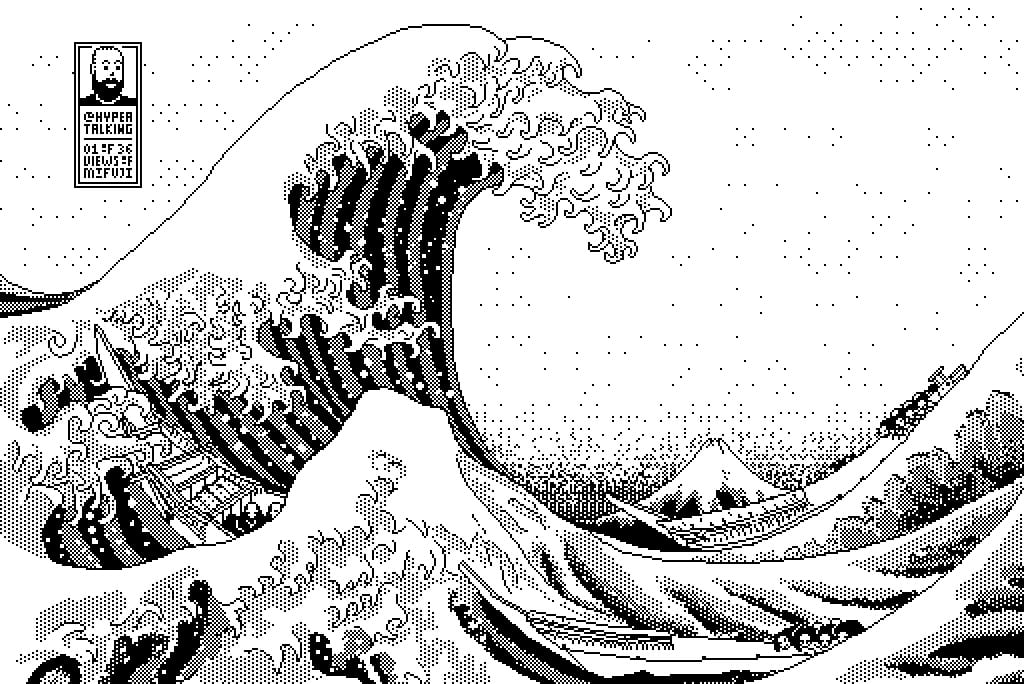
And he used an old Mac running System 7 to do it:
I usually use either my Quadra 700 or PowerBook 100, mostly because those are my reliable and easy to access computers (that run System 7, my favourite and most familiar OS of that era).
Software-wise I use Aldus SuperPaint 3.0, which is what my family had when I was a kid. Yes, I’d say that all of this is 99% nostalgia-driven…
This is just a lovely rendering — spare and elegant with just the right amount of detail.


The three images above were created by long-exposure photography of the flight paths of drones with onboard bright lights.
The first image is from Jadikan’s new series, Phénomènes (Instagram), in which he uses fireworks to create brightly-lit cylindrical forms.
The second one is by Will Ferguson of Broadway Tower in the Cotswolds — you can see more of his aerial work here or on Instagram.
The third is from Reuben Wu (Instagram), whose work I’ve featured here for many years. IMO, Wu’s work is slightly more polished than Jadikan’s or Ferguson’s, but I enjoy experiencing all of it. (via petapixel)
No matter which side you come down on in the debate about using AI tools like Stable Diffusion and Midjourney to create digital art, this video of an experienced digital artist explaining how he uses AI in his workflow is worth a watch. I thought this comment was particularly interesting:
I see the overall process as a joint effort with the AI. I’ve been a traditional artist for 2 decades, painting on canvas. And in the last five years I’ve been doing a lot of digital art. So from that part of myself, I don’t feel threatened at all.
I feel this is an opportunity. An opportunity for many new talented people to jump on a new branch of art that is completely different from the one that we have already in digital art and just open up new way of being creative.


The paintings in David Ambarzumjan’s Brushstrokes in Time series bring together large, rough brushstrokes with intricate landscapes — it’s a stimulating combination. A popular one too: all of his prints are currently sold out but there’s some new ones coming soon. You can also check Instagram for auctions of the original oil paintings. (via my modern met)


Josh Gluckstein makes these remarkably detailed sculptures of animals out of cardboard and paper.
Inspired by my extensive travels and volunteering through Asia, Africa and South America, I have sought to capture the presence of some of the most majestic animals I have seen by creating life-size sculptures, often made from found and recycled materials. I have continually strived to make my practice more and more sustainable, and my new collection is made entirely of recycled cardboard and paper. Its accessibility and versatility allows me to bring the animal to life and capture their character and intriguing beauty while creating zero waste.
(via colossal)
In a video for the Victoria and Albert Museum, sculptor Simon Smith shows us how Renaissance sculptor Donatello might have approached carving a piece from marble, which Smith calls “the Emperor of all stones”.
It’s all about trapping shadows. Carving is all about having deep cuts here and lighter here and the angle here and how the light plays on it. And certainly in relief…because relief carving like this, it’s kind of halfway between sculpture and drawing. If you’re doing a three-dimensional sculpture, if a form runs around the back you just carve it so it goes around the back, but with this you have to give the illusion of it running around the back like a drawing. You’ve got to make something look like it turns around and comes out the other side even though it really is just going into the block. And that’s all about angles and shadow and light.
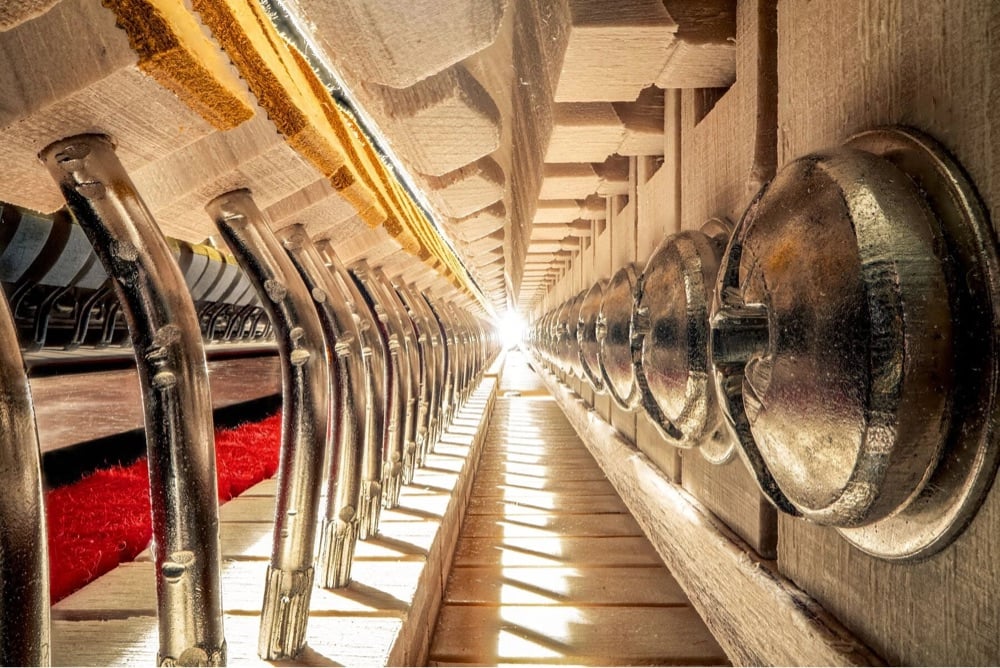
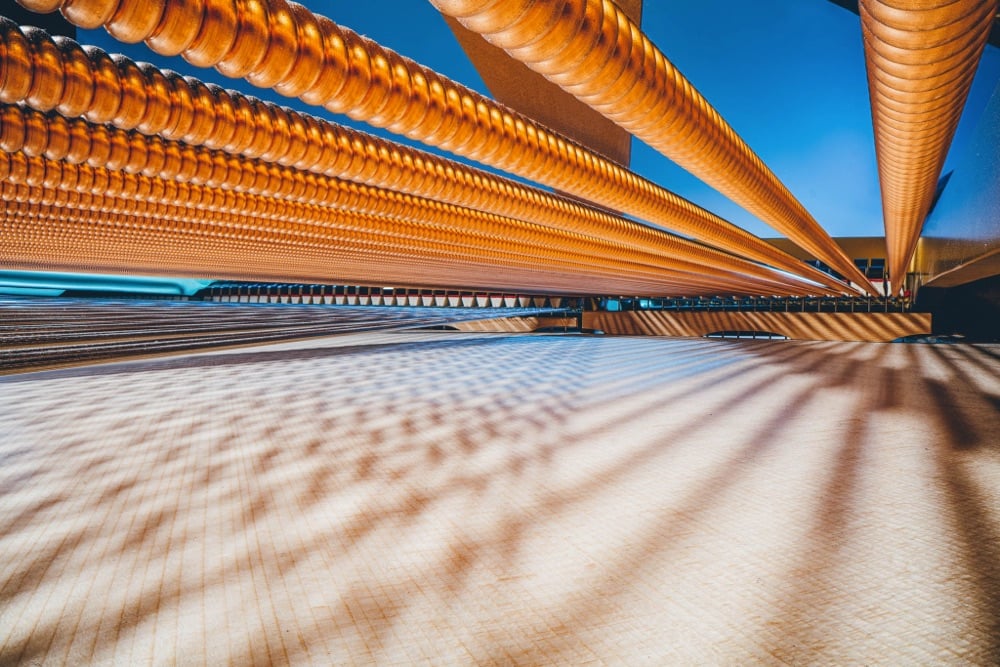
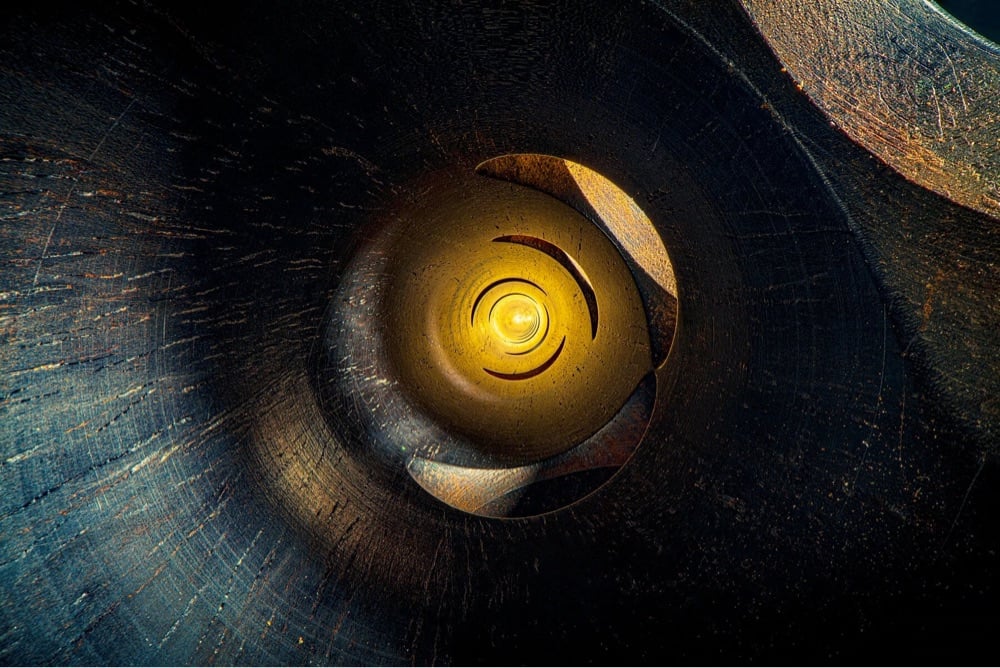
Charles Brooks takes photographs of the insides of musical instruments like pianos, clarinets, violins, and organs and makes them look like massive building interiors, enormous tunnels, and other megastructures. So damn cool. Some of the instruments he photographs are decades and centuries old, and you can see the patina of age & use alongside the tool marks of the original makers. Prints are available if you’d like to hang one of these on your wall.
And if you liked those, don’t miss these Dreamy Cave-Like Photos Taken Inside Musical Instruments. (via moss & fog)


During the course of my online travels, I see a lot of cool and interesting things, but this one really stopped me in my tracks. David Popa uses natural pigments to draw large format portraits on fractured sheets of ice and then photographs them from above. Wow, wow, wow. From a profile of Popa’s work at Colossal:
Because many of his works are destined to melt and be reabsorbed, Popa opts for natural materials like white chalk from the Champagne region, ochres from France and Italy, and powdered charcoal he makes himself — the latter also plays a small role in purifying the water, leaving it cleaner than the artist found it. Most pieces take between three and six hours to complete, and his work time is dependent on the weather, temperature, and condition of the sea. “The charcoal will sink into the ice and disappear from a very dark shade to a medium shade, so it has to be created very quickly and documented. No to mention the work on the ice will just crack and drift away completely, or the next day it will snow and be completely covered,” he says. “I’m really battling the elements.”
I love these so much — they remind me of self-portraits taken in shattered mirrors or fragmented mirrored surfaces, a practice I apparently engage in with some regularity.


These are lovely: voxel rooms of Malaysian hawker stalls and other shops by Shin Oh. She started making them after quitting her job due to anxiety and depression:
At that point in my life, I lost passion and interest in everything, I was feeling worthless, I felt like there was nothing I was good at,” Shin shares. But, later in her career break she discovered voxel art, and this, she says, is when things started to change. Noticing that voxel art was making her “more focused, relaxed and calm” after six months she began to share her creations on social media, and receiving good responses, she felt herself regaining her “long-lost” self confidence. “Making voxel art is now my hobby and my job, it’s a fun way for me to explore and express myself,” Shin concludes. “Voxel art has saved my life.”
(via present & correct)
Newer posts
Older posts

Socials & More