

A call for more “mindful underparenting” from psychologist Darby Saxbe. “If you want to raise empathetic, imaginative children who can figure out how to entertain themselves, don’t keep their brains too occupied.” 💯

Advertise here with Carbon Ads
This site is made possible by member support. 💞
Big thanks to Arcustech for hosting the site and offering amazing tech support.
When you buy through links on kottke.org, I may earn an affiliate commission. Thanks for supporting the site!
kottke.org. home of fine hypertext products since 1998.
Beloved by 86.47% of the web.

KDO Search Now Available to Everyone
Ok, after a week of testing, I’ve opened up KDO search to everyone. You can read more about it in my post from last week:
For now, the search only looks at posts from 2014 to the present. You can search by keyword, describe what you remember (“the guy who walks in Japan”), or paste a link to find posts that link to it. Search is fuzzy-ish but it’s not an AI bot or anything like that so if you ramble on with a 25-word query, it’s probably not going to work that well. You can sort by best match or newest, search all posts or just Quick Links or main posts, and filter by time (past month, past 3 months, etc.)
Launching that member preview was a little deflating tbh — “no plan survives first contact with the user”. It was clear that search was not as good as I wanted it to be — even I started noticing it despite my excitement. I spent quite a bit of time last weekend trying to tune the search and it’s much improved. I’ve been using it quite a bit this week and am loving it. There’s so much good stuff in the archives (and I can say that because if it’s more than 3-4 years old, I don’t even remember writing it! 🤷♂️) and this does a great job of surfacing that stuff.
Speaking of surfacing more posts from the archive, one of the coolest things about the way the search works is that you get a “more like this post” capability more or less for free. If you open recent posts like the video of three humpback whales breaching, the composite photo of 14,000 satellite trails, this Ted Chiang interview, or even an older post like Sesame Street puppeteers on how they play their characters and click on the “Related posts” tab below the post, you should see links 1-5 posts that you may want to read next.
Like the search, it’s not perfect and not every post will have related links, but I keep turning up good posts I’d completely forgotten about. Anyway, related posts are available for everyone on post-2014 posts. Post post post post. Poooooost. Ok, getting punchy. Have a good weekend everyone.
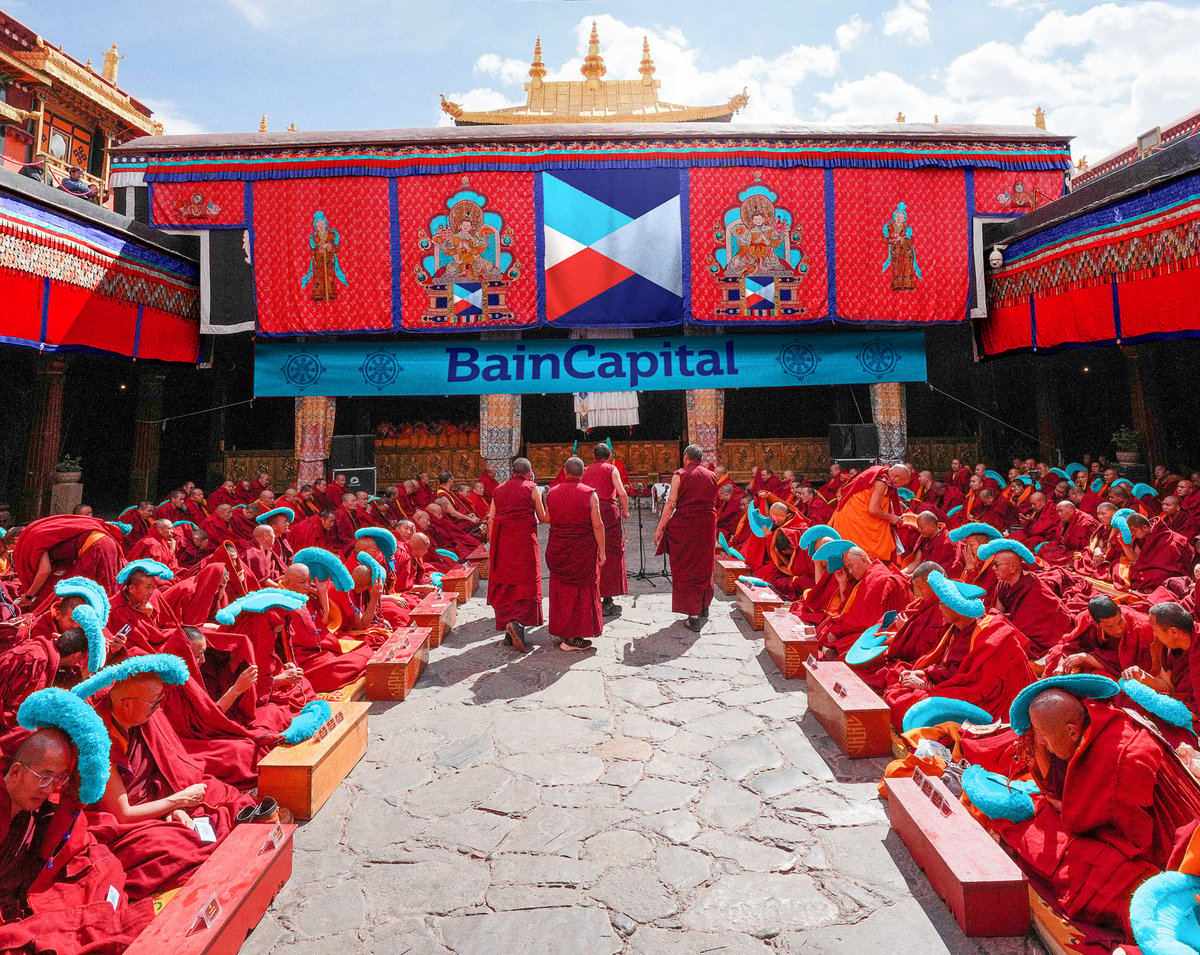
Bain Capital Acquires Tibetan Buddhism For $35 Million. “For centuries, this organization has been guided by outdated principles that are antithetical to investor and shareholder concerns, prioritizing incentives like wisdom, mental discipline…”
Anthropic has new rules for its Opus 5.5 model to “steer it away from recreating someone else’s specific [video] game”. (From a few days ago but I just saw it…)

And in other news, the NY Times is trying to buy Letterboxd for a reported price of $330 million.

Salon, one of the last OG general interest web publications, is shutting down. “When Salon launched in November 1995, the web was a very different place.” And: “We have reached the difficult decision that our publishing model is no longer sustainable.”

Rosa Parks on To Tell the Truth
In 1980, civil rights hero Rosa Parks appeared on To Tell the Truth, a long-running game show. Parks appeared alongside two other women claiming to be Parks and a celebrity panel tried to guess the identity of the true Parks. See also the appearance of a Lincoln assassination witness on a 50s game show. (via @ptak)
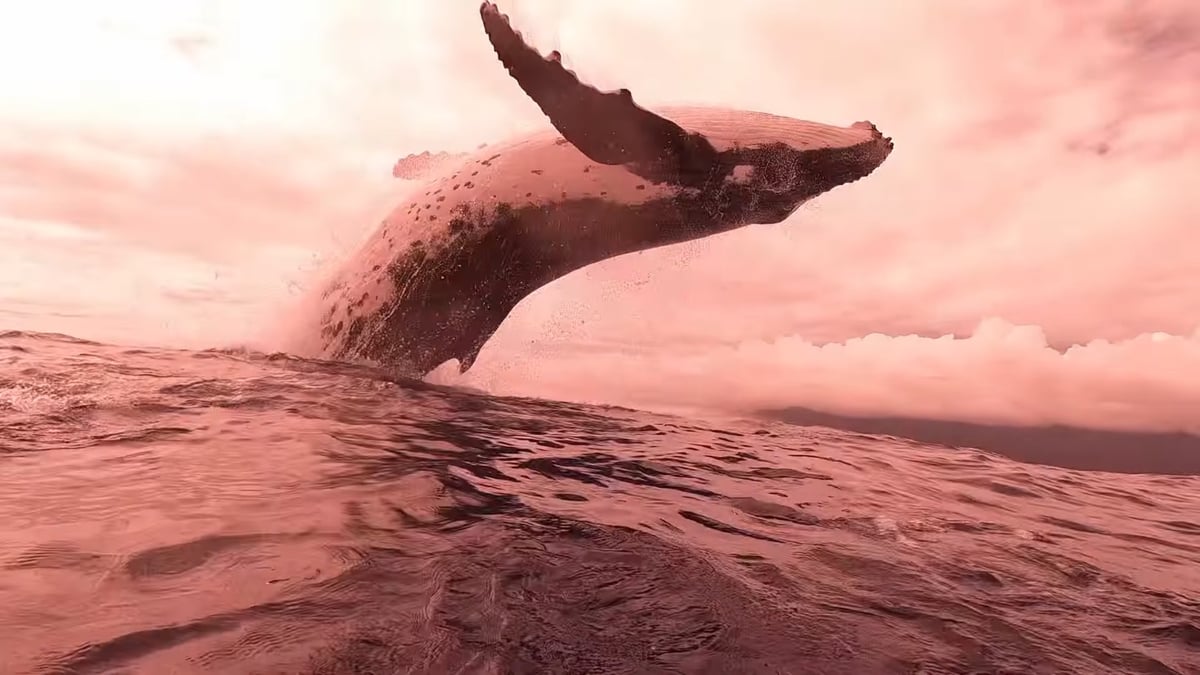
Video captured by Amy Yolland of three humpback whales breaching one after another. Incredible. Also available on YouTube.
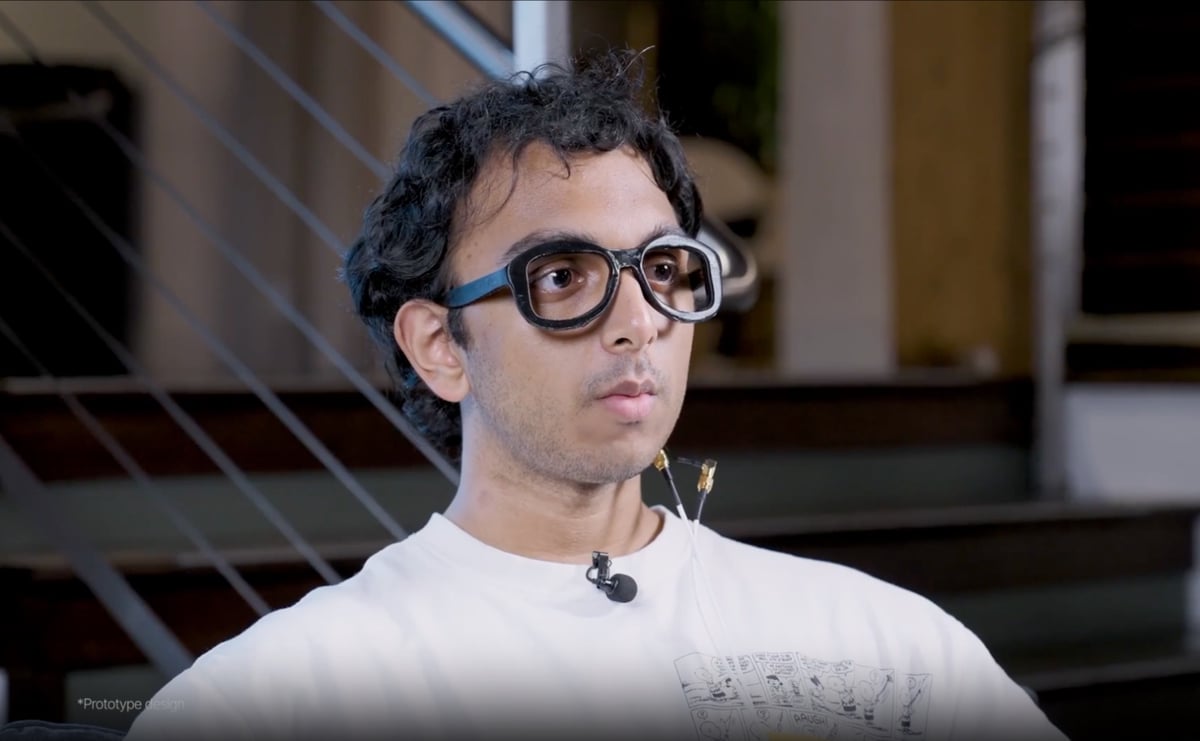
Subvocal’s glasses turn your silent speech into text at 200 wpm — it measures mouth movements with radar? Like many things these days, this is very technically interesting but also creepy and dystopian.
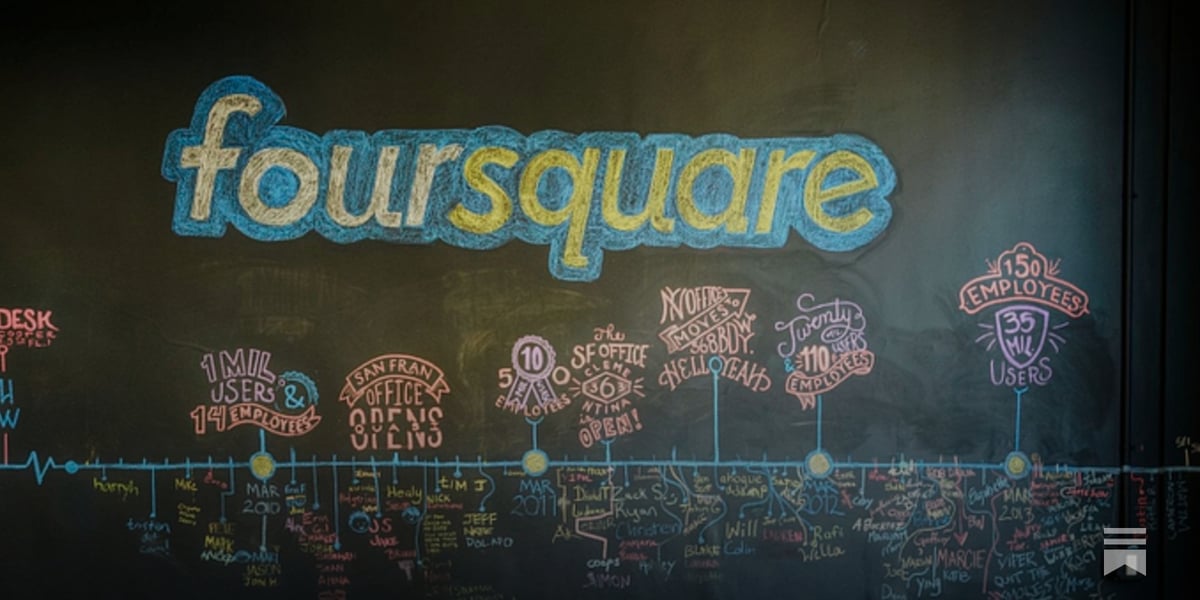
Foursquare was recently acquired and co-founder Dennis Crowley wrote about it. “Dozens of current and former Foursquare employees have reached out to me to express their frustration with the leadership that led the company to this outcome.”
Grocery Shopping With a Bow & Arrow
For a 1992 conceptual art piece called The Hunt, Christian Jankowski survived for a week on goods he shot at the local supermarket with a bow and arrow.
To rebel against modern society, to return to nature: in pursuit of these primeval instincts, for one week, Jankowski lived off goods he hunted in the supermarket. Instead of stalking animals, he eyed and avoided the supermarket security cameras. Armed heroically with a bow and arrow, Jankowski shot down frozen chickens, butter, toilet paper, and various other essentials. His game, if edible, was not just dead, it was processed on a mass scale. Thus the reaction of the woman working the checkout counter: she remained wholly unimpressed by the trophies of his bargain hunt, which she scanned with the arrows still sticking out of them. He has to pay like everyone else.
Paul Ford: “The web browser is very, very, very powerful software for building applications, and the cost of accessing that power is going down seemingly every day.”
Women who die postpartum often do so because they lose too much blood. An 80-cent plastic bag is helping solve the problem. “The drape is not an A.I. thing — it’s the absolute opposite: It’s a simple, simple, intervention that can solve our problems.”

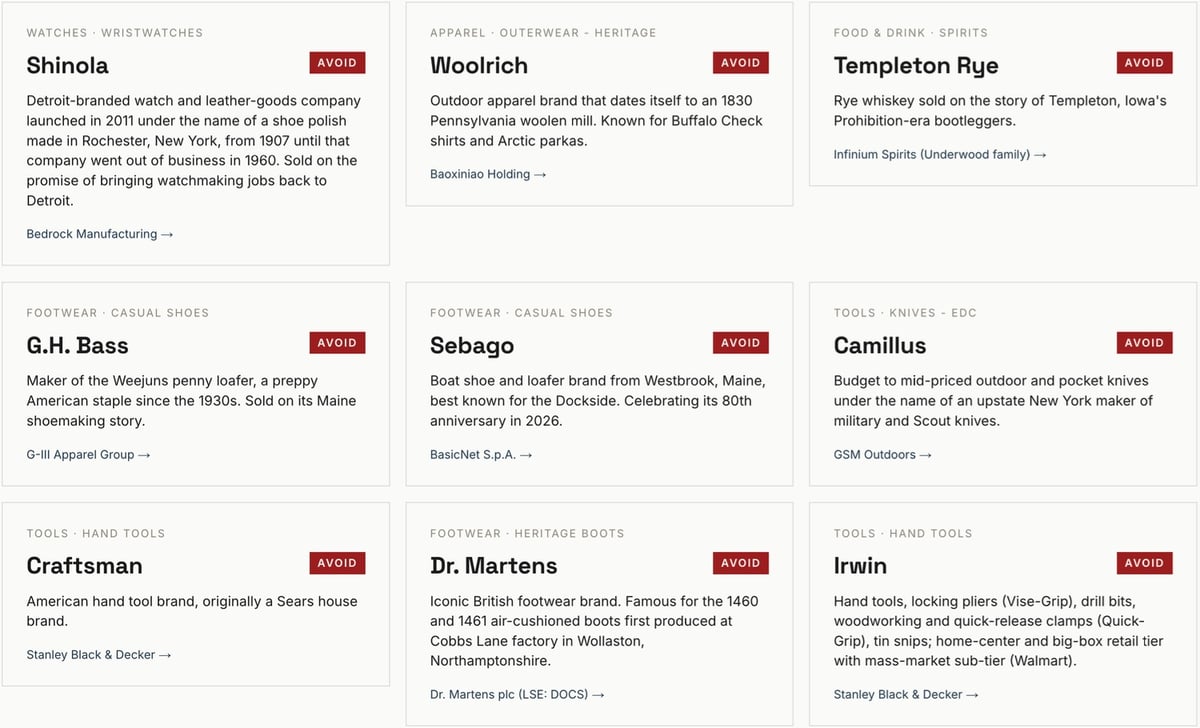
A growing list of brands to avoid because they are “actively engaged in the enshittification playbook” (many post-acquisition by private equity), including Dr. Martens, Pyrex, Hoka, rag & bone, Ray-Ban, Black+Decker, Hunter Boot, Craftsmen, and more.
Stunning Image of Our Satellite-Choked Night Skies
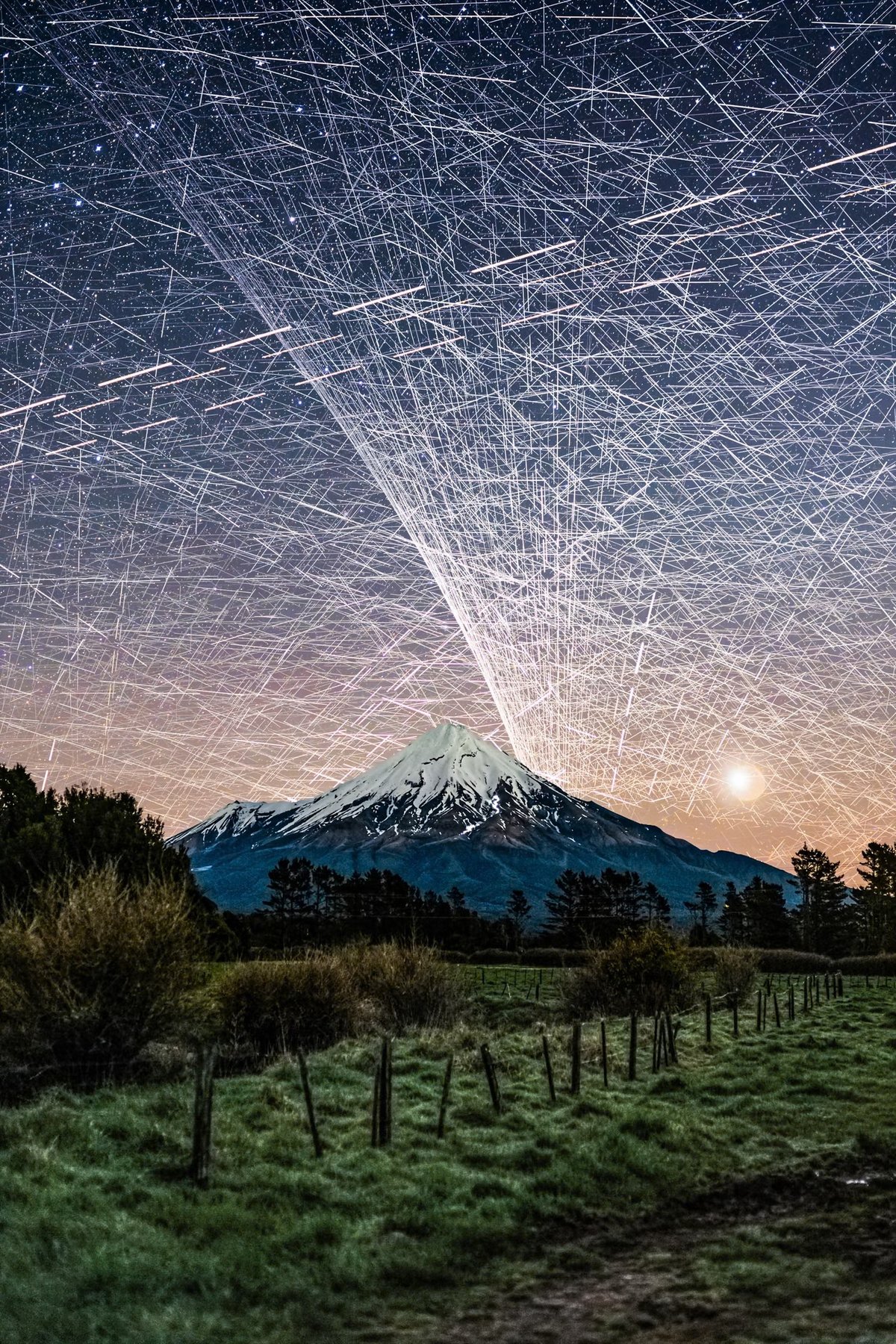
To create this composite image, photographer Brendan Larsen captured almost 600 photographs over a two-hour period and then manually stitched them together.
This is the most time-consuming photo edit I’ve EVER done!
I left my camera photographing the night sky over Mt Taranaki for nearly TWO HOURS, capturing 578 photographs.
The result? An estimated 14,450 satellite trail appearances, representing approximately 1,400 individual satellites! 😱
I manually masked in EVERY SINGLE TRAIL from the original photographs — approximately 45 HOURS of editing to create this one image!
The Guardian has more on how he created the image (which, despite many online commenters’ beliefs, is not AI):
Larsen, 51, says he set his camera up to take an unlimited number of eight-second-long shots, with a two-second gap in between each photo. “I left her running for two hours and captured 578 photos … That was the easy part.”
The hard part came next. Larsen spent about 45 hours layering the individual photos – each of which contained about 25 satellites – over one another, using Adobe Photoshop. Much of the time was spent painstakingly erasing stars, to reveal the satellites.
“I could start to see the pattern emerging and realised: ‘Wow, this looks really awesome.’ I knew if I carried on it would look even better and more impressive in terms of satellite numbers.”
Fellow photographer Vincent Laforet called Larsen’s image “an important photograph”:
I was initially startled. Then confused. Then fascinated all in quick succession.
And then I felt a deep sense of betrayal once I realized that what I was tracking with my eyes were a series of small satellites. And btw: that they likely had ruined my long exposure that I was capturing at the time.
I remember asking in the moment:
Who gave anyone permission do this?
I Thought I’d Left Authoritarianism Behind. “To anyone who has lived under dictatorship, the pattern is instantly recognizable. Dictators start by instilling fear. They exploit uncertainty to manufacture loyalty.”
See You Thursday
I’m taking the day off from the site today — feeling crispy from a little too much work lately. Besides, everyone’s gonna be too busy huffing US midterm election results to pay any attention to anything else. In the meantime, you can spend some time with my poorly timed Election Day post celebrating 10 years of the KDO membership program that gets into all the stuff I’ve been busy working on around here.
How Human Civilization Began
In a recent video, Kurzgesagt explores what we know about the first human civilizations that formed some 12,000 years ago and how they led to the first cities and the invention of writing.
What we know about human history is only a fraction of the full story. Much of the rest is like dark matter, invisible to us. We can’t see it, and we can only see the effects of its presence. But thanks to new techniques for DNA sequencing, dating ancient detritus, mathematical models, and aerial and lidar archaeology, we are now able to get a faint idea of what this world might have looked and felt like.
One thing I really appreciate about Kurzgesagt is how each of their videos is accompanied by an extensive list of sources. For instance, I’m not sure I’d heard about the massive Lake Agassiz draining into the world’s oceans and disrupting the entire planet’s climate some 8200 years ago — and there are several primary sources listed for further reading. Here’s how Kurzgesagt tells it:
Around the year 3800 of the human era a sudden catastrophe happened in North America. The receding glaciers of the last ice age had created one of the largest lakes in Earth’s history, larger than the Caspian Sea today. It was held back by super massive ice sheets, which formed a gigantic dam.
Surprising no one, the dam melted and suddenly failed – the whole lake suddenly drained into the ocean. Global sea levels rose by 1-2 meters and the great conveyor belt that carried warm water northwards slowed down. Across the North Atlantic and Europe, and into the Near East, the climate turned colder and drier – in some regions by several degrees. Rain patterns shifted, summers grew longer and harsher, and a drought lasting well over a century parched the land.
And:
We know that during this time all over the world migration towards rivers and lakes sped up — bringing agriculture and technology with them. Some of the most consequential journeys led into the Nile Valley, where farming villages took root and slowly laid the ground for the rich civilization that would one day rise there.
Lake Agassiz’s major drainage reorganization events were of such magnitudes that they significantly impacted climate, sea level, and possibly early human civilization. The lake’s enormous freshwater release into the Arctic Ocean has been postulated to have disrupted oceanic circulation and caused temporary cooling. The draining of 13,000 years ago may be the cause of the Younger Dryas stadial. Although disputed, the draining at 9,900–10,000 years ago may be the cause of the 8,200 yr climate event. A study by Turney and Brown links the 8,500-years-ago drainage to the expansion of agriculture from east to west across Europe; they suggest that this drainage may also account for various flood myths of ancient cultures, including the Biblical flood narrative.
Fascinating.
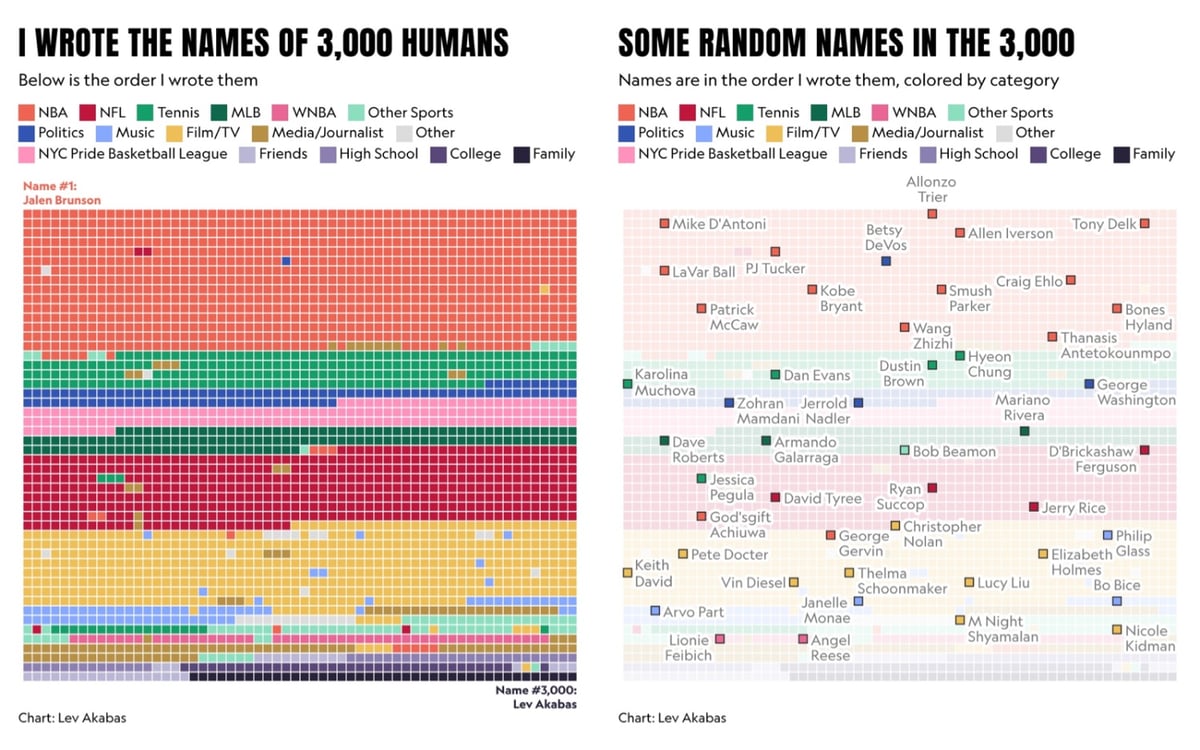
Do you think you could write down the names of 3000 people? “As part of a competition with a few friends, I attempted the very dumb challenge of trying to write the names of 3,000 real people in one sitting. It took 7 hours, but I did it.”
“Our attention is all we have. And we already gave away a huge percentage of it to machine learning algorithms 10 years ago, and we are living in an intensely different and I think worse world because of it.” Was 2016 a sneaky inflection point?

The soundtrack for Wipeout XL (aka Wipeout 2097) was crazy for a video game; it featured tracks from groups like Underworld, Orbital, The Prodigy, Daft Punk, and Chemical Brothers. I had this on CD! Ripped it and played ‘em on Winamp!
10 Years of Kottke.org Membership
An important KDO milestone whooshed by the other day and I was so heads-down on tuning up the new search engine (more on that below) that I missed it. So: it’s been 10 years since I started the KDO membership program! (Quick recap of the value proposition from the membership page FAQ: “kottke.org is my full-time job and member support keeps the site free, open, and available to everyone on an internet that is increasingly paywalled.”)
10 years! It is impossible for me to overstate the impact membership has had on my work. Beyond the simple fact that KDO wouldn’t exist without it, membership support allows me the freedom to choose when, where, how, and why to work, resulting, IMO, a better place for all of us to spend time.
The last couple of years have felt especially membership-inflected and influenced. We’ve been working together on building the KDO comments into a quieter haven for sharing stories and information, outside the social media networks driven by algorithms and outrage. It’s taken time, but KDO is starting to feel like a neighborhood joint where folks can stop by and find a welcoming place for interesting conversation.1 And more to come!
I’ve also been working hard on different ways of helping people find stuff to read/watch/listen to online and just generally making things easier to use around here. There’s:
- The Rolodex (which includes a mini feed reader for members), which is a list of the sites and people I read that you might like too.
- Improvements to the comments to help make following & having conversations easier. This has been a steady effort — tweaks and new features every few months since launching member comments three years ago. (How has it been that long?!)
- Prometheus, a search & discovery tool for gift links, open only to members for now.
- KDO site search. Still only open to just members. I spent a lot of time over the past weekend tuning it to return better results, and I think we’re getting somewhere. Improved the speed as well, at the expense of, well, increased expense.2 It’s still not magic, but I’m hoping to open this up to everyone soon.
- Underscore, a web-based music player I built for listening to music across multiple streaming platforms while I work. Anyone can listen to my collection and members can compile their own collection to listen to.
And this is in addition to the site’s usual service of curated links and posts. A lot of this has happened in just the last month — Jesus, Kottke, slow down! — but I’ve been working on some of these things, on and off, for years. I couldn’t focus on this stuff for months and months earlier this year — launching requires a level of attention that’s difficult for me to muster when other things are going on. Getting the move behind me and establishing myself in surroundings more suitable to my temperament has been a real boon.
I hope all of this adds up to a place and project that people want to make use of and support. Twenty-something years into doing KDO as my full-time job, I can honestly say I am enjoying it more than ever. Thanks so much for reading and for your support. If you’re not yet a member and want to join us on this ride, you can check out your membership options here — it only takes a minute to sign up (less if you use Apple Pay or Stripe’s Link autofill).
Maybe KDO readers have always felt this way about the site, but for me, the comments have livened things up and added a new dimension to things. ↩
I’m using a couple of outside services for search, but at the relatively small volumes I’m dealing with, it won’t come to more than a few bucks every month. ↩
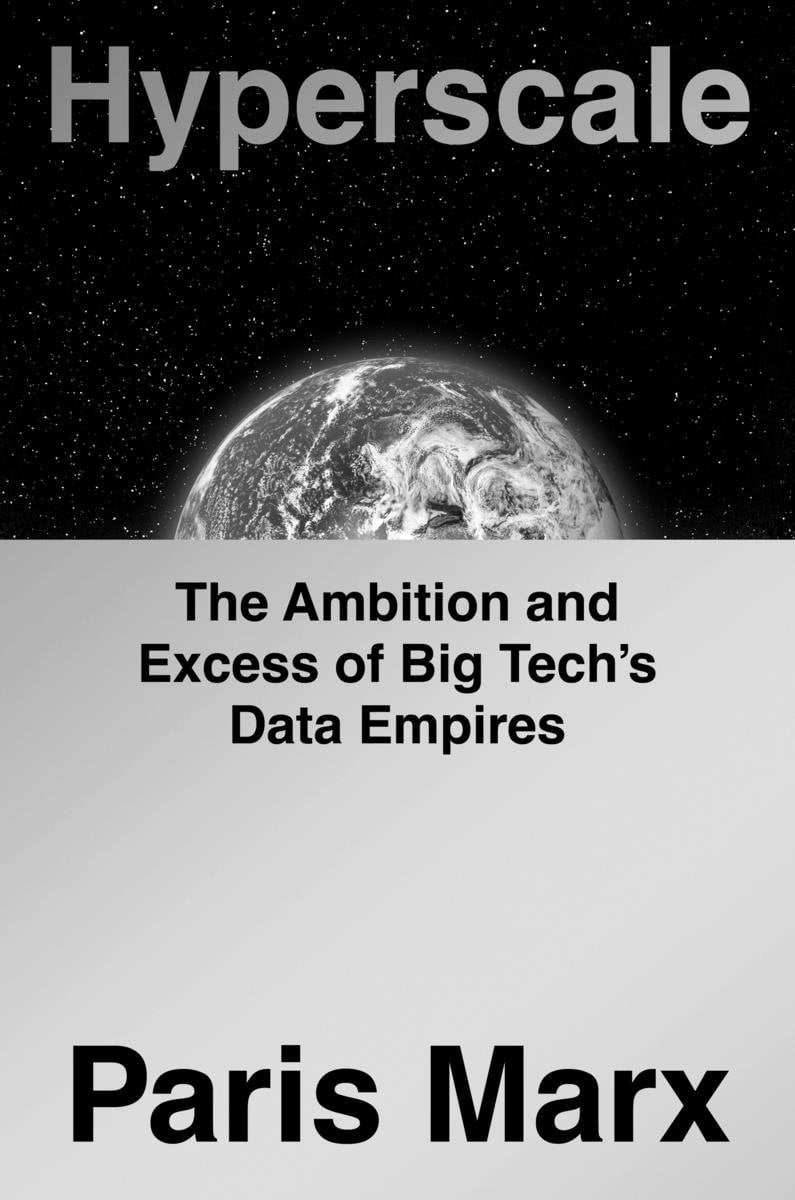
Hyperscale: The Ambition and Excess of Big Tech’s Data Empires by Paris Marx. “He exposes the deceptive, exploitative ways tech companies are siphoning energy and resources from vulnerable communities in their pursuit of digital power…”
Film Meets Art
Vugar Efendi has made a pair of videos showing scenes from films that have been inspired by famous paintings. The second video is especially good, showing references in There Will Be Blood, Lost In Translation, and a Jacques-Louis David reference from About Schmidt.
Socials & More