kottke.org posts about video
Ok I know you’ve probably seen the teaser trailer for season 3 of Succession by now but I was away and missed it so we’re all going to watch it together mmm’kay? New season starts “this fall”, whatever that means. I guess that’s enough time for a rewatch of the first two seasons?
For more than 21 years, Noah Kalina has taken a photograph of himself. Periodically, he makes video compilations of the photos — you’ve probably seen them here or elsewhere. For his latest video, he’s collaborated with Michael Notter (visuals) and Paul O’Mara (sound) on a video called 7777 Days.
In a first step, Michael used the machine learning library dlib (http://dlib.net/) and some custom Python code to detected in each of Noah’s photos 5 face landmarks (i.e. both eyes, the nose and the two corners of the mouth). These landmarks were then used to align the faces in all photos, so that the eyes and corner of the mouth were horizontally oriented and always an equal distance apart. After that, some small image intensity correction were applied to make very dark images a bit brighter and very bright ones a bit darker. This was followed by an upscaling of all images (where needed) to a 4K resolution.
The result is a 2-minute video (reminiscent of Jason Salavon’s work) that spans half of Kalina’s life — in the video he ages 2 months every second and 10 years a minute.
Update: Kalina and Notter explain how this video came about and how it was made.
In collaboration with Jun Takahashi, Thom Yorke has released a “Very 2021” remix of his band’s iconic Creep. Slow and reverby, the singer’s perhaps-least-favorite Radiohead song takes on new life for this (second?) oddest of years. On first listen, I like but maybe don’t love this version, but some of the YT comments are worth reading:
Can’t believe Thom Yorke finally collaborated with Radiohead. Two of my favorite artists making a song together
Thom has went so far into artistic discovery he looped back on himself. It’s like post-post-irony, but musically
I can’t believe Thom made a doomer wave version of his own fucking song
Thom nailed this one, he sounds just like the originals singer!
You can find the song on a variety of platforms.
Hermit Nicolas Cage goes on a crusade to find the person who kidnapped his truffle-hunting pig? Yes, please. (This is going to be terrible, right? Or fantastic? No in-between I’m guessing. Would make an interesting triple feature with The Truffle Hunters .)
Bear with me, I am on a bit of an art kick lately. As I said earlier this week, I’ve been slowly working my way through James Payne’s Great Art Explained video series. But then — bang! — he came out with a new episode on Vincent van Gogh and his masterpiece, Starry Night. Having seen this painting in person for the first time in a few years just days ago at MoMA, I abandoned the back catalog and dug in to this new one immediately.
Van Gogh is one of my favorites — I spent several happy hours at his museum in Amsterdam in 2017 — and Payne does a good job of contextualizing his life and work around the time he painted Starry Night, particularly the emphasis on the influence of Japanese art on his work and his probable incorporation of spiral galaxy imagery into Starry Night. Highly recommended, especially if you’ve seen the painting in person.
ILM visual effects artist Todd Vaziri asked his Twitter followers to share their favorite shots from a movie made in the last decade. The replies are a visual feast (and heavy on blockbusters) — here are a few of my favorites.
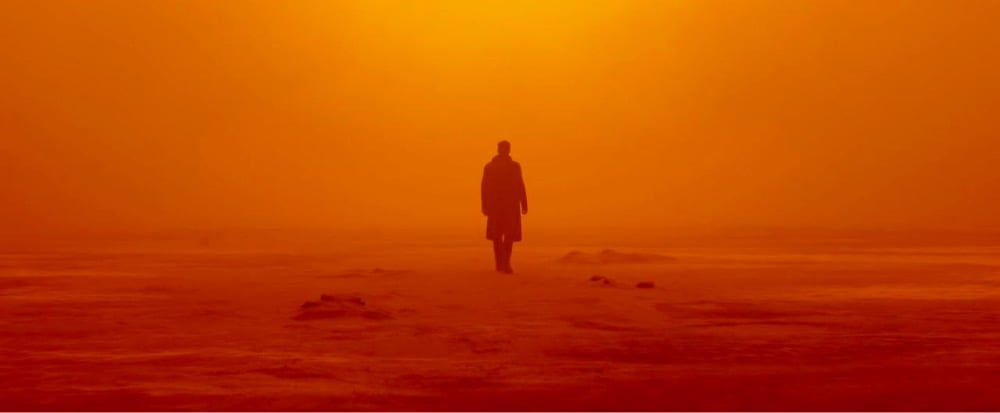
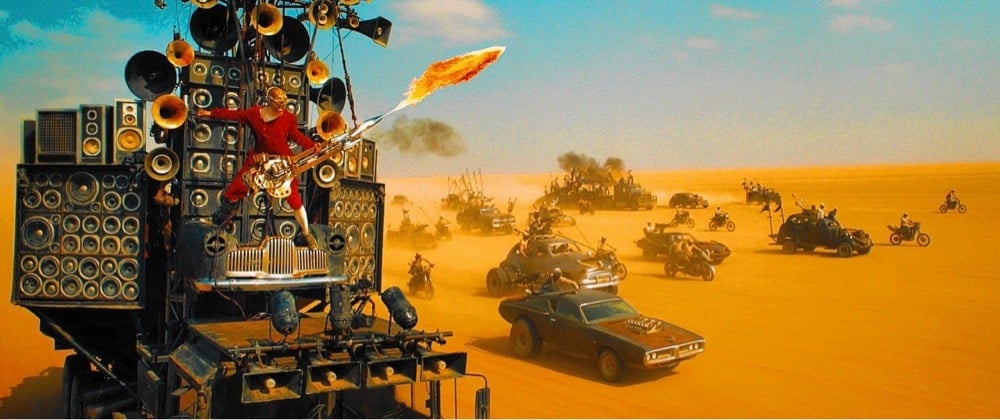
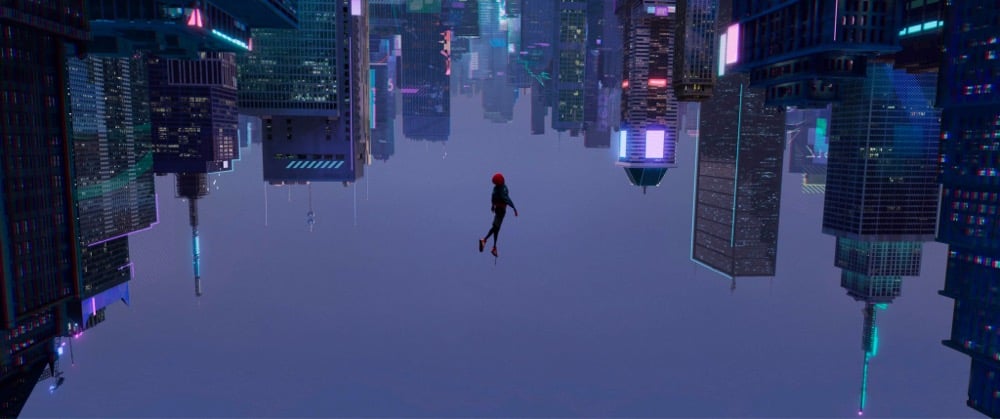
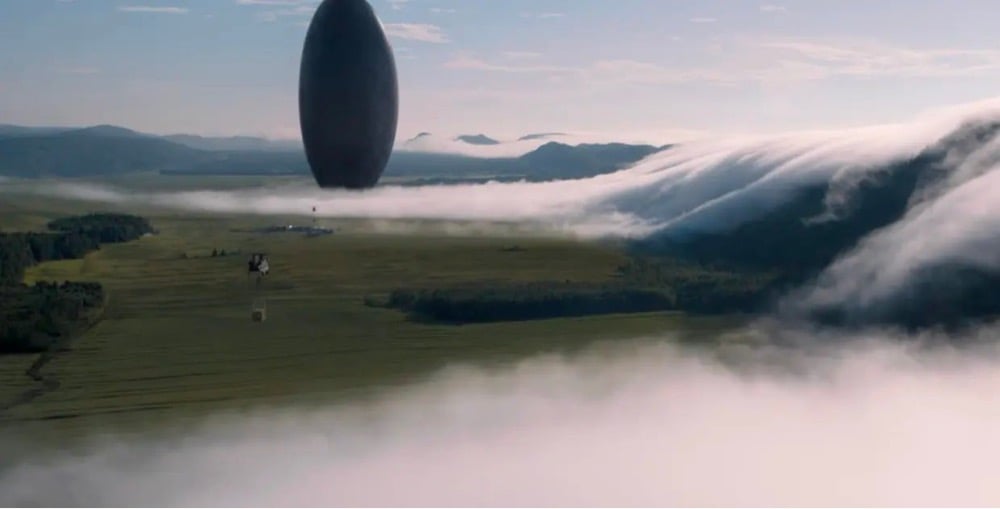
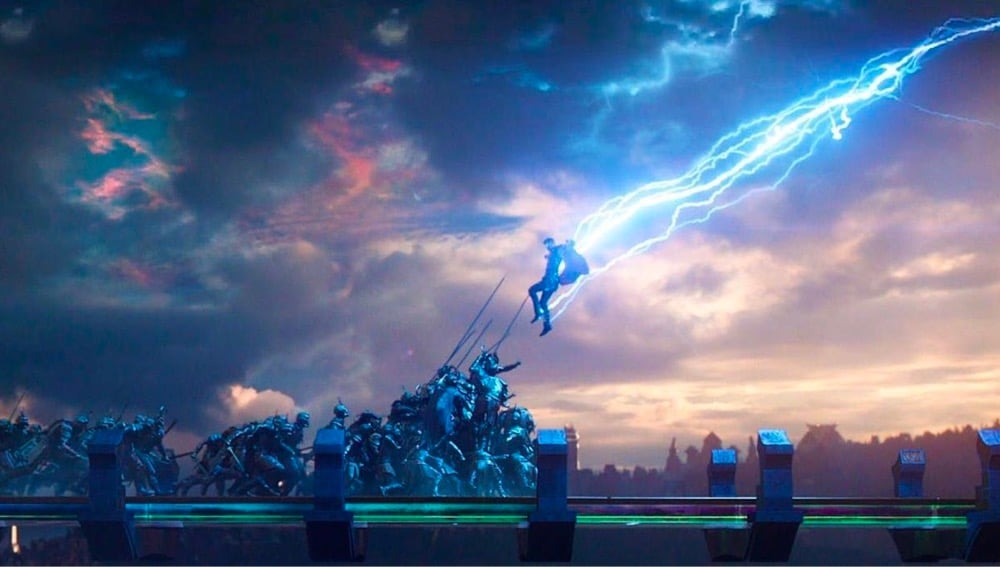
From top to bottom: Blade Runner 2049, Mad Max: Fury Road, Spider-Man: Into the Spider-Verse, Widows, Arrival, and Thor: Ragnarok. There are probably several deserving scenes omitted from the thread (no Wes Anderson fans…the sushi scene from Isle of Dogs?), but that Blade Runner shot is probably my favorite from the decade. I would also have included a shot from Dunkirk (one of the expansive plane chase vistas that looked incredible in IMAX) , Portrait of a Lady on Fire, and the final scene in Carol — that look gives me chills just writing about it.
Update: A video compilation of some of the best shots of the decade.
(via @nielsmann)
Evan Puschak looks at how the personal nature, intimacy, and stylistic approachability have given Frida Kahlo’s work enduring and increasing popularity.
This is an incredible video investigation by the NY Times of the January 6th attack on Congress by terrorists, rioters, and supporters of Donald Trump. They analyzed hundreds of videos, police bodycam footage, and police communications to reconstruct a minute-by-minute account of the Capital breach.
From the accompanying article of six takeaways from the investigation:
Most of the videos we analyzed were filmed by the rioters. By carefully listening to the unfiltered chatter within the crowd, we found a clear feedback loop between President Trump and his supporters.
As Mr. Trump spoke near the White House, supporters who had already gathered at the Capitol building hoping to disrupt the certification responded. Hearing his message to “walk down to the Capitol,” they interpreted it as the president sending reinforcements. “There’s about a million people on their way now,” we heard a man in the crowd say, as Mr. Trump’s speech played from a loudspeaker.
The call and response didn’t stop there. We found evidence of his influence once the violence was well underway. In one moment, a woman with a megaphone urged rioters to climb through a broken window by asking them to “stand up for our country and Constitution” — echoing the language in an earlier tweet from Mr. Trump. In another, as the police were pushing to clear the mob off the building, a rioter screamed at officers: “I was invited here by the president.”
It is astonishing to me how close we came to having a hostage or assassination situation with members of Congress and the Vice-President — like literal seconds and minutes away — and how is this not the only topic of conversation over the past 6 months in our country? And not only that, it’s clear that we’re not really going to do anything about it, aside from beefing up Capitol security and imprisoning some of the insurrectionists. This isn’t over — as the video’s narration states near the end: “The forces that brought them there have not gone away.”
Update: From Brian Stelter’s Reliable Sources newsletter:
But Rangappa could have also been talking about CNN’s efforts in court to obtain riot footage; or ProPublica’s recent investigation that indicated “Senior Trump Aides Knew Jan. 6 Rally Could Get Chaotic;” or Just Security’s new “clearinghouse” for riot research. Her broader point is spot on: Newsrooms have been putting the January 6 puzzle pieces together, creating a detailed rough draft of history, in spite of partisan efforts to bury that history.
Professional road racing cyclist Lachlan Morton is attempting to complete the Tour de France this year. Except: He’s doing it entirely on his own, without teammates, support vehicles, and transportation from the previous day’s finish to the next day’s start (which might be dozens or even hundreds of miles apart). That means he’ll be riding an extra 1500 miles, climbing an additional 50,000 feet in elevation, shopping for his own meals, and still trying to beat the peloton to Paris. Here’s a quick explanatory trailer:
You can follow his progress on Rapha’s site and check out updates in this Instagram Story. He’s currently ahead of the peloton, even riding day four in Birkenstocks:
Ah, but — the day three press release had an ominous note in it. Right after telling us that Morton had “picked up a tub of couscous and a couple of bags of nuts for dinner” came the real kicker: our protagonist had a bad knee, and had bought new pedals to allow a switch to flat shoes.
So on day four, Morton set off with his new pedals and covered both stage four and stage five of the actual Tour de France — in a pair of Birkenstocks. Despite his sensible sandals, Morton managed to average the same speeds as the day prior, getting through the time trial in 1:17.

(via matt)
Great Art Explained is one of my favorite newish YouTube channels and I’ve been slowly working my way through their back catalogue. Today’s watch was a 15-minute explanation of one of the signature masterpieces of the Renaissance, Michelangelo’s David. The details related to the carving of the swollen jugular vein and the variable visibility of the veins in the hands is fantastic. (via open culture)
Drone photographer Lior Patel has spent the last several months capturing the movements of a flock of sheep in Israel as they move from their winter to summer pastures. (via colossal)
In a family house, Mathieu Stern found a box of treasures hidden away by a little girl some 120 years ago. Inside was a pair of glass plate negative images of some pets, which Stern developed using the cyanotype technique. Film development is just straight-up magic.
See also I Found a Mystery Film in a 60-Year-Old Camera.
This is a filmstrip version of Margaret Wise Brown’s Goodnight Moon produced in 1984. Not sure what a filmstrip is? Boing Boing explains:
From the 1940s until the low-cost videocassette boom of the 1980s, audio filmstrips were commonly used in classrooms as an alternative to 16mm film projectors that were more expensive and fiddly to keep working.
This post doubles as one of those “say how old you are without saying how old you are” Twitter prompts. Here’s more on filmstrips from the Museum of Applied Arts & Sciences:
While the show was a welcome diversion from parsing, long division and dictation, what we didn’t realise was the filmstrips were an educational revolution in Australia akin to smart boards today. They were stored in neat little canisters which could be easily dispatched to schools. Accompanying them was a script read by the teacher describing the 25 or so images depicted in the films, which were manually advanced in the projector.
Until watching this Goodnight Moon video, I had totally forgotten about the beep used in filmstrip audio used to signal someone to switch to the next frame.
In just over two hours, this video presents 1540 paintings by impressionist master Claude Monet, a significant portion of his lifetime output. This is a really intriguing way to look at art. It’s not in-person and you don’t get a lot of time with each piece, but the video is HD, you can pause or slow the playback speed, and by seeing a lot of work over a short span of time, you can get a real sense of the stylistic choices and variations across Monet’s oeuvre — a view of the forest rather than the trees. (via open culture)
This stop motion animation takes us on a journey through various tropical fruits, as if we’re seeing animated MRI slices of them. If you’re wondering how it’s done, a behind-the-scenes immediately follows the animation. The sound design on this video is fantastic.
See also Hidden Patterns Inside Fruit (by the same creator) and WoodSwimmmer, a Gorgeous Stop Motion Journey Through Wood. (via moss & fog)
Newer posts
Older posts




Socials & More