


The Wes Anderson soundtrack collection
Twee out with more than 9 hours of music from Wes Anderson’s movies:

This site is made possible by member support. 💞
Big thanks to Arcustech for hosting the site and offering amazing tech support.
When you buy through links on kottke.org, I may earn an affiliate commission. Thanks for supporting the site!
kottke.org. home of fine hypertext products since 1998.
Beloved by 86.47% of the web.
Twee out with more than 9 hours of music from Wes Anderson’s movies:
LOOK Effects did the visual effects for Wes Anderson’s The Grand Budapest Hotel and Darren Aronofsky’s Noah. (via @Colossal)
By Louis Paquet, the opening titles of Forrest Gump if it were directed by Wes Anderson.
(via @kyledenlinger)
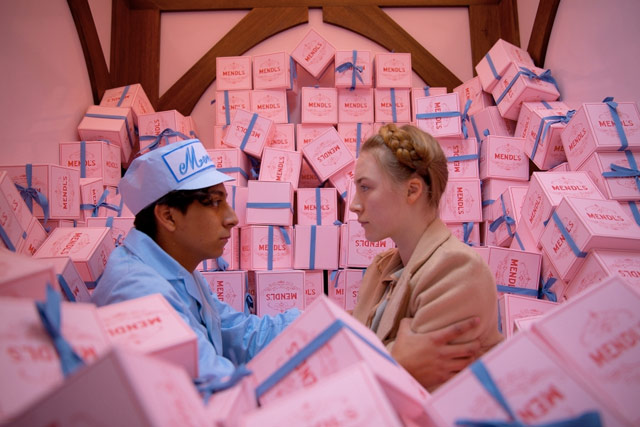
The Grand Budapest Hotel is Wes Anderson’s most design-y film, and that’s really saying something. Typography is present in almost every frame; at times, it was almost oppressive. Creative Review interviewed designer Annie Atkins, who was responsible for the film’s graphic design elements.
Oh my goodness, so many signs in the 1960s hotel lobby! I have to give credit to Liliana for this work, as she took care of nearly all of these. She had three sign-writers from Berlin painting non-stop for a week to get them all done in time for our first day of shoot, as that set was first up. Wes and Adam had seen so many examples of quite officious signage in what had been communist East Germany — don’t do this, don’t do that, do this but only like that! The signs really added to the claustrophobic feeling of that set, and Wes had asked for them all to be black with simple white hand-painted lettering — based on the style of the old sign at Yorckstrasse subway station in Berlin.
Oh hello Grand Budapest Hotel soundtrack on Rdio. Alexandre Desplat. It’s a goooood morning.
Also available for download on Amazon or iTunes if that’s your thing.
In his own words, Wes Anderson explains different aspects of his visual style.
Nicely edited together by Nelson Carvajal at Way Too Indie.
No one uses slow motion more consistently than Wes Anderson; all his films except Fantastic Mr. Fox use the technique. Here are all the slow-mo scenes from his films strung together:
(via devour)
Wes Anderson did a short film for Prada. The film contains race cars, Jason Schwartzman, Italy, and tweeness.
(via digg)
Speaking of Wes Anderson, Matt Zoller Seitz has finished his video essay series on Anderson’s movies. You can find the entire collection of videos on Vimeo and transcripts and notes are on Seitz’s blog. Here are the final two to get you going:
And if that’s not enough for you, here’s the book that the videos are based on.
Wes Anderson is coming out with a new horror movie. Here’s the trailer:
Ha ha just kidding it’s a SNL spoof. Ed Norton does a pretty ripping Owen Wilson.
Nestled in the midst of Matt Zoller Seitz’s video essay on Wes Anderson’s The Life Aquatic with Steve Zissou is this bombshell: the movie contains a Star Wars reference no one seems to have noticed. Seitz synced the scenes for us:
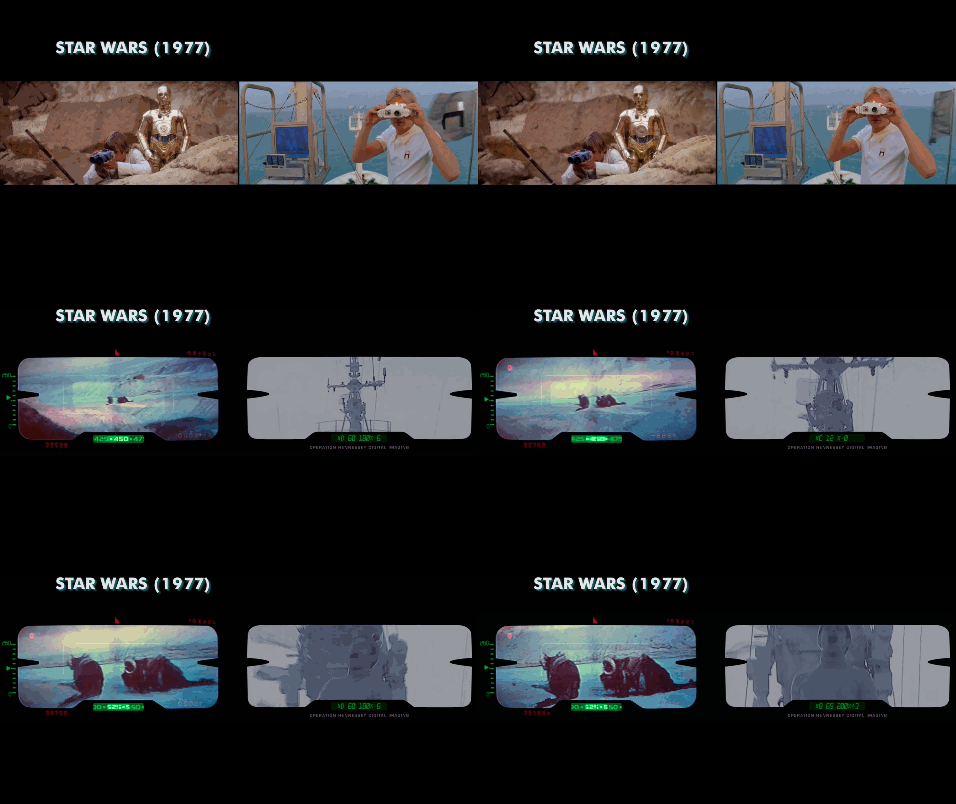
There have to be others, right? Many of Anderson’s films end with all of the characters gathered together like at the medals ceremony in Episode IV…someone even synced up the end of the movie with the closing credits music from Zissou and it works really well:
And of course, there’s Conan O’Brien’s take on what a Star Wars movie directed by Anderson might look like.
Matt Zoller Seitz is doing a video essay series based on his new book, The Wes Anderson Collection. The first two installments, on Bottle Rocket and Rushmore, are already up:
I love what he says about Rushmore:
There are few perfect movies. This is one of them.
The book and video essays came about because Anderson saw Seitz’s earlier video essay series, The Substance of Style, an examination of Anderson’s stylistic influences. Great resource for fans of Anderson and film.
Kumar Pallana, one of Wes Anderson’s cast of regulars, has died at age 94. Pallana appears as Kumar in Bottle Rocket, Mr. Littlejeans in Rushmore, and as Pagoda in The Royal Tenenbaums.
Pallana led a massively interesting life before hitting the big screen at nearly 80. Born in colonial India, he lived all around the world, and first made a name for himself as an entertainer in America in the 1950s. Back then he was known as Kumar Of India, and his specialty was spinning plates-he even appeared on Captain Kangaroo in 1961. (Other feats included magic, balancing, swordplay, and juggling-you can see him do a handstand in The Royal Tenenbaums.)
Out today is The Wes Anderson Collection (at Amazon), a coffee-table book about Wes Anderson’s career.
The Wes Anderson Collection is the first in-depth overview of Anderson’s filmography, guiding readers through his life and career. Previously unpublished photos, artwork, and ephemera complement a book-length conversation between Anderson and award-winning critic Matt Zoller Seitz. The interview and images are woven together in a meticulously designed book that captures the spirit of his films: melancholy and playful, wise and childish — and thoroughly original.
Vulture has an excerpt of the chapter on The Royal Tenenbaums.
Q: Gene Hackman - it was always your dream for him to play Royal?
A: It was written for him against his wishes.Q: I’m gathering he was not an easy person to get.
A: He was difficult to get.Q: What were his hesitations? Did he ever tell you?
A: Yeah: no money. He’s been doing movies for a long time, and he didn’t want to work sixty days on a movie. I don’t know the last time he had done a movie where he had to be there for the whole movie and the money was not good. There was no money. There were too many movie stars, and there was no way to pay. You can’t pay a million dollars to each actor if you’ve got nine movie stars or whatever it is - that’s half the budget of the movie. I mean, nobody’s going to fund it anymore, so that means it’s scale.
That’s right, Gene Hackman (and probably the rest of them as well) worked for scale on The Royal Tenenbaums.
Anderson also talks about the scene in The Darjeeling Limited where they show everyone on the train:
Q: When you turn to reveal the tiger, what is that, the other side of the train?
A: No, it’s all one car. We gutted a car, and that is a fake forest that we built on the train, and it is a Jim Henson creature on our train car. The whole thing is one take, and I think because we did it that way, while we were doing it, we did feel this electricity, you know? There’s tension in it because it’s all real. Fake but real. I mean, that was the idea. The emotion of it, well — there’s nothing really happening in the scene, you know? They just kind of sit there, but it was a real thing that was happening. But I did at the time have this feeling like “I don’t know.”
Socials & More