kottke.org posts about Vermont
In Florida, flooding is a huge cause of death and destruction from hurricanes. This video looks at how a town called Babcock Ranch was designed to withstand hurricane flooding through some smart engineering.
Yet this one town, Babcock Ranch, has been hit by four hurricanes and basically came out unscathed. There was no flooding at all. So we asked the engineer who helped build this town to break down its hidden designs.
Related: John Seabrook’s piece in this week’s New Yorker, In an Age of Climate Change, How Do We Cope with Floods? (archive).
Vermont feels like the frontier of climate change in the Northeast. Farmers in the bottomlands, who previously planted wheat and barley, are beginning to plant rice, which can be underwater for two days without damage to the crop. The old roads that early Vermont settlers hacked out on hilltops, which lasted for more than two hundred years, are melting back into the forest. Extreme-rain events scour the roads down to bedrock ledges, rendering them impassable, and, because no one then uses them, any blown-down trees don’t get cleared. The next storm brings more blowdowns. A road that I went mountain biking on ten years ago, when it was a distinct pathway with old-growth trees on each side, lined by aged stone walls, is now such a tangle of fallen trees, branches, and rocks that it’s hard to tell a road was ever there.
Vermont is the second least populated state, after Wyoming, with fewer than six hundred and fifty thousand residents; it is also the fourth highest in disaster-relief funding per capita, nearly all of it flood-related. Washington County ranked first nationally in disaster declarations between 2011 and 2024. Annual precipitation in the state has increased six inches since the nineteen-sixties, and heavier-than-normal rain events in the Northeast are expected to increase by as much as fifty-two per cent by 2100. Vermont is a laboratory for the study of intense rainfall in steep terrain, and a proving ground for scientists, policymakers, regulators, and land-use planners who are on the front lines of a recurring catastrophe that traditional methods of prevention — dredging a river’s bottom, armoring its sides, berming its banks — have only made worse.
I live in Washington County so how communities are attempting to mitigate flooding is of great interest to me.

From Akela Lacy at The Intercept, Palestinian Student Leader Was Called In for Citizenship Interview — Then Arrested by ICE (archive):
Mohsen K. Mahdawi arrived at the U.S. Citizenship and Immigration Services office in Burlington, Vermont, on Monday. A Palestinian student at Columbia University, he hoped that, after 10 years in the U.S., he would pass the test to become a naturalized citizen.
Instead, agents from U.S. Immigration and Customs Enforcement arrested him and began the process to deport him to the occupied West Bank. Mahdawi, a leader of the campus protest movement against Israel’s war on Gaza, became yet another green card holder arrested and facing removal.
“Mohsen Mahdawi was unlawfully detained today for no reason other than his Palestinian identity,” Mahdawi’s attorney Luna Droubi said in a statement to The Intercept. “He came to this country hoping to be free to speak out about the atrocities he has witnessed, only to be punished for such speech.”
Windsor County state senator Rebecca White took a video of Mahdawi being escorted in handcuffs (also on Reddit & YouTube) from the U.S. Citizenship and Immigration Services in Colchester, VT by hooded and masked men to a group of unmarked vehicles.
(thx, caroline)
Good news: at least for now, Lucy Welch remains employed by Sugarbush. From the Boston Globe (archive):
In a statement to the Globe, Sugarbush spokesperson John Bleh said the resort respects “the voice and opinion” of its employees but “determined that the snow report was not the appropriate medium to share that information.”
He would not comment on whether Welch had faced disciplinary action but said she “remains a member of the snow reporting team.”
JD Vance visited Vermont this weekend and skied at Sugarbush; Welch wrote the widely shared snow report for the resort that, in direct and plain language, detailed her distaste for the administration that Vance represents. Bill McKibben called Welch “a hero for the moment” — here’s a portion of her missive:
I am really scared for our future. Acting like nothing is happening here feels way scarier than losing my job. I want to have kids one day, and I want to teach them to ski. The policies and ideals of the current Administration, however, are not conducive to either of these things, because, at least how things look now, I’d never be able to afford a good life for a child anyway, and snow will be a thing of Vermont history. So please, for the sake of our future shredders: Be Better Here. It has truly been a pleasure writing your morning snow reports — I hope this one sticks with you. With love, peace, and hope, Lucy Welch
Judging from the comments on Sugarbush’s most recent Instagram photo and other social media platforms, Welch has achieved the status of folk hero in the state. Well deserved, IMO. (thx, caroline)
JD Vance, fresh off of helping his boss ambush & insult a foreign leader in the White House yesterday afternoon, is on vacation in Vermont with his family this weekend and will be skiing at Sugarbush Resort in Warren, VT, a 15-minute drive from where I live.
This morning, Sugarbush snow reporter Lucy Welch took the opportunity to make some good trouble by sending out a message of resistance against Vance and the administration he represents. The message went out via email to all Sugarbush daily report subscribers and appeared on the website for a brief time before it was removed. Here is the text of her message:
Mar 1st, 2025, 6:49 AM: Today of all days, I would like to reflect on what Sugarbush means to me. This mountain has brought me endless days of joy, adventure, challenges, new experiences, beauty, community, and peace. I’ve found that nothing cures a racing mind quite like skiing through the trees and stopping to take a deep breath of that fresh forest air. The world around us might be a scary place, but these little moments of tranquility, moments I’ve been fortunate enough to enjoy as a direct result of my employment here, give me, and I’d guess you, too, a sense of strength and stability.
This fresh forest air, is, more specifically fresh National Forest air. Sugarbush operates on 1745 acres of the Green Mountain National Forest. Right now, National Forest lands and National Parks are under direct attack by the current Administration, who is swiftly terminating the positions of dedicated employees who devote their lives to protecting the land we love, and to protecting us while we are enjoying that land.
This Administration also neglects to address the danger, or even the existence of, climate change, the biggest threat to the future of our industry, and the skiing we all so much enjoy here. Burlington, VT is one of the fastest-warming cities in the country, and Vermont is the 9th fastest-warming state. The National Oceanic and Atmospheric Association (NOAA), a resource I use every day for snow reporting, is crucial in monitoring extreme weather events and informing public safety measures, and is also experiencing widespread layoffs and defunding at the hands of the Administration.
Sugarbush would not be Sugarbush without our wonderful community. Employees and patrons alike, we are made up of some of the most kind hearted, hardworking people I have ever met. Our community is rich with folks of all different orientations, ethnicities, and walks of life, who all contribute to make this place what it is. They all love Sugarbush because it is a place where they can come to move their bodies, to connect with the land, to challenge themselves, to build character, to nourish their souls with the gift of skiing.
Many of these people are part of the LGBTQI+ community. Many (well, that’s a stretch, we all know this is an incredibly white-washed industry) are people of color. Half are women. Many are veterans or adaptive skiers who, through Vermont Adaptive, are able to access snow sports in part thanks to federal grants through the Department of Veterans Affairs, which is also facing devastating cuts. Many of our beloved employees moved across the world through an exchange program on the J1 visa to help this resort run, and they are not US citizens. ALL of these groups are being targeted, undervalued, and disrespected by the current Administration.
The beauty of National Forest land, is that anyone and everyone is welcome to enjoy it. Anyone and everyone can buy a lift ticket. I also imagine it is incredibly difficult, and likely impossible, to say “No” to the Secret Service. I hope that, instead of faulting Sugarbush management or employees for “allowing this to happen”, you can direct your anger to the source — the Administration that, in my oh-so-humble opinion, is threatening our democracy, our livelihoods, our land.
I want to reiterate how much I admire and respect my fellow employees and managers — they work so hard to make this place operate, to keep you coming back and enjoying it and making lifelong memories. Many of them may feel the same way that I do, but their hands are tied, and for good reason. They have families to support, they have benefits and health insurance to receive, they face far greater and more binding pressure from Corporate. I am in a privileged position here, in that I work only seasonally, I do not rely on this job for health insurance or benefits, and hey, waking up at 4:30 AM isn’t exactly sustainable. Therefore, I am using my relative “platform” as snow reporter, to be disruptive — I don’t have a whole lot to lose. We are living in a really scary and really serious time. What we do or don’t do, matters. This whole shpiel probably won’t change a whole lot, and I can only assume that I will be fired, but at least this will do even just a smidge more than just shutting up and being a sheep.
I am really scared for our future. Acting like nothing is happening here feels way scarier than losing my job. I want to have kids one day, and I want to teach them to ski. The policies and ideals of the current Administration, however, are not conducive to either of these things, because, at least how things look now, I’d never be able to afford a good life for a child anyway, and snow will be a thing of Vermont history. So please, for the sake of our future shredders: Be Better Here. It has truly been a pleasure writing your morning snow reports — I hope this one sticks with you. With love, peace, and hope, Lucy Welch
But hey, while we’re here…1-3” of fresh snow to kick off this interesting weekend. Chance of scattered mixed precip showers today, with warmer temps reaching 36 at the base and 28 at the summit. Right now, the snowpack is a mix of machine groomed and frozen granular, with more winter-like conditions near the summits, but the new snow may help nudge conditions into the powder/packed powder category in certain aspects and elevations. Enjoy 60 groomers and 100% open terrain today! For Saturday, we’ll be rocking 111 trails, 484 skiable acres, and 60 groomed runs. Temps are expected to be in the mid-20s and mid-30s under cloudy skies with winds out of the WNW ranging from 15-40 MPH. With all the new snow we saw this month, it is more important than ever to be diligent when skiing and riding in the woods — tree wells pose a greater risk with all this fresh pow.
Thank you, Lucy — that was wonderful.

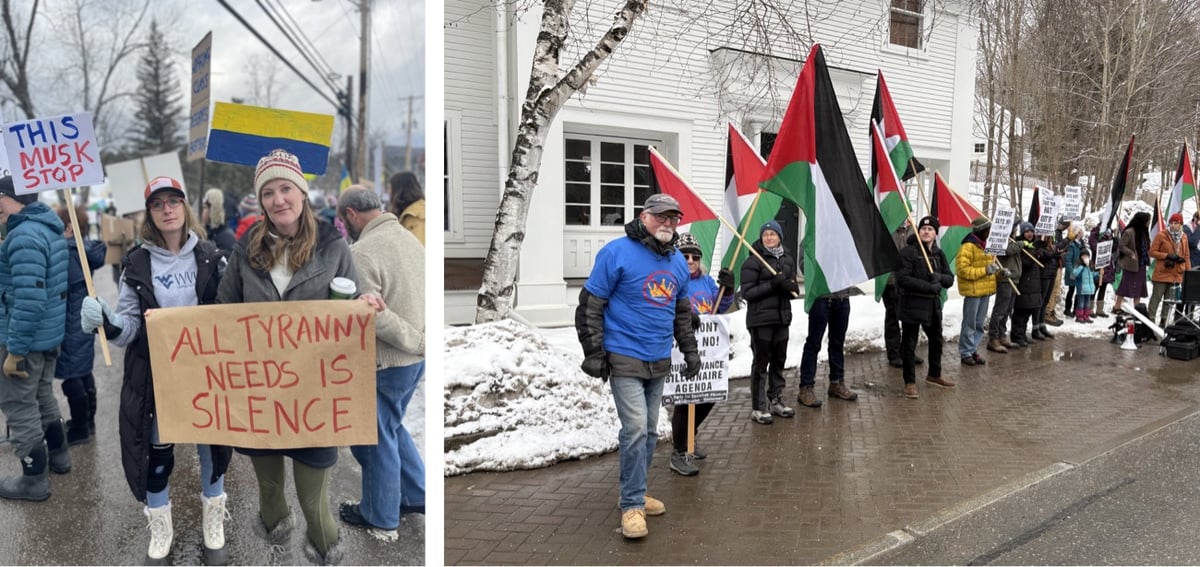
The rest of the towns around here and in the surrounding area have turned out for protests as well…some pics and video here, here, and here. There were some protesters spotted earlier on one of the Sugarbush webcams as well.
Update: There are a bunch of updates on the protests and links to photos and videos in the comments below. Two of the photos embedded above (HIT A TREE and the pride flag one) were taken at the protest yesterday by KDO field reporter Caroline. 🙏
Talk to anyone who lives near the flight path of Burlington, Vermont’s airport and it won’t be too long until they are complaining to you about the F-35 jets that routinely disrupt their lives. The loud, expensive weaponry arrived in the state in 2019 and have upset and angered residents ever since.
A sudden roar announced that the military jets were taking to the sky again.
Julia Parise’s son had developed a routine for whenever this happened: He would look to his mother and assess whether it was “one of them” — the F-35 fighter jets that had become such a constant presence in his young life — before asking her to cover his ears. He might do it himself, recalling aloud her reassurances as he did: “They won’t hurt me. They won’t hurt me.”
To capture the community unrest created by what one resident calls “Lockheed Martin’s welfare program” (the jet program will cost taxpayers $1.7 trillion over its lifetime), filmmakers Patrick McCormack and Duane Peterson III made a short film called Jet Line: Voicemails from the Flight Path featuring residents’ concerns from a complaints hotline the pair set up.
This short film employs an anonymous hotline to elevate the voices beneath Vermont’s F-35 flight path, the first urban residents to live with one of the military’s most controversial weapons systems overhead.
Tranquil scenes of unassuming neighborhoods near Burlington International Airport are juxtaposed with voicemails of the unheard, those drowned out by the ear-shattering “sound of freedom.” Exploring the relationship between picturesque residential areas and the deafening fighter jets overhead, Jet Line is a poetic portrait of a community plagued by war machines, documenting untenable conditions in a small city once voted one of the best places to live in America.
I hear the F-35s almost every time I am up in the Burlington area and they are very loud. I hear them when I’m on the phone with friends who live in Winooski. I hear them during my weekly Zoom session w/ my Burlington-based therapist and we have to pause for a few seconds so everyone can hear again. I live 30 miles away and they flew loudly over my house earlier today, as they do at least once a week. Over the weekend, the Marine Corps tweeted that they’d lost an F-35 somewhere in South Carolina and — yes, you heard right: they lost a whole-ass $100 million lethal weapon over a populated area. (They found the wreckage yesterday.) Hopefully when one of VT’s F-35s decides to drop out of the sky someday, it somehow misses everyone.
The climate crisis has hit home this year for many Americans — its effects have been nearly inescapable in most parts of the country. With that, writes Bill McKibben, has come a sense of unease about the future, particularly about the places we live and will be able to live.
Drawing on his experience as a Vermonter, McKibben argues that no place is truly safe from the effects of the climate crisis, but we can find protection from it by rebuilding our sense of community and social trust. Those things can provide the resilience we’re going to need to get though this.
We’ve come through 75 years where having neighbors was essentially optional: if you had a credit card, you could get everything you needed to survive dropped off at your front door. But the next 75 years aren’t going to be like that; we’re going to need to return to the basic human experience of relying on the people around you. We’re going to need to rediscover that we’re a social species, which for Americans will be hard — at least since Reagan we’ve been told to think of ourselves first and foremost (it was his pal Margaret Thatcher who insisted ‘there is no such thing as society, only individual men and women.”) And in the Musk/Trump age we’re constantly instructed to distrust everyone and everything, a corrosion that erodes the social fabric as surely as a rampaging river erodes a highway.
Update: Here’s an example of what McKibben is talking about w/r/t Vermont’s sense of community:
Someone called Susan from Hollister Hill brought them sandwiches and brownies every day for two weeks after the flood. Bill from East Montpelier showed up and turned out to be a kind of one-man construction crew, and he’s been coming for weeks, pushing river sediment around and clearing out barns.
Over 50 people came to help. And at the end of these days, there were bonfires and pizza.
Hey folks. I’m sure you’ve read about the heavy rains and the flooding in the Northeast, particularly in New York and Vermont. My town here in central VT did not flood last night (though some area fields may have) and appears to be out of danger but other places around me were not so lucky.
In particular, I’m stunned by the several feet of water that are currently covering Montpelier, the capital of Vermont and a place that I know pretty well. This is a video from late last night and early this morning of someone paddling around downtown Montpelier, surveying the flooding and interviewing locals:
The water is not rushing, just standing, and there is almost no one around — there’s an eerie quiet that’s punctuated by the sounds of alarms going off all around. And there’s just so much water. Here’s a drone view of Montpelier (photo) from this morning:
And the threat isn’t over yet. A nearby dam is close to capacity and if they need to release the water, it could quickly dump much more water into the city (UPDATE: the threat to the dam has thankfully subsided for now):
“This has never happened since the dam was built so there is no precedent for potential damage,” City Manager William Fraser wrote in a statement posted to Montpelier’s Facebook page at 3:53 a.m. “There would be a large amount of water coming into Montpelier which would drastically add to the existing flood damage.”
People who live along the north branch and in downtown Montpelier are at greatest risk, he said. The dam, located on the border of Middlesex and Montpelier, is located about three miles north of the city center.
With “few evacuation options remaining,” Fraser wrote, “People in at risk areas may wish to go to upper floors in their houses.”
I’ve walked those streets a lot. Been to many of those shops. Eaten in those restaurants. Watched dozens of films in those movie theaters. I cannot believe how much water there is. So many people are going to be displaced from their homes for weeks and months. Businesses will be closed for weeks? Months? Some may never reopen. I’m not sure what else to say here.
Other places near here flooded too: Richmond, Waterbury, Moretown, Middlesex. The freeway is closed in some areas and motorists were left stranded. Officials had to evacuate the State Emergency Operations Center in Waterbury.
Towns further south in Vermont got hit too: Londonderry, Weston, Shrewsbury.
One of the things I’ve been doing this morning is trying to figure out why some places (Montpelier) got hit hard while other low-lying areas less than 15-20 miles away didn’t. And I’ve come to the conclusion that water does not give a fuck. Not about logic or human life or property. It just flows where it wants. There’s more rain over here than there is over there — because a butterfly’s wing flapped halfway across the world.
Climate disasters, fueled by large-scale, human-driven changes in the global climate, are becoming more frequent. In the past few weeks in Vermont, we’ve had wildfire smoke from Canada forcing people to stay inside, a heat wave, and now this flooding. And Vermont is a place that is supposedly safer for climate refugees to go. But that’s the thing about a global climate crisis: it’s going to affect absolutely everyone absolutely everywhere.
A high school here in Vermont is located (temporarily) in an abandoned Macy’s department store. A crew from the BBC recently made a short video tour, where you can see books on shelves designed to display fine china, an absence of windows, escalators, a lack of floor-to-ceiling walls, and fashion branding that remains on the walls.
Alexandra Lange wrote about the school in 2021 for Curbed.
The genre may be nearly dead, yet the building remains. And for economic, ecological, and social reasons, those buildings should be reused. “It’s amazing to think that we are standing in what used to be a department store; that we’re greeting people where we used to buy winter coats; reading books where they once sold fine china; taking phone calls in converted changing rooms; and learning science in the old suit racks,” Burlington’s school superintendent, Tom Flanagan, said at the ceremony. A school in a department store doesn’t have to be a sad story. In fact, this should just be the beginning, both for the students and for a country once addicted to big boxes.
Vermont indie newspaper Seven Days published a writeup, video tour, and photo slideshow of the school when it opened two years ago.
This advertisement from Vermont granite company Rock of Ages, featuring views of their majestic quarry accompanied by soaring opera, is way better than any commercial for a local quarry has any right to be.
See also The Quarryman’s Symphony, an all-time favorite post of mine about the hand signals used by a quarry boss guiding his marble harvesting crews. (via @AndrewLiptak)
For Vox, Julia Belluz takes a look at the approach that’s made Vermont more successful than most other US states in combatting Covid-19. The big thing? State officials recognized that those most at risk needed more support.
There’s a fatal flaw embedded in the basic Covid-19 test, trace, and isolate trifecta used around the world: It doesn’t account for the fact that the coronavirus is not an equal-opportunity pathogen. The people who are most likely to be tested, and to have the easiest time quarantining or isolating, are also the least likely to get sick and die from the virus.
From the United Kingdom to Sweden to Canada, we have evidence that the virus preys on people employed in “essential service” jobs (bus drivers, nurses, factory workers), which don’t allow for telecommuting or paid sick leave; people in low-income neighborhoods; and people in “congregate housing” like shelters, prisons, and retirement homes.
People of color tend to be overrepresented in these groups — but there’s no biological reason they’re more likely to get sick and die from the virus. Simply put: They tend to work jobs that bring them outside the home and into close contact with other people, live in crowded environments ideal for coronavirus contagion, or both.
The state then directed efforts, resources, and money to nursing homes, the unhoused, prisons, and essential workers to make it easier for those folks to stay safe.
I also thought this bit was really interesting:
There’s a simple adage in public health: “Never do a test without offering something in exchange,” said Johns Hopkins’s Stefan Baral. So when a patient gets tested for HIV, for example, they’re offered treatment, support, or contact tracing. “We’re not just doing the testing to get information but also providing a clear service,” Baral added, and potentially preventing that person from spreading the virus any further. “This is basic public health.”
With Covid-19, the US has failed at basic public health. Across the country, people have been asked to get tested without anything offered in exchange.
“If we are asking people to stay home and not work, we have to make sure society is supporting them,” Baral said. “An equitable program would support people to do the right thing.”
“Never do a test without offering something in exchange.” To the extent that federal and state governments have been asking to people to stay home, get tested, and wear a mask, many of those same governments have been unwilling or unable to provide people with much in return for doing so. And so, here we are months into this, paying for that inaction with 250,000 lives.
Update: How NYC does “never do a test without offering something in exchange”:
You can access a free hotel room to safely isolate from your family, which include meals, Rx delivery, free wi-fi, medical staff on site, and transportation to and from hotel and medical appointments.
(via @agoX)
As I write this, it’s snowing outside here in Vermont and Covid-19 has finally gained a foothold in our little state. At the governor’s press conference yesterday, he and his pandemic response team announced that contact tracing done by the state showed that the rise in cases started as an outbreak in some hockey leagues. That initial outbreak wasn’t contained and subsequent non-essential, indoor, mask-less, multi-household gatherings and Halloween parties resulted in the very sharp rise we started to see here in the first week of November.
Scott explained that 71% of outbreaks reported from Oct. 1 to Nov. 13 were linked to “social events, parties and people hanging out at home or bars and clubs.” He added Vermont has not seen the virus spread widely at schools, restaurants or other businesses.
Dr. Mark Levine, the state health commissioner, said those parties came in a variety of sizes of parties — Halloween gatherings large and small, dinner parties, baby showers, “people in the high single numbers at a deer camp.”
In states with many infections, particularly in the Midwest, contact tracing is all but impossible, so it’s instructive to pay attention to Vermont’s example here: we’re doing the tracing and the tracers say the infections are coming from people gathering indoors across multiple households. Which is exactly what public health and medical experts have been urging people not to do for months now.
And that brings us to Thanksgiving. For The Atlantic, Rachel Gutman asked her colleagues who have been writing extensively about the pandemic for some of their top safety rules and guidelines and their number one was, say it with me:
My colleagues’ guidance boils down to this winter’s golden rule for interacting with anyone outside your immediate household: Don’t spend time indoors with other people.
Here it is again in a fun font, just to make sure you got it: 𝓓𝓸𝓷’𝓽 𝓼𝓹𝓮𝓷𝓭 𝓽𝓲𝓶𝓮 𝓲𝓷𝓭𝓸𝓸𝓻𝓼 𝔀𝓲𝓽𝓱 𝓸𝓽𝓱𝓮𝓻 𝓹𝓮𝓸𝓹𝓵𝓮.
Look, for some people spending time indoors with others is essential — jobs, education, etc. — but those who don’t have to, shouldn’t. And this goes for everywhere in the US because no states (aside from maybe Hawaii) are doing well right now — cases are either high, rising sharply, or both. Please please don’t gather in indoor, multi-household groups for Thanksgiving if you haven’t quarantined beforehand. In the US right now, about 1-in-55 people who get Covid-19 die from it. With rates already high around the country, if many people do Thanksgiving as usual, an already horrific and deadly situation could become much much worse.
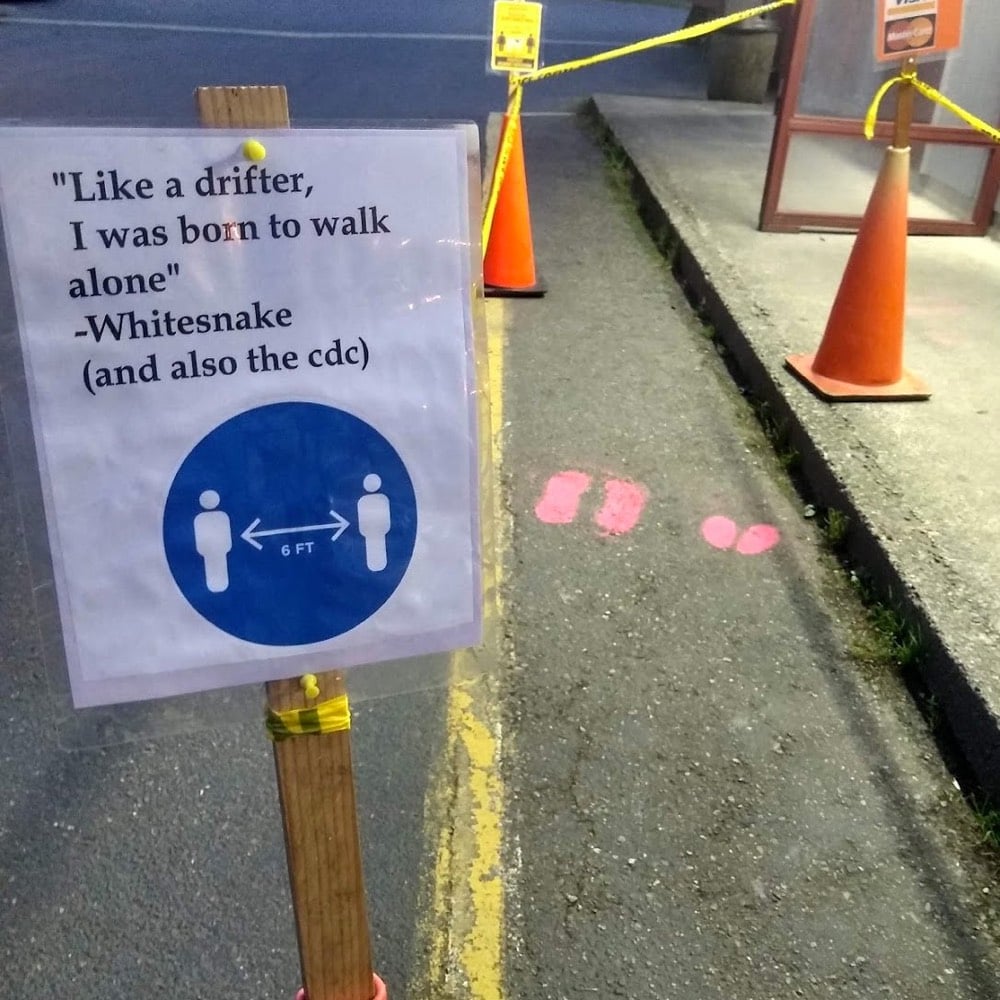
Public health safety measures don’t have to be bureaucratic, dour, and oppressive. They can even be fun. This is a sign from my local hardware store here in Vermont reminding shoppers to social distance:
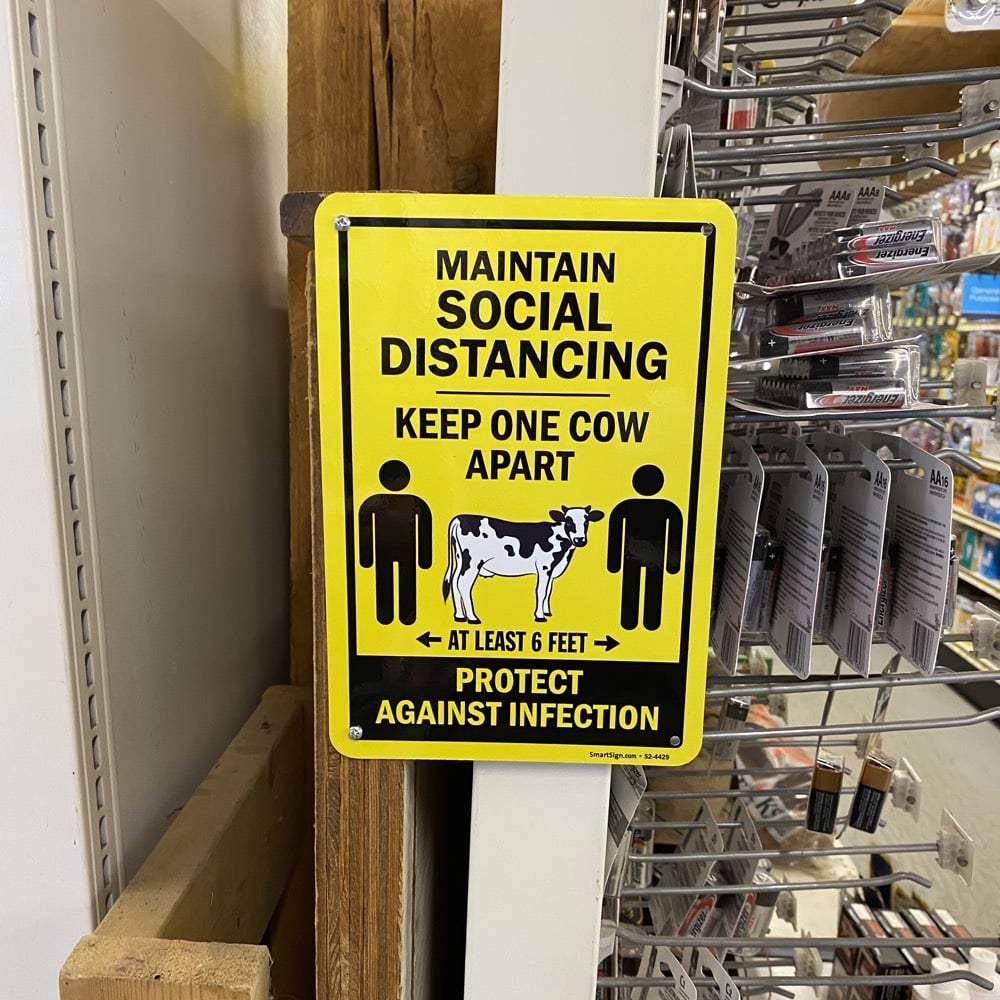
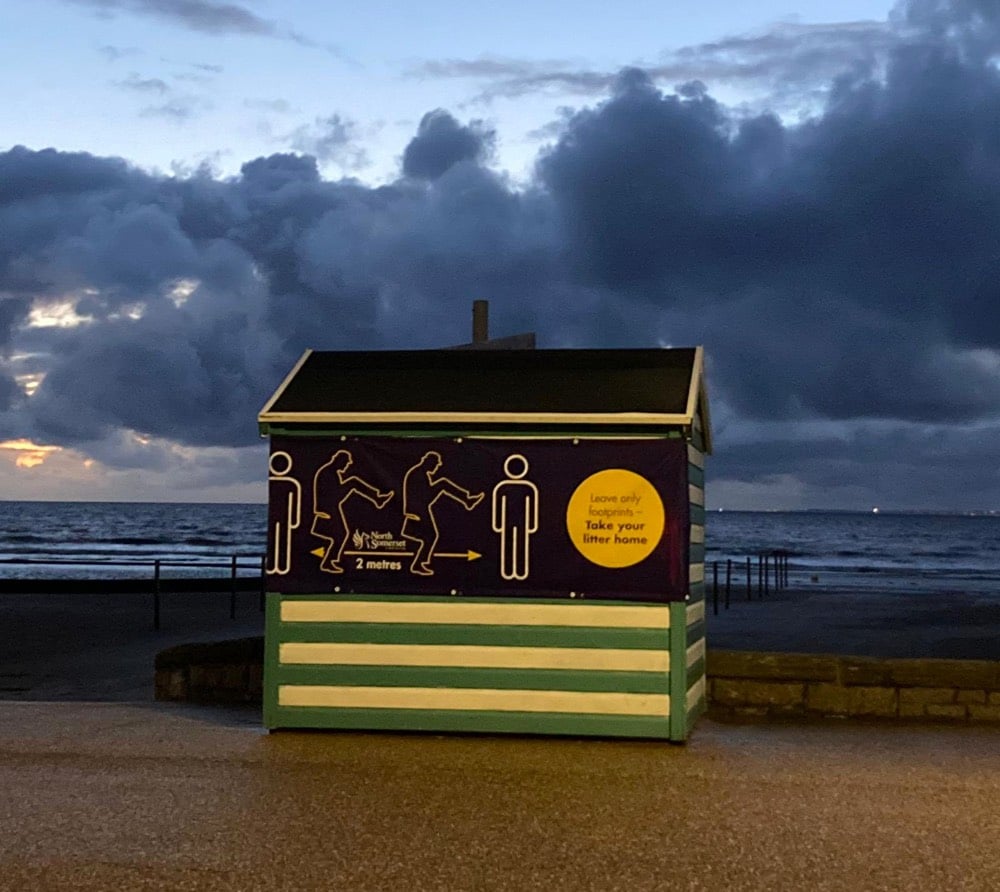
Journalist Rebecca Boyle recently asked her followers to share their local Covid-19 signage and they responded with some great examples.
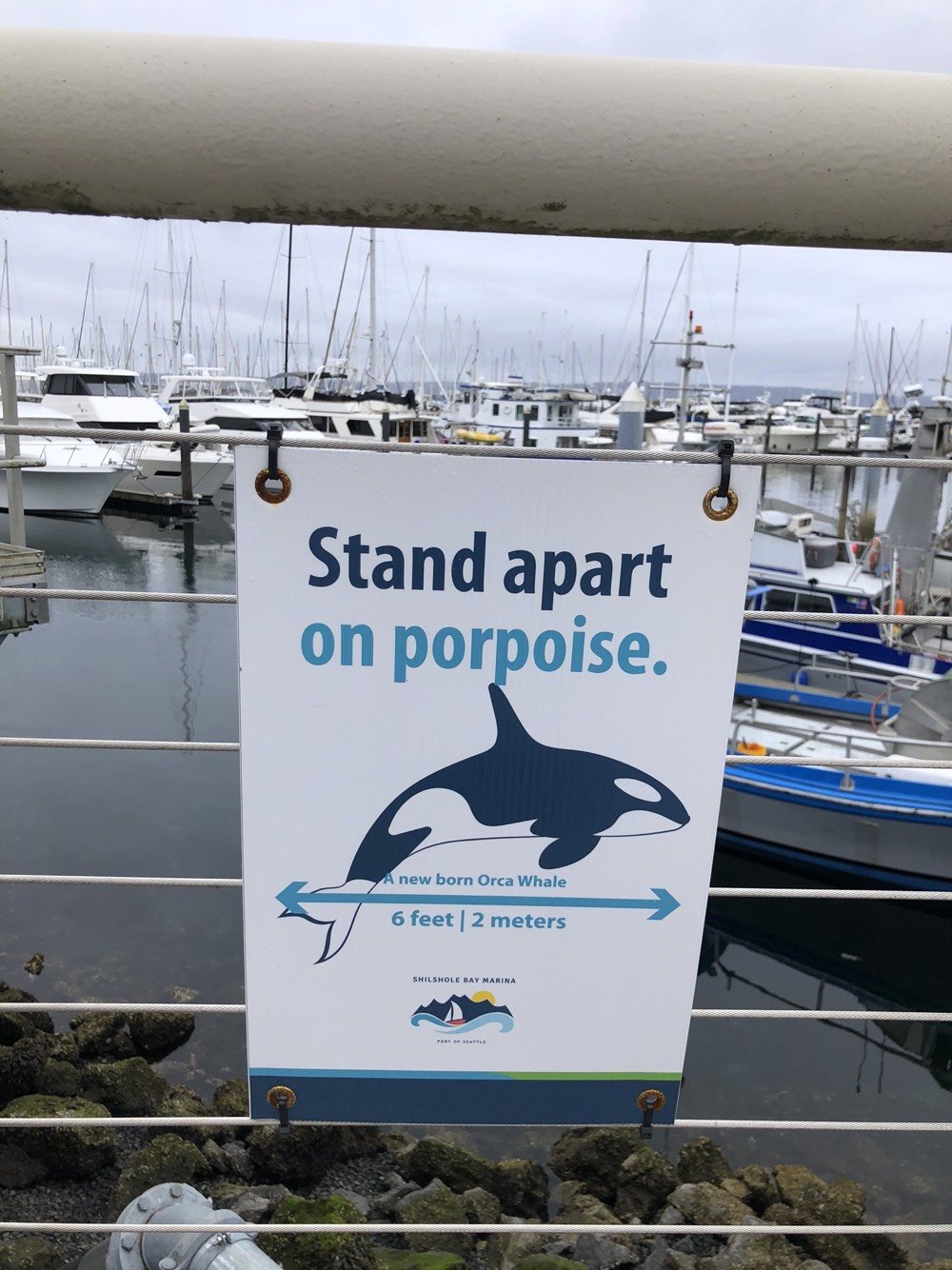
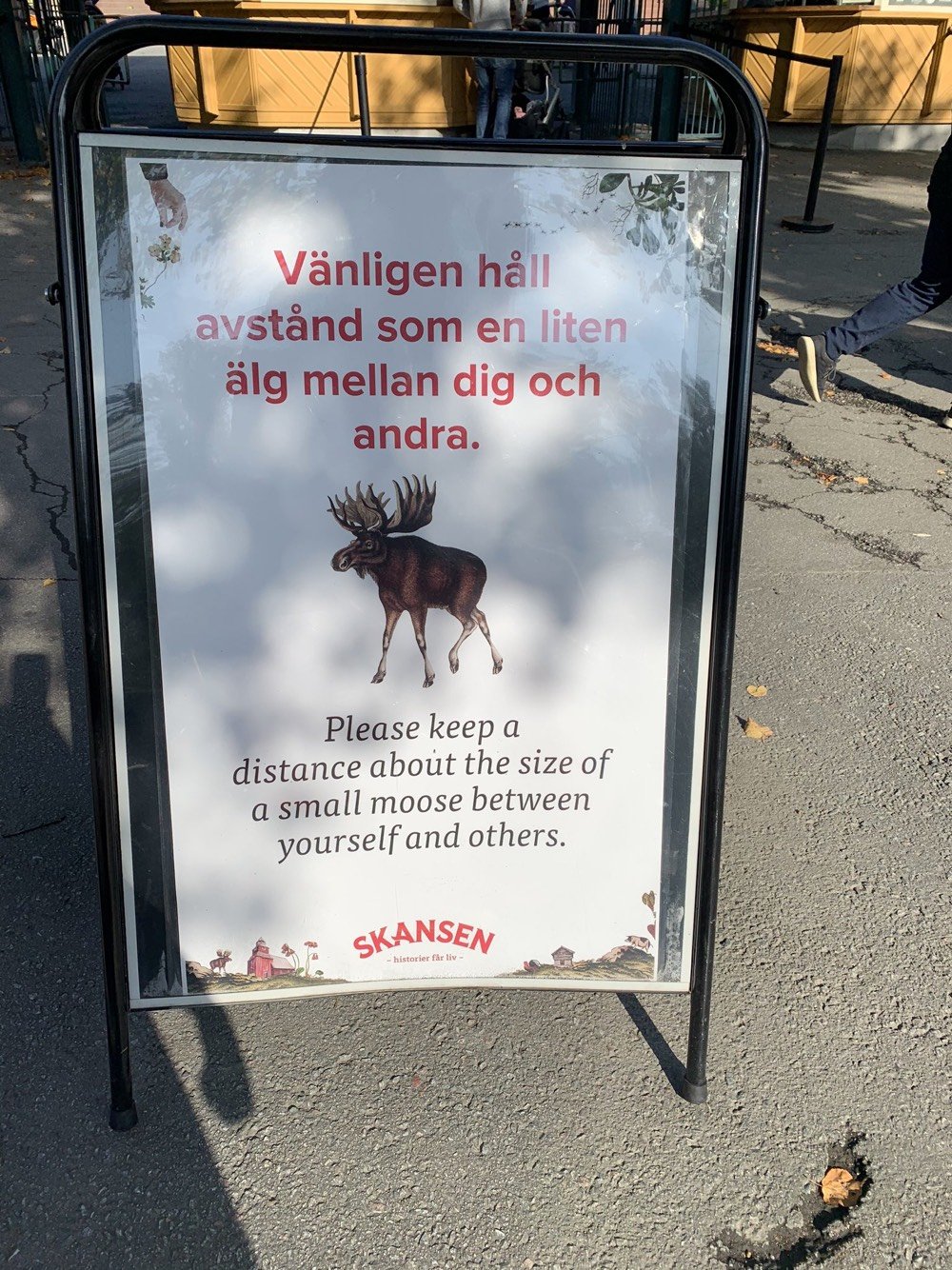
This homage to the Ministry of Silly Walks might be my favorite:
You can scroll through the whole thread for many more.
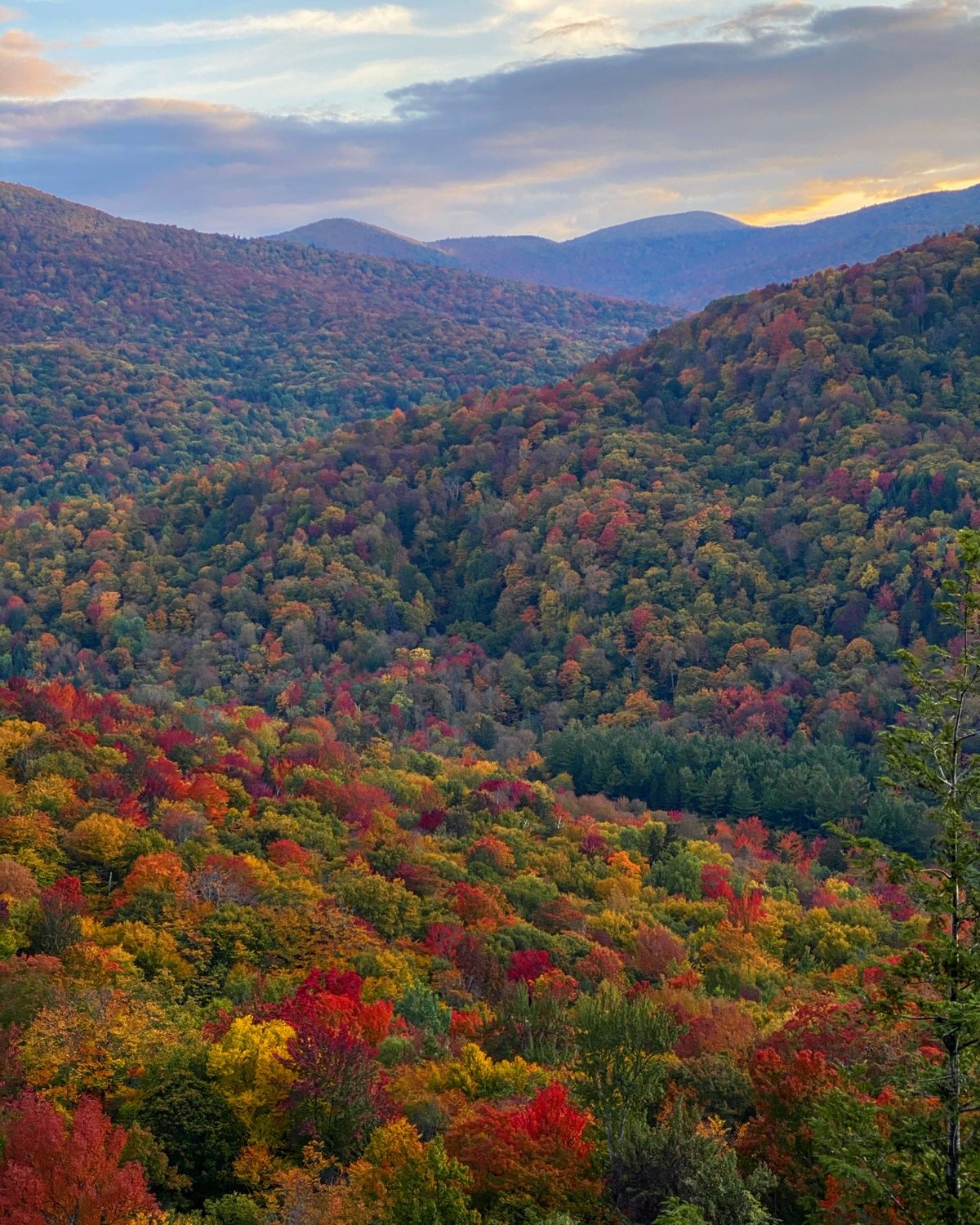
I don’t know whether it’s our dry weather, my increased appreciation for Vermont due to our relative sanity during the pandemic, or just because I’ve been trying to spend as much time as I can outside appreciating nature before the snow flies, but this year’s foliage display seems extra good. Mother Nature just spilled her box of crayons everywhere.
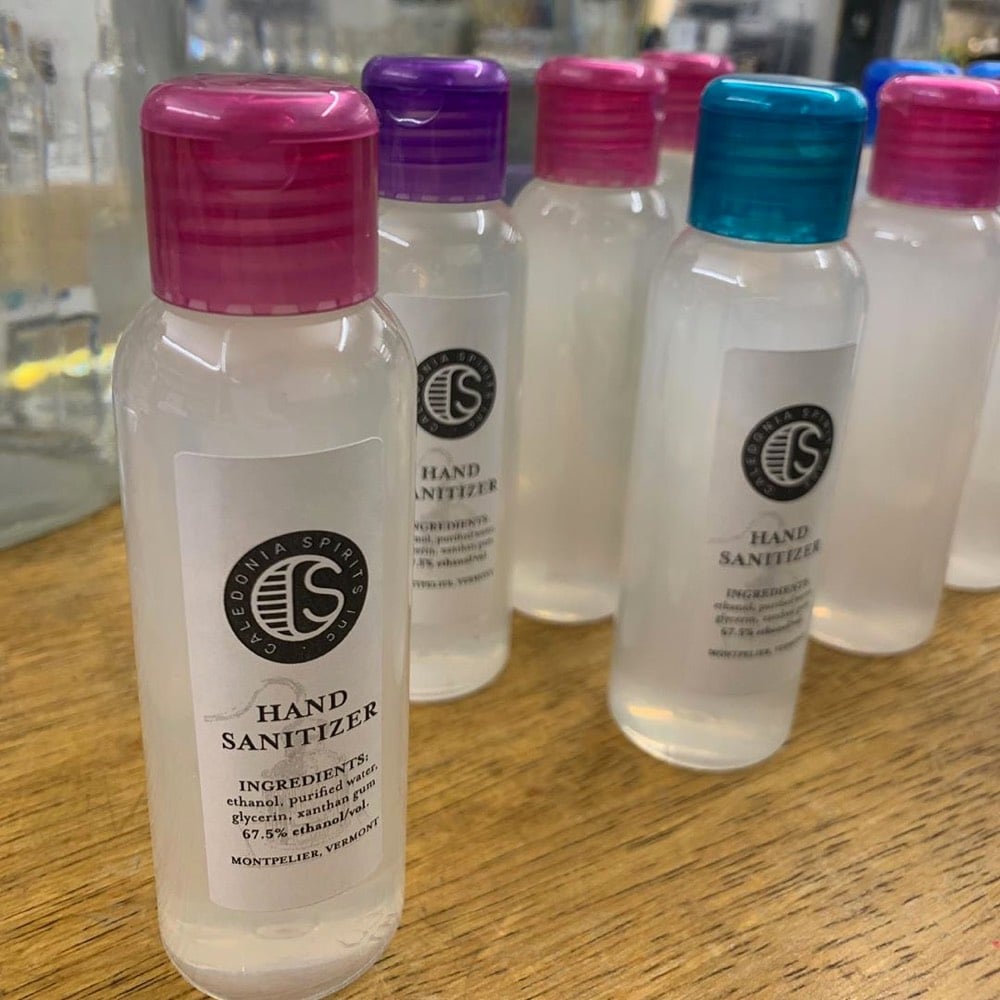
Hand sanitizer, a necessary tool in the fight against the COVID-19 pandemic, has been difficult to come by in stores the past few weeks (or months, depending on your location). Last night, I read in a local email newsletter here in Vermont that Mad River Distillers is producing hand sanitizer and giving it away for free to local residents. They’ve set up two pick-up stations for today — it’s BYOB and limited to 6oz per person. Earlier this week, workers at Barr Hill’s closed distillery made hand sanitizer and distributed it to local food shelves. Green Mountain Distillers and Smuggler’s Notch Distillery have also begun producing hand sanitizer.
These Vermont companies join dozens of other distilleries around the country (and world) that have started using high proof alcohol to produce hand sanitizer that meets the CDC’s recommendation of 60% ethanol needed to inactivate the virus that causes COVID-19: Texas, Alabama, Florida, Connecticut, Arkansas, Pennsylvania, Illinois, Oregon, and many more. From Bloomberg:
Basic recipes include aloe vera for moisturizing; distilleries will also add the botanicals or flavorings from their signature spirits as a twist. Portland, Ore.-based Shine Distillery & Grill isn’t treating its formula like a trade secret. “I have fielded some calls from Seattle and suggested they contact their local distilleries to tell them what we are doing,” says general manager Ryan Ruelos. “Because any distillery can do it.”
The one thing they cannot do, though, is sell their sanitizers: Sales of distilled spirits are strictly regulated by the government and could jeopardize business licenses. Instead, distilleries are giving them away to customers who come through their doors. In some cases, such as at Psychopomp Microdistillery in Bristol, England, donations from customers who take the sanitizer are being given to charity.
Around the world, alcohol is often used in toasts that relate to health: the Irish “sláinte” (health), the Mexican Spanish “salud” (to health), the Russian “vashe zdorov’ye” (to your health), the Persian “be salamati” (good health), and the Hindi “achchee sehat” (good health). These distillery-produced hand sanitizers are a toast of health from them to us, and I am very grateful for it.
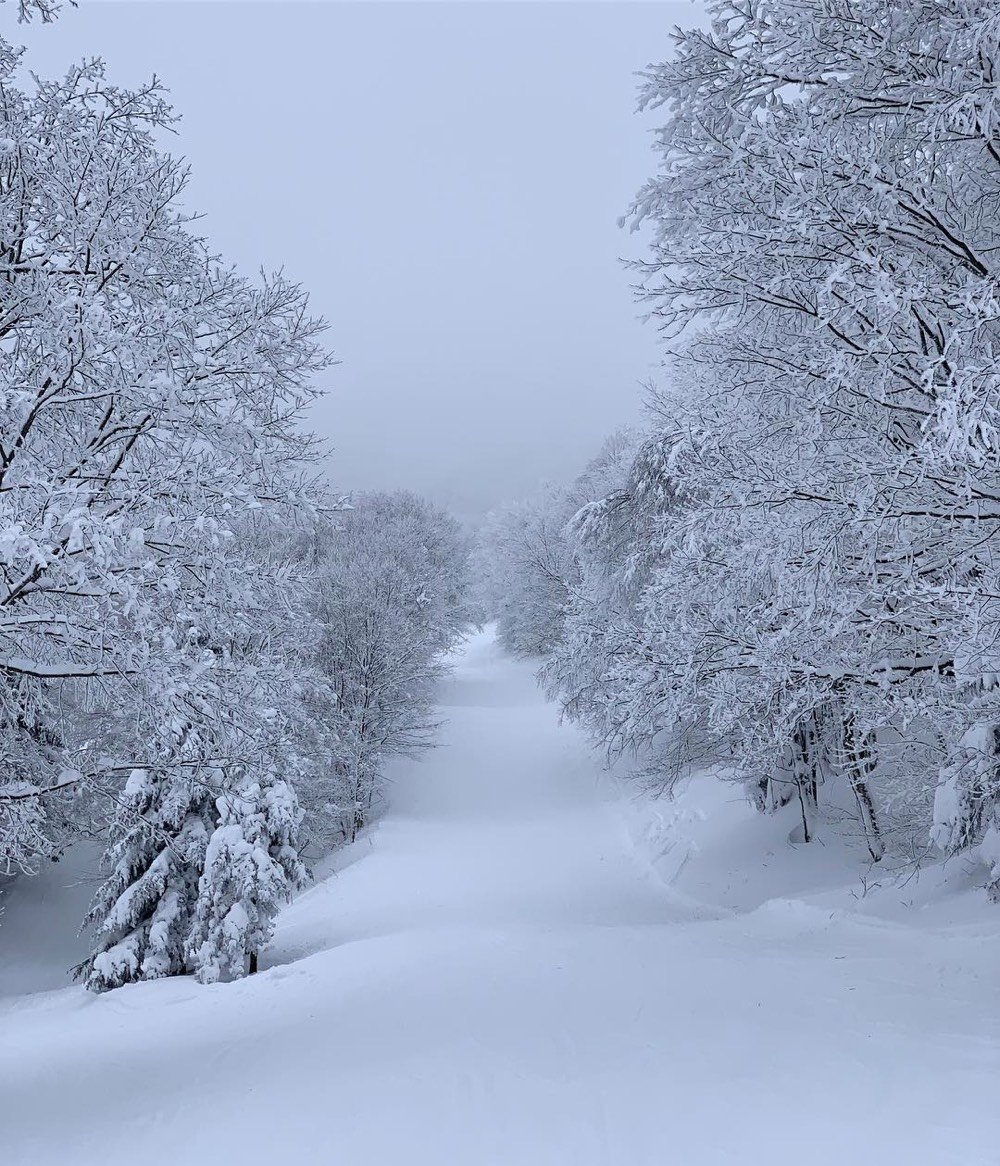
I grew up in Wisconsin, and have lived in Iowa, Minnesota, and New York. Except for a two-year stint in the Bay Area, I’ve experienced winter — real winter, with lots of snow, below-freezing temperatures, and little daylight — every year of my life and never had a problem with it. So I was surprised when my last two Vermont winters put me on my ass. In winter 2017-18, I was depressed, anxious, wasn’t getting out of bed in the morning, spent endless time on my phone doing nothing, and had trouble focusing on my work. And I didn’t realize what it was until the first nice spring day came, 70 and sunny, and it hit me: “holy shit, I’ve been depressed because of winter” and felt wonderful for the next 5 months, like a completely different person. Then last year I was so anxious that it would happen again that all that stuff was worse and started basically a week into fall.
Nothing helped: I tried getting outside more, spent more time with friends, got out to meet new people, travelled to warm places, took photos of VT’s beautiful winter landscapes, spent time in cities, cut back on alcohol, and prioritized sleep. Last year I skied more than ever before and enjoyed it more than I’d ever had. Didn’t matter. This stuff worked during the spring and summer but my winter malaise was seemingly impenetrable. The plan for this fall was to try a SAD lamp, therapy, maybe drugs, and lots more warm travel. But then something interesting happened.
Sometime this fall — using a combination of Stoicism, stubbornness, and a sort of magical thinking that Jason-in-his-30s would have dismissed as woo-woo bullshit — I decided that because I live in Vermont, there is nothing I can do about it being winter, so it was unhelpful for me to be upset about it. I stopped complaining about it getting cold and dark, I stopped dreading the arrival of snow. I told myself that I just wasn’t going to feel like I felt in the summer and that’s ok — winter is a time for different feelings. As Matt Thomas wrote, I stopped fighting the winter vibe and tried to go with it:
Fall is a time to write for me as well, but it also means welcoming — rather than fighting against — the shorter days, the football games, the decorative gourds. Productivity writer Nicholas Bate’s seven fall basics are more sleep, more reading, more hiking, more reflection, more soup, more movies, and more night sky. I like those too. The winter will bring with it new things, new adjustments. Hygge not hay rides. Ditto the spring. Come summer, I’ll feel less stress about stopping work early to go to a barbecue or movie because I know, come autumn, I’ll be hunkering down. More and more, I try to live in harmony with the seasons, not the clock.
Last night, I read this Fast Company piece on some research done by Kari Leibowitz about how people in near-polar climates avoid seasonal depression and it really resonated with this approach that I’d stumbled upon.
At first, she was asking “Why aren’t people here more depressed?” and if there were lessons that could be taken elsewhere. But once she was there, “I sort of realized that that was the wrong question to be asking,” she says. When she asked people “Why don’t you have seasonal depression?” the answer was “Why would we?”
It turns out that in northern Norway, “people view winter as something to be enjoyed, not something to be endured,” says Leibowitz, and that makes all the difference.
The people in the Norwegian communities Leibowitz studied, they got outside as much as they could — “there’s no such thing as bad weather, only bad clothing” — spent their time indoors being cozy, came together in groups, and marveled at winter’s beauty. I’d tried all that stuff my previous two winters but what seems to have moved the needle for me this year is a shift in mindset.
As I experienced firsthand Tromsø residents’ unique relationship to winter, a serendipitous conversation with Alia Crum, assistant professor of psychology at Stanford University, inspired me to consider mindset as a factor that might influence Tromsø residents’ sunny perspective of the sunless winter. Crum defines mindsets as the “lenses through which information is perceived, organized and interpreted.” Mindsets serve as an overarching framework for our everyday experiences — and they can profoundly influence how we react in a variety of situations.
Crum’s work has shown that mindsets significantly influence both our physical and mental health in areas as diverse as exercise, stress and diet. For example, according to Crum’s research, individuals can hold the mindset that stress is either debilitating (bad for your health and performance) or enhancing (motivating and performance-boosting). The truth is that stress is both; it can cause athletes to crumble under pressure and lead CEOs to have heart attacks, but it can also sharpen focus and critical thinking, giving athletes, CEOs and the rest of us the attention and adrenaline to succeed in high-pressure situations. According to Crum’s work, instead of the mere presence of stress, it is our mindset about stress — whether or not we perceive it as a help or a hindrance — that contributes most to health, performance and psychological outcomes.
This is the woo-woo bullshit I referred to earlier, the sort of thing that always brings to my mind the advice of self-help gurus embodied by The Simpsons’ Troy McClure urging his viewers to “get confident, stupid!” Is the secret to feeling happy really just to feel happy? It sounds ridiculous, right? This is the bit of the Fast Company piece that resonated with me like a massive gong:
But overall, mindset research is increasingly finding that it doesn’t take much to shift one’s thinking. “It doesn’t have to be this huge complicated thing,” says Leibowitz. “You can just consciously try to have a positive wintertime mindset and that might be enough to induce it.”
So how has this tiny shift in mindset been working for me so far? It’s only mid-November — albeit a mid-November where it’s already been 5°F, has been mostly below freezing for the past week, and with a good 6 inches of snow on the ground — but I have been feeling not only not bad, but actually good. My early fall had some seasonally-unrelated tough moments, but I’ve experienced none of last year’s pre-winter despondency. I’m looking forward to the start of skiing, especially since my kids are so jazzed up about it. I don’t currently have any trips planned (just got back from warm & sunny Mexico and am glad to be home even though the trip was great), but I’m definitely eager to start prepping for something in January. I’ve had more time for reading, watching some interesting TV, eating rich foods, making apple pie, and working. I went for a 6-mile walk in the freezing cold with a friend and it was delightful. And I’m already looking forward to spring and summer as well. It’s comforting to know that warmer weather and longer days are waiting for me in the distance, when I can do more of what I want to do and feel more like my true self. But in the meantime, pass the cocoa and I’ll see you on the slopes.
Older posts





Socials & More