kottke.org posts about Evan Puschak
Ok folks, it’s time for some game theor- I mean, art history. In this video, Evan Puschak explains what makes Rembrandt’s The Night Watch so compelling from both a historical and artistic perspective.
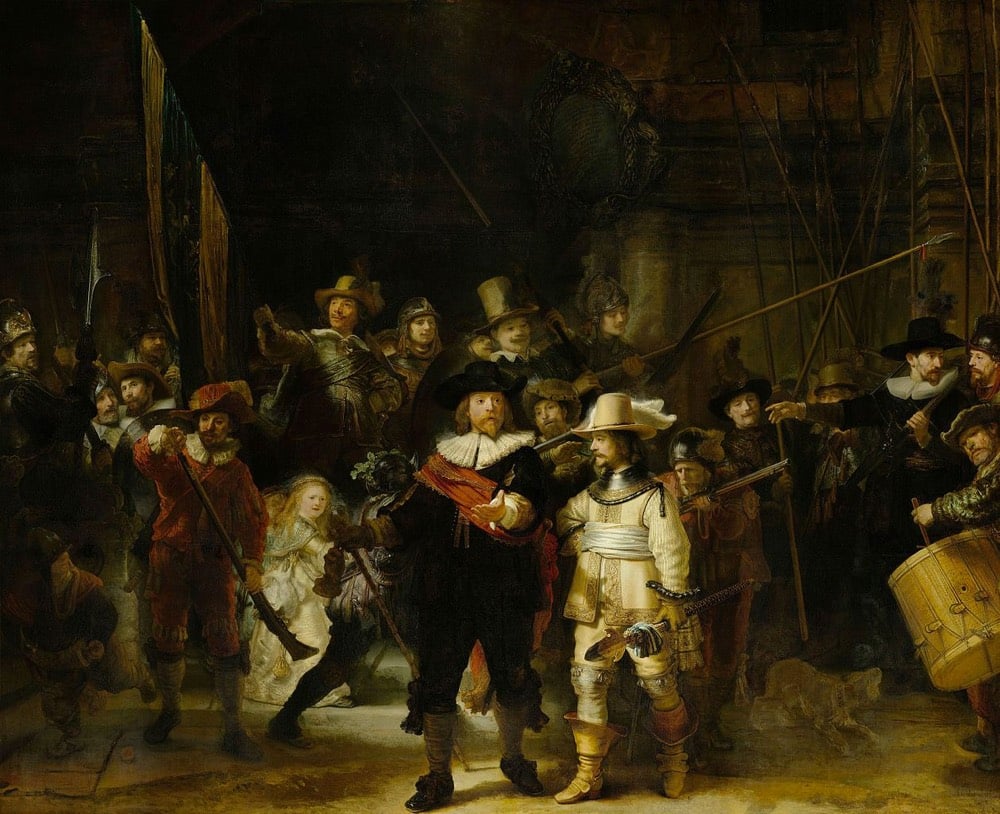
When I was in Amsterdam last year, I saw The Night Watch at the Rijksmuseum. As Puschak notes, it’s an impressive painting — for one thing, it’s more than 12 feet tall and weighs more than 740 pounds. However, I was even more keen on a nearby early self-portrait though.
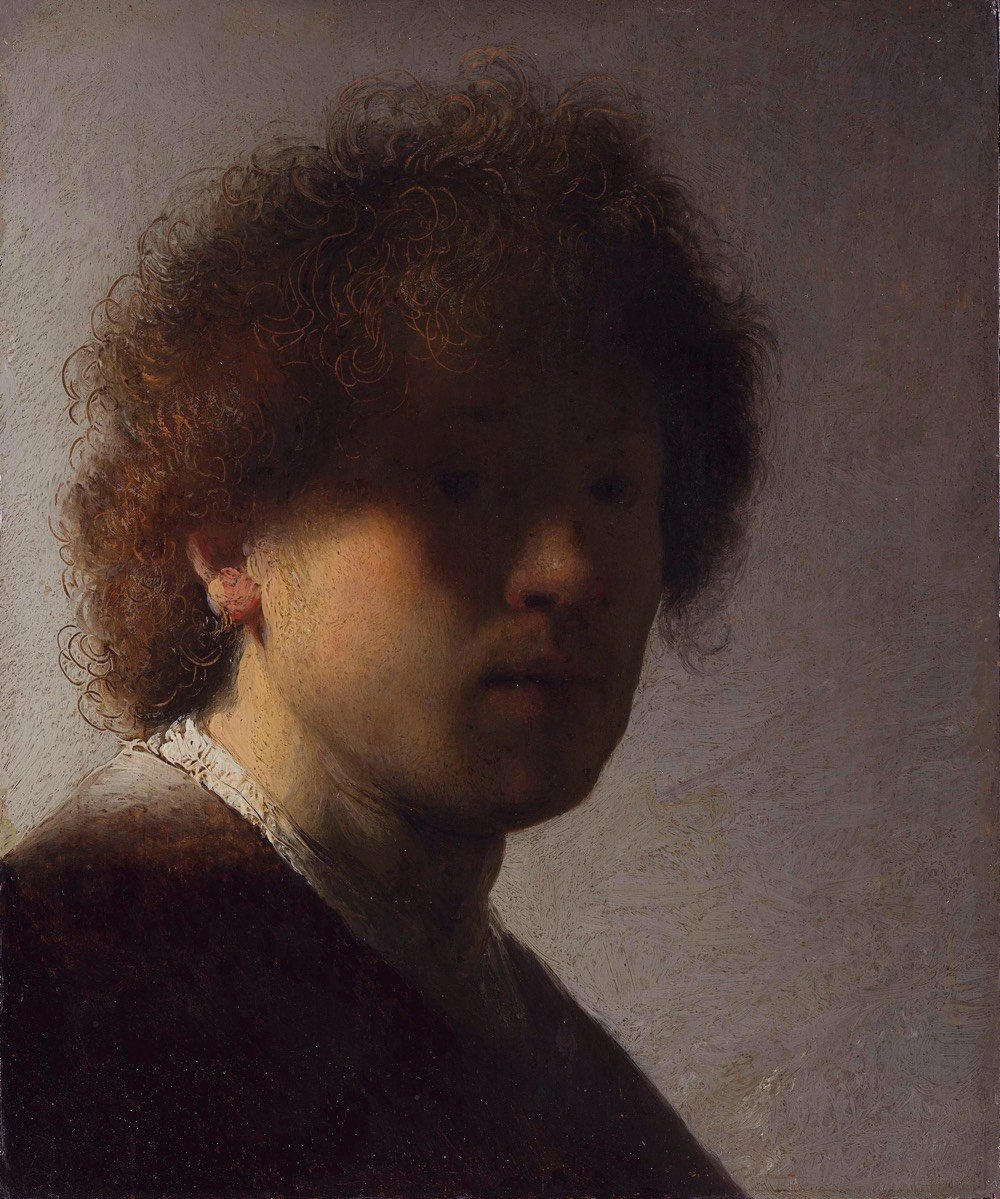
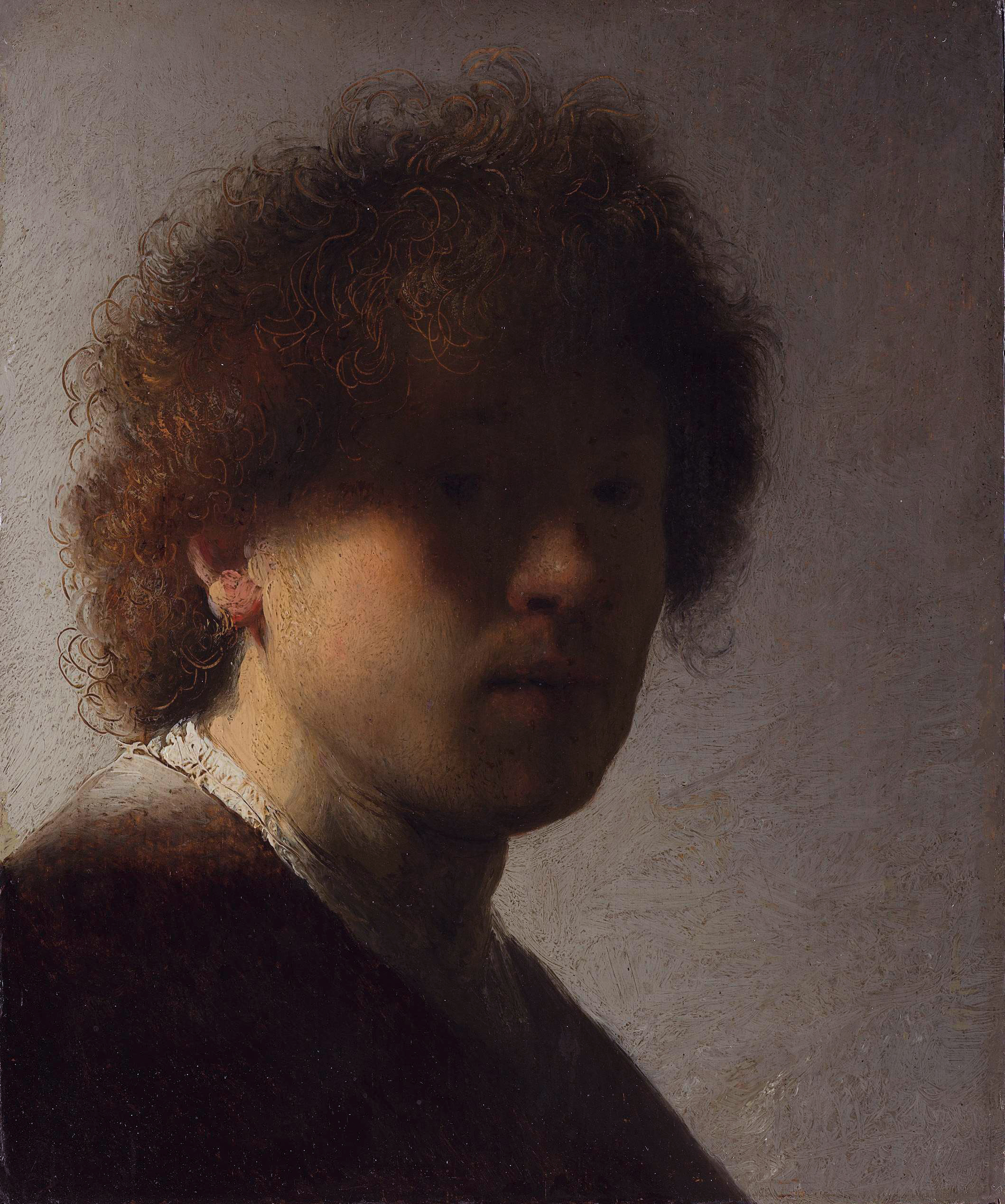
Rembrandt painted this when he was 22 and while it lacks the subtle mastery of his later work, I couldn’t stop staring at it and kept looping back for one more view. If you look at a larger view of the painting, you can see where Rembrandt used the butt of his brush to scratch the wet paint to accentuate his curly hair. Something about seeing those tiny canyons on the canvas…I could almost see the young artist standing right where I was, flipping his brush around to scrape those marks before the paint dried, making his dent in the universe.
P.S. My absolute favorite piece at the Rijksmuseum was Vermeer’s The Milkmaid. Holy moly, what a painting.
In Michael Jackson’s transition from child singer to the electrifying King of Pop, Evan Puschak argues that Don’t Stop ‘Til You Get Enough from Off the Wall marked an inflection point. The song was a combination of the 70s sounds of funk & disco but mixed with other elements to make a pop hit that culturally belonged more to the 80s.
In this short video, Evan Puschak talks about how music is made for Super Nintendo games. That system was first released in 1990 and the audio chips could only hold 64 KB of information, only enough room for beeps, boops, and very short samples. But composers like David Wise, whose soundtrack for the Donkey Kong Country series of games is on many lists of the best video game music, were able to make the SNES sing despite its limited capabilities.
Darth Vader was only on screen in the original Star Wars movie for 8 minutes and for a little under 34 minutes in the whole original trilogy. In the latest Nerdwriter episode, Evan Puschak examines how the cinematography of the films (particularly Empire Strikes Back) helped make Vader into an iconic character despite such little screentime.
Today seems to be movie villain day on kottke.org: see also this morning’s post on Black Panther’s Killmonger.
In his latest video, Evan Puschak compares the action scenes from Marvel and DC superhero movies and shows how DC comes up short. Some don’t appreciate all of the humor packed into Marvel’s films, but the DC movies take themselves WAY too seriously. And don’t even get me started on Zack Snyder — outside of 300, his take on action is not good. It’s not a coincidence that Snyder didn’t direct Wonder Woman, the best of the DCEU films in terms of action (and everything else).
See also the problem with action movies today and why are action movie trailers sounding more musical lately?
Yesterday, hip hop legend Lauryn Hill announced The Miseducation Of Lauryn Hill 20th Anniversary Tour 2018.
This summer marks the 20th anniversary of seminal hip-hop album The Miseducation Of Lauryn Hill, and Lauryn Hill is marking the occasion with a special anniversary tour dedicated to the album. Hill will be performing Miseducation in full, and each stop on the tour will feature “special guest performers” that haven’t been named yet. Plus, a portion of ticket sales will be donated to Hill’s MLH Foundation, which backs a huge group of charities built to help people all over the world-including the Africa Philanthropic Foundation, Appetite For Change, Apps & Girls, and the Equal Justice Initiative.
And Nerdwriter’s Evan Puschak, always with his ear to the ground (or perhaps with his ear to Drake’s Nice for What), just came out with this mini-doc celebrating of Hill’s music, influences, and people she’s influenced:
This might be one of the best Nerdwriter videos yet: no commentary, just clips of Hill performing and talking, music she was influenced by, and people & music that were influenced by her…an impressionistic portrait of a significant and uncompromising artist.
From Evan Puschak, a quick video on dark patterns, UI design that tricks users into doing things they might not want to do. For instance, as he shows in the video, the hoops you need to jump through to delete your Amazon account are astounding; it’s buried levels deep in a place no one would ever think to look. This dark pattern is called a roach motel — users check in but they don’t check out. I wonder how much this single pattern has added to Jeff Bezos’ personal net worth?
In this episode of the Nerdwriter, Evan Puschak imagines a film school class that studies the influences of Call Me By Your Name, which include a pair of Merchant Ivory films, A Room With a View and Maurice. One of the best love stories I’ve seen in recent years, Call Me By Your Name is one of those movies I’m waiting to watch again after some time, saving it like the last chocolate in the box.
In the latest installment of Nerdwriter, Evan Puschak explains why Francisco Goya’s painting Saturn Devouring His Son is so disturbing, not only from the standpoint of the subject matter but also the circumstances surrounding its creation.
I am especially fond of Art History Nerdwriter because the first video of his I ever watched was on Jacques-Louis David’s The Death of Socrates. I’ve been a fan ever since.
For the latest installment of Nerdwriter, Evan Puschak explains the distinct brand of physical comedy practiced by Rowan Atkinson, best known for his character Mr. Bean. For my money, this scene of Mr. Bean running late for a dentist appointment is one of the funniest things ever put on screen.
This is the comedy of personality rather than the comedy of gags. It’s not about doing funny things. It’s about doing something quite normal in a funny way.
Atkinson himself explained and demonstrated the principles of physical comedy in a 60-minute documentary called Funny Business; here’s part 1:
This is really odd timing. Just two days ago, I was watching some videos with my kids and we stumbled across Rowan Atkinson performing as Mr. Bean at the opening ceremonies of the London Olympics in 2012, which a) opens Puschak’s video, b) I had completely forgotten about, and c) is perhaps the most British thing ever.
Using a scene from Steven Spielberg’s Munich that features very little dialogue, Evan Puschak shows how much sound design contributes to the feeling and tension of a film. I love the two head fakes Puschak does with the sound at the beginning of the video. It’s like, oh wait, he fooled me a bit there, so I need to pay more attention.
In the New Yorker, Alex Ross points to Frank Lehman’s Complete Catalogue of the Motivic Material in ‘Star Wars,’ Episodes I-VIII, which has been updated to include The Last Jedi. Ross goes on to note that composer John Williams did some of his strongest work for the film, deftly employing musical themes called leitmotifs to supplement (and sometimes subvert) the on-screen action. (Spoilers, ho!)
In early scenes set at a remote, ruined Jedi temple, we keep hearing an attenuated, beclouded version of the Force motto: this evokes Luke’s embittered renunciation of the Jedi project. As the young heroine Rey begins to coax him out of his funk, the Force stretches out and is unfurled at length. Sometimes, the music does all of the work of explaining what is going on. In one scene, Leia, Luke’s Force-capable sister, communicates telepathically with her son Kylo Ren, who has gone over to the dark side and is training his guns on her vessel. Leia’s theme is briefly heard against a dissonant cluster chord. Earlier in the saga, we might have been subjected to dialogue along the lines of “Don’t do this! I’m your mother!” Williams’s musical paraphrase is more elegant.
If you’re looking for a primer/refresher for the use of leitmotif in film, Evan Puschak’s video on Howard Shore’s music for the Lord of the Rings films is a good place to start. (via anil dash)
Using a single page from Art Spiegelman’s Maus (considered by many as one of the finest graphic novels ever written), Evan Puschak considers how Spiegelman used the page (and not the individual panel) as the atomic unit of the narrative of his father surviving the Holocaust. Designing the page is the thing. In making this point, he quotes the cartoonist Seth (Gregory Gallant):
The ‘words & pictures’ that make up the comics language are often described as prose and illustration combined. A bad metaphor: poetry and graphic design seems more apt. Poetry for the rhythm and condensing; graphic design because cartooning is more about moving shapes around — designing — then it is about drawing.
Drawing from David Wittenberg’s book, Time Travel: The Popular Philosophy of Narrative, as a guide, Evan Puschak goes in search of the origins of time travel in fiction. Along the way, he connects Charles Darwin’s work on evolution to the largely forgotten genre of utopian romance novels to the depiction of time travel in modern sci-fi.
P.S. While I was in France, I met up with Evan for lunch (we happened to be in Paris at the same time). We’d never met before, and it was really strange hearing the voice of one of my favorite YouTube channels coming out of an actual person.
This is a really keen observation by Evan Puschak about the camera movement in David Fincher’s films: it mimics your eyes in paying attention to the behavior in a scene. The effect is sometimes subtle. When a character shifts even slightly, the camera keeps that person’s eyes and face in the same place in the frame, just as you would if you were in the room with them.
Newer posts
Older posts






Socials & More