kottke.org posts about Antarctica
In this clip from my favorite Werner Herzog film, Encounters at the End of the World, the director muses about the mental health of penguins and observes a lone penguin heading in the wrong direction. From an appreciation of this penguin scene written by Tim Cooke for Little White Lies:
Herzog proceeds to explain that the penguin will not go to the feeding grounds at the edge of the ice, nor will he return to the colony; instead he heads straight for the mountains, “some 70 kilometres away”. Catching him and bringing him back will make no difference — he’ll simply turn around and head again for the interior. “But why?” Herzog asks. We then see footage of another of these “deranged” penguins, 80 kilometres off course, sliding on its belly towards certain death. These shots of the solitary birds marching to their demise, mere black dots against the white expanse, are perfect in their portrayal of loneliness and desolation.
The scene, then, is a splendid tragicomedy, serving as a sour antidote to the fluffy charm of films like the The March of the Penguins, which arrived two years earlier. It’s a play within a play; masterfully constructed, it delivers a hefty emotional blow. It’s in this construction, and self-reflexive style, that truth and revelation can be found — Herzog’s ecstatic truth, that is. The natural world, as we learnt from the horrors of Grizzly Man, is not easily compared with ours. The structures we adopt for our stories — be they tragic, romantic or comedic — do not fit nature quite so tightly, and Herzog knows this. Any facts about the penguins’ motivations and thought processes remain unobtainable. We view the narrative as the filmmaker builds it: through an exclusively human lens.
When emperor penguin chicks go for their first swim, they usually jump a few feet into the sea. The group of chicks in the video National Geographic video above decided to leap off of a 50-foot ice cliff for their first trip out.
It’s not unusual for emperor penguin chicks to march toward the ocean at a young age, even when they’re just 6 months old. They jump just 2 feet off the ice to take their first swim, according to National Geographic.
Others have jumped from a much a higher altitude, heading to “sheer ice cliffs” knowingly to make the first jump. Satellites have recorded the death-defying jumps since 2009, but what happens next has remained a mystery until now.
Having watched the video, “leap” and “jump” are charitable descriptions of what the penguins are doing here. “Flop”, “plop”, and “fall” might be better…penguins are all kinds of cool, but no one has ever accused them of being graceful out of the water.
Ernest Shackleton’s ship, The Endurance, has been lost since it sank in the Antarctic in 1915. A team of explorers and researchers just found it in icy waters 10,000 feet beneath the surface.
The ship was found about four miles south of the last location recorded by Shackleton’s captain and navigator, Frank Worsley. The search had been conducted over a wide area to account for errors in Worsley’s navigation equipment.
Endurance’s relatively pristine appearance was not unexpected, given the cold water and the lack of wood-eating marine organisms in the Weddell Sea that have ravaged shipwrecks elsewhere.
Mr. Bound also described the wreck as “intact.” Although Hurley’s photographs before the sinking had shown major damage to, and the collapse of, the ship’s mast and rigging, and there had been damage to the hull, Mr. Bound had expected most of the ship to be in one piece.
The video above was taken by the underwater drones that found the wreck.
From September to March each year, the Sun never sets at the South Pole. This time lapse video, taken over 5 days in March, shows the sun circling the entire sky just above the horizon, getting ready to set for the first time in months. (via sentiers)
This video and blog post look at the challenges of building and maintaining a 3000-meter ice runway in Antarctica. It bears some resemblance to grooming ski slopes and maintaining ice rinks.
Once the snow is removed, the runway is inspected for cracks, pits, or any other deficiencies that would prevent a safe landing. These are repaired by crews with a mixture of cold water, ice chips, and snow that is poured on, allowed to harden, and then smoothed over.
Finally, two snow groomers with tillers grind a small layer of ice to create a top layer of crushed snow and ice that gives the runway the necessary friction for aircraft to operate. Lidström points out that equipment at Troll isn’t necessarily purpose built, ‘These are the same machines that you see on ski slopes, but with a tiller grinder attached.’
There’s even a small terminal with bathrooms and wifi, amenities which aren’t available at all Antarctic airfields.
In this charming little film (that feels very Wes Andersonian), we get to visit the Union Glacier Camp in West Antarctica, see what life is like there, and meet the people who run it. The camp is situated next to a blue-ice runway (which makes the area accessible to large aircraft) and serves as the jumping-off point for many kinds of activities, projects, and expeditions.
Union Glacier Camp is the only facility of its kind in Antarctica. Our full-service private camp operates during the Antarctic summer (November through January) and is dismantled at the end of each season. Our camp not only provides accommodations to guests on guided experiences but also serves as a logistics hub, supporting private expeditions and National Antarctic Programs.
I love the grid of tents for guests.
We can house up to 70 guests in our dual occupancy Clam Tents. These double-walled sleeping tents are designed to withstand Antarctic conditions with a high-tech nylon covering and durable aluminum frame that opens up like a clam shell. They are also incredibly comfortable to live in with large doors and a tall interior that allows you to stand upright and move around easily (16 ft x 8 ft or 5 m x 2.4 m). Tents are naturally heated by the 24-hour sunlight up to 60^0-70^0F (15^0-21^0C) but also have a wooden floor underneath to provide insulation from the snow and solid footing. Each guest is provided with a cot, mattress, pillow, linens, towels, and wash basin.
Tourist trips to Union Glacier start at $26,000 for six days.
Ariel Waldman and her microscopes spent five weeks in Antarctica investigating the microbes that live in the seas, lakes, and glaciers. One of the outcomes of the trip is Life Under the Ice, a website that showcases some of the tiny critters, plants, and miscellaneous things she found.
Typically when we think about Antarctica, we think of a place that’s barren and lifeless… except for a few penguins. But Antarctica should instead be known as a polar oasis of life, host to countless creatures that are utterly fascinating. They’ve just been invisible to us — until now. Life Under the Ice enables anyone to delve into the microscopic world of Antarctica as an explorer; as if you had been shrunk down and were wading through one large petri dish of curiosities.
Ahhh, look at this tardigrade at 20X magnification:
The tardigrade was found while extremophile hunting on a glacier.
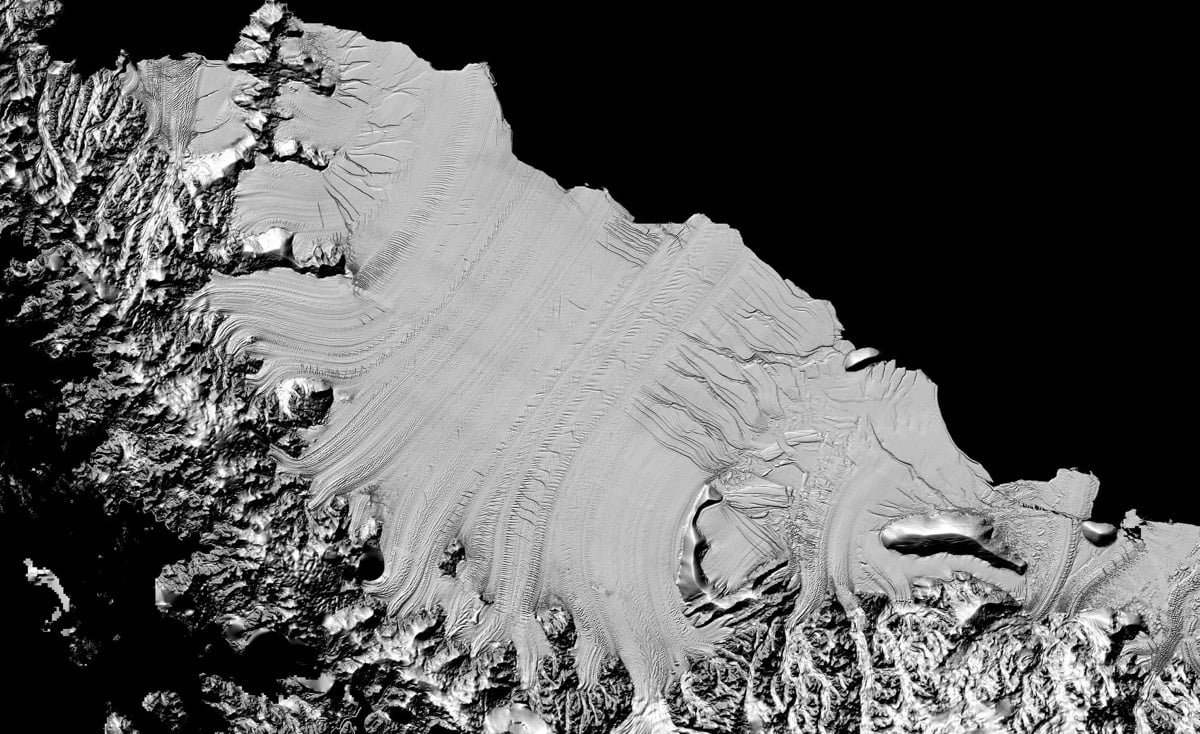
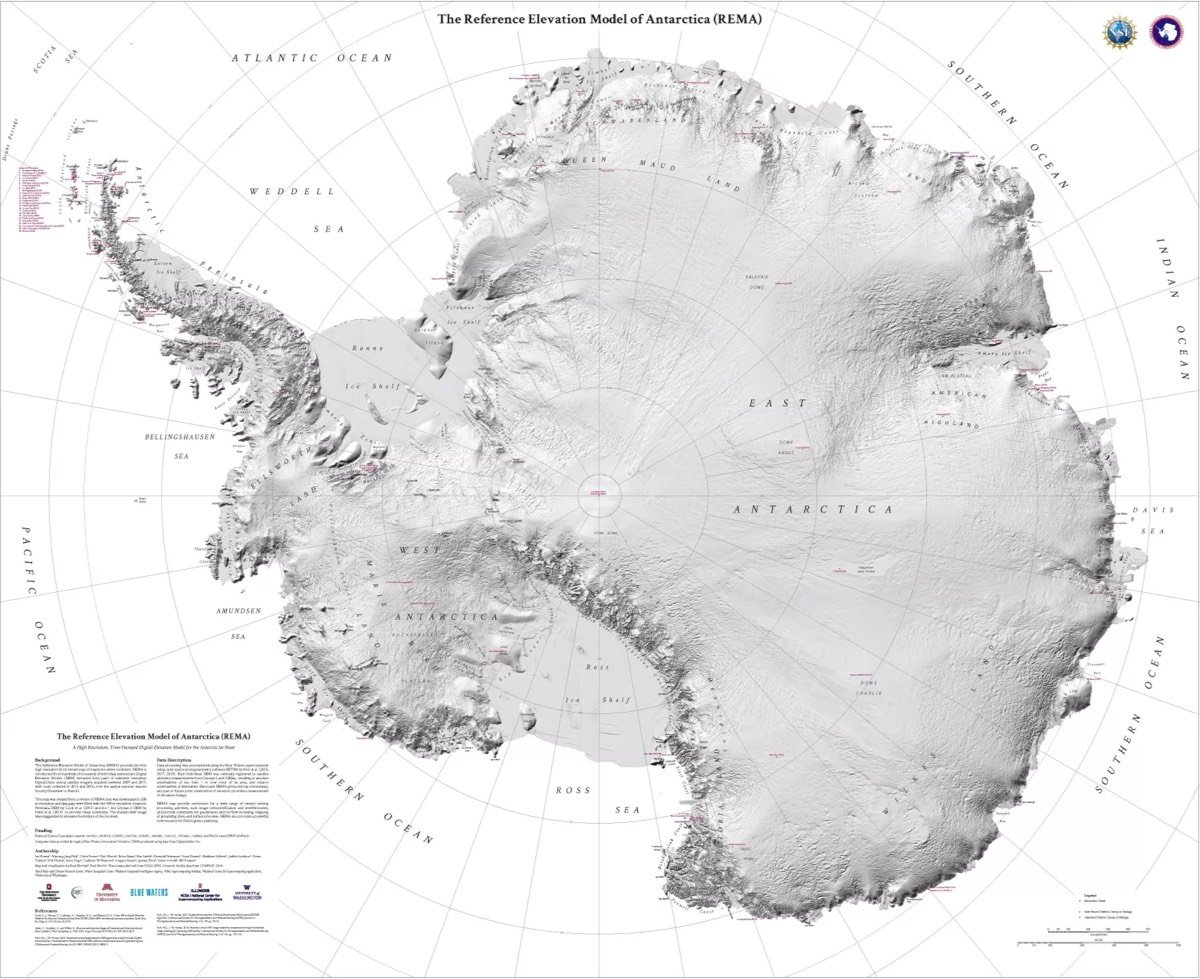
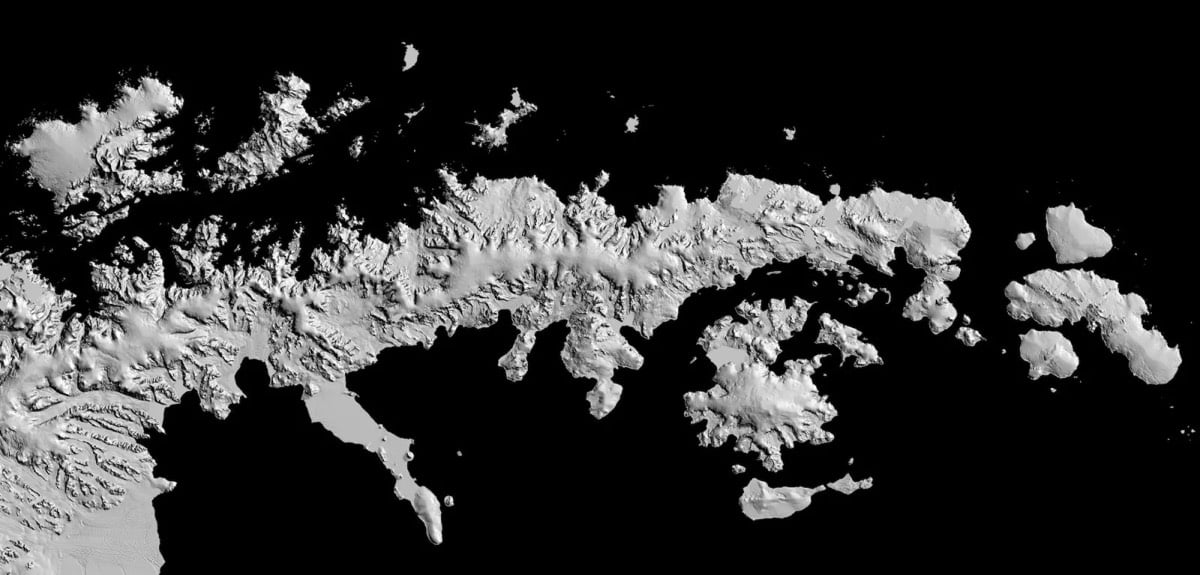
Using years of satellite data and photography, researchers have constructed an extremely detailed terrain map called the Reference Elevation Model of Antarctica that maps 98% of the continent down to a resolution of 8 meters. That makes it the most detailed terrain map of any continent. The NY Times has the skinny on the new map.
Previous maps of the continent had a resolution similar to seeing the whole of Central Park from a satellite. With this new data, it is now possible to see down to the size of a car, and even smaller in some areas. The data is so complete that scientists now know the height of every feature on the continent down to a few feet.
“If you’re someone that needs glasses to see, it’s a bit like being almost blind and putting on glasses for the first time and seeing 20/20,” said Dr. Howat.
The team used 187,585 images collected over six years to create the map.
“Until now, we’ve had a better map of Mars than we’ve had of Antarctica,” said Dr. Howat.
Peter Neff is part of a team drilling ice cores from glaciers in Antarctica to look at how the climate has changed. But after they’ve done their work, they have a little fun dropping chunks of ice down the bore holes to make really cool noises (sound on, headphones recommended).
Oh, that *peeewwww* as it hits the bottom! See also the wonderful sounds of black ice skating, an incredible photo of the black ice covering an Antarctic lake, and “Whumph”: the sound of settling Antarctic snow.
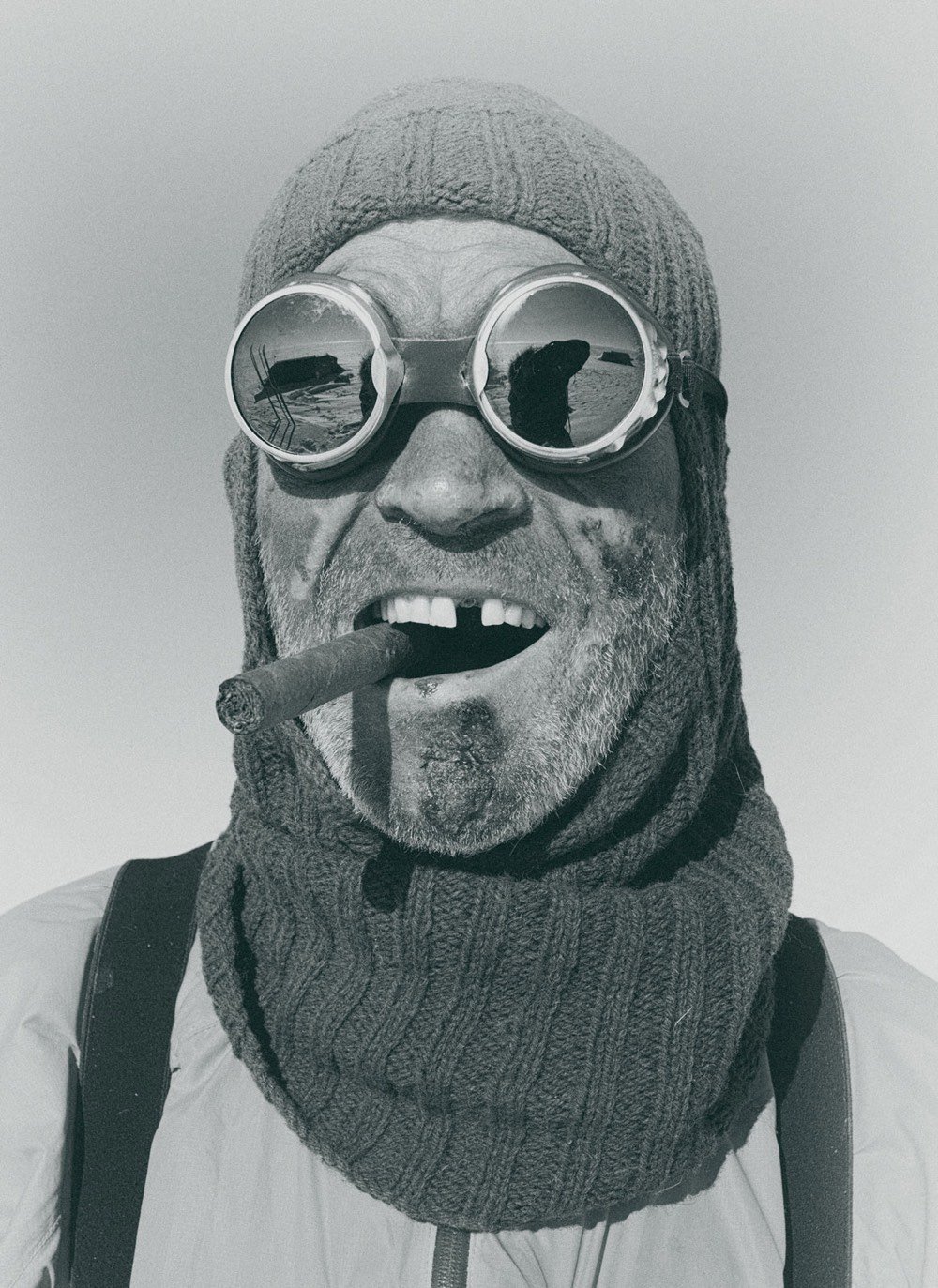
After a long hiatus during which he wrote The Killers of the Flower Moon, David Grann is back in the pages of the New Yorker with The White Darkness, a piece about modern-day polar explorer Henry Worsley, who attempted to cross Antartica in 2015, solo and unaided.
By the middle of January, 2016, he had travelled more than eight hundred miles, and virtually every part of him was in agony. His arms and legs throbbed. His back ached. His feet were blistered and his toenails were discolored. His fingers had started to become numb with frostbite. In his diary, he wrote, “Am worried about my fingers — one tip of little finger already gone and all others very sore.” One of his front teeth had broken off, and the wind whistled through the gap. He had lost some forty pounds, and he became fixated on his favorite foods, listing them for his broadcast listeners: “Fish pie, brown bread, double cream, steaks and chips, more chips, smoked salmon, baked potato, eggs, rice pudding, Dairy Milk chocolate, tomatoes, bananas, apples, anchovies, Shredded Wheat, Weetabix, brown sugar, peanut butter, honey, toast, pasta, pizza and pizza. Ahhhhh!”
He was on the verge of collapse. Yet he was never one to give up, and adhered to the S.A.S.’s unofficial motto, “Always a little further” — a line from James Elroy Flecker’s 1913 poem “The Golden Journey to Samarkand.” The motto was painted on the front of Worsley’s sled, and he murmured it to himself like a mantra: “Always a little further … a little further.”
This was the same trip attempted by Ben Saunders a few months ago. It’s also worth noting the Snow Fall aesthetic of the piece. What is it about winter that inspires this sort of multimedia package? Is it the white space?
Why is this 16-year-old girl holding a ham & cheese sandwich at the South Pole?

At 14, Jade Hameister became the youngest person to ski to the North Pole from outside the last degree of latitude. After she gave a talk about the journey at TEDx Melbourne, a video of the talk was posted online and the comments — like “Make me a sandwich” — rolled in from men presumably upset that Hameister isn’t preparing for a life of cooking & cleaning rather than polar exploration. After skiing across Greenland and then to the South Pole, Hameister had a message (and some lunch) for those men:
Tonight (it never gets dark this time of year) I skied back to the Pole again… to take this photo for all those men who commented “Make me a sandwich” on my TEDX Talk. I made you a sandwich (ham & cheese), now ski 37 days and 600km to the South Pole and you can eat it xx
How’s that Hameister & cheese sandwich taste, fellows? *bicep flex emoji* *dancing woman emoji*
Polar adventurer Ben Saunders is currently about three weeks into a planned 1000-mile solo journey across Antarctica, blogging about it all the while. In his latest post, he describes the noise that snow makes when it settles under certain conditions, which he calls “whumphing”.
The only redeeming factor of all this fresh snow is what I’ll refer to as ‘whumphing’. I’ve no idea if there’s an actual term for the phenomenon, but I had the best whumph of my life when I first stepped out of the tent today. I assume it’s something to do with the weight of the snow settling, but the sensation is of the area of snow you’re standing on suddenly dropping by an inch or two, accompanied by a sound like a muffled thunderclap. If you’re lucky — as I was this morning — this sets off a chain reaction whumph, with a shockwave rolling out towards the horizon in every direction. It’s petrifying the first time you experience a whumph (in Greenland for me) but once you realise they’re harmless, it’s extraordinarily satisfying, like being a snowfield chiropractor, clicking tons of snow back into the right place.
Curious to see if whumphing was documented elsewhere, I did a little poking around. In a 1920 mountaineering book called Mountain Craft, Geoffrey Young talks about sudden settling due to sub-surface snow that’s less dense than the snow above. On a slope that can lead to an avalanche but on a flat Antarctic surface, you just get the muffled thunderclap.
I was also delighted to find that the legendary Roald Amundsen, who led the first expedition to reach the South Pole in 1911, noted the very same effect in his book detailing the journey: The South Pole. In a false start to the expedition in September 1911, facing poor visibility and a temperature of -69 °F, he and his men decide to stop and build igloos for warmth. After settling in, they heard a noise.
That night we heard a strange noise round us. I looked under my bag to see whether we had far to drop, but there was no sign of a disturbance anywhere. In the other hut they had heard nothing. We afterwards discovered that the sound was only due to snow “settling.” By this expression I mean the movement that takes place when a large extent of the snow surface breaks and sinks (settles down). This movement gives one the idea that the ground is sinking under one, and it is not a pleasant feeling. It is followed by a dull roar, which often makes the dogs jump into the air — and their drivers too for that matter. Once we heard this booming on the plateau so loud that it seemed like the thunder of cannon. We soon grew accustomed to it.
Amundsen seemed rather less charmed than Saunders with whumphing, but it’s wonderful to witness the experience of it shared between these two explorers across more than 100 years.
Writing for Grist, Eric Holthaus reports on some research about a pair of fast-melting glaciers in Antarctica that could add 11 feet to the global sea level.
The glaciers of Pine Island Bay are two of the largest and fastest-melting in Antarctica. (A Rolling Stone feature earlier this year dubbed Thwaites “The Doomsday Glacier.”) Together, they act as a plug holding back enough ice to pour 11 feet of sea-level rise into the world’s oceans — an amount that would submerge every coastal city on the planet. For that reason, finding out how fast these glaciers will collapse is one of the most important scientific questions in the world today.
To figure that out, scientists have been looking back to the end of the last ice age, about 11,000 years ago, when global temperatures stood at roughly their current levels. The bad news? There’s growing evidence that the Pine Island Bay glaciers collapsed rapidly back then, flooding the world’s coastlines - partially the result of something called “marine ice-cliff instability.”
The ocean floor gets deeper toward the center of this part of Antarctica, so each new iceberg that breaks away exposes taller and taller cliffs. Ice gets so heavy that these taller cliffs can’t support their own weight. Once they start to crumble, the destruction would be unstoppable.
“Ice is only so strong, so it will collapse if these cliffs reach a certain height,” explains Kristin Poinar, a glaciologist at NASA’s Goddard Space Flight Center. “We need to know how fast it’s going to happen.”
Eleven feet of sea level rise would be, uh, hugely problematic for the world’s coastal areas:
Three feet of sea-level rise would be bad, leading to more frequent flooding of U.S. cities such as New Orleans, Houston, New York, and Miami. Pacific Island nations, like the Marshall Islands, would lose most of their territory. Unfortunately, it now seems like three feet is possible only under the rosiest of scenarios.
At six feet, though, around 12 million people in the United States would be displaced, and the world’s most vulnerable megacities, like Shanghai, Mumbai, and Ho Chi Minh City, could be wiped off the map.
At 11 feet, land currently inhabited by hundreds of millions of people worldwide would wind up underwater. South Florida would be largely uninhabitable; floods on the scale of Hurricane Sandy would strike twice a month in New York and New Jersey, as the tug of the moon alone would be enough to send tidewaters into homes and buildings.
Alarming, but read the whole article. Scientists are still trying to figure out how probable this scenario is…early days still.
Update: The site Climate Feedback, a network of scientists that evaluates media coverage of climate change, recently rated Holthaus’ piece as “high” on the credibility scale and described it as both “accurate” and “alarmist”.
Scientists who reviewed the article found that while it accurately described recent research on these processes, it should have provided more accurate context on the timescale of these sea level rise scenarios and the scientific uncertainty about how likely these scenarios are to come to pass.

Hilary Dugan is a limnologist, which means she studies inland bodies of water like rivers, streams, lakes, ponds, and marshland. Specifically she studies lakes:
As a limnologist, I study how terrestrial and atmospheric changes, such as warming air temperatures or land use patterns, alter biogeochemical fluxes and aquatic processes in lakes.
Right now, Dugan is in Antarctica on a research trip to Lake Vanda, where she took this amazing photo of the 12-ft sheet of black ice covering the lake. (She also took a video of herself walking on the ice.) Beautiful.
Lake Vanda sounds fascinating btw: three thermal layers of water that don’t mix (the bottom layer is a toasty 73 °F) and it’s one of the saltiest bodies of water in the world, more than 10 times saltier than seawater (although very little of that salt is contained in the upper layers). The lake is also home to the The Royal Lake Vanda Swim Club, a largely abandoned tradition of skinny dipping in the lake when the ice melts enough to permit it.
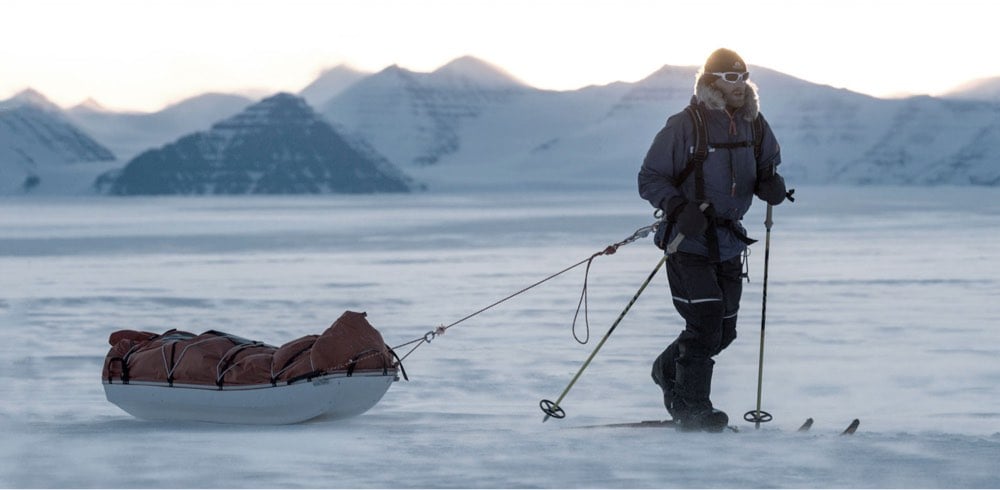
In 2013, polar adventurer Ben Saunders, along with his partner Tarka L’Herpiniere, set out from the coast of Antarctica to ski to the South Pole and back again, unsupported (meaning they carried all their food and supplies with them). They completed the 1800-mile journey in just over three months, but fell short of doing it unsupported.
This year, Saunders is back in Antarctica by himself, attempting the first solo, unsupported, unassisted crossing of the continent in the Trans-Antarctic Solo expedition. The really cool part: he’s blogging the whole trip. He’s already completed day one of the 1,024-mile journey, consisting of a short little 45-minute jaunt to set up his tent before hitting it in earnest on day two. Good luck, Ben! I’ll be following along on the blog, via Twitter & Instagram, and tracking your progress on this map.
Update: A bittersweet update from Ben today (12/28/2017). After 52 days and 650 miles, he’s reached the South Pole. But he’s also not embarking on the return leg of the journey, thereby ending his expedition. A further explanation will come — it’s likely his journey was taking much longer than he had food for — but what I wrote when his last expedition ended prematurely holds:
Adventure is never about battling the environment or elements or whatever. It’s always a struggle with the self. And as this battle reached a fevered pitch, Ben and Tarka were not found wanting. Calling for resupply, and thereby giving up on one of the major goals of this expedition 10 years in the making, was probably the hardest thing Ben has ever had to do in his entire life. But he did it, for his family, his loved ones, and his teammate. Ben, Tarka, I’m proud of you. Thank you for letting us follow along on your journey, for showing us what is humanly possible, and for the reminder that pushing the boundaries is never about how far you can tow a sled but about what you do when confronted with the no-win scenario: beating yourself.
Congratulations, Ben!
Older posts





Socials & More