Entries for May 2021

Courtesy of Geodienst, this is a map of the world’s lighthouses. Where the data is available (and you can see it’s quite sparse for some areas of the world), the map shows the location, color, range, and flashing frequency/pattern of each lighthouse. The color and flashing pattern of a lighthouse is called the characteristic. Each lighthouse has a different characteristic so that mariners can tell them apart and to indicate different water areas. (via strange maps)
The New Yorker is running an excerpt from Seth Rogen’s new memoir, Yearbook (ebook), which will be out next week. When you’re reading this, remember to hear Rogen’s voice in your head; it makes it so much better.
The movie “Tombstone” came out in 1993, and, although it wasn’t a massive box-office or critical hit (the New York Times called it “morally ambiguous”), it made an impression on many, mostly owing to an amazing performance by Val Kilmer that was publicly praised by President Bill Clinton — which is the single most nineties sentence one could write. As 1994 rolled around, a young me was smitten with not only Kilmer’s performance as Doc Holliday but the entire Western aesthetic. The result? A fuckload of vests.
I could not own enough vests. I’d have bought more torsos just to wear them all if that were an option. A vest packed me in, gave me shape, and, most important, kind of made me feel like a cowboy who was dying of tuberculosis, which Kilmer had somehow made seem super-awesome. I also wore a pocket watch, which, in a truly impressive act of delusion, I’d convinced myself was cool.
It wasn’t.
Weekend after weekend, a slow song would come on, boys would ask girls to dance, girls would ask boys to dance, and I’d generally find myself standing off to the side, watching it all happen, spinning my pocket watch like some sort of nineteen-twenties Mafia snitch.
I’m a little older than Rogen — Tombstone hit when I was in college — and seeing the film didn’t make me want to wear vests, but that didn’t stop me and my friends from going around quoting the film at length, pretty much all of the time for months on end. One of our favorites — I can’t remember which of us originally came up with this — was reworking Doc Holliday’s line about his partner not wearing a bustle (seen at the beginning of this clip) into: “Kate, you’re not doing The Hustle. How doo doo doo doodoo doodoo doo doo…” That’s some prime middle school humor right there.

Oh dear, this illusion just totally broke my brain. No can write now. Somehow all same ball colors. What world? What earth? Why live? (Even after reading and seeing the explanation, I had to drag this into my photo editing app to verify it with my own eyes. True true. Oh, humanity.) (via @flyosity)
A new documentary film called Carterland and Jonathan Alter’s biography His Very Best: Jimmy Carter, a Life (ebook) are among the recent media attempting to reconsider and recontextualize the presidency of Jimmy Carter. From Megan Mayhew Bergman in The Guardian:
“Here’s what people get wrong about Carter,” Will Pattiz, one of the film’s directors tells me. “He was not in over his head or ineffective, weak or indecisive — he was a visionary leader, decades ahead of his time trying to pull the country toward renewable energy, climate solutions, social justice for women and minorities, equitable treatment for all nations of the world. He faced nearly impossible economic problems — and at the end of the day came so very close to changing the trajectory of this nation.”
Will’s brother, Jim, agrees. “A question folks should be asking themselves is: what catastrophes would have befallen this country had anyone other than Jimmy Carter been at the helm during that critical time in the late 1970s?”
I’m gonna need a three-episode series about Carter on You’re Wrong About, stat. If there’s any justice in the world (wait, don’t answer that), in 50 years’ time Ronald Reagan’s presidency will be considered the disaster that is was and Carter’s will look better in comparison.
If you’re interested in seeing Carterland, it looks as though it’s not out widely quite yet — the only place I could even find a trailer is on this Atlanta Film Festival page (click “Play Trailer” at the bottom of the page).
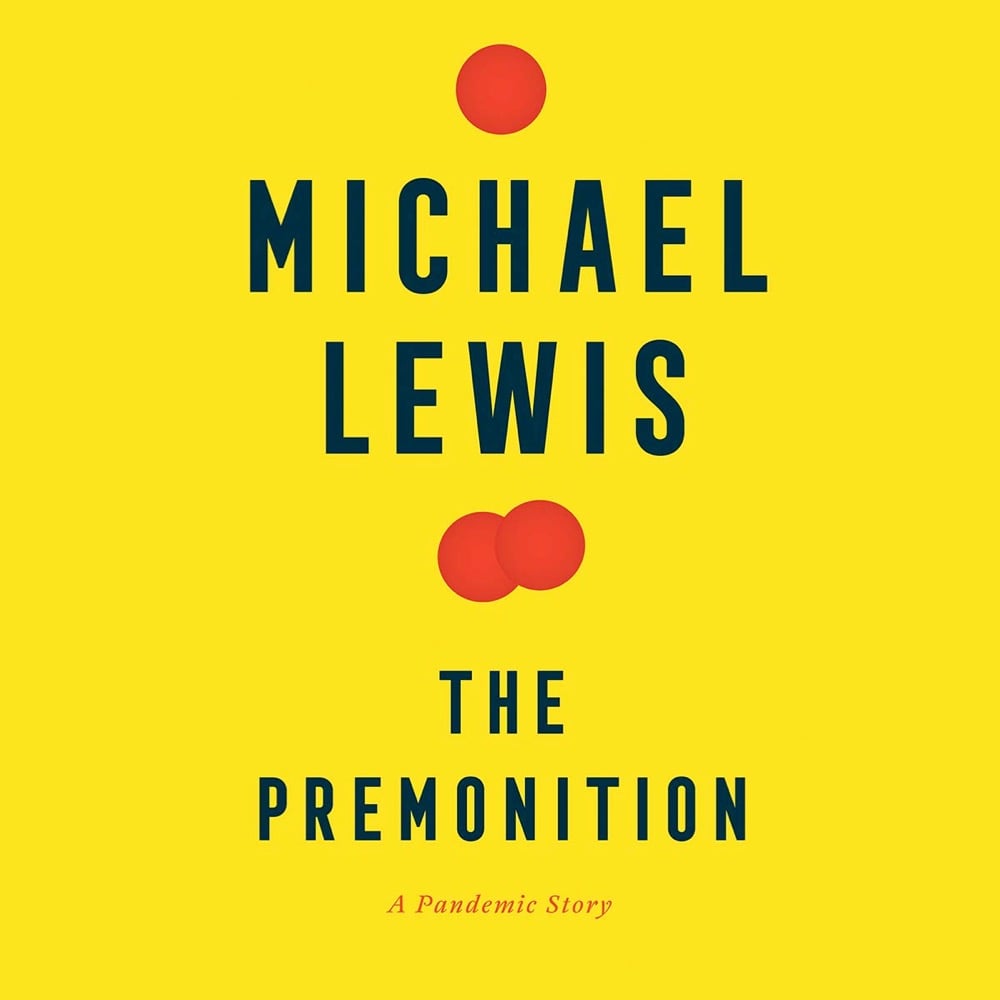
When large, seemingly sudden systemic failures occur, Michael Lewis is one of those writers who’s just waiting to pounce on it and tell us all about it. So it’s not a surprise to see that his new book comes out tomorrow: The Premonition: A Pandemic Story (ebook). From a Time interview with Lewis:
The Premonition makes sense of the COVID-19 pandemic through three people, each of whom knows a great deal about how to stop it-and none of whom is ever approached by the U.S. government: A “redneck epidemiologist” named Carter Mercher who had written the closest thing the government had to a pandemic strategy; Joe DeRisi, a McArthur Fellow who once built a chip containing all the world’s viruses; and Dr. Chastity Dean, an obscure local health official in California.
And from a mainly positive review by the NY Times’ Jennifer Szalai:
True to form, Lewis makes few grand claims for what he finds, preferring instead to let the curated details speak for themselves. “I like to think that my job is mainly to find the story in the material,” he writes in the prologue. “I think this particular story is about the curious talents of a society, and how those talents are wasted if not led. It’s also about how gaps open between a society’s reputation and its performance.”
The main question running through “The Premonition” is how, when it came to the initial Covid response, a very rich country that was ranked first globally in pandemic readiness in 2019 managed to incentivize almost all the wrong things.
Of course, this is the reality that all of us have been living for the past year, so the failures of the system don’t come as much of a surprise. Still, Lewis finds ways not just to showcase the brokenness of the system writ large but to zoom in on the sand in the gears.
But Szalai also notes the drawback of most of Lewis’s books:
This method of hewing so tightly to his characters’ perspectives gives Lewis’s narrative its undeniable propulsion, but it also comes at a cost. He doesn’t supply any endnotes, or even a sense of how many people he talked to. His main characters are presented to us as they would undoubtedly like to appear: charmingly obsessive, unwaveringly principled and unfailingly right.
You can listen to a brief interview with Lewis on NPR’s Morning Edition.
In a career filled with iconic performances, one of the standout Prince moments came at the 2004 Rock and Roll Hall of Fame induction ceremony for George Harrison. On stage to play While My Guitar Gently Weeps were Harrison’s son Dhani, music legends Tom Petty, Jeff Lynne, and Steve Winwood, and Prince. At about 3 minutes and 30 seconds in, Prince absolutely rips the place apart with a 3-minute guitar solo for the ages. If you’ve never seen this, make sure you watch all the way to the end.
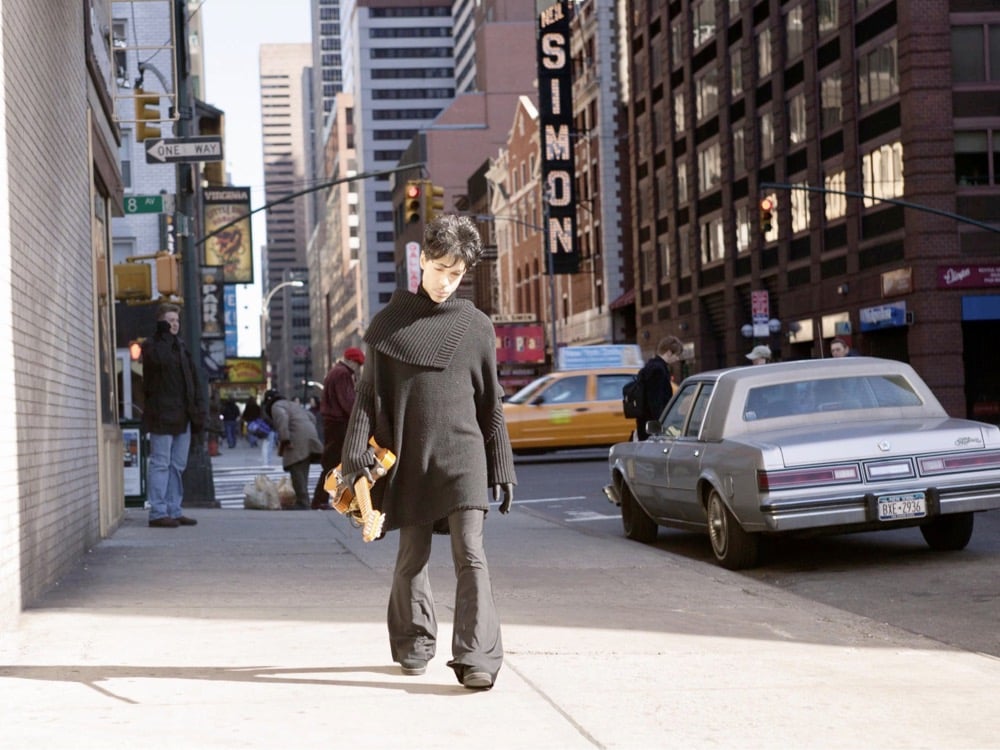
Video of the performance has been available online for years, but producer Joel Gallen recently uploaded a recut version (embedded above) that focuses more on Prince during the solo. As with all things Prince, Anil Dash shared some context for the performance, including this amazing detail about what happened to the guitar that Prince threw into the air: “long-time guitar tech Takumi Suetsugu caught the guitar & handed it to Oprah”. AS YOU DO. Dash also shared this photo by Afshin Shahidi of Prince walking, guitar in hand and seemingly unnoticed in NYC, to rehearsals for the Hall of Fame ceremony in question.
Update: This is a great oral history of the ceremony written in 2016.
Tom sort of went over to him and said, “Just cut loose and don’t feel sort of inhibited to copy anything that we have, just play your thing, just have a good time.” It was a hell of a guitar solo, and a hell of a show he actually put on for the band. When he fell back into the audience, everybody in the band freaked out, like, “Oh my God, he’s falling off the stage!” And then that whole thing with the guitar going up in the air. I didn’t even see who caught it. I just saw it go up, and I was astonished that it didn’t come back down again. Everybody wonders where that guitar went, and I gotta tell you, I was on the stage, and I wonder where it went, too.
From the US National Archives, an 8-minute film of aerial footage filmed from a dirigible piloted by Roy Knabenshue in 1914. I am not super familiar with Chicago and the architecture of the time, but given the city’s role in the development & popularization of the skyscraper, I bet there are some amazing views in here of iconic buildings not so long after they were constructed as well as some buildings and spaces that no longer exist.
If you wish, you can also watch the upsampled, colorized, and “AI enhanced” version of this video. As I’ve said before, I’m not a huge fan of these, uh, restorations. We shouldn’t accept crappy colorization of historic B&W films just because an AI did it. (via @davidplotz)
Post-vaccination Inertia Is Real. “Readjusting our ideas about what’s safe is going to take time.”
The NES version of Tetris has been out in the world for more than 30 years now. Somehow, using the same controllers and human hands that have been in use all this time, a new technique has been invented that’s resulting in scores and maneuvers that no one using The Old Ways could have dreamed of. One YouTube commenter sums it up:
The fact that we are still out here revolutionizing the mere concept of pressing a button on a controller that is almost 40 years old. I love this community.
This is a great illustration of innovation in action. There’s a clearly new invention, based on prior effort (standing on the shoulders of giants), that allows for greater capabilities and, though it’s still too early to tell in this case, seems likely to shift power to people who utilize it. And it all takes place inside a small and contained world where we can easily observe the effects.
See also Jacob Sweet’s piece from the New Yorker a couple of months ago, The Revolution in Classic Tetris, which contains this unbelievable tidbit:
Dana Wilcox, one of the highest-scoring players on the Twin Galaxies leaderboard, discovered that she’d played for twenty years without knowing that the blocks could be spun in either direction.
(via robin sloan)
Reaching ‘Herd Immunity’ Is Unlikely in the U.S., Experts Now Believe. This has seemed the likely outcome for months now – simply not enough people are interested in the vaccine to get us there.
Newer posts




Socials & More