Entries for March 2021
In the late 80s and early 90s, a show called The Secret Life of Machines aired in the UK and the US. Each episode focused on one piece of technology (television, vacuum cleaner, refrigerator) and how it worked — the show is definitely a precursor to the hordes of explainer videos on YouTube, and, increasingly, streaming services. Show creator Tim Hunkin has been uploading digitally remastered episodes of the show to YouTube with newly added commentary from Hunkin at the end of each one. (via @TimothyHelmuth)
Update: I got distracted and forgot to include that Hunkin is doing a new series called The Secret Life of Components about things like chains, hinges, and LED lights. (thx for the reminder @rou_revisionist & @kylevanhorn)
I Like That The Boat Is Stuck. “I like knowing that there can be a big problem that’s caused by something as straightforward and comprehensible as a stuck boat.”
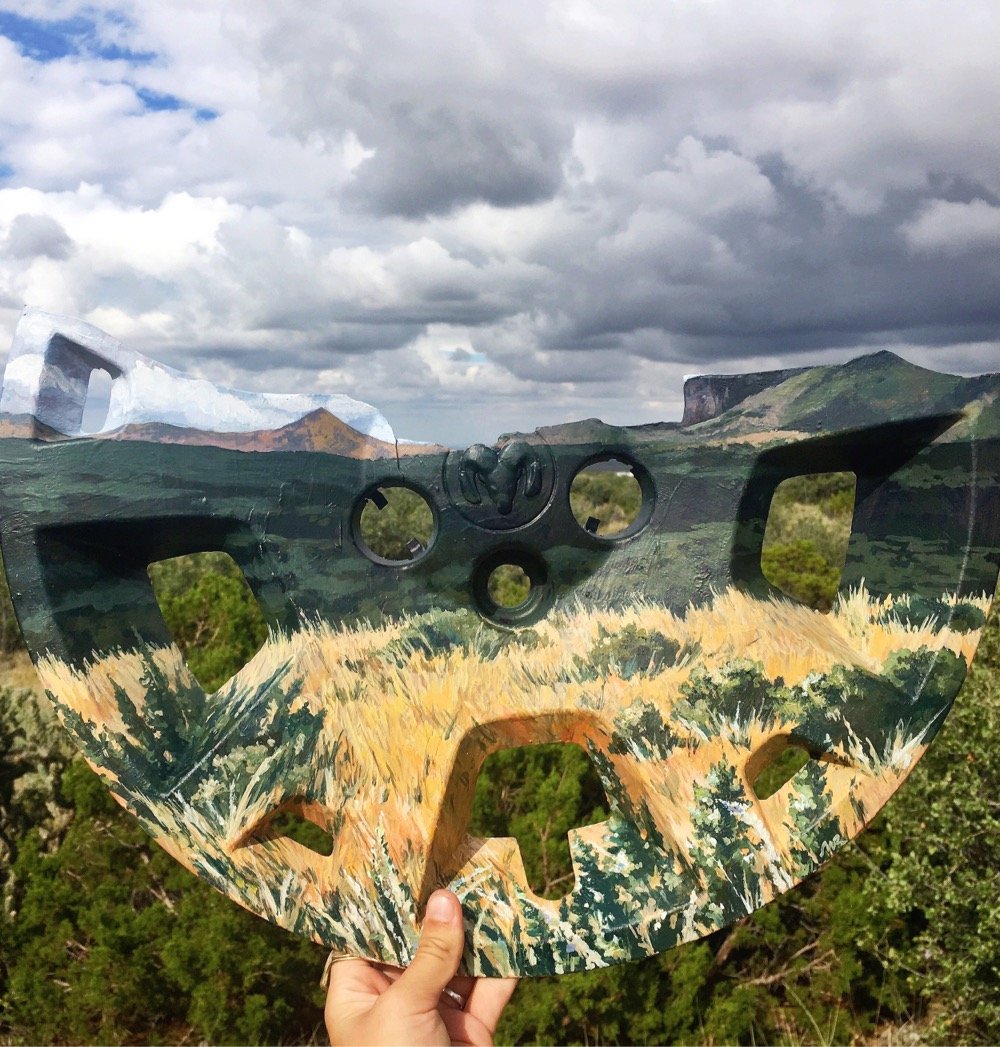


Eco-artist Mariah Reading finds discarded objects in National Parks, on native lands, and in other natural environments and paints impressionistic landscapes on them so they blend into the backgrounds of the places they were found. Atlas Obscura has an interview with Reading about her work.
The first piece I did that was a single object, not a bunch of [objects] stuck together. I was working at Guadalupe Mountains National Park and along its edge there was a major highway. I would walk along it and find a lot of car parts, just a lot of scrap things that fall off as the cars are whizzing past. I found half of a hubcap, and I took a closer look at it and realized it had cracked perfectly to form the silhouette of the mountain range I was standing in front of. I had a vision that I would just paint the land onto it and use the shape of the object to inform the piece. That’s when I started getting more into photography, too. Then my finished work shifted to not just being the painting, but also the painting photographed in the land where it was found.
That piece, called “El (Hub)Capitan”, is pictured at the top of this post. You can check out more of Reading’s work on her website and on Instagram. (via the morning news)
The Hard Work of Remembering. “As of today 545,305 people in this country have died from COVID-19. If the names were on the same bronze parapets as the 9/11 memorial, they’d stretch for forty-nine miles.”
Yes, this. But also: I am torn between a) the knowlege that I need to cut *myself* some slack and b) the continuous criticism of myself. Working on it!
The fantastic civil rights documentary Eyes on the Prize will soon be available for viewing on public media and online. WORLD Channel and PBS will begin airing the 14-part series in early April. The first part of the series, covering the civil rights movement from 1954-1965, will also be available to watch online starting in mid-April. Check out the press release for more info.
Eyes on the Prize, created by Executive Producer Henry Hampton, is an award-winning and critically-acclaimed in-depth documentary series on civil rights in America. Hampton set out to share his vision of what he called “the remarkable human drama that was the Civil Rights Movement” through the experiences and challenges of those fighting for justice. Produced by Blackside Inc, Eyes on the Prize tells the definitive story of the civil rights era from the point of view of the ordinary men and women whose extraordinary actions launched a movement that changed the fabric of American life and embodied a struggle whose reverberations continue to be felt today.
With contemporary interviews and historical footage, the Academy Award-nominated documentary traces the civil rights movement from the Montgomery bus boycott to the Voting Rights Act; from early acts of individual courage through the flowering of a mass movement and its eventual split into factions. The late Julian Bond, political leader and civil rights activist, narrates.
If you’ve never seen Eyes on the Prize, you should definitely take this opportunity to check it out. (via @jbenton)
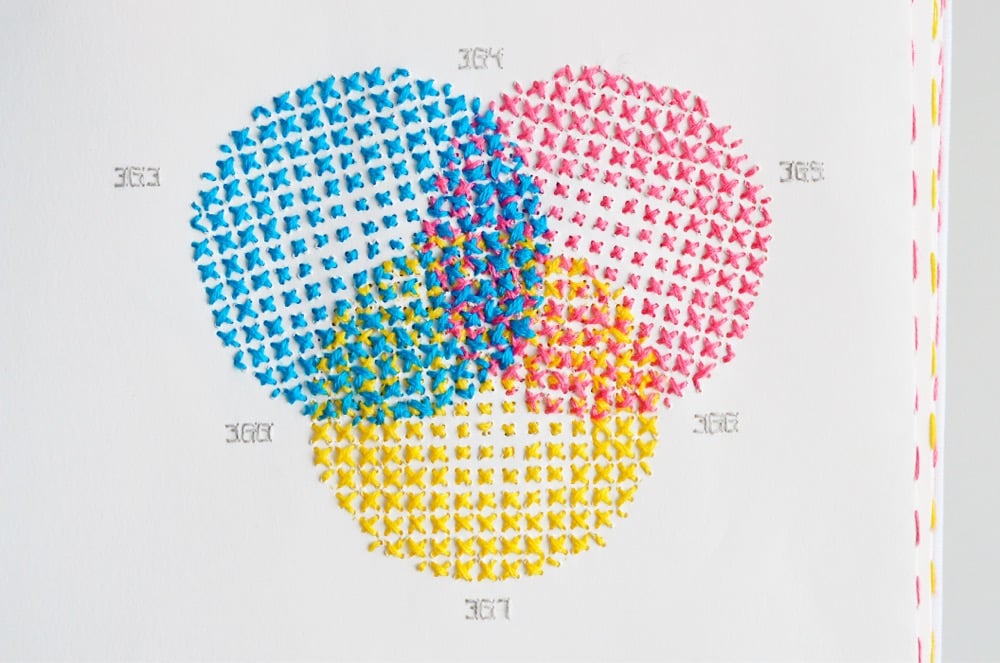
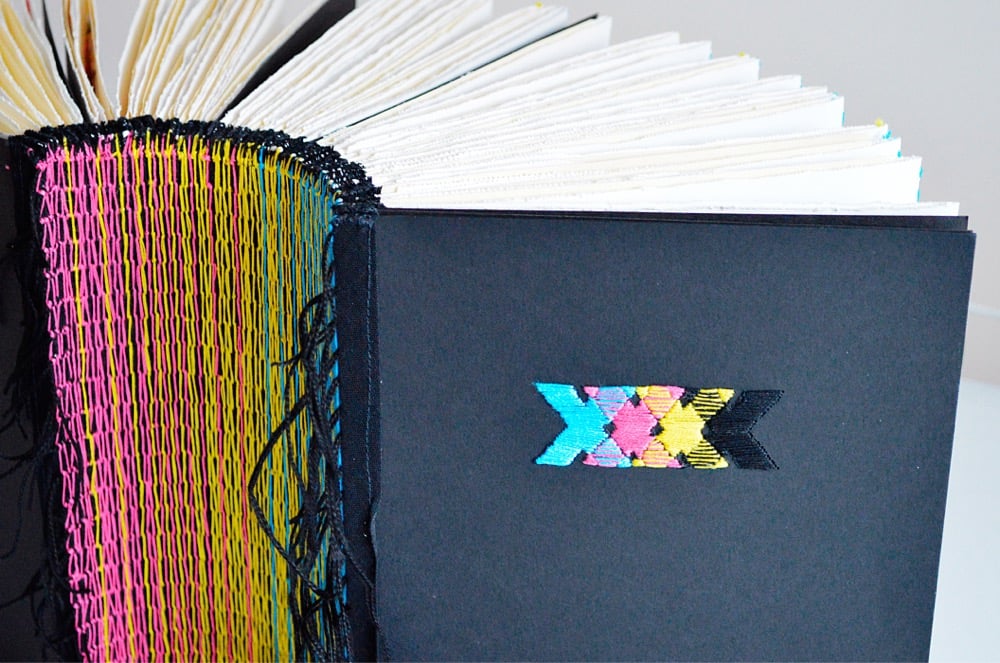
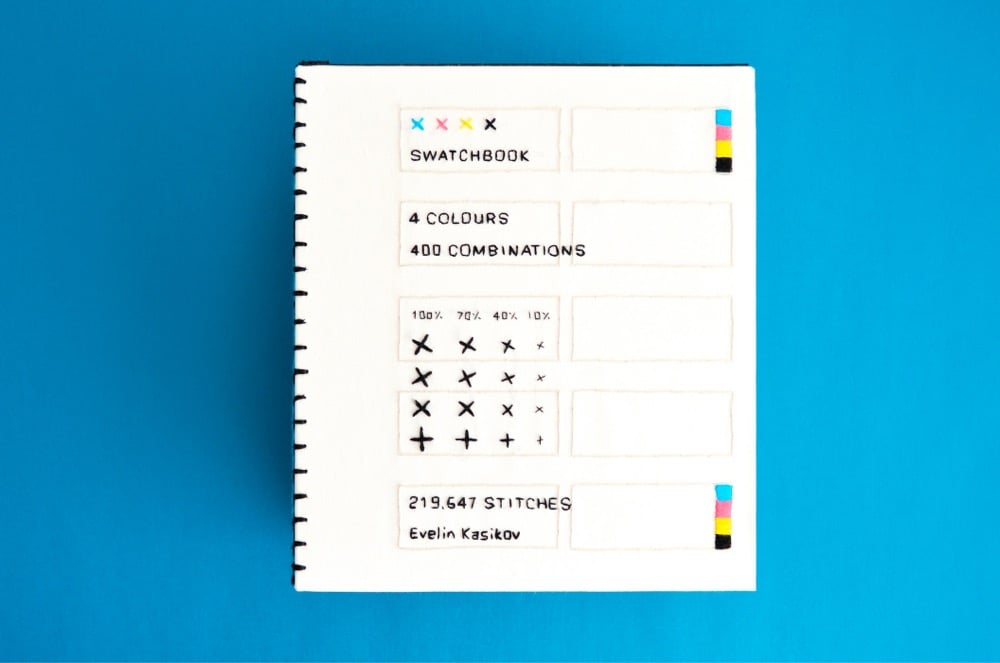
Back in January, Clive Thompson asked his Twitter followers for links to books of unusual dimensions. In the resulting thread, people shared images and links to books of all different shapes and sizes, from Irma Boom’s miniature books to the Codex Gigas to a book of Kraft American Singles (my contribution). Designer Evelin Kasikov’s XXXX Swatchbook, a handmade book about CMYK printing constructed entirely of embroidery thread and paper, would fit nicely into that collection.
XXXX Swatchbook shows the range of colours that can be achieved in handmade printing technique. But it also twists the idea of print by turning quick reproduction process into slow handmade process. It’s a book about a process, and with no less than six years in the making, the book itself is a process. It’s a catalogue of colour, a unique art book and an object of book art. The book documents 400 hand-stitched colour swatches in CMYK embroidery. The line screen in my book is incredibly low and ranges between 4 to 7 lines per inch (as opposed to 300 lpi in standard printing).
See also Embroidery that Breaks the Fourth Wall and The Embroidered Computer. (via colossal)
Visualizing deaths caused by policing in the United States. “These three alarming trends…could suggest that the police are becoming increasingly aggressive and invested in maintaining the racial order.”
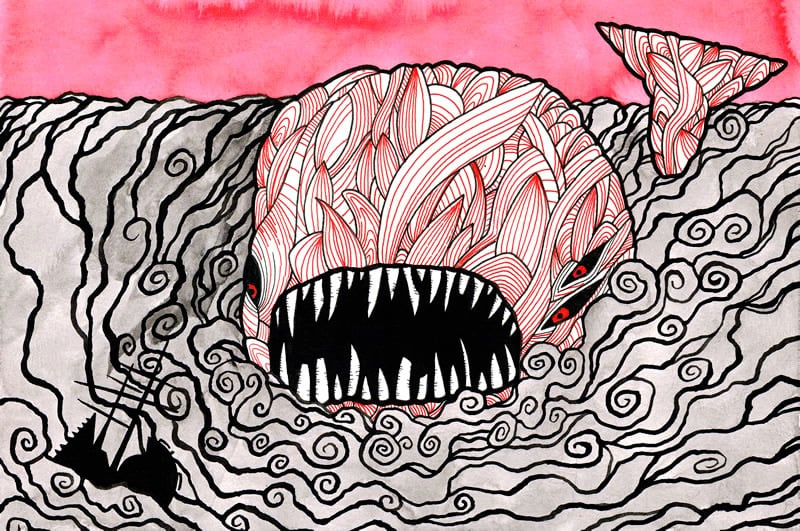
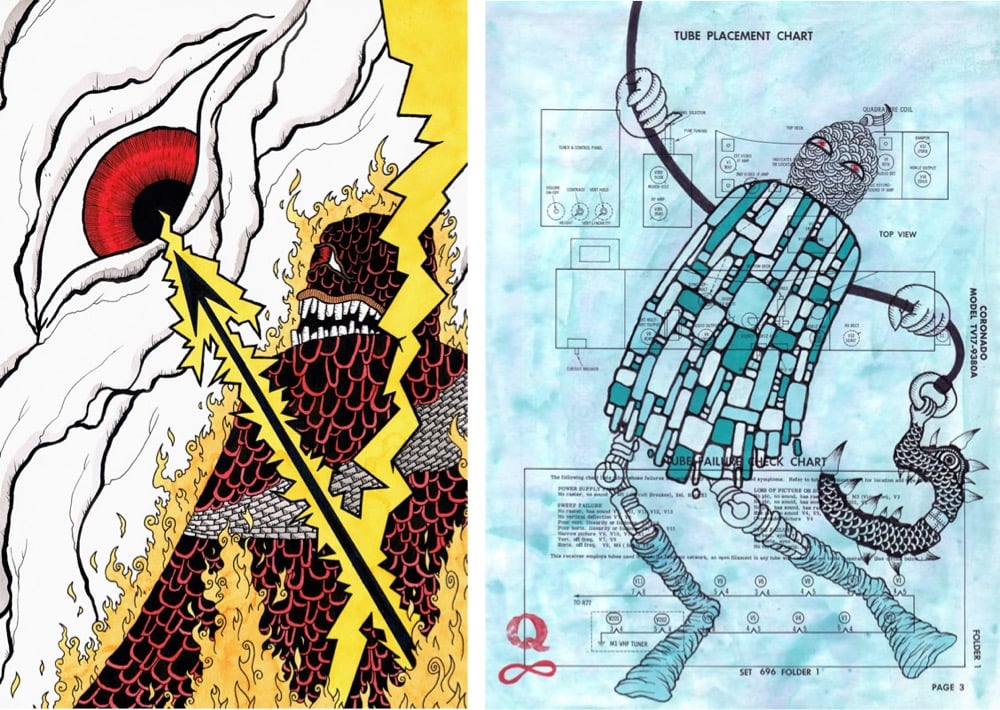
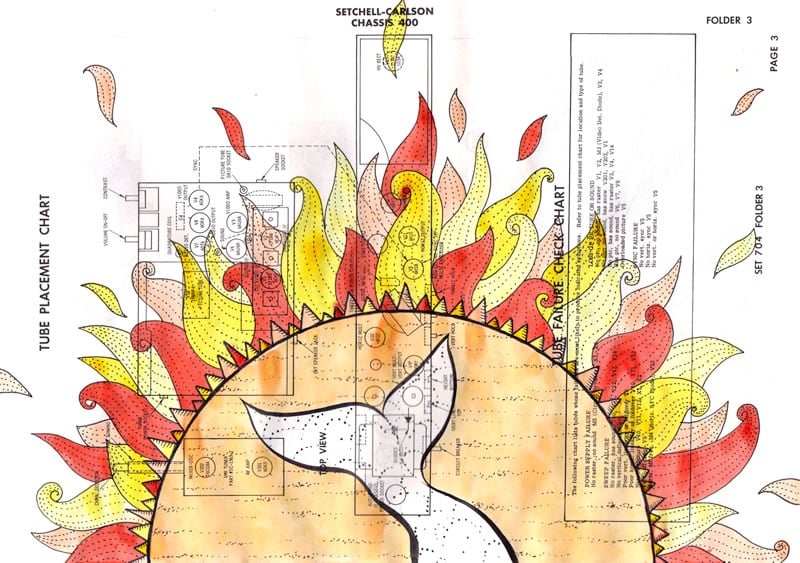
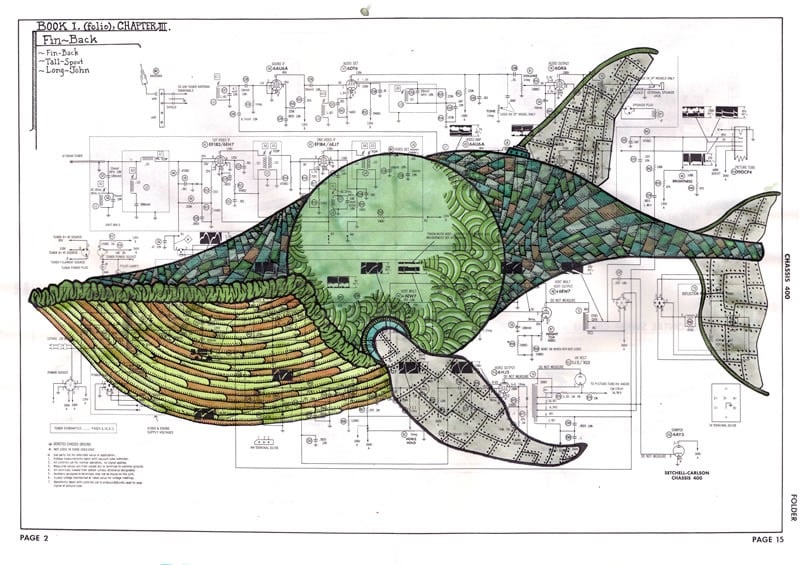
Over a period of a year and a half, Matt Kish created one illustration for each of the 552 pages in the Signet Classic paperback edition of Herman Melville’s novel, Moby-Dick. He then turned those illustrations into a book, Moby-Dick in Pictures: One Drawing for Every Page.
In retrospect, Kish says he feels as foolhardy as Ishmael, the novel’s narrator, and as obsessed as Captain Ahab in his quest for the great white whale. “I see now that the project was an attempt to fully understand this magnificent novel, to walk through every sun-drenched word, to lift up all the hatches and open all the barrels, to smell, taste, hear, and see every seabird, every shark, every sailor, every harpooner, and every whale,” he says. “It was a hard thing, a very painful thing, but the novel now lives inside me in a away it never could have before.”
All of the drawings are still available on Kish’s old Blogspot blog (first entry here) but the best way to see them is to get the book.

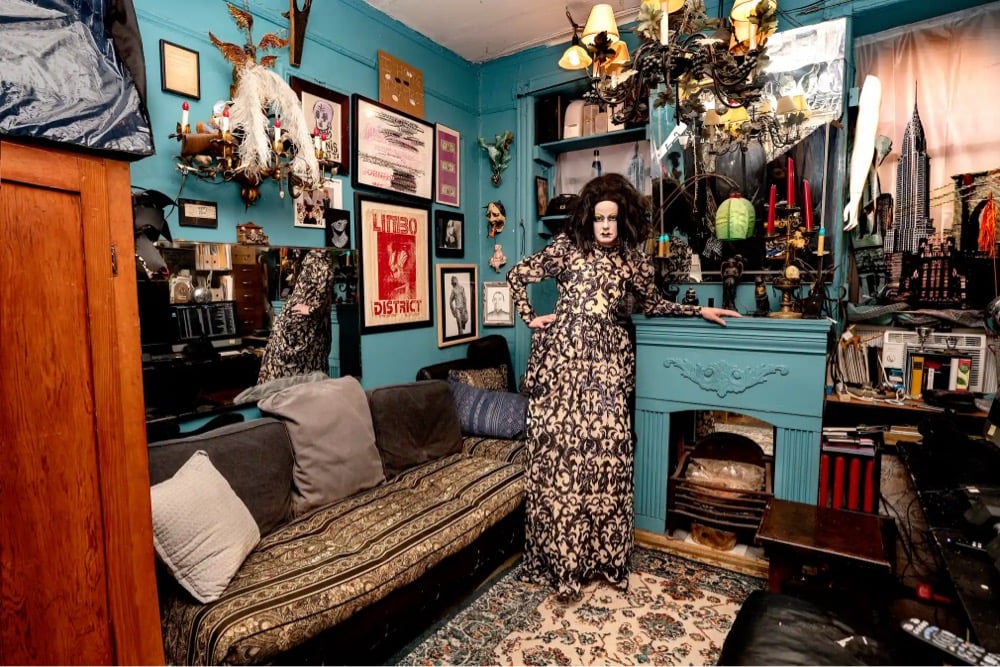
For her forthcoming book New Yorkers, photographer Sally Davies (Instagram) captured portraits of people inside their NYC apartments. I love the creativity of these living spaces, many in styles you just do not see in contemporary design magazines. You can preorder New Yorkers at Bookshop.org — it comes out April 1.
For some reason, my teen son has become obsessed with the “Dicky Moe” episode of Tom & Jerry. To be fair, the first 40 seconds are a brilliant animated distillation of Captain Ahab’s deranged whale obsession.
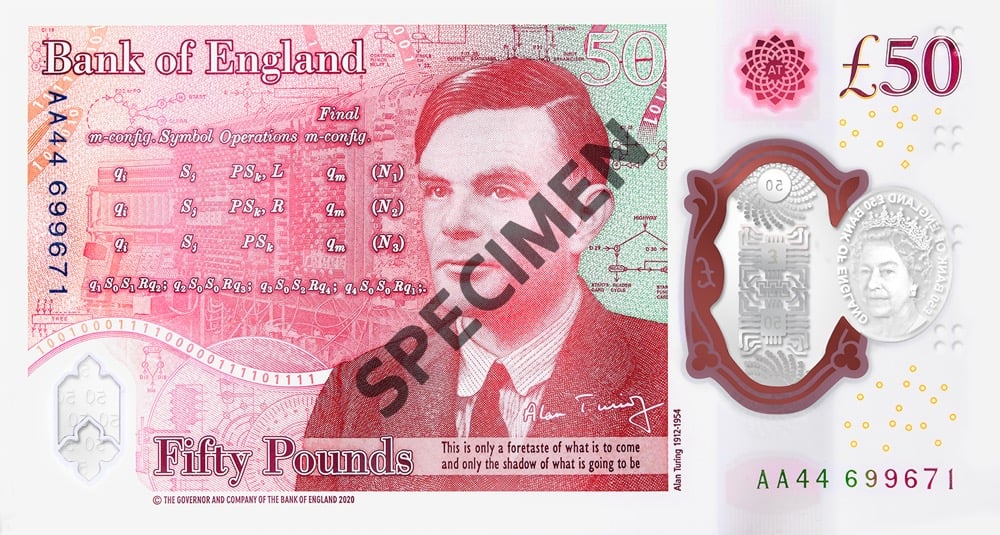
The Bank of England unveiled the final design of the new £50 banknote honoring mathematician and computer scientist Alan Turing.
Commenting on the new note, Governor Andrew Bailey said: “There’s something of the character of a nation in its money, and we are right to consider and celebrate the people on our banknotes. So I’m delighted that our new £50 features one of Britain’s most important scientists, Alan Turing. Turing is best known for his codebreaking work at Bletchley Park, which helped end the Second World War. However in addition he was a leading mathematician, developmental biologist, and a pioneer in the field of computer science. He was also gay, and was treated appallingly as a result. By placing him on our new polymer £50 banknote, we are celebrating his achievements, and the values he symbolises”.
The note will be placed into circulation beginning June 23, 2021. As part of the introduction of the note, GCHQ (the successor agency to the one Turing worked for) has created a series of 12 puzzles for folks to decipher. Good luck!
In a sort of self-ventriloquism move, Gracie Scullion has learned how to make it seem as though her voice is delayed when she talks. Check out the video to see what I mean:
Neat! Scullion has a career in vaudeville ahead of her if she wants.1 (via digg)
Related to my post from last month about what a 95% or 66% efficacy rate of a vaccine even means, Vox made a clear and concise video about why comparing vaccine efficacy rates is difficult — trials were done in different countries with different variants under different conditions with different levels of disease — and why protection against severe illness, hospitalization and death is a better way to compare and evaluate these vaccines. As this chart from Dr. Eric Topol shows, all of the major vaccines show strong protection against severe illness.

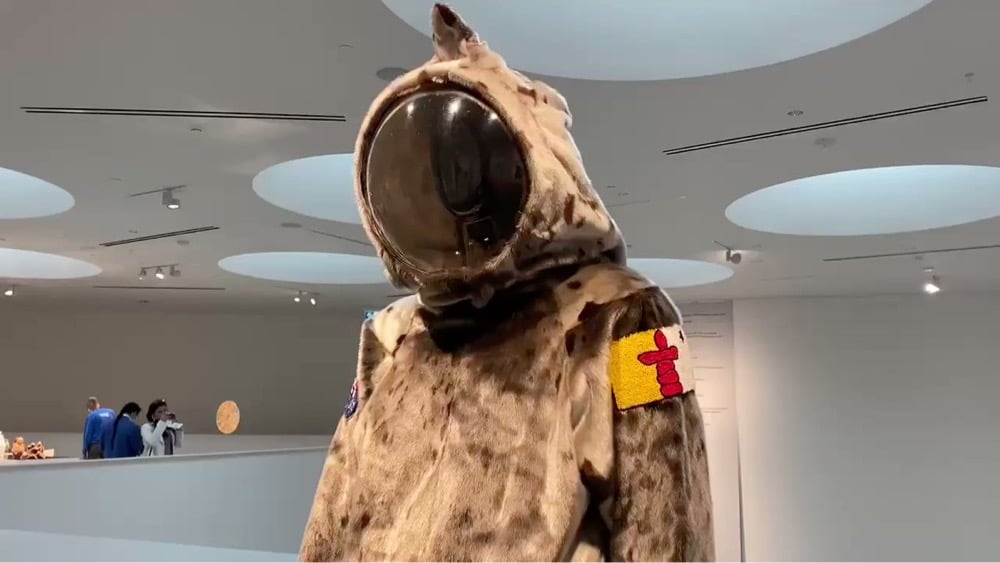
Working with Dr. Heather Igloliorte at Montreal’s Concordia University, Inuit artist Jesse Tungilik and a group of students designed and built a spacesuit made out of seal skin. Tungilik was inspired by the feelings he’d had as a child, bundled up in hunting clothes made by his mother out of caribou hide.
When Jesse Tungilik was a child, his mother made him traditional caribou hunting clothes. While wearing the bulky, heavy handmade outfit, he often imagined that he was in a spacesuit.
“That memory stuck with me when I heard about this opportunity here at Concordia, with its future-themed focus, and the two ideas met in the middle,” Tungilik says.
The image above is a still from a video taken by Brittany Hobson of the spacesuit on display in an exhibition at the Qaumajuq museum in Winnipeg. She says “the video doesn’t do it justice” but the suit looks pretty amazing in that video — I would love to see this in person someday. Dr. Igloliorte, who co-curated the exhibition, talked about the suit and its creation in this video:
Via CBC, you can see a photo of Tungilik as a kid, bundled up in his homemade “spacesuit” while out hunting with his father. Aww. (via @UnlikelyWorlds)
“In City After City, Police Mishandled Black Lives Matter Protests.” Mishandled? Or deliberately escalated? Police intentionally rioted in American streets last summer as a show of force & a rebuke to any restriction of their power & autonomy.
Ollie Bye has created an animated time lapse of the growth of London from a small Roman town in 47 ACE to the largest city in the world (during the Victorian era) to the massive, sprawling city it is today.
See also Here Grows New York City, a Time Lapse of NYC’s Street Grid from 1609 to the Present, an example of what the creator called “an abstract representation of urbanism”. And a list of the largest cities throughout history — perhaps surprisingly, there have only been two lead changes since the 1820s. (via open culture)
On the Americal ritual of a Killing Day. “Mass shootings are by now a standard part of American life. Preparing for them has become a ritual of childhood.”
Riffing on a byōbu folding screen of the Battle of Sekigahara painted in the 1700s, Yusuke Shigeta made a pixel animated version for a recent exhibition. The video above is a tantalizingly short preview of the work — I could have watched these tiny pixel vignettes all day.
Amazon Delivery Drivers Forced to Sign ‘Biometric Consent’ Form or Lose Job. Amazon could be a beloved company (and still hugely profitable) if they wanted to be but it just doesn’t seem like they want to be.
Pickup lines generated by AI. “What’s the definition of a femtometer? Cause I’d like to run it through your quark 10 times.”
From a short piece riffing on Idi Amin and the political utility of being a buffoon by Mark Leopold, author of an Amin biography:
What, then, are the advantages of political buffoonery? Off-hand, considering Amin’s career, I can think of at least five:
1) It leads opponents to underestimate the ability and intelligence of the buffoon.
2) It provides deniability — “it was only a joke.”
3) It appeals to core supporters (many Africans loved Amin’s teasing of the former colonial masters).
4) It serves as a distraction from the more serious, perhaps frightening or incompetent, actions of the leader, what we now call the “dead cat” tactic.
5) It leads to ambiguity (was it a joke or not?), producing confusion and uncertainty about how to respond.
Behind all this is clearly what Freud recognized as the aggressive nature of joking. I suggest that buffoonery is, at root, a quintessentially masculine characteristic.
If you’ve lived though recent UK and US politics, I expect you’re furiously nodding your head at all this right now. (via sam potts)
How to Wait in Line. “Distract yourself to pass the time. If you can, embrace the camaraderie of wanting something en masse.”
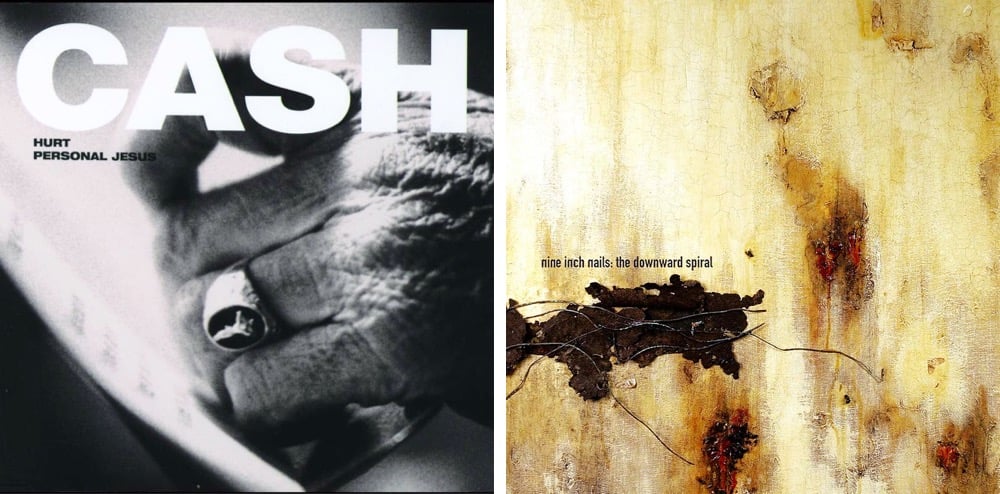
Back in 2011, NME listed 30 cover songs that are better than the originals, as determined by their writers and readers. I’m not going to weigh in on the truth of their assertions, but listening to this playlist of the covers and the original songs is a pretty good way to pass the time.
(via @philipkd)
Update: My friend Matt Haughey thought this list sucked and made his own selections. Something I had forgotten: Matt was responsible for the bootleg of the Ted Leo Since U Been Gone / Maps mashup.
Also, the Coverville podcast has done more than 1350 episodes featuring all sorts of cover songs. (via @john_overholt)
Ten people were killed in a mass shooting in Boulder, Colorado supermarket yesterday. In America, part of opening back up after a pandemic is the return of periodic public slaughter. (Gun sales surged massively in 2020.)
Sylvia Plath’s Food Diary. The poet wrote about food a lot and @whatsylviaate is keeping track. “God, must I lose it in cooking scrambled eggs for a man?”
Mickey Drexler tells the Old Navy origin story. “I did some research and found that 80% of the jeans in America sold for less than $30, and Gap’s price point started at $34.50.”
Newer posts
Older posts



Socials & More