


A history of the Space Shuttle in pictures
From earlier this month at In Focus, a photographic look at the “dizzying inspiration and crushing disappointment” of NASA’s Space Shuttle program. (via @robinsloan)

This site is made possible by member support. 💞
Big thanks to Arcustech for hosting the site and offering amazing tech support.
When you buy through links on kottke.org, I may earn an affiliate commission. Thanks for supporting the site!
kottke.org. home of fine hypertext products since 1998.
Beloved by 86.47% of the web.
From earlier this month at In Focus, a photographic look at the “dizzying inspiration and crushing disappointment” of NASA’s Space Shuttle program. (via @robinsloan)
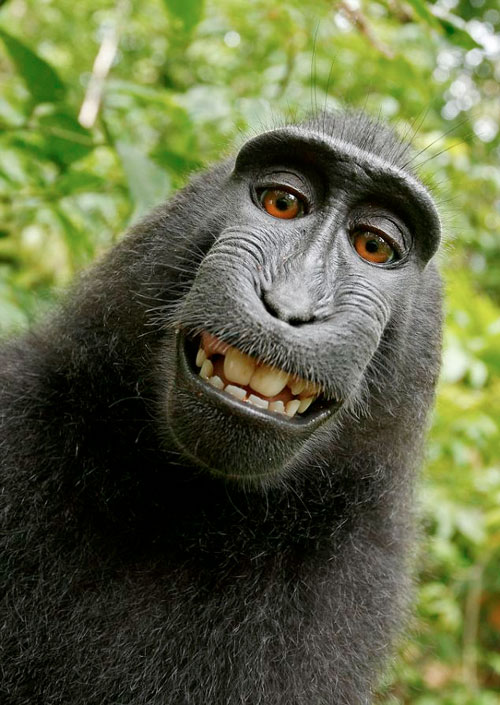
I almost made a joke on this post about getting a takedown notice from the monkey who took the inlined image, but this story on Techdirt explores the copyright issues involved in a more serious way.
Technically, in most cases, whoever makes the actual work gets the copyright. That is, if you hand your camera to a stranger to take your photo, technically that stranger holds the copyright on the photo, though no one ever enforces this.
(via ★tcarmody)
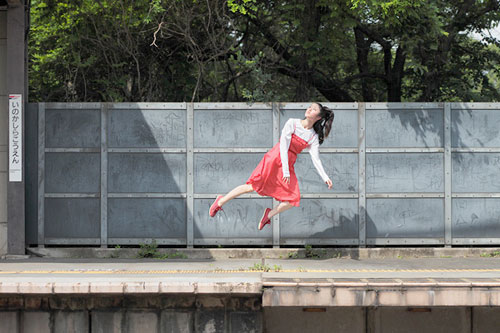
Even though several photographers have done similar projects (e.g. Denis Darzacq), these levitating self-portraits by Natsumi Hayashi charmed the pants right off of me.
Forget the million monkeys at a million typewriters eventually pounding out Shakespeare. Watch out Cartier Bresson (or perhaps Jill Greenberg), they’ve moved on to photography. A crested black macaque grabbed a photographer’s camera and shot dozens of shots, including this fine self-portrait:
I think that is my new favorite photo by my new favorite photographer.
Anna Skladmann takes photographs of the children of rich Russian families.

When I came to photograph Eva, she was at home with her two nannies, one British and one Russian. She had planned everything in advance: the dress she had chosen hung already perfectly ironed and pressed with matching tights and shoes carefully next to it. I felt that I had been hired by Eva to do this shoot rather than the other way around. She was experienced and knowledgeable as she showed me the rooms we were allowed to photograph. She placed herself carefully on the edge of a couch, stood in front of her favorite painting, and posed in her parents’ library. At the end of this photo session she was exhausted and lay down on the sofa. Finally I was able to take the only photograph that I had composed myself.
A photo restorer walks through the process of restoring a tintype photograph from the 1870s.
My standard operating procedure is to use an ultra-high resolution camera combined with a top-of-the-line macro lens to photograph tintypes. I use strobe lights to illuminate the artwork. Strobes produce “hard” light, much like the sun on a clear day. In addition to the strobes, I place a polarizer over the camera lens and polarizer gels over the strobe lights. This eliminates all reflections and enables the camera to pick up a greater tonal range along with more detail.

The original photo is on the left and an intermediate step on the right; you’ll need to click through to see the finished product.
Update: This is a better restoration…the one above is too airbrushed, like the photo on the cover of a fashion magazine.
A lovely collection of self portraits by Vivian Maier.

Maier, you’ll recall, is the street photographer whose photos were discovered at a Chicago thrift store in 2007.
A bunch of street level panoramas of midtown Manhattan from 1982. 1982 has never seemed so long ago. This link has been up and down for the past two weeks so it may not be available, so bookmark it for later checking-out.
As part of his new-ish gig as editor of In Focus at The Atlantic, Alan Taylor is running a 20-week series of photo essays on World War II. The first essay, Before the War, has been posted and is excellent.
The years leading up to the declaration of war between the Axis and Allied powers in 1939 were tumultuous times for people across the globe. The Great Depression had started a decade before, leaving much of the world unemployed and desperate. Nationalism was sweeping through Germany, and it chafed against the punitive measures of the Versailles Treaty that had ended World War I. China and the Empire of Japan had been at war since Japanese troops invaded Manchuria in 1931. Germany, Italy, and Japan were testing the newly founded League of Nations with multiple invasions and occupations of nearby countries, and felt emboldened when they encountered no meaningful consequences. The Spanish Civil War broke out in 1936, becoming a rehearsal of sorts for the upcoming World War — Germany and Italy supported the nationalist rebels led by General Francisco Franco, and some 40,000 foreign nationals traveled to Spain to fight in what they saw as the larger war against fascism.
(thx, david)
Peter Langenhahn will take hundreds of photos at a sporting event and stitch them together to make a single time-compressed panorama of the event’s action, like this image of every foul committed during a soccer match. Here’s a short video showing how he does it.
See also Peter Funch’s composite NYC street scenes. (via petapixel)
There’s a great thread over at Quora with photos of famous people in unexpected places, situations, or company. For example, there’s a photo of a young Bill Clinton meeting John F. Kennedy and one of Mark Twain and Nikola Tesla hanging out. My two favorites are a photo of Tank Man captured from an unusual angle and a chilling photo of John Wilkes Booth at Lincoln’s second inauguration, taken a little over a month before he killed Lincoln.

See also awesome people hanging out together. (thx, david)
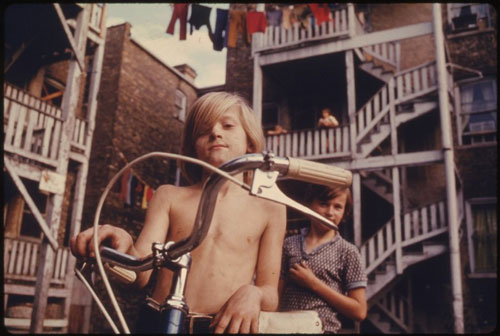
No idea what these have to do with business or being inside business or whatever, but Business Insider has a nice selection of photos by Danny Lyon of Brooklyn in 1974.
Textify.it is a web app that uses text to make alphabetic pointillist representations of images. I turned a photo of the Most Photographed Barn in America into this:
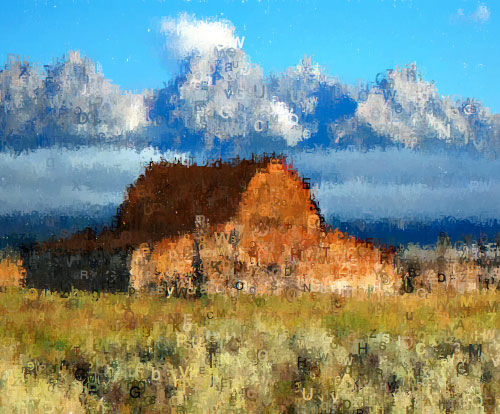
It’s also available as an iOS app. (via prosthetic knowledge)
A great collection of behind-the-scenes shots from famous movies. Here’s Kubrick and Sellers on the set of Dr. Strangelove:

(via df)

Socials & More