kottke.org posts about art


Chinese sculptor Lei Xue has made these crushed cans in the style of Ming dynasty pottery.
The pieces are part of an ongoing series titled Drinking Tea, and unlike the mechanical process of producing cans, each object is sculpted and painted by hand.
So good! See also the ingenious design of the aluminum beverage can.


Oh, I really like these. The detail, the delicate realism, the muted but also somehow vibrant colors. Me Kyeoung Lee has been drawing South Korean convenience stores for the past two decades. There appears to be a recent book of her work, but I don’t know if or where it’s available (Google Translate isn’t working on that page). Doesn’t look like prints are available either. Yo 20x200, get on this! (via colossal)


Artist Simon Birch and architect Paul Kember have recreated the famous bedroom from Stanley Kubrick’s 2001: A Space Odyssey as part of a larger art project called The 14th Factory in the Lincoln Heights neighborhood of Los Angeles. Weirdly, when Birch approached Kember about doing the project, Kember revealed that his uncles had worked on the actual set for Kubrick:
Birch showed the project’s architect, a guy named Paul Kember, a series of stills from the film hoping he’d be able to recreate it. Then Paul goes, and I’m paraphrasing here, “Oh, Si, didn’t I tell you? My uncle and great-uncle — you know, Tony and John? — were draughtsman on that movie, and they literally — literally! — worked on that exact room! Isn’t that bonkers?!”
From the Instagram evidence, it looks as though you can walk around the bedroom, sit on the furniture, lay on the bed, etc. This might almost be worth making a special trip to LA.
Update: This exhibition has moved on to the National Air and Space Museum in Washington DC. It will be on view from April 8 - May 28 2018. (via @kathrynyu)

I ran across this painting by Nicole Eisenman this morning on Facebook and it really grabbed my attention. There’s something about the cozy sweatpants vibe of the person with the default Emoji Yellow™ skin in contrast to everything else in the scene that really belongs to the present moment. Looking closer, you’ll notice the surprising realism of the purple milk crate in the foreground, the teeth on the woman’s zipper, the icons on the projected desktop, and the inputs on the back of the projector. But much of the rest of the painting isn’t that detailed — Eisenman is playing with different levels of abstraction in the same painting.
You can take a look at some of Eisenman’s other work here, here, and here. Stylistically, she’s is all over the place, as noted by Roberta Smith in the NY Times:
Few figurative painters are doing what Nicole Eisenman is, jumping back and forth among starkly different styles while inviting us to consider an equally broad range of urgent themes.
Her constant movement may be more familiar in male painters inclined to the abstract. So it’s not surprising that in her interview for the catalog for “Nicole Eisenman: Al-ugh-ories,” her exhibition at the New Museum, she mentions her admiration for two stylistic gadflies, Sigmar Polke and Julian Schnabel.
(thx, laura)


I really like these paintings by Alim Smith of black culture in America. (The best way to see them all is in the shop.) They’re slightly Cubist almost, reminiscent of Picasso. But of course Picasso’s Cubism was heavily influenced by African art and sculpture; unpacking the levels of cultural influence and appropriation here is above my pay grade. On Instagram, Smith refers to himself as an “Afro Surrealist”. Prints are available. (via @anildash)
Artist & writer James Bridle has shared a video and photos of his new work-in-progress, Autonomous Trap 001. It’s a trap for self-driving cars.
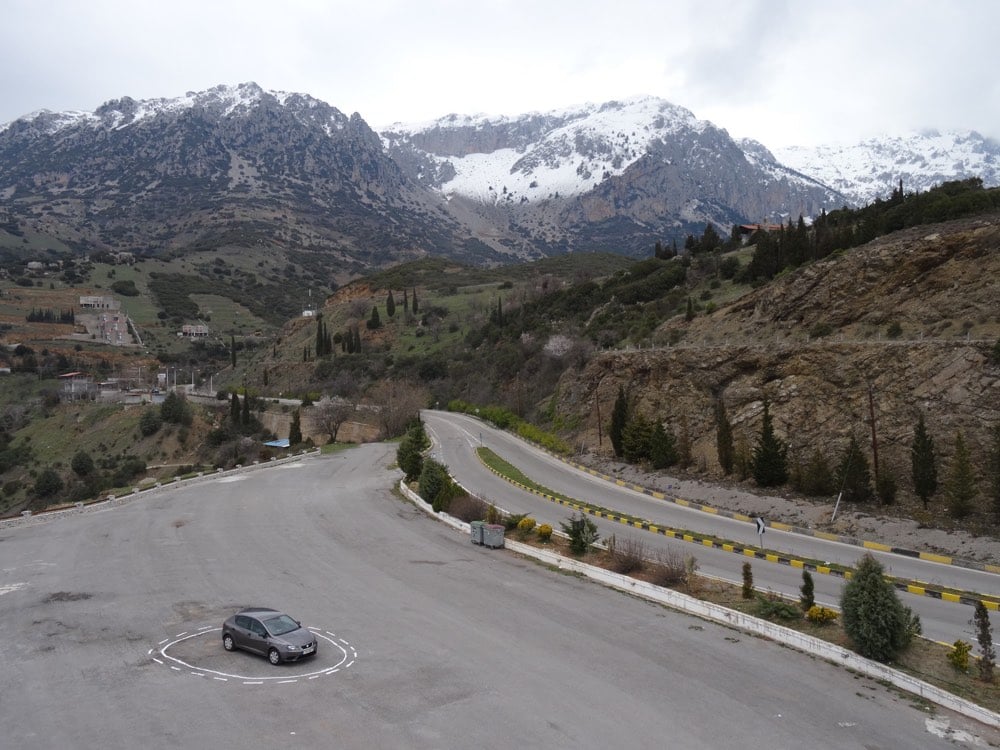
Looooooovvve this. (via @robinsloan)


A Japanese artist called Gaku carves fruits and vegetables in an amazingly intricate way and posts the results to his Instagram account. He turned what looks like a radish into Baymax from Big Hero 6! (via colossal)
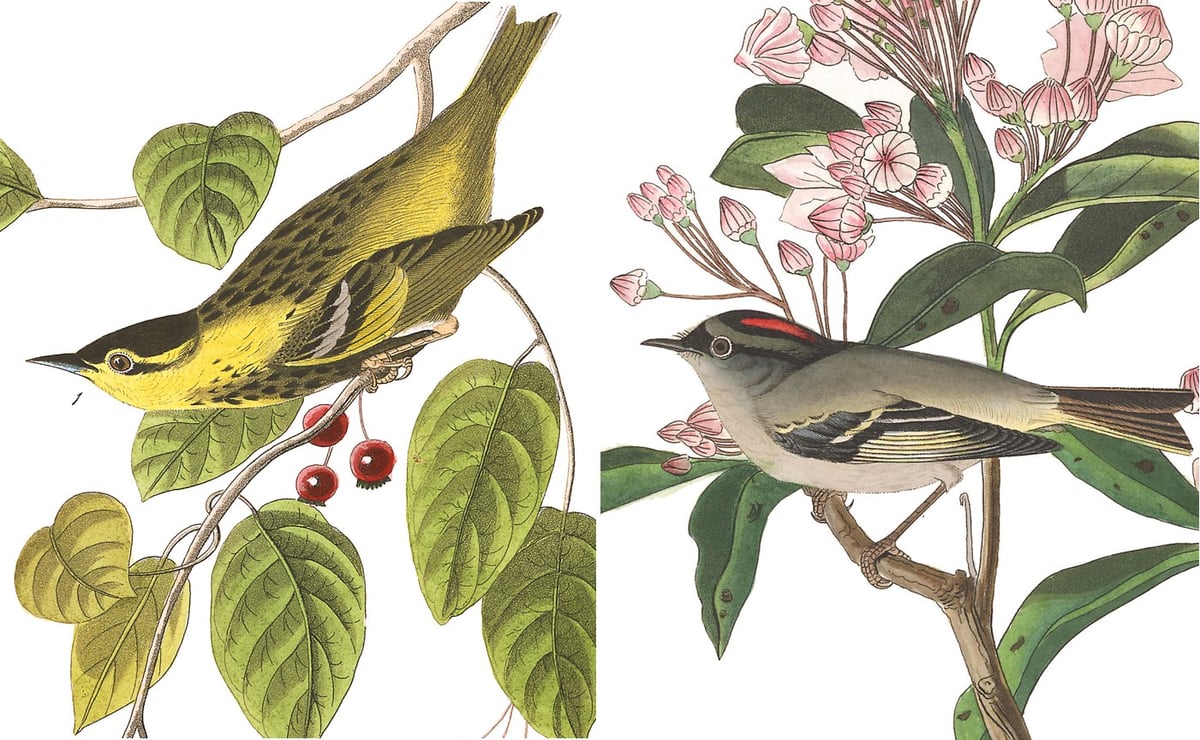
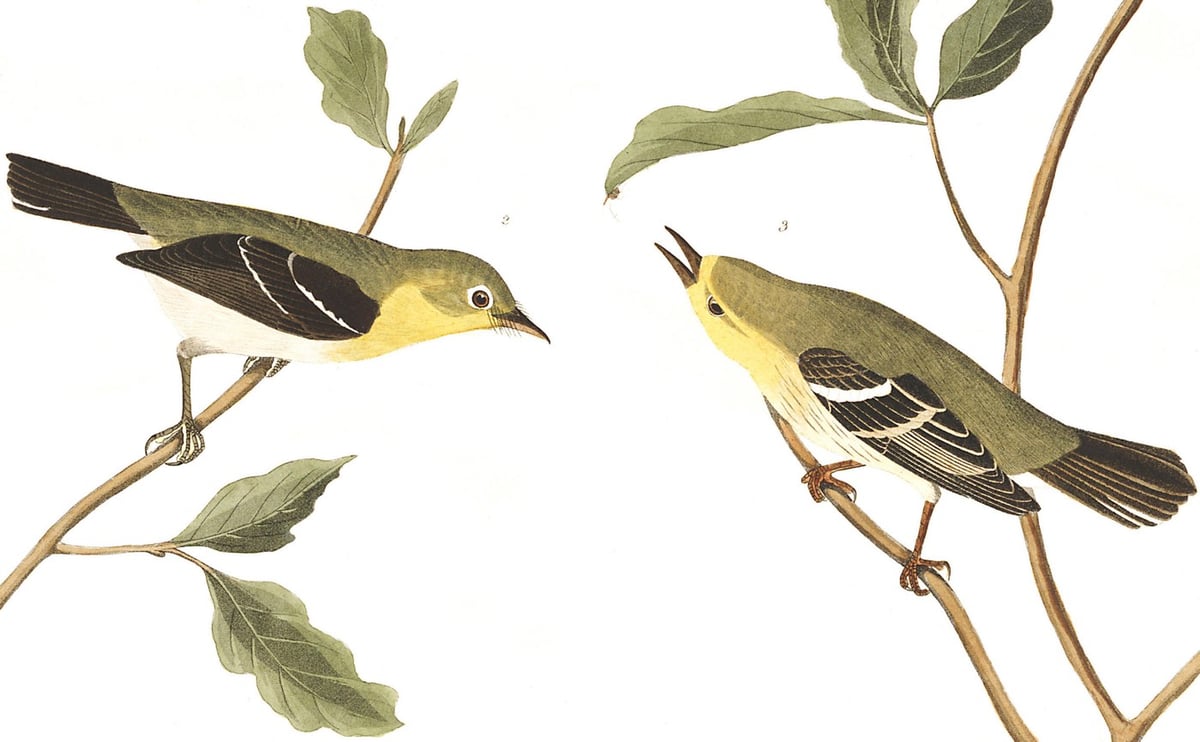
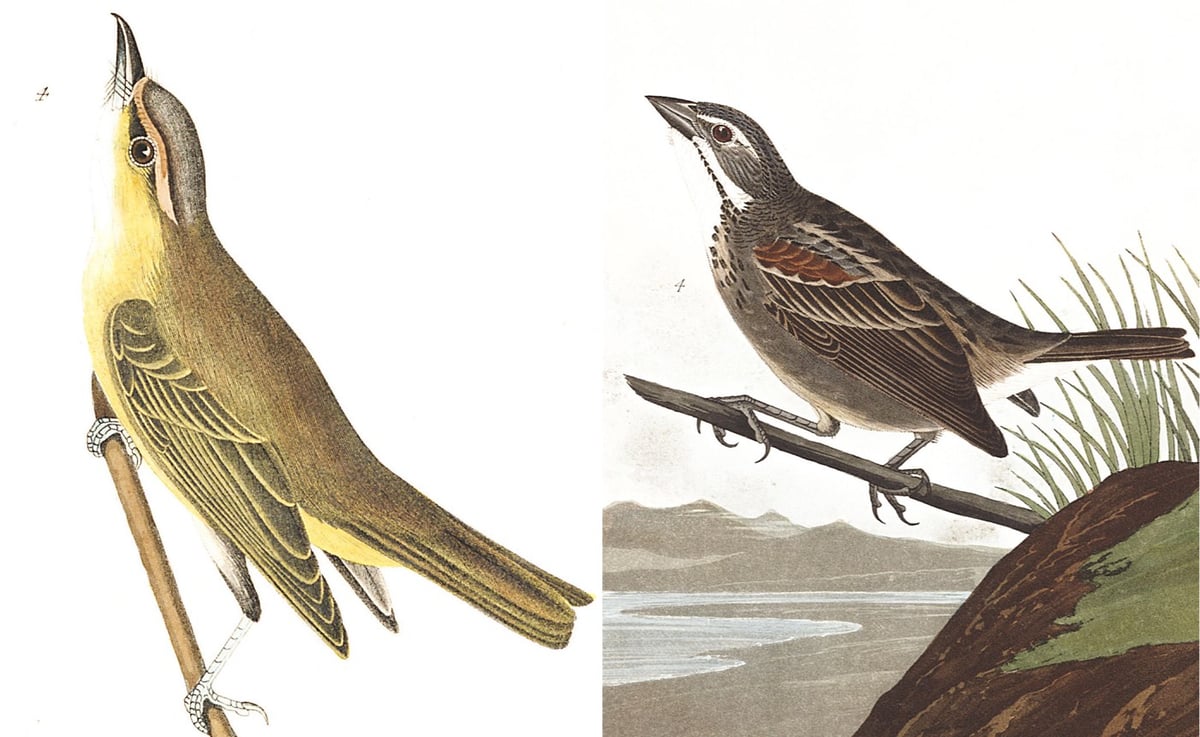
Over a period of thirteen years beginning in the 1820s, John James Audubon painted 435 different species of American birds.1 When he was finished, the illustrations were compiled into The Birds of America, one of the most celebrated books in American naturalism. Curiously however, five of the birds Audubon painted have never been identified: Townsend’s Finch, Cuvier’s Kinglet, Carbonated Swamp Warbler, Small-headed Flycatcher and Blue Mountain Warbler.
These birds have never been positively identified, and no identical specimens have been confirmed since Audubon painted them. Ornithologists have suggested that they might be color mutations, surviving members of species that soon became extinct, or interspecies hybrids that occurred only once.
The specimen that Audubon used to paint Townsend’s Bunting is now in the Smithsonian Museum of Natural History, identified as Townsend’s Dickcissel, but no bird exactly like it has been reported, Dr. Olson, an authority on Audubon’s work, noted in an email. Ornithologists suggest that it is either a mutation of the Dickcissel or a hybrid of Dickcissel and Blue Grosbeak, she said.
And that’s not counting the ones he got wrong for other reasons:
And indeed, there are several birds painted and explained in Birds of America that are not, in fact, actual species. Some are immature birds mistaken for adults of a new species (the mighty “Washington’s Eagle” was, in all likelihood, an immature Bald Eagle). Some were female birds that didn’t look anything like their male partners (“Selby’s Flycatcher” was a female Hooded Warbler).
Audubon also painted six species of bird that have since become extinct: Carolina parakeet, passenger pigeon, Labrador duck, great auk, Eskimo curlew, and pinnated grouse. Here’s his portrait of the passenger pigeon:
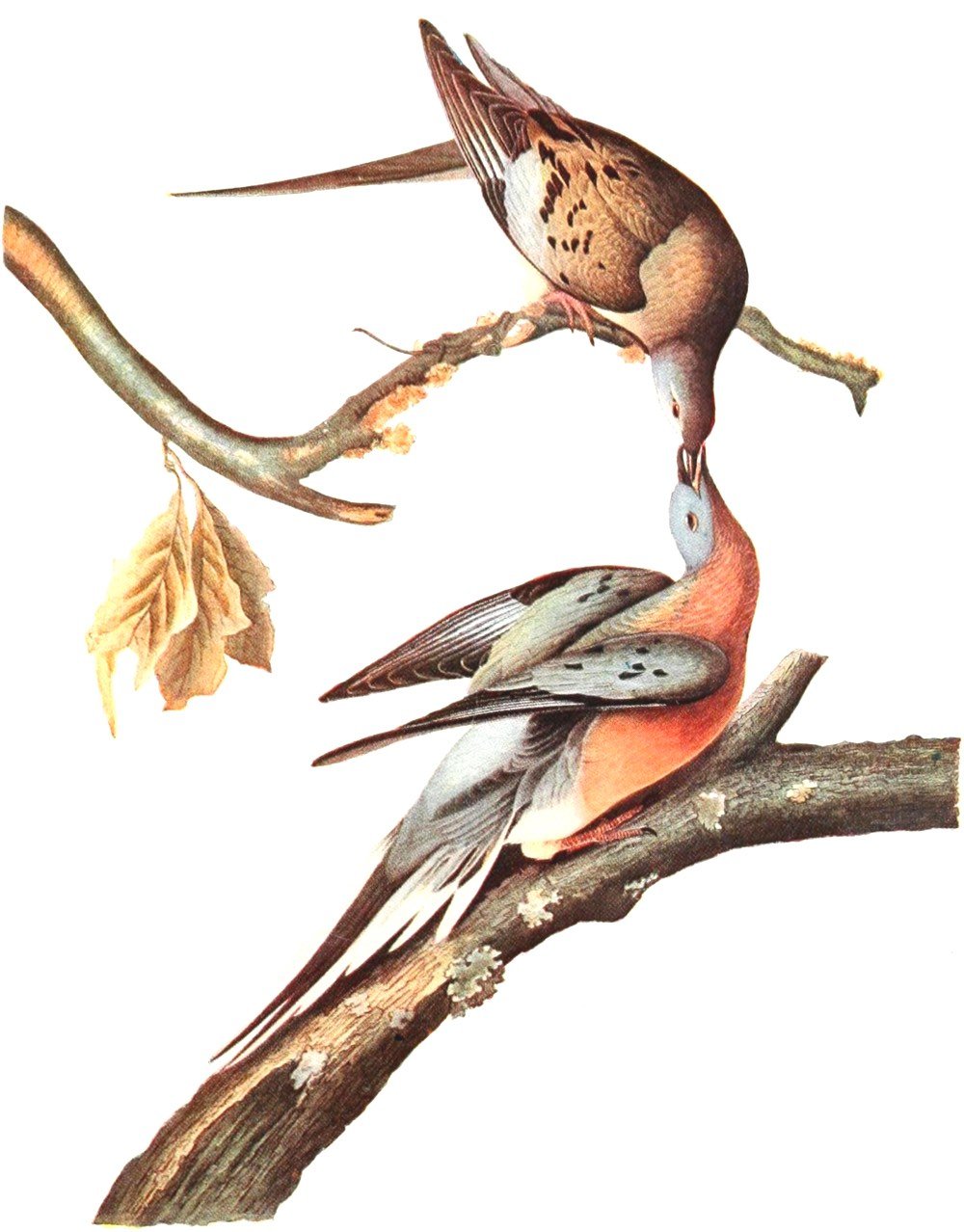
There were an estimated 3 billion passenger pigeons in the world in the early 1800s — about one in every three birds in North America was a passenger pigeon at the time. Their flocks were so large, it took hours and even days for them to pass. Audubon himself observed in 1813:
I dismounted, seated myself on an eminence, and began to mark with my pencil, making a dot for every flock that passed. In a short time finding the task which I had undertaken impracticable, as the birds poured in in countless multitudes, I rose and, counting the dots then put down, found that 163 had been made in twenty-one minutes. I traveled on, and still met more the farther I proceeded. The air was literally filled with Pigeons; the light of noon-day was obscured as by an eclipse; the dung fell in spots, not unlike melting flakes of snow, and the continued buzz of wings had a tendency to lull my senses to repose… I cannot describe to you the extreme beauty of their aerial evolutions, when a hawk chanced to press upon the rear of the flock. At once, like a torrent, and with a noise like thunder, they rushed into a compact mass, pressing upon each other towards the center. In these almost solid masses, they darted forward in undulating and angular lines, descended and swept close over the earth with inconceivable velocity, mounted perpendicularly so as to resemble a vast column, and, when high, were seen wheeling and twisting within their continued lines, which then resembled the coils of a gigantic serpent… Before sunset I reached Louisville, distant from Hardensburgh fifty-five miles. The Pigeons were still passing in undiminished numbers and continued to do so for three days in succession.
100 years later, they were all dead. Which may have had at least one interesting consequence:
But the sad echo of the loss of passenger pigeons still reverberates today because its extinction probably exacerbated the proliferation of Lyme disease. When the passenger pigeons existed in large numbers, they subsisted primarily on acorns. However, since there are no pigeons to eat acorns, the populations of Eastern deer mice — the main reservoir of Lyme disease — exploded far beyond historic levels as they exploited this unexpected food bonanza.
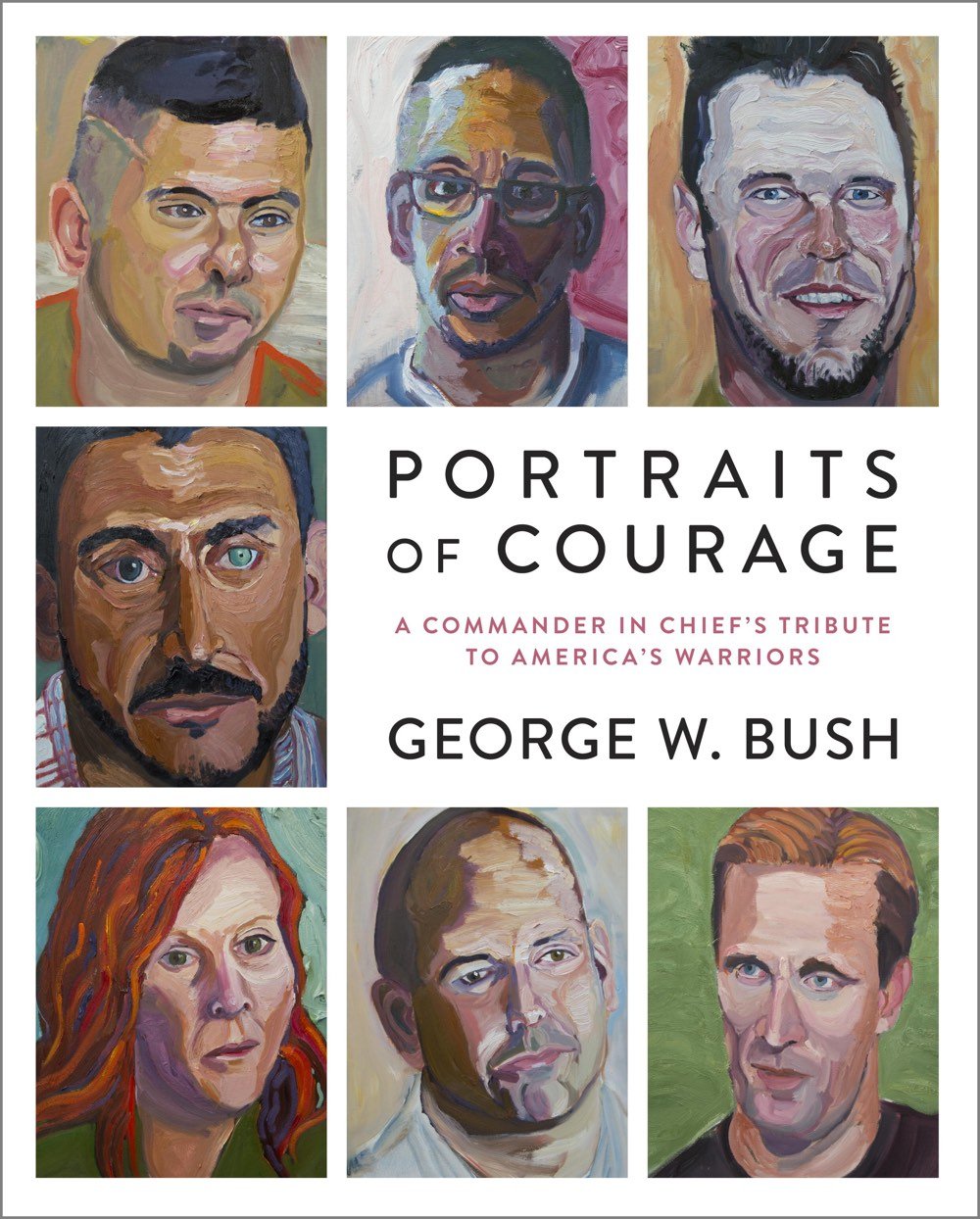
After leaving office in 2009, George W. Bush famously turned his attention to painting. That pursuit has now resulted in a book of portraits of post-9/11 US veterans painted by Bush called Portraits of Courage: A Commander in Chief’s Tribute to America’s Warriors.
Growing out of President Bush’s own outreach and the ongoing work of the George W. Bush Institute’s Military Service Initiative, Portraits of Courage brings together sixty-six full-color portraits and a four-panel mural painted by President Bush of members of the United States military who have served our nation with honor since 9/11 — and whom he has come to know personally.
The author proceeds from the book will be donated to the George W. Bush Presidential Center, “a non-profit organization whose Military Service Initiative works to ensure that post-9/11 veterans and their families make successful transitions to civilian life with a focus on gaining meaningful employment and overcoming the invisible wounds of war”. There’s a certain — I don’t know, let’s call it irony — in Bush honoring those whom he personally caused to be put in the harm’s way in the first place, under false pretenses no less.
Artist Garip Ay recently painted van Gogh’s Starry Night (along with his self-portrait) on top of water. Ebru, or paper marbling, is an art form where paint or ink is splattered or “painted” on the surface of water. Typically the painted scene is then transferred to paper with the finished product resembling polished marble stone. But Ay records his marbling on video and the effect is pretty cool.
See also the art of making marbled paper, which is well worth your attention.

I love these abstract paintings by Samantha Keely Smith. The paintings are Smith’s attempt at representing our inner emotional worlds using imagery resembling oceans, clouds, and even nebulas. From Colossal:
Smith refers to her paintings as ‘internal landscapes,’ part of an ongoing examination of an externalized inner conflict. “My newer works try to boldly portray the struggle I’ve always tried to address in my work between order and chaos, dark and light, and positive and negative impulses,” Smith shares, “along with addressing what feels like a shifting and unpredictable landscape due to global warming.”
A few prints of the original paintings are available through Smith’s website.
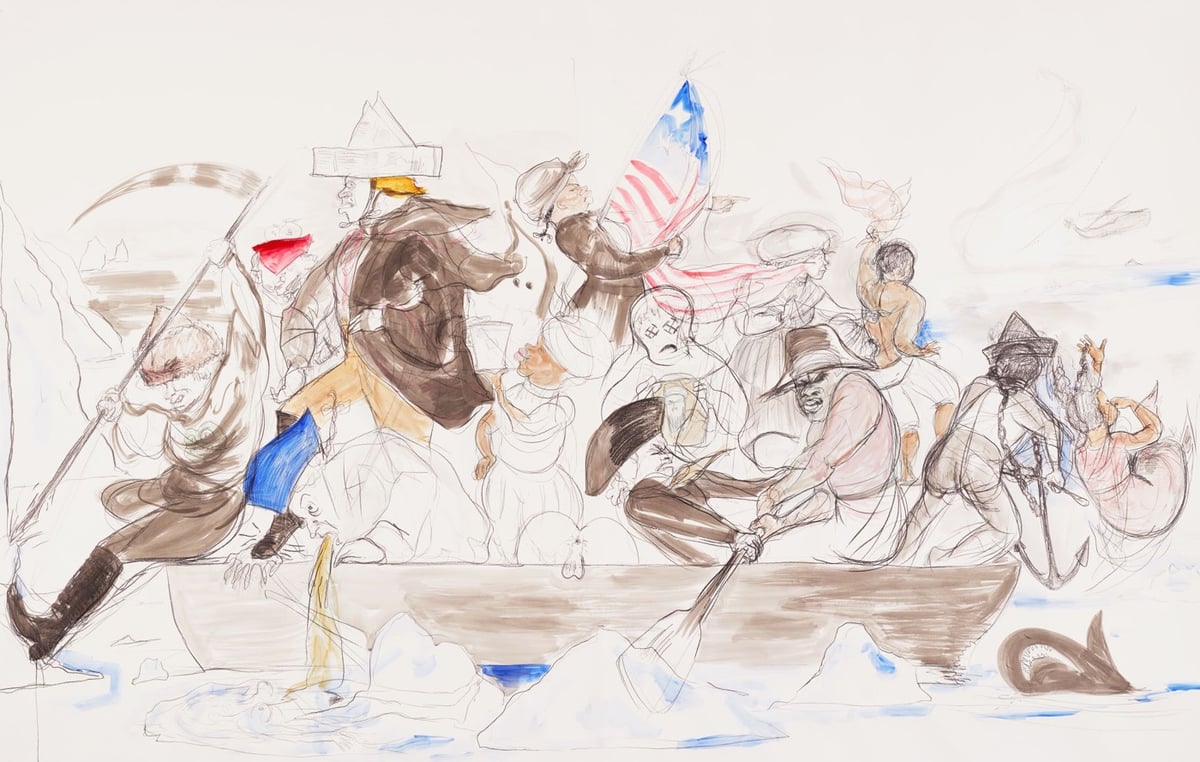
Not wanting to listen to the news on inauguration day, artist Kara Walker painted. The result is a Trumpian take on Emanuel Leutze’s famous work “Washington Crossing the Delaware”, a copy of which is on display at the Met Museum. I hope I get to see Walker’s version in a museum or gallery someday soon.
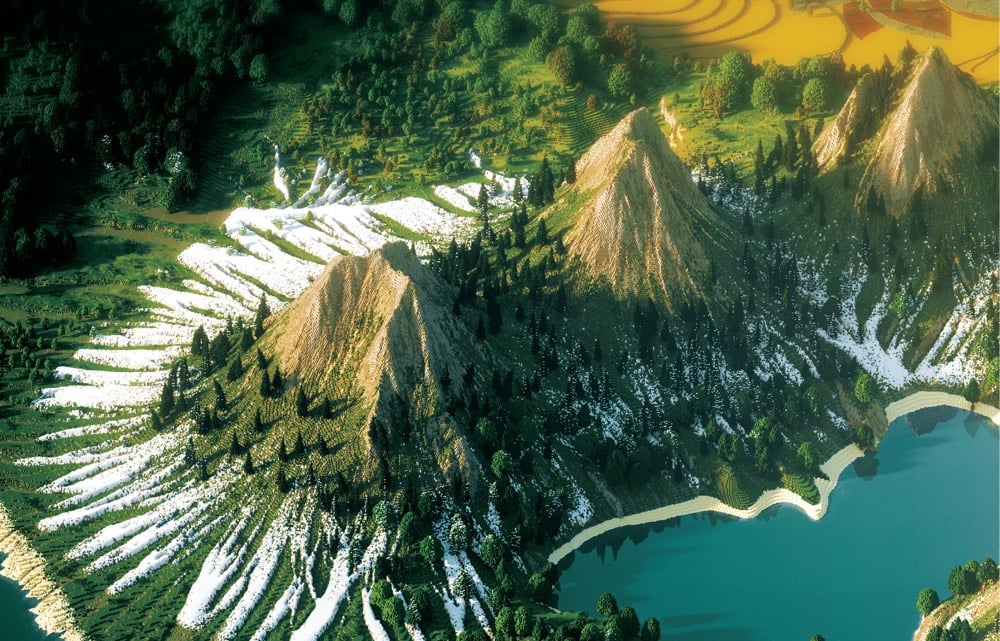
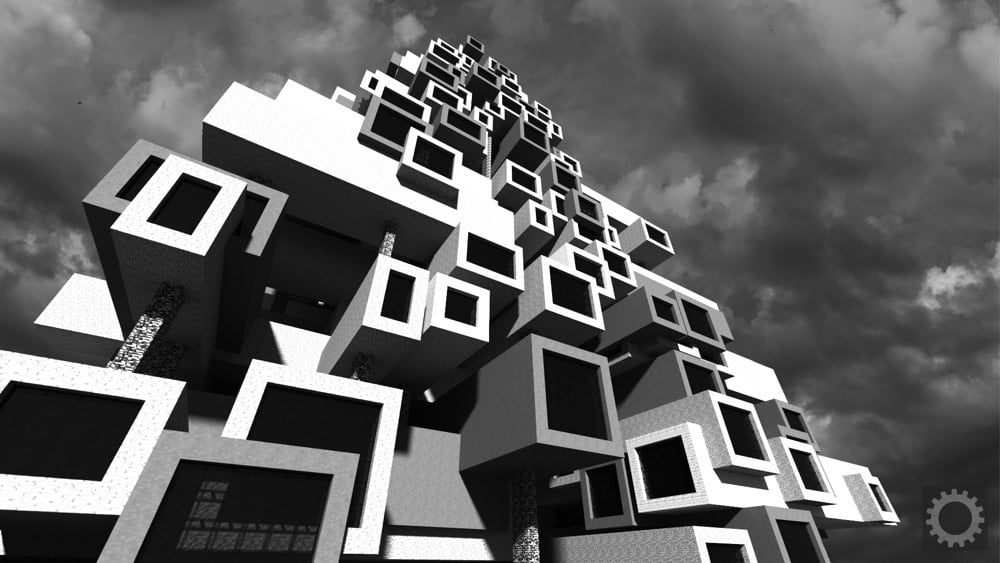
Since its initial release in 2009, Minecraft has matured to the point of being a platform for people who want to make art and also for people who want to make money. Phil Edwards of Vox highlights some of the beautiful structures being created by Minecraft players (some of which are collected in this coffee table book called Beautiful Minecraft) and the challenges faced by creators trying to make money within a game owned by a large company.
The creativity “Creative Mode” enables is obvious in the work that talented designers produce. Sometimes Minecraft artists will create interactive worlds that replicate historic events; other times, Minecraft’s many cubes coalesce into a sculptural image, the same way pointillism’s dots disappear to form a picture. These images and worlds can be eerie, magical, and surprisingly beautiful.
But perhaps most surprising of all, Minecraft worlds can also be a business. Companies like Blockworks make maps for private Minecraft servers (computer networks that host Minecraft games), and they also occasionally design maps in collaboration with institutions and companies like Minecraft owner Microsoft.
BlockWorks — company tagline: “creative Minecraft solutions” — has done some really fantastic designs for themselves and their clients.
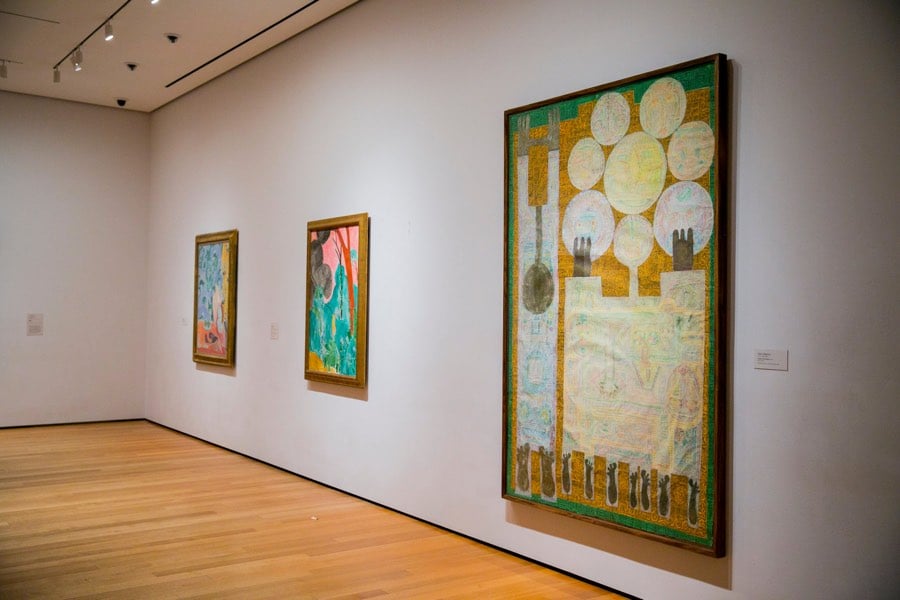
In response to the Trump administration’s monumentally cruel immigrant travel ban, the Museum of Modern Art in NYC has retooled its galleries to hang art by artists from countries affected by the ban, noting that if those artists are currently out of the country, they wouldn’t even be able to come to see their works in one of the world’s best art museums.
In one of the strongest protests yet by a major cultural institution, the museum has reconfigured its fifth-floor permanent-collection galleries — interrupting its narrative of Western Modernism, from Cezanne through World War II — to showcase contemporary art from Iran, Iraq and Sudan, whose citizens are subject to the ban. A Picasso came down. Matisse, down. Ensor, Boccioni, Picabia, Burri: They made way for artists who, if they are alive and abroad, cannot see their work in the museum’s most august galleries. (A work from a Syrian artist has been added to the film program. The other affected countries are Somalia, Yemen and Libya.)
The works will be up for several months, and alongside each painting, sculpture, or photograph is a text that makes no bones about why it has suddenly surfaced: “This work is by an artist from a nation whose citizens are being denied entry into the United States, according to a presidential executive order issued on January 27, 2017. This is one of several such artworks from the Museum’s collection installed throughout the fifth-floor galleries to affirm the ideals of welcome and freedom as vital to this Museum, as they are to the United States.”
The travel ban is currently not being enforced due to a temporary restraining order…hopefully that will hold up indefinitely.


I love these colorfully imaginative drawings of animals by illustrator Lisa Ericson; fish with coral reef tails and mice with butterfly wings. Sadly her prints are sold out, but hopefully she’ll make more available soon.
BTW, Ericson’s husband is Josh Keyes, whose grafitti-themed art I featured last week. Talented household.
Newer posts
Older posts



Socials & More