kottke.org posts about LGBTQ
In this short animated film, a boy’s heart brings him closer to the boy he has a crush on. What a lovely little video. It was made by Ringling College of Art and Design students Beth David and Esteban Bravo as their computer animation thesis and funded via Kickstarter.
Check It is a documentary film about a Washington DC gang with an all-LGBT+ membership.
At first glance, they seem unlikely gang-bangers. Some of the boys wear lipstick and mascara, some stilettos. They carry Louis Vuitton bags, but they also carry knives, brass knuckles and mace. As vulnerable gay and transgender youth, they’ve been shot, stabbed, and raped.
Once victims, they’ve now turned the tables, beating people into comas and stabbing enemies with ice picks. Started in 2009 by a group of bullied 9th graders, today these 14-22 year old gang members all have rap sheets riddled with assault, armed robbery and drug dealing charges.
Led by an ex-convict named Mo, Check It members are now creating their own clothing label, putting on fashion shows and working stints as runway models. But breaking the cycle of poverty and violence they’ve grown up in is a daunting task.
Louis CK is one of the films executive producers and he has put the film up on his site as a $5 download. In a recent newsletter, he explained why:
Look, I know this isn’t what you’re expecting from me. Nor am I the guy you’re expecting to get this film from. I guess that’s why I’m doing this. When I saw this film, I knew that no one I know will ever see it. Documentaries are MUCH harder to make than the things that I do and they are FAR more expensive to the filmmakers in terms of their time and their lives and their emotional energy. And nobody much watches them. Those who do watch documentaries are usually people who are likely to be interested in the subject they cover already. But what a great value there is in showing people films about something that just isn’t on their radar. So that’s why I asked Steve, and Wren Arthur, who produced the film, if I could host “Check It” on my site so that lots of people can see it who may not have had it put in front of them.


Over a number of recent summers, well-known portrait photographer Mark Seliger has been documenting the transgender community that gathers on Christopher St in the West Village. Since Seliger’s website is slow and bloated, I’d recommend checking out coverage of the photos on The Advocate, The New Yorker, American Photo, and PDN. I lived on Christopher Street for several years1 and definitely recognize a couple of people in Seliger’s photos.
It was in the Village, on Christopher Street and the nearby piers, where many trans and queer people first shared space with others like them. For generations, these places provided mirrors for those who rarely saw reflections of themselves. On Christopher Street, there were multitudes of potential selves: transgender, transsexual, non-binary, genderqueer, femme, butch, cross-dresser, drag king or queen, and other gender identities and sexual orientations that challenge social norms.
Seliger has collected the photos into a book, On Christopher Street: Transgender Stories and the photos will be on display at 231 Projects in Chelsea until early January.
My friend Matt Thompson grew up in Orlando, and like many of the shooters’ victims, he’s gay, a person of color, and a child of immigrants to the US. His wonderful essay grapples with the shooting and tries to untie the fear and risk and hope and community that’s knotted up in those identities.
My own parents were the very last people in my life I was out to, years after I’d been out to friends and colleagues. I didn’t know how they’d react to the fact of my sexuality, and among my friends, there was often impatience with that uncertainty. If they’re good parents, these friends would say, they will love you without conditions and without hesitation.
But this reaction was rare among those of us who grew up, like me, knowing that our parents left their homes and settled here mainly in pursuit of visions of what their children’s lives would be. They had imagined their sons as men with wives, and their daughters as women with husbands, and cultivated these visions throughout our adolescence and beyond. Some of our parents had tended to these visions so zealously that they missed all the signs that these weren’t, in fact, the people we’d become. When we came out, they were forced both to reckon with these people they no longer recognized and mourn the visions of us they had nurtured all those years.
“I can’t stop thinking about the possibility that someone like us was hurt or murdered at Pulse on Sunday morning,” Matt writes. “outed in the very worst way, in a phone call every family dreads. For some parents, such a call would be a double heartbreak.”
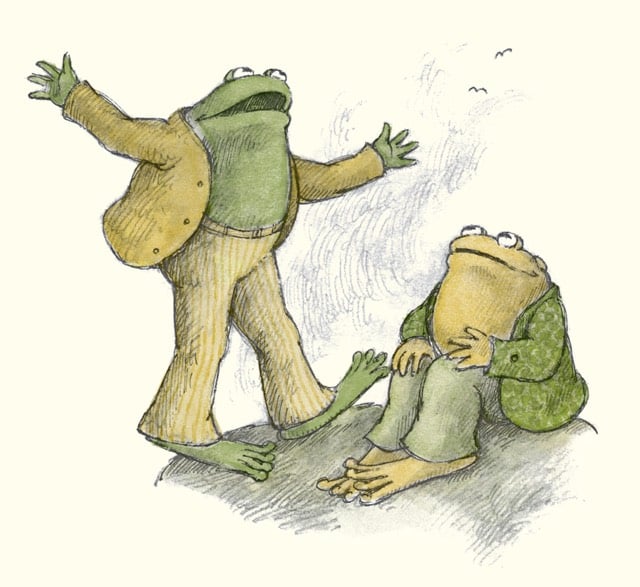
Bert Clere wrote a nice appreciation for the children’s books of Arnold Lobel, among them the Frog and Toad series and Owl at Home. Clere says Lobel’s stories offered insights for children about, yes, friendship but also about the importance of individuality.
Lobel’s Frog and Toad series, published in four volumes containing five stories each during the 1970s, remains his most popular and enduring work. Frog and Toad, two very different characters, make something of an odd couple. Their friendship demonstrates the many ups and downs of human attachment, touching on deep truths about life, philosophy, and human nature in the process. But it isn’t all about relationships with others: In the series, and in his lesser-known 1975 book Owl at Home, Lobel offers a conception of the self that still resonates decades later. Throughout his books, he reminds readers that they are individuals, and that they shouldn’t be afraid of being themselves.
Frog and Toad are favorites at our house. I’m going to read them to the kids this weekend with a new appreciation. Wanting to fit into the group is a powerful impulse for children, reinforced these days by the increased focus on group work in schools, so it’s nice to have a counterpoint to share with them.
Update: From the New Yorker’s Colin Stokes, another appreciation of Arnold Lobel. Lobel’s daughter Adrianne suspects the Frog & Toad books were “the beginning of him coming out” of the closet.
Adrianne suspects that there’s another dimension to the series’s sustained popularity. Frog and Toad are “of the same sex, and they love each other,” she told me. “It was quite ahead of its time in that respect.” In 1974, four years after the first book in the series was published, Lobel came out to his family as gay. “I think ‘Frog and Toad’ really was the beginning of him coming out,” Adrianne told me.
The article also sadly notes that Lobel died at age 54, “an early victim of the AIDS crisis”. (via @bdeskin)
Charles Haggerty is a promising candidate for the best and most chill dad of all time. In the late 1950s, in a much less progressive era, he had a talk with his son, who would come to realize later in life that he (the son) was gay, about the responsibility you have to your true self.
Don’t sneak. Because if you sneak like you did today, it means you think you doing the wrong thing. And if you run around spending your whole life thinking that you’re doing the wrong thing, then you’ll ruin your immortal soul.
Reader, I don’t often say things like “that stopped me dead in my tracks” because life doesn’t work like that most of the time, but that last bit, about ruining your soul, did just that. A fantastic reminder of to thine own self be true. (via cup of jo)
The Danish Girl is an upcoming film starring Eddie Redmayne as transgender pioneer Lili Elbe, who was one of the first people to undergo gender reassignment surgery. It’s based on a novel of the same name which presents a fictionalized account of Elbe’s life.
The film may well net Redmayne another Oscar nomination, but I don’t know how the transgender community will react. From a quick look on Twitter and the past reception of Oscar-hopeful films dealing with similar issues (see The Imitation Game’s portrayal of Alan Turing’s sexuality), I’m guessing it may not be so well-received.
Polari was a secret slang language spoken by gay men in England so that they could converse together in public without fear of arrest. It fell into disuse in the 1960s, but this short film by Brian Fairbairn and Karl Eccleston features a conversation conducted entirely in Polari.
This Slate article has more on the film and Polari.
Of all the cultural forms that gay men have created and elaborated since coalescing into a social group around the late 19th century, Polari, a full-fledged gay English dialect with roots among circus folk, sailors, and prostitutes, has to be one of the most fascinating-not least since it has faded along with the need for discretion and secrecy. While some words remain in common use-zhush or zhoosh (to adjust or embellish something to make it more pleasing) and trade (highly masculine or straight-acting sex partners) come to mind — the richness that we know once defined Polari is difficult to capture in 2015.
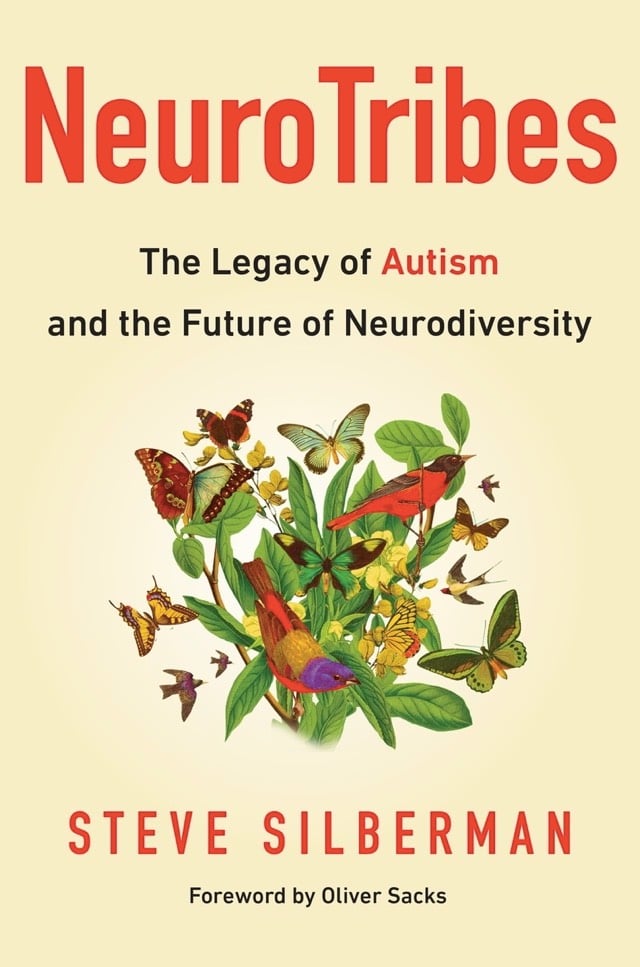
Added to the series of things I thought I posted about but never did is Steve Silberman’s new book, NeuroTribes: The Legacy of Autism and the Future of Neurodiversity, out next week.
What is autism? A lifelong disability, or a naturally occurring form of cognitive difference akin to certain forms of genius? In truth, it is all of these things and more-and the future of our society depends on our understanding it. WIRED reporter Steve Silberman unearths the secret history of autism, long suppressed by the same clinicians who became famous for discovering it, and finds surprising answers to the crucial question of why the number of diagnoses has soared in recent years.
Jennifer Senior wrote a largely positive review for the NY Times.
“NeuroTribes” is beautifully told, humanizing, important. It has earned its enthusiastic foreword from Oliver Sacks; it has found its place on the shelf next to “Far From the Tree,” Andrew Solomon’s landmark appreciation of neurological differences. At its heart is a plea for the world to make accommodations for those with autism, not the other way around, and for researchers and the public alike to focus on getting them the services they need. They are, to use Temple Grandin’s words, “different, not less.” Better yet, indispensable: inseparably tied to innovation, showing us there are other ways to think and work and live.
Update: NeuroTribes has won the prestigious 2015 Samuel Johnson prize for non-fiction. The Guardian’s Stephen Moss interviewed Silberman about the prize and book.
Silberman was born in New York, the son of two teachers who were communists and anti-war activists. “I was raised to be sensitive to the plight of the oppressed. One of the things I do is frame autism not purely in a clinical or self-help context, but in a social justice context. I came to it thinking I was going to study a disorder. But what I ended up finding was a civil-rights movement being born.”
He says the fact he is gay also conditioned his approach. “My very being was defined as a form of mental illness in the diagnostic manual of disorders until 1974. I am not equating homosexuality and autism — autism is inherently disabling in ways that homosexuality is not — but I think that’s why I was sensitive to the feelings of a group of people who were systematically bullied, tortured and thrown into asylums.”
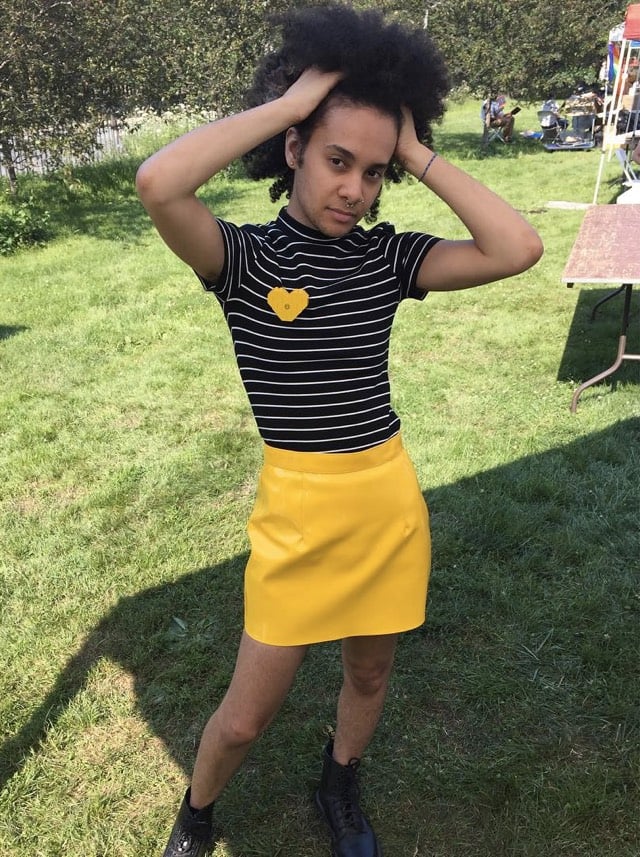
Tyler Ford was born a girl, transitioned to being a man in college, but now identifies as an agender person.
I have been out as an agender, or genderless, person for about a year now. To me, this simply means having the freedom to exist as a person without being confined by the limits of the western gender binary. I wear what I want to wear, and do what I want to do, because it is absurd to limit myself to certain activities, behaviours or expressions based on gender. People don’t know what to make of me when they see me, because they feel my features contradict one another. They see no room for the curve of my hips to coexist with my facial hair; they desperately want me to be someone they can easily categorise. My existence causes people to question everything they have been taught about gender, which in turn inspires them to question what they know about themselves, and that scares them. Strangers are often desperate to figure out what genitalia I have, in the hope that my body holds the key to some great secret and unavoidable truth about myself and my gender. It doesn’t. My words hold my truth. My body is simply the vehicle that gives me the opportunity to express myself.
Ford uses the “they”, “them”, and “their” pronouns to refer to themselves. (Is it themselves? Or would it be themself? English is a relatively young and fluid language but even it can’t keep up.)
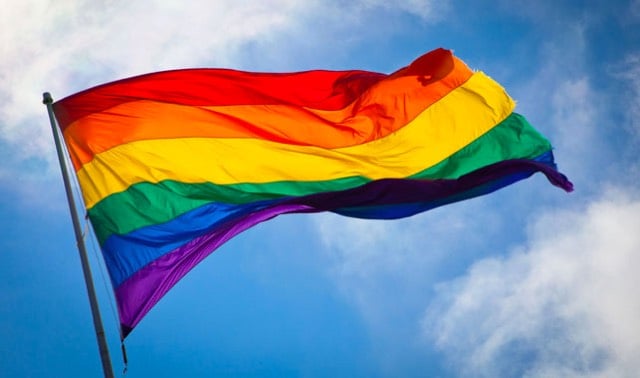
MoMA has announced that they’ve acquired the Rainbow Flag for their permanent collection. The flag has been a symbol of the LGBT community around the world since its creation in 1978. As part of the acquisition, MoMA Curatorial Assistant Michelle Millar Fisher interviewed the man who designed the flag, artist Gilbert Baker.
And I thought, a flag is different than any other form of art. It’s not a painting, it’s not just cloth, it is not a just logo — it functions in so many different ways. I thought that we needed that kind of symbol, that we needed as a people something that everyone instantly understands. [The Rainbow Flag] doesn’t say the word “Gay,” and it doesn’t say “the United States” on the American flag but everyone knows visually what they mean. And that influence really came to me when I decided that we should have a flag, that a flag fit us as a symbol, that we are a people, a tribe if you will. And flags are about proclaiming power, so it’s very appropriate.
So the American flag was my introduction into that great big world of vexilography. But I didn’t really know that much about it. I was a big drag queen in 1970s San Francisco. I knew how to sew. I was in the right place at the right time to make the thing that we needed. It was necessary to have the Rainbow Flag because up until that we had the pink triangle from the Nazis — it was the symbol that they would use [to denote gay people]. It came from such a horrible place of murder and holocaust and Hitler. We needed something beautiful, something from us. The rainbow is so perfect because it really fits our diversity in terms of race, gender, ages, all of those things. Plus, it’s a natural flag — it’s from the sky! And even though the rainbow has been used in other ways in vexilography, this use has now far eclipsed any other use that it had…
Update: Baker died at his home on March 30, 2017. He was 65 years old.
Mr. Baker replicated his flag dozens of times over the years. He crafted a mile-long banner to parade down Fifth Avenue in Manhattan, and he sent flags around the world in support of gay rights protests. He sewed the rainbow flag used in the movie “Milk,” along with a new flag for this year’s television miniseries “When We Rise.”
“I remember the most fabulous queen I’d ever seen in my life shows up in sequins with a sewing machine in his arms, and he insisted on creating that flag exactly the same way he’d created it then,” said Dustin Lance Black, who wrote “Milk” and wrote and directed “When We Rise,” which was based on Jones’ memoir of the same name.
After the end of World War II in Europe, homosexual prisoners of liberated concentration camps were refused reparations and some were even thrown into jail without credit for their time served in the camps. From the United States Holocaust Memorial Museum:
After the war, homosexual concentration camp prisoners were not acknowledged as victims of Nazi persecution, and reparations were refused. Under the Allied Military Government of Germany, some homosexuals were forced to serve out their terms of imprisonment, regardless of the time spent in concentration camps. The 1935 version of Paragraph 175 remained in effect in the Federal Republic (West Germany) until 1969, so that well after liberation, homosexuals continued to fear arrest and incarceration.
After 1945, it was no longer a crime to be Jewish in Germany, but homosexuality was another matter. Paragraph 175 of the German Criminal Code had been on the books since 1871. An English translation of the earliest version read simply:
Unnatural fornication, whether between persons of the male sex or of humans with beasts, is to be punished by imprisonment; a sentence of loss of civil rights may also be passed.
In Germany, homosexuality was considered a crime worthy of up to five years of imprisonment until Paragraph 175 was voided in 1994.
Update: I missed this while writing the post: Paragraph 175 was amended in 1969 to limit enforcement to engaging in homosexual acts with minors (under 21 years). (thx, eric)
In an article for Businessweek, Apple CEO Tim Cook publicly reveals he is gay.
At the same time, I believe deeply in the words of Dr. Martin Luther King, who said: “Life’s most persistent and urgent question is, ‘What are you doing for others?’ ” I often challenge myself with that question, and I’ve come to realize that my desire for personal privacy has been holding me back from doing something more important. That’s what has led me to today.
For years, I’ve been open with many people about my sexual orientation. Plenty of colleagues at Apple know I’m gay, and it doesn’t seem to make a difference in the way they treat me. Of course, I’ve had the good fortune to work at a company that loves creativity and innovation and knows it can only flourish when you embrace people’s differences. Not everyone is so lucky.
While I have never denied my sexuality, I haven’t publicly acknowledged it either, until now. So let me be clear: I’m proud to be gay, and I consider being gay among the greatest gifts God has given me.
For the latest installment of Grantland’s 30 for 30 short documentary series, a story on the genesis of the high five and what happened to one of its inventors. This video is chock full of amazing vintage footage of awkward high fives. [Weird aside: The sound on this video is only coming out of the left channel. Is that a subtle homage to the one-handed gesture or a sound mixing boner?]
GLAAD has a good resource on transgender identity: Transgender 101.
Gender identity is someone’s internal, personal sense of being a man or a woman (or as someone outside of that gender binary.) For transgender people, the sex they were assigned at birth and their own internal gender identity do not match.
Trying to change a person’s gender identity is no more successful than trying to change a person’s sexual orientation — it doesn’t work. So most transgender people seek to bring their bodies more into alignment with their gender identity.
People under the transgender umbrella may describe themselves using one (or more) of a wide variety of terms, including transgender, transsexual, and genderqueer. Always use the descriptive term preferred by the individual.
In writing here, I sometimes get tripped up on the differences between sex, gender, and sexual orientation. No more. See also Tips for Allies of Transgender People and An Ally’s Guide to Terminology: Talking About LGBT People & Equality.
Newer posts
Older posts




Socials & More