kottke.org posts about Japan
The Victoria and Albert Museum filmed this short four-part documentary about the Somenotsukasa Yoshioka dye workshop near Kyoto, Japan. They make dyes using only natural materials, producing vibrant colors using little-used and often long-forgotten techniques.
Sachio Yoshioka is the fifth-generation head of the Somenotsukasa Yoshioka dye workshop in Fushimi, southern Kyoto. When he succeeded to the family business in 1988, he abandoned the use of synthetic colours in favour of dyeing solely with plants and other natural materials. 30 years on, the workshop produces an extensive range of extremely beautiful colours.
Another great find from internet gem The Kid Should See This.
From visual journalist Fritz Schumann, a short, poignant documentary on Hoshi Ryokan, a Japanese hotel built on a hot springs that has been run by the same family for 1300 years, making it the oldest running family business in the world.
This ryokan (a traditional japanese style hotel) was built over a natural hot spring in Awazu in central Japan in the year 718. Until 2011, it held the record for being the oldest hotel in the world.
Houshi Ryokan has been visited by the Japanese Imperial Family and countless great artists over the centuries. Its buildings were destroyed by natural disasters many times, but the family has always rebuilt. The garden as well as some parts of the hotel are over 400 years old.
The ryokan is now on its 46th generation of ownership. As you might expect, the changing role of the family in Japanese society has put the future succession of the hotel to the next generation in jeopardy. (via open culture)
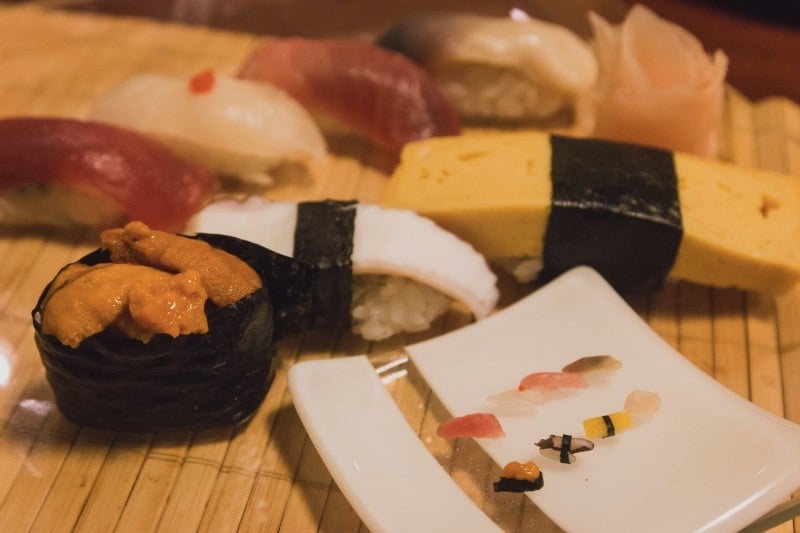
At Sushiya no Nohachi in Tokyo, you can eat sushi that is made using a single grain of rice. The tiny sushi came about when a customer challenged the owner’s son to make the smallest possible sushi.
The most difficult tiny sushi are the ones with nori seaweed — those are the sea urchin and egg. For sea urchin, he has to put a small piece of nori around a grain of rice horizontally. For egg, he has to wrap the nori around the egg and grain of rice. It’s pretty impressive to witness.
You can see the small sushi being made in this video:
That said, when we asked how often they need to make a plate of small sushi, we were surprised.
“Just a few times a week and at most five times in a day.” Though when customers from overseas order, they tend to be extra enthusiastic about the tiny sushi.
He told us that one woman from Europe burst into tears and cried for an hour and a half after seeing the cute, little sushi.
(thx, jason)
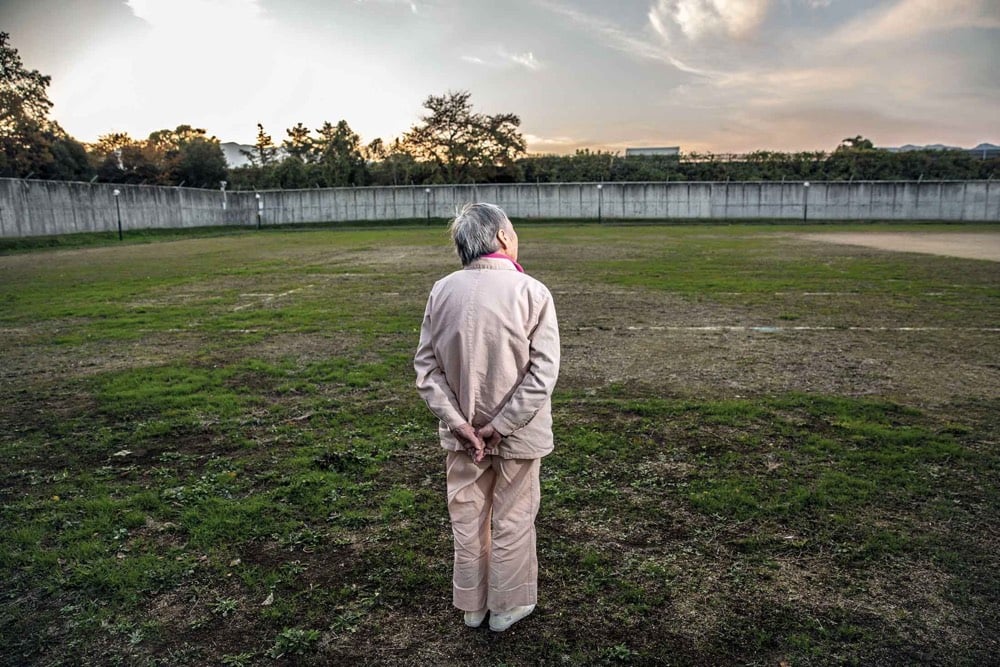
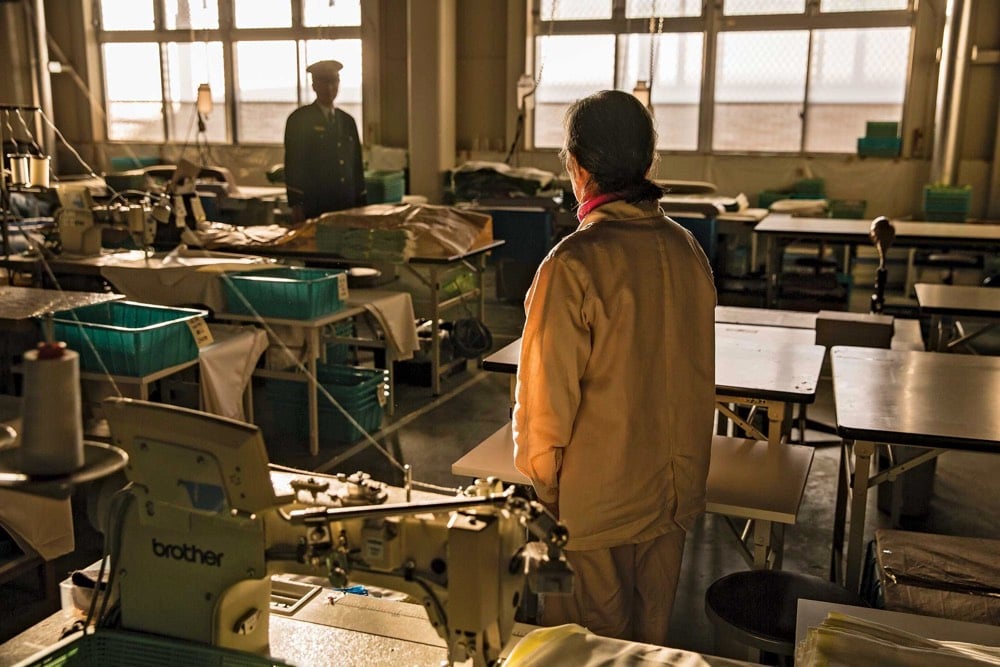
In Japan, where 27.3% of the population is 65 or older, elderly women are committing petty crimes like shoplifting in order to go to jail to find care and community that is increasingly denied them elsewhere. Japan’s jails are becoming nursing homes.
Why have so many otherwise law-abiding elderly women resorted to petty theft? Caring for Japanese seniors once fell to families and communities, but that’s changing. From 1980 to 2015, the number of seniors living alone increased more than sixfold, to almost 6 million. And a 2017 survey by Tokyo’s government found that more than half of seniors caught shoplifting live alone; 40 percent either don’t have family or rarely speak with relatives. These people often say they have no one to turn to when they need help.
Even women with a place to go describe feeling invisible. “They may have a house. They may have a family. But that doesn’t mean they have a place they feel at home,” says Yumi Muranaka, head warden of Iwakuni Women’s Prison, 30 miles outside Hiroshima. “They feel they are not understood. They feel they are only recognized as someone who gets the house chores done.”
All photos by Shiho Fukada. The first photo is of Mrs. F, aged 89, who stole “rice, strawberries, cold medicine”. She says: “I was living alone on welfare. I used to live with my daughter’s family and used all my savings taking care of an abusive and violent son-in-law.” The woman in the second photo recounts:
The first time I shoplifted was about 13 years ago. I wandered into a bookstore in town and stole a paperback novel. I was caught, taken to a police station, and questioned by the sweetest police officer. He was so kind. He listened to everything I wanted to say. I felt I was being heard for the first time in my life. In the end, he gently tapped on my shoulder and said, ‘I understand you were lonely, but don’t do this again.’
I can’t tell you how much I enjoy working in the prison factory. The other day, when I was complimented on how efficient and meticulous I was, I grasped the joy of working. I regret that I never worked. My life would have been different.
I enjoy my life in prison more. There are always people around, and I don’t feel lonely here. When I got out the second time, I promised that I wouldn’t go back. But when I was out, I couldn’t help feeling nostalgic.
New Zealand drift racer Mike Whiddett recently travelled to Japan to explore Tokyo’s “extraordinary after-dark modified auto scene”. He found people making California-style lowriders, Dekotora (my favorite, if only for the sheer spectacle), illegally modified cars, and a man who says with a straight face that “driving an unmodified Lamborghini is boring”.
What’s interesting is that more than one of these guys in the video repeated some variation of “I don’t care what anyone thinks about me”. I….don’t believe you? If there’s one thing most humans care deeply about, it’s what other people think about them, particularly when you’re driving million-dollar, pulsing-neon supercars around the world’s most populous city.
The monks of Mount Hiei in Japan perform a spiritual practice called Kaihōgyō in the form of a 1000-day pilgrimage that’s spread out over seven years. There’s secrecy around the practice so it’s difficult to know the precise details, but the gist is that each year, a monk undertaking the practice spends 100 days (or more!) walking 25 miles (or more!) in the middle of the night (because monks have their regular duties and chores to do during the day), stopping at more than 250 sites to recite prayers. That’s 25 miles each day, mind you.
And then there’s this, thrown in about 2/3rds of the way through, just for good measure:
After 700 days, the Kaihogyo practitioner faces what Mitsunaga calls an exam. He enters a hall and prays nonstop for nine days, without eating, drinking, sleeping or even lying down. It’s a near-death experience, the monk says.
“Put simply, you just have to give up everything and pray to the Immovable Wisdom King,” he says. “By doing this, he may recognize you and allow you to live for nine days.”
The practitioner interrupts his prayers every night to come to a small fountain and get an offering of water for Fudo Myo-o. Toward the end of the nine days, the practitioner is so weak, he must be supported by fellow monks.
Finally, his old self dies, at least figuratively, and he is reborn to help and lead all beings to enlightenment.
You can read more about at Wikipedia, The Guardian, and Nowness.


The 8th World Bonsai Convention was recently held in Saitama, Japan. Billed as “the Olympics of the bonsai world”, over 300 trees were on display and one of them sold for ¥100,000,000 ($900,000). Japanistry and Bonsai Tree have some photos of the outstanding trees shown at the event. Bonsai Tonight also has some photos and descriptions of the trees from the convention, but I wish the photos were bigger. (via @sluicing)
Update: Bonsai Tonight made some larger photos available, so I couldn’t help including this one, from a post on the satsuki azalea bonsai, many of which were in full bloom.

Beautiful. (thx, Bonsai Tonight
Robots fighting each other in arenas is a popular sporting event; see Robot Wars. In Japan, such competitions often take place in small sumo rings and the robots need to move incredibly fast to achieve victory. Robert McGregor compiled some of the fastest and most vicious footage in this video…and none of the footage is sped up in any way. Note the protective leg pads worn by the referee in many of the clips…there must have been an “incident”. (via @domyates)
The small coastal Japanese town of Yuasa is known as the birthplace of soy sauce. Fermented sauces made using soybeans had been around for centuries in China, but a Buddhist monk who settled in Japan in the 13th century started making soy sauce “as we know it”.
Using the abundance of clear, spring water from the town of Yuasa he began producing a type of miso that he had learned about on his travels that had been used to preserve vegetables. A byproduct from this process — a liquid that collected in the barrels of the miso paste — was soy sauce.
More than 750 years later, factories in Yuasa still produce soy sauce using traditional methods.
Don’t know about you, but I need a cat massage right now. You can’t hear it, but I bet that cat is purring big time as well. (My pal Matt was the first person I’d heard refer to cat kneading as “making muffins”, which is an essentially perfect and cute description. He also calls when a cat sits with all four of its paws tucked up underneath it “loaf-a-kitty”. Again, cute and perfect.)
Smartphones have been getting more water-resistant for a while now, but this is pretty crazy. Via Ina Fried at Recode, who writes:
The phone is a successor to an earlier handset that worked only with certain types of hand soap. The washable phone can be used with a range of soaps, including foaming body wash and hand soap… Waterproof phones have long been a thing in Japan, so it’s not too much of a stretch to think there might be an appetite for soap-proof devices.
In the US, smartphones have gotten so ubiquitous as to be boring — all of them big, flat, and offering slightly different versions of the same thing. I don’t know — maybe that’s an unfair characterization. But I wish the market were just a little weirder, wilder, offering different things to different people with different needs and lives.
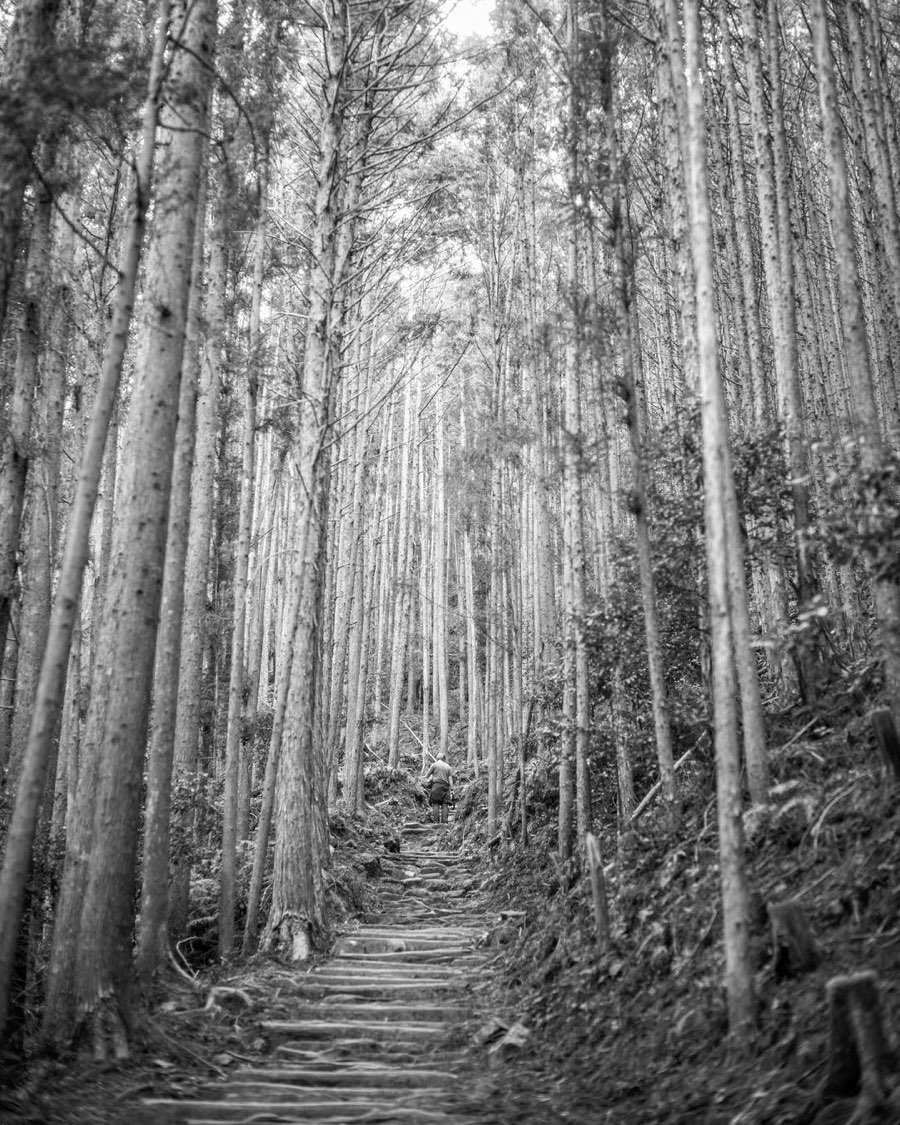
Craig Mod and Dan Rubin recently walked the Kumano Kodo pilgrimage path in Japan, taking thousands of photos along the way. They made a book of the photographs and have launched a Kickstarter project to make more copies of the book and do some other fun stuff.
The book, of course, is beautiful — Rubin and Mod are great photographers and designers - but direct your attention to the economy of their project description:
In March of this year, Dan Rubin and I went on a walk. The walk was along Japan’s 1,000+ year old Kumano Kodo pilgrimage path.
From that walk, we made one copy of a book of photographs called Koya Bound.
Together, with your help, we’d like to make/do a whole lot more…
This is what we did, here’s what we made, and we’d like your help to do more. That’s how you do Kickstarter, folks.
Update: The website Rubin and Mod made for the project is live. It’s super simple but extensive…I especially like how the journey progresses as you scroll down and the photos “spotlight” out from the path. Strong web design work.
One of the oldest businesses in the world, Sudo Honke is a sake brewery founded in 1141 and managed by the Sudo family for the past 55 generations.
We’ve been making sake for at least 870 years.
I love the “at least” bit. You can buy some of their sake online. (BTW, feel free to supply your own “Sudo, pour me a sake” joke.)
As you can tell from whatever “outfit” I’ve extracted from my closet and placed on my body each morning, I know close to nothing about fashion. But I love reading about it. This piece about circa-2016 fashion trends in Tokyo neighborhood of Harajuku is interesting in many ways. Take the first section on Genderless Kei and Kawaii Boys.

Though the Kawaii Boys’ styles vary, the most popular look is childlike rather than traditionally feminine. These are not crossdressers, most of them are not gay, and they are not trying to look like — or pass as — women. They are specifically aiming for a happy fun Genderless style. That said, none of these new generation of Kawaii Boys are afraid of incorporating traditionally female fashion elements and makeup into their looks.
When I typically think of genderless fashion, I think of someone dressing “in between” the two dominant genders in relatively nondescript drab clothing that leans masculine. So it’s interesting to see the different approach described here…men wearing traditionally feminine clothes to average out as genderless.
As odd as it sounds, Japanese-ness is also making a comeback in Japanese fashion:
Fashion designers may have finally gotten his message, as we’ve never seen as many Japanese characters in street fashion as we did in 2015. The kanji print boom was just one of the many signs that young Japanese creatives are looking inward as well as outward for inspiration.
The classic Japanese sukajan (souvenir jacket) has been ubiquitous on the streets of Harajuku and in vintage shops since the end of summer. As Spring approaches, the low cost trend shops are well stocked with souvenir jackets as well. Influential indie boutique and underground Japanese brands are offering t-shirts, bags, dresses, and accessories printed with messages in kanji, hiragana, and katakana.
The post also delves into economic and city planning territory with sections on tourism and gentrification. (via @moth)
Bill Wurtz’s History of Japan is the most entertaining history of anything I have ever seen.
Newer posts
Older posts





Socials & More