From photographer and videographer Jan Erik Waider, a trio of videos that features the black sand beaches of Iceland from a drone’s vantage point.
Captured on Iceland’s south coast where a glacial river meets the Atlantic Ocean. The camera observes the slow interplay of water, sand, and silt — an abstract rhythm shaped by tides and sediment flow. Amid these shifting textures, a few seals drift, rest, and return to the current, blending seamlessly into the landscape. A quiet study of movement and stillness, captured from above.
The colors are amazing: the rich yellow of the river’s waters & the turquoise of the ocean against the black sand. You can find many more of his videos on YouTube, including this one of mesmerizing lava flows. (via moss & fog)
In coastal cities in Iceland, including on the Vestmannaeyjar archipelago, it’s common to see people out at night, hunting for baby puffins (called pufflings). Once they’re caught, they’re chucked off of cliffs the next day and fly out to sea:
Many residents of Vestmannaeyjar spend a few weeks in August and September collecting wayward pufflings that have crashed into town after mistaking human lights for the moon. Releasing the fledglings at the cliffs the following day sets them on the correct path.
This human tradition has become vital to the survival of puffins, Rodrigo A. Martínez Catalán of Náttúrustofa Suðurlands [South Iceland Nature Research Center] told NPR. A pair of puffins – which mate for life – only incubate one egg per season and don’t lay eggs every year.
“If you have one failed generation after another after another after another,” Catalán said, “the population is through, pretty much.”
Jessica Bishopp’s meditative short film follows a pair of teen girls and their friends as they drive around in the middle of the night collecting pufflings.
Interspersed with the puffling search are brief moments of the quotidian: we see Selma talking to her friends about acrylic nails and also braiding her younger sister’s hair. These scenes illustrate how the teens’ environmental action is only a part of a larger routine of caretaking, revealing a world in which environmental protection is both normal and necessary. “I think it’s important that we tell alternative stories of girlhood, and it’s not led by trauma or romance,” Bishopp said. The girls show themselves to be responsible stewards. They are also in the midst of their own coming of age, and they’re aware of the parallel between their own experiences and those of the birds, who are separating from their parents.
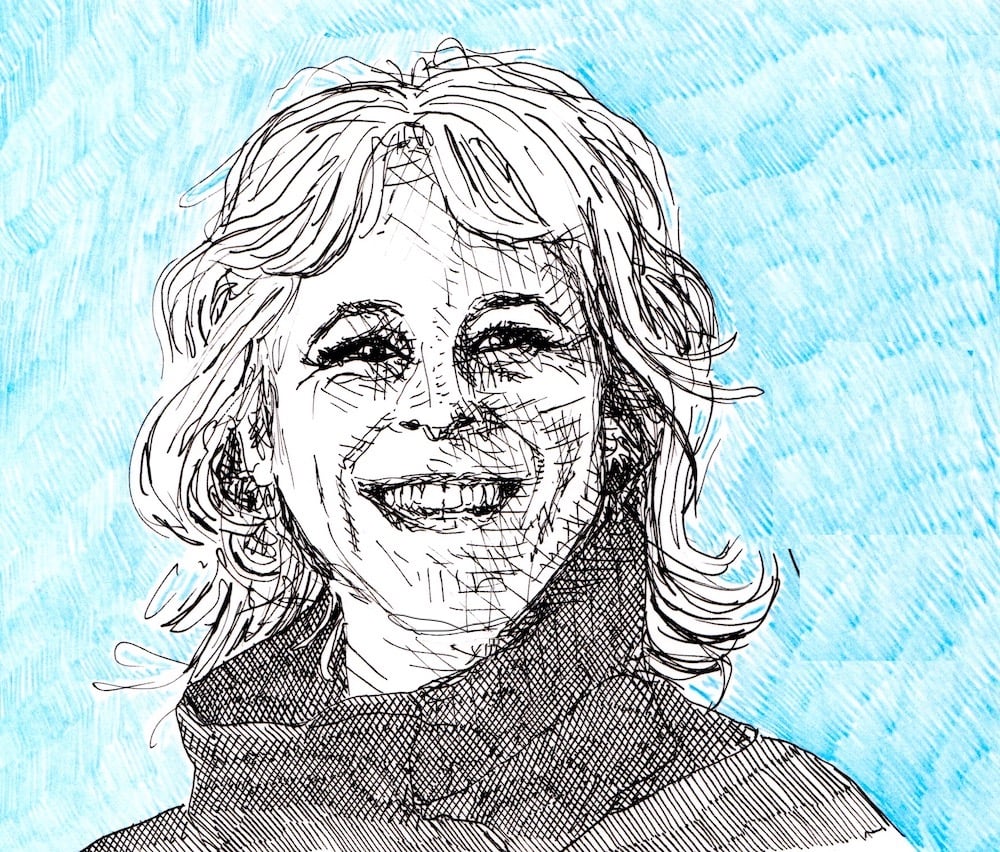
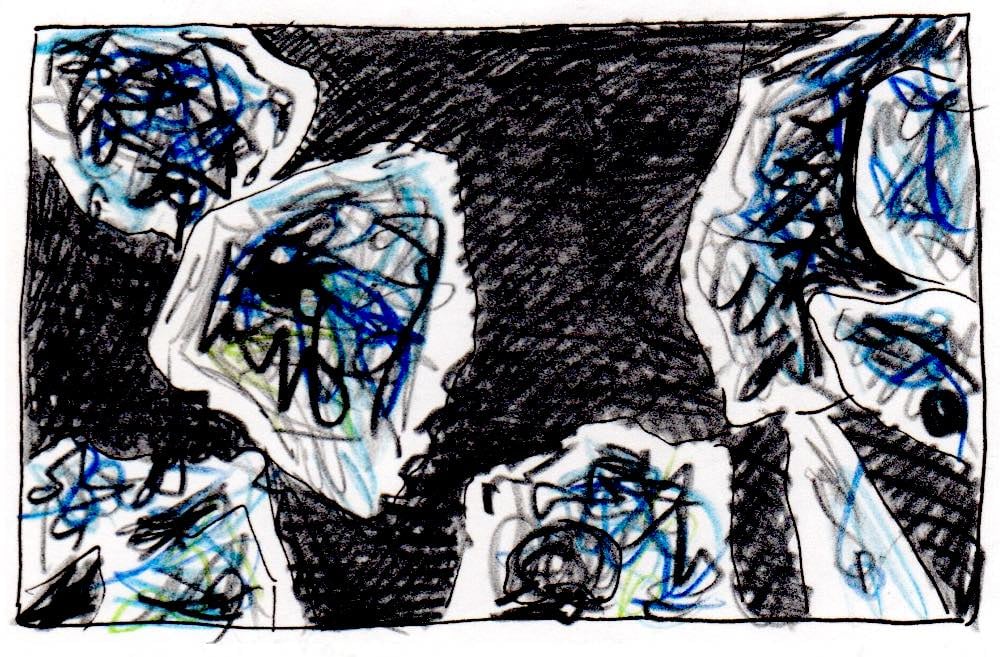
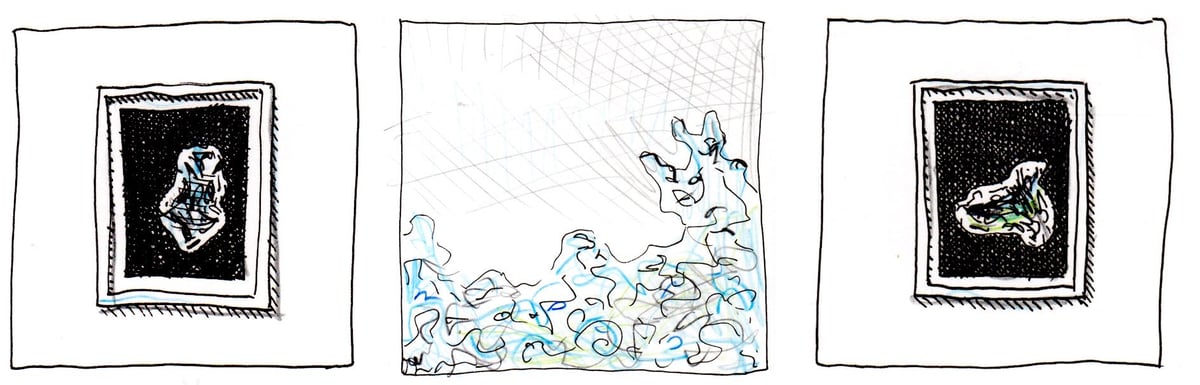
Edith here. For the latest installment of my newish illustrated column, I interviewed my friend and neighbor, the artist and climate activist Zaria Forman. Zaria makes pastel drawings of ice, among other things, and her solo show “Fellsfjara, Iceland” is currently on exhibition at Winston Wächter gallery in New York until May 4. (I’ve rendered a miniature version of some of it right below these words, but definitely click here for the actual images.) Zaria is also on Instagram.
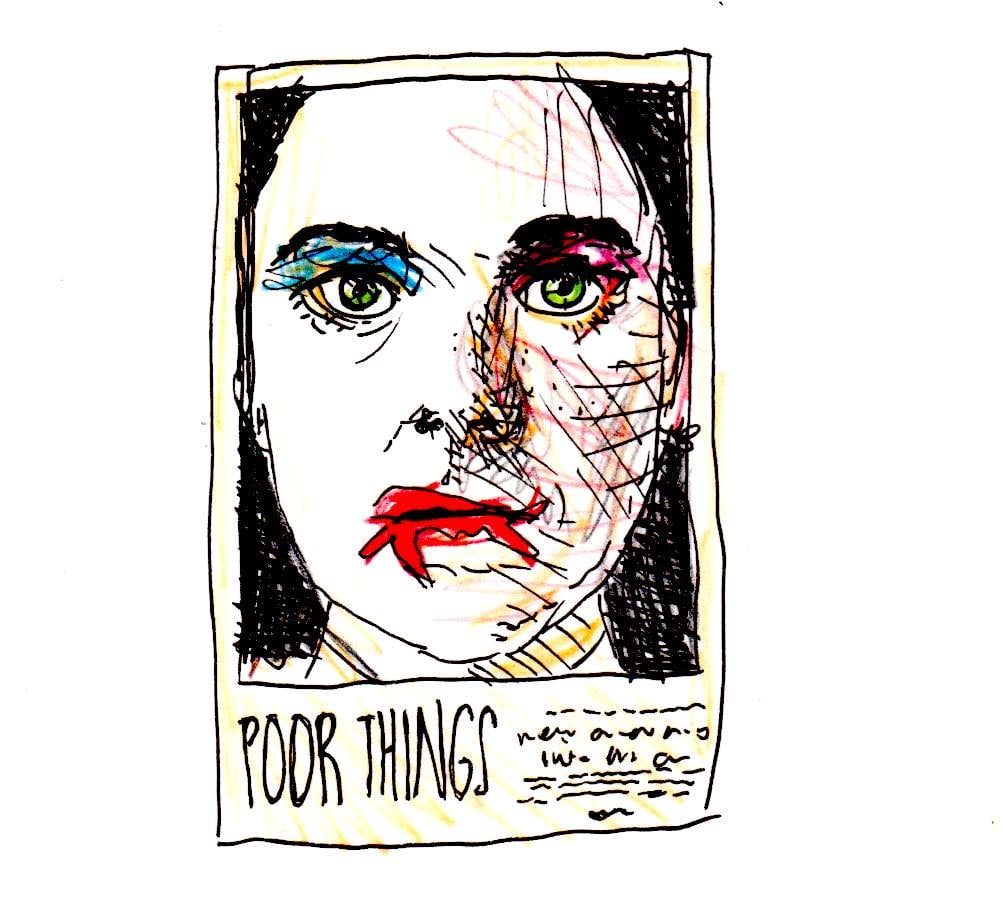
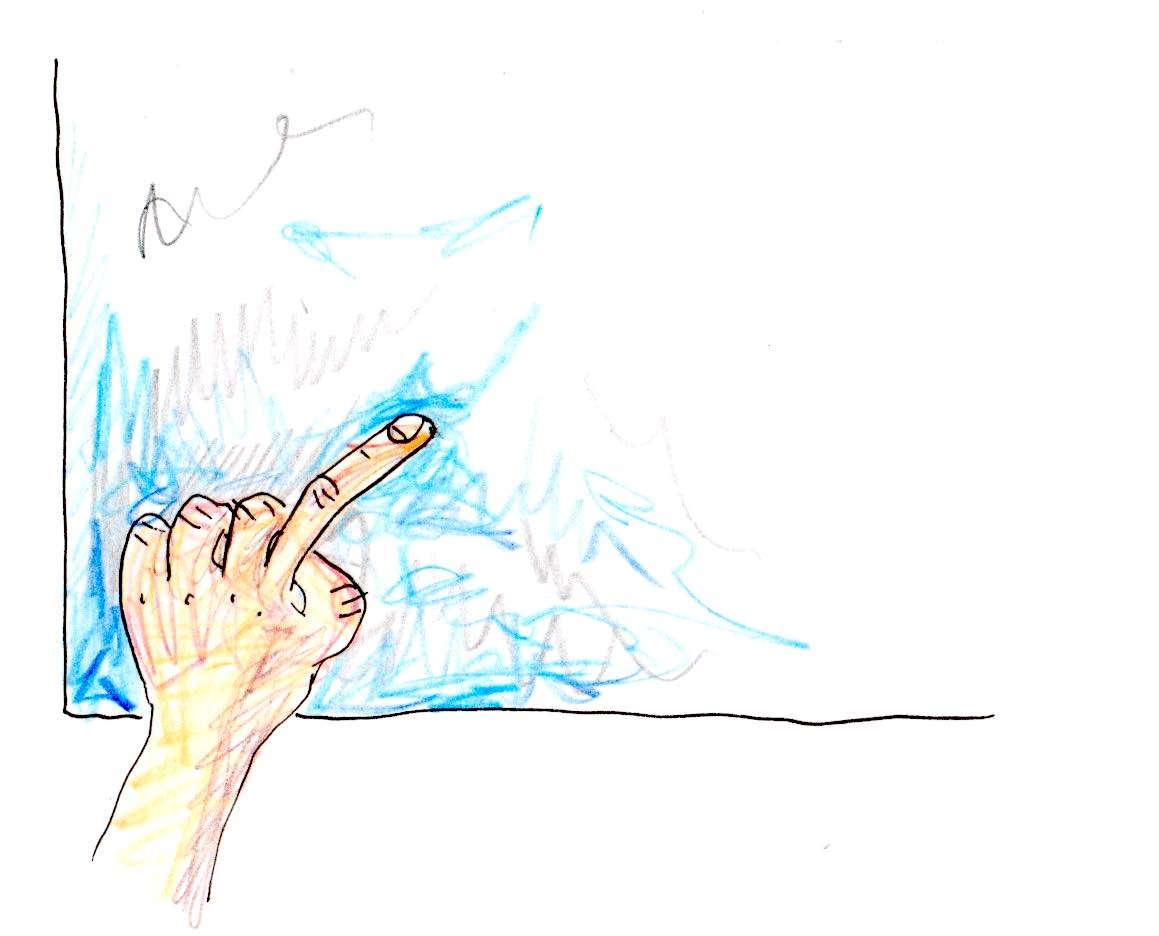
Zaria, have you read, watched, listened to, or otherwise experienced anything good recently? Poor Things. It was so visually stimulating and imaginative — more than anything I’ve seen in a while.
Possibly more interesting: the ice storm a few weekends ago! I’d never seen an ice storm before moving to upstate New York, and although the storms are destructive, they’re so beautiful. It was the most spectacular one I’ve ever experienced.
Seen anything bad? Mr. and Mrs. Smith, the new version. I thought it was poorly cast and just plain dumb. OR: All the mud, now that the ice has melted ;)
What’s something you’ve read or seen that changed your life?
Seeing glaciers and icebergs for the first time absolutely changed my life. But if we’re sticking to books, etc., one that changed my way of thinking was Love Between Equals: Relationship as a Spiritual Path, by Polly Young-Eisendrath.
She’s a psychologist and couples therapist, and the book just kind of reframed the idea of relationships in my mind — of how you relate to someone you’re in a long-term relationship with, and how you can grow with them. And how, like, love is.
She talks about radical acceptance, fully accepting someone for who they are, learning how to do the same for yourself, and then figuring out how all of that can work together.
Does anything make you laugh online?
Memes on Instagram!
What’s a recent one?
I just forwarded you the last one I sent to [my husband] this morning.
Are there any cultural moments you currently think about unusually often? Like are you haunted by a moment from a TV show, or anything like that?
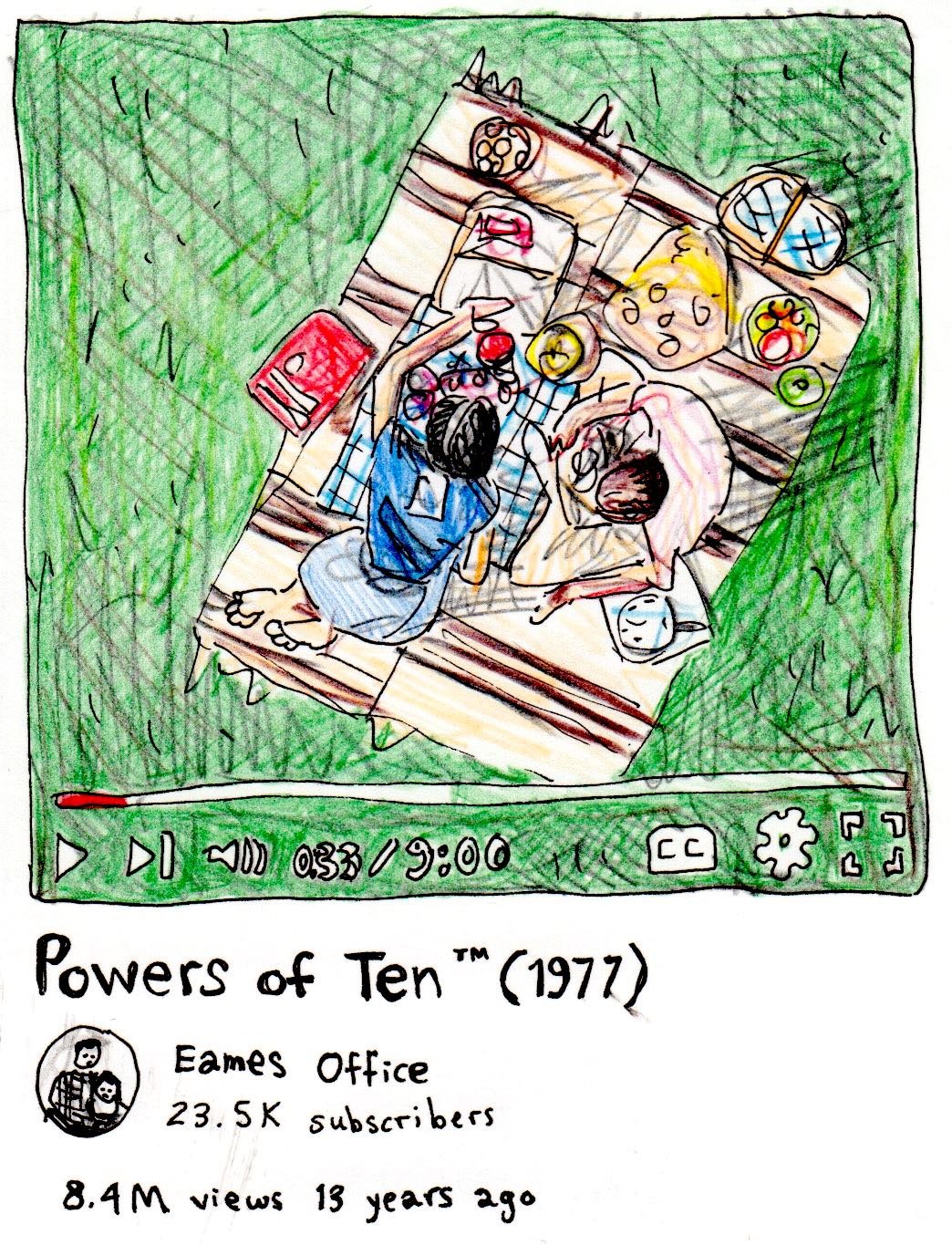
More “inspired” than “haunted,” but the artists Ray and Charles Eames made a 10-minute documentary in 1977 called “Powers of 10” that made a big impact on me. The Tang Teaching Museum in Saratoga Springs exhibited the film in a show during my years at Skidmore College, and it’s probably the one film I think about more than any other.
What’s it about?
It starts with a couple on a blanket having a picnic by a lake in Chicago. And then from one of their hands, the camera zooms back 10 meters. And then it continues zooming back by powers of ten. And so you see these squares get smaller and smaller, and it keeps going into the atmosphere, and the solar system, and it’s just mind-boggling how it keeps going.
And then it then zooms back down to the picnic and goes into their skin and all the way down to, like, a molecule inside the body. And it’s crazy to see the similarities between the two.
It’s on YouTube, if you want to watch — I highly recommend!
What were you really into when you were 12?
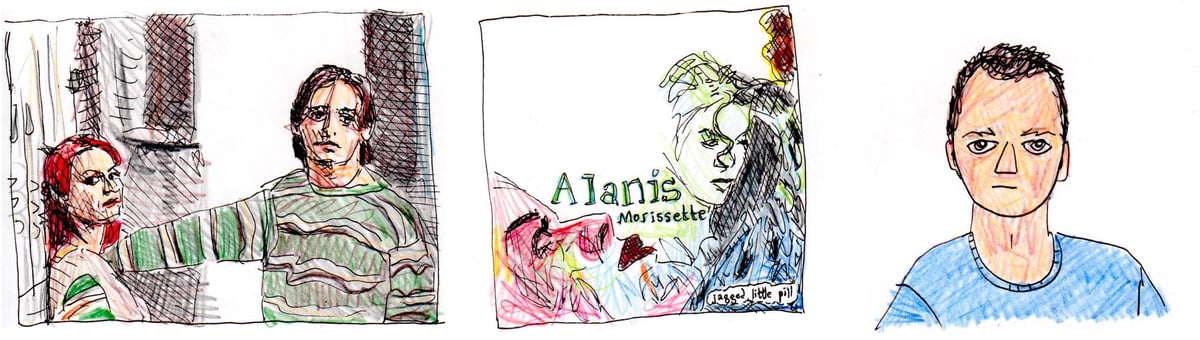
My So-Called Life, singing along to Alanis Morissette, and a boy named Ben.
Is there a book/movie/whatever you’d like to experience again for the first time?
Burning Man. There’s just no way to really know what it’s like until you’re there, in the middle of it. And when you know what to expect, it’s not as thrilling. But as a climate activist, it doesn’t feel right to continue attending over and over.
What’s a funny or weird way people have described your art?
As “finger painting.” It was a term used first (I think) in the Daily Mail, and then almost every writer used it to describe my work for several years. I wince at a line I say in my TedTalk: “I cringe when people call me a finger painter,” or something like that — my tone just sounds so snobby, I hate it — but I was attempting to detach my work from the term, and it did finally work. It pops up every now and then, but rarely.
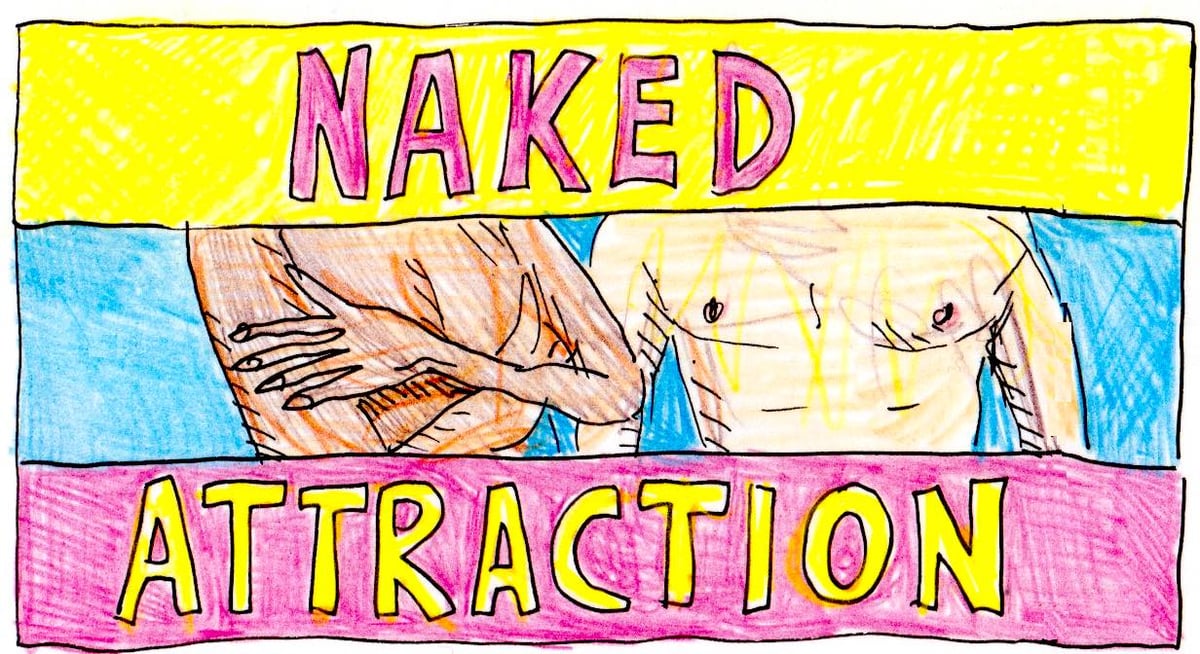
Please tell me something silly that you love. Naked Attraction, the dating show where people are naked.
Thanks, Zaria!
Zaria’s work can be found here. And past installments of Drawing Media can be found here.
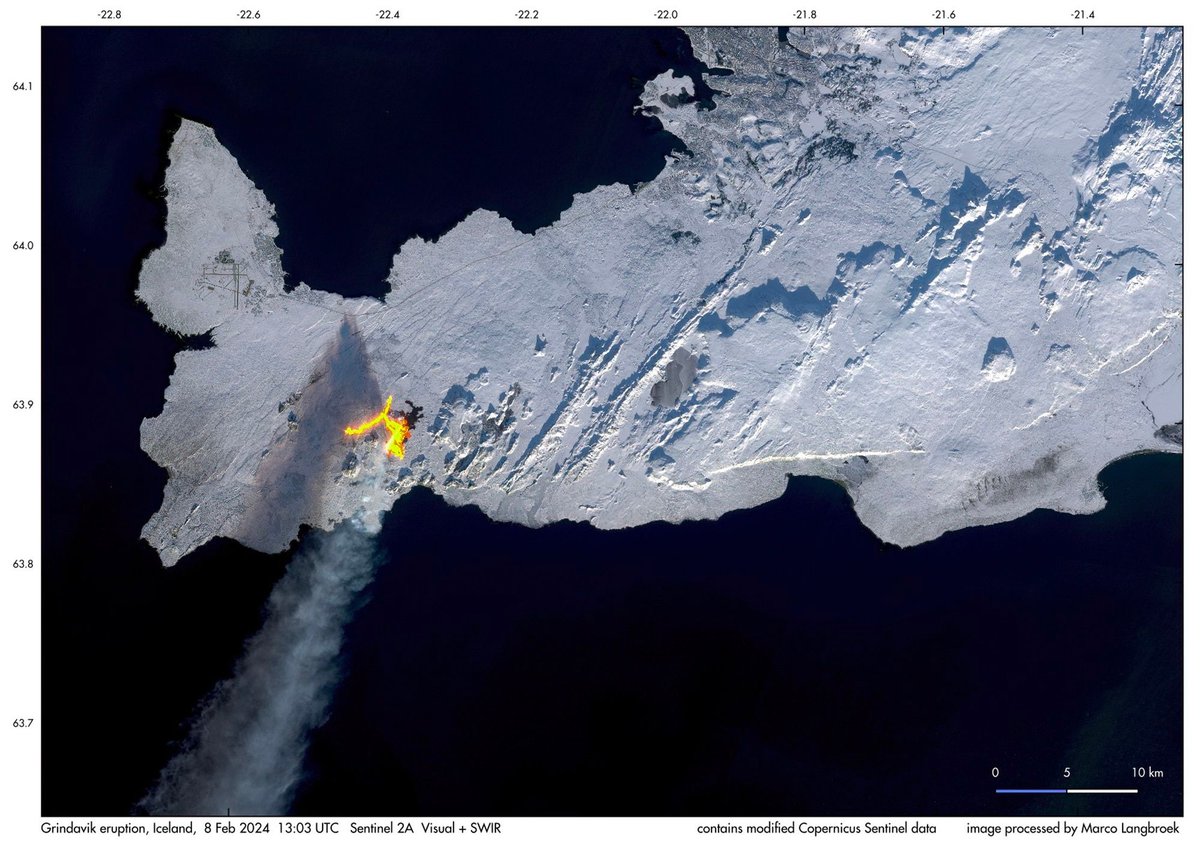
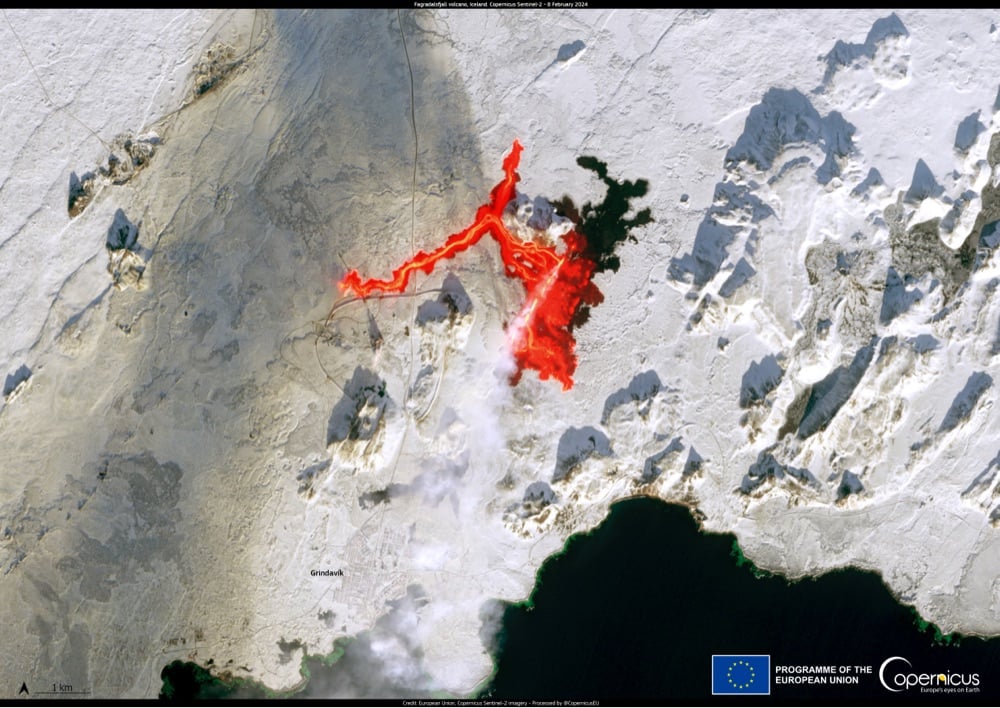
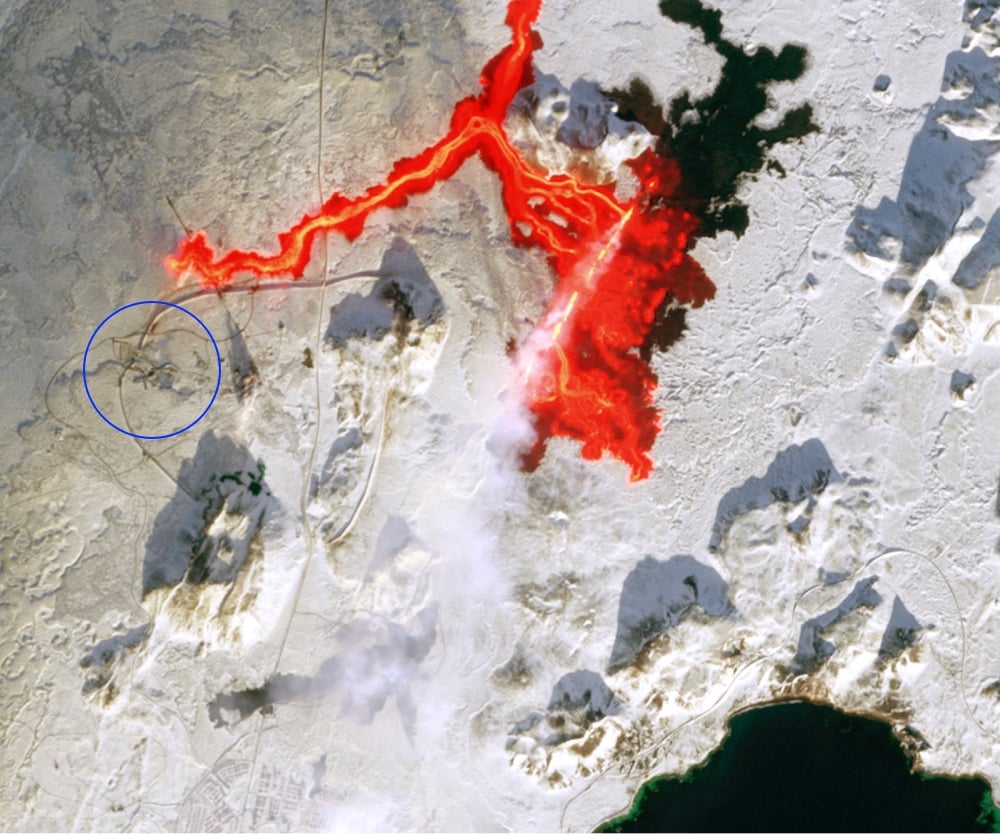
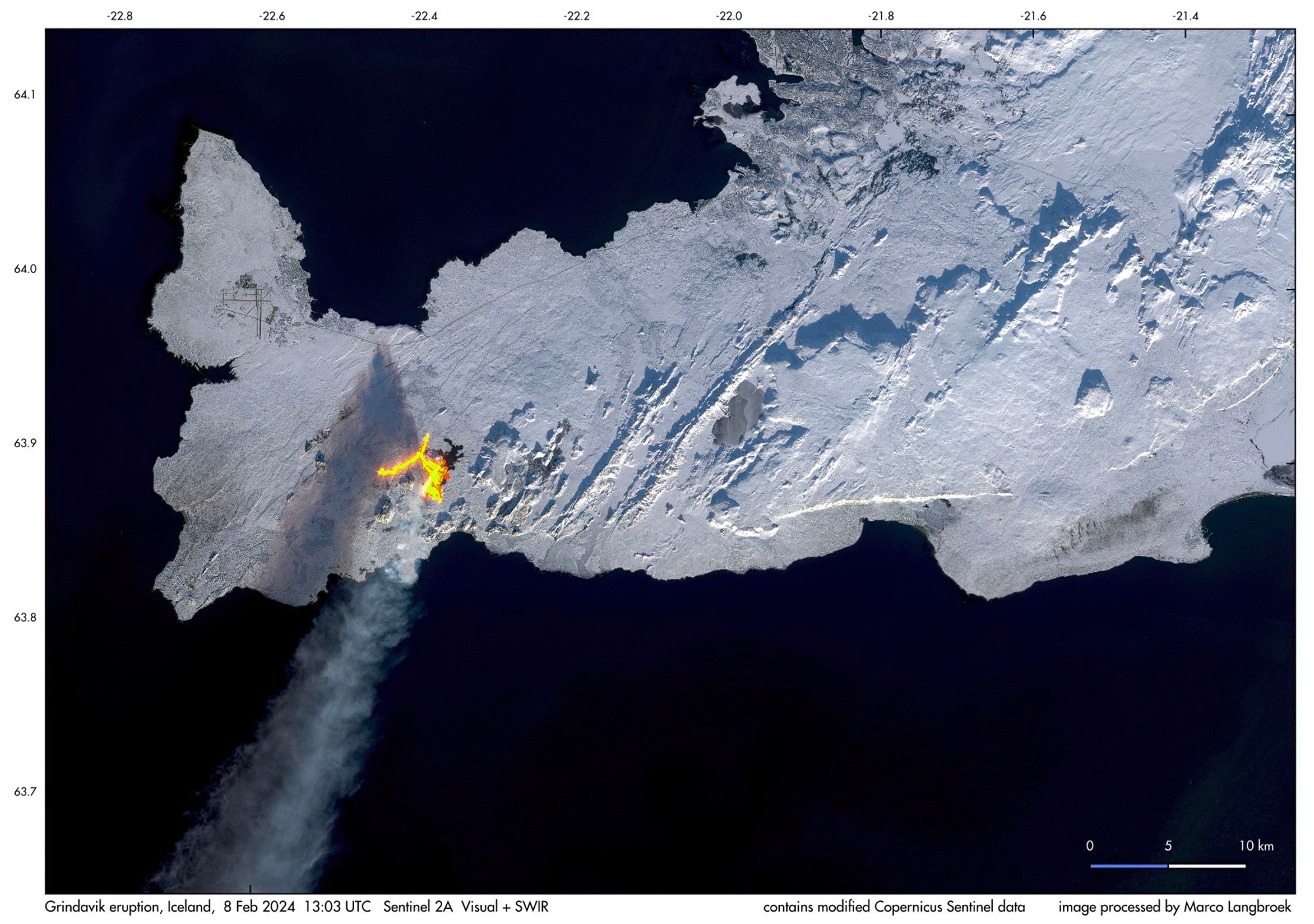
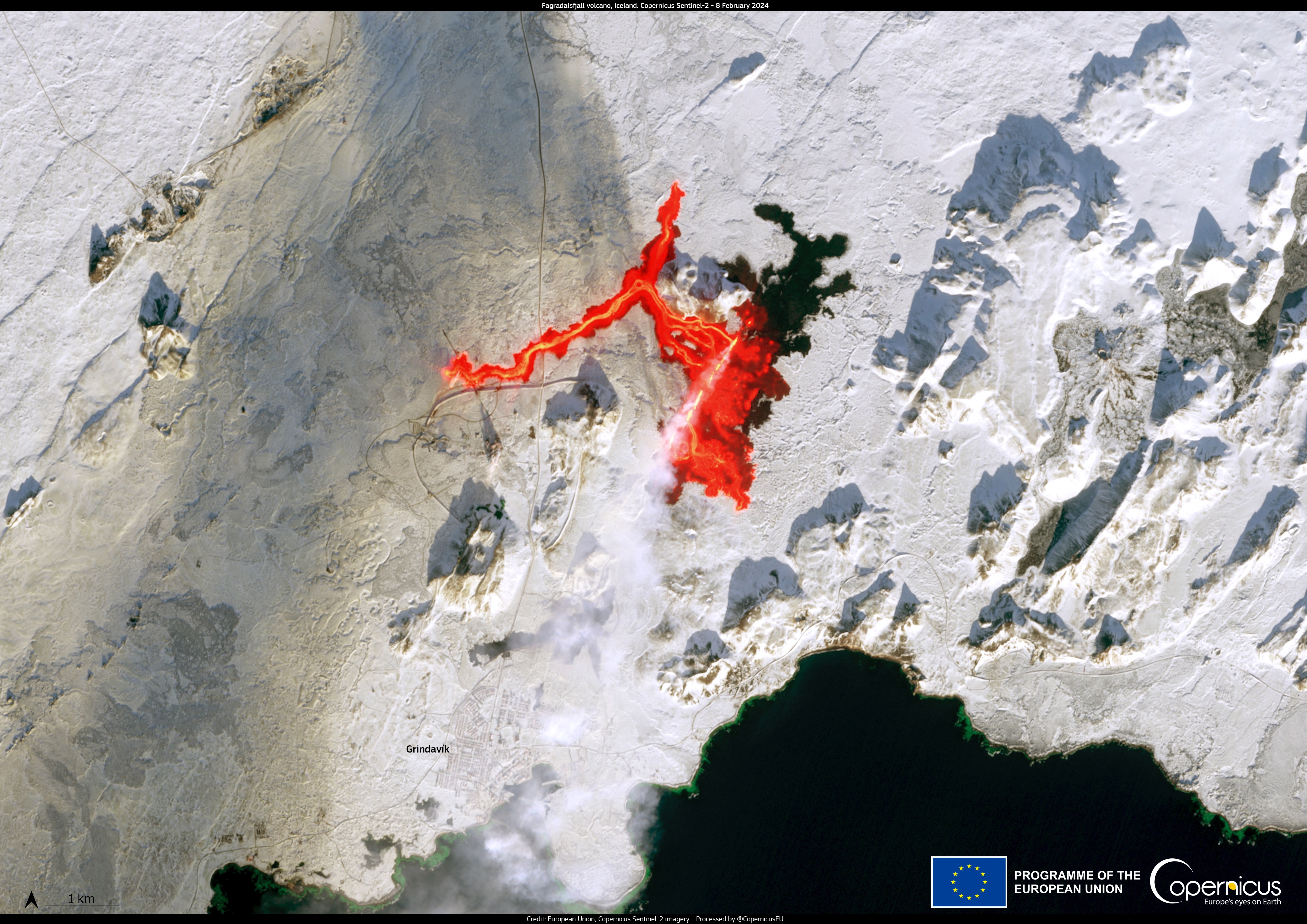
Wow. It’s worth clicking through to see it larger (mirrored here). You can see the Keflavik airport to the northwest of the fissure and Reykjavík is the darker area in the upper part of the image, just right of center. This image really underscores the extent to which volcanoes are fiery, slashing cuts to the Earth’s skin. It’s bleeding! Bleeding lava!
If you want to check out the satellite imagery for yourself, you can find it on Copernicus Browser. I tried for a few minutes to duplicate Langbroek’s view (“combined natural colour + SWIR”) but couldn’t quite manage it.
A new eruption started yesterday in the general area of Iceland’s Fagradalsfjall volcano and drone pilot Isak Finnbogason was there to capture some footage. The shot of the lava flow beginning at the 1:00 mark is absolutely stunning.
This short video is an excerpt from a longer livestream Finnbogason did — here’s another short excerpt that shows just how large the eruption is and how close some people are getting to it:
Icelandic filmmaker Jón Karl Helgason has made a film called Sundlaugasögur (Swimming Pool Stories) about the central role of the swimming pool in Icelandic life. The trailer is above. From Fatherly:
The swimming pool is first and foremost a communal space. “The swimming pool is your second home,” Helgason says. “You are brought up in the swimming pool.” There may be only 160, or so, swimming pools in the entire country (which is roughly 305 miles wide by 105 miles long), but every one of them is the essential social hub of a community, large or small.
The swimming pool is a public utility — as critical as the grocery store or the bank. “The British go to the pub, the French go to the cafes — in our culture, you meet in the swimming pool,” says Helgason. Swimmers come from all walks of life, from farmers to artists to clergymen to celebrities. “You can have 10, 15, 20, 30 people [in the pool] — they’re talking about politics and about their lives.”
Well, I don’t think these photos of Icelandic ice caves by Ryan Newburn need much explanation. Stunning. I found these photos via Colossal, which has more information about how they were taken.
Occupying such an ancient and always evolving space is an experience that’s difficult to photograph, Newburn shares, because the constant trickle of melting water, the roar of distant rivers, or even the unique interplay of light and glacier are impossible to depict entirely. “Underneath the ice, where the sun cannot penetrate,” he says, “your eyes slowly adjust from the bright sun to the glowing deep blue crystal walls of the ice cave. The more that your eyes adjust, the more saturated the blue gets. It’s a surreal visual experience that you cannot get from any photo of an ice cave.”
If you’d like to see some of these places for yourself, Newburn runs a tour company called Ice Pic Journeys.
In this short video from TED-Ed, we learn how Iceland extracts nearly emissions-free geothermal energy from the Earth (hint: volcanoes) but also how harnessing geothermal energy with heat pumps is something that can be done around the world. (via the kid should see this)
On March 19, after seismic activity in the area, an eruption occurred in Fagradalsfjall, Iceland, adding a new volcano to the country’s already charismatic geology. Because the ongoing eruption is relatively small, steady, and located fairly close to Reykjavik, it’s been well-documented, both by drone and by live webcam. YouTube user stebbigu stitched footage from the live feed into a 5-minute time lapse of the formation of the volcano that covers 18 days, from the first few hours to a couple of days ago. The night views, with all that pulsing orange lava, are especially mesmerizing.
After a series of thousands of tiny earthquakes in the area, a small volcano has started erupting in Fagradalsfjall, Iceland. Drone pilot Bjorn Steinbekk took his brand new DJI FPV drone and flew it right into the eruption, capturing this pair of amazing videos. Said Steinbekk of the experience: “I really thought I would never see my drone again, but man, this was so thrilling to capture!!!”
Update: Here’s a live view of the erupting volcano.
Update: Steinbekk has added several new drone videos of the volcano to his YT account, including this fantastic night view of the lava from directly overhead.
Update: Steinbekk did a 12-hour stream from the volcano the other day and at the end, he sent the drone into the volcano to die:
It’s hard to describe in words, but I have actually been very emotional this morning, crying and sad but also so thankful for this experience and being able to share it with you. I realised last night when I took a walk down to say goodbye to this magnificent phenomenon that you can fall in love with a volcano.
One of the countries with the best response to Covid-19 has been Iceland. The country didn’t lockdown nor do many people wear masks, but they have virtually eliminated the virus through a vigorous program of test, trace, and isolate that was coordinated by public-health authorities. Iceland’s numbers were high in the beginning (the virus was carried into the country from people returning from vacation) but they acted quickly and aggressively — Elizabeth Kolbert has the story for the New Yorker.
Möller pulled up a series of graphs and charts on her laptop. These showed that, per capita, Iceland had had more COVID-19 cases than any other Scandinavian country, and more than even Italy or Britain. There was an outbreak in a nursing home in the town of Bolungarvík, in northwestern Iceland, and one in the Westman Islands, an archipelago off the southern coast, which seemed to have started at a handball game. (In Europe, handball is a team sport that’s sort of a cross between basketball and soccer.)
“The numbers in the beginning were terrible,” Möller said. She attributed the country’s success in bringing the caseload down in part to having got an early start. The “trio,” along with officials from Iceland’s university hospital, had begun meeting back in January. “We saw what was going on in China,” she recalled. “We saw the pictures of people lying dead in emergency departments, even on the street. So it was obvious that something terrible was happening. And, of course, we didn’t know if it would spread to other countries. But we didn’t dare take the chance. So we started preparing.” For example, it was discovered that the country didn’t have enough protective gear for its health-care workers, so hospital officials immediately set about buying more.
At Metropolitan State College of Denver, Milkman was instrumental in developing the idea that people were getting addicted to changes in brain chemistry. Kids who were “active confronters” were after a rush — they’d get it by stealing hubcaps and radios and later cars, or through stimulant drugs. Alcohol also alters brain chemistry, of course. It’s a sedative but it sedates the brain’s control first, which can remove inhibitions and, in limited doses, reduce anxiety.
“People can get addicted to drink, cars, money, sex, calories, cocaine — whatever,” says Milkman. “The idea of behavioural addiction became our trademark.”
This idea spawned another: “Why not orchestrate a social movement around natural highs: around people getting high on their own brain chemistry — because it seems obvious to me that people want to change their consciousness — without the deleterious effects of drugs?”
BTW, this is a somewhat controversial view but it has always made sense to me for those with mild addictions or depression. Speaking strictly for myself, I’ve found that when healthier alternatives are available to me (spending time with family & friends, exercise, exploring, reading a good book), I spend a lot less time mindlessly doing things that give me the same sort of brain buzz but which I don’t consider positive or worthwhile (drinking alcohol, watching TV, eating poorly, and especially reloading Instagram over and over again like a lab rat slapping that lever to get more cocaine).
But back to Iceland. By giving teens access to more healthy activities, getting parents more involved in their children’s lives, implementing curfews, and administering annual surveys, the country has made great strides over the past two decades:
Today, Iceland tops the European table for the cleanest-living teens. The percentage of 15- and 16-year-olds who had been drunk in the previous month plummeted from 42 per cent in 1998 to 5 per cent in 2016. The percentage who have ever used cannabis is down from 17 per cent to 7 per cent. Those smoking cigarettes every day fell from 23 per cent to just 3 per cent.
The way the country has achieved this turnaround has been both radical and evidence-based, but it has relied a lot on what might be termed enforced common sense. “This is the most remarkably intense and profound study of stress in the lives of teenagers that I have ever seen,” says Milkman. “I’m just so impressed by how well it is working.”
Young did a follow-up last year about the expansion of the program into other areas of the world.
If you need to convince yourself to go to Iceland, this short film by Vadim Sherbakov should do the trick for you. Just stunningly beautiful landscape masterfully shot.
Islandia — is a Latin name for Iceland and relative to the old language since this film portraits primordial and rough nature of Iceland. For the short duration of the film, you will be transported to a place that easily could be a million years ago. From unbelievable landscapes and vast valleys to painting-like terrain and majestic waterfalls and lakes - this film shows the unparalleled beauty of Iceland and its unearthly glory.
Watching the film, I wondered what Iceland would have looked like back when it had trees — probably even more amazing. (via colossal)
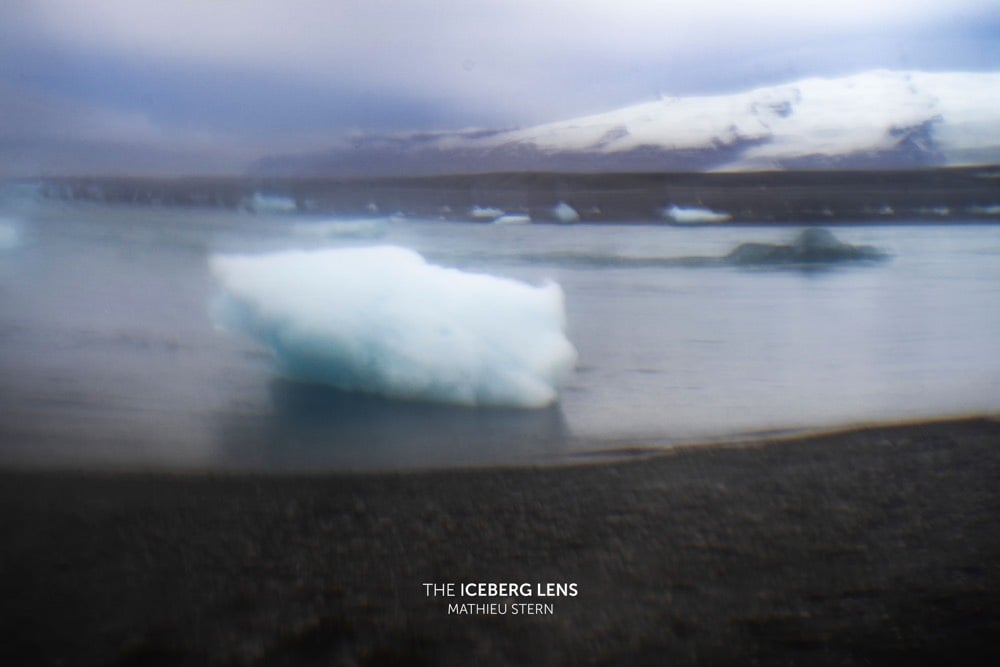
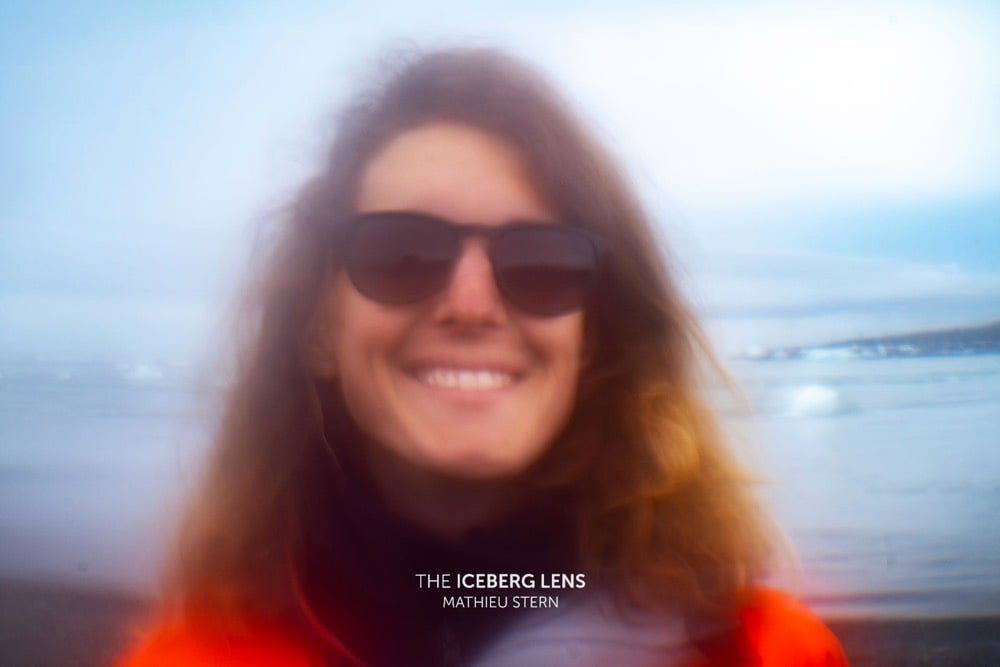
Mathieu Stern had an idea. He thought that if you could sculpt a piece of ultra-clear ice into the correct shape, it would function as a camera lens. To find that quality of ice, he traveled to Iceland to scavenge a chunk of an iceberg washed ashore on a black sandy beach. After some trial and error, he succeeded in making his iceberg lens and using it to shoot some photos and video. The lens lasted for about a minute before melting.
It’s a little impractical to go all the way to Iceland for iceberg ice when you can make your own clear ice at home, but Stern had this to say:
Now if people asks me “Are you happy with the result? it’s a bunch of blurry photos!?”, my response would be: “this project is a scientific, artistic and poetic project, I never imagined the result would look like the photos that comes from an ultra modern lens, but I was amazed by the strange beauty of the images I made with the first ever 10 000 year old lens.”
This is not a project for everyday photography, it was an adventure and a bet that when you have a crazy hypothesis, you should do everything to experiment it in the field.
I also wondered whether iceberg ice was actually more clear or pure than ice you could make at home. I didn’t find anything definitive but I did read this piece by Michelle Iwen about drinking single-malt scotch cooled by iceberg ice.
Our expedition leader, an Irish biologist studying southern birds, fished small chunks of clear-bubbled ice directly from the water as he worked to dislodge a sharp edged growler from beneath the propeller. He encouraged us to taste the ice, licking off the overlying salt water to find the pure, flavorless cold underneath.
“If you hold it in your bare hand long enough to speed the melting, you’ll hear it fizzle,” he told us. The fizzy pop of bergy seltzer is a familiar, yet unexpected sound. It sounds like a freshly opened can of soda, as the bubbles newly freed from the ice travel up toward the surface of the water. Yet the mundane sound of bergy seltzer belies the sinister power of melt against the bottom of the iceberg. Each bubble released scores the surface of the ice, compromising its structural integrity. We held the ice shards in our hands to make it fizz, let our skin burn against the freeze, as our expedition guide hoisted the free-floating remnants of a tiny growler into the zodiac to be chipped apart and consumed in cocktails that evening.
The Iceland men’s soccer team is nearly impossible not to root for in this World Cup. They are the smallest nation by population ever to qualify for a World Cup. Their coach is a dentist and still maintains his hometown dental practice. The Skol chant done by the team’s fans is a great addition to the collection of international soccer chants & songs. All great underdog stuff.
Adding to that, their goalkeeper Hannes Thor Halldórsson is a former film director who, until four years ago, pursued soccer as a second job. In anticipation for the World Cup, Halldórsson stepped back into his old job to direct a commercial for Coca-Cola featuring the Icelandic men’s national team and the Skol chant.
Pretty good for a keeper. Is this the best commercial ever made by someone who has also kept clean sheets against both Lionel Messi and Cristiano Ronaldo?
Note: If you are a member and tried to log in, it didn't work, and now you're stuck in a neverending login loop of death, try disabling any ad blockers or extensions. Or try logging out and then back in. Still having trouble? Email me!






Socials & More