kottke.org posts about hip-hop
Two of the most famous screeches in music history are from House of Pain’s Jump Around and Cypress Hill’s Insane in the Brain — you likely heard both of them in your mind just reading the names of the songs. This short video explains where those samples came from and which one of them is a horse (and not Prince).
These days, instead of writing down lyrics and bringing them to the studio to record, many rappers are using the improvisational “punch-in method” to craft songs during the recording session.
Is this good for the music? The jury is out, even within hip-hop. But in this behind-the-scenes video — the latest entry in our Diary of a Song series, which documents how popular music is created — we track the generational shift through exclusive studio footage of young rappers like Doechii, Veeze and Lil Gotit, plus interviews with genre veterans including the artist Killer Mike and the producer Just Blaze, to track this creative shift and its effects on the still-experimental genre of hip-hop, 50 years after its birth.
Interesting technique, but there is definitely some music in that video that is not for me.
The other day when I posted about iconic hip-hop samples from the past 50 years, I noticed a name that featured prominently in the early years: Sylvia Robinson. Robinson was the CEO and co-founder of the very first rap record label, Sugar Hill Records. She produced the first rap record, Rapper’s Delight, and the seminal The Message, widely regarded as one of the best and most influential rap and hip-hop tracks ever.
From an essay written on the occasion of her induction into the Rock and Roll Hall of Fame in 2022:
Sylvia Robinson played many roles in the music world — artist, producer, and, most notably, record executive. But as the founder and leader of the pioneering Sugar Hill label, she revealed herself to be something even rarer. She was a visionary.
In 1979, “Rapper’s Delight” by the Sugarhill Gang introduced hip-hop to the global mainstream, illustrating the genre’s commercial and creative potential. Robinson had overseen the record’s backing track, assembled the group members, and arranged their vocals — but fundamentally, it was her idea that rap was even viable as recorded music. Her place in history would be secured by that track alone, though it was far from her only impact on the direction of pop.
Here’s a short video that covers the high points of her career:
It’s sad that Robinson and her achievements haven’t been more widely known — this seems like another case (as in computing and other industries) where women played an early vital role and were then forgotten.
This started off a little slow for me but once it hit the early-to-mid 80s, I was hooked — and bobbing my head uncontrollably throughout. The visualizations really help you see how the various samples were modified, repeated, and layered to achieve the desired sounds — geniuses at work. Man, watching stuff like this makes me want to learn how to do this. (via waxy
The roots of hip-hop and rap are various and stretch back in time to the antebellum South and from there to Africa. But by some accounts, a song called Noah by gospel group The Jubalaires was the first instance of recorded music that sounded like rap. Listen for yourself…the relevant bit is right around the 35-second mark:
I’m not a music historian by any stretch, but that sounds 30 years ahead of its time. There are several bad remixes of Noah on YouTube…this one is maybe the best at pairing their singing with a rap beat.
To help celebrate 50 years of hip-hop, Cypress Hill visited NPR’s studios to perform a Tiny Desk Concert.
While the term “pioneer” is used loosely in pop culture today, few terms describe Cypress Hill’s impact over the past three decades more adequately. They are the first Latino hip-hop group to achieve platinum and multi-platinum status. B Real, Sen and producer DJ Muggs crafted a sound in the ’90s that stretched beyond regional boundaries. It was dark, psychedelic and at times directly addressed mental health before the topic was commonplace. Many dismissed the group as “stoner rappers,” yet the members were fervent advocates for the legalization of weed long before it came to fruition.
Really enjoyed this one…I’m not a particular fan of Cypress Hill but after this, maybe I am?
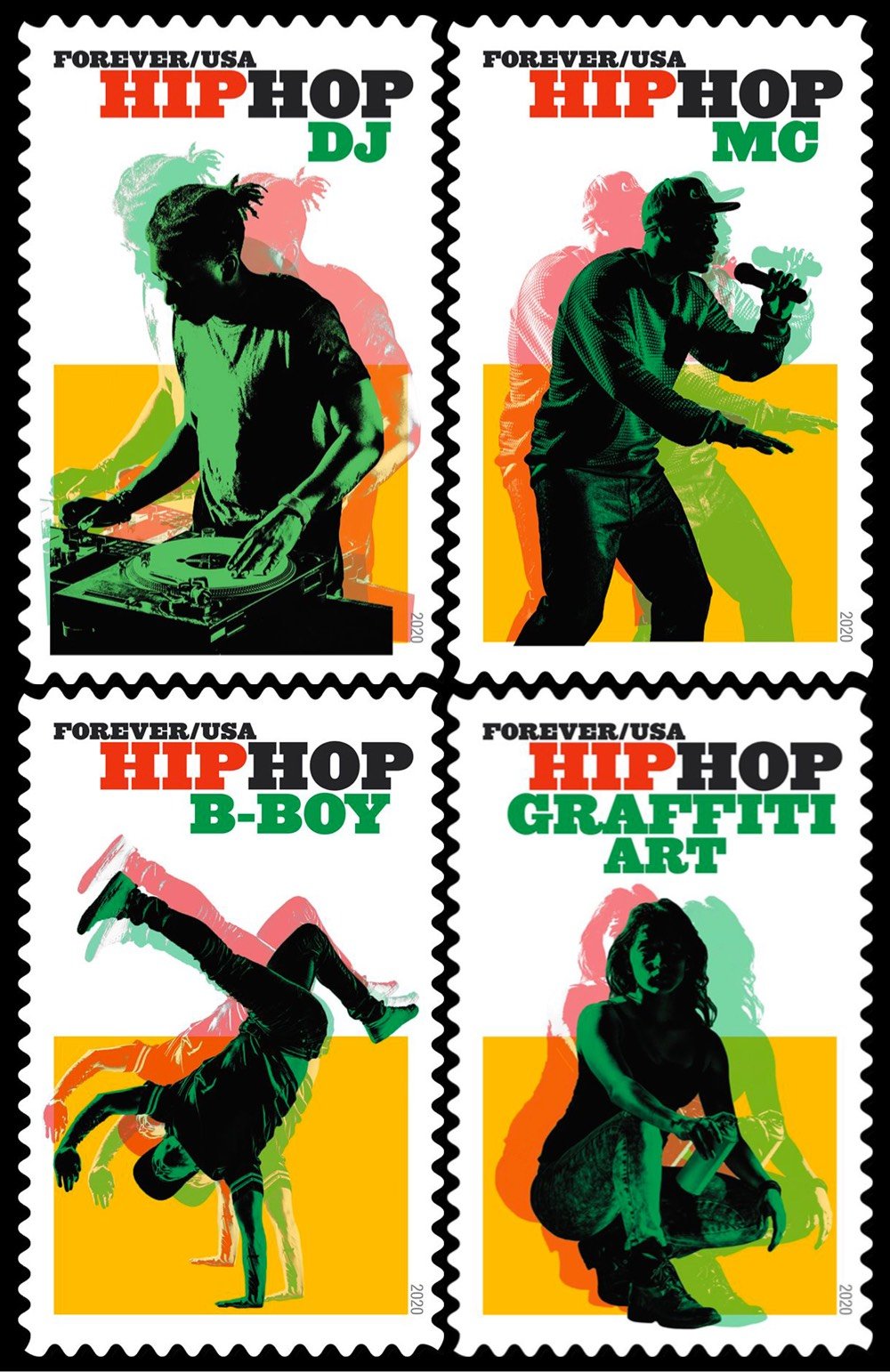
On July 1, the USPS is introducing a set of four stamps celebrating hip hop. The stamps were designed by Antonio Alcalá based on photographs by Cade Martin. In an interview with Steven Heller, Alcalá explained how he thought about the design process:
Hip Hop has a long and rich history, and from the start, I knew I wouldn’t be able to represent its totality in one set of stamps. But because it is such an important part of our nation’s art, and one of our most significant cultural contributions to the world, I knew we needed to at least begin representing it somehow. Hip Hop has four widely recognized key elements, or “pillars”: Rap, DJs, Graffiti, and B-boying (known more broadly as break-dancing). Using contemporary images that quickly and accurately depict the genres eased the burden of having to represent the many histories within the subject.
You can preorder the hip hop stamps on the USPS website.

This week, music fans were rejoicing. The legendary hip-hop group De La Soul’s catalog was finally coming to music streaming services. Three Feet High and Rising on Spotify!
Alas, it was too good to be true. It turned out that De La Soul themselves would only be getting 10 percent of the streaming revenue after costs, with label Tommy Boy taking 90 percent.
Now, everyone had speculated that De La Soul’s catalog wasn’t available on streaming because the label had never resolved the legal issues attendant to De La’s innovative use of sampling. The band and label had been sued by The Turtles for their use of a sample in a landmark case that forever changed hip-hop. In 2014, De La Soul gave away free digital copies of their albums to try to get their music to the fans. But now that the albums were to be made available via streaming, everything must have been sorted, right?
Wrong:
This sparked a boycott movement from artists/De La Soul fans like Nas, Pete Rock, and Questlove. Better to avoid Tommy Boy and the new streaming music entirely than put De La Soul in the jackpot for little reward. Tidal also announced that it wouldn’t stream the new album, in respect of the band’s wishes.
On Thursday, Tommy Boy announced that it was delaying the release of the albums on streaming services, likely missing the window for the 30th anniversary of Three Feet High and Rising, but preserving the possibility of a more equitable agreement.
“Because Tommy Boy has not had the opportunity to sit down together with De La Soul and finalize our negotiations — something we’ve wanted to do for months — we have decided to postpone the digital release of their catalog scheduled for tomorrow,” the statement reads. “We know fans are eager to hear these amazing recordings and we are hopeful for a quick resolution.”
A rep for the group did not immediately respond to Variety’s requests for comment.
While a rep for Tommy Boy stressed to Variety that sampling was not a central issue of the disagreement and “negotiating points are still to be finalized,” the group’s catalog with the label has been plagued by legal issues over uncleared samples since shortly after the release of their first album, “3 Feet High and Rising,” some 30 years ago. That album — widely considered to be one of the best and most influential hip-hop albums ever released — and several other titles from the group never have been legally available on streaming services, as the catalog has moved from Tommy Boy to Warner Bros. and back again without the sampling issues being resolved.
On Friday, De La Soul gave a lengthy interview to Billboard where they spoke on these issues, and their hope that they might be resolved:
“It’s a victory,” Pos, of De La Soul, tells Billboard. “It’s great that people who supported and understood what we mean to the culture, whether it’s someone who’s so dear and close to us like a Q-Tip, or someone who could admire the moves we’ve made creatively, but we ain’t necessarily been in the room with each other nothing but maybe three times together, like a Jay-Z. You can have people just feel like, ‘Culturally, I support and understand where they are coming from.’” …
“He [Tommy Boy’s Tom Silverman] can legally do what he wants, but the issues that I raised [was that] in all that you’re doing with what you’re able to do, did you clear it? Did you clear those samples? When he got the catalog back, is it cleared? What he said on the phone was, ‘If anything comes up, we will deal with it the way we’ve dealt with it in the past.’ And what I know that to be is that if a lawsuit comes up, we’re gonna settle because we’re in the wrong. I say we because we do suffer from that.”
As De La Soul’s Mase told Variety, the band has never earned money from its recorded catalog because of the levies the original copyright owners have placed on the band’s samples. “Let’s be straight up: We don’t really financially benefit — there’s so many infractions around this whole thing that we’ll probably never see no money from it or any project that has these infractions.”
It’s a shame, because De La Soul created some of the most exciting—and original music of the late 1980s and early 1990s. Let’s hope that the band and label can come to an agreement, the samples can be properly cleared, and we can hear these albums on whatever service we want (with the band finally getting their fair share) soon.
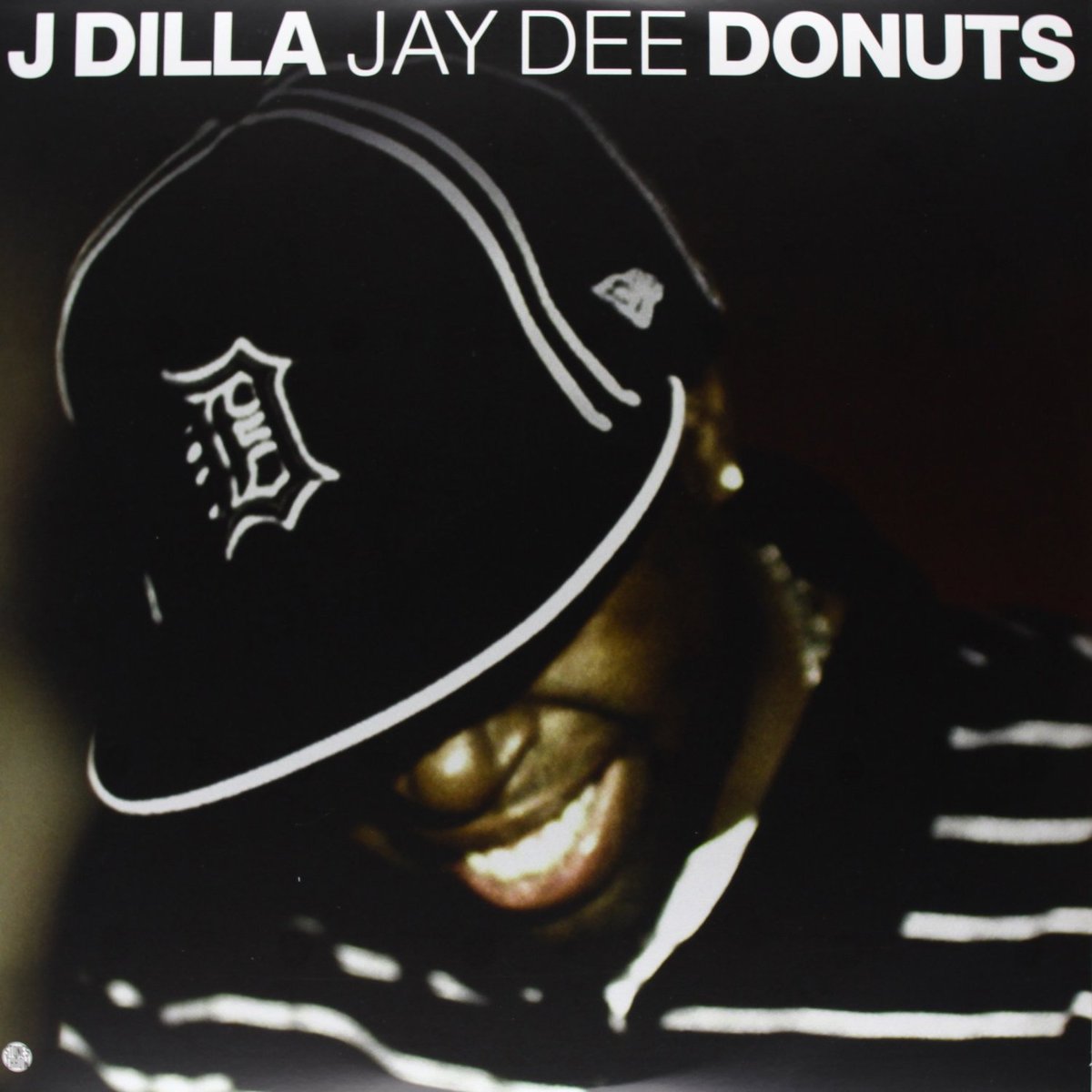
On his 32nd birthday, February 7, 2006, J Dilla (born James Dewitt Yancey, in Detroit, MI) released an unusual instrumental album called Donuts. Three days later, he was dead, from complications of lupus. Since then, February 7 has become an especially important day for fans of Dilla and Donuts, and this year (which would have been his 45th birthday) was no different.
His local alt-weekly, the Metro Times, gathered a collection of memories from other top producers and collaborators, including Q-Tip, DJ Jazzy Jeff, and T3 from Slum Village, the underground hip-hop group to which Dilla belonged for years.
At High Snobiety, Danny Schwartz published a lengthy tribute to and analysis of Dilla’s contributions to musical history:
J Dilla operated within the rich tradition of sampling, and like many other hip-hop producers, he used the MPC to layer jazz, soul, fusion, and other styles of music on top of breakbeats. What distinguished Dilla from everyone else was his holistic approach that imbued his massive production catalogue with a dynamic range of sounds and textures. His most important innovation was that he turned off the ‘quantize’ feature of the MPC, so that his kicks and hats might arrive significantly before or after the beat. To put it another way, he loosened his beats from their rhythmic bedrock; they were not rigid, but gambled forward with a woozy lilt. One could easily argue that Dilla and Lex Luger influenced the rhythmic sensibilities of pop music more than anyone else since funk drummers like James Brown’s Clyde Stubblefield. Dilla was a perfectionist, and his rhythmic idiosyncrasies, however off-grid, were perfectly calibrated; like Gandalf, he arrived precisely when he meant to.
An MPC is a sampling machine. A little over a year ago, Vox put together a nice little video specifically about Dilla’s idiosyncratic, influential use of his MPC3000:
A 2006 feature in The Fader has memories from everyone from Madlib to Erykah Badu, but Dilla’s mother Maureen Yancey (affectionately known as “Ma Dukes”) talks specifically about Donuts, probably Dilla’s most famous album (although you’re sure to start a fight if you call it or any other of his albums his “best”):
I knew he was working on a series of beat CDs before he came to Los Angeles. Donuts was a special project that he hadn’t named yet. This was the tail end of his “Dill Withers” phase, while he was living in Clinton Township, Michigan. You see, musically he went into different phases. He’d start on a project, go back, go buy more records and then go back to working on the project again. I saw it because I was at his house every day, all day. I would go there for breakfast, go back to Detroit to check on the daycare business I was running, and then back to his house for lunch and dinner. He was on a special diet and he was a funny eater anyway. He had to take 15 different medications, we would split them up between meals, and every other day we would binge on a brownie sundae from Big Boys. That was his treat.
I didn’t know about the actual album Donuts until I came to Los Angeles to stay indefinitely. I got a glimpse of the music during one of the hospital stays, around his 31st birthday, when [friend and producer] House Shoes came out from Detroit to visit him. I would sneak in and listen to the work in progress while he was in dialysis. He got furious when he found out I was listening to his music! He didn’t want me to listen to anything until it was a finished product. He was working in the hospital. He tried to go over each beat and make sure that it was something different and make sure that there was nothing that he wanted to change. “Lightworks,” oh yes, that was something! That’s one of the special ones. It was so different. It blended classical music (way out there classical), commercial and underground at the same time.
At okayplayer, Elijah C. Watson focused on Dilla’s influence on contemporary hip-hop artists, especially the emerging subgenre of lo-fi hip-hop:
Also called “chill-hop,” “jazzy hip-hop,” or the more specific “lo-fi hip-hop radio for studying, relaxing, and gaming,” lo-fi hip-hop has become a subgenre and subculture. It’s a subgenre featuring instrumentals rooted in the melancholy melodies of jazz and boom-bap drums of golden age hip-hop.
Playlists dedicated to lo-fi hip-hop can be found on music streaming services but YouTube serves as its primary base (with a looped image of an anime scene often being featured.) Channels like Chillhop Music, ChilledCow, and Private ChillOut offer 24/7 streams of the subgenre — the subscriber count anywhere from 102,000 to 2,500,000. Through these channels, the aesthetic of lo-fi hip-hop is best experienced. Fans from across the world listen to the tracks and engage with each other in real time, all while a looped image of an animated character writing or working on a laptop is featured.
At Ambrosia For Heads, Dan Charnas discusses his research for his forthcoming academic book, DillaTime: How a Hip-Hop Producer Reinvented Rhythm and Changed the Way Musicians Play:
[J Dilla’s] story gets complicated first as he encounters some of the pains of the business and then, later, illness. The thing he most wants to do becomes harder and harder for him to do. But that laser focus, as his friends and family have painstakingly documented, remains until his final hour. Talk about triumph and pain mixed together. One of the things I’ve grappled with since the day I walked into his basement in 1999 is why people have such an overwhelming emotional connection to this person and his work. And one of the answers I’ve come to is that, in every piece of music, we can somehow sense that overwhelming will and spirit…
My co-author, Jeff Peretz, and I took about 20 students to Detroit in 2017 as a part of my Dilla course at the Clive Davis Institute… The Detroit experience was a real eye-opener for our students. Context and environments are crucial to understanding. I’ll tell you one of the things that always strikes me about the D: everyone in Detroit always seems to be building something. Dilla’s ‘Uncle Herm’ isn’t just a chef and baker—he gutted and built the donut shop with his own two hands.
Hanif Abdurraqib contributed this unforgettable anecdote
We miss you, Jay. You should still be here.
For some reason, the only YouTube channels I subscribe to are about hip-hop (with one or two dead design vlogs thrown in), and most of the hip-hop reviews and discussion I consume happens there. Likewise, almost all the podcasts I listen to are about sports, and when I’m looking for sports content, I start with podcasts. Who knows how or why these things happen? When I was a media reporter, I’d have theories about these things. These days, I chalk most stuff up to contingency.
Anyways, a favorite show of mine is Dead End Hip Hop, or DEHH, which is a kind of Around the NBA-ish take on new and old music. It’s four guys, all about my age, who have musical touchstones in common with me and each other, who argue with each other about music. It’s brash and insider-y and a little hater-ish, and I love it.
In their latest episode, the DEHH crew and a couple of younger guests answer a reader question: What will hip-hop look like in twenty years? It turns into a thoughtful (and brash and insider-y and a little hater-ish) discussion of the history of popular music, generational change, the relationship between music, technology, and the broader culture, and the dangers of becoming too popular for too long:
The general consensus boils down to three things:
- Hip-hop has an unusually rich, symbiotic relationship with pop culture in a way other pop music forms just can’t match, with music and culture informing each other;
- The musical dominance of hip-hop has generally been bad for the quality of hip-hop, and the longer this dominance continues, the more degraded the music gets;
- There is no reason to expect this dominance to continue indefinitely, and every reason to expect it will be exchanged for another cultural form.
Now, hip-hop has some advantages. It’s unusually capacious, almost greedy, when it comes to culture. It’s not just music, but dance, fashion, slang, and visual art. Plus, when it comes to interacting with other forms of popular culture, you can pour almost anything into it and get hip-hop back out. (For instance, hip-hop was into superheroes before it was cool. And PS: superheroes’ days at the top are numbered, too.)
But is hip-hop really that much more resilient than jazz, or rock n’ roll, each of which had their turn leading the way before turning into something else besides the most popular music in the world? Seriously: jazz is looking at hip-hop with its eyes all the way to the side, along with boxing, musical theater, and smoking cigarettes.
The harder question to answer isn’t whether something will come next, but what it will look like. In the 90s, techno and dance music were legitimate heirs/threats to hip-hop; in comparison, EDM and what’s left of indie rock seem to be pretty insular corners rather than comers.
The coolest thing to imagine is the future evolution of hip-hop, even if it loses its spot on top of the music/culture heap, into a richer and more personal form of artistic expression. I hope we haven’t seen its full flourishing. But then again, I’m 39. That’s the kind of stuff I like. And the days of hip-hop caring about what guys my age like are waning, if not over.
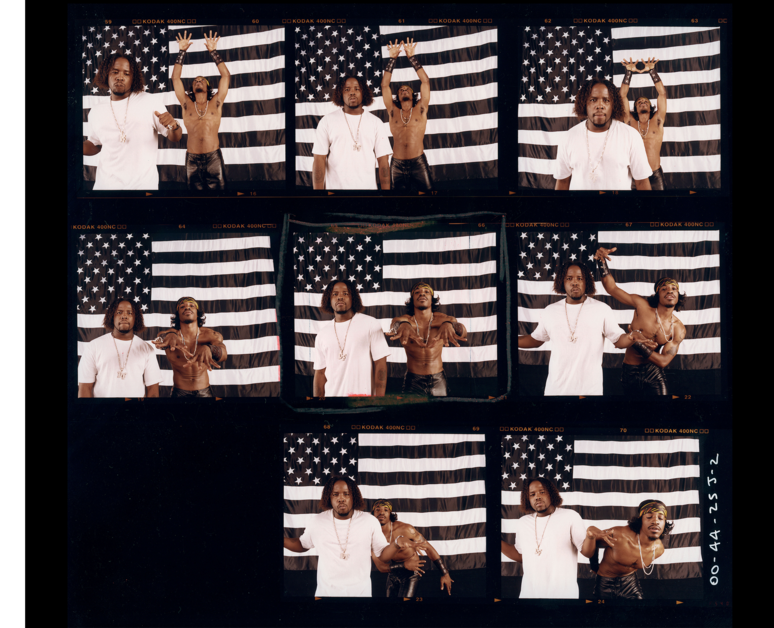
Hua Hsu reviews Contact High, a visual history of hip-hop by Vikki Tobak that takes interviews, essays, and outtakes from over 100 photographers through all of hip-hop’s history, from early b-boys and b-girls breaking to iconic album covers.
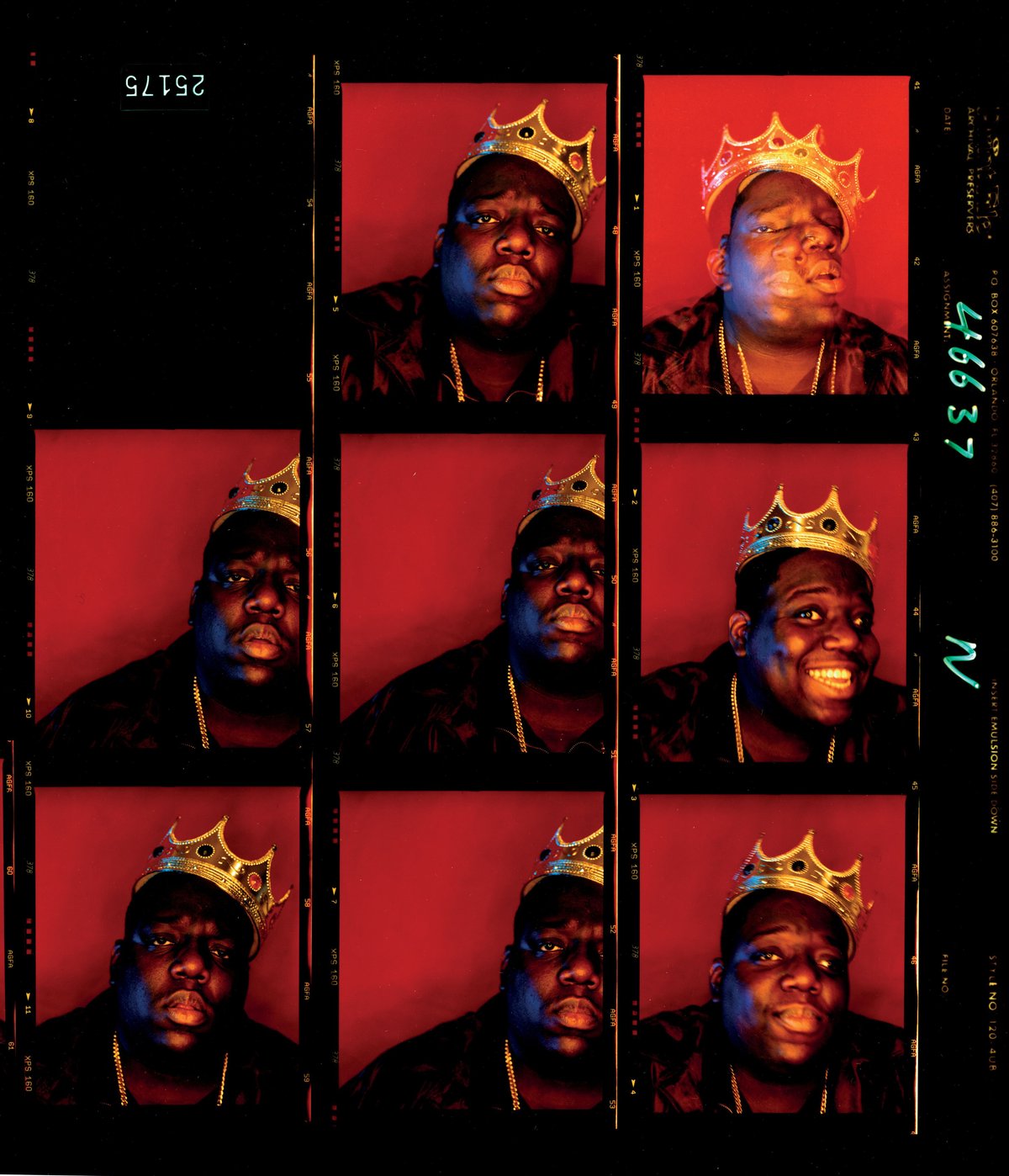
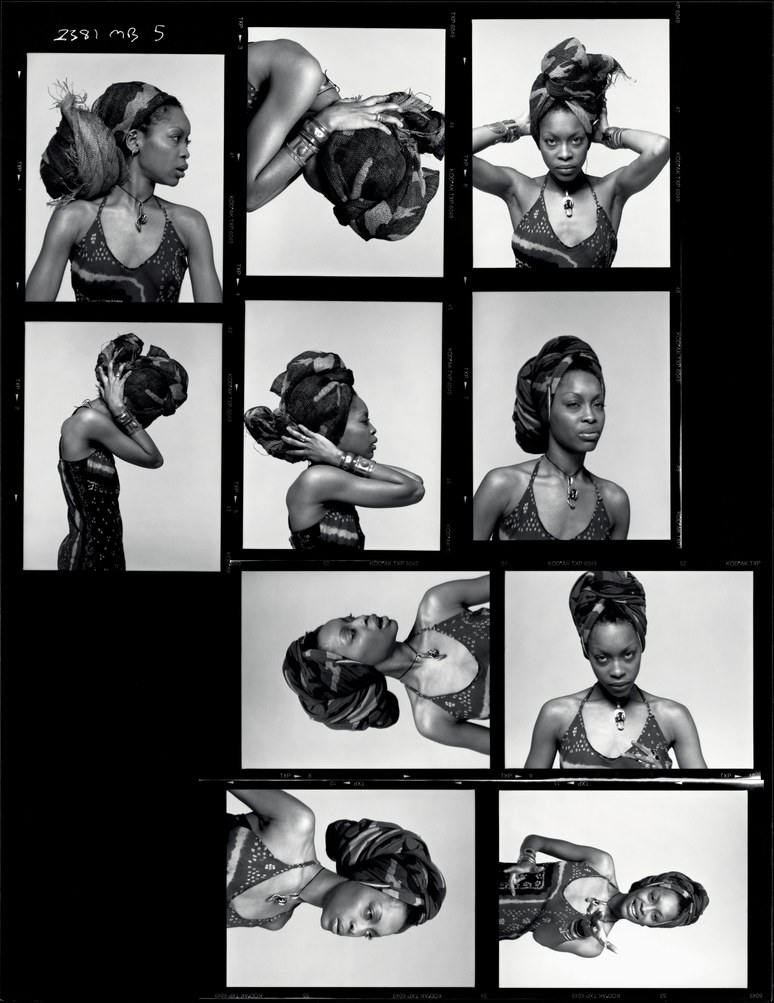
There’s something thrilling about seeing Michael Lavine’s outtake versions of OutKast’s “Stankonia” cover, where André 3000 has his hands up rather than pointed toward the viewer in a hex, or alternate versions of Danny Clinch’s famed portrait of a shirtless Tupac and his “Thug Life” tattoo, where he’s looking down at the ground with a measure of peace, rather than toward the sky or directly at the viewer in defiance. These images are like portals into alternate time lines. There’s a lone photo of the Notorious B.I.G., wearing a crown and grinning, surrounded by a dozen versions of him flashing a tragic scowl. The crown was the photographer Barron Claiborne’s idea, meant to evoke Biggie as the king of New York. Biggie’s close friend and producer, Sean “Puffy” Combs, feared that it made him look like the Burger King.
Here are a few photos and contact sheets from the book, including Biggie in his crown, plus outtakes from Baduizm by Marc Baptiste, and the Rock Steady Crew’s Frosty Freeze by Martha Cooper.
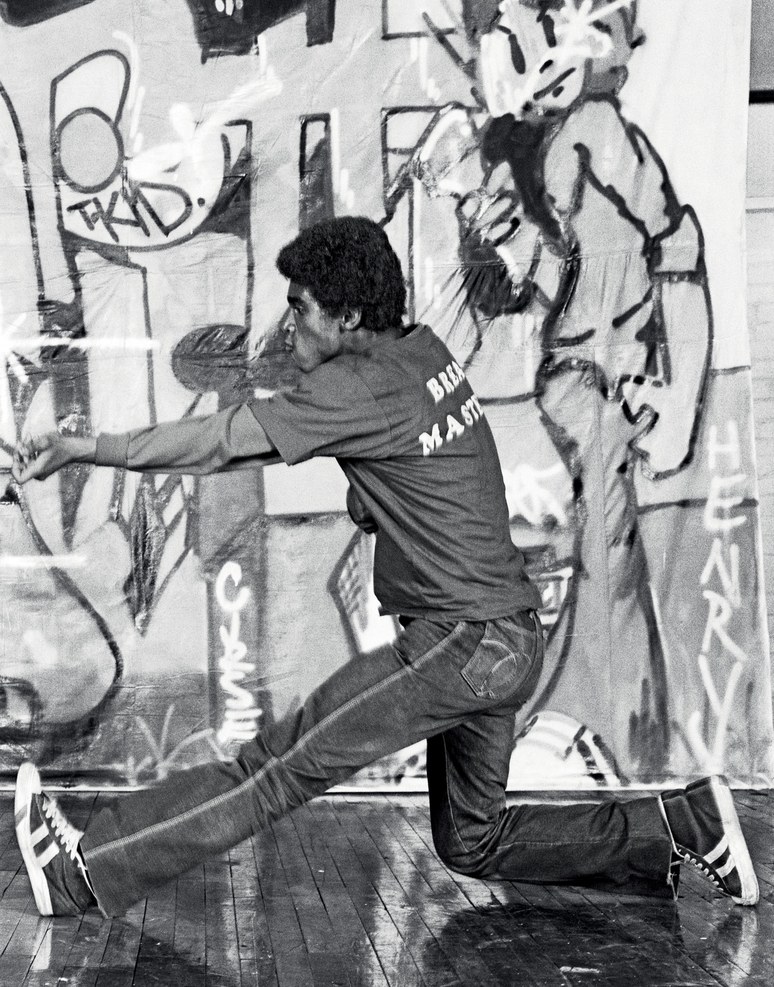
This was taken in 1981. I love it so much.
On Sunday, September 23, OutKast’s double album Speakerboxxx/The Love Below will be fifteen years old. About ready for a learner’s permit. Damn.
Okayplayer assembled an short oral history of both albums, with fresh input from contributors like Cee-Lo Green and engineer Neal Pogue as well as digging into the archives for commentary from Andre 3000 and Big Boi. Just like the albums, it’s a lot of fun.
Cee-Lo Green: They don’t make physical copies of physical CDs anymore. So basically, streaming is just like, “We like this a lot” It’s like analytics. I don’t know what else actually did Diamond or better. Speakerboxxx/The Love Below will probably be one of the last albums in history that will have moved physically over 10 million copies. That ain’t never gonna happen again.
Khujo Goodie: That was the biggest thing it Atlanta, man, because along with Goodie Mob, those guys are the pioneers of Atlanta, Georgia music! They’re the pillars. Just to have some guys representing where you stay, it wasn’t nothing but love when Speakerboxxx/The Love Below dropped, man. And you got a double album, that was just icing on the cake right there!
Big Boi [via MTV News, 2017]: When you’re inside of [the creative process], you don’t know [the impact], you know what I mean? You just go in and try to create something new. One thing that we do is never revisit what we’ve done, although we stand on it and we know it’s there.
I would never go back and try to create a song like “The Rooster”, or “Unhappy”, or “The Way You Move” — That’s too easy, you know what I’m saying? That’s what I could dig about the younger generation. I like to see who’s gonna play it safe and who’s gonna evolve into that other thing.
We really could use a full documentary about OutKast, digging into each of their albums, both principals, and the development of the scene/family around them. Someone should make that happen.
Hip hop pioneer Grandmaster Flash grew up in the Bronx and attended a public vocational high school. There he learned how to fix electronics. He was also into music — his father had a huge record collection. In this video, Flash talks about how he combined those two interests and built his first mixer using parts he bought at Radio Shack.
Grandmaster Flash was tinkerer and a hacker. There were commercially available mixers at the time; he built his own. He absorbed the nascent music culture developing around him and twisted it to his own ends, developing new mixing techniques like beat juggling. He perfected scratching and brought it to a wider audience.
Any scientist, engineer, or artist would recognize the process at work here, how tightly coupled the development of new technology and fresh ideas is. Club DJs wanted a way to transition from one record to another without missing a beat, so the mixer was invented. Once that technology existed, people started using mixers to do things other than their initial purpose. New tech begat new ideas begat new tech, the adjacent possible expanding all the while, until a curious kid who dabbled in electronics and was obsessed with music came along and helped invent hip hop, the most culturally significant movement of the past 40 years. (via kelli anderson)

In swimming, “freestyle” means the swimmer can choose their own stroke; in biking or skating, “freestyle” is a kind of informal series of stunts on varied terrain. In rap, to freestyle at its limit means to improvise lyrics off the top of one’s head. But very few lyrical freestyles are actually done completely off the top; the more salient criteria seem to be that the lyrics are memorized, they’re not from a record, they don’t conform to a verse-chorus structure (or sometimes even a verse structure), and they’re meant to showcase an MC’s lyrical gifts. A little more like an orchestral jazz solo than something completely unstructured and improvisational.
The Roots’ Black Thought, who performed a highly acclaimed freestyle in this mode on Hot 97 earlier this month, explains the difference to Rolling Stone:
When I was coming up, a freestyle wasn’t a freestyle unless everything was completely improvised, in-the-moment and right there, and you had to incorporate various elements of what was going on in the room on the day. That’s still a part of it. But I feel like it’s evolved into something more, where you have to have the improv element, but you also have to have a certain script. As an actor, the theatrical side of me identifies with the concept of having a script, and memorizing the lines, and then being able to be “off book,” so to speak. If you know your lines and everybody else’s lines, and you have those beats in your muscle memory, then you can improvise and go off-script. And if you reach a point during the improvisation where you feel like you’re about to stutter or second-guess yourself, then you can immediately fall back on the part that you already know. So that’s what [freestyle] has evolved into. It’s like the new definition of freestyle. I mean, it still has to be witty, and you have to have punchlines. But in order to make it super dense, and incorporate all those layers of meaning and depth to the listener, it has to be both improv and muscle memory….
There has to be a research element involved. No public speaker or stand-up comedian, I mean, there’s no one who’s going to give a speech completely off the top without having worked on the beats, and how you’re going to say what it is that you’re saying, or worked on the tone.
This last bit about public speaking and performance reminds me of this anecdote J. Period’s told a few times about Tariq Trotter’s time at Philadelphia’s High School for Creative and Performing Arts:
Hip-hop vlogger Justin Hunte includes this anecdote as part of his case for Black Thought being considered one of the greatest MCs (if not the greatest) of all time.
Warning: this is the best thing you’re going to see today, even if you already saw it yesterday.
In this clip, The Roots’ MC dishes out an album’s worth of rhymes from memory, while hardly stopping to breathe.
For once in his life, Sean Combs may not be exaggerating:
But as his bandmate Questlove pointed out, Black Thought has been doing this for years:
And Genius fulfilled its one true purpose, with fans getting the freestyle transcribed and available the same day.
Update: Aaaaand Genius took the post down, without explanation. So the quoted lyrics you’re about to get are as close to definitive as we have.
What I love about Black Thought’s freestyle is that it does everything hip-hop at its best does. He has the technical virtuosity and improvisation, both of which are first-rate. He toasts, boasts, and roasts. He plays with words, and the words play right back.
But he also tells stories, including this striking one about his mother:
My mother was a working class very lovin’ woman
Who struggled, every dinner could’ve been the last summer
I come home, chasing good-for-nothing half-cousins
And then walk in the crib to the smell of crack cookin’
She was introduced to that substance abuse
On some of the strongest drugs that the government produced
He gets philosophical and abstract. Like, real abstract.
I made the 21-pound for some a new found religion
When money’s put down, it’s only one sound to make
OGs and young lions equally proud to listen
The secret amalgam is an algorithm
Coming from where only kings and crowns permitted
The darkness where archaeologists found
My image in parchment rolled into a scroll
Holding a message for you, it says
“The only thing for sure is taxes, death, and trouble”
The anomaly swore solemnly, high snobiety
Freakonomics of war policy, dichotomy
That’s Heaven and Hades
Tigris and Euphrates
His highness
The apple of the iris to you ladies
As babies, we went from Similac and Enfamil
To the internet and fentanyl
Where all consent was still against the will
He pays homage to rap history:
Maybe I’m the new Rakim
Maybe I’m fat Pharaohe
Undergarments of armor be my intimate apparel
Pre-Kardashian Kanye
My rhyme-play immaculate
Same cadence as D.O.C Pre-accident
Maybe my acumen on par with Kool G Rap and them
And to his own discography:
I hate to say I told y’all, but I told y’all
Things fall apart when the center too weak to hold y’all
I’m just collecting what you owed to my old jawn
You ‘bout to get swooped down on and stoled on
He charms and disarms:
You in the residency of the one they call
King Dada
Ali Baba
The Talented Mr. Trotter
Inside of my right palm, the mark of the stigmata
Big Poppa wig chopper
Emperor Joffrey Joffer
Motherfucka, I’m stronger than the coffee out in Kaffa
All y’all n***as vagina-hop
Remind me of Icona Pop
I step in the booth, I’m a bull inside a China Shop
Mollywopper
Watch another cotton-pickin’ body drop
Every time we rock
Yo they actin’ like it’s Mardi Gras
‘Til the party stop
Skirt off like she that Ferrari drop
So psyched he pumpin’ that Earth, Wind and Fire body I
Cool a product doc
A la Marina, hard-body yacht
You seen another rapper cleaner? Mami, probably not
And sometimes, he just kills it:
How it feel to be the best that did it, I admit it
I’m visiting from planet bring these n***as death in minutes
And y’all know I’m exquisite
Wicked as Wilson Pickett
The sickness I exhibit
I’m too legit to quit it
I don’t fake it ‘till I make it
I take it to the limit, and break it
Never timid, what I’m about, I represent it
Infinite just like Chace is
Been a million places
Conversation is how beautiful my face is
People hating on how sophisticated my taste is
Then I pulled up on these motherfuckers in a spaceship
Even reading this, it’s just too good.
I am a walking affirmation
That imagination
And focus and patience
Get you closer to your aspiration
And just cuz they give you shit
Don’t mean you have to take it
My words capture greatness
Sworn affidavits
Meanwhile, the talented Tariq Trotter himself kept it humble:
Older posts





Socials & More