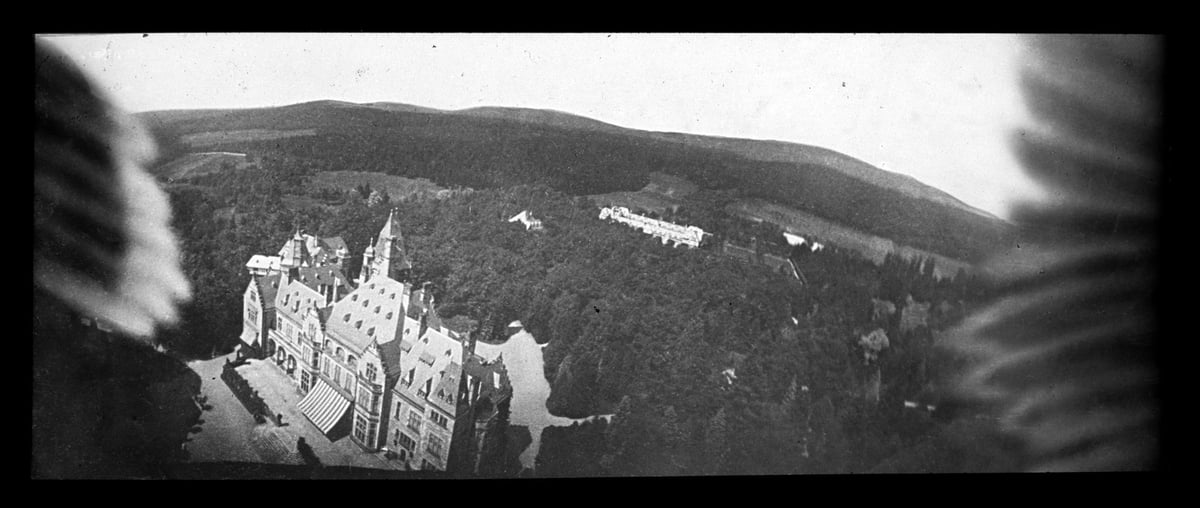
The New Yorker has some genuinely exciting early aerial photographs, taken by birds. They’re excerpts from a new book, The Pigeon Photographer, about Dr. Julius Neubronner.
Neubronner developed the pigeon camera for practical purposes. At first, he was simply hoping to track the flights of the birds in his flock. But his invention also represented a more sublime achievement. The images his pigeons captured, featured in “The Pigeon Photographer,” a recent book from Rorhof, are among the very early photos taken of Earth from above (the earliest were captured from balloons and kites) and are distinct for having the GoPro-like quality of channelling animal movement. That perspective that is so commonplace to us now, in which the rooftops stretch out before us as though they were made of a child’s blocks, and people crawl along like ants, was a rare sight when Neubronner took his pigeon pictures. The photos offered a glimpse of the world rendered pocket-size, as it eventually would be via a hundred types of new technology—by airplanes, or skyscrapers, or Google Earth.
But there’s also something a bit wild about the photos, precisely because they were taken by birds. Their framing is random and their angles are askew; sometimes a wing feather obscures the view. Pigeons are surely the most pedestrian of birds, but, looking at these oddly graceful photographs, or at Neubronner’s pictures of the birds looking stately and upright in their photo kits, they start to seem like heavenly creatures.
These pictures remind me quite a bit of the chapters in Paul Saint-Amour’s Tense Future on the relationship between aerial photography and modernist art. (I can’t recall if he mentions the pigeons or not.)
It’s been years since we first heard it, and I have no idea if my little boy still loves it like he did then, but I can’t get enough of this acoustic version of Bob Marley’s “Three Little Birds” from the kids’ album B Is For Bob:
This song and its video presentation drive home the importance of a literary frame for meaning. I never much liked the other versions of this song, in part because the frame was obscured. The cartoon and the flattening of the song’s structure help draw it out again.
Bob Marley and (forgive me) a bunch of college hippies singing “every little thing’s gonna be all right” as an anthem is insipid. But Bob Marley singing a song to children about three birds who tell him (apocryphally, fleetingly) that everything will be all right? That is inspired.
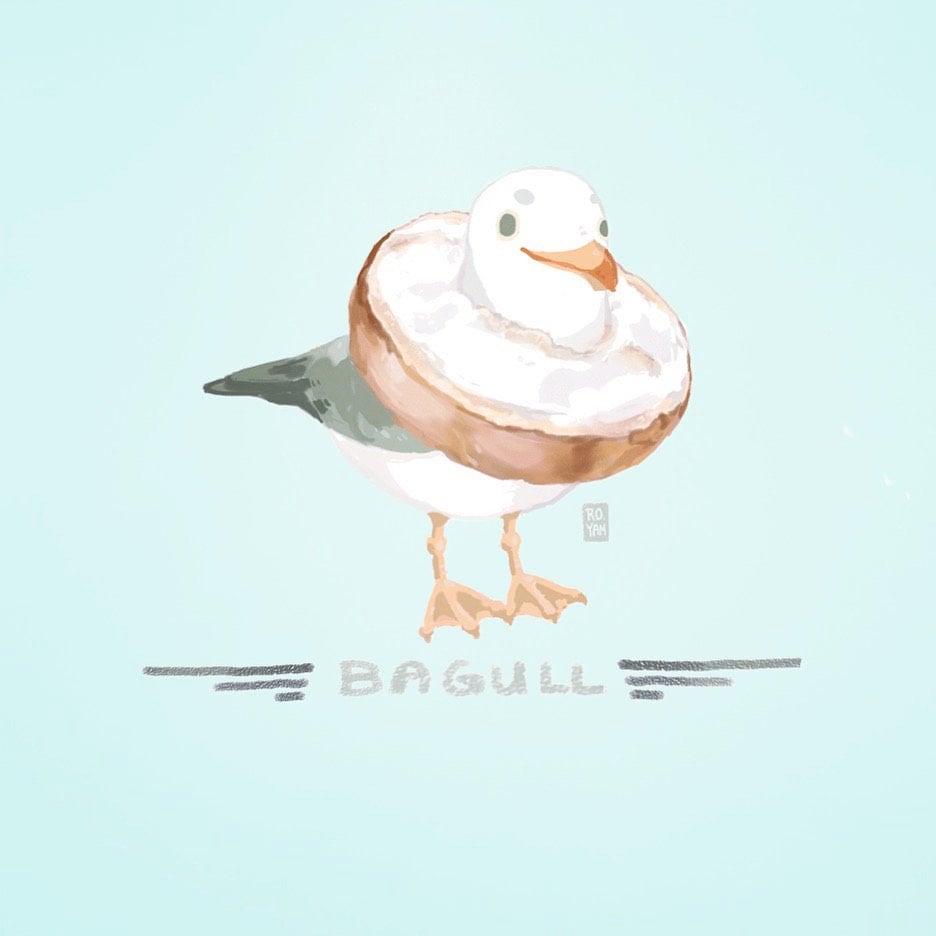
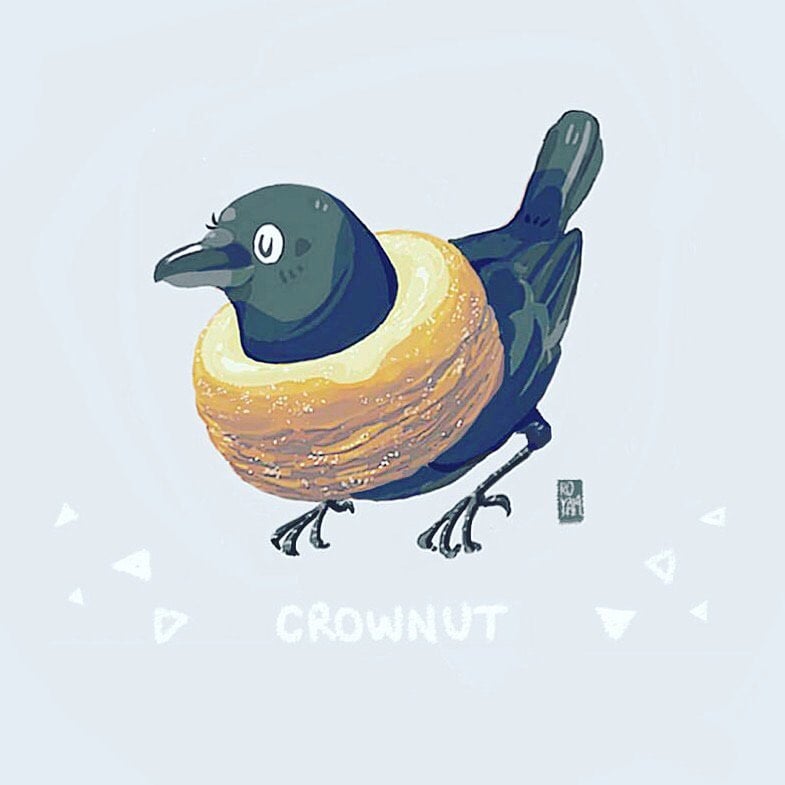
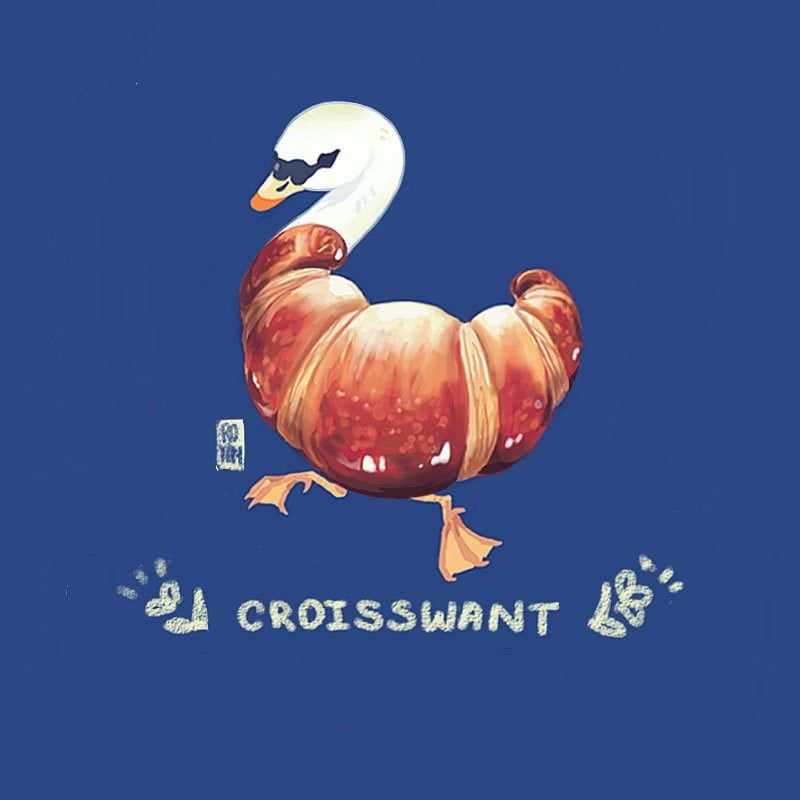
Twitter user @fuguhitman has recently done a series of bread birds with portmanteau names like Croisswant, Breadolark, Pidgingerbread, Bagull, and Crownut. Now I’m hungry and I want to go sit in a quiet forest with binoculars.
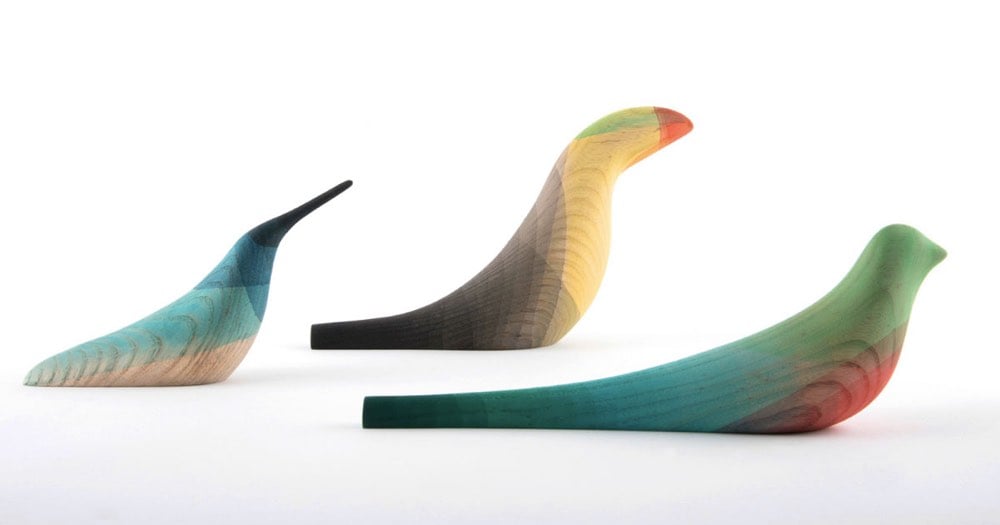
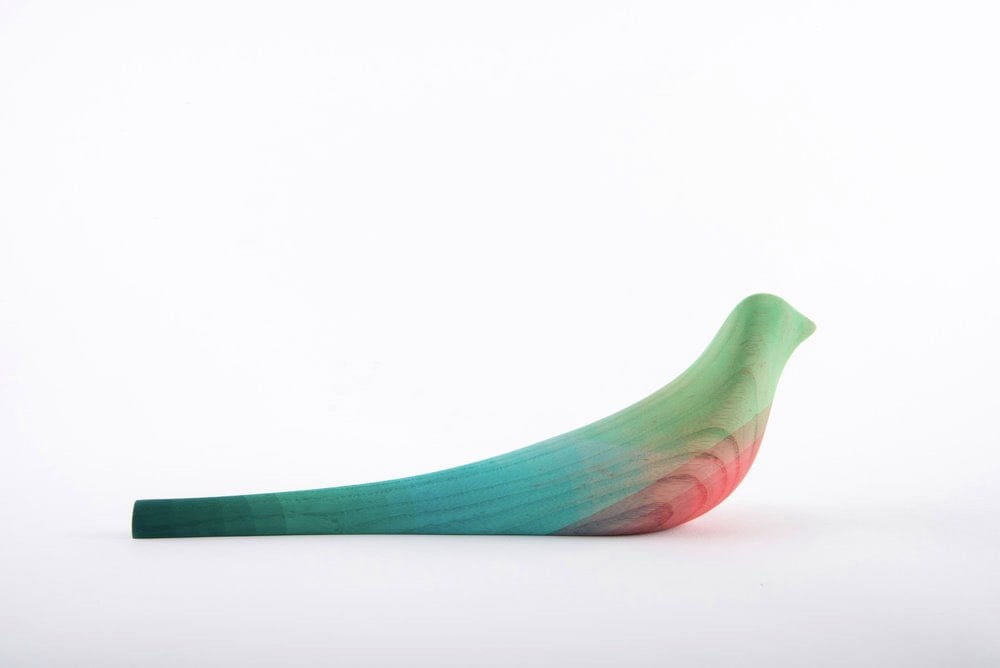
Mexican artist Moisés Hernández makes these simple, graceful bird sculptures by having a machine carve the shapes out of ash and filling in the plumage by hand-dipping them in watercolor paint, as if decorating Easter eggs.
In an attempt of generating a balanced dialogue between machine made and handmade objects, we made soft and continuous shapes milled with CNC technology contrasted with handmade painting done by immersion in coloured water, an experimental technique we developed for this project, which gives the birds a unique personality. This technique of painting allows to achieve an interesting texture of intersections and transparency made by layers of colour that resembles the plumage of birds. The amount of colour, hue and the way sections cross one another depends on the time and position the wood is plunged.
Lovely. (via colossal)
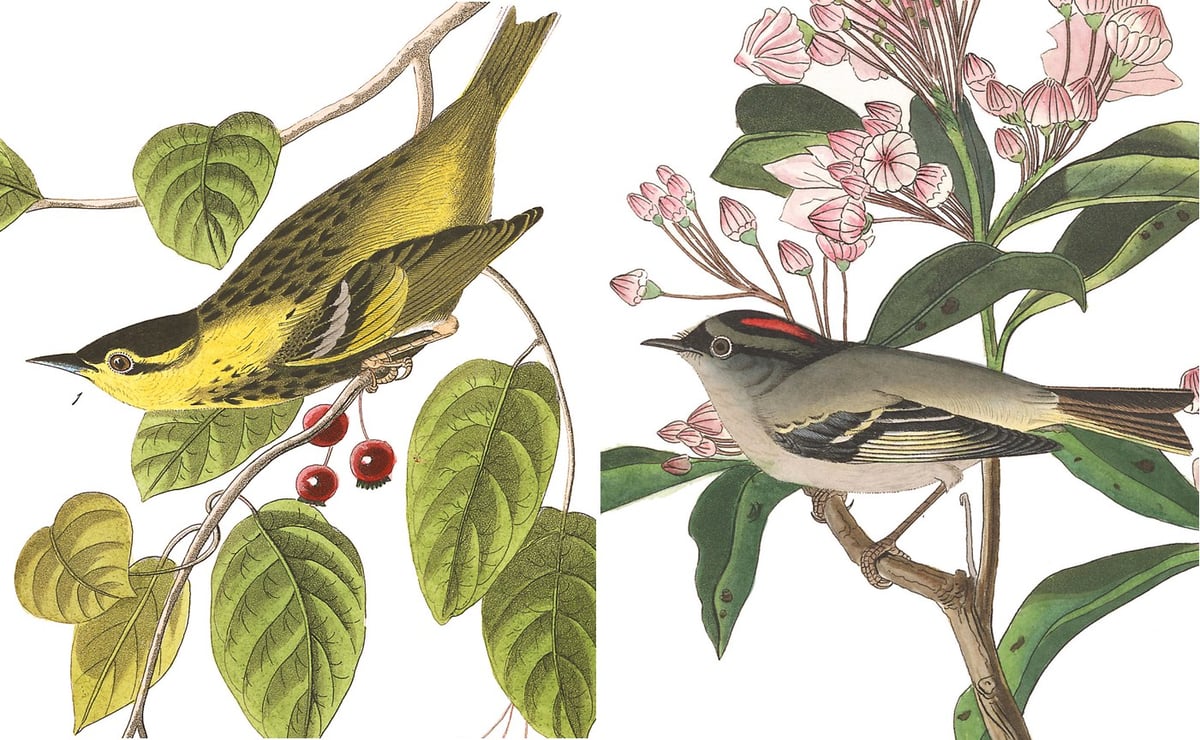
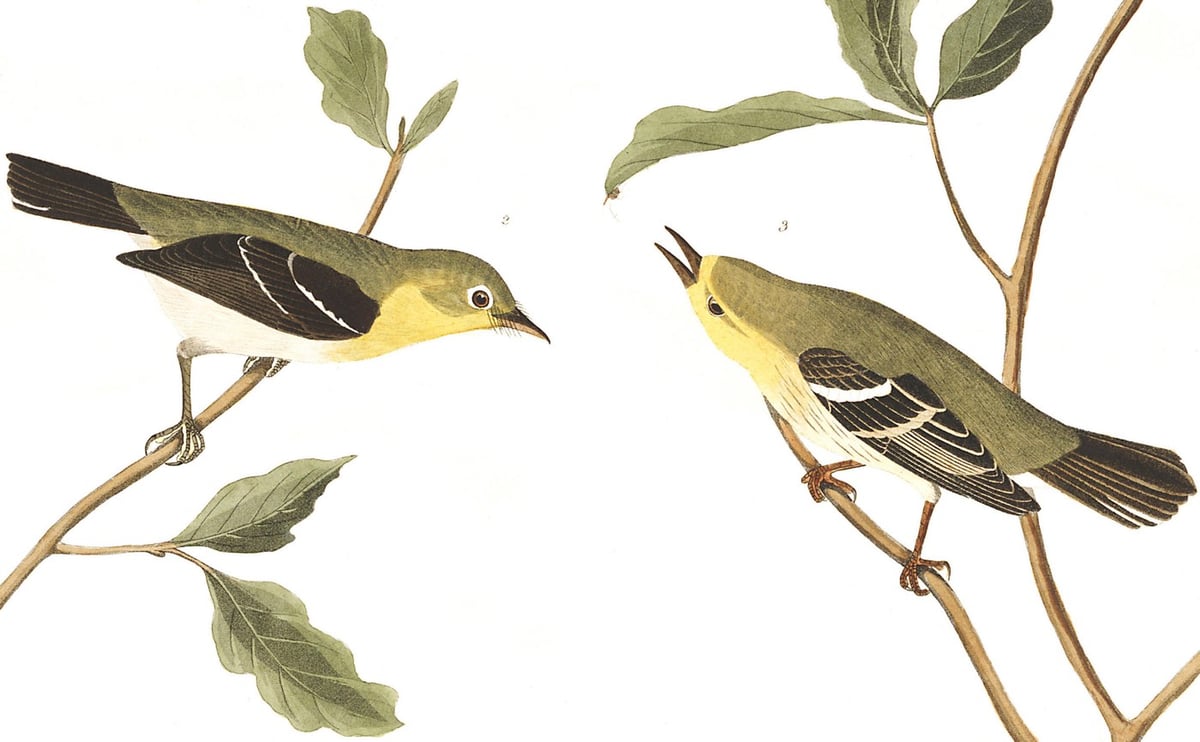
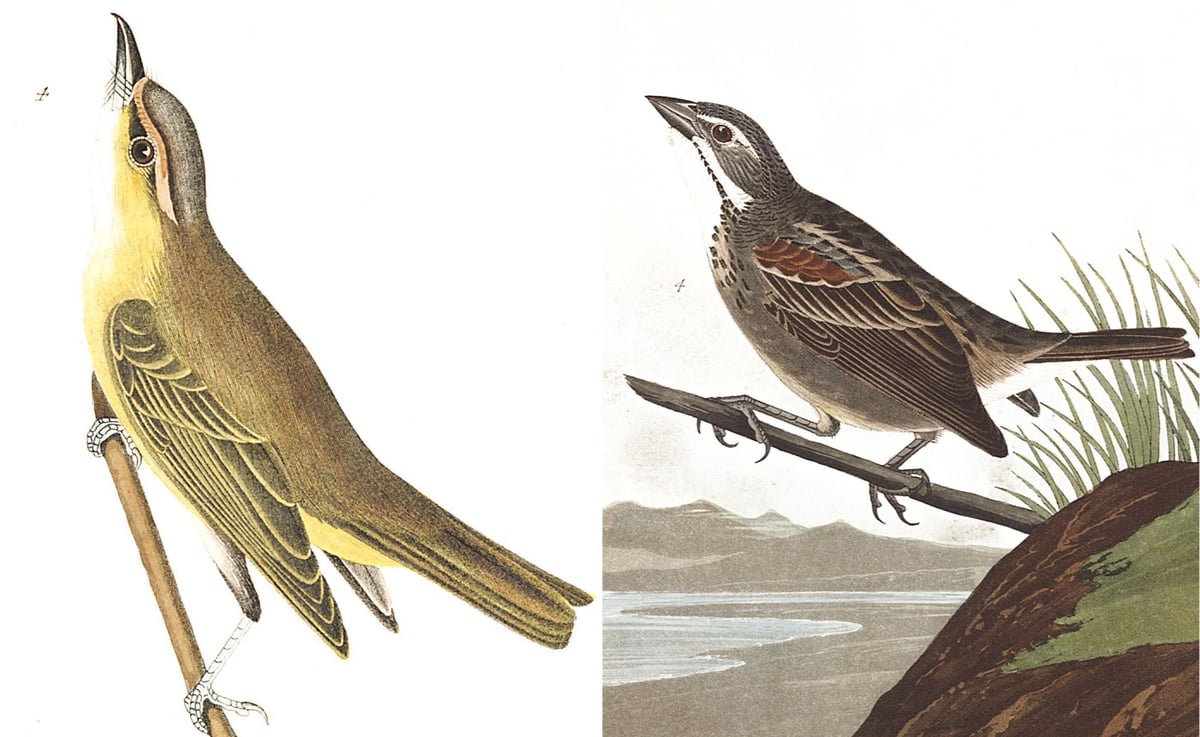
Over a period of thirteen years beginning in the 1820s, John James Audubon painted 435 different species of American birds.1 When he was finished, the illustrations were compiled into The Birds of America, one of the most celebrated books in American naturalism. Curiously however, five of the birds Audubon painted have never been identified: Townsend’s Finch, Cuvier’s Kinglet, Carbonated Swamp Warbler, Small-headed Flycatcher and Blue Mountain Warbler.
These birds have never been positively identified, and no identical specimens have been confirmed since Audubon painted them. Ornithologists have suggested that they might be color mutations, surviving members of species that soon became extinct, or interspecies hybrids that occurred only once.
The specimen that Audubon used to paint Townsend’s Bunting is now in the Smithsonian Museum of Natural History, identified as Townsend’s Dickcissel, but no bird exactly like it has been reported, Dr. Olson, an authority on Audubon’s work, noted in an email. Ornithologists suggest that it is either a mutation of the Dickcissel or a hybrid of Dickcissel and Blue Grosbeak, she said.
And that’s not counting the ones he got wrong for other reasons:
And indeed, there are several birds painted and explained in Birds of America that are not, in fact, actual species. Some are immature birds mistaken for adults of a new species (the mighty “Washington’s Eagle” was, in all likelihood, an immature Bald Eagle). Some were female birds that didn’t look anything like their male partners (“Selby’s Flycatcher” was a female Hooded Warbler).
Audubon also painted six species of bird that have since become extinct: Carolina parakeet, passenger pigeon, Labrador duck, great auk, Eskimo curlew, and pinnated grouse. Here’s his portrait of the passenger pigeon:
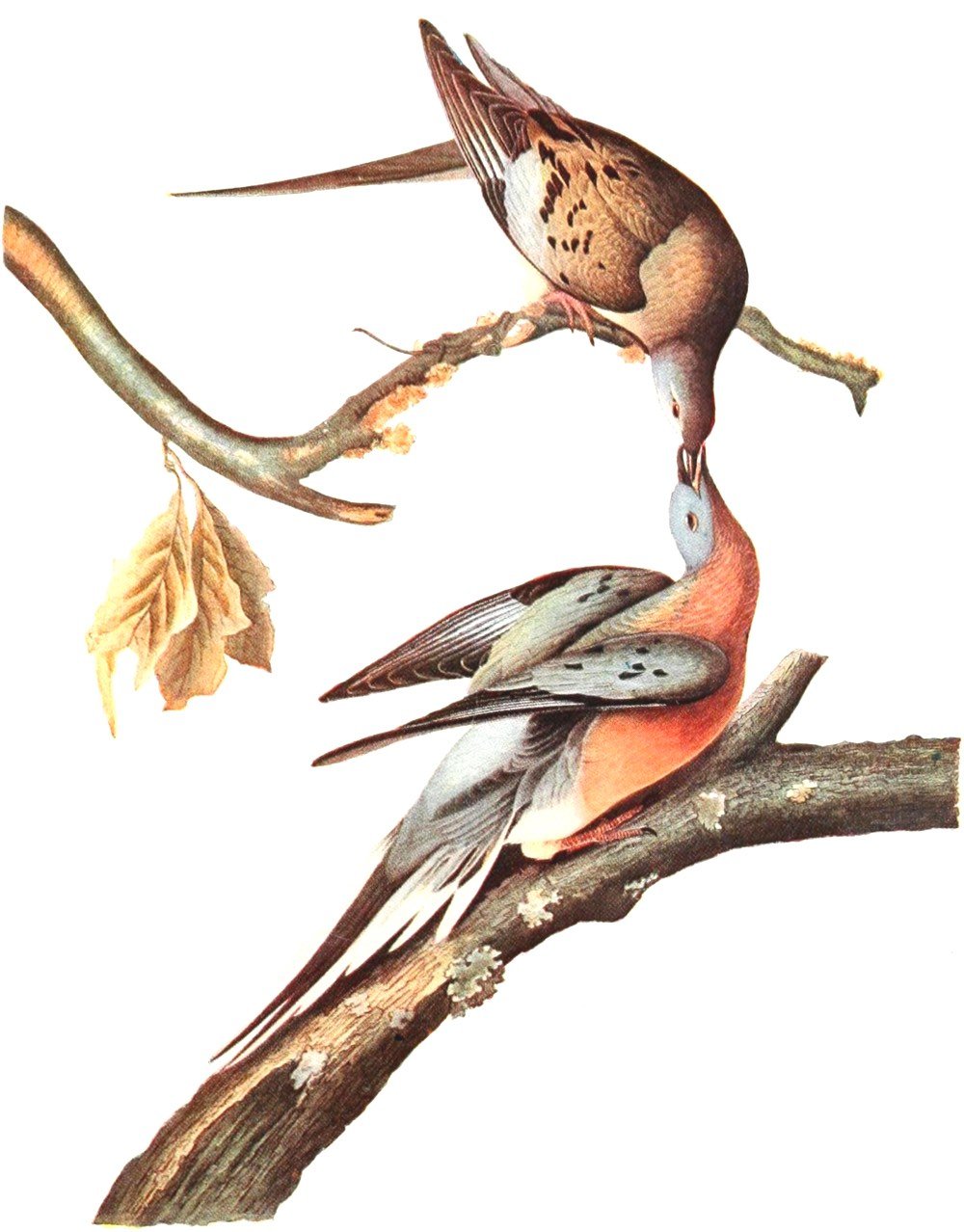
There were an estimated 3 billion passenger pigeons in the world in the early 1800s — about one in every three birds in North America was a passenger pigeon at the time. Their flocks were so large, it took hours and even days for them to pass. Audubon himself observed in 1813:
I dismounted, seated myself on an eminence, and began to mark with my pencil, making a dot for every flock that passed. In a short time finding the task which I had undertaken impracticable, as the birds poured in in countless multitudes, I rose and, counting the dots then put down, found that 163 had been made in twenty-one minutes. I traveled on, and still met more the farther I proceeded. The air was literally filled with Pigeons; the light of noon-day was obscured as by an eclipse; the dung fell in spots, not unlike melting flakes of snow, and the continued buzz of wings had a tendency to lull my senses to repose… I cannot describe to you the extreme beauty of their aerial evolutions, when a hawk chanced to press upon the rear of the flock. At once, like a torrent, and with a noise like thunder, they rushed into a compact mass, pressing upon each other towards the center. In these almost solid masses, they darted forward in undulating and angular lines, descended and swept close over the earth with inconceivable velocity, mounted perpendicularly so as to resemble a vast column, and, when high, were seen wheeling and twisting within their continued lines, which then resembled the coils of a gigantic serpent… Before sunset I reached Louisville, distant from Hardensburgh fifty-five miles. The Pigeons were still passing in undiminished numbers and continued to do so for three days in succession.
100 years later, they were all dead. Which may have had at least one interesting consequence:
But the sad echo of the loss of passenger pigeons still reverberates today because its extinction probably exacerbated the proliferation of Lyme disease. When the passenger pigeons existed in large numbers, they subsisted primarily on acorns. However, since there are no pigeons to eat acorns, the populations of Eastern deer mice — the main reservoir of Lyme disease — exploded far beyond historic levels as they exploited this unexpected food bonanza.
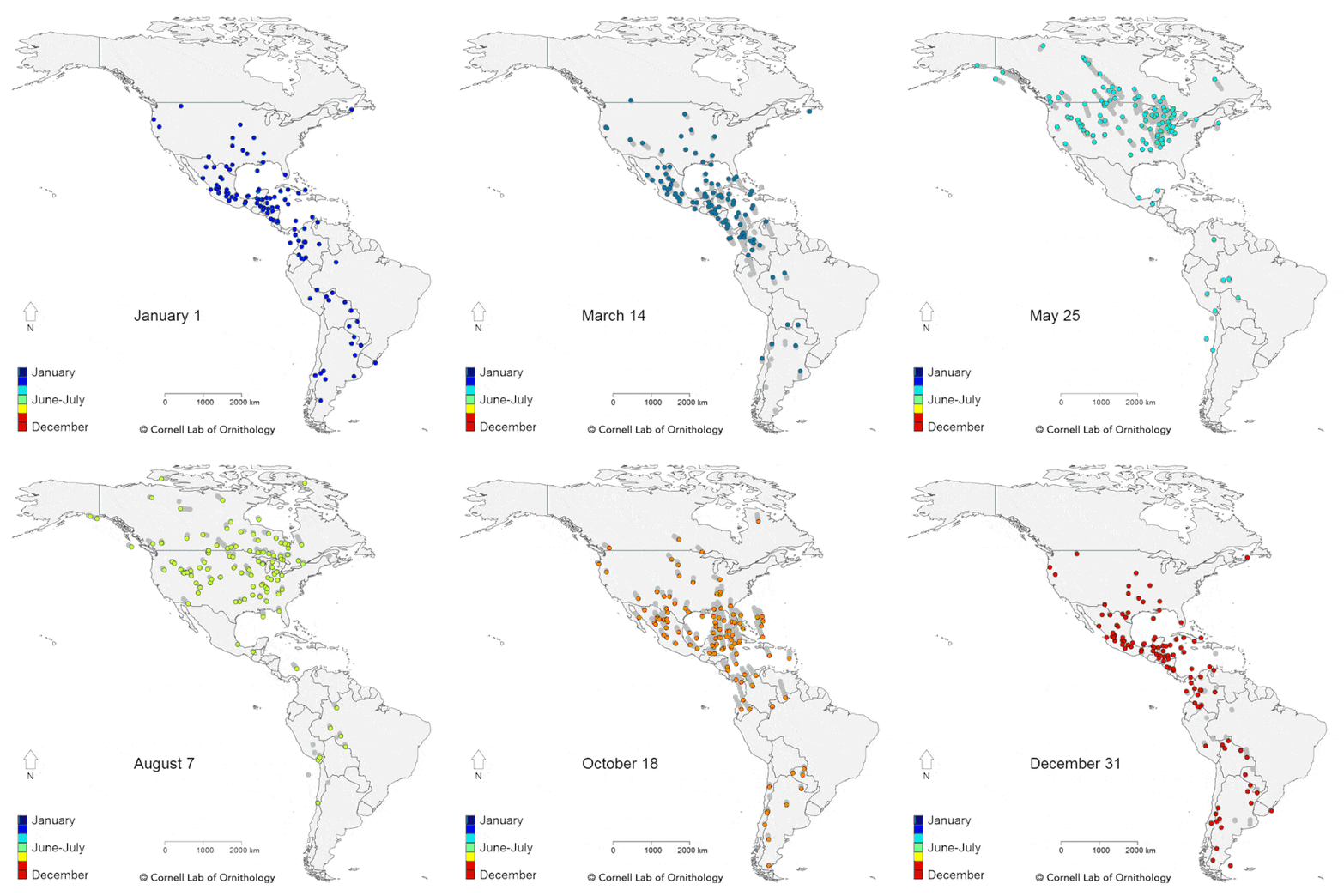
From the Cornell Lab of Ornithology, an animated map of the yearly migratory patterns of 118 bird species in the Western Hemisphere.
La Sorte says a key finding of the study is that bird species that head out over the Atlantic Ocean during fall migration to spend winter in the Caribbean and South America follow a clockwise loop and take a path farther inland on their return journey in the spring. Species that follow this broad pattern include Bobolinks, Yellow and Black-billed cuckoos, Connecticut and Cape May warblers, Bicknell’s Thrush, and shorebirds, such as the American Golden Plover.
“These looped pathways help the birds take advantage of conditions in the atmosphere,” explains La Sorte. “Weaker headwinds and a push from the northeast trade winds as they move farther south make the fall journey a bit easier. The birds take this shorter, more direct route despite the dangers of flying over open-ocean.”
The map was created with data from eBird, a database of crowdsourced bird sightings. They also created a follow-up map which labels each of the species. Look at how far Baird’s Sandpiper (#5) flies…all the way from central Argentina to Northern Canada and back. (thx, kevin)
A flock of starlings is called a murmuration, an apt word because the flocks move like a rumor pulsing through a crowded room. This is a particularly beautiful murmuration observed in Utrecht, The Netherlands.
What does it feel like to soar majestically like an bird? Maybe something like this video, shot with a camera strapped to the back of an eagle flying near Chamonix in France.
See also first-person footage of a peregrine falcon diving and killing a duck in mid-air. (via @gavinpurcell)
The Peregrine Falcon is the world’s fastest animal;1 it can reach speeds of more than 240 mph during dives. It uses that speed to kill other birds in mid-air. Here’s a video of a Peregrine diving and killing a duck, shot with a camera mounted on the falcon’s back.
It’s cool watching her fly around, but the exciting part starts right around 2:45. The acceleration is incredible. The same bird does a longer and faster dive in this video (at ~0:55):
Here’s what the Peregrine’s dive looks like from an observer’s point-of-view:
Our family had a lively discussion about Peregrine Falcons around the dinner table a couple of weeks ago…I can’t wait to show the kids these videos when I get home tonight. (via @DavidGrann)
A collection of starlings is called a murmuration and when they roam the skies together, it’s beautiful.
This video is more artistic than the one I linked to in 2011, but the birds are super close in the older one:


Socials & More