




A Lovely 3500-Year-Old Drawing of a Sparrow
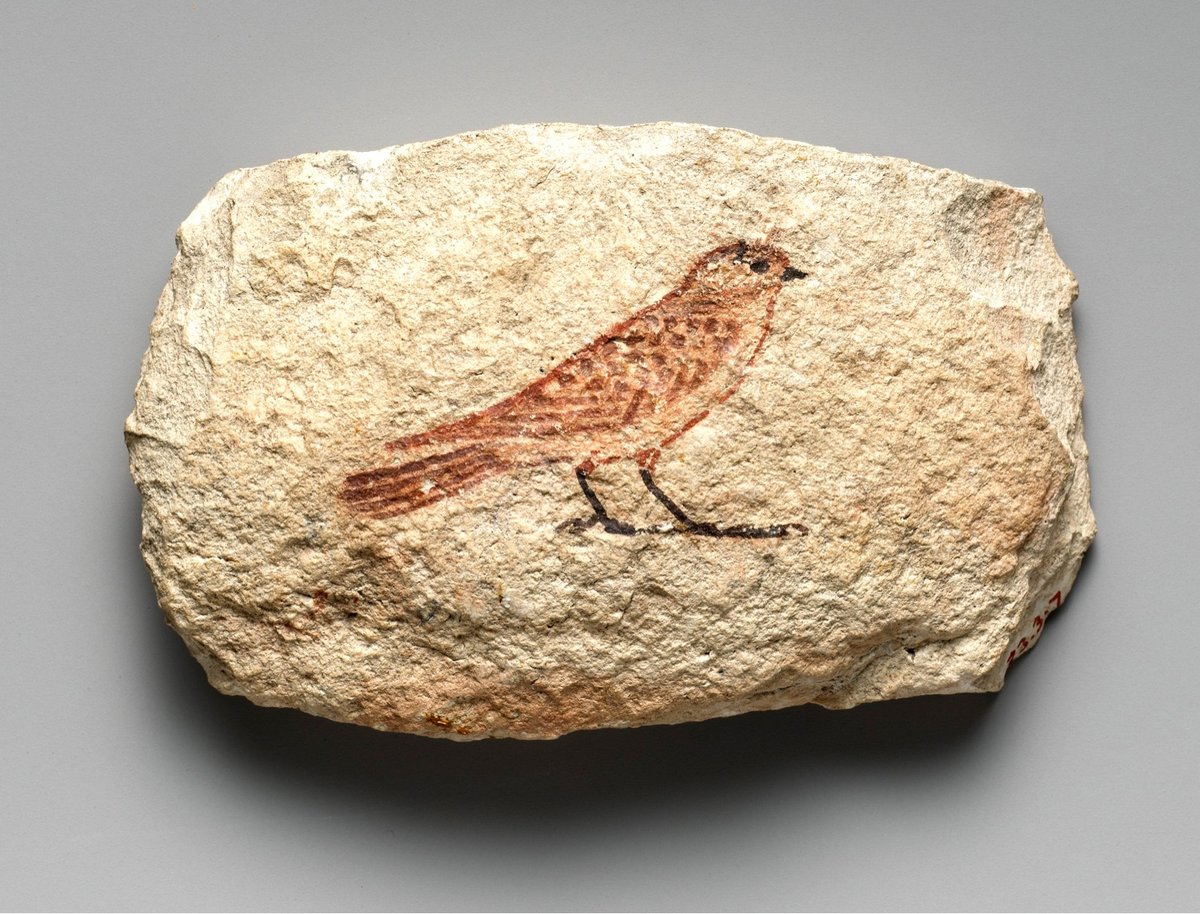
From the collection of the Met, an Egyptian artist’s sketch of a sparrow circa 1479–1458 BCE. Much of the art that filters down to us from ancient civilizations was used for official purposes (state, religion, commerce); it’s nice to see something simpler like this drawing. Archaeologist Alison Fisk:
This may have been a practice drawing of the sparrow hieroglyph which was used for words meaning ‘small’, ‘poor’, or ‘bad’
The Egyptian artisans who decorated tombs and temples, drew sketches and jotted down notes on the plentiful limestone flakes which were by-products of temple and rock-cut tomb construction. Egyptologists refer to them as ‘ostraca’ (singular: ostracon). More info: ancientegyptonline.co.uk/ostracon/
From that link about ostracon:
The word “ostracon” is derived from the Greek “ostrakon” (meaning a piece of pottery used as a voting ballot). When a vote was held on whether to banish a person from society these shards were used to cast votes. This is the origin of the word “ostracism” (literally meaning “to be voted out”).
Socials & More