Jason’s only got one rule for guest editors and it’s, “If you’re going to post about Utrecht once, you have to post about Utrecht three times,” which is a bad rule imo and problematic for me because I don’t know anything about Utrecht except they got bones full of drugs there and a doorbell for fish.
Luckily, I am American and did the American thing of texting the only Dutch person I know when I saw the fish doorbell was opening up for the year, because obviously everyone from the Netherlands will already know about the fish doorbell. He didn’t know about the fish doorbell, but he did used to be an intern at the Musical Clock Museum in Utrecht, which is a museum focusing on self-playing instruments and musical clocks. The Museum Speelklok appears to contain the second largest such collection in the world behind the Musical Museum in Brentford, which has them beat on self-playing instruments, though it’s not clear how many musical clocks they’ve got at MM. Regardless, the Utrecht Musical Clock Museum appears delightful and you should visit after visiting the fish doorbell.
Update:
Thanks to Logan and Marc in the comments for pointing me to Wintergatan. The marble machine in the video below is exhibited at Museum Speelklok.
(Jason previously wrote about Martin Molin’s Wintergatan projects in 2020, which were inspired by Martin’s visit to Museum Speelklok in 2016.)
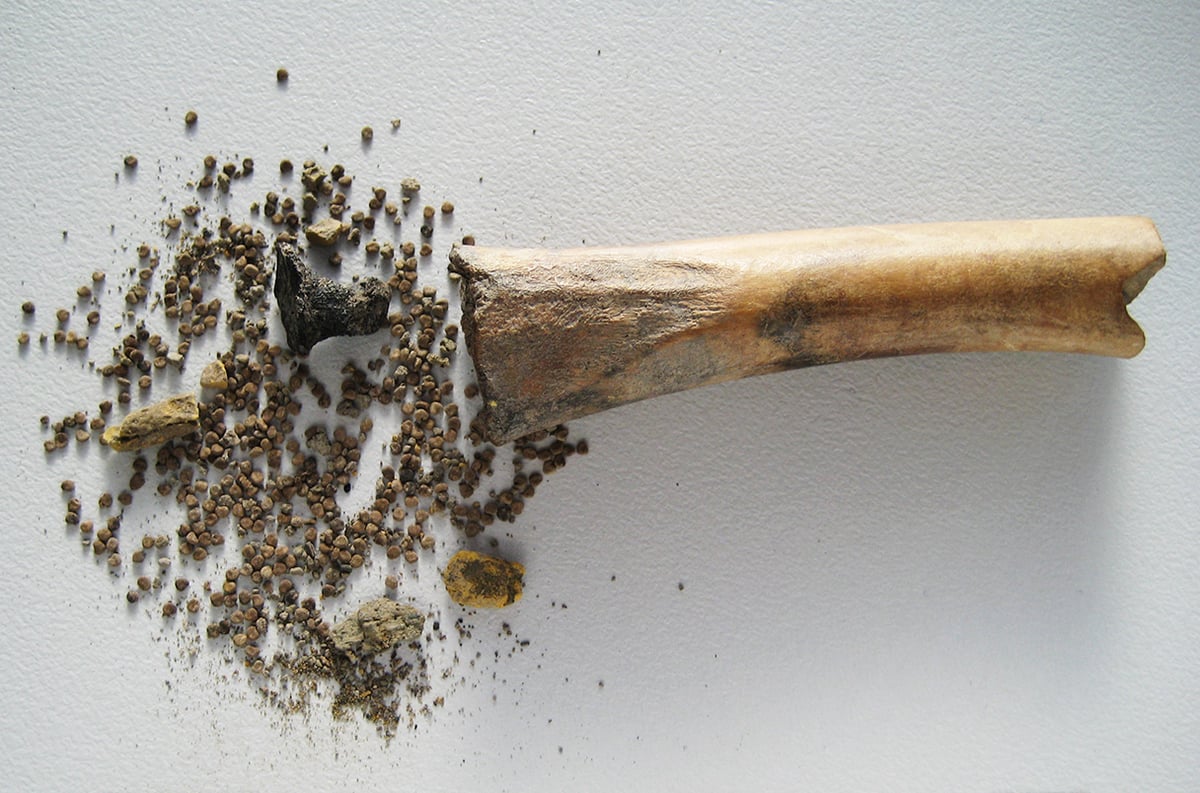
Researchers from the Freie Universität Berlin working in the Netherlands recently found a little bone container full of drugs in a pile of 86,000 other bones they had found outside a farm in what is now the Dutch city of Utrecht. Initially the researchers missed the find because they weren’t looking for a first century C.E. bone full of drugs in a bone stack (that’s a needle in a haystack joke I was afraid you wouldn’t get, so I’m just pointing it out, but if you did get it, I’m sorry for not trusting you as a reader.).
The bone container, discovered when a birch pitch plug was dislodged, was full of black hebane seeds which back in the olden olden olden days was used for “relieving pain and helping with difficult pregnancies. Yet ingesting too much, one Roman author wrote, could lead to “alienation of [the] mind or madness”.”
Ancient Roman authors were clearly familiar with the plant. Pliny the Elder, Plutarch, and others wrote about black henbane, along with its closely related but less potent relatives, white and yellow henbane. These plants—in the form of ointments, potions, or burning smoke—were prescribed for everything from earaches and toothaches to flatulence and “pains of the womb.” Ancient scholars also warned against taking too much because of the potential for hallucinogenic effects; Pliny counseled physicians to avoid it entirely.
This quotation submitted without comment: “When you think about how much was in there, your imagination really goes wild.”
This video submitted without comment, as well:




Socials & More