
Jiggle Cat

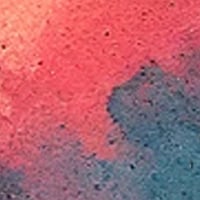
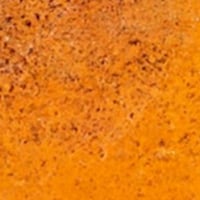
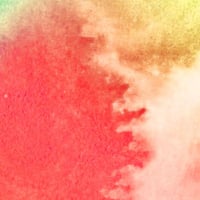
This is a pretty good optical illusion. If you’re not on your phone, it also works if you shake your head a little. (thx, caroline)

This site is made possible by member support. 💞
Big thanks to Arcustech for hosting the site and offering amazing tech support.
When you buy through links on kottke.org, I may earn an affiliate commission. Thanks for supporting the site!
kottke.org. home of fine hypertext products since 1998.
Beloved by 86.47% of the web.
This is a pretty good optical illusion. If you’re not on your phone, it also works if you shake your head a little. (thx, caroline)



I’ve seen a bunch of these before, but it’s cool to scroll and get your tiny mind blown over and over again. Human cognition and perception is such a trip. (via neatorama)
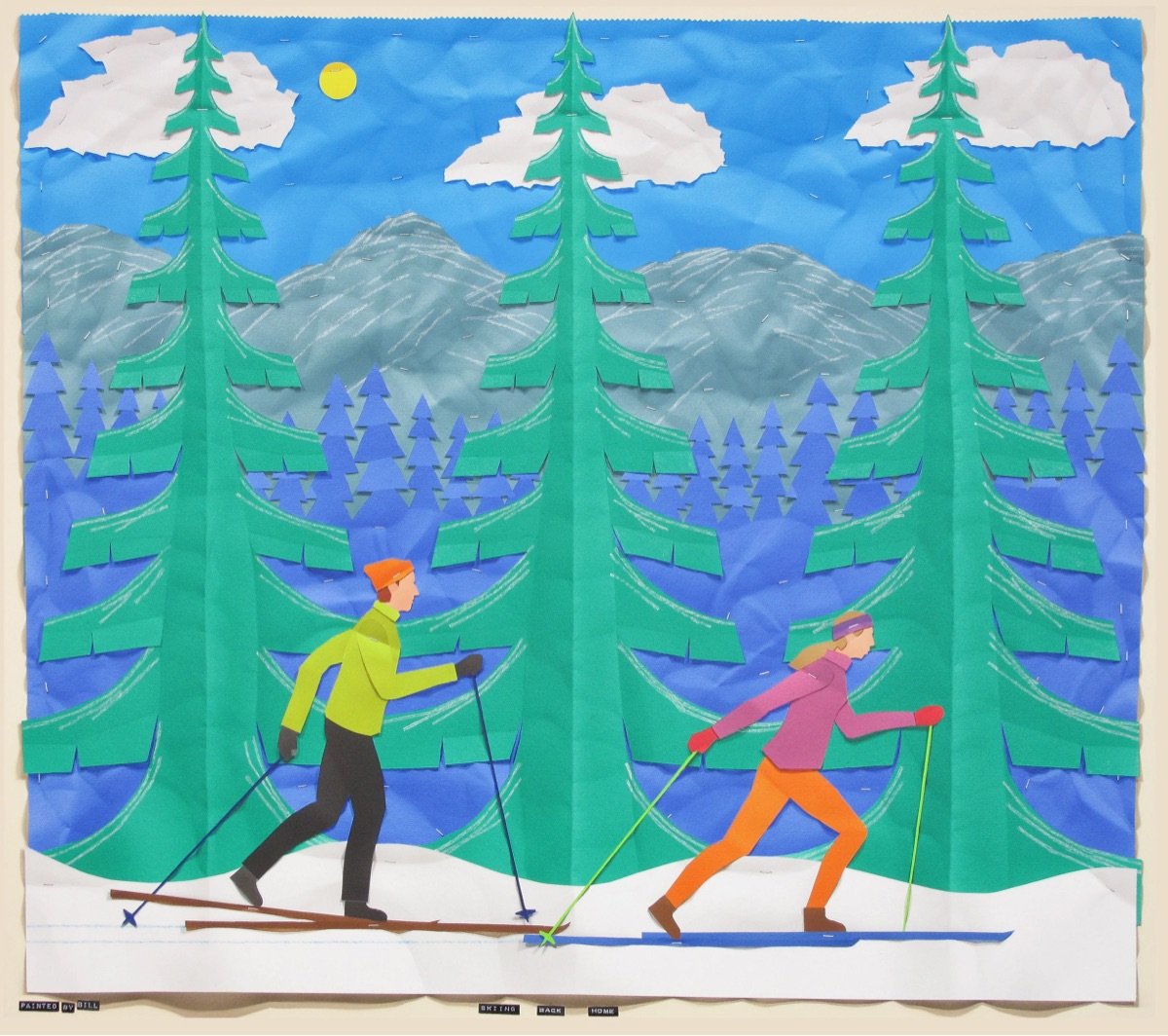

Bill Braun is a “trompe l’oeil painter” who creates paintings that look like paper craft, complete with visible paper folds, shadows, and even the “staples” holding the “paper” to the backing. What an incredible illusion. And I always enjoy an artist who is reticent to give an artist statement or explain their work:
I don’t like to give an artist statement because it undoes the premise of my work, trompe l’oeil painting. Literally from the French, trompe l’oeil means “trick the eye”. An artist’s statement might undo the fundamental aim of convincing the viewer, at least for a moment, that what he sees are actual objects and not a painting. The basic rules of trompe l’oeil painting are that objects are rendered in real scale, and totally within a shallow painted space. This type of painting has always been a minor branch of realist painting, but with a very long history. The Athenian painters Xeuxis and Parrhasios in 5th century B.C. (as told by Pliny the Elder in his Natural History) and Roman murals of the 2nd century A.D., 16th century Dutch vanitas painting and the 19th century Philadelphia School painters, Harnett, Peto and Haberle, are examples. Today there are still trompe l’oeil painters around; I am happy to be one of them.
(via tohippo)
If you watch the video above of a front-facing camera on a moving train, the train appears to move much faster in the zoomed out view than in the zoomed in view. Here’s what’s going on:
The illusion that speed decreases when zoomed is “because when one focuses on an inner portion of the movie, the optic flow angular speed is slow, and appears to fill one’s entitle visual field, which is consistent with overall lower forward speed.
Note: The more zoomed, the more densely packed the overhead rigging appears. So, even though you appear to be moving forward more slowly when zoomed in, the actual rate of rigging flowing by remains constant, consistent with same forward speed in all conditions.
(via the kid should see this)
The mind-boggling winners of the Best Illusion of the Year Contest for 2023 have been announced. The entries for each the ten finalists include a video that demonstrates each illusion and then shows how it works. The top prize winner is this working model of Platform 9 3/4 from the Harry Potter books:
One of my favorites is The Poggendorff Triangles, which goes to show you that straight lines aren’t always straight:
Here’s an audio illusion that sounds as though the tempo is endlessly rising (similar to the Shepard tone):
And then there’s this hollow face illusion in which this woman’s face looks at you as you move around her:
The winners of the Best Illusion of the Year Contest for 2021 have been announced and among the top 3, the one that really baked my noodle is the second place winner, Michael A. Cohen’s Changing Room Illusion:
I caught a tiny bit of what was going on here — it’s a bit like the invisible gorilla experiment — but the full reveal shocked me. First place was The Phantom Queen and The Double Ring Illusion took third. You can find a list of winners on the front page of their website and a list of the 10 finalists here.
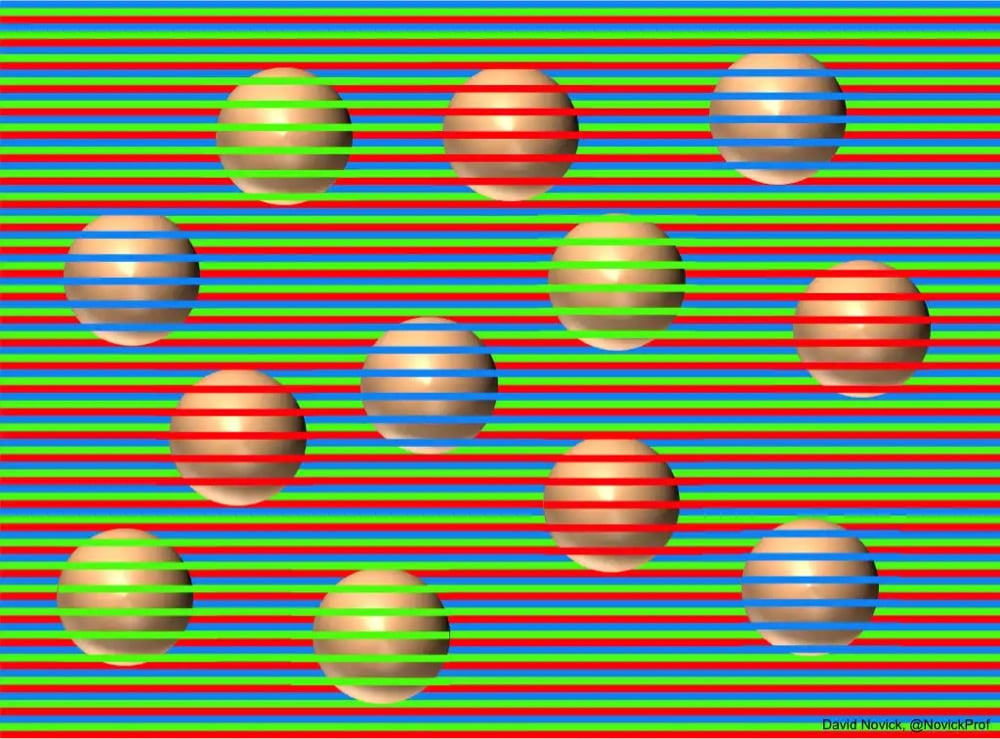
Oh dear, this illusion just totally broke my brain. No can write now. Somehow all same ball colors. What world? What earth? Why live? (Even after reading and seeing the explanation, I had to drag this into my photo editing app to verify it with my own eyes. True true. Oh, humanity.) (via @flyosity)

Healing Grid is an optical illusion by Ryota Kanai that was a finalist in the 2005 Best Illusion of the Year Contest. If you stare at the center of the image for several seconds, the broken edges start to “repair” themselves in your peripheral vision. Explains Kanai: “This illusion seems to indicate the preference of the visual brain to see regular patterns.” (via @stevesilberman)
Update: Kanai and several co-authors later wrote a scientific paper about this illusion: The Uniformity Illusion: Central Stimuli Can Determine Peripheral Perception.
We argue that the uniformity illusion is the result of a reconstruction of sparse visual information (from the periphery) based on more readily available detailed visual information (from the fovea), which gives rise to a rich, but illusory, experience of peripheral vision.
(via @kanair)
This is one of the best optical illusions I’ve ever seen: aside from rotating, these circles don’t move.
The left/right/up/down arrows were freaky enough but the in & out arrows really blew a gasket in my brain. For proof that the circles don’t move, blink your eyes quickly as you watch or check out this gif. (via @jagarikin)
A Mind Sang is an inventive short film about “perception, rebirth, and transformation”. What I most liked about watching was how effortless it was to see the transitions between all the optical illusions — but it wasn’t too easy. A great sense of pacing by filmmaker Vier Nev. Read an interview with Nev about his film on Vimeo’s blog. (via @mikeindustries)
This mind-bending optical illusion concocted by Frank Force has won this year’s Best Illusion of the Year contest. The illusion features a moving shape that somehow can be seen to rotate around both the horizontal and the vertical axis and rotates in two different directions around each axis. W. T. A. F.
This impossible M.C. Escher-esque cube broke my brain a little bit. And you might get some ASMR tingles when the cube snaps back into place right at the end. Mmmmmm.

…this optical illusion broke my brain. And then for a second, I was like, I got it. Then my brain broke again. Repeat for several minutes. (via bb)
Update: This illusion was made by Charlie Deck. (via @tdhooper)

Is this a blurry photo of some sliced ham? Or is the ham perfectly in focus? This is a gnarly optical illusion, that’s for sure. Even when I force myself to realize the photo is in focus, that ham still looks blurry. (via digg)
I couldn’t figure this out when I watched it on my phone this morning, but if you watch it in fullscreen HD, you can see how the shapes are cut to look different from various angles. Still trippy though.
Update: Make Anything reverse-engineered the illusion…here’s how it works:
(via @dunstan)
Socials & More