After analyzing dozens of Hollywood films, a team of researchers has found evidence that the visual rhythm of movies at the shot level matches a pattern called the 1/f fluctuation, the same pattern that is found in dozens of natually occurring phenomena, including the length of the human attention span.
These results suggest that Hollywood film has become increasingly clustered in packets of shots of similar length. For example, action sequences are typically a cluster of relatively short shots, whereas dialogue sequences (with alternating shots and reverse-shots focused sequentially on the speakers) are likely to be a cluster of longer shots. In this manner and others, film editors and directors have incrementally increased their control over the visual momentum of their narratives, making the relations among shot lengths more coherent over a 70-year span.
Modern action movies are particularly adept at matching the audience's attention span in this manner. The full paper is available here.
One of the films up for the Best Animated Short Oscar is called Logorama. It's a Pulp Fiction-inspired ditty composed almost entirely of inventively used corporate logos. A screenshot is instructive in illustrating what I'm talking about:
I don't know what took me so long, but I finally tracked down the soundtracks for both Moon and Sunshine...hiding in plain sight on iTunes. They are both great in their entirety. If you just want a taste, at least get Welcome to Lunar Industries from Moon and Sunshine (Adagio in D Minor) from Sunshine.
Update: Forgot to add that the Sunshine soundtrack is only available through iTunes and the Moon soundtrack is available in the US as an expensive import (and not on Amazon's mp3 site or anything like that) so your best bet is iTunes there as well.
I work in the film business, where schmoozing is an art form, lunch hour lasts from 12:30 until 3, and every meeting takes an hour whether there's an hour's worth of business or not. Not so at Vogue, where meetings are long if they go more than seven minutes and everyone knows to show up on time, prepared and ready to dive in. In Anna's world, meetings often start a few minutes before they're scheduled. If you arrive five minutes late, chances are you'll have missed it entirely. Imagine the hours of time that are saved every day by not wasting so much of it in meetings.
Showing at MoMA next month, a documentary based on the NY Times' relentless and intrepid street photographer Bill Cunningham. From the press release:
The opening night feature of this year's New Directors/New Films is the world premiere of Bill Cunningham New York (USA, 2010) on Wednesday, March 24, at 7:00 p.m. at MoMA. Director Richard Press' documentary is a heartfelt and honest film about the inimitable New York Times photographer, who has for decades lovingly captured the unexpected trends, events, and people of Manhattan for the Styles section of the newspaper. The film shows Cunningham, an octogenarian, riding his Schwinn bicycle to cover benefits, galas, and fashion shows around Manhattan, and illustrates how his camera has captured the looks that have defined generations.
I couldn't really find any other information online about this film. They should at least get a trailer up on YouTube or something.
"When I planned to ski Everest, the first thing I faced was 'How can I return alive?'" he recalls. "All the preparation and training was based on this question. But the more I prepared, I knew the chance of survival was very slim. Nobody in the world had done this before, so I told myself that I must face death. Otherwise, I am not eligible."
The Lord of the Rings movie trilogy is finally coming out on Blu-ray on April 6th, but more than 1800 angry Amazon commenters would like to remind you that these are the theatrical versions and not the extended versions that true LOTR fans have canonized.
Some confusion among other reviewers that somehow we're obligated to post a five star recommendation for the movie. This is an incorrect understanding of the review process. If I were reviewing the movie itself it would get a five. This review is for the product, as listed -- in other words, I DO NOT RECOMMEND BUYING THIS PRODUCT/DVD. This product is being created FOR NO OTHER REASON than to dupe people into buying this movie twice...again. Those of us who were huge fans bought the original DVDs of the theatrical releases. THEN the studio FINALLY released the extended editions, even though they could have released both at the same time. Now that Blu Ray has won the High Def battle, the studios are salivating at screwing us all again the same way! Please do not let them get away with holding the extended edition hostage until everyone buys the theatrical versions.
Or, to put it in a way that Gandalf would understand:
New Line/WB need to learn a lesson from the movies themselves and realize that evil never prevails. Greed has a grip on them stronger than the Ring itself.
If you must watch. I'm not supposed to giggle when Liam Neeson says "I love it when a plan comes together" in a sorta-American sorta-Irish accent, right?
A young-ish Christopher Walken appears in Annie Hall but his name is misspelled in the credits as "Christopher Wlaken". Were this 1990, I might have invented a eastern European backstory for Wlaken, who, perhaps, Americanized his name sometime after appearing in the film. But as we live in the future, a cool hunk of glass and metal from my pocket told me -- before the credits even finished rolling -- that the actor was born Ronald Walken in Astoria, Queens.
Andy Baio is back with his annual report on how many Oscar nominated films have shown up online prior to the awards ceremony (ripped from screeners, DVDs, etc.). For some reason, fewer films have been leaked this year and they are taking longer to show up online.
Are studios doing a better job protecting screeners and intimidating Academy members? Or was this year's crop of films too boring for pirates to bother with? I can't tell if this is a scene-wide trend or localized to the Oscars only.
Three out of the top 40 Hollywood earners for 2009 are the 20-something stars of the Harry Potter films...Daniel Radcliffe is sixth on the list, below James Cameron but above Jerry Bruckheimer. Robert Pattinson makes the list at #35 (Kristen Stewart is at #37)...I expect those totals will go up if the Twilight films continue to do well.
Someone sent this to me ages ago and I forgot to post it but luckily I ran across it again this morning: A Failed Entertainment is a show at The LeRoy Neiman Gallery featuring the films of James Incandenza...you know, the ones from the 8-page footnote in Infinite Jest.
Included as a footnote in Wallace's novel is the Complete filmography of James O. Incandenza, a detailed list of over 70 industrial, documentary, conceptual, advertorial, technical, parodic, dramatic non-commercial, and non-dramatic commercial works. The LeRoy Neiman Gallery has commissioned artists and filmmakers to re-create seminal works from Incandenza's filmography.
No word on whether any of the filmmakers made JOI's Infinite Jest...I guess we'll find out if anyone emerges from the opening reception tonight.
Heard your NPR interview and you were boring. You couldn't have dragged me to see THE THIN BLUE LINE if my life depended on it. It's time you start being a performer and understand the media.
Fascinating map of Netflix rental patterns for NYC, Atlanta, Miami, and nine other US cities. I wonder if you could predict voting patterns according to where people rent Paul Blart: Mall Cop or Frost/Nixon. I wonder what the map for Napoleon Dynamite looks like?
Most of the interesting trends occurred on a local scale -- stark differences between the South Bronx and Lower Manhattan, for example, or the east and west sides of D.C. -- and weren't particularly telling at a national scale. (We actually generated U.S. maps in PDF form that showed all 35,000 or so ZIPs, but when we flipped through them, with a few exceptions, we found the nationwide patterns weren't nearly as interesting as the close-in views.)
It was of consequence, I should think; verily, it tied the room together, gather'd its qualities as the sweet lovers' spring grass doth the morning dew or the rough scythe the first of autumn harvests. It sat between the four sides of the room, making substance of a square, respecting each wall in equal harmony, in geometer's cap; a great reckoning in a little room. Verily, it transform'd the room from the space between four walls presented, to the harbour of a man's monarchy.
Yep, it's the entire screenplay. The Knave abideth, indeed. (thx, conor)
There is something conservative about much of Pixar's output, but when I say conservative, I mean a small "c" conservative that sees the world along the same lines as Edmund Burke: "A disposition to preserve." I'm going to call this "social conservatism," by which I don't mean the religious or moral conservatism of modern political discourse, but a conservatism that is interested in preserving traditional social features -- in particular, the idea of "family" -- but which sees such preservation as ultimately futile. The family will dissolve, eventually, and so we must do what we can to keep it going as long as possible. It is a worldview based not on progression but on loss.
One of the most difficult things to get right in movies about aliens or the future is matching the cultural and technological sophistication of a people with their environment and history. In Avatar, the Na'vi are portrayed as a Stone Age tribe, living in relatively small groups and essentially ignorant or uninterested in technology beyond simple knives and bows. But the Na'vi are also very physically capable, obviously very intelligent, aware of their global environment, well-nourished, healthy, omnivorous, adaptive, and even inventive. They have domesticated animals, are troubled by few serious natural predators, can live in different environments, have easy access to many varied natural resources (for sustenance and building/making), and can travel and therefore communicate over long distances (dozens if not hundreds of miles a day on their winged animals).
And most importantly, the Na'vi have regular and intimate access to a moon-sized supercomputer -- a neural net supercomputer at that -- that connects them to every other living thing on their world and have had such access for what could be millennia.
It just doesn't add up. The Na'vi are too capable and live in an environment that is far too pregnant with technological possibility to be stuck in the Stone Age. Plot-wise it's convenient for them to be the way they are, but the Na'vi really should have been more technologically advanced than the Earthlings, not only capable of easily repelling any attack from Captain Ironpants but able to keep the mining company from landing on the moon in the first place.
Nation's Pride is a fictional Nazi propaganda film that appeared in Inglourious Basterds. The six-minute clip above was released as a promotion for IB and was shot by Eli Roth, who played the baseball bat-wielding Bear Jew (and is also a director of some repute). (thx, jeffrey)
I confess that I only had time this morning to watch the first 10 minutes, but from that viewing I can safely conclude that this is the best 70-minute video critique of The Phantom Menace that exists in the world. If the first 20 seconds don't get you, stick around until "protagonist". Or don't take my word for it; here's Lost's Damon Lindelof's reaction:
Your life is about to change. This is astounding film making. Watch ALL of it.
Part the first:
After watching the last 3-4 minutes of this first segment, I wanted to give Lucas a hug because I feel so bad for the guy for failing in public in such a huge way. (thx, scott)
Journalists and gun experts point to the 1993 Hughes brothers film Menace II Society, which depicts the side grip in its opening scene, as the movie that popularized the style. Although the directors claim to have witnessed a side grip robbery in Detroit in 1987, there are few reports of street gangs using the technique until after the movie came out.
But the side grip can also be practical:
During the first half of the 20th century, soldiers used the side grip for the express purpose of endangering throngs of people. Some automatic weapons from this era --like the Mauser C96 or the grease gun -- fired so quickly or with such dramatic recoil that soldiers found it impossible to aim anything but the first shot. Soldiers began tilting the weapons, so that the recoil sent the gun reeling in a horizontal rather than vertical arc, enabling them to spray bullets into an onrushing enemy battalion instead of over their heads.
The Black List is the collection of scripts that got movie executives most excited in 2009. Here's #1:
1. The Muppet Man By Christopher Weekes
What it's about: The life and times of the late Jim Henson, the man behind Sesame Street and The Muppets.
What it's like: The Andy Kaufman biopic Man on the Moon, but with puppets. This moving story depicts the life of a creative genius, with occasional surreal appearances by the likes of Kermit and Miss Piggy.
I'm ashamed of Rosebud. I think it's a rather tawdry device. It's the thing I like least in Kane. It's kind of a dollar book Freudian gag. It doesn't stand up very well.
Even calmly answering interview questions and sipping on tea from fine china, Welles is an imposing presence. (via clusterflock)
Between the Folds is a documentary about people who really really like origami.
Between the Folds chronicles the stories of ten fine artists and intrepid theoretical scientists who have abandoned careers and scoffed at hard-earned graduate degrees -- all to forge unconventional lives as modern-day paperfolders.
Watching Stanley Kubrick's Barry Lyndon is a pleasure, like eating a very good soup. It is very stylised and then suddenly comes some emotion [when the child falls off the horse]. There is not a lot of emotion. There are a lot of moods and some fantastic photography, really like these old paintings.
Thank God he didn't have a computer. If he had a computer at that time, you wouldn't care, but you know he has been waiting three weeks for this mountain fog or whatever. It is overwhelming with the boy, because it is suddenly this emotional thing. The character Barry Lyndon is not very emotional. In fact, he is the opposite. He is an opportunist.
I saw the film when it came out. I was in my early twenties. The first time I saw it, I slept. It was on too late and it is a very, very long film. What is interesting is that Nicole Kidman told me Kubrick hated long films. If you have seen Barry Lyndon, the last scene of the film, where she is writing out a cheque for him, is extremely long. It goes on and on and on, but it's beautiful.
The good thing is that Kubrick always sets his standards. Barry Lyndon to me is a masterpiece. He casts in a very strange way, Kubrick. It is a very strange cast. But that is how the film should be, of course. This thing that he liked short films was very surprising. And he liked Krzysztof Kieslowski very much. He was crazy about Kieslowski.
I don't know if Kubrick saw any of my films, but I know Tarkovsky watched the first film I did and hated it! That is how it is supposed to be.
"The first time I saw it, I slept" will be my go-to answer for lots of things from now forward.
Scenes from several movies that depict New York being destroyed (Day After Tomorrow, Ghostbusters, Independence Day, etc.) accompanied by George Gershwin's Rhapsody in Blue, which famously accompanies a similar but less violent montage at the beginning of Woody Allen's Manhattan.
Cooking, perhaps more than any activity, lets an actor exude absolute physical and intellectual mastery without seeming domineering or smug. Why is that? It's probably because, while cooking is a creative talent that has a certain egotistical component (what good cook isn't proud of his or her skills?), there's something inherently humbling about preparing food for other people. It doesn't matter whether you're a workaday gangster footsoldier giving lessons on how to cook for 20 guys, like Richard Castellano's Clemenza in The Godfather, or a hyper-articulate, super-fussy kitchen philosopher like Tony Shalhoub in Big Night, ("To eat good food is to be close to God..."), when you're cooking, it's ultimately not about you; it's about the people at the table. Their approval and pleasure is the end game.
From Making Of, a further look at how the animation of Fantastic Mr. Fox was coordinated through the use of a custom-built software system that allowed for remote direction.
The best part about the setup is that the software interface for the cameras has a "Live to Wes" button that will stream the live feed from a particular camera to Wes Anderson for immediate viewing.
In this feature-length documentary, Troy James Hurtubise goes face to face with Canada's most deadly land mammal, the grizzly bear. Troy is the creator of what he hopes is a grizzly-proof suit, and he repeatedly tests his armour -- and courage -- in stunts that are both hair-raising and hilarious.
Prompted by my post about how few non-adapted/sequel/franchise films there are on the list of the top-grossing films of the 2000s (9 out of 50), kottke.org reader Keith took a look at the Best Picture Oscar nominees for the decade and noticed that the percentage of original properties was actually lower (7 out of 45). From his email:
This leaves 7 that are original. Gladiator, Gosford Park, Lost in Translation, Crash, Babel, Little Miss Sunshine, Juno, and Michael Clayton.
You'll note that 7/45 (15.556%) is worse than 9/50 (18%). So it seems that the box office appreciates originality more than the Academy. Take from this what you will. I might suggest that this is a poor way to truly gauge originality, as the top 50 box office grossers of the decade is a pretty high bar (500 million+), and seems to demand some kind of familiarity in order to attract the rapid widespread viewing needed for a big theatrical run. Alternately, it builds into the argument that most creativity is follow-on. I would venture a guess that if we dove deeper, into say, every movie that made at least $100 million in the decade, the ratio of original properties would be a bit more palatable.
Thanks, Keith! Also interesting is a comparison between the top grossing films of the 2000s and those for the 1990s and the 1980s. You don't have to delve too far to see how much has changed. Of the top 15 films in the 1990s, 7 are original properties: Independence Day, The Lion King, Sixth Sense, Armageddon, Home Alone, Ghost, and Twister. For the 1980s, a consensus on the top 10 grossing films is difficult to come by, but using the Wikipedia one yields 5 original properties out of the top 10: ET, Raiders of the Lost Ark, Ghostbusters, Beverly Hills Cop, and Back to the Future (other lists I saw included Top Gun and Rain Man but also Who Framed Roger Rabbit? (adapted)).
Clearly sequels, adaptations, and franchises ruled in the 2000s much more than in the 1990s or 1980s. But if you go back to the 1970s, only 2 or 3 of 10 top-grossing films are original: Star Wars, Close Encounters of the Third Kind, and perhaps The Sting. So maybe the 2000s were a return to old ways for Hollywood?
In stop motion animation, Wes Anderson has found the perfect medium for telling his special brand of precise yet fanciful tales. I won't go so far as to say that it's his best film -- Rushmore will be difficult to dislodge from its perch -- but there are some pretty special moments in Fantastic Mr. Fox.
While the film deviates from Roald Dahl's book quite a bit -- only the middle third is straight from the book -- the story holds true to the sense of playful mischieviousness evident in Dahl's books for children. (I especially liked the drugged blueberry bit that Anderson purloined from Danny, the Champion of the World, my favorite Dahl story.) I can't say for sure whether or not the movie is good for kids, but the two nine-year-old boys sitting next to me in the theater loved it...although they also loved the Tooth Fairy and the Alvin and the Chimpmunks: the Squeakquel trailers, so YMMV.
Wikipedia gets into the 2000s roundup game with a main article and a number of topic-based summaries, including fashion, film, and sports. From the fashion page:
In hip hop, the throwback jersey and baggy pants (popular in the '90s to 2004) look was replaced with the more "grown man" look which was highly popularized by Kanye West around the year 2005.
If you say so. More interesting is the chart of the 20 highest grossing movies from the film page (the top 3 each grossed $1 billion+ worldwide):
1. The Lord of the Rings: The Return of the King
2. Pirates of the Caribbean: Dead Man's Chest
3. The Dark Knight
4. Harry Potter and the Philosopher's Stone
5. Pirates of the Caribbean: At World's End
6. Harry Potter and the Order of the Phoenix
7. Harry Potter and the Half-Blood Prince
8. The Lord of the Rings: The Two Towers
9. Shrek 2
10. Harry Potter and the Goblet of Fire
11. Spider-Man 3
12. Harry Potter and the Chamber of Secrets
13. Ice Age: Dawn of the Dinosaurs
14. The Lord of the Rings: The Fellowship of the Ring
15. Finding Nemo
16. Star Wars Episode III: Revenge of the Sith
17. Transformers: Revenge of the Fallen
18. Spider-Man
19. Shrek the Third
20. Harry Potter and the Prisoner of Azkaban
Only one movie on the list was made from an original screenplay: Finding Nemo...the rest are all sequels or adapted from books, TV shows, amusement park rides, etc. Out of the top 50, only nine are not franchise films.
3. The Rock - Director Michael Bay, 1996 Ugh. That's right. I failed to mention up top that there are not one, but two Michael Bay films in the Criterion Collection. It's the kind of shock-inducing information you need delivered in increments. If they wanted to include an Alcatraz movie, uh, why not Escape from Alcatraz? Perhaps Criterion felt they needed a couple of signature "explosion" films to represent the genre. But given that logic, why not throw in Every Which Way but Loose to represent the "truck driver with an orangutan sidekick" genre too?
Also, Michael Bay is doing a remake of Hitchcock's The Birds? What? WHAT??
I was watching The Perfect Storm on The Weather Channel the other night and witnessed the worst cut to commercial in the history of television.
If you're not familiar with the film, this is *the* scene in the movie, the climax...when this huge wave overwhelms the Andrea Gail and all souls are lost at sea. Bravo, Weather Channel. Next time, have somebody view the movie before you chop it up randomly for ads.
Update:This one might be worse. With about two minutes remaining in extra time of a 0-0 match between Everton and Liverpool, ITV cut away to commercial and back just in time...to see the players celebrating the winning goal. I think "wankers!" is the appropriate response here.
This cut to commercial during Battlestar Galactica (spoilers! or so I'm told) is pretty bad as well. (thx, michael & gerald)
The thing is, truth is always at the center of Morris' films, as you'd expect of a documentary filmmaker, but he also acknowledges that truth is a complicated thing; he's always toying with questions of truth and fiction. Morris' films aren't about The Truth; they're about our personal, private truths, as well as the lies and rationalizations we create for our actions. So fiction and lies and manipulation are also at the center of Morris' films. Fiction is as much the spine of his work as truth.
A short video about the making of Fantastic Mr. Fox.
In it, you can see a brief glimpse of one of the emailed videos that Wes Anderson sent his London-based crew from Paris.
As well, for reference, the director would send short films of himself enacting certain scenes. "It's kind of embarrassing," Anderson said, laughing. "For most of these things, the performance is just a few seconds. Somebody hearing a noise and looking at their watch. The simplest way to relate how to do it is to make these little movies."
The making of video is from a site called, uh, Making Of, which was co-founded by Natalie Portman and contains a bunch of interesting stuff: a bunch of on-the-set stuff from A Serious Man, Where the Wild Things Are, The Lovely Bones, etc., director interviews from the likes of Aronofsky, Neill Blomkamp, Michel Gondry, Mira Nair, etc., and all sorts of other stuff. (via @akstanwyck)
After doing the script, working with the actors, and supervise the set design, Wes Anderson directed Fantastic Mr. Fox over email. He also didn't want to use many contemporary stop-motion animation techniques. Both of these decisions ruffled some feathers.
"It's not the most pleasant thing to force somebody to do it the way they don't want to do it," Anderson said. "In Tristan's case, what I was telling him was, 'You can't use the techniques that you've learned to use. I'm going to make your life more difficult by demanding a certain approach.'
"The simple reality is," Anderson continued, "the movie would not be the way I wanted it if I just did it the way people were accustomed to doing it. I realized this is an opportunity to do something nobody's ever seen before. I want to see it. I don't want afterward to say, 'I could have gone further with this.'"
The Informant (Steven Soderbergh, Matt Damon) is out in theaters now. I had no idea it was based on a true story...a genuinely crazy true story of corporate price fixing, FBI informants, and an eager-to-please executive. Kurt Eichenwald wrote a series of article about the case for The New York Times, which he fashioned into a book. This American Life devoted an entire hour to this story back in 2000...it's a fascinating listen.
We hear from Kurt Eichenwald, whose book The Informant is about the price fixing conspiracy at the food company ADM, Archer Daniels Midland, and the executive who cooperated with the FBI in recording over 250 hours of secret video and audio tapes, probably the most remarkable videotapes ever made of an American company in the middle of a criminal act.
The cinema is now one of the main objects on which efforts should be concentrated in order to conduct the revolution in art and literature. The cinema occupies an important place in the overall development of art and literature. As such it is a powerful ideological weapon for the revolution and construction. Therefore, concentrating efforts on the cinema, making breakthroughs and following up success in all areas of art and literature is the basic principle that we must adhere to in revolutionizing art and literature.
Here's more information about Dear Leader's cinematic and operatic interests.
On the Art of Opera describes how Kim and his dad, the late Great Leader Kim Il Sung, discovered the husk of a tired art form and gave it a much-needed shot of North Korean communism. Any impartial observer would agree that Kim's aesthetic prescriptions are every bit as crowd-pleasing as his economic policies.
"In conventional operas," Kim writes, "the personalities of the characters were abstract, their acting clumsy, and the flow of the drama tedious, because the singers were forced to sing unnaturally and their acting was neglected." Furthermore, until the arrival of the Kims, "no one interwove dance and story very closely."
And now? "The 'Sea of Blood'-style opera," he observes, "has opened up a new phase in dramaturgy." In case you've been living in a cave, Sea of Blood is North Korea's longest-running production, the Cats of Pyongyang. It has been staged 1,500 times, according to the official Korea News Service, which calls it an "immortal classical masterpiece." Kim claims to have revamped the form by chucking the aria out the window and replacing all solo performance with a cunning Kim innovation: the pangchang, a more satisfying off-stage chorus representing groupthink.
If you and someone else hate the same third person, but like each other, balance theory says you're golden -- all three can persist without changing their opinions. On the other hand, if all three of you despise the others, it's an unstable triad, as well as a wildly common plot point for crime movies. While there are numerous resolutions -- one person changes his preference toward another, a relationship tie is cut -- another route back to stability, albeit a messy one, is the gunning down of at least one person.
Arbesman has some videos and stills on his web site from the movies mentioned in the article as well as the relevant mathematical materials.
"It's in the visual language of, like, some sort of fantasy film, and it is a fantasy film to some degree," he acknowledged, "but the tone of it is its own tone. We wanted it all to feel true to a 9-year-old and not have some big movie speech where a 9-year-old is suddenly reciting the wisdom of the sage." He hadn't set out to make a children's movie, he said, so much as to accurately depict childhood. "Everything we did, all the decisions that we made, were to try to capture the feeling of what it is to be 9."
It's difficult to draw a conclusion from this article other than Wild Things is going to bomb but be really good.
One of the main arguments always rolled out in favor of conversion is that theaters can charge more for 3-D screenings. Proportionately, theaters that show a film in 3-D will take in more at the box-office because they charge in the range of $3 more per ticket than do theaters offering the same title in a flat version.
But what happens when, say, half the films playing at any given time in a city are in 3-D? Will moviegoers decide that the $3 isn't really worth it? Even now, would they pay $3 extra to see The Proposal or Julie & Julia in 3-D? The kinds of films that seem as if they call out for 3-D are far from being the only kinds people want to see. Films like these already make money on their own, unassisted by fancy technology.
Thompson briefly mentions Pixar as well, saying that they don't seem too keen on 3-D (or at least not as keen as Cameron or Katzenberg). But the zeal with which the 3-D-ness of Up was promoted was tacky and not at all typical of Pixar, a company that spent the last twenty years insisting that their films were not about the technology but about the same things that the makers of live action films were concerned with...real moviemaking stuff. To trumpet this 3-D technology that doesn't enhance films in anything other than a superficial sense seems like a step backwards for them.
Beverly Hills Cop
Ghostbusters
Indiana Jones and the Temple of Doom
Gremlins
The Karate Kid
Police Academy
Footloose
Purple Rain
Amadeus
Revenge of the Nerds
Red Dawn
The Terminator
The Killing Fields
A Nightmare on Elm Street
Sixteen Candles
Once Upon a Time in America
This Is Spinal Tap
Top Secret!
That's a pretty good year. My God, the pop culture references.
Matt Zoller Seitz and Aaron Aradillas recently completed a five-part video series on the evolution of the summer blockbuster movie focused on the summers of 1984 and 1989.
Part 1: "The origins of MTV editing and post-Boomer cynicism. Also starring Ronald Reagan, John Hughes, semi-gratuitous T&A, synth-pop videos, The Stay Puft Marshmallow Man, and Prince."
Part 2: "Steven Spielberg's society of the spectacle, the rise of sadism and cynicism in the blockbuster movie, and the influence of the PG-13 rating. Also starring Indiana Jones, Red Dawn, and gremlins. Lots and lots of gremlins."
Part 3: "A lickety-split recap of the second Reagan term, and begin the Bush years with the rise of hip-hop, Field of Dreams, Do the Right Thing, and the American indie film opting out and breaking out with sex, lies and videotape."
Part 4: "We watch feel-good sequels ape the spirit of '84 while the heroes of Lethal Weapon II and The Abyss flip out, and the unprecedented Batman taps into the decayed American city."
Part 5: "The New Sincerity, as rediscovered in the hallowed teen-movie triumvirate of Heathers, Dead Poets Society and Say Anything, released within three months of each other twenty years ago."
This video features a number of directors talking about the difference between viewing films in widescreen vs. pan and scan. Martin Scorsese:
[Converting to pan & scan] is, technically, re-directing the movie.
Update: Thoughts from David Lynch about pan and scan taken from a 1997 interview:
I would like to see everything done letterboxed and with great sound. I'm not too interested in doing the commentary, you know, like a lot of people do. But in some strange way I kind of like pan-and-scan. Because you see things. It is a compromise, and in a couple of things you really say, "Why am I doing it?" But it's just an interesting thing that happens- another composition. It's not so bad, but I wish really that people could see the thing in a theater and that laserdiscs and videos didn't exist. Because on the big screen with the sound, you become inside the film, and that's the beauty of cinema. And it never happens on video, and it doesn't happen on laserdisc, either.
The Cove is a 2009 documentary film documenting the annual killing of more than 2,500 dolphins in a cove at Taiji, Wakayama in Japan. The film was directed by former National Geographic photographer Louis Psihoyos, and was filmed secretly during 2007 using underwater microphones and high-definition cameras disguised as rocks.
Dave Eggers has written a young adult novel called The Wild Things that is based loosely on Maurice Sendak's Where the Wild Things Are and the screenplay he co-wrote with Spike Jonze for the movie version. The New Yorker published an excerpt of the book this week.
Max left the room and found Gary lying on the couch in his work clothes, his frog eyes closed, his chin entirely receded into his neck. Max gritted his teeth and let out a low, simmering growl.
Gary opened his eyes and rubbed them.
"Uh, hey, Max. I'm baggin' a few after-work Z's. How goes it?"
Max looked at the floor. This was one of Gary's typical questions: Another day, huh? How goes it? No play for the playa, right? None of his questions had answers. Gary never seemed to say anything that meant anything at all.
"Cool suit," Gary said. "Maybe I'll get me one of those. What are you, like a rabbit or something?"
But while I was working on the book, it was funny, because I started going in new directions, different from any of the screenplay versions, pushing it into some territory that was personal to me. So in a way the movie is more Spike's version of Maurice's book, and this novel is more my version.
THE GOONIES: Physically abused, retarded man finds love with overweight preteen. THE PASSION OF THE CHRIST: Mel Gibson fulfills fantasy of showing a Jew beaten to a bloody pulp and killed on-screen. TITANIC: Crazy old widow disregards lifelong memories of husband, children, and grandchildren in favor of that one time she fucked a bum. STAR WARS: Religious extremist terrorists destroy government installation, killing thousands. LORD OF THE RINGS: Midget destroys stolen property. DOCTOR WHO: Elderly man serially abducts young women. BOOGIE NIGHTS: Deformed boy goaded into life of crime.
In "Extract," writer/director Mike Judge returns to the fertile territory of the American workplace, rotating his perspective away from the white collar cubicle warriors of "Office Space" and towards a blue collar boss -- a small business owner -- who employs an odd cast of losers, loners and misfits in his flavor extract factory.
Tarantino doesn't just explore language's capacity to reveal and conceal motives and personality, he shows how people pick words and phrases (consciously or subconsciously) in order to define themselves and others, and describe the reality they inhabit (or would like to inhabit). Even low-key and seemingly unimportant exchanges are as carefully choreographed as boxing matches. Clever flurries of interrogatory jabs are often blocked by witty responses; the course of conflict can be shifted by deft rhetorical footwork that re-frames the terms of debate.
Can you resist reading an article that starts off with an anecdote this interesting? I couldn't.
The playwright David Mamet and the theatre director Gregory Mosher affirm that some years ago, late one night in the bar of the Ritz-Carlton Hotel in Chicago, this happened:
Ricky Jay, who is perhaps the most gifted sleight-of-hand artist alive, was performing magic with a deck of cards. Also present was a friend of Mamet and Mosher's named Christ Nogulich, the director of food and beverage at the hotel. After twenty minutes of disbelief-suspending manipulations, Jay spread the deck face up on the bar counter and asked Nogulich to concentrate on a specific card but not to reveal it. Jay then assembled the deck face down, shuffled, cut it into two piles, and asked Nogulich to point to one of the piles and name his card.
"Three of clubs," Nogulich said, and he was then instructed to turn over the top card.
He turned over the three of clubs.
Mosher, in what could be interpreted as a passive-aggressive act, quietly announced, "Ricky, you know, I also concentrated on a card."
After an interval of silence, Jay said, "That's interesting, Gregory, but I only do this for one person at a time."
Mosher persisted: "Well, Ricky, I really was thinking of a card."
Jay paused, frowned, stared at Mosher, and said, "This is a distinct change of procedure." A longer pause. "All right-what was the card?"
"Two of spades."
Jay nodded, and gestured toward the other pile, and Mosher turned over its top card.
The deuce of spades.
A small riot ensued.
That's from a 1993 profile of Ricky Jay, who is probably more well known now for his acting (Magnolia, Boogie Nights, Deadwood, The Spanish Prisoner, The Prestige) than his magic scholarship. Check out a couple of Jay's tricks on YouTube: Four Queens and Sword of Vengence. (via df)
Television operators, the people who buy and produce things for people to watch on TV, are taking the position that films photographed in the 2.40:1 ratio should be blown up or chopped up to fit a 16:9 (1.78:1) ratio. They are taking the position that the viewers of television do not like watching 2.40 films letterboxed to fit their 16:9 screens, and that a film insisting on this is worth significantly less -- or even nothing -- to them.
He has particular contempt for AMC and HBO:
[HBO wants] everything pan/scanned. On the Ocean's films I had to get somebody VERY HIGH UP WITH WAY BETTER SHIT TO DO to call them and make an exception. Their influence means they could make this problem go away single-handedly, but since they won't, they get to be the poster child for stupidity. Not that they're uninterested in hypocrisy too; while their PR caters to the most adventurous TV watchers, their actions indicate they think their viewers are very, very afraid of anything actually different.
I watched The Darjeeling Limited on Starz a few months ago. This is a movie where the wider aspect ratio is almost another character and the knuckleheads at Starz chopped the hell out of it. Blech.
Battle Royale
Anything Else
Audition
Blade
Boogie Nights
Dazed & Confused
Dogville
Fight Club
Fridays
The Host
The Insider
Joint Security Area
Lost In Translation
The Matrix
Memories of Murder
Police Story 3
Shaun of the Dead
Speed
Team America
Unbreakable
For one of those Chicago adventures, we secretly borrowed a car almost as ridiculously conspicuous as the 1961 Ferrari 250 GT in the movie: my dad's purple Cadillac El Dorado (yes, purple). Put an extra 113 miles on the odometer. Hoping to erase that telltale mileage, we raised the back on a pair of jacks and ran the car in reverse. The Caddy did not fly backward into a ravine, as in the film. What it did do is quickly take off a clean 10,000 miles. Oops. (Yes, you bet he noticed.)
Warner Bros. didn't know what to do with a movie about a killer robot who becomes a pacifist with the help of a patriotic kid in love with comics like Superman, the ultimate alien benevolent (and the Iron Giant's eventual role model). "When we showed the executives the movie, they didn't get it," Iron Giant screenwriter Tim McCanlies said in 2003. One possible reason: The movie has no clearly defined protagonist or antagonist, a must for popcorn entertainment. "Let's just have paranoia be the enemy," McCanlies remembers Bird saying, "not the combined armies of the superpowers." The Iron Giant's domestic box office gross of $23 million didn't come close to recouping the movie's production budget, which reportedly hit $70 million.
As I've written before, 1999 was a great year for movies and The Iron Giant was one of my favorites. If you haven't seen it, it's only $6 on Amazon.
John told me about why he left Hollywood just a few years earlier. He was terrified of the impact it was having on his sons; he was scared it was going to cause them to lose perspective on what was important and what happiness meant. And he told me a sad story about how, a big reason behind his decision to give it all up was that "they" (Hollywood) had "killed" his friend, John Candy, by greedily working him too hard.
John saw something in me that I didn't even see in myself. He had complete confidence in me as an actor, which was an extraordinary and heady sensation for anyone, let alone a 16-year-old girl. I did some of my best work with him. How could I not? He continually told me that I was the best, and because of my undying respect for him and his judgment, how could I have not believed him?
Rein him in, but only when necessary. You are his girlfriend, not his mother. If he wants to sing to the city on a giant float, let him do it. He's a big man and he can deal with the consequences. You can nicely remind him, Look, if you do that there might be trouble, but if you throw a bitch fit and give him the silent treatmeant you will look fucking retarded when he has a new girlfriend on his arm from the impressive stunts he's pulled.
It is the story of a teenage girl who, after being brutally raped and murdered, watches from heaven as her family and friends go on with their lives, while she herself comes to terms with her own death.
Jackson personally purchased the film rights to the book and from the trailer, it seems like this is a return to his Heavenly Creatures days, with a bit of the LOTR fantasy and special effects sprinkled in. Looking forward to this one.
This is a documentary about vogueing, and the extremely refined and detailed aesthetic sensibilities it reflects, shot in New York City around Chelsea, the Meatpacking District, and Harlem in the mid- to late-80s. The city has changed in dramatic ways since then, to say the least. The characters of the film are complete outsiders with, at the same time, a deep understanding of the world they are outside of.
Not sure what the proper response to this news is.
Twentieth Century Fox is resuscitating its "Alien" franchise. The studio has hired Jon Spaihts to write a prequel that has Ridley Scott attached to return as director. Spaihts got the job after pitching the studio and Scott Free, which will produce the film.
The film is set up to be a prequel to the groundbreaking 1979 film that Scott directed. It will precede that film, in which the crew of a commercial towing ship returning to Earth is awakened and sent to respond to a distress signal from a nearby planetoid. The crew discovers too late that the signal generated by an empty ship was meant to warn them.
Yes!? No!? What? Uh-uh. Zzzz. Great! Not again. That's it man, game over man, game over!
1. The Night of the Hunter, Laughton 2. Apocalypse Now, Coppola 3. Sunrise, Murnau 4. Black Narcissus, Powell & Pressburger 5. L'avventura, Antonioni 6. The Searchers, Ford 7. The Magnificent Ambersons, Welles 8. The Seventh Seal , Bergman 9. L'atalante, Vigo 10. Rio Bravo, Hawks
Lots of notable titles missing...and only a couple post-1980s films make the list.
Indeed his response will mirror that of most other people who see this movie. Upon leaving the theater, James said, "That was a really good movie, Dad. (pause) Kind of makes you want to be a vegetarian. (pause) Kind of makes you not want to eat."
Wonder no more what an animated Wes Anderson movie might look like: the trailer for Fantastic Mr. Fox is out. Scroll a bit for the HD links. This looks *great*. (thx, dain)
The film is set in St. Louis Park, Minnesota in the year 1967, and is intended in some ways to reflect the childhood of the Coen brothers as they recall it.
This is their first film in quite awhile with no big-name actors...Alan Adam Arkin is the only name I recognize among the cast. I wonder if that contributed to the filming wrapping "ahead of schedule and within budget". (thx, david)
In 1980, Boeing employee Loren Carpenter presented a film called Vol Libre at the SIGGRAPH computer graphics conference. It was the world's first film using fractals to generate the graphics. Even now it's impressive to watch:
That must have been absolutely mindblowing in 1980. The audience went nuts and Carpenter, the Boeing engineer from out of nowhere, was offered a job at Lucasfilm on the spot. He accepted immediately. This account comes from Droidmaker, a fascinating-looking book about George Lucas, Lucasfilm, and Pixar:
Fournier gave his talk on fractal math, and Loren gave his talk on all the different algorithms there were for generating fractals, and how some were better than others for making lightning bolts or boundaries. "All pretty technical stuff," recalled Carpenter. "Then I showed the film."
He stood before the thousand engineers crammed into the conference hall, all of whom had seen the image on the cover of the conference proceedings, many of whom had a hunch something cool was going to happen. He introduced his little film that would demonstrate that these algorithms were real. The hall darkened. And the Beatles began.
Vol Libre soared over rocky mountains with snowy peaks, banking and diving like a glider. It was utterly realistic, certainly more so than anything ever before created by a computer. After a minute there was a small interlude demonstrating some surrealistic floating objects, spheres with lightning bolts electrifying their insides. And then it ended with a climatic zooming flight through the landscape, finally coming to rest on a tiny teapot, Martin Newell's infamous creation, sitting on the mountainside.
The audience erupted. The entire hall was on their feet and hollering. They wanted to see it again. "There had never been anything like it," recalled Ed Catmull. Loren was beaming.
"There was strategy in this," said Loren, "because I knew that Ed and Alvy were going to be in the front row of the room when I was giving this talk." Everyone at Siggraph knew about Ed and Alvy and the aggregation at Lucasfilm. They were already rock stars. Ed and Alvy walked up to Loren Carpenter after the film and asked if he could start in October.
Carpenter's fractal technique was used by the computer graphics department at ILM (a subsidiary of Lucasfilm) for their first feature film sequence and the first film sequence to be completely computer generated: the Genesis effect in Star Trek II: The Wrath of Khan. The sequence was intended to act as a commerical of sorts for the computer graphics group, aimed at an audience outside the company and for George Lucas himself. Lucas, it seems, wasn't up to speed on what the ILM CG people were capable of. Again, from Droidmaker:
It was important to Alvy that the effects support the story, and not eclipse it. "No gratuitous 3-D graphics," he told the team in their first production meeting. "This is our chance to tell George Lucas what it is we do."
The commercial worked on Lucas but a few years later, the computer graphics group at ILM was sold by Lucas to Steve Jobs for $5 million and became Pixar. Loren Carpenter is still at Pixar today; he's the company's Chief Scientist. (via binary bonsai)
Due to blinking, viewers of a 2.5 hour-long film like the latest Harry Potter will have their eyes shut for up to 15 minutes. But researchers have found that movie goers synchronize their blinks:
The synchronised blinks occurred at "non-critical" points during the silent movie -- at the conclusion of an action sequence or when the main character had disappeared from view. "We all commonly find implicit breaks for blinking while viewing a video story," Nakano says.
In In the Blink of an Eye, film editor Walter Murch wrote about the blink as a natural place to cut between scenes, a marker of the boundary between two ideas.
Strange Maps has a map of What's On Earth Tonight, basically a TV Guide for the Milky Way. The map is not that big yet because TV signals have only been sent out from Earth since the late 1920s.
The first tv images of World War II are about to hit Aldebaran star system, 65 light years [ly] away. If there's anybody out there alive and with eyes to see it, the barrage of actual and dramatised footage of WW2 will keep them shocked and/or entertained for decades to come. Which is just as well, for they'll have to wait quite a few years to catch the first episodes of such seminal series as The Twilight Zone and Bonanza (both 1959), just about now hitting the (putative) extraterrestrial biological entities of the Mu Arae area (appr. 50 ly). The Cosby Show, Miami Vice and Night Court (all 1984) should be all the rage on Fomalhaut (25 ly). Meanwhile, the sentient, tv-watching creatures near Alpha Centauri (4.4 ly), our closest extrasolar star, are just recovering from the infamous "wardrobe malfunction" during Janet Jackson and Justin Timberlake's halftime show during the 2004 Superbowl.
I didn't know The Fantastic Mr. Fox, directed by Wes Anderson, was scheduled to come out so soon...IMDB says it'll be out on November 13 of this year. Here's a screenshot:
It's a stop-motion animation film based on a story by Roald Dahl. The main character is voiced by George Clooney, with Michael Gambon, Meryl Streep, Bill Murray, Owen Wilson, Willem Dafoe, Jason Schwartzman, Adrien Brody, Anjelica Huston, Brian Cox, Roman Coppola, Jarvis Cocker, and Mario Batali providing some of the other voices. According to Wikipedia, a trailer will be out on July 31.
Several times in Last Year at Marienbad, the characters play a game called Nim. The gameplay is simple: a) players take turns removing objects from rows, b) they can remove as many objects as they want from a single row in one turn, and c) the player who removes the last object loses. The strategy is somewhat more difficult to understand, even though the player who goes first and follows the optimal strategy will always win. Although somewhat less glamourous than the film version, a Flash version of Nim is available to play.
The September Issue is the much-anticipated documentary that follows Anna Wintour and her staff at Vogue through the process of creating the magazine's September issue, AKA the world's thickest magazine issue.
An apt demonstration that an editor/curator's main job is saying no to almost everything.
Let's take a look at who's still alive here. Brad Pitt: yes. Aaron Sorkin: yes. Steven Soderbergh: no. Expected soon: Michael Bay, Alan Ball, Sam Mendes, McG, and M Night Shamalamadingdong. (thx, david)
The world of the movie is one in which everyone tells the truth all the time...until Gervais invents lying. It also stars every other Hollywood actor and comic in the world, including Jennifer Garner, Jason Bateman, Patrick Stewart, Jeffrey Tambor, Tina Fey, Christopher Guest, Rob Lowe, Louis C.K., and John Hodgman. (You know it's quite an august list when you have to stick "and John Hodgman" on the end of it.)
The Great Ghostbusters Campaign must start today. Here. Starting with this inarguable, scientific fact: Ghostbusters is still the most successful comedy film of all time, with a 1984 box-office return of $229.2 million. But this, of course, in turn, makes it the most successful film OF ALL TIME, FULL STOP -- given that comedy is the supreme genre, and rules over every other format, such as "serious", "foreign" or "black and white".
IFC lists the 50 greatest trailers of all time. Trailers are like episodes for Law & Order for me -- ten minutes after viewing and I can't remember a thing about them -- so I don't really have any favorites, but this list seems like a solid collection.
Robert McNamara, former Secretary of Defense during a large portion of the Vietnam War, died early today at 93. Errol Morris' documentary on McNamara, The Fog of War, is well worth checking out if you haven't seen it.
Errol Morris, Werner Herzog and over 30 of today's top documentary filmmakers provide an in-depth look at non-fiction filmmaking and the steps to making a documentary. These masters of the craft reflect upon the nature of documentary as a form of storytelling and offer insight into their approach to the 'truth.'
Accounts from more than a dozen people involved with the film, who spoke on the condition of anonymity to avoid damaging professional relationships, described a process in which the heady rush toward production was halted by a studio suddenly confronted by plans for something artier and more complex than bargained for.
Sony was probably looking for something more BIG RED TEXTish.
Once upon a time, Luke | Kirk | Neo | Harry was living a miserable life. Feeling disconnected from his friends and family, he dreams about how his life could be different. One day, he is greeted by Obi Wan | Captain Pike | Trinity | Hagrid and told that his life is not what it seems, and that due to some circumstances surrounding his birth | birth | birth | infancy he was meant for something greater.
Pay phones ring for no reason, and they don't stop. Dead relatives call their families in the middle of the night. People, horrifically, even call themselves-- but it's the person they used to be, phoning out of the blue, warning them about future misdirection.
Every once in a while, though, something genuinely bad happens: someone answers the phone... and they go a little crazy.
Thing is -- spoiler alert -- halfway through the film, the Ghostbusters realize that NYNEX isn't a phone system at all: it's the embedded nervous system of an angel -- a fallen angel -- and all those phone calls and dial-up modems in college dorm rooms and public pay phones are actually connected into the fiber-optic anatomy of a vast, ethereal organism that preceded the architectural build-up of Manhattan.
Manhattan came afterwards, that is: NYNEX was here first.
Update: It's not quite a statistical analysis, but a couple of folks have guessed at the impact. First, from Tyler Cowen:
With five entries there are usually only two or maybe three real contenders. Strategic voting is present but manageable. There can be split votes across a particular actor or genre. With ten entries it is much harder to tell which picture will win. Counterintuitively, it might be harder for "odd" pictures to be nominated because they might end up winning. Popular movies like The Dark Knight will win more often because it will be hard not to nominate them (it didn't even receive a nomination).
With more Best Picture slots open, studios and indies alike could be pushing harder to get their movies seen. What does that mean to you, the home viewer? It might -- just might -- mean that some smaller movies get longer runs in the big city arthouses, and even end up finding their way into the hinterlands. Everyone knocks the taste of the Academy (and often with good reason), but it's not like everything that gets nominated is dowdy and self-serious and simplified. And it's certainly true that plenty of excellent movies contend for the honor of contending each season. More of those excellent-but-low-priority movies may put up more than just a token campaign, and as a result, the average movie fan may become more aware of them, and may even get to see them.
In all about 300 films were eligible for awards in 2008. Were that to hold going forward, roughly one of every 30 films would become a best-picture nominee.
The trailer for Ponyo, the latest animated feature film from Hayao Miyazaki (Princess Mononoke, Spirited Away, etc.). The film opened in Japan last year and made more than $150 million at the box office. The American version is dubbed and I don't know if a subtitled version will made it to theaters in the US or not. There was a theatrical release of a subtitled Mononoke but that was a long time ago.
Jim Capobianco's end credits to Andrew Stanton's "WALL-E" are essential; they are the actual ending of the film, a perfect and fantastically optimistic conclusion to a grand, if imperfect idea. Humanity's past and future evolution viewed through unspooling schools of art. Frame after frame sinks in as you smile self-consciously. It isn't supposed to be this good but there it is. This is art in its own right. Peter Gabriel and Thomas Newman's song, "Down to Earth" indulges you with some incredibly thoughtful lyrics and, from the Stone Age to the Impressionists to the wonderful 8-bit pixel sprites, you are in the midst of something special.
Not quite a building, but the monumental quality of its form and its polygonal facades lend this Jawa Sandcrawler a building-like presence. These large treaded vehicles have inspired buildings from a Tunisian hotel to Rem Koolhaas' Casa de Musica in Porto.
Death to Smoochy
The Boondock Saints
The Karate Kid, Part III
Cool as Ice
Dice Rules
Basic Instinct 2
Gigli
SuperBabies: Baby Geniuses 2
From Justin to Kelly
The Hottie & the Nottie
Glitter
Car 54, Where Are You?
Son of the Mask
Leonard Part 6
Lady in the Water
Norbit
Swept Away
White Chicks
Anacondas: The Hunt for the Blood Orchid
Spice World
Jaws 3-D
Bratz: The Movie
Troll 2
Howard the Duck
Battlefield Earth
The Postman
I Know Who Killed Me
Kazaam
Rambo III
Freddy Got Fingered
Stop! Or My Mom Will Shoot
Striptease
Caddyshack II
The Adventures of Pluto Nash
Barb Wire
Ishtar
Bio-Dome
Jingle All the Way
Catwoman
Disaster Movie
Rocky V
BloodRayne
Deuce Bigalow: European Gigolo
The Love Guru
Crossroads
Book of Shadows: Blair Witch 2
The Flintstones in Viva Rock Vegas
It's Pat!
Batman & Robin
Speed 2: Cruise Control
When I first saw the headline, I thought "this is amazing...Darren Aronofsky's directing a movie based on the book by Nassim Taleb and Natalie Portman's gonna star in it!" The plot of the actual movie is only slightly less implausible:
"Swan" centers on a veteran ballerina (Portman) who finds herself locked in a competitive situation with a rival dancer, with the stakes and twists increasing as the dancers approach a big performance. But it's unclear whether the rival is a supernatural apparition or if the protagonist is simply having delusions.
In this movie, Natalie Portman and Mila Kunis have sex. Yeah. You read that right. And not just nice sweet innocent sex either. We're talking ecstasy-induced hungry aggressive angry sex.
Another nail house is actually a nail church. Citicorp Center was built without corner columns to accommodate St. Peter's Church, which occupied one corner of the block on which the skyscraper was built. The engineer who built Citicorp Center made a mistake related to the church's accommodation and famously corrected it after the building was built.
Two movies from now, after Toy Story 3 and Newt, Pixar is *finally* releasing a movie with a female main character. The only problem? She's a princess.
I have nothing against princesses. I have nothing against movies with princesses. But don't the Disney princesses pretty much have us covered? If we had to wait for your thirteenth movie for you to make one with a girl at the center, couldn't you have chosen something -- something -- for her to be that could compete with plucky robots and adventurous space toys?
Update: The score to beat is 1,050,200 points. (Oops, Wiebe just died as I was typing this. He's got two guys left.) Wiebe owns the second highest score with 1,049,100 points.
Update: He just died again. He's at ~370,000 with one guy left. Not looking good.
Update: Last guy. 457,000. Not looking good.
Update: He finally got it going but ended up short of the record with 923,400. Word is he's got two more chances to break it today.
Update: No dice...didn't break the score with any of his games.
1. A detailed examination of the Star Trek franchise which shows that the film by JJ Abrams is merely the latest in a long series of successful reboots.
2. A list of rules to follow to successfully reboot a franchise, whether it's Star Trek or Bond or Batman.
Don't abuse the audience goodwill. Remember, you sell the audience on your story based on certain expectations. Break that unspoken contract and you're in trouble. No one bought a ticket for Spider-Man 3 thinking they were going to get a romance with musical comedy interludes, yet that's what it felt like we got.
If you're doing a new version of a beloved old property, that means you need to figure out what it was people liked and make damn sure it's in there. That doesn't mean you have to do it the same way every time, you just have to do it. James Bond movies have been retooled a number of times, but we never lose the license to kill, the exquisite stunt work, the Bond theme music, or the cool cars and hot girls. There's about a million miles of difference between Moonraker and Casino Royale, but they're both recognizably Bond movies and they were both successful, because they met the baseline audience expectation of what a James Bond movie would give them.
This is my dedication to the creative team behind Pixar's movie The Incredibles. I loved the depth of the world, the buildings, the gadgets and most of all I loved the chairs.
RunPee is quite possibly the GREATEST MOVIE WEB SITE EVER. It tells you the best time to run to the bathroom during a movie and what happened while you were gone. Star Trek has four available times, the first of which starts when Captain Pike leaves the bridge for Nero's ship.
1. Traveling into the future is easy. We travel into the future all the time, at a fixed rate: one second per second. Stick around, you'll be in the future soon enough. You can even get there faster than usual, by decreasing the amount of time you experience elapsing with respect to the rest of the world -- either by low-tech ways like freezing yourself, or by taking advantage of the laws of special relativity and zipping around near the speed of light. (Remember we're talking about what is possible according to the laws of physics here, not what is plausible or technologically feasible.) It's coming back that's hard.
She was a librarian. Her husband was a postal worker. They lived on his salary and bought art with hers. Both are now retired. They have no children. "We bought art we could afford and that would fit into the apartment," they say. Water from the fish tank once splashed a Warhol they owned. It later had to be restored.
Did you notice all the lens flares in Star Trek? JJ Abrams' rationale for them -- he refers to them as "another actor" in the movie -- is pretty interesting.
I love the idea that the future was so bright it couldn't be contained in the frame. The flares weren't just happening from on-camera light sources, they were happening off camera, and that was really the key to it. I want [to create] the sense that, just off camera, something spectacular is happening. There was always a sense of something, and also there is a really cool organic layer thats a quality of it.
The result is supposed to be funny but I thought it also somewhat validated Abrams' remarks above. (via snarkmarket & waxy)
Henry Jenkins and Snarkmarket also address my biggest problem with the movie, that the cadet-to-captain thing happened way too quickly to Kirk and his crew. Jenkins' contention is that the new movie treats the Enterprise as a start-up company; Tim adds this gem of a line:
But it's not academia; it's the NBA. You give these kids the ball.
So, which NBA player is Kirk supposed to be? While not an exact comparison, I'm going to say that Kirk is Tony Parker to Spock's Tim Duncan. And Scotty = Manu Ginobli?
Noodling is the practice of catching catfish by letting them latch onto your arm.
To begin, a noodler goes underwater to depths ranging from only a few feet to up to twenty feet, placing his hand inside a discovered catfish hole. If all goes as planned, the catfish will swim forward and latch onto the fisherman's hand, usually as a defensive maneuver in order to try to escape the hole. If the fish is particularly large, the noodler can hook the head around its gills.
This video captures some noodling fishermen in action.
Reading two-week-old 13-page New Yorker articles about Rwanda probably isn't your favorite thing to do, but if you're a subscriber, I'd urge you to check out Philip Gourevitch's fascinating article about what's been happening in Rwanda in the fifteen years since the genocide. It's a complicated situation (boldface mine):
On the fifteenth anniversary of the genocide, Rwanda is one of the safest and most orderly countries in Africa. Since 1994, per-capita gross domestic prduct has nearly tripled, even as the population has increased by nearly twenty-five per cent, to more than ten million. There is national health insurance, and a steadily improving education system. [...] Most of the prisoners accused or convicted of genocide have been released. The death penalty has been abolished. And Rwanda is the only nation where hundred of thousands of people who took part in mass murder live intermingled at every level of society with the families of their victims.
Like I said, complicated. This is the best thing I've read in the New Yorker in a long while.
Update: As We Forgive is a documentary film about the Rwandan reconciliation.
Can survivors truly forgive the killers who destroyed their families? Can the government expect this from its people? And can the church, which failed at moral leadership during the genocide, fit into the process of reconciliation today? In As We Forgive, director Laura Waters Hinson and narrator Mia Farrow explore these topics through the lives of four neighbors once caught in opposite tides of a genocidal bloodbath, and their extraordinary journey from death to life through forgiveness.
McQuarrie says only after finishing the film and preparing to do press interviews about it did he and Singer realize they both had completely different conceptions about the plot.
"I pulled Bryan aside the night before press began and I said, 'We need to get our stories straight because people are starting to ask what happened and what didn't,' " recalls McQuarrie. "And we got into the biggest argument we've ever had in our lives."
He continues: "One of us believed that the story was all lies, peppered with little bits of the truth. And the other one believed it was all true, peppered with tiny, little lies. ... We each thought we were making a movie that was completely different from what the other one thought."
I always assumed that Verbal was telling the truth the whole time, in the cavalier the-truth-can't-hurt-me manner of the movie master criminal. (thx, dave)
[1] What's the statute of limitations on spoiler warnings? The Usual Suspects is fourteen years old; surely everyone who wanted to see it has seen it by now. ↩
Woody Allen + Larry David + the process for making a feature-length film - all but about 2 minutes of the footage = the trailer for Whatever Works.
An eccentric New Yorker played by Larry David abandons his upper class life to lead a more bohemian existence. He meets a young girl from the south and her family and no two people seem to get along in the entanglements that follow. This is a comedy also starring Ed Begley Jr., Patricia Clarkson, Conleth Hill, Michael McKean, Evan Rachel Wood, and a number of other amusing types.
[Note: spoilers.] Bones did it for me. As soon as he sat down next to Kirk on the shuttle, I was hooked. Loved Star Trek, wanted to go again as soon we got out.
J.J. Abrams did something kinda crazy with the film though. He took the entire Star Trek canon and tossed it out the window. Because of the whole time travel thing, the events that occurred in The Original Series, The Next Generation, Voyager, DS9, and the previous 10 movies will not happen. Which means that in terms of sequels to this film, the slate is pretty much clean for Abrams or whomever he passes it off to.
Well. Almost. Events in this alternate timeline unfold differently but the same. Even though the USS Kelvin was destroyed with Kirk's father aboard, Kirk and the rest of the gang somehow all still end up on the Enterprise. But the destruction of an entire planet and 6 billion people should have a somewhat larger effect going forward.
Also worth noting is how the time travel in Trek compares with that on Lost, a show Abrams co-created and currently executive produces. On Lost (so far), the universe is deterministic: no matter who travels when, not much changes. Time travel can affect little details here and there, but the big events unfold the same way each time and every character remembers events unfolding in the same way, no matter when they are on the timeline. Star Trek's universe is not that way; characters before time travel events remember events unfolding differently. According to the older Spock, the Romulan ship going back in time changed things. Kirk knew his dad, Vulcan wasn't sucked into a black hole, etc.
And yeah, we do hear ships whoosh as they go to warp and all that, but that's what we expect to hear, having evolved in an atmosphere which whooshes when things fly past us. I'd prefer that we hear nothing, but I accept that as a filmmaker's prerogative to make the audience comfortable.
But I'll add that for years I have complained about sounds in space, saying that done correctly, making things silent can add drama. That sentiment was proven here; the sudden silence as we leave the ship and fly into space with the doomed crewmember is really eerie and unsettling.
"Star Trek" was an early manifestation of our contemporary absorption with the pop culture of the past. The show's creator, Gene Roddenberry, was a gifted hack writer for TV Westerns like "Have Gun, Will Travel" and cop shows like "Highway Patrol," and "Star Trek," though set in a nominally stylized future, was essentially a Western cop show. In fact, Roddenberry pitched the series to NBC as "Wagon Train" to the stars; and, as Captain Kirk noted in his log, the ship would venture out on "patrol," cruising the galaxy like a city beat.
3. The Usual Suspects. Considered the best twist ending by many people, it was hard to put this so far down at #3. I've seen a couple people put this crime thriller starring Kevin Spacey on "Worst Twist Endings" lists, but those people are just idiots wanting to sound smarter and more sophisticated than everyone else.
Science fiction often holds a mirror up to contemporary culture, critiquing its practices, politics, and mores. So, too, with Romulan ale. Because of the United Federation of Planets' standoff with the Romulan Empire, the drink is illegal within the Federation -- much like Cuban cigars are in the U.S. But like the captains of industry of today, captains of starships indulge in this vice.
Oddly, my only complaint is that (somehow) his piece isn't long enough. Adam, you didn't even get in to "Tea. Earl Grey. Hot." (thx, alaina)
The trailer for District 9 looks interesting. I particularly like the way the alien's face is pixelated out in the interview, both for privacy in the world of the film and to not spoil the reveal for movie goers.
There's very little information about this online, but here's what I've scraped together. Milton Glaser: To Inform and Delight is a documentary on the legendary designer and it will be released in theaters sometime near the end of May. You know, one of those huge summer blockbusters.
I posted about Glaser's Ten Things I Have Learnedseveral years ago, mostly for point #5's rejoinder to "less is more": "Just enough is more". Rereading it now, I'm much more interested in some of the other points, particularly 1-3.
And the important thing that I can tell you is that there is a test to determine whether someone is toxic or nourishing in your relationship with them. Here is the test: You have spent some time with this person, either you have a drink or go for dinner or you go to a ball game. It doesn't matter very much but at the end of that time you observe whether you are more energised or less energised. Whether you are tired or whether you are exhilarated. If you are more tired then you have been poisoned. If you have more energy you have been nourished. The test is almost infallible and I suggest that you use it for the rest of your life.
Early in Frost/Nixon, we meet Irving Lazar, who negotiates on behalf of Richard Nixon with David Frost. He didn't get that much screen time, but Lazar struck me as an interesting character1 so I looked him up on Wikipedia after the movie. Michael Korda, himself a publishing bigwig, wrote a profile of Lazar for the New Yorker in 1993. Korda was befriended by Lazar early on in his career and went on to do many deals with the legendary agent.
Early on, Lazar hit upon three rules that have stood him in good stead for over fifty years. The first was that he could always reach anyone, anywhere, any time. His secret weapon is the world's largest address book, full of the private, unlisted numbers of people whom nobody else can reach. Who else can pick up the phone and call Mrs. Norton Simon, Jack Nicholson, Barry Diller, Larry McMurtry, Arthur Schlesinger, Richard Nixon, Cher, Gregory Peck, or Henry Kissinger, and get through immediately? The second rule was always to go directly to the top. Lazar doesn't deal with underlings. The last rule was to insist on a quick answer. Even now, if I tell Irving that I want to think something over or discuss it with someone else he will snap, "Never mind, I can see you're not interested, I'll talk to Phyllis Grann."
[1] My first impression was, this guy seems a bit like Truman Capote to me. Well, duh: the actor playing him, Toby Jones, also portrayed Capote in Infamous. ↩
My favorite thought-piece about Ferris Bueller is the "Fight Club" theory, in which Ferris Bueller, the person, is just a figment of Cameron's imagination, like Tyler Durden, and Sloane is the girl Cameron secretly loves.
One day while he's lying sick in bed, Cameron lets "Ferris" steal his father's car and take the day off, and as Cameron wanders around the city, all of his interactions with Ferris and Sloane, and all the impossible hijinks, are all just played out in his head. This is part of the reason why the "three" characters can see so much of Chicago in less than one day -- Cameron is alone, just imagining it all.
I can't figure out if Meryl Streep is almost nailing her Julia Child impression or completely blowing it. Also, Streep is ~5'7"....I don't know what they're doing in the movie to make her look so tall, but it doesn't work.
Sport Science recently tested to see whether professional golfer Padraig Harrington could drive the ball further than normal by employing a Happy Gilmore swing.
The good stuff doesn't get going until around 3:00. The running swing technique increased Harrington's distance by an average of 30 yards but his accuracy suffered. The split-screen view of his stationary and running swings is amazing...it's the same swing.
Our nation's food supply is now controlled by a handful of corporations that often put profit ahead of consumer health, the livelihood of the American farmer, the safety of workers and our own environment. Food, Inc. reveals surprising -- and often shocking truths -- about what we eat, how it's produced, who we have become as a nation and where we are going from here.
The whole-earth nature documentary space is quickly becoming crowded. We've got:
The Blue Planet, 2001
Deep Blue, 2003
Planet Earth, 2006
Earth, 2009
Nature's Great Events, 2009
Oceans, 2010
The last one on the list is from Disney. If you watch the trailer, the company is attempting to say, "Planet Earth? Ha! Disney was down with nature all along!" Pfft. A point in Disney's favor however is that Oceans is being done by Jacques Perrin, the man responsible for Microcosmos and Winged Migration. Points against: the film has cost $75 million so far (for a documentary!), the footage in the trailer looks like it was lifted directly from The Blue Planet and Planet Earth, and no David Attenborough narration.
Update: I added Earth to the list, also from Disney. Here's the trailer. BBC and Discovery are listed as partners so it's likely that the footage in the film is from Planet Earth. (thx, @gjdsalinger)
At the restaurant, on the phone with the Maitre D' he says, "This is Sgt. Peterson, Chicago Police." Violation of 720 ILCS 5/32-5.1: False Personation of a Peace Officer. A person who knowingly and falsely represents himself or herself to be a peace officer commits a Class 4 felony.
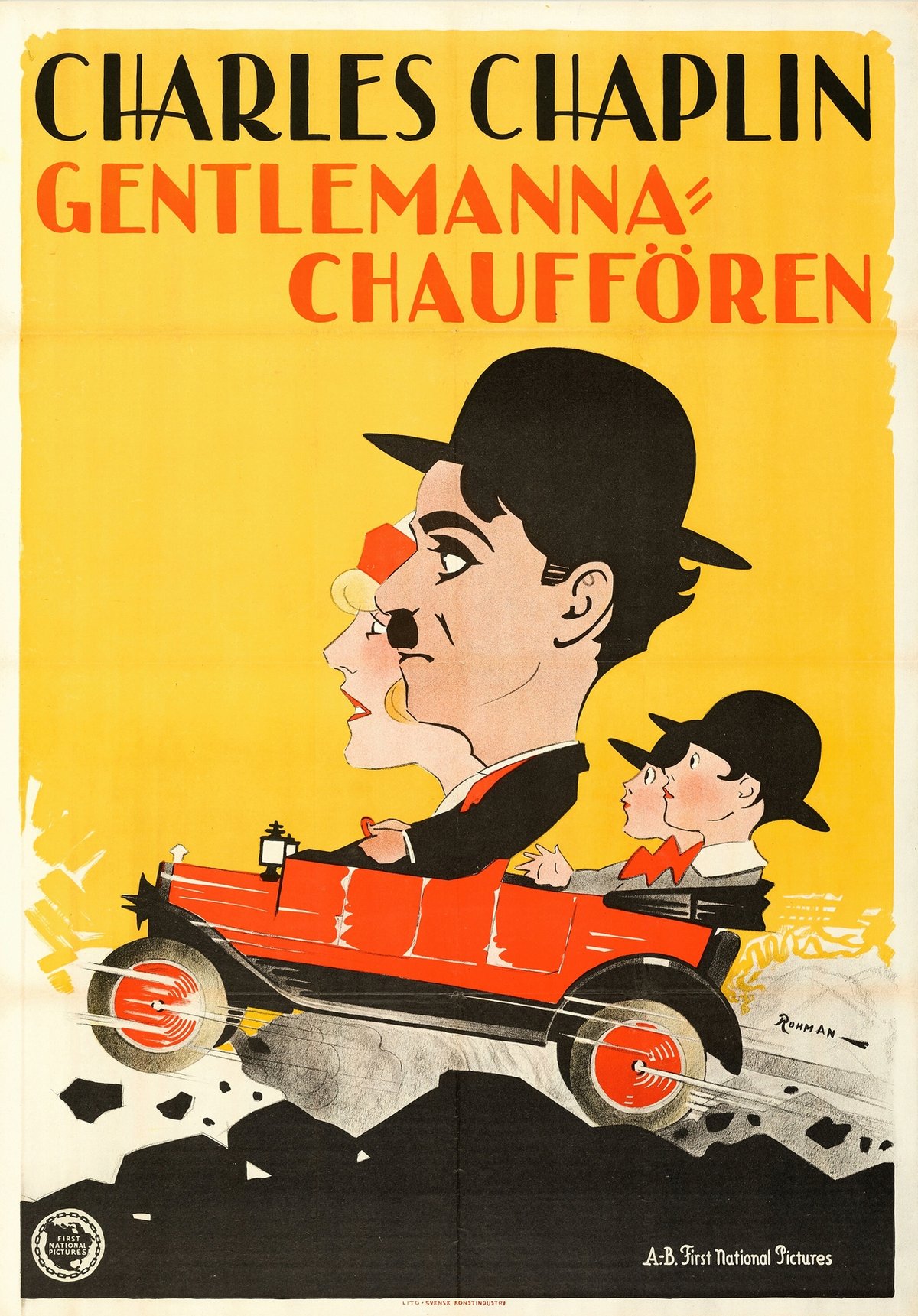
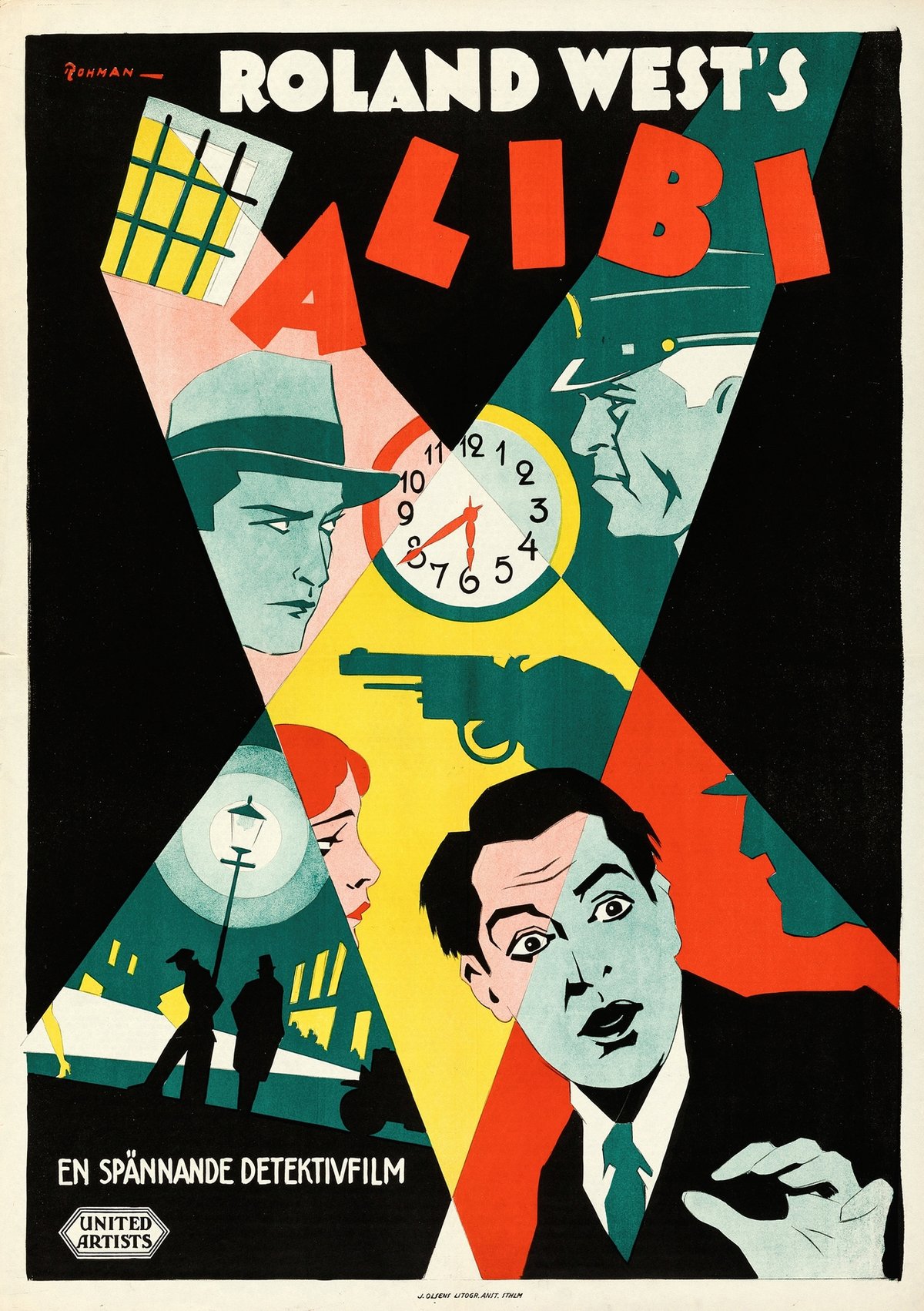
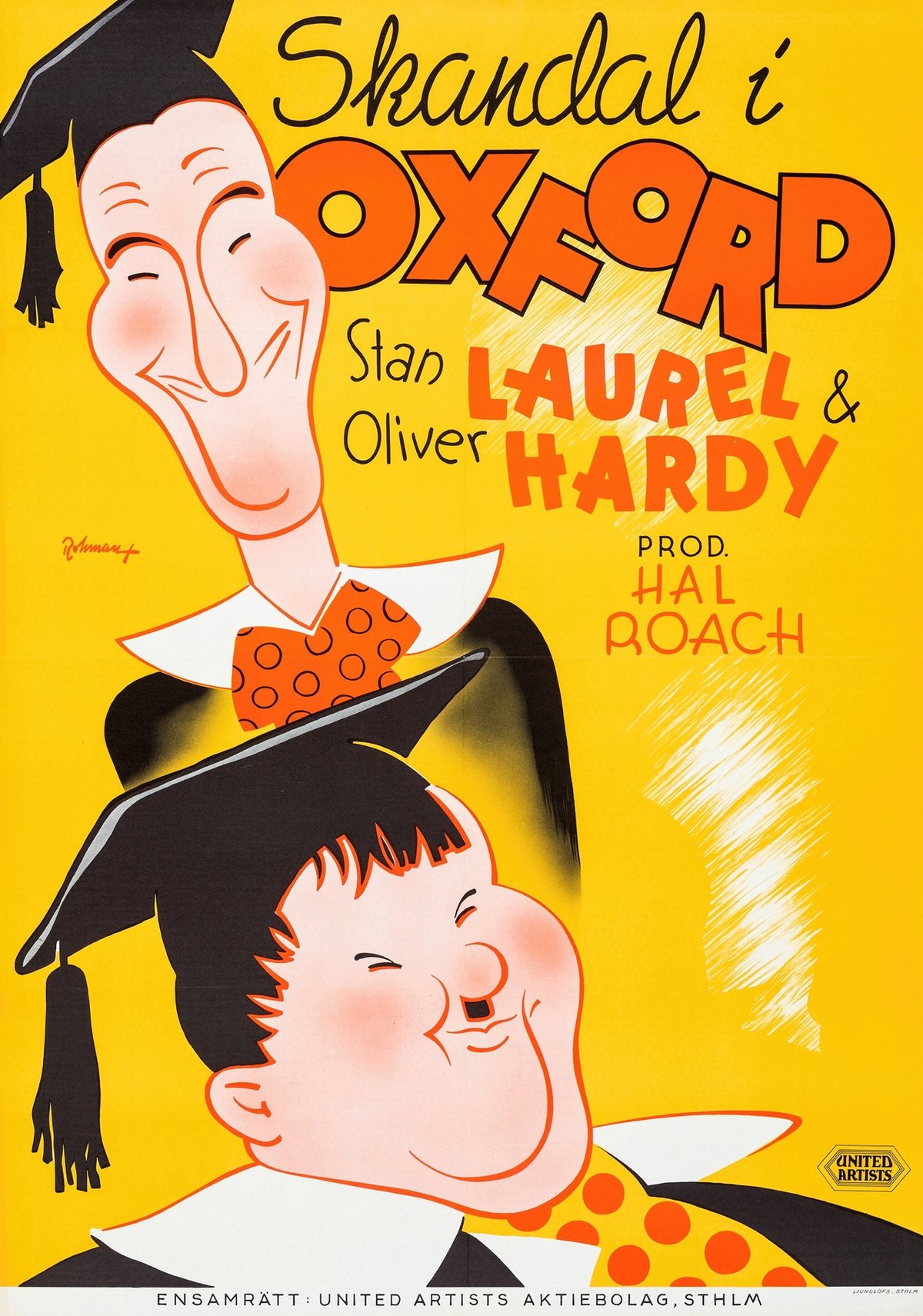
Recently a number of efforts have been made at re-imagining the packaging for movies, books, video games, and other media, mostly mashups and in the illustration style of typical of Saul Bass' movie posters or Penguin Classics book covers. I've collected several examples below.
In his I Can Read Movies series, spacesick imagines Penguin-like book covers for movies like Close Encounters of the Third Kind, Sixteen Candles, and Back to the Future.
Wait, Steven Soderbergh is directing the film adaptation of Michael Lewis' Moneyball? When did this wonderfulness happen?!! Last I heard, the director was the guy who did Marley & Me. Perhaps Pitt put the kibosh on that and lobbied for Soderbergh? (via fimoculous)
Matt Zoller Seitz has completed his five-part look at Wes Anderson's influences.
Part 1: Bill Melendez, Orson Welles, and Francois Truffaut Part 2: Martin Scorsese, Richard Lester, and Mike Nichols Part 3: Hal Ashby Part 4: J.D. Salinger Part 5: The Royal Tenenbaums, annotated
Seek out the video links in the right sidebar; they're better than just reading the text. From the Salinger segment:
Detractors say Anderson's dense production design (courtesy of regular collaborator David Wasco) overwhelms his stories and characters. This complaint presumes that in real life our grooming and style choices aren't a kind of uniform -- visual shorthand for who we are or who we want others to think we are. This is a key strength of both Anderson and Salinger's work. Both artists have a knack for what might be called "material synecdoche" -- showcasing objects, locations, or articles of clothing that define whole personalities, relationships, or conflicts.
The fifth part, where Seitz annotates the beginning segment of The Royal Tenenbaums with text, images, and video, is particularly fun to watch.
[Ed note: This is a piece by Matt Bucher, written a few years ago for the now-defunct andbutso.com. Reprinted with permission.]
The Royal Tenenbaums (RT) opens with a shot of a book, titled The Royal Tenenbaums, and immediately a narrator (Alec Baldwin) begins to read the opening paragraph of the book. Throughout the film, we are led to believe that this narrator is reading us the story of the book The Royal Tenenbaums. While that prose-form screenplay serves as the narration, I believe that another book, Infinite Jest (IJ), manages to influence the film in a number of general and specific parallels. In no way could I substantiate the claim that Wes Anderson and Owen Wilson have read Infinite Jest or that they are in any way aware of the specific connections between their film and Wallace's book (or even that Anderson and Wilson are the exclusive authors of the RT screenplay). {However, Anderson and Wilson are natives of Austin, TX and DFW wrote in a postcard to Rachel Andre [2001] that he loves Austin -- "especially the bat caves at sunset".} Taken piece-by-piece, it seems clear that any correlation between IJ and RT is coincidental at best. However, considered as a whole, the resemblances between the two reach the heights of the uncanny.
Rather than provide a close reading of all 1,079 pages of Infinite Jest, I will look here only at those sections pertaining to the mirror-image of the Tenenbaum family, mostly the Incandenza family.
"The Royal Tenenbaums" is the story of a family, and, as the movie opens, we are introduced to its members. The children -- all prodigies in their own right -- are Margot, the adopted, but award-winning playwright; Richie, the tennis champion; and Chas, the real-estate and business tycoon. The patriarch of the family, Royal, and his wife, Etheline, separated immediately after the children were born and two decades of betrayal, deceit, and failure, erased the brilliance of the young Tenenbaums.
In IJ, the parallel family of the Tenenbaums is the Incandenzas. When we meet the Incandenza family we learn matriarch and patriarch are no longer married, but unlike Royal and Etheline, who split for obvious personality differences, James O. Incandenza (JOI) and Avril M. Incandenza (AMI) are no longer married because JOI is dead. Like the Tenenbaums, the Incandenzas produced three offspring: Orin, the womanizing tennis-prodigy turned football punter; Hal, eidetic tennis prodigy; and Mario, kind-hearted, bradykinetic, homodontic dwarf. There are qualities of each Incandenza that correspond to qualities and traits found in the Tenenbaums, but also the correspondence falls outside of the two families to the extended families of in-laws and friends (Eli Cash, Dudley, Raleigh St. Claire, Pagoda, etc.). Here is a quick run-down.
Marlon Bain is a regular fixture at the Incandenza residence as a child, just as Eli Cash, as a child, is a regular fixture at the Tenenbaum residence. Eli admits that he always wanted to be a Tenenbaum, but one gets the feeling that Marlon Bain got away from the Incandenzas as soon as possible. Eli sleeps with Margot (Richie's sister and object of Richie's affections), but in IJ, Orin sleeps with Bain's sister (without there being any apparent affection involved -- witnessed by Orin's classification of her as just another "Subject"). Eli is eccentric at the very least, but Bain suffered from "the kind of OCD you need treatment for" (similar to Avril's compulsions).
Margot Tenenbaum loses a finger to an axe, just as Trevor Axford loses a finger (or two) to a fireworks incident.
Margot Tenenbaum is a long-term smoker, who hides this from everyone, just as Hal Incandenza is a regular pot smoker who hides this fact from almost everyone.
Richie Tenenbaum is a tennis prodigy, just as Hal and Orin Incandenza were; and Richie's on-court breakdown could be compared to Hal's near loss to Stice or Pemulis's dosing of his opponent or pretty much any other breakdown in the book.
One child in each family produces a drama: Margot Tenenbaum and Mario Incandenza.
The suicide attempt of Richie Tenenbaum seems reminiscent of Joelle Van Dyne's, as both take place alone in a bathroom.
Both JOI and Royal Tenenbaum have rival suitors (Tavis, for one, and Mr. Henry for Etheline) and both patriarchs die in the course of the book / movie.
Eli Cash is a drug addict of the highest type, much like Gately, Hal, and the varied addicts of IJ. Eli is nonchalant about his drug use, but also feels the need to hide it from those closest to him.
The Incandenzas have a dog loved primarily by a family member (S. Johnson and Avril) as do the Tenenbaums (Buckley by Ari and Uzi). Both dogs die.
Chas subjects Ari and Uzi to Schtitt-like physical-education routines. The sight of Ari and Uzi in their jogging suits, doing endless calisthenics, brings to mind the ETA students pushed to their limits during star drills.
There is incest (Richie and Margot Tennenbaum; Avril and Tavis). Although Royal would be quick to point out that Richie and Margot are not technically blood related since Margot is adopted, Richie feels the incest taboo. Avril's taboo is more Gertrude than Margot, one gets the feeling that Avril would find Etheline Tenenbaum to be a kindred spirit. Avril's misdeeds with John NR Wayne (off-screen except one illicit interruption) seem similar to Margot's being caught with Eli Cash in her bedroom. Although Avril isn't Wayne's teacher, Anderson did address that subject in "Rushmore."
The first article to address the relationship between The Royal Tenenbaums and IJ is this one. While Sidney Moody plays up some of the basic similarities, I take issue with his/her assumption that Avril "fends off many suitors after Dr. Incandenza's death" (and there is little evidence that Royal Tenenbaum was a "once-brilliant litigator"). Moody also equates Eli Cash to Don Gately because they both have drug problems and Cash's friends try to force him into rehab, but I see a closer comparison to be Eli Cash and Marlon Bain, despite Bain not having as prominent of a role in IJ as Cash does in RT.
I am hoping that Moon will be awesome and not just a mashup of 2001 and Solaris. The score is by Clint Mansell, who has scored all of Darren Aronofsky's movies, most notably Requiem for a Dream. Moon opens on June 12 in NYC and LA. (via sarahnomics)
- Rob Walker, who writes the Consumed column for the NY Times Magazine, was my favorite person in the movie. I particularly liked his idea for a million-dollar marketing campaign for the stuff we already own. Paraphrasing from memory: "You already own all these wonderful things. Enjoy them today."
- The best comment during the Q&A after the film was from a man who said that the film made him feel physically sick. Not that the movie was bad but that it was powerful. The man was a product designer and the film raised a lot of issues for him with regard to the waste -- both physical trash and human energy, if I was catching his drift correctly -- produced during the course of making these billions of mass produced items, most of which end up in landfills in pretty short order. He seemed to be asking himself and the audience: how can we, as designers, in good conscience, keep doing this to ourselves?
- The film addressed that question a bit at the end as did the panelists during the Q&A. Dan Formosa of Smart Design, echoing Walker's marketing idea, said that some designers in the future will shift from designing new products and start to design experiences for people to make better decisions about the objects they introduce into their lives or to better utilize the products they already have. The sales and support process at many many product companies are ripe for a designer's guiding hand. It's mind-boggling to me that companies spend billions and billions of dollars designing and building products and then leave the selling of those products to sales people who are largely untrained and unmotivated and the support to a call center in Bangalore. Zappos, Apple, Amazon, and similar companies have realized this with spectacular results.
- What didn't work for me: 1) The IDEO stuff. They had 12 people brainstorming about how to build a better toothbrush that people won't throw away and in addition to all of the time they're spending talking about it, they went through dozens of Post-It notes, and had purchased what looked like hundreds of toothbrushes for research purposes that were likely to get thrown away as well. The whole thing seemed super wasteful (and maybe that was the point of showing it). 2) Karim Rashid. He said a lot of things that sounded good but when you look at his work, I don't know that he actually believes any of it. 3) Marc Newson. What the hell was he on about?
How to Take a Beloved Children's Classic Book and Screw It All Up, Exhibit A: based on the trailer, Cloudy With a Chance of Meatballs. Except for the food falling from the sky, they changed everything else. But it's IN 3-D!!! *pffft*
My selections are movies featuring fairly large herds of individuals who clash or collude directly, whose lives intersect or intertwine, who sustain the illusion of continuing to lead their lives beyond the frame, long after the credits roll.
The initial selections include Gosford Park and LA Confidential with the commenters adding many more excellent suggestions like Ocean's Eleven, Glengarry Glen Ross, Big Night, and Do the Right Thing.
This may be the big blockbuster film of 2009, and one we really need right now. It's miles easier to understand than "The Dark Knight," and tremendously more emotional. Hood simply did an outstanding job bringing Wolverine's early life to the screen.
Fox News is owned by News Corp. 20th Century Fox, the company putting out Wolverine, is also owned by News Corp. You can see where this is heading. Friedman is now out of a job and a large media company has once again made its priorities clear:
We've just been made aware that Roger Friedman, a freelance columnist who writes Fox 411 on Foxnews.com -- an entirely separate company from 20th Century Fox -- watched on the Internet and reviewed a stolen and unfinished version of 'X-Men Origins: Wolverine.' This behavior is reprehensible and we condemn this act categorically -- whether the review is good or bad.
Translation: we're more concerned with piracy than with the quality of the film as perceived by the audience. I bet the filmmakers are happy that someone really liked the film.
Trailer for a new film called Guest of Cindy Sherman. It's a documentary about a man who becomes romantically involved with the famous artist, only to find that his ego can't handle her fame. I wonder if we actually get to see the real Sherman in the film...the trailer is very teasing about it.
City Secrets offers reflections and discoveries from the authors, artists, and historians who know each city best. Movies takes this intimate, insider's approach to the arts, featuring brief essays and recommendations by esteemed figures in the film industry -- including actors, directors, producers, and critics -- and other writers and figures in the arts. Some have written on a film, or an aspect of a film (a performance, style, or theme) that they feel is overlooked or underappreciated. Others have chosen a well-known film for which they can offer personal insights or behind-the-scenes observations. Contributors include Woody Allen, Martin Scorsese, Wes Anderson, Ken Auletta, Milos Forman, Anjelica Huston, Barbara Kopple, Sidney Lumet, Simon Schama, and many others.
When I interviewed Anderson for a 1998 Star-Ledger article about A Charlie Brown Christmas, directed by the late animator Bill Melendez, Anderson cited Melendez as one of three major influences on his work, so we'll start there. Anderson told me that he and his screenwriting collaborator, Owen Wilson, conceived Rushmore hero Max Fischer as Charlie Brown plus Snoopy. He said that Miss Cross, the teacher Max adores and will draw into a weirdly Freudian love triangle with the industrialist Mr. Blume, is a combination of Charlie Brown's teacher and his unattainable love object, the little red-haired girl.
The video (located in the right sidebar) takes longer to watch than it does to read the text, but the visual comparisons are worth it. I can't wait to read parts 2-5. (via the house next door)
According to this interview, Tom Tykwer, director of Run Lola Run and the recent The International, is working on a film version of Dave Eggers' What Is the What, his semi-biographical novel about Sudanese refugee Valentino Achak Deng. (via crazymonk)
Gwyneth Paltrow runs an online lifestyle site/newsletter called GOOP. It has both been widely panned by snarky news outlets and proved successful at attracting subscribers who would otherwise shy away from such things. (Hello, A & M!)
Anyway, the most recent GOOP newsletter shares DVD rental picks from some of Gwyneth's friends...you know, Sofia Coppola, Steven Spielberg, Wes Anderson. The inexplicable crush I have on Gwyneth was only strengthened by this bit of her introduction:
I'm not one of those film people who can tell you who the cinematographer was on On The Waterfront or who most influenced Truffaut. When it comes to knowledge of film history, I'm semi-rubbish (a friend of mine once left the dinner table when I admitted I had never seen one of the most famous and most well-regarded films of all time). I can do the whole rap at the end of The Revenge of the Nerds and all of Jeff Spicoli's dialogue, but sadly, my expertise ends there.
Like I said, inexplicable. If you could only see the fun time she and I are having in my head as we quote memorable Fast Times at Ridgemont High moments to each other. She loves my Spicoli impression!
Vendela Vida, Dave Eggers, Sam Mendes, John Krasinski, Maya Rudolph, Jeff Daniels, Maggie Gyllenhaal, Allison Janney, Catherine O'Hara. Movie. Trailer.
Hustwit has said that the key to interviewing people is "not to ever interview them," and, like Errol Morris, he's pretty damn good at (not) doing it. Nobody hangs themselves here, but they're presumably given a ton of rope with which to construct bridges between disparate ideas, wrap up gifts, or tie Gordian knots.
But aside from what we see onscreen, the Ewoks are miserable little creatures for a completely different reason: they are the single clearest example of Lucas' willingness to compromise the integrity of his Trilogy in favor of merchandising dollars. How intensely were the Ewoks marketed? Consider this: "Ewok" is a household word, despite the fact that it's never once spoken in the film.
When I was a kid, I had a friend who knew all the names of even the most minor characters from the Star Wars movies and had no idea where he got that information. Was there a fourth movie I didn't know about? It wasn't until much later that I realized his extensive collection of SW action figures had filled in all the blanks for him.
When it comes to the crunch it really is about having actors who are totally able to think deeply about their characters while at the same time, once we developed those characters, for them to be absolutely organic and able to respond emotionally to anything that comes their way. When it comes to thinking about how a character talks, there are literary and language considerations. For actors to be able to differentiate between themselves and the characters they are playing while at the same time remain in character and spontaneous requires a sophisticated combination of skills and spirit. The bottom line is this: For those that can do it, it's a natural combination and they don't think twice about it. For those that can't do it, they can bang their heads against a brick wall from now till kingdom come and they still won't get there.
Leigh's acting example -- that there are two distinct people at work, the actor and the character -- is interesting to think about in the context of sports. I wonder if any athletes approach working on their games in this way, differentiating between the player who performs and the person who analyzes the playing. Plenty of athletes refer to themselves in the third person (Rickey Henderson!), I wonder if that's why.
The Roku is a wee box that hooks up to your internet and TV over which you can stream movies and TV shows. Until recently, the Roku only worked with Netflix (the streaming is free and unlimited with your Netflix acct) but the Roku added support for Amazon's Video On Demand service the other day, bringing Amazon's 40,000+ movie titles into the mix. I have friends that love this thing.
BTW, Amazon is getting good at closing the loop on this stuff. Like Apple (Apple TV / iTunes Store), they're not only selling the media but also the device.
Terrence Malick is supposedly working on a new film with Brad Pitt and Sean Penn called The Tree of Life. It's a movie about time but the Wikipedia page doesn't say anything about the dinosaurs.
In this trailer for Terminator Salvation -- more like salivation, which is what I'm doing waiting for this movie to come out, amiright? -- we're led to believe that perhaps Christian Bale turns out to be a Replicant or a Mecha. (via fimoculous)
The doorbell rang at seven p.m. at the family house in Fort Lee, New Jersey, right across the Hudson River from Manhattan. "I opened the front door and there was Marlon Brando, James Caan, Morgana King [who played Don Corleone's wife], Gianni Russo [who played Don Corleone's son-in-law, Carlo], Al Ruddy [the film's producer], and my uncle Al [Lettieri]," recalls Gio. "We all went downstairs into the family room, where the table was set and where we had the pool table and the bar."
Sita is a goddess separated from her beloved Lord and husband Rama. Nina is an animator whose husband moves to India, then dumps her by e-mail. Three hilarious shadow puppets narrate both ancient tragedy and modern comedy in this beautifully animated interpretation of the Indian epic Ramayana. Set to the 1920's jazz vocals of Annette Hanshaw, Sita Sings the Blues earns its tagline as "The Greatest Break-Up Story Ever Told."
I put on the DVD and start watching. I am enchanted. I am swept away. I am smiling from one end of the film to the other. It is astonishingly original. It brings together four entirely separate elements and combines them into a great whimsical chord. You might think my attention would flag while watching An animated version of the epic Indian tale of Ramayana set to the 1920's jazz vocals of Annette Hanshaw. Quite the opposite. It quickens.
The Linguists is a hilarious and poignant chronicle of two scientists -- David Harrison and Gregory Anderson -- racing to document languages on the verge of extinction. In Siberia, India, and Bolivia, the linguists confront head-on the very forces silencing languages: racism, humiliation, and violent economic unrest. David and Greg's journey takes them deep into the heart of the cultures, knowledge, and communities at risk when a language dies.
During the closing credits of the Academy Awards, a clip was shown previewing some movies that will open in 2009. None of them look like they'll win any Oscars so I presume this was paid advertising and not editorial on the part of the program. Fun though! (via /film)
The studio executives wanted Laurence Olivier, Ernest Borgnine, Richard Conte, Anthony Quinn, Carlo Ponti, or Danny Thomas to play Don Corleone. Anyone but Brando, who, at 47, was perceived as poison. His recent pictures had been flops, and he was overweight, depressed, and notorious for causing overruns and making outrageous demands. WILL NOT FINANCE BRANDO IN TITLE ROLE, the suits in New York cabled the filmmakers. DO NOT RESPOND. CASE CLOSED.
But Coppola fought hard for him, and finally the executives agreed to consider Brando on three conditions: he would have to work for no money up front (Coppola later got him $50,000); put up a bond for any overruns caused by him; and-most shocking of all-submit to a screen test. Wisely, Coppola didn't call it that when he contacted Brando. Saying that he just wanted to shoot a little footage, he arrived at the actor's home one morning with some props and a camera.
Brando emerged from his bedroom in a kimono, with his long blond hair in a ponytail. As Coppola watched through the camera lens, Brando began a startling transformation, which he had worked out earlier in front of a mirror. In Coppola's words, "You see him roll up his hair in a bun and blacken it with shoe polish, talking all the time about what he's doing. You see him rolling up Kleenex and stuffing it into his mouth. He'd decided that the Godfather had been shot in the throat at one time, so he starts to speak funny. Then he takes a jacket and rolls back the collar the way these Mafia guys do." Brando explained, "It's the face of a bulldog: mean-looking but warm underneath."
Coppola took the test to Bluhdorn. "When he saw it was Brando, he backed away and said, 'No! No!'" But then he watched Brando become another person and said, "That's amazing." Coppola recalls, "Once he was sold on the idea, all of the other executives went along."
In a NY Times op-ed piece, Emily Oberman and Bonnie Siegler argue that the Oscars should have a category for the design of title sequences. Hear, hear. Their pick for this year's hypothetical award:
1. "WALL-E," Susan Bradley and Jim Capobianco/Pixar. These poignant end titles, which show humans and robots flourishing on a revived Earth, offer a quick history of art, from cave paintings to van Gogh. They then proceed to retell the entire movie, this time in the pixelated style of old video games.
Critics pilloried the anti-erotic ridiculousness of the orgy, with its funereal organ music and self-sacrificing hookers and mass-like rituals involving cloaked high priests and great plumes of incense. But the orgy is more about power than sex; in that respect, it's the opposite of some free-love hippie bacchanal, where the fucking is more democratic. Here, the rituals are about affirming the elite, and Bill doesn't belong to this exclusionary country club, whose members are intent on subjugating their inferiors. For Bill, it's the peak of a humiliating journey, and Kubrick accomplishes the remarkable feat of making Cruise, the brashly confident movie star, look small and scared behind that mask.
Overall, 1999 is still my favorite movie year. I saw more than 50 movies in the theater that year, including EWS, Rushmore, Princess Mononoke, Election, Run Lola Run, Being John Malkovich, Iron Giant, The Matrix, Magnolia, American Beauty, Toy Story 2, and Three Kings. Quite a year.
We both thought of ourselves as full-service, one-stop film critics. We didn't see why the other one was quite necessary. We had been linked in a Faustian television format that brought us success at the price of autonomy. No sooner had I expressed a verdict on a movie, my verdict, than here came Siskel with the arrogance to say I was wrong, or, for that matter, the condescension to agree with me. It really felt like that. It was not an act. When we disagreed, there was incredulity; when we agreed, there was a kind of relief. In the television biz, they talk about "chemistry." Not a thought was given to our chemistry. We just had it, because from the day the Chicago Tribune made Gene its film critic, we were professional enemies. We never had a single meaningful conversation before we started to work on our TV program. Alone together in an elevator, we would study the numbers changing above the door.
For example, is someone more likely to win Best Actress if her film has also been nominated for Best Picture? (Yes!) But the greatest predictor (80 percent of what you need to know) is other awards earned that year, particularly from peers (the Directors Guild Awards, for instance, reliably foretells Best Picture). Genre matters a lot (the Academy has an aversion to comedy); MPAA and release date don't at all. A film's average user rating on IMDb (the Internet Movie Database) is sometimes a predictor of success; box grosses rarely are.
Silver's "Gamble-Tron 2000 Lock of the Oscars" is that Danny Boyle wins Best Director for Slumdog Millionaire with a whopping 99.7% certainty. I suspect that the Oscars will prove more difficult to predict than the election and that Silver will be wrong in at least two categories. I will report back on Oscar night. (via fimoculous)
As I stood in line to buy my tickets, I noticed a small hand-lettered sign in the box-office window that read, "People arriving five or more minutes late to Memento will not be allowed entrance." This was at a small art-house cinema -- not one to place arbitrary restrictions on its patrons -- and it struck me as odd that the limitation applied solely to this one film, so I asked the cashier about it when I reached the front of the line.
"You can't understand anything about the film if you miss the first five minutes," she told me with a roll of her eyes. "We've had late-comers charge out here after the end and demand that we explain the whole thing to them."
Baldwin gives Primer some much-deserved love, which is always appreciated around here.
Tarantino's latest film is about Nazi-killing American soldiers and stars Brad Pitt. I can't decide if this movie is going to completely suck or be really great. Vampire movies notwithstanding, Quentin always gets the benefit of the doubt from me so great it is.