kottke.org posts about games
The chess program available on Delta Air Lines’ seatback screens is an ELO monster that can beat almost all opponents on easy mode. This guy used a series of increasingly powerful bots to see just how good the Delta chess bot is. Can it beat a grandmaster-level bot? (via clive thompson)
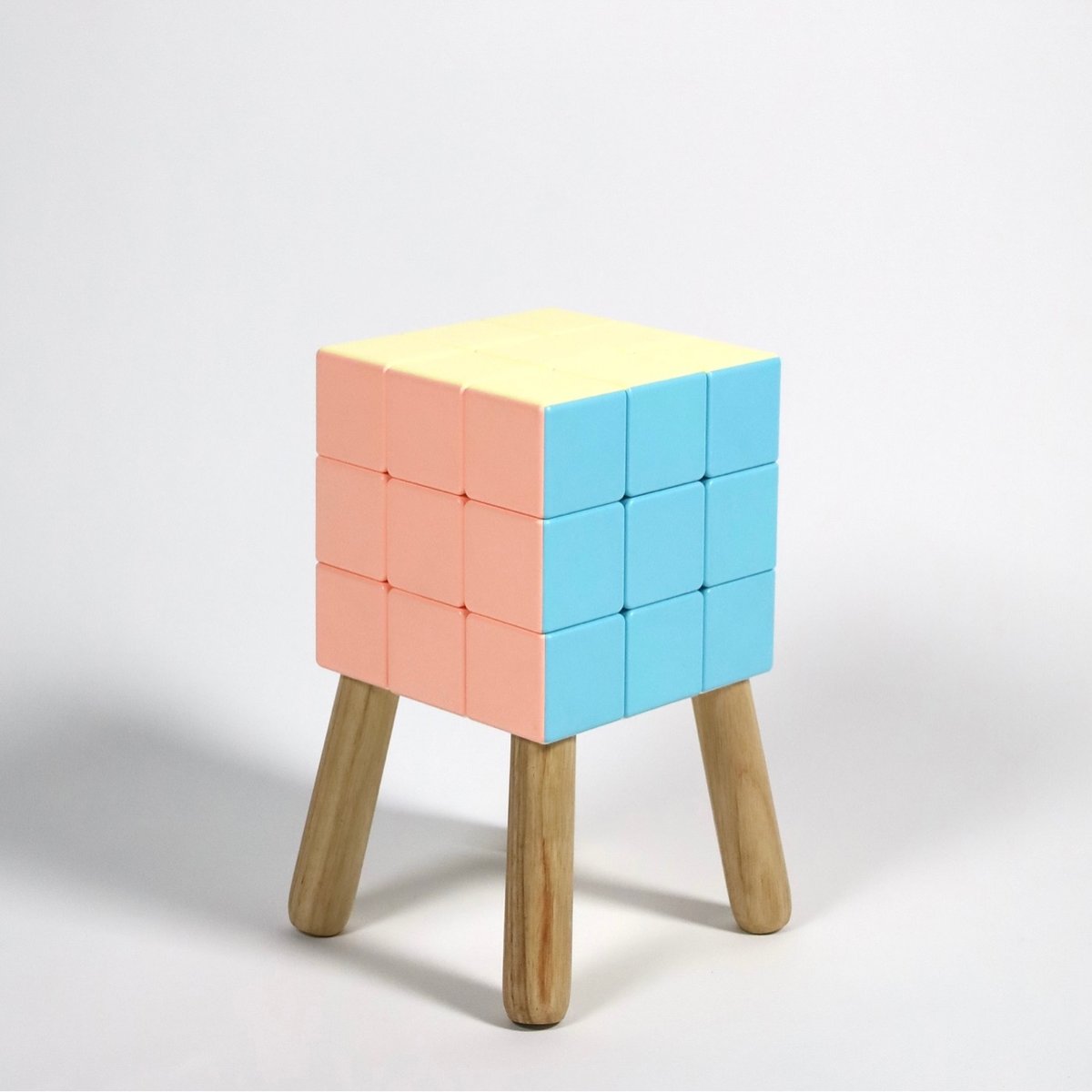


If you want to sit in this chair, you have to be able to solve a Rubik’s Cube because the chair is a Rubik’s Cube. (Ok, technically it looks like you only need to place the four leg corners of the chair correctly, but we’re not going to pick nits on this because it is fun and loooorrrrrrrd do we all need some fun right now.)
Oh and I like how the unsolved chair in the last photo looks like it’s striking a break dancing pose. Fresh! (via moss & fog)
Cheating expert Sal Piacente, who’s got the perfect name, accent, demeanor, and face for someone who helps casinos catch cheaters, stops by Wired Tech Support to answer reader queries about how gamblers & casinos attempt to bamboozle each other.
Can slot machines be hacked? Why is card counting illegal? How can you tell if dice are loaded? What’s it like working security at a casino? Could an Oceans 11-style heist ever happen in real life? Are casinos ever the ones to cheat? Answers to these questions and plenty more await on Casino Cheating Support.
Whoa, I’d never heard of the chip cup before — it looks like a stack of low-denomination chips but actually hides a smaller stack of high-denomination chips inside of it. The false shuffle demo and the edge sorting explanation are especially interesting.
See also Casino Cheating Expert Reviews Card Counting and Casino Scams From Movies.
Mark Rober built a robot that solves jigsaw puzzles and pitted it against Tammy McLeod, one of the world’s faster human solvers. The design and build process is fascinating, especially the fine-tuning enabling the robot to “wiggle” each piece into its place.
When we first tried to assemble the puzzle, almost none of the pieces fit together perfectly. This was before we had corrected the errors in the computer vision code as described earlier.
However even after we improved the computer vision code, some small errors remained. Many pieces would fit together perfectly, and then you would see one that was ever so slightly out of place, and that could ruin the alignment for the rest of the puzzle if left unresolved.
To solve this, we took inspiration from humans. If you try to place a puzzle piece with your hands, you’ll find that often you need to wiggle the piece around to get it to snap into place. So we programmed the robot to do the same thing.
Also, Kristen Bell shows up?
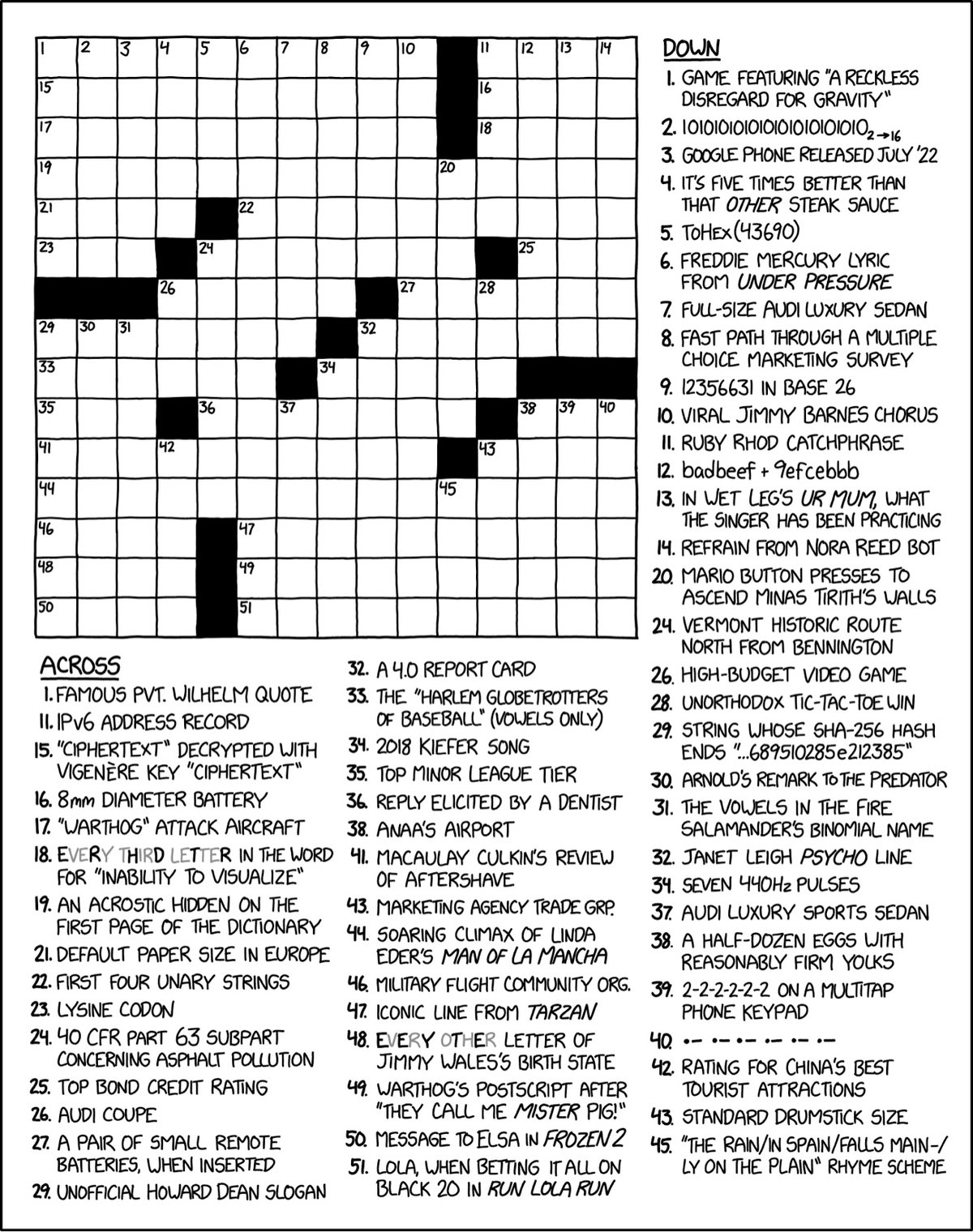
Although I am slightly disappointed this isn’t a “real” crossword puzzle, I do admire Randall Munroe’s commitment to the bit. And then there’s the gray letters…
YouTuber Paralogical downloaded data from over 5 billion chess games to find the rarest move in chess. Slight spoiler: there are many possible moves that weren’t played in any of the games analyzed. The data and analysis programs used are available on Github:
This is a lil’ code to analyze chess .pgn files, with the goal of finding the “rarest” move in chess.
That is, the rarest move notation (standard algebraic notation) given a large number of input games (e.g. every rated game from lichess) in pgn format.
However, since there are many moves that never happen, this is moreso counting and categorizing moves of various types rather than finding one specific rare move.
My teen daughter doesn’t care for crosswords or the Spelling Bee, but she does try to play Connections every day. We were working on this one together a few days ago and when I suggested SNAIL GALAXY CYCLONE SUNFLOWER as a group, she said “I was thinking spirals but sunflowers are round”. Which prompted a discussion about the Fibonacci sequence and the golden ratio (which she’d covered in math class) and a search for videos that explained how the sequence pops up in nature and, specifically, sunflowers.
As beautiful as the sunflower is, isn’t it even lovelier knowing there is a deep mathematical order to it?
That quote reminds me of Richard Feynman’s thoughts on the beauty of nature:
I have a friend who’s an artist and has sometimes taken a view which I don’t agree with very well. He’ll hold up a flower and say “look how beautiful it is,” and I’ll agree. Then he says “I as an artist can see how beautiful this is but you as a scientist take this all apart and it becomes a dull thing,” and I think that he’s kind of nutty.
First of all, the beauty that he sees is available to other people and to me too, I believe. Although I may not be quite as refined aesthetically as he is … I can appreciate the beauty of a flower. At the same time, I see much more about the flower than he sees.
I could imagine the cells in there, the complicated actions inside, which also have a beauty. I mean it’s not just beauty at this dimension, at one centimeter; there’s also beauty at smaller dimensions, the inner structure, also the processes. The fact that the colors in the flower evolved in order to attract insects to pollinate it is interesting; it means that insects can see the color. It adds a question: does this aesthetic sense also exist in the lower forms? Why is it aesthetic? All kinds of interesting questions which the science knowledge only adds to the excitement, the mystery and the awe of a flower. It only adds. I don’t understand how it subtracts.
Games, language, mathematics, the beauty of flowers, science, time spent together — Connections indeed.
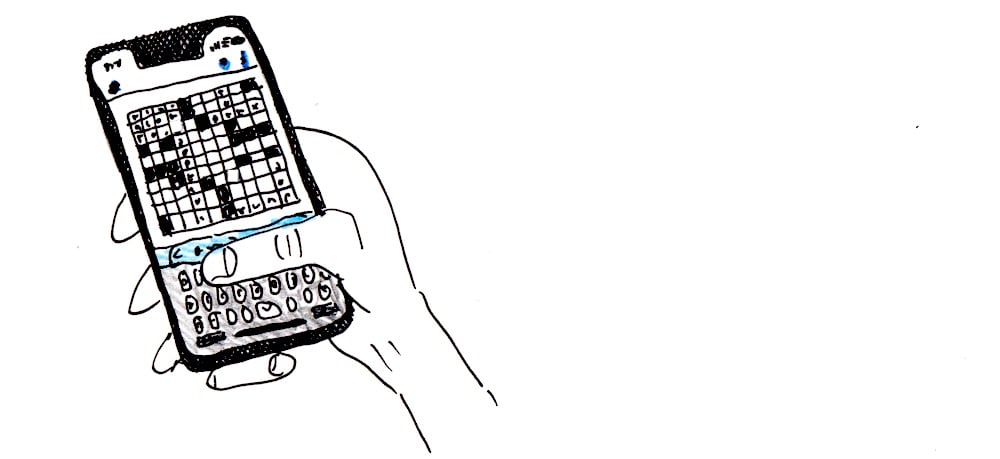
I love playing the NYT crossword, but I only recently discovered Rex Parker Does the NY Times Crossword Puzzle, a blog of daily puzzle reviews, full of spirit and bile. And although like Jason I’m a little put off by how negative the reviews can be — I don’t want the thing I’m so proud to have just finished be considered “toothless” or “dead in the water”!! — they’re also funny. So maybe it’s fine, or actually better. For instance, from his review of Tuesday’s puzzle:
The [theme answers] seemed listless (except [REDACTED], which just seemed bizarre), and the overall fill ran weak (and heavily, drearily name-y; more on that below), and then [REDACTED], ugh, I would’ve shut my computer right there if I weren’t contractually obligated to go on. […] As for the rest of the puzzle, it was gunked up with names to an unusual, and possibly dangerous degree.
Lol. Meanwhile, there’s also XWordInfo (NY Times crossword “answers and insights” — useful for puzzle constructors, too), Diary of a Crossword Fiend (“reviewing the best crosswords in print and on the web”), and Daily Crossword Links (“all the day’s crosswords in one place”), as well as the NY Times’ own Daily Wordplay Column, an adjoining column riffing on each day’s puzzle, often with a mini-interview of that day’s puzzle constructor. (From today’s constructor: “This puzzle was partly inspired by my children, who love to put on one red oven mitt and run around the kitchen exclaiming, ‘Look, I’m an (18A)!’”) The comments section here is also a goldmine for community-minded puzzlers. What else is out there?
But really the main thing to do after finishing the puzzle is to open the Spelling Bee back up… Am I right???
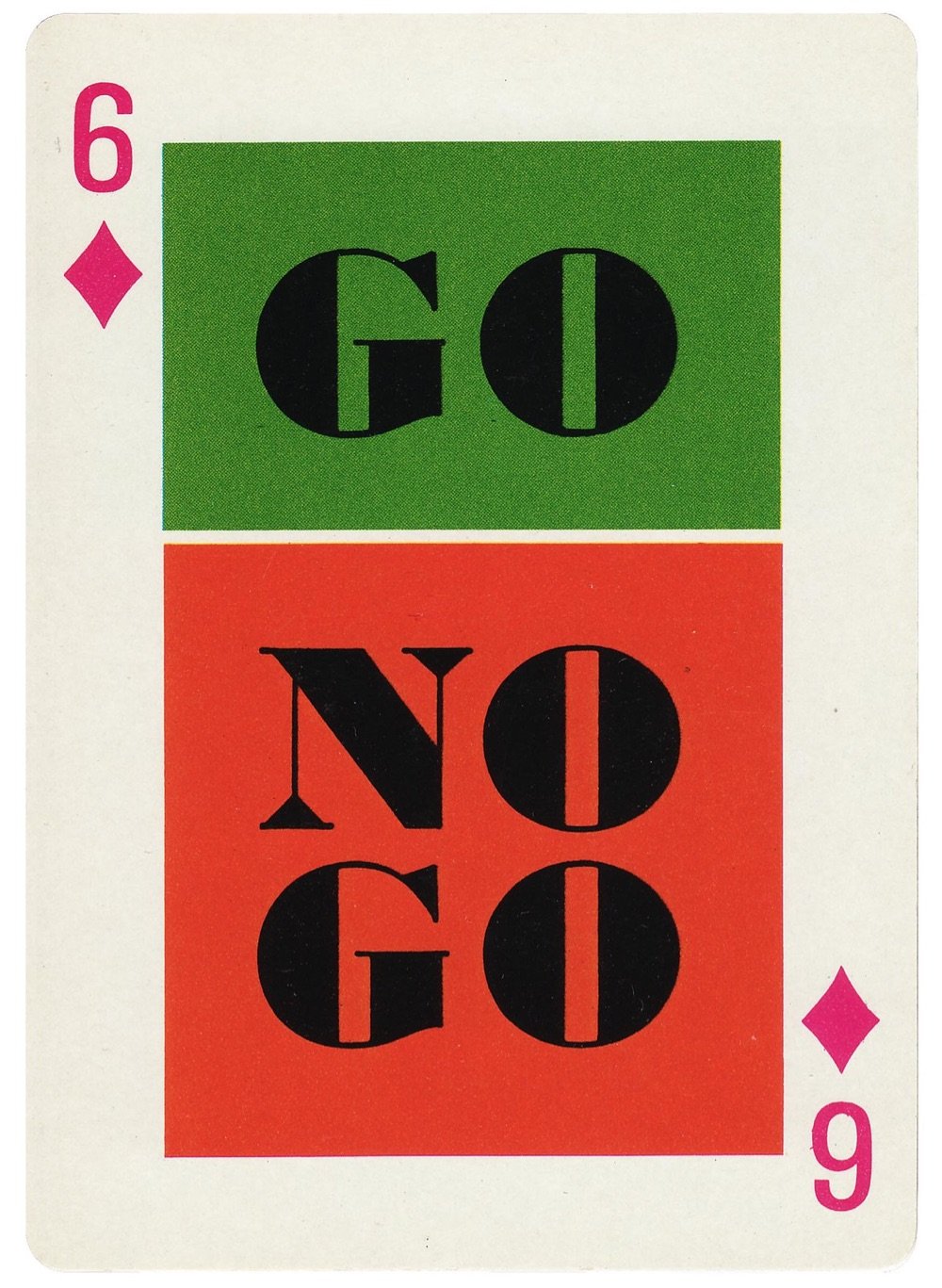
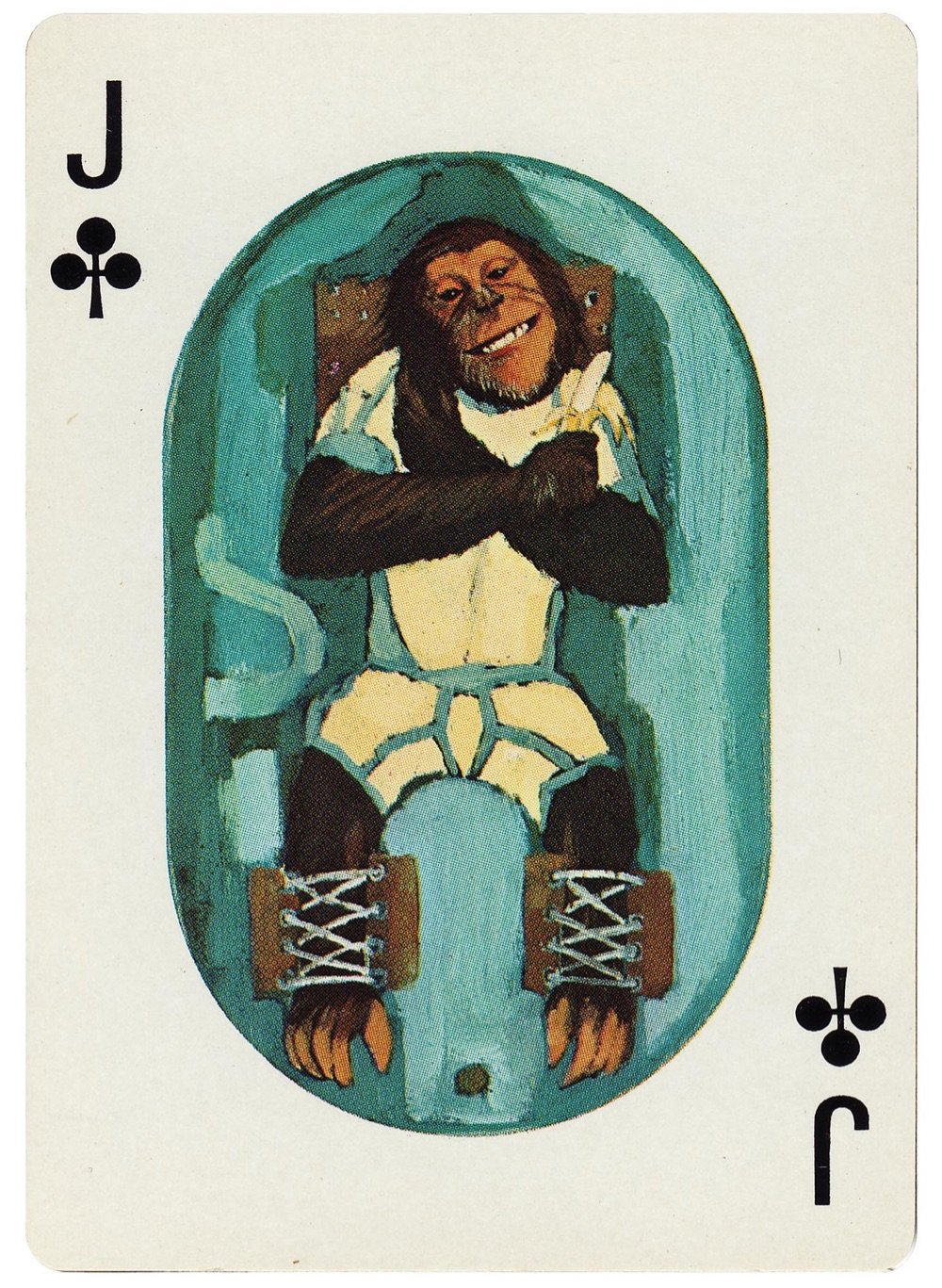
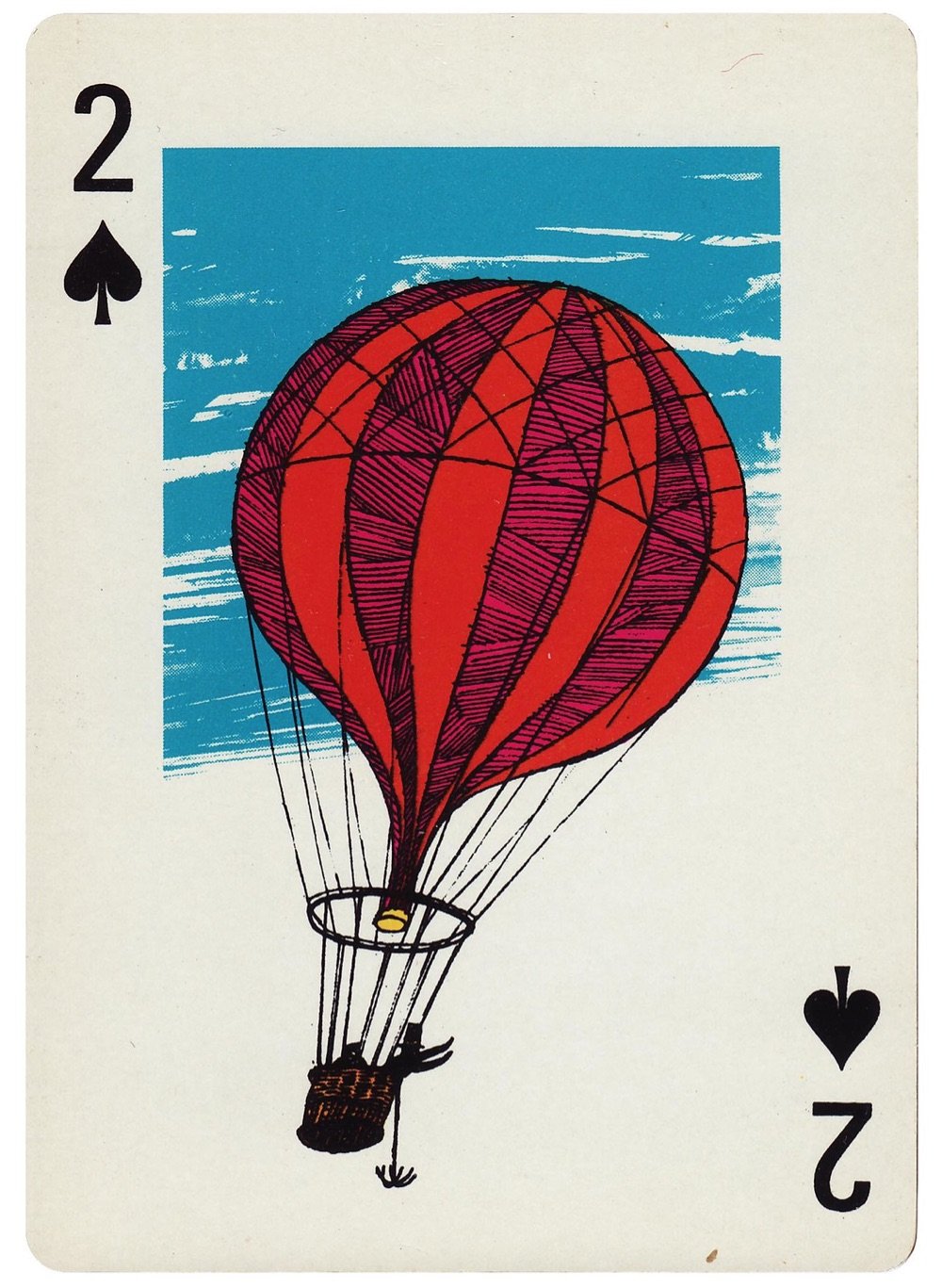
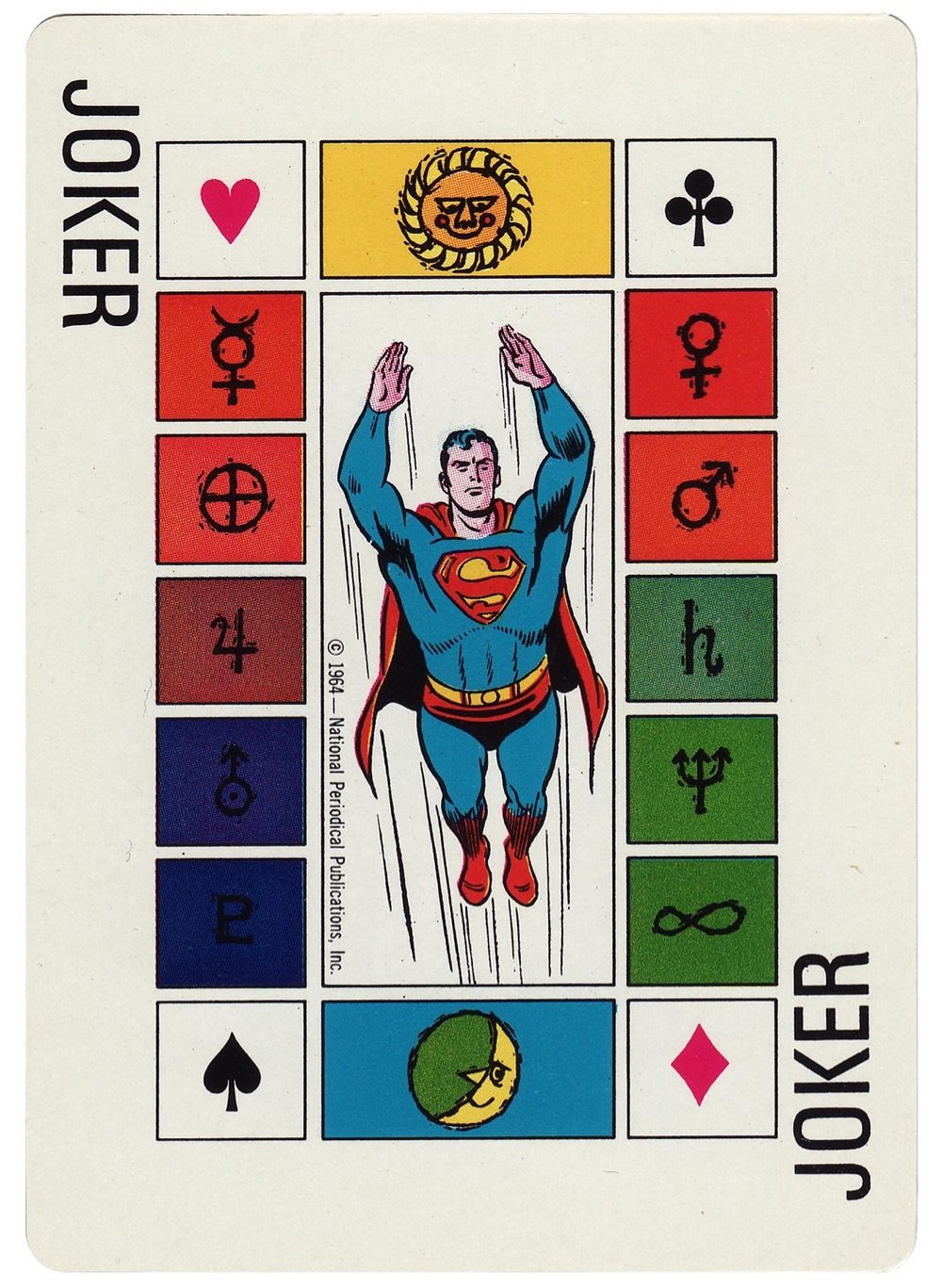
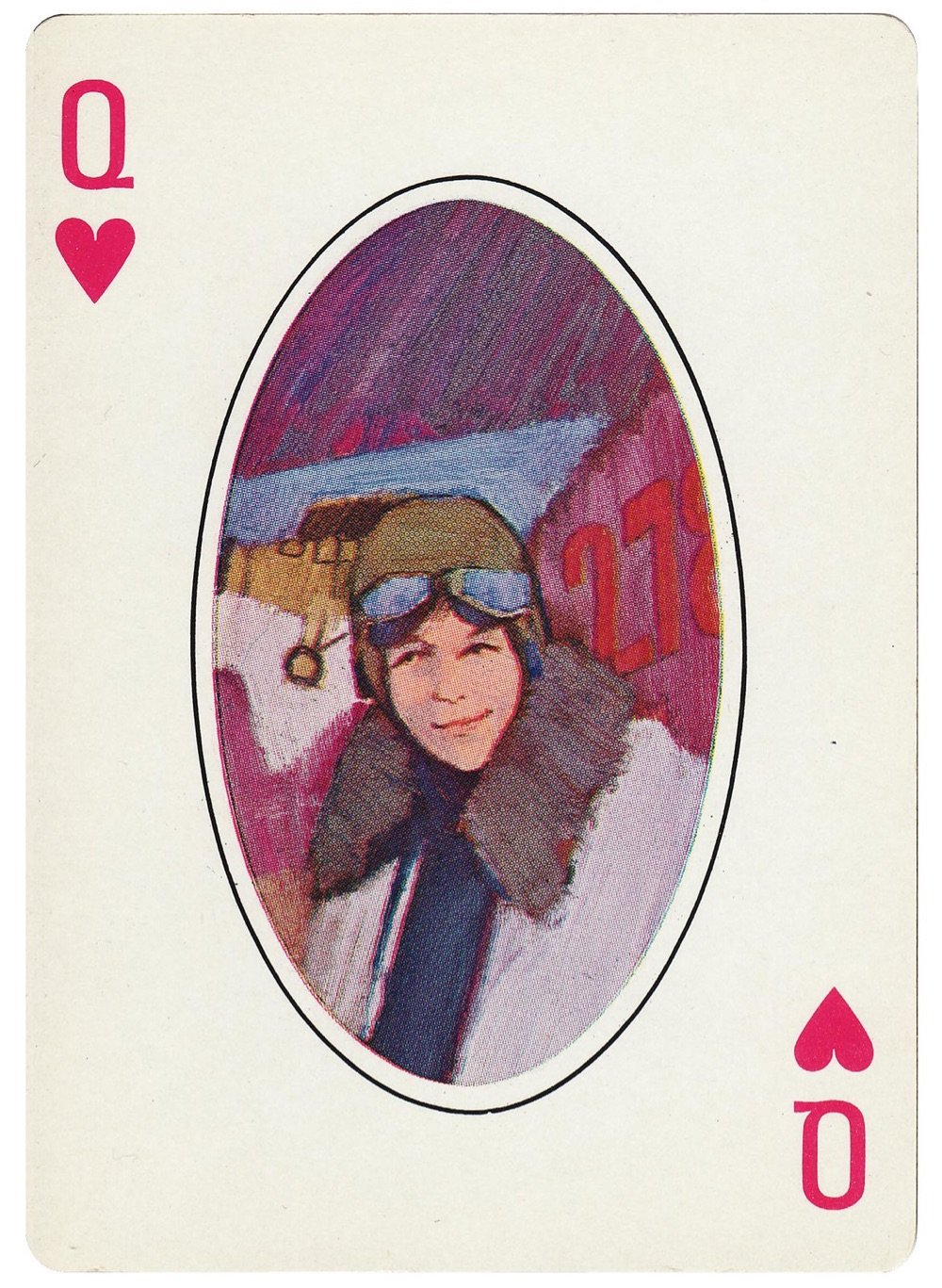
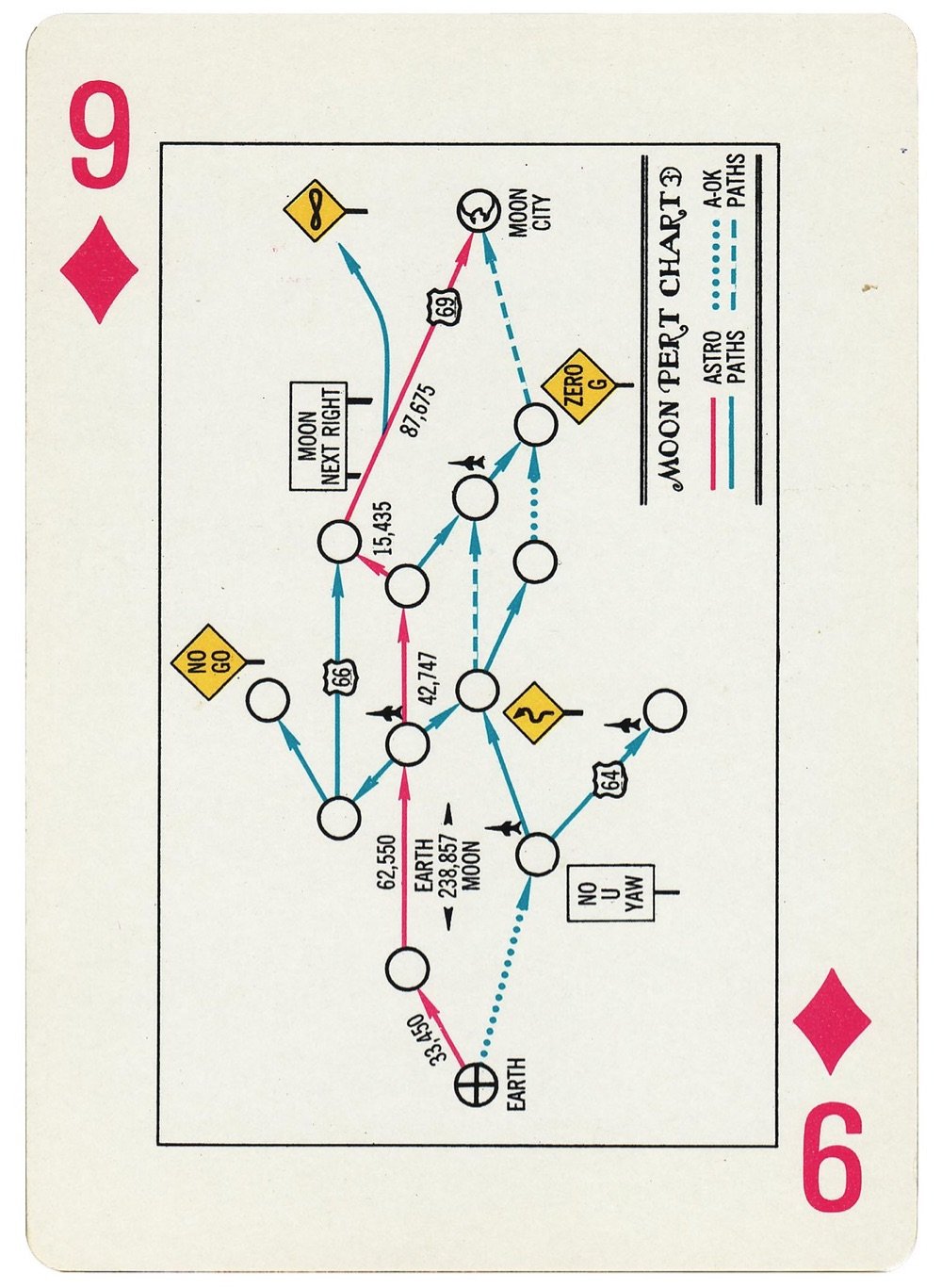
The General Dynamics Astronautics Space Cards were printed up in 1964 to celebrate the American space program. This Flickr account has scans of every card in the deck, including both jokers. Each suit corresponds to a different aspect of the program:
These space cards tell a story — the story of America’s man-in-space programs. The hearts deal with the human element, the clubs portray the sciences, the spades show products, and the diamonds depict modern aerospace management without which the other three elements could not be successful…
If you’d like your own factory-sealed deck, you can buy one on eBay for $249. (thx, mark)
I am not a sudoku player but I do appreciate the logical nature of the game, so Numberphile’s explanation of a simple pattern hidden in every single sudoku puzzle was pretty satisfying.
But really, it’s just an excuse to revisit this other video about solving “The Miracle Sudoku”:
Every once in a while during my internet travels, I run across something like this video: something impossibly mundane and niche (a ~26-minute video of someone solving a sudoku puzzle) that turns out to be ludicrously entertaining.
Oh and this perfect explanation of cryptocurrency is always worth another look:
imagine if keeping your car idling 24/7 produced solved Sudokus you could trade for heroin
It’s a trip watching how fast CyberRunner can run a marble through this wooden labyrinth maze.
Labyrinth and its many variants generally consist of a box topped with a flat wooden plane that tilts across an x and y axis using external control knobs. Atop the board is a maze featuring numerous gaps. The goal is to move a marble or a metal ball from start to finish without it falling into one of those holes. It can be a… frustrating game, to say the least. But with ample practice and patience, players can generally learn to steady their controls enough to steer their marble through to safety in a relatively short timespan.
CyberRunner, in contrast, reportedly mastered the dexterity required to complete the game in barely 5 hours. Not only that, but researchers claim it can now complete the maze in just under 14.5 seconds — over 6 percent faster than the existing human record.
CyberRunner was capable of solving the maze even faster, but researchers had to stop it from taking shortcuts it found in the maze. (via clive thompson)
Scrabble is one of those games where pro/expert gameplay differs so much from amateur/novice gameplay that it might as well be a totally different game. In this entertaining recap of the finals of the 2023 Scrabble World Championships, former US champ Will Anderson explains how finalists David Eldar and Harshan Lamabadusuriya think and strategize throughout the best-of-seven series.
Gameplay aside, the thing that stood out for me is how many of the words played I’d just never heard of before. Like, at least 60% of them. Like I said, it’s just a completely different game at the expert level, with a shit-ton of memorization required. I don’t play Scrabble for this reason — because if you don’t have a bunch of two-letter words and Q,Z, & X words memorized and you’re playing against someone who does, it’s not fun. But it is fun to see two heavyweights of the game go at it on equal terms. (via peterme)
Now showing on American Experience on PBS: Ruthless: Monopoly’s Secret History.
For generations, Monopoly has been America’s favorite board game, a love letter to unbridled capitalism and — for better or worse — the impulses that make our free-market society tick. But behind the myth of the game’s creation is an untold tale of theft, obsession and corporate double-dealing. Contrary to the folksy legend spread by Parker Brothers, Monopoly’s secret history is a surprising saga that features a radical feminist, a community of Quakers in Atlantic City, America’s greatest game company, and an unemployed Depression-era engineer. And the real story behind the creation of the game might never have come to light if it weren’t for the determination of an economics professor and impassioned anti-monopolist.
You can watch the first ten minutes of the show on YouTube or see the whole thing on the PBS website.
See also The Antimonopolist Origins of Monopoly Differ from Hasbro’s Official Story. (via @Kitbuckley)
This is a delightfully early-80s clip about how electronic music legend Suzanne Ciani created the soundtrack and sound effects for the Xenon pinball game. Xenon was the first talking Bally pinball game and the first pinball game voiced by a woman.
The idea of using the short grunts and groans came to me when I watched people playing the game — the way that people expressed their frustrations or their involvement with the game — and I wanted the game to do that back. I wanted it to talk back to the people playing.
Here are two other videos from the 80s of her explaining her work: on PBS’s 3-2-1 Contact (I *loved* that show) and on The David Letterman Show. According to her Wikipedia page, Ciani created the Coca-Cola “Pop ‘n Pour” sound logo as well as other sound logos for Energizer and ABC.
In 2013, Ciani was inducted into the Pinball Expo Hall of Fame for her pioneering work on the game. (thx, caroline)
David Shariatmadari, an editor at The Guardian, was asked by a colleague to “have a go” at inventing a new game, a new viral sensation like Wordle. The game he came up with is called Wordiply (it’s fun!) and he wrote up the whole process of how he went about designing it. The idea behind the game is a simple one and the way in which Shariatmadari arrives at it is a familiar trope in discovery stories:
That’s where my older brother, Daniel, comes in. While I’m racking my brains about how to come up with a better version of Boggle, he’s with his partner Nic in a hospital waiting for their baby to be born. On the morning she is due for an induction, they arrive bright and early at 8am. I call at about 11am to see how things are going. “What about if you had a word,” Daniel says, “of three letters — and the point of the game is to find the longest word that still has those three letters.”
“You mean like an anagram, but you make it longer?” I ask, confused.
“No, you’ve got to keep them in order. So if you had ‘bid’, then maybe, er, ‘forbidden’ would be the longest word.”
“Or ‘ambidextrous’.”
“Right.”
This is typical. I’ve been thinking about this for weeks. Daniel is supposed to be having a baby today and instead he’s come up with something that just might be the next Wordle.
“I think that’s pretty good,” I tell him.
“Yeah, OK — gotta go.”
“What about the bab — “
It’s worth reading the whole thing — stories of invention and discovery are always interesting and the familiarity that most people have with word puzzles makes this one easy to follow and even to place yourself in the creator’s shoes. A key part of the design process is to look for the spark:
Next, I pitch the longest word game: “So if you have a word like ‘pit’, you could have ‘spit’, ‘spittoon’, ‘hospitable’.” “Amphitheatre!” Will exclaims, triumphantly. There’s a beat before we realise it doesn’t work. But I can hear an excitement in his voice — pride at having swung even if he missed. Maybe there is something to this. We do a paper prototype, and decide to play it against the clock — 15 seconds. I call out the word “cub” and everyone scribbles furiously. Time’s up before we know it, and all I managed is “scuba”. Someone gets “incubation”. Will has “cubism”. “You know what?” he says. “It’s a good game!” Entrancement? Unlocked. Well, possibly.
I found this via Clive Thompson, who riffs on Shariatmadari’s piece here.
Alas, there is no magic formula to finding the right mix of rules. You just have to tweak and tweak, and test and test.
Often the hardest part of finessing a design can be some incredibly weird thing you’d never predict.
For Shariatmadari, the hardest part was creating the list of allowable words. Since the goal of his game was - given a target word like “pop” (for example) - to find the longest possible word that contains the target, there are a ton of super-long medical and chemical words one could use, like “pseudopseudohypoparathyroidism”. But allowing words like that could break the feeling of fairness, giving an advantage to people who rote-memorize really long medical words. (As an aside, this is why I find competitive Scrabble rather dreary: Success hinges upon memorizing endless marginal two-letter words that normal people rarely ever use in daily speech; this does not feel, to me, like a particularly interesting skill.)
I have a weird relationship with word puzzles. I don’t like crossword puzzles but have been doing them recently with a friend over FaceTime, which has been enjoyable. Boggle is my jam and has been since childhood, but I dislike Scrabble with an intensity that is almost absurd. I’ve never played Wordle (I know!) but I do Spelling Bee every day. I’m not sure why I love some of these games and dislike others — all word games require pattern matching to some extent, which is something I enjoy and am good at, but for some reason Scrabble and Wordle don’t interest me at all while I cannot get enough Spelling Bee.
This is delightful: a group of five friends who grew up on a predominantly Italian block of Union St. in Brooklyn reminisce about their childhood and the neighborhood in this animated video.
Imagine a whole block where 75-80% of the kids spoke Italian. We all lived there.
A lot of families were first generation Italians in America. Everybody was poor.
It was an open concept where, in the evening, the mothers and the grandmothers would take their chairs, sit outside, while we’re playing in the street. People were out the window watching their kids from the fourth floor. It was tight-knit.
And whenever a stranger walked on the block, like the whole block knew that there was a stranger on the block. That’s how tight-knit it was.
We’ve been together since, forget about it, since we were infants. Like brothers. Paisanos.
The names of the games they played in the street are amazing; I’ve only actually heard of a couple of these: stoopball, cracktop, red light green light one-two-three, ringolevio, buck buck, old mother witch, slapball, skelsies, boxball, stick ball, and hot peas & butter. The rules for hot peas & butter, which Eddie Murphy remembers playing as a kid:
It involved a long leather belt with a sharp edge. As kids gathered on the stoop or base, one person was selected from the group to hide the belt in our community’s parking lot. The belt was usually tucked away in a car bumper or under a loose hubcap or something.
After hiding it, the child returned to base and said, “Hot peas and butter, come and get your supper!” With that call, dozens of eager children ventured out to find the belt. The person who hid it constantly screamed who’s “hot” or near the belt and who’s “cold” or far away from it. This could go on for 15 even 20 minutes, and then the climax! The person who located the belt got to whip and thrash every child until they ran hurriedly back to base.
When I was a kid, we played a game with a homophobic name where one kid would have the football and the rest of us would try to take it from them using any means necessary; it was a violent version of keep-away. Being a small bookish sort, I don’t think I ever got the football and if I did, I threw it down the second anyone got close.
Anyway, back to the video…it’s really charming; here’s how it was produced.
The result is a vivid film that plays out on an intricately detailed model of a single block of brownstone Brooklyn. The childhood friends, now in late middle age, remember not just the games they played but also the prevalence of organized crime that shaped the neighborhood, and, to some degree, their own lives. And they talk, of course, about how the neighborhood has changed, laughing about the influx of “yuppies” who don’t return hellos on the street.
Sal Piacente is an expert in casino game protection (aka he thwarts cheaters & people who are beating the house) and in this video, he shows us some literal tricks of the trade while reviewing card & dice gambling from movies like Rain Man, Rounders, The Sting, Austin Powers, and Casino. Fascinating. My eyes widened when he started talking about juiced cards — check out this video for more about them. Genius.
See also Casino Boss Breaks Down Gambling Scenes from Movies (Casino Royale, The Hangover, Ocean’s 13, Casino, etc.)
I know three things about Monopoly:
1. I do not like playing it.
2. No one plays by the actual rules.
3. A good strategy for Monopoly will anger the other players.
In the video above, a bunch of game-playing AI bots are pitted against each other in an attempt to find the best strategy for the game. No word on whether the bots had any fun playing the game.
Yesterday, Josh Wardle announced that he had sold Wordle to the NY Times.
It has been incredible to watch a game bring so much joy to so many, and I feel so grateful for the personal stories some of you have shared with me — from Wordle uniting distant family members, to provoking friendly rivalries, to supporting medical recoveries.
On the flip side, I’d be lying if I said this hasn’t been a little overwhelming. After all, I am just one person, and it is important to me that, as Wordle grows, it continues to provide a great experience to everyone.
Given this, I am incredibly pleased to announce that I’ve reached an agreement with The New York Times for them to take over running Wordle going forward. If you’ve followed along with the story of Wordle, you’ll know that NYT games play a big part in its origins and so this step feels very natural to me.
And then a lot of people freaked out. “RIP Wordle” started trending on Twitter. Hands wrung and voices cried out that the game would no longer be free (even though both Wardle and the Times said that it would remain so). Some protested that the game is cheap to run, so what’s the problem? The general consensus seemed to be that Wardle was a greedy sellout who had deprived the public of a beloved game.
I’m so irritated at this reaction on behalf of Wardle. Lydia Polgreen gets it exactly right here:
Creator of Wordle: I can’t keep running this thing; I love the NYT puzzle peeps, they inspired me to make this thing you love, so I sold it to them! Twitter: How dare you give this thing we love a sustaining home!
Honestly, people. The choice isn’t between Wordle as it exists today and NYT Wordle. It is between no Wordle and NYT Wordle, or even worse, a much crummier acquirer.
Wardle made a free thing for his partner, it got out of hand, and it became overwhelming. I’m not sure if you’ve noticed, but people feel VERY INTENSELY about this game. It doesn’t matter if it only costs Wardle a few bucks a day to host…the psychological weight of it all must be immense. I’ve been running kottke.org for more than 23 years and let me tell you, the financial cost is not what keeps me up at night. (And yes, the site does keep me up at night sometimes.) And I built a site another site, Stellar, that folks loved pretty intensely, and while it never blew up like Wordle did, the strain of keeping it going became too much, I couldn’t see a way out of it, and I had to shut it down.1 That weight is real, folks, and shutting websites down, even when they are beloved, even when you would desperately love to keep them going, is sometimes the easiest option. All good things, etc. etc.
Sometimes, no amount of money or support or introduction of clever business model will help in a situation like this because the responsibility still remains — the millions of intense fans showing up every day, demanding their two minutes with five letters. Some people love that feeling, that pressure — they’ll lean right into that shit, bring it on — but clearly Wardle did not. So instead of shutting Wordle down, Wardle sold it to a really good steward that has clearly invested a lot of time and energy into building a strong puzzling presence and community. He secured an arrangement to keep the game free. And because this is capitalism, you can’t just sell something to the Times for a dollar — the Times is getting something of real value to their business and they should pay an appropriate price for it.
If people really care about this gift freely given and the person who made it (instead of focusing on what they get from it personally), they should recognize this as a good outcome. Will Wordle change? Will it someday not be free to play? Perhaps. Perhaps. But as Polgreen said, the choice here was “between no Wordle and NYT Wordle” and for right now, and into the foreseeable future, Wordle is alive and available for everyone to play. Let’s appreciate that.
Update: Bess Kalb:
Why are people mad the Wordle guy got paid? Pay the sweet Wordle man! Give him jewels and gold for his glorious letter squares! He got less than half what it could have been worth in a bidding war and he kept it a free game. Shower him with champagne and furs!
Caissie St. Onge:
I’m happy for Mr. Wordle. He made a game for his partner because she loved word games, then he shared it with all of us for nothing. Now he gets a million unexpected dollars. Because he loved someone!
Cyd Harrell:
proposing a term for NYT/Wordle: egg cream swan
we didn’t discover that the proprietor’s a bad guy, we’re happy for him; but the reality that supporting a small scale thing of beauty at large scale is beyond one person (now) & reasonable options are compromised…is bittersweet
Boom, nailed it. There’s an element of the players killing the thing they loved here — if the game hadn’t become so popular, a transfer of ownership would not have been necessary.
This game from Tom Watson is great fun: you’re presented with a succession of people, places, and things with associated dates that you have to correctly place in chronological order, like so:

All the data is pulled from Wikipedia and it gets harder as you go along because the gaps in time between dates already on the timeline get shorter. Did the discovery of radium happen before or after Queen Victoria’s death? Was Jane Austen born before or after the American Revolution? I know everyone is all about Wordle right now, but this game is much more my speed (and I can’t stop playing). (via waxy)
Update: For fans of this, there are at least two board games that are similar: Chronology and Timeline.
You may have also noted that the data is a little…wrong in places. The dangers of building a game based on a non-structured dataset. Think of it as an unintentional “hard mode”. (thx @bobclewell & peter)
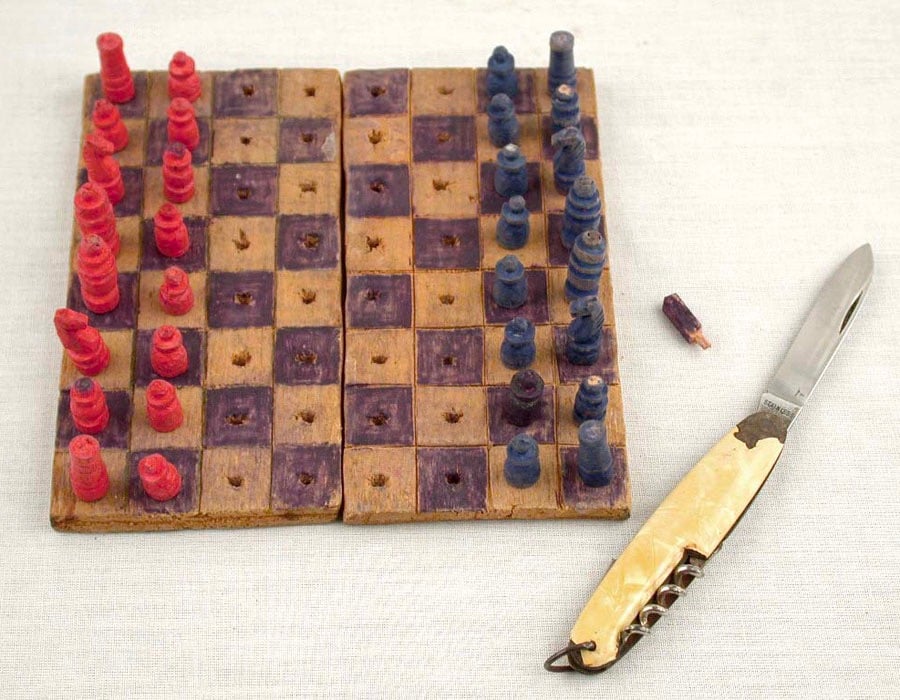
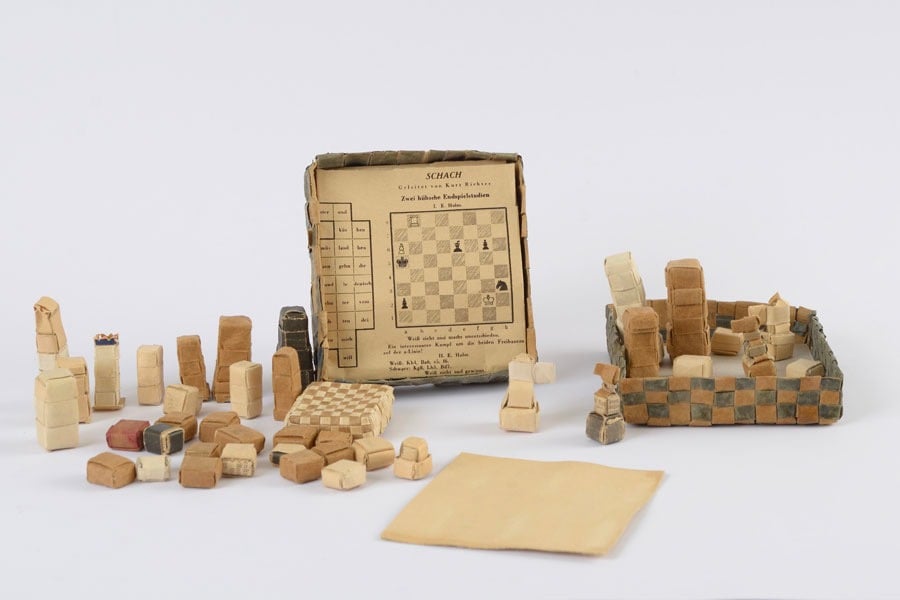
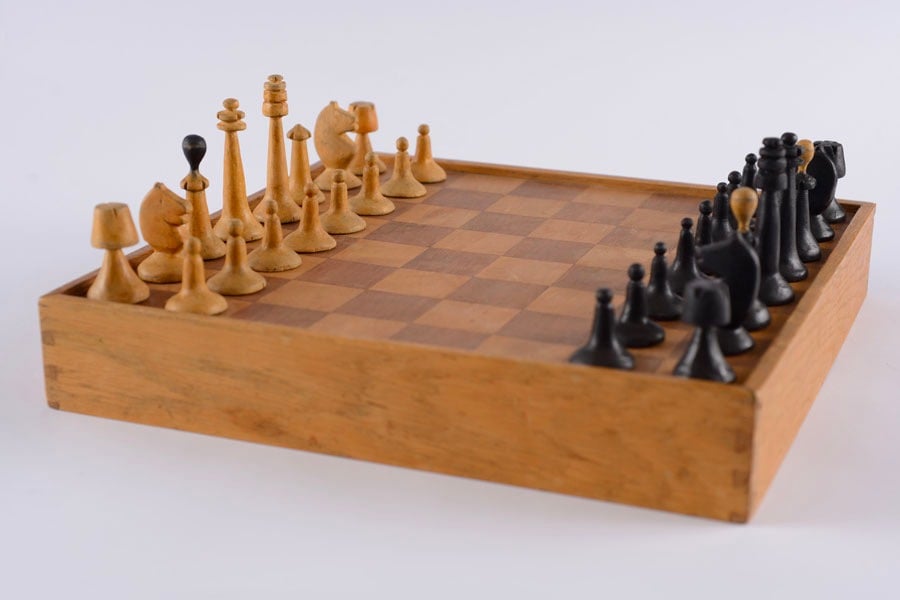
From Yad Vashem, Israel’s official memorial to the victims of the Holocaust, a collection of chess sets used by Jews during the Holocaust. Some of the sets predate the war while others were made and used in camps and in hiding.
Playing chess helped to alleviate the suffering of Jews and allowed them a few brief moments of relief from the hunger, the cold and the fear, temporarily easing their loneliness and sense of isolation.
The Atlantic’s Ed Yong is one of our great biology writers. He recently won a Pulitzer for his coverage of the COVID-19 pandemic, but it’s equally illuminating and much more fun to read him write about tapeworms or some other more benign form of life.
In this case, it’s about songbirds, which have two unusual things in common besides their love of song: they all evolved to detect and eat sugar in the form of sap and nectar [and did so in a way different from hummingbirds, who also love the sweet stuff], and they all did this in Australia, and from there spread out all over the world.
Songbirds probably evolved sweet perception about 30 million years ago, when Australia was much wetter. As the climate dried, the soils became poorer and the eucalyptus trees expanded. The forests abounded with new sources of sugar such as manna, which the songbirds were already primed to find and exploit. Perhaps the extra energy from these abundant calories allowed them to migrate over long distances and travel to other continents. Perhaps they could thrive in their new homes by finding flowers that were already baiting insects with nectar. “They are the most successful group of birds,” Eisthen told me. “You have to wonder how much of their success is due to this hidden talent, which allows them to invade new niches and feed on food sources that other animals are not exploiting.” …
Meanwhile, Sushma Reddy, an ornithologist at the University of Minnesota, points out that hummingbirds, songbirds, and parrots, three groups of birds with lots of nectar-eating species, “are also the same lineages that have convergently evolved vocal learning”—the ability to make new songs and sounds after listening to other individuals. Could these traits be related? Perhaps there’s a hidden connection between the sugary riches of Australia’s forests and the beautiful tunes that fill the air of every continent—between sweetness of palate and sweetness of voice.
Side note: Ed mentions in a parenthetical here that “fans of the board game Wingspan and its Oceania expansion will be familiar with the importance of nectar to Australian birds.” I, in fact, was not familiar with the board game Wingspan or any expansions thereof, so I looked it up:
You are bird enthusiasts—researchers, bird watchers, ornithologists, and collectors—seeking to discover and attract the best birds to your network of wildlife preserves. Each bird extends a chain of powerful combinations in one of your habitats (actions). These habitats focus on several key aspects of growth:
- Gain food tokens via custom dice in a birdfeeder dice tower
- Lay eggs using egg miniatures in a variety of colors
- Draw from hundreds of unique bird cards and play them
The winner is the player with the most points after 4 rounds.
Also, apparently it’s a card-based game, but is also available for computers via Steam. The more you know!
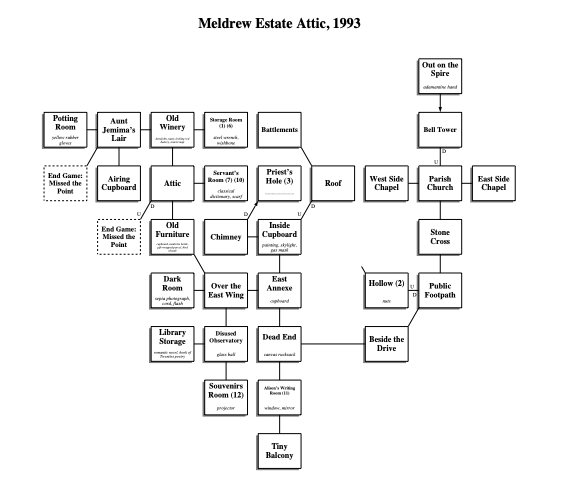
50 Years of Text Games by Aaron Reed is a favorite newsletter of mine. (It’s a hard newsletter to read in your email right away, but a rewarding one to pile up and save.) It specializes in in-depth explorations, typically at a single game per newsletter, but also takes a wider view to try to understand why this game at that moment was particularly significant or representative.
Here’s an example of a great newsletter about a game I do not know well: Graham Nelson’s Curses, from 1993. Curses, Reed, argues, emerges at an unlikely moment (surrounded by emerging CD-ROM games and exploding console popularity) to bring about an equally unlikely renaissance of interactive fiction.
Curses is scavenger hunt meets Dante’s Inferno, “an allegorical rite of passage,” adventure game by way of historical footnote. It certainly owes a great debt to Infocom, recreating the company’s signature style even while literally resurrecting its technical bones…
But Nelson also took much inspiration from history and classics. When asked once about his favorite games and authors, he gave much more space to the latter, listing “Auden, Eliot, Donne, Browning, Elizabeth Bishop… For plays, Tom Stoppard, Christopher Hampton, David Hare.” Curses is steeped in antiquities, from the abandoned odds and ends squirreled away in the Meldrew attics—an old wireless radio, for instance, which seems to do nothing when turned on until you realize it just takes a few turns to warm up—to its detailed time travel excursions to lovingly researched long-ago eras. It’s a game very much about odd corners and margins: interstitial places…
Nelson’s game would take over the IF newsgroups as players who thought they’d seen the last of the great text adventures discovered a worthy modern successor. “Congratulations,” wrote one poster: “Its almost like having Infocom back.” It helped that the game had so many nooks and crannies and puzzles, endless puzzles, that at least some of them were bound to be stumpers for any given player. Hint requests and discussion of the game proliferated, and dominated the newsgroups through the rest of 1993 and 1994: so much so there was a half-hearted proposal to split it all off into a dedicated new group, rec.games.curses, just so there’d be enough oxygen to talk about anything else.
The other big thing Nelson did with Curses is build a compiler for the Infocom virtual machine so that players and designers could create their own text adventures. Kind of like Dante importing the classic epic into the vernacular. Everybody could now do it themselves.
That juncture — a compelling world, an obsessed and supportive community, and (there’s no better way to put this) the means of creative production — have proved over and over again to be the secret formula for building something beautiful and new in art.
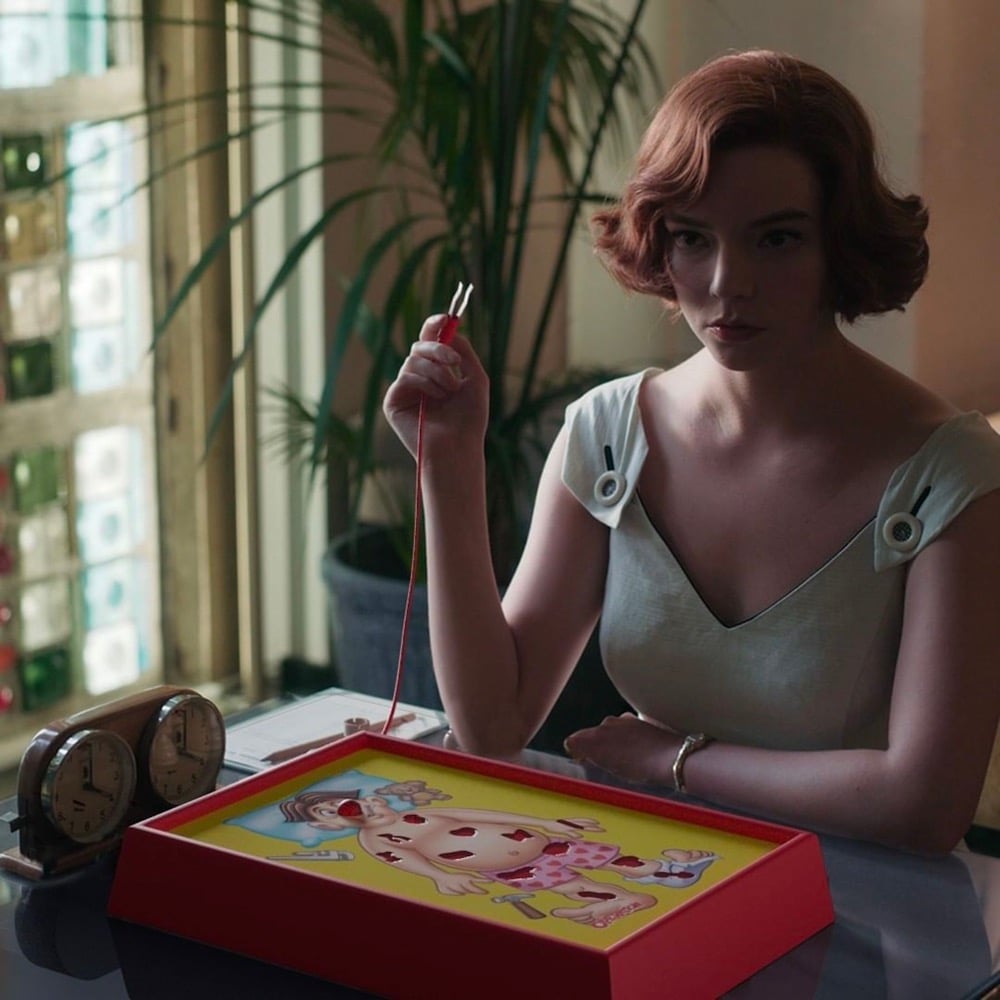
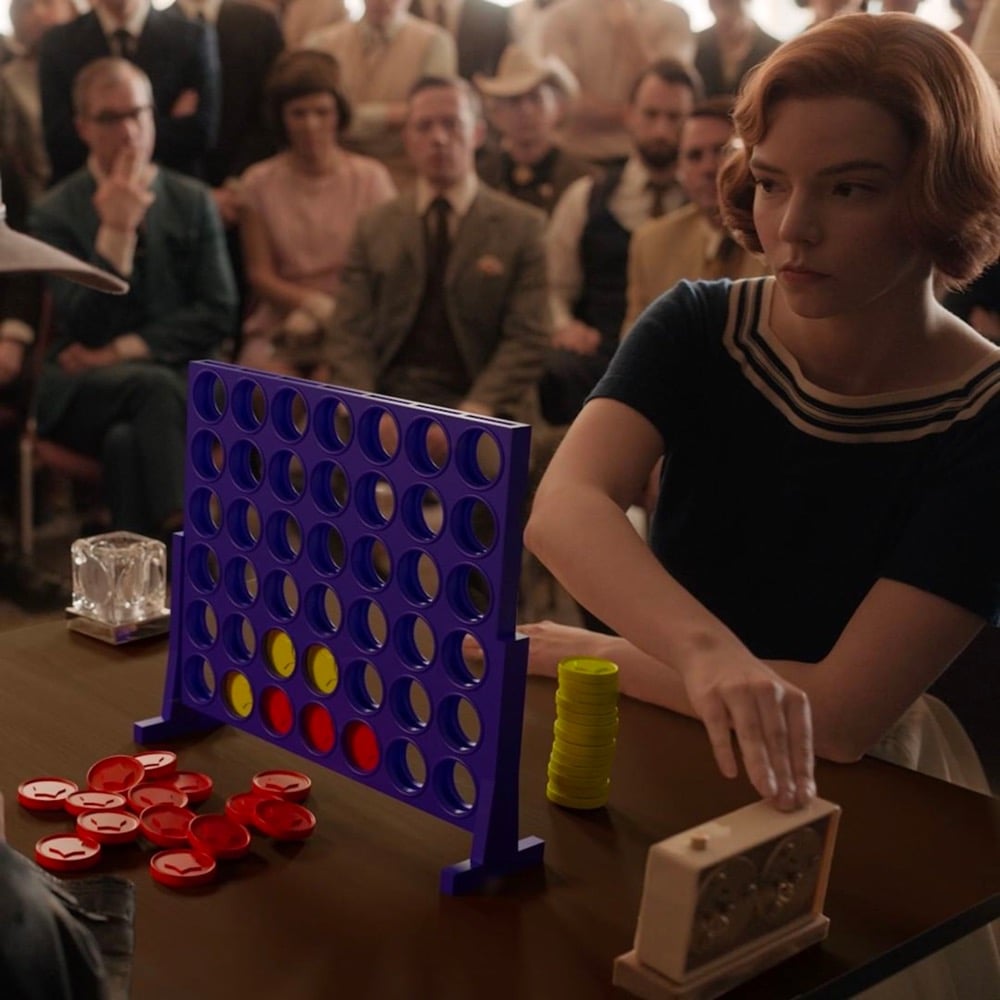
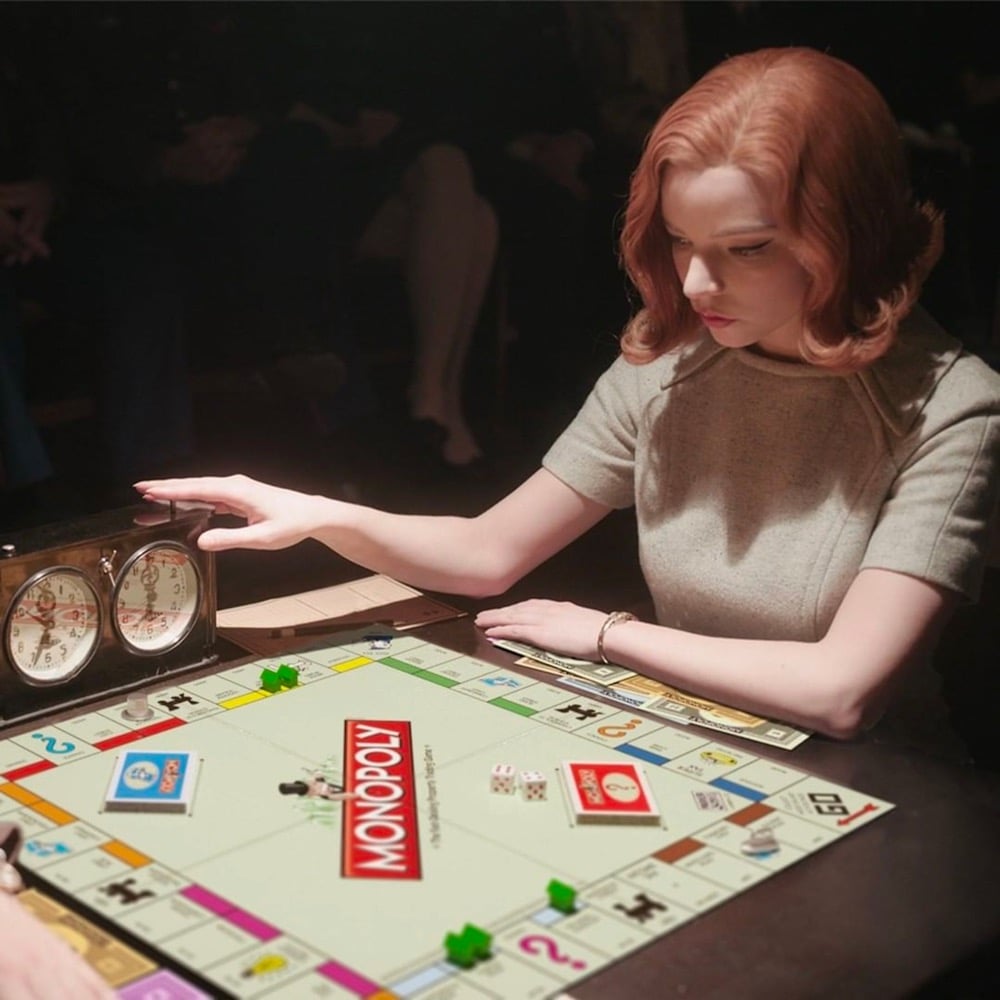
Netflix spoofed their own hit show by photoshopping Beth Harmon from The Queen’s Gambit intensely playing children’s board games like Operation, Monopoly, Connect Four, and Jenga.
This look inside the world of professional tag — the court setup, the vocabulary, the strategy — by Phil Edwards was the perfect low-stakes thing I needed to watch today. If you’d like to know more after watching, you can check out the World Chase Tag site, including the rules and terminology of the game (which has too many trademarked terms for my taste) or some competition videos (this compilation of the best moves from the last world championships is probably a good place to start).
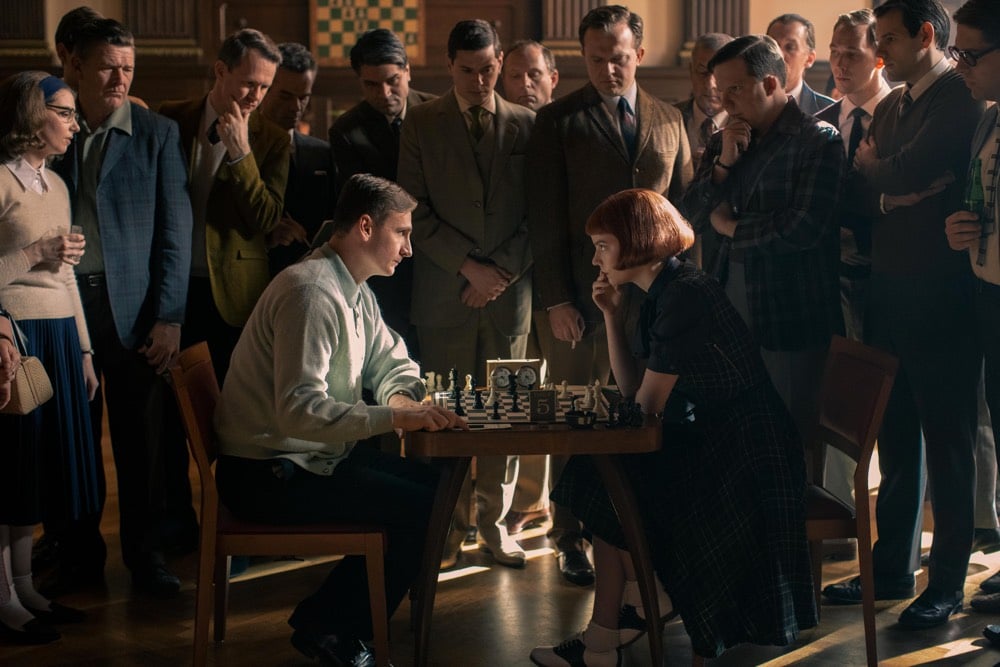
Like many of you, I watched and loved The Queen’s Gambit on Netflix (trailer). Part of the reason it’s so compelling is the care the show’s creators took in accurately portraying the chess players, games, and tournaments. Over the past few weeks, I’ve been reading articles by and interviews with chess experts on what the show got right and wrong. I’ll link to some of them below, but this interview with Garry Kasparov, one of the best chess players ever and an advisor to the show, is particularly worth reading. Here he talks about choosing a real game to be played as the final match in the series (spoilers):
Most of the games, it was not difficult, but the biggest challenge was the last game, because the last game is just, it’s a full game. And the problem is that the last game had to be played by the Queen’s Gambit. Of course I could pick up games from other openings, but it would be very much against the spirit of the book. How did I find a good game that will be played for 40 or so moves adjourned in a complicated situation? And then you have this very important element of Benny and his team calling from New York. It means the position had to be complicated. I found a few games and picked up one: Patrick Wolff against Vassily Ivanchuk, Biel Interzonal, 1993. Wolff sent me a note a couple of days after the show was released: “I recognize the game.” It was quite an obscure game. He said, “Garry, how on earth did you find it?” I said, “I had certain parameters, with the gambit, the number of pieces left, so basically, I ended up with 700 games.” It’s not perfect, because it’s not exactly as complicated as I want it, but it fit the book description: game adjourned, complicated position. And even with all the ruckus, he’s pushing the rook. The rook is trapped in the center. I preserved most of the game description and I think it helped, because that’s a climax, and the climax is something that people always recall.
The interview is interesting throughout. Here are some of the other articles I’ve read: former pro Linda Diaz, former top 10 player Judit Polgar (and others), former NY Times chess columnist Dylan Loeb McClain, chess pros Alexandra and Andrea Boetz, 2-time US champ Jennifer Shahade, and ChessBase editor Albert Silver.
I missed this back in March (I think there was a lot going on back then?) but the feature-length documentary AlphaGo is now available to stream for free on YouTube. The movie documents the development by DeepMind/Google of the AlphaGo computer program designed to play Go and the competition between AlphaGo and Lee Sedol, a Go master.
With more board configurations than there are atoms in the universe, the ancient Chinese game of Go has long been considered a grand challenge for artificial intelligence. On March 9, 2016, the worlds of Go and artificial intelligence collided in South Korea for an extraordinary best-of-five-game competition, coined The DeepMind Challenge Match. Hundreds of millions of people around the world watched as a legendary Go master took on an unproven AI challenger for the first time in history.
During the competition back in 2016, I wrote a post that rounded up some of the commentary about the matches.
Move after move was exchanged and it became apparent that Lee wasn’t gaining enough profit from his attack.
By move 32, it was unclear who was attacking whom, and by 48 Lee was desperately fending off White’s powerful counter-attack.
I can only speak for myself here, but as I watched the game unfold and the realization of what was happening dawned on me, I felt physically unwell.
Every once in a while during my internet travels, I run across something like this video: something impossibly mundane and niche (a ~26-minute video of someone solving a sudoku puzzle) that turns out to be ludicrously entertaining. I cannot improve upon Ben Orlin’s description:
You’re about to spend the next 25 minutes watching a guy solve a Sudoku. Not only that, but it’s going to be the highlight of your day.
The solver himself calls it “a work of sublime genius” and “one of the most extraordinary puzzles we’ve ever seen”. It’s fascinating listening to him slowly uncover different aspects of the puzzle — watching him methodically figure out the 3s was genuinely thrilling. And the symmetry thing at the end…
If you fancy yourself a sudoku master, you can try solving the puzzle yourself here (keeping in mind the special chess-related rules laid out in the video). (via @robinsloan)
In this charming short film, The Magic of Chess, some young competitors at the National Elementary Chess Championship explain what they find so intriguing about the game. From an Atlantic piece on the film:
The children interviewed in the film are articulate and wise beyond their years. “When I asked the kids questions like, ‘What has chess taught you?,’ I was surprised, given their limited life experience, that they could formulate a response beyond the obvious mechanics of the game,” Schweitzer Bell told me.
Chess “teaches you how to make a plan,” one child says in the film.
“When you lose, you learn from your mistakes,” says another.
I was curious about the tournament, so I looked up the results and the standings are so full of Asian, Indian, Latino, and other non-European language names that my browser offered to translate the page for me. Another thing that jumped out at me was that most of the top competitors in the K-6 competition were 6th graders, except for 2nd grader Aditya Arutla finishing in 8th place. Wow!

Is this the first salvo in the end of year barrage of reviews? Polygon are going all out anyway, with a review of the whole decade! “Looking back at the past 10 years in pop culture.” There’s lots to read and I can’t say I’ve gone over the whole thing yet but it’s a fun mix.
The second decade of the 21st century was marked by seismic shifts in media and entertainment — loot boxes, games as a service, esports, livestreaming, virtual reality, smartphones, streaming services, “binge” watching, cloud computing, corporate consolidation, and a blockbuster takeover of the box office. It’s tempting to dismiss those items as big-picture developments rather than changes that affect us personally. But as we increasingly rely on pop culture as the lens through which we process the world around us — and, as ever, a mirror that reflects that world back at us — it’s important to take a breath every so often to ponder how we got here and what it all means.
They’ve got a bunch of lists, some which are actually lists of lists by various team members, like The best movies of the 2010s (some surprising choices as well as some Fury Road and Spider-Man: Into the Spider-Verse), or doing one detailed selection like The best comics of the 2010s, and also some deeper dives in individual topics, like Why Minecraft is the most important game of the decade.
Counting Minecraft among the most influential games of the 2010s is a no-brainer. According to its developer, Mojang, Minecraft recently became the bestselling video game of all time, beating out Tetris by moving over 176 million units. Unlike Tetris, it hit that number in a single decade. (Emphasis mine.)
Older posts





Socials & More