kottke.org

...is a weblog about the liberal arts 2.0 edited by Jason Kottke since March 1998 (archives). You can read about me and kottke.org here. If you've got questions, concerns, or interesting links, send them along.

626 kottke.org posts about design


Geotypography (or is that typegeography?)

I like these Alphaposters by Happycentro, especially the gorgeous Lowercase F Island:

F Island

By Jason Kottke    Feb 19, 2010    design   geography   maps   typography

Overcoming creative block

A number of designers, artists, and photographers share how they combat creative block. One solution begins:

Slice and chop 2 medium onions into small pieces.
Put a medium sized pan on a medium heat with a few glugs of olive oil.
Add the onions to the pan, and a pinch of salt and pepper.

By Jason Kottke    Feb 12, 2010    art   design   photography

Beautiful planetary posters

All nine of the planets in our solar system are represented in these wonderful posters by Ross Berens.

Pluto poster

Pluto. Never forget.

By Jason Kottke    Feb 8, 2010    design   Pluto   Ross Berens   space

The best of Fortune visual design

Fortune magazine used to have some of the best graphics and design around...here are some of the best.

By Jason Kottke    Feb 5, 2010    design   Fortune

Multi-touch interactions on the iPad

For all you UI nerds out there, a four-minute video collection of some of the multi-touch gestures and actions on the iPad from Wednesday's event.

Here are the annotations. (via @h_fj)

By Jason Kottke    Jan 29, 2010    Apple   design   iPad   video

Feltron Annual Report 2009

You know it, you love it, the Feltron Annual Report for 2009. This year, he asked people who knew him to report data.

Update: Here's a nice interview with Felton about the report.

Interesting letterhead

From the same folks who brought us the excellent Letters of Note comes Letterheady, a collection of interesting letterheads. Includes letterhead from Albert Einstein, Adolf Hitler, and my favorite: Robot Salesmen Ltd.

Robot Salesmen Ltd.

By Jason Kottke    Jan 11, 2010    design

The future of magazines, maybe, pt 2

Magazine publishers Bonnier and BERG, a London design consultancy, have collaborated on a digital magazine prototype called Mag+. The conceptual device is impressive in its restraint and its truth to form and function.

We find that the graphical page-turning metaphors that you see quite frequently in web-based e-magazine readers are not terribly believable, and they don't feel very honest to the form of the screen. [...] Scrolling systems are more appropriate to what we're dealing with.

Sing it, brother! Also of note is the way that the video takes the conventional "let me talk over some graphics" screencast and presents it in a much more compelling way.

By Jason Kottke    Dec 17, 2009    BERG   design   magazines   video

I.D. Magazine no more

I.D. Magazine folds after 55 years of publication ; the design world mourns. The staff didn't even know it was coming.

By Jason Kottke    Dec 16, 2009    design   magazines

Tube typography

A lengthy discussion of the typeface for the London Underground, both the old version by Edward Johnston as well as the refresh.

"We continue to make subtle changes" Ashworth admits, "but we're very wary about doing too much and are always happy to roll back changes if they end up not feeling 'right.'

"The most recent major change was to the numbers 1 and 4 earlier this year. Not a lot of people noticed until a poster appeared advertising engineering work on the 14th of February -- then I got A LOT of emails."

Hating a book by its cover

Sometimes a book cover is so bad that it keeps you from reading the words within, even if those words are some of the best Twain ever wrote.

The cover of the Signet Classic [version of The Adventures of Huckleberry Finn] was a drawing of a ruddy-cheeked scamp, buck teeth prominent, clutching an apple, with a perky little newsboy tam cocked at a saucy Depression-era angle. Here Huck bore an alarming similarity to both Jerry Mathers of "Leave It to Beaver" and Britney Spears. Revolting. So once again my efforts to polish off this peerless classic were stymied. I could never get more than a few pages into the book before the illustration on the cover made me sick.

By Jason Kottke    Dec 7, 2009    books   design

A world flag

What the world needs is a great flag, a flag of pure bliss. Here's one of the intermediate steps to the finished product; it's an average of all the world's countries' flags weighted by population.

Average World Flag

By Jason Kottke    Dec 1, 2009    design   flags   remix

Design actually within reach

Greg Allen finally finished his version of Enzo Mari's 1974 Autoprogettazione dining table made from wood from Ikea's Ivar shelving system. An example of the Mari's original table went at auction a few years ago for $14,000; Allen paid $120 for his Ikea raw materials.

By Jason Kottke    Nov 30, 2009    design   Enzo Mari   Greg Allen   Ikea

Oodles of blueprints

A huge repository of blueprints of cars, trains, ships, weapons, sci-fi vehicles, etc.

Millennium Falcon blueprint

(via quips)

By Jason Kottke    Nov 24, 2009    design

New NFL helmet designs

Ken Carbone redesigned three of the crappiest NFL helmets, those of the Tampa Bay Buccaneers, Washington Redskins, and New England Patriots.

Among the weakest designs are the Washington Redskins and Tampa Bay Buccaneers, whose visually complicated logos become a graphic mess when televised and, I imagine, even if you're sitting on the fifty-yard line. At the very the bottom of the list are the New England Patriots. The Patriots' helmet is plastered with their logo, which comes dangerously close to looking like a wind-swept John Kerry dressed up like a Minute Man.

New Pats helmet
(thx, jason)

By Jason Kottke    Nov 11, 2009    design   football   sports

Soviet commercial advertising posters

There are some tsarist Russia posters in the collection as well. (via do)

By Jason Kottke    Nov 11, 2009    design   Russia

Peter Paul Rubens, painter, designer, and diplomat

In addition to being a painter of some repute, Peter Paul Rubens was also a diplomat:

In Master of Shadows, Mark Lamster tells the story of Rubens's life and brilliantly re-creates the culture, religious conflicts, and political intrigues of his time. Commissions to paint military and political leaders drew Rubens from his Antwerp home to London, Madrid, Paris, and Rome. The Spanish crown, recognizing the value of his easy access to figures of power, enlisted him into diplomatic service. His uncommon intelligence, preternatural charm, and ability to navigate through ever-shifting political winds allowed him to negotiate a long-sought peace treaty between England and Spain even as Europe's shrewdest statesmen plotted against him.

and a graphic designer.

Moretus was Rubens's most frequent design client. To save his friend money, Rubens generally did his work for Plantin on holidays, so he would not have to charge Moretus his rather exorbitant day rate (Rubens was notorious for his high prices), and even then he agreed to be paid in books.

A three-year-old's view of the NYC subway

Simple NYC subway map

This was my present to my nephew for his 3rd birthday. He loves, loves, loves the subway so my sister asked me if I could make a custom map with all the places that mean something to him on the poster.

Best viewed a bit large.

Update: There's been a bit of confusion...this is not something that I made. I don't even have a nephew.

Update: The subway map was made by Erin Jang.

By Jason Kottke    Oct 22, 2009    design   infoviz   maps   NYC   subway

150 different pasta shapes

From alfabeto to zitoni, here are over 150 illustrations of pasta shapes, a visual pasta encyclopedia, if you will.

Hiding at the very end of the listing is a pasta shape called Marille, which is unusual in that a) it's a recent shape, b) its designer is known, and c) it is no longer available. Marille's designer, Giorgetto Giugiaro, previously had designed some of the most distinctive cars in the world and in 1999 was named Car Designer of the Century. (via @nicolatwilley)

How to design a flag

Ted Kaye has compiled some advice for designing flags.

1. Keep it simple.
2. Use meaningful symbolism
3. Use 2-3 basic colors
4. No lettering or seals
5. Be distinctive or be related

In a nutshell:

The flag should be so simple that a child can draw it from memory.

The best flag in the world follows all of these rules.

By Jason Kottke    Oct 13, 2009    design   flags   how to

The value of time off

Every seven years, Stefan Sagmeister closes his design studio for a year of focused R&D.

Every seven years, designer Stefan Sagmeister closes his New York studio for a yearlong sabbatical to rejuvenate and refresh their creative outlook. He explains the often overlooked value of time off and shows the innovative projects inspired by his time in Bali.

A bathroom in a box

One of the finalists in the Roca's bathroom-related design contest, Jump the gap, was Spanish design studio Yonoh's "box." It's a self-contained, customizable modular bathroom that features enough room for a toilet, wash-basin, shower, seat, two shelves, a towel rack, and a section for extra space and storage. All of the faucets are electronic, with displays indicating the temperature and the amount of water consumed. This "box" requires hookups for water and electricity, and after water is used by the sink or the shower, it's stored in a conservation-friendly water tank where it supplies the toilet. It remains to be seen if the eco-friendly "box" will compete with other cubic commodes. Regardless, it's quite a leap from the Port-a-Potty.

By Ainsley Drew    Oct 8, 2009    bathrooms   design

A tray for tea and tomes

Yu Hun Kim's reading tray prevents coffee stains and crumb-filled spines. Part of a series called "Aids for Multi-Tasking," the transparent, acrylic tray covers your magazine or book and features an indentation for your coffee mug. Imagine covering the surface in food and gradually eating your way through an article. But how do you turn a page?

One pig, 185 different products

PIG 05049 by Christien Meindertsma recently won the 2009 Index Award in the Play category. This book looks amazing.

05049 was an actual pig, raised and slaughtered on a commercial farm in the Netherlands. Rotterdam designer Christien Meindertsma was shocked to discover that she could document 185 products contributed to by the animal.

Meindertsma's design includes the publication of her book, PIG 05049, which charts and pictures each of the products supported by the animal. The surprise is in the fact that elements of production contributed to by pig farming include not only predictable foodstuffs -- pork chops and bacon -- but far less expected non-food items: ammunition, train brakes, automobile paint, soap and washing powder, bone china, cigarettes.

PIG 05049

The caption on the page reads:

Fatty acids derived from pork bone fat are used as a hardening agent in crayons and also gives them their distinctive smell.

Crayons smell like pig bone fat. I don't think I'll use crayons ever again without thinking of that little factoid.

See also I, Pencil. Nobody knows how to make a pencil and nobody knows where all the parts of a pig go either. (via design observer)

Michael Jackson Monument Design Competition winners

Winners in the Michael Jackson Monument Design Competition have been announced. Evan Roth, a noted Michael Jackson enthusiast, came in first. I like the second place entry only slightly more:

A gold-plated wind turbine powers an interactively-lit dance floor and speaker system. Michael Jackson's music plays day and night for the fans that congregate in these remote sand flats.

Hack 2 Work, tips for designers

Hack 2 Work is a series of tips and tricks for designers from Core77. Looks good so far. Check out Liz Danzico's How to Learn About Your Clients From Their Table Manners (to be taken with a grain of salt, I'm sure):

When the food arrives, does your client salt and pepper the food before he or she tastes it? If so, this is a clear sign that your client is potentially closed-minded, not open to new ideas, or set in his or her ways. If your client first tastes the food, and then adds salt or pepper, tremendous. This suggests your client has opinions, and is not afraid to exercise them-but only after the voice of the "creator" (in this case the chef) has been fairly given a chance first.

and How to Make Your Client's Logo Bigger Without Making Their Logo Bigger from Michael Bierut:

Like all con games, this one is based on the illusion that the sucker has the advantage. In this case, it's the conviction that this kind of client always has that it's your job to do as they say. Little do they realize that your final allegiance is not to them, but to the quality of the work, something that you cannot in good conscience permit them to jeopardize with their lack of taste.

Update: James Grimmelmann shares his similar tip for lighting designers:

The lighting-designer version of this is to tell the director that yes, you can make the lights brighter, but you'll need to turn off the power for a few minutes while you change some of the wiring. Turn everything off, wait fifteen minutes while the director's eyes adjust to the dark, then turn everything back on. It sure does look brighter now, doesn't it?

New issue of Emigre magazine, sort of

The influential design magazine Emigre stopped publishing issues back in 2005, but now they're releasing issue No. 70, which is actually a hardcover book celebrating the best of Emigre from the past 25 years.

This book, designed and edited by Emigre co-founder and designer Rudy VanderLans, is a selection of reprints, using original digital files, tracing Emigre's development from its early bitmap design days in the late 1980s through to the experimental layouts that defined the so called "Legibility Wars" of the late 1990s, to the critical design writing of the early 2000s.

(via quipsologies)

By Jason Kottke    Aug 19, 2009    books   design   emigre   magazines

Killed book covers

Some well-known book cover designers talk about their rejected cover designs.

By Jason Kottke    Aug 18, 2009    books   design

Coca-Cola vs. Pepsi branding

You know that image that's been going around that shows several revisions to the Pepsi logo while the Coca-Cola logo is the same as it's been since 1885? It tells a compelling story...Pepsi shifting its brand every few years in an attempt to catch up to steady market leader Coca-Cola. But of course it's bullshit...Armin Vit constructs a more accurate brand timeline that shows many Coca-Cola logos over the years.

By Jason Kottke    Aug 6, 2009    arminvit   branding   Coca Cola   design   food   Pepsi   timelines

Design Observer redesign

Lovely redesign for Design Observer, which is also expanding in scope.

100 years of design manifestos

John Emerson has collected a number of design manifestos dating back to 1909.

Since the days of radical printer-pamphleteers, design and designers have a long history of fighting for what's right and working to transform society. The rise of the literary form of the manifesto also parallels the rise of modernity and the spread of letterpress printing.

You should follow me on Twitter

Using a link to his Twitter account from his blog, Dustin Curtis tested the effect of language on clickthrough rates.

Making the phrase more direct and personal by adding the words "you should" increased the clickthrough rate by 38% to 10.09%.

Curtis started out with "I'm on twitter" and eventually increased the clickthrough rate by more than double by changing the wording to "You should follow me on Twitter here." (And Jesus, gorgeous site design too.)

Typography reference for the iPhone

The Typography Manual looks like a nice little iPhone app for designers.

The Typography Manual has several useful features and resources for designers, including a visual type anatomy glossary, a font size ruler, an em calculator, and a enough content to fill a 60 page book. It has the all the essentials of a desk reference in a regularly updated pocket resource.

(via quips)

Nice custom lettering

Lettercult has a round-up of some notable "custom letters" from the first half of 2009...hand lettered type, calligraphy, sign painting, graffiti....stuff like that. This is one of my favorites:

Custom Letters

(via do)

By Jason Kottke    Jul 7, 2009    best of   best of 2009   design   lists

Chip Kidd's favorite covers

Chip Kidd shares his seven favorite book cover designs (that aren't his). (via do)

By Jason Kottke    Jul 7, 2009    best of   books   Chip Kidd   design   lists

Loose tweets sink fleets

If World War III started tomorrow, these would be the propaganda posters.

Someone Tweeted

By Jason Kottke    Jul 6, 2009    design   Twitter

Flip Flop Fly Ball

Flip Flop Fly Ball is a marriage of baseball fandom and an enthusiasm for infographics. While not strictly baseball, this comparison of the sizes and shapes of sports balls is a favorite.

By Jason Kottke    Jun 22, 2009    design   infoviz   sports

Folding experience into paper maps

Two recent projects that incorporate the experiences of map users into the subsequent versions of the maps:

1. For the Salone di Mobile event in Milan, The British Council commissioned a map of the event that would be augmented each day with information flowing in from Flickr, Twitter, blogs, and people's physical scribbles on the maps.

One thing that's very interesting to us that is using this rapidly-produced thing then becomes a 'social object': creating conversations, collecting scribbles, instigating adventures - which then get collected and redistributed.

More information about the project is available on The Incidental site.

2. Walking Maps, produced by Mike Migurski at Stamen, encourages people print out maps from OpenStreetMap, annotate them with missing information, and scan them back in.

In some places, participants are creating the first freely-available maps by GPS survey. In other places, such as the United States, basic roads exist, but lack local detail: locations of traffic signals, ATMs, caf'es, schools, parks, and shops. What such partially-mapped places need is not more GPS traces, but additional knowledge about what exists on and around the street. Walking Papers is made to help you easily create printed maps, mark them with things you know, and then share that knowledge with OpenStreetMap.

By Jason Kottke    Jun 18, 2009    design   maps   mikemigurski

50 ridiculous design rules

Never Use White Type on a Black Background.

Design has many rules that claim to be big truths and full of wisdom. Designers all go by rules that work for them. However, their rules may not work for someone else, or for a particular piece of design work. When a rule is forced upon you, it stops working and becomes a joke, like "Never use a PC," or "Leave it until the last minute," or the most famous of them all, "Less is more." The problem is that every rule related to, or governing, design is ultimately ridiculous. In this book we have collected the most talked-about rules and the viewpoints of designers and thought leaders who live by them or hate them.

(via swissmiss)

By Jason Kottke    Jun 12, 2009    books   design

Later today: Layer Tennis

This afternoon at 3pm ET, I will offering the commentary in a first round match of the 2009 Layer Tennis playoffs. The match features Aaron Draplin vs. Sam Potts and promises to be awesome. Come by and heckle. BTW, the morning match between Chris Glass and Greg Hubacek with commentary by Rosecrans Baldwin has already begun.

Designing for the deceased

Marie Mundaca designed three of David Foster Wallace's books (the insides, not the covers). The second one was challenging but rewarding.

Wallace's idea was to have leaders and labels, like a diagram. He wanted something that looked like hypertext rollovers that were immediate and at hand. I thought this whole thing might be a bit much for me to design. It seemed like it might be a full-time job. I sent it off to one of my favorite designers, who shot me an email back saying something along the lines of "There is not enough money in the world to make me do this."

The third was just plain tough.

The demise of "form follows function"

Regarding the design of digital products, form doesn't follow function anymore.

Thanks to digital technology, designers can squeeze so many functions into such tiny containers that there is more computing power in a basic cellphone (not a fancy model, like a BlackBerry or iPhone, just a cheap one) than at NASA's headquarters when it began in 1958. That is why the appearance of most digital products bears no relation to what they do.

I've heard this idea expressed before, specifically about the iPhone, but I can't remember where. Maybe it was Rawsthorn herself in Objectified?

Nice posters for the 2012 Olympics

Alan Clarke has designed some lovely proposed posters for the 2012 Olympics in London.

2012 Olympic Posters

The Ministry of Type likens them to Otl Aicher's classic work for the 1972 Munich Games but they also remind me of several of the media packaging mashups, particularly those of Olly Moss.

Dollar Redesign Project

Richard Smith is hosting the Dollar Redesign Project, which is starting to attract some interesting redesigns of American paper currency.

Washington five dollar bill

Ministry of Type has some further analysis, including a comparison to European bills.

By Jason Kottke    May 20, 2009    currency   design   usa

Design award deadline approaching...

The deadline for entering the Winterhouse Awards for Design Writing & Criticism is nearing. Get your entries in by June 1.

The Writing Award of $10,000 is open to writers, critics, scholars, historians, journalists and designers and given for a body of work. The Education Award of $1,000 is open to students (high school, undergraduate or graduate) whose use of writing in a single essay demonstrates originality and promise.

By Jason Kottke    May 19, 2009    design   writing

Brand timeline portraits

A brand timeline portrait shows all the different brands a person uses and interacts with during the course of a typical day.

Brand Timeline Portrait

Originated by Jane Sample, dozens of other people have also created portraits. (via rocketboom)

Update: Make your own at Brand My Day.

Objectified at IFC Center

Objectified is playing at the IFC Center in NYC through May 21.

By Jason Kottke    May 15, 2009    design   movies   NYC   Objectified

Low-fi sci-fi

Nice black and white covers for science fiction books.

"Sanda created each cover using A4 paper, with all the typography printed and placed on the structure by hand," Jones continues. "We then photographed each paper structure and, upon seeing the original black and white images, we didn't feel that any tweaking or further alterations were needed."

The hole punch one is my favorite. (thx, conor)

By Jason Kottke    May 14, 2009    books   design

Sweating the details

The Ministry of Type highlights a small but significant feature on the UI of the Xerox Star, a computer with an early GUI: precise positioning of icons on a dithered background in order to avoid rough edges.

It may be subtle, but it's the kind of thing that reduces the overall apparent quality of your work, the stuff that marks out your work as being standard (read: mediocre) or exceptional. If you feel you shouldn't get precious about such things, perhaps graphic design isn't your thing.

By Jason Kottke    May 7, 2009    design   xeroxstar

Milton Glaser: To Inform and Delight

There's very little information about this online, but here's what I've scraped together. Milton Glaser: To Inform and Delight is a documentary on the legendary designer and it will be released in theaters sometime near the end of May. You know, one of those huge summer blockbusters.

I posted about Glaser's Ten Things I Have Learned several years ago, mostly for point #5's rejoinder to "less is more": "Just enough is more". Rereading it now, I'm much more interested in some of the other points, particularly 1-3.

And the important thing that I can tell you is that there is a test to determine whether someone is toxic or nourishing in your relationship with them. Here is the test: You have spent some time with this person, either you have a drink or go for dinner or you go to a ball game. It doesn't matter very much but at the end of that time you observe whether you are more energised or less energised. Whether you are tired or whether you are exhilarated. If you are more tired then you have been poisoned. If you have more energy you have been nourished. The test is almost infallible and I suggest that you use it for the rest of your life.

The St. John's Bible

The Ministry of Type has a look at The St. John's Bible, a modern-day hand-lettered Bible.

Jackson has brought together an incredible range of styles for the bible, from rich, lush, gold-encrusted illuminations reminiscent of Eastern Orthodoxy to crisp and spare compositions more like the modern style of the Church of England (to my mind at least).

Looks nice. A Heritage Edition is available for $145,000.

By Jason Kottke    Apr 24, 2009    books   design   The Bible

Media packaging mashups

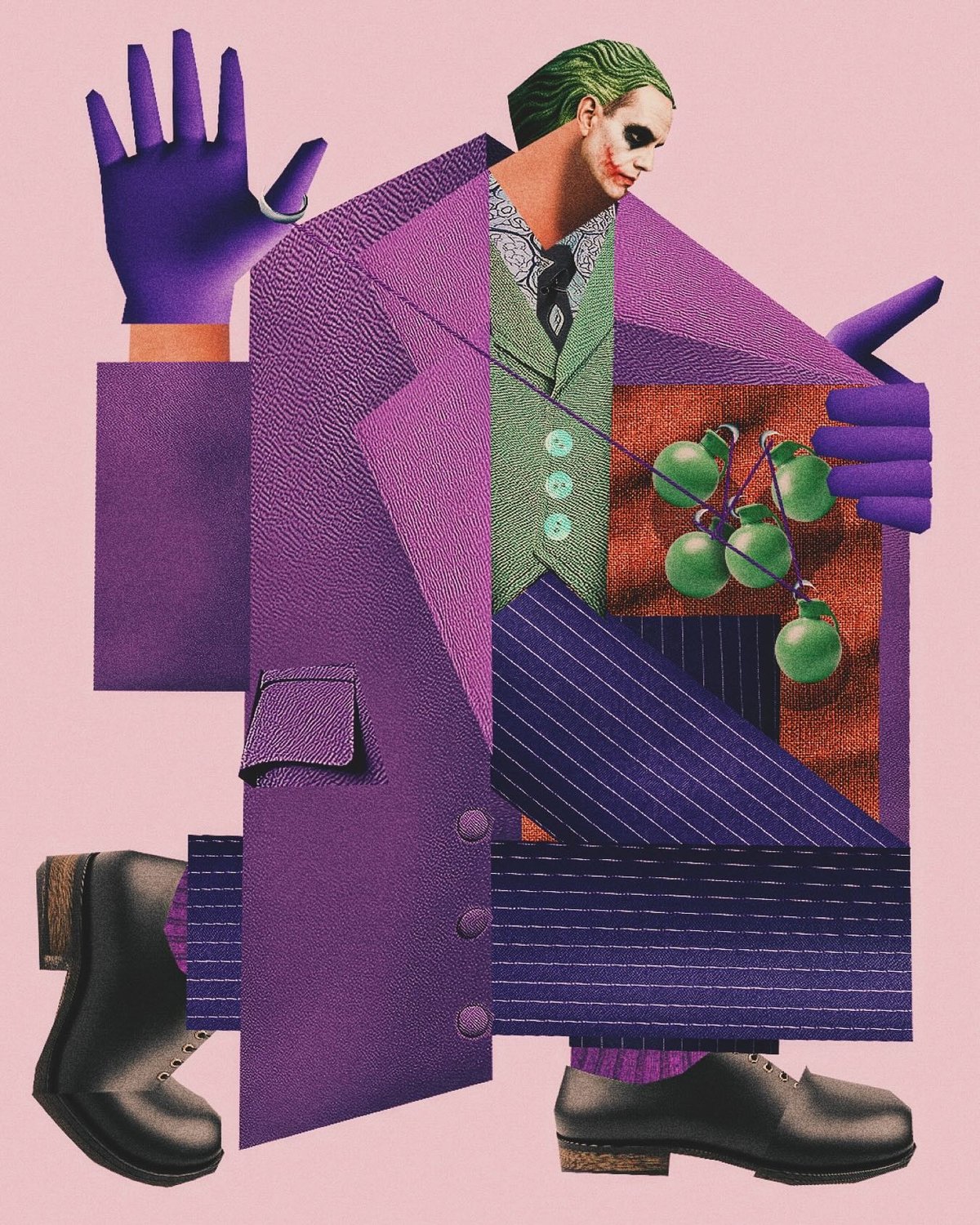
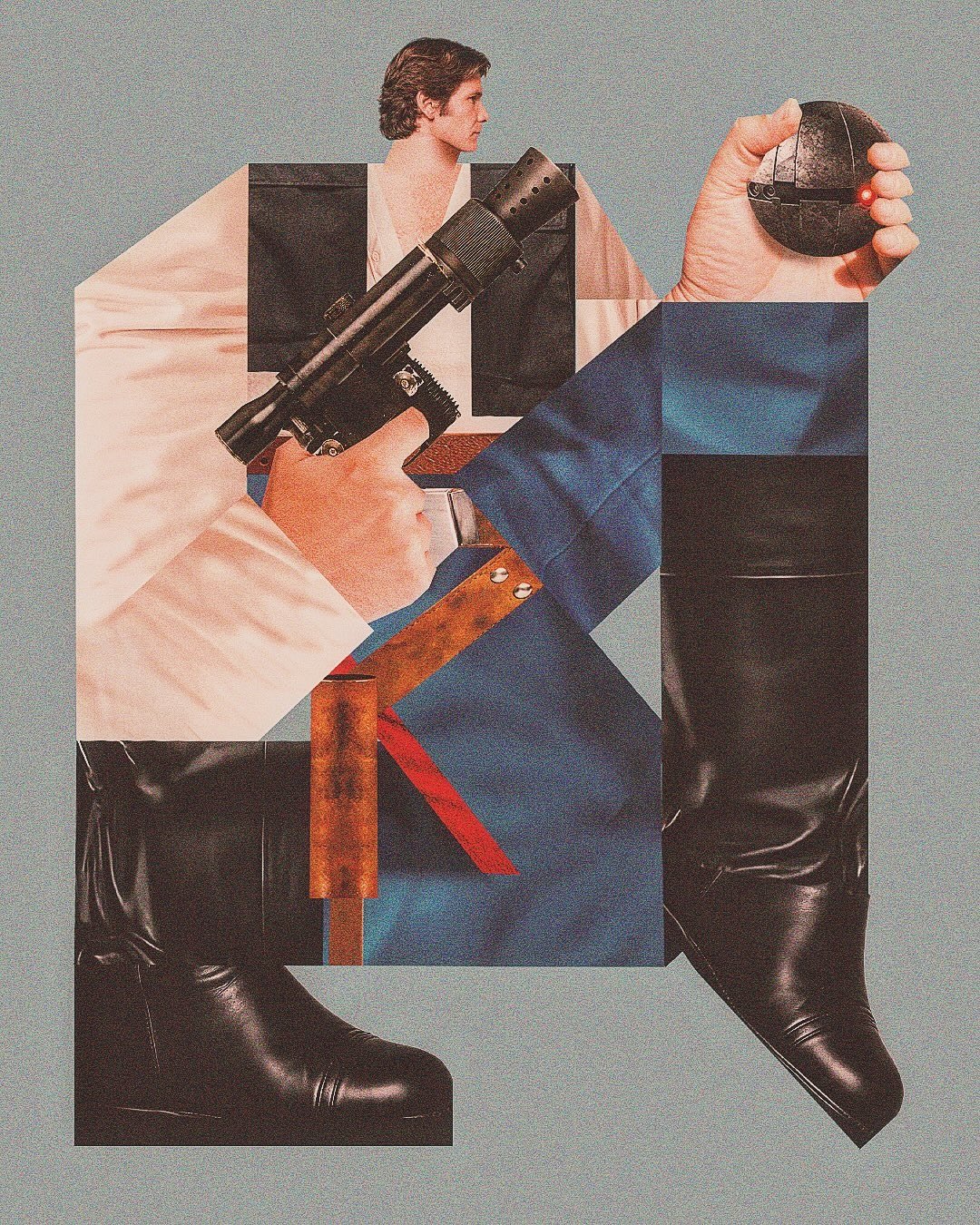
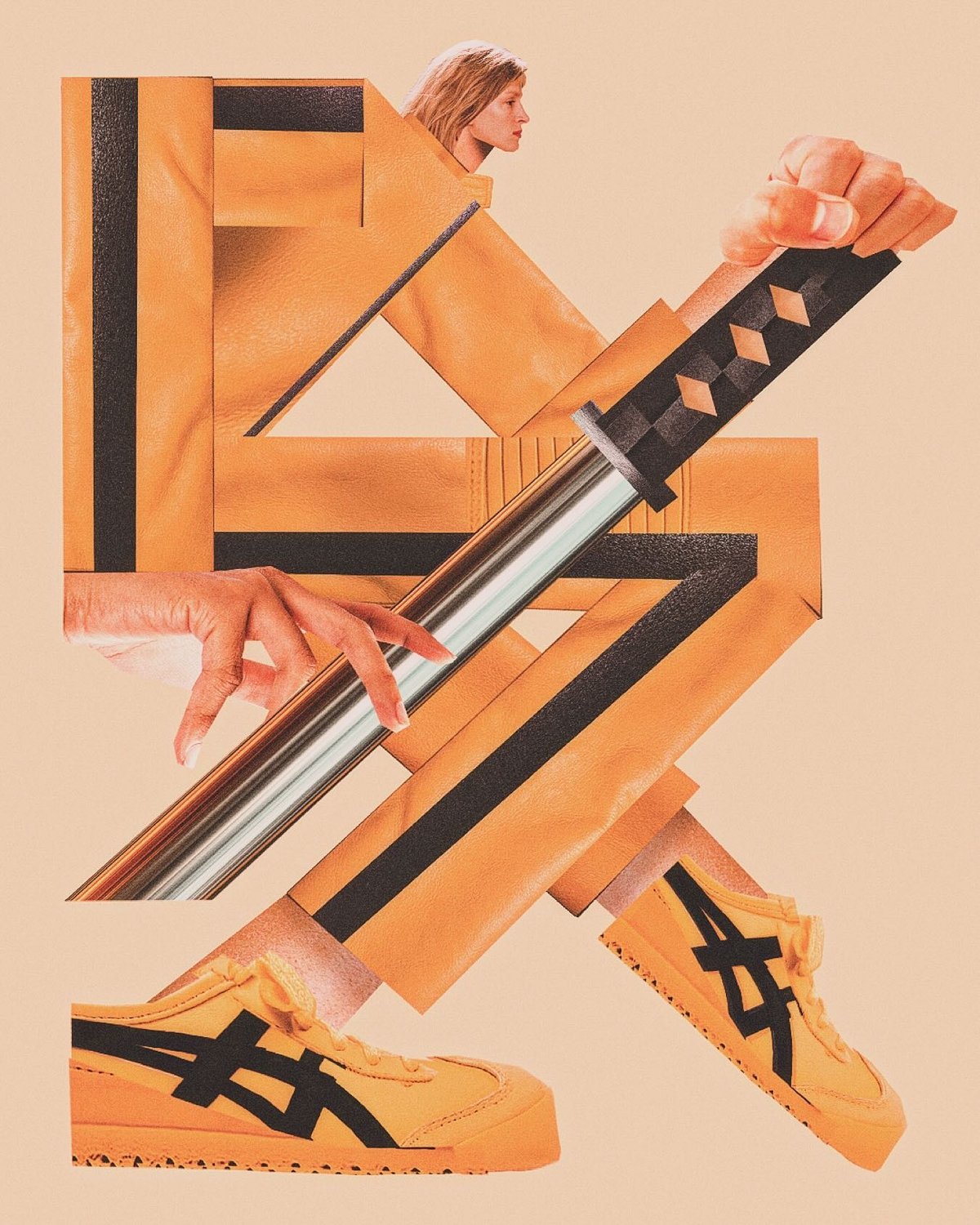
Recently a number of efforts have been made at re-imagining the packaging for movies, books, video games, and other media, mostly mashups and in the illustration style of typical of Saul Bass' movie posters or Penguin Classics book covers. I've collected several examples below.

Olly Moss

Olly Moss made Penguin-like book covers for video games like Ocarina of Time and Half-Life.

M. S. Corley made Penguin-like versions of the Harry Potter books.

I Can Read Movies

In his I Can Read Movies series, spacesick imagines Penguin-like book covers for movies like Close Encounters of the Third Kind, Sixteen Candles, and Back to the Future.

Forrest Lucero designed Penguin-like book covers for songs from The Postal Service and Daft Punk.

Olly Moss

Olly Moss also did simple red/white/black posters for some of his favorite movies, including Die Hard and The Deer Hunter.

A bunch of people on Flickr imagined Nintendo DS tie-in games for movies like Andy Warhol's Empire, Eyes Wide Shut, and 8 1/2. They also did some for TV shows, magazines, web sites, and all sorts of other media.

Criterion video games

The folks on the NeoGAF message board made Criterion Collection-style box art for video games like Super Mario Galaxy, Black and White, and Super Mario 64.

Nikolay Saveliev

Nikolay Saveliev made simple two-color album covers for the likes of Kanye West, Jessica Simpson, and Franz Ferdinand.

Update: Modernist editions of classic album covers. (thx, zach)

Update: Logan Walters is redoing Wu-Tang Clan album covers.

Update: Classic albums reimagined as Pelican books.

Update: Simple Star Wars posters.

Update: Brandon Schaefer did some simple Blu-ray sleeve for movies, very much in the style of Olly Moss. Exergian did some posters for TV shows; the one for Weeds is particularly nice.

Weeds poster

Update: Books as web services.

Update: Panic made some Atari 2600-themed packaging for their software. (thx, daniel)

By Jason Kottke    Apr 22, 2009    books   design   movies   music   remix

Green bean

The spouting bean concept illustrated by Jillian Tamaki for the "Green Chicago" issue of Hemispheres, the inflight magazine for United Airlines, is a little bit of genius.

Without boundaries

From an interview by Kicker Studio of London designer Crispin Jones, where he says that the broad definition of design is perhaps not so bad.

On one level design is horribly inarticulate word - it has no real meaning nor way of encompassing all the things that are classed as "design". This weakness however means that the discipline is kind of without boundaries. I think design allows you to engage with the contemporary world and engage in shaping the world: we're living in a golden age of products/services as technology matures and people integrate it into their lives.

You may have picked up on this by reading kottke.org over the years, but I think that designers, architects, entrepreneurs, filmmakers, writers, scientists, et al. are all engaged in doing the same kind of thing, more or less, and that working "without boundaries" and borrowing the best aspects of many disciplines is one of the keys to maximizing your creative potential. (thx matt)

Office spaces

Cliff Kuang traces the evolution of office designs from the open factory-like floors of Frederick Taylor to the present era of semi-private pods.

Design paradoxes

Adrian Shaughnessy shares ten paradoxes about graphic design; by paradox he means "an opinion or statement contrary to commonly accepted wisdom". I particularly liked these two bits of wisdom:

As part of their training, all designers should be obliged to spend a sum of their own money on graphic design.

And:

If we want to make money as a graphic designer, we must concentrate on the work -- not the money.

Goodbye, Speak Up

Long-running design blog Speak Up will cease publication later this week.

Earlier this year, Bryony and I made the decision to close Speak Up. Seeing weeks and weeks go by where we have only two or three posts (and one of them being the Quipsologies round-up) has become too painful for us. It's also like watching Ozzy Ozbourne today, still holding on to that rock glory but he can't really rock no more, not like he used to.

By Jason Kottke    Apr 13, 2009    design   weblogs

Is the Heinz ketchup bottle good design?

If the glass Heinz ketchup bottle were introduced today, it would likely be disparaged because it doesn't work very well as a ketchup dispenser. But since it's been around so long, people love it.

Like the Apple iPod, a Rawlings baseball and 3M's Post-it Notes, Heinz Ketchup is a rare example of a best-selling brand that is also generally considered to be best in class. It would seem silly to splash out on a more expensive alternative, especially as the glass bottle affirms its stellar status.

That is why Heinz Tomato Ketchup is one of the very few branded products you see in its original packaging in expensive restaurants. "Sometimes we have to accept that we can't better something that already exists," said Jeremy King, who co-owns The Wolseley in London and is now re-opening The Monkey Bar in New York. "When a customer asks for ketchup they generally want Heinz. The iconic glass bottle reassures them that they are getting it." Quite a coup for something that does not really do its job properly.

ps. He-ketchup for manly men.

Update: Daniel Eatock Everything Heinz project:

An edition of 57 sealed cans each containing a composite mix of 57 Heinz canned foods.

(thx, andy)

By Jason Kottke    Apr 13, 2009    design   food
rating: 4.0 stars

Objectified

Some interesting moments from the Objectified screening last night.

- Rob Walker, who writes the Consumed column for the NY Times Magazine, was my favorite person in the movie. I particularly liked his idea for a million-dollar marketing campaign for the stuff we already own. Paraphrasing from memory: "You already own all these wonderful things. Enjoy them today."

- The best comment during the Q&A after the film was from a man who said that the film made him feel physically sick. Not that the movie was bad but that it was powerful. The man was a product designer and the film raised a lot of issues for him with regard to the waste -- both physical trash and human energy, if I was catching his drift correctly -- produced during the course of making these billions of mass produced items, most of which end up in landfills in pretty short order. He seemed to be asking himself and the audience: how can we, as designers, in good conscience, keep doing this to ourselves?

- The film addressed that question a bit at the end as did the panelists during the Q&A. Dan Formosa of Smart Design, echoing Walker's marketing idea, said that some designers in the future will shift from designing new products and start to design experiences for people to make better decisions about the objects they introduce into their lives or to better utilize the products they already have. The sales and support process at many many product companies are ripe for a designer's guiding hand. It's mind-boggling to me that companies spend billions and billions of dollars designing and building products and then leave the selling of those products to sales people who are largely untrained and unmotivated and the support to a call center in Bangalore. Zappos, Apple, Amazon, and similar companies have realized this with spectacular results.

- What didn't work for me: 1) The IDEO stuff. They had 12 people brainstorming about how to build a better toothbrush that people won't throw away and in addition to all of the time they're spending talking about it, they went through dozens of Post-It notes, and had purchased what looked like hundreds of toothbrushes for research purposes that were likely to get thrown away as well. The whole thing seemed super wasteful (and maybe that was the point of showing it). 2) Karim Rashid. He said a lot of things that sounded good but when you look at his work, I don't know that he actually believes any of it. 3) Marc Newson. What the hell was he on about?

If you're interested, check out the trailer. You can also download the groovy song from the trailer and the film's opening credits...it's called I Like Van Halen Because My Sister Says They Are Cool by El Ten Eleven.

Layer Tennis tomorrow

Tomorrow at 3pm ET: Layer Tennis match between Jennifer Daniel and Jillian Tamaki with commentary by some guy named Jason Kottke. What is Layer Tennis?

Two competitors will swap a file back and forth in real-time, adding to and embellishing the work. Each artist gets fifteen minutes to complete a "volley" and then we post it to the site live. A third participant, a writer, provides play-by-play commentary on the action, as it happens. A match lasts for ten volleys.

Update: Here's the match preview.

Frank Black's process

In a 1989 interview for Dutch television, Pixies frontman Frank Black talks about his songwriting process as creating a "poetic structure" with the melody and letting the lyrics flow from there. The Dutch graphic design studio Experimental Jetset took inspiration from Black's approach.

When we get an assignment (which usually comes in the form of a question, a theme, a problem or a riddle), we feel as if the solution is already enclosed in the assignment itself. The design is already there; it just has to be released. Like the fist from Frank Black's shirt.

By Jason Kottke    Apr 3, 2009    design   frankblack   interviews   music

Tropicana's poor redesign kills sales

In the month and a half after the awful redesign of their packaging, sales of Tropicana's Pure Premium orange juice dropped 20%. !!! Same juice, different package, 20% fewer sales.

Tropicana had certainly sought to create excitement around the Pure Premium rebrand, announcing Jan. 8 a "historic integrated-marketing and advertising campaign ... designed to reinforce the brand and product attributes, rejuvenate the category and help consumers rediscover the health benefits they get from drinking America's iconic orange-juice brand."

Who knows what the proper conclusions are to draw from all this. Did sales drop because glancing shoppers couldn't tell Tropicana from a generic store brand? Does this underscore the importance of good design? Or should we beware of what seems like good design but turns out to be a bunch of metaphorical subterfuge? Did PepsiCo do this on purpose, a la the New Coke conspiracy? Are people stupid because they focus more on orange juice packaging than the actual juice when making buying decisions? (via df)

By Jason Kottke    Apr 2, 2009    design   food   tropicana

Mimic gimmick

Designer Naoto Fukasawa has designed juice boxes that both look and feel like their juices' fruits of origin. That newly-reinstated orange on Tropicana cartons is turning green with envy.

By Ainsley Drew    Apr 1, 2009    advertising   art   design   food   packaging

Chick click

I'm a classy roustabout, but I'm not sure I'd want to accessorize my computer with the pink-accented Swarovski Crystal mouse.

By manipulating the design of an item used everyday into a sensual, feminine form, we have created a personal gesture for the urban lifestyle of the working woman.

Kind of the opposite of the more organic, but equally impractical Mouse Mouse.

via design bloom

Typo/graphic posters

A directory of typographic and graphic posters.

via Arkitip

By Ainsley Drew    Mar 31, 2009    art   design   lists

A business card with teeth

Pull one of these out at a bar and jaws will start wagging.

Designed by Michael Häne & Remo Caminada.

Dairy airs

Attention milk product enthusiasts: The 2009-2014 World Outlook for 60-Milligram Containers of Fromage Frais has been released, and it won the dubious distinction of the Bookseller/Diagram Prize for Oddest Book Title of the Year.

The benefits of winning the award appear to be few. According to Philip Stone, The Bookseller's charts editor:

"What does the future hold for these items?" Mr. Stone asked, speaking of fromage-frais cartons. "Well, given that fromage frais normally comes in 60-gram containers, one would assume that the world outlook for 0.06-gram containers of fromage frais is pretty bleak. But I'm not willing to pay £795 to find out."

For those of you who are more into designer accessories than dairy almanacs, the Calf & Half pitcher lets you pour with udder abandon.

And if you're looking for more clandestine cream, bring your own containers. Raw milk, once our only option, then treated as a potential health hazard, now finds itself on the black market.

By Ainsley Drew    Mar 27, 2009    awards   design   food   publishing   science

Coloring without the lines

Brooke Inman's Everything Color Circle is mesmerizing. As somebody with limited organizational skills, I find it mind-boggling that she was able to put this together. And to think that it could be destroyed in a nanosecond if a sugar-addled kindergartner armed with construction paper wandered into the room.

[via Design Milk]

By Ainsley Drew    Mar 26, 2009    art   colors   design

Lush flush

Remember the gilded age before The Recession? Well, for those of you still untouched by the meltdown, there's always the $75K rhinestone toilet by designer Jemal Wright.

Thanks to Luxury Property Blog, you can peruse a list of the Most Expensive Luxury Interiors to aid you in the always-fashionable sport of conspicuous consumption. My personal favorite is from designer Andre Kim: a garish Samsung washing machine featuring baroque paneling and a gilded thingamajig on the door.

For the more utilitarian aristocrat suffering from paranoia, or those who have committed investor fraud and fear angry mobs seeking money for better torches, why not build a panic room for your palace? Constructing a basic model in your home should only cost you about $50K, which is chump change compared to the price tag on the aforementioned sparkly loo.

Making a font

Jeremy Mickel shares the story of making his first font, which took him about a year and a half.

But then a funny thing happened. I kept correcting and correcting, and all of a sudden I had sanitized the font and there was almost no personality left in it. What I was left with might as well have been VAG Rounded. In a very early draft, I had played with the idea of exaggerating the swellings in the strokes from the original sign. Now I resurrected that, and found the true character of the font.

The result was Router. I also liked this bit:

It's been said that type design is the art of making unequal things appear equal. Noordzij's theory of the Stroke of the Pen is apparent even in monoweight sans-serifs. Flip Helvetica's A, V, or W sideways, and you'll see that the diagonal strokes are slightly unequal. Rotate the O in Futura, which I was always told was a perfect circle, and you'll see why that's not true.

(via shaun inman)

Google and design

How should a company like Google approach design? By the numbers?

A designer, Jamie Divine, had picked out a blue that everyone on his team liked. But a product manager tested a different color with users and found they were more likely to click on the toolbar if it was painted a greener shade.

As trivial as color choices might seem, clicks are a key part of Google's revenue stream, and anything that enhances clicks means more money. Mr. Divine's team resisted the greener hue, so Ms. Mayer split the difference by choosing a shade halfway between those of the two camps.

Her decision was diplomatic, but it also amounted to relying on her gut rather than research. Since then, she said, she has asked her team to test the 41 gradations between the competing blues to see which ones consumers might prefer.

Or in the hands of artist practitioners?

Without a person at (or near) the helm who thoroughly understands the principles and elements of Design, a company eventually runs out of reasons for design decisions. With every new design decision, critics cry foul. Without conviction, doubt creeps in. Instincts fail. "Is this the right move?" When a company is filled with engineers, it turns to engineering to solve problems. Reduce each decision to a simple logic problem. Remove all subjectivity and just look at the data. Data in your favor? Ok, launch it. Data shows negative effects? Back to the drawing board. And that data eventually becomes a crutch for every decision, paralyzing the company and preventing it from making any daring design decisions.

In many cases, I'd trust a good designer with 10 years of experience over The Numbers™. That 10 years represents an internalization of thousands of instances of The Numbers across a broad range of experience. At other times, the quantitative approach is useful. Part of being an effective designer (or an auto mechanic or an engineer or programmer etc.) is learning to recognize the right mixture of the two approaches.

Google's Very Hungry Caterpillar

The Very Hungry Caterpillar was one of my favorite books when I was a kid and I've loved reading it to Ollie over the past few months. So of course, Google's logo today is aces.

Google Hungry Caterpillar

Now do Cloudy with a Chance of Meatballs!

Was this review helpful to you?

Jared Spool reveals that a simple yes/no question added to Amazon's site brought in an additional $2.7 billion in revenue.

Amazon had reviews from the very first day. It's always been a feature that customers love. (Many non-customers talk about how they check out the reviews on Amazon first, then buy the product someplace else.) Initially, the review system was purely chronological. The designers didn't account for users entering hundreds or thousands of reviews.

For small numbers, chronology works just fine. However, it quickly becomes unmanageable. (For example, anyone who discovers an established blog may feel they've come in at the middle of a conversation, since only the most recent topics are presented first. It seems as if the writer assumed the readers had read everything from the beginning.)

The reviews of reviews are really helpful when buying. Personally, I always check out four types of reviews on Amazon in roughly this order:

1) most helpful/highest rated, 2) most helpful/lowest rated, 3) least helpful/highest rated, 4) least helpful/lowest rated

Sometimes reading a really negative review which many people think is spectacularly wrong can help make a useful buying decision.

See also the $300 million button and Cynical-C's new series on one-star reviews of classic books, movies, and music: To Kill a Mockingbird and Sgt. Pepper's Lonely Hearts Club Band. (via designnotes)

Update: There is also the Billion Dollar HTML Tag.

This phenomenon is best illustrated by a single design tweak to the Google search results page in 2000 that Mayer calls "The Billion Dollar HTML Tag." Google founders Sergey Brin and Larry Page asked Mayer to assess the impact of adding a column of text ads in the right-hand column of the results page. Could this design, which at the time required an HTML table, be implemented without the slower page load time often associated with tables?

Mayer consulted the W3C HTML specs and found a tag (the "align=right" table attribute) that would allow the right-hand table to load before the search results, adding a revenue stream that has been critical to Google's financial success.

Things needing a redesign

A couple of months ago, Jessica Helfand posted a list of 10 things that needed to be redesigned. Her list included the hearse, plastic packaging, and IRS forms. Fast Company recently asked a few other designers what they thought was in need of fixing.

How about it? What would you like to see redesigned? (More than one-line answers appreciated.)

By Jason Kottke    Mar 18, 2009    53 comments    design   jessicahelfand   lists

The Social Life of Small Urban Spaces

A tantalizing 10-minute clip of an hour-long video called The Social Life of Small Urban Spaces.

The clip shows an analysis of the plaza of the Seagram Building in NYC and what makes it so effective as a small urban space.

A busy place for some reason seems to be the most congenial kind of place if you want to be alone. [...] The number one activity is people looking at other people.

The video was adapted from a book of the same name by William H. Whyte, who is perhaps most well known as the author of The Organization Man. The video is largely out of print -- which is a shame because that clip was fascinating -- but I found a DVD copy for $95 (which price includes a license for public performance). (via migurski)

One for you, one for me

This clever bread cutting board has a crumb tube down to a bird feeder. (via monoscope)

By Jason Kottke    Mar 2, 2009    design

Design writing awards

The 2009 Winterhouse Awards for Design Writing & Criticism are now open for entries until June 1.

The Winterhouse Awards for Design Writing & Criticism seek to increase the understanding and appreciation of design, both within the profession and throughout American life. A program of AIGA, these annual awards have been founded by Jessica Helfand and William Drenttel of the Winterhouse Institute to recognize excellence in writing about design and encourage the development of young voices in design writing, commentary and criticism.

The main award is $10,000 with a student award of $1000.

By Jason Kottke    Mar 2, 2009    design

Exploring logo designs with Mathematica

This post on the Wolfram blog about using Mathematica to play around with logo designs provides a tantalzing glimpse into how useful the program could be as a graphic design tool.

Take a logo as simple as the Mercedes-Benz star. Just three points framed by a circle, its geometry is easily described in a few lines of Mathematica code, with some obvious parameters controlling the number of points on the star, the sharpness of the star's points, the thickness of the outer circle, and the orientation of the star.

Paging Joshua Davis. (via waxy)

By Jason Kottke    Feb 27, 2009    design   logos   mathematica

Good design

The 10 design commandments of Dieter Rams.

Good design is innovative. It does not copy existing product forms, nor does it produce any kind of novelty for the sake of it. The essence of innovation must be clearly seen in all functions of a product. The possibilities in this respect are by no means exhausted. Technological development keeps offering new chances for innovative solutions.

Rams was the influential designer behind many Braun products and described his design approach as "less, but better". (via df)

And the Oscar for Best Titles goes to...

In a NY Times op-ed piece, Emily Oberman and Bonnie Siegler argue that the Oscars should have a category for the design of title sequences. Hear, hear. Their pick for this year's hypothetical award:

1. "WALL-E," Susan Bradley and Jim Capobianco/Pixar. These poignant end titles, which show humans and robots flourishing on a revived Earth, offer a quick history of art, from cave paintings to van Gogh. They then proceed to retell the entire movie, this time in the pixelated style of old video games.

(via subtraction)

By Jason Kottke    Feb 23, 2009    design   movies   Oscars   WALL-E

Bad Tropicana packaging to go away

We won! PepsiCo is reverting to the old Tropicana OJ containers.

The about-face comes after consumers complained about the makeover in letters, e-mail messages and telephone calls and clamored for a return of the original look. Some of those commenting described the new packaging as "ugly" or "stupid," and resembling "a generic bargain brand" or a "store brand."

"Do any of these package-design people actually shop for orange juice?" the writer of one e-mail message asked rhetorically. "Because I do, and the new cartons stink." Others described the redesign as making it more difficult to distinguish among the varieties of Tropicana or differentiate Tropicana from other orange juices.

David Wertheimer notes that the decoration of the packaging was not the main issue, the design was:

As a loyal Tropicana buyer, I don't love the straw-punctured fruit or the old logo at all. What I love is Tropicana juice. And the new packaging made it hard for me to buy it. My preference was hidden in small type; the cartons no longer differentiated on the shelves. It took me longer to shop, and twice this winter I went home with the wrong juice.

(thx, david)

By Jason Kottke    Feb 23, 2009    design   food   tropicana

The Hofmeister Kink

Have you ever noticed that the rear side window on a BMW has a small design element that hooks back toward the front of the car?

Rather than having the rear side window extend all the way down as might be expected, it angles back toward the front of the car.

Yeah, me either, but apparently all BMWs have it. It's called the Hofmeister Kink, so named for the Director of Design at BMW who oversaw the style tweak, Wilhelm Hofmeister. Other carmakers have copied the Kink to make certain models appear luxury. (via spronblog)

By Jason Kottke    Feb 19, 2009    bmw   cars   design

Colorful German banknotes from the 1920s

In Germany in the 1920s, towns, banks, and companies printed their own money called notgeld.

Notgeld was mainly issued in the form of (paper) banknotes. Sometimes other forms were used, as well: coins, leather, silk, linen, stamps, aluminium foil, coal, and porcelain; there are also reports of elemental sulfur being used, as well as all sorts of re-used paper and carton material.

A Flickr user has uploaded hundreds of examples of the notgeld notes collected by his wife's family; they're so colorful! (via design observer)

By Jason Kottke    Feb 19, 2009    design   Germany   money

Interaction design reading

The School of Visual Arts has published a list of recommended reading for their MFA in Interaction Design program.

By Jason Kottke    Feb 11, 2009    books   design   lists

Metacovers

The Book Design Review has collected a number of book covers that feature books on them. An addition to the list: Penguin's paperback cover of The Work of Art in the Age of Mechanical Reproduction by Walter Benjamin.

By Jason Kottke    Feb 10, 2009    books   design

Computer aided design

In the NY Times, Michael Bierut talks about the differences in graphic design when he started work in the early 80s and now. In a word: computers.

Still, I wonder if we haven't lost something in the process: the deliberation that comes with a slower pace, the attention to detail required when mistakes can't be undone with the click of a mouse. Younger designers hearing me talk this way react as if I'm getting sentimental about the days when we all used to churn our own butter.

The sucky new Tropicana orange juice cartons

Steven Heller asks why Tropicana redesigned the packaging for their orange juice.

What could Arnell, the agency that did the deed, have been thinking? It's one thing to change the logo; it's another to abandon the mnemonic orange with the straw in it. As package imagery goes, it was pretty smart, and decidedly memorable.

He goes on to call the redesign "a big tactical mistake". I'm a Tropicana drinker and I think the new packaging sucks. It's impossible to figure out at a glance which juice is which because all the packages look the same, aside from some thin lines at the very top. Horrible.

Quick design tweaks

As promised, the redesign of this site started last week is still in motion. I've just made a bunch of small tweaks that should make the site more readable for some readers.

- Fonts. In response to a number of font issues (many reports of Whitney acting up, the larger type looking like absolute crap on Windows), I've changed how the stylesheets work. Sadly, that means no more lovely Whitney. :( Mac users will see Myriad Pro Regular backed up by Helvetica and Arial while PC users will see Arial (at a different font-size). In each case, the type is slightly smaller than it was previously. I'm frustrated that these changes need to be made...the state of typography on the web is still horrible.

- Blue zoom border. Oh, it's staying, but it'll work a bit differently. The blue sides will still appear on the screen at all times but the top and bottom bars will scroll with the content. I liked the omnipresent border, but the new scheme will fix the problems with hidden anchor links and hidden in-page search results and allow for more of the screen to be used for reading/scanning. It breaks on short pages (see: the 404 page) and still doesn't work quite right on the iPhone, but those are problems for another day.

- Icons. Updated the favicon and the icon on the iPhone to match the new look/feel.

- Misc. Rounded off the corners on the red title box. Increased the space between the sidebar and the main content column.

Thanks to everyone who offered their suggestions and critiques of the new design, especially those who took the time to send in screenshots of the problems they were having. Feedback is always appreciated.

Redesigning the Super Bowl logo

Some designers take a crack at redesigning the most recent Super Bowl logo. Most are completely impractical, but I thought Aaron Draplin's had a nice throwback style.

By Jason Kottke    Jan 28, 2009    design   football   logos   NFL   sports

Regarding the new design

The design of kottke.org has been mostly the same since 2000...a garish yellow/green bar across the top and small black text on a white background everywhere else. (See the progression of designs since 1998.) People absolutely hated that color when I first introduced it1, but it stuck around -- mostly out of laziness -- and that pukey yellow became the most visible brand element of the site.

Two days ago, I refreshed the design of the site and, as you may have noticed, no more yellow/green. The other big changes are: bigger text set in a new font, a blue "zoom" border around the page, and the addition of titles to the short posts.

(A brief nuts and bolts interlude... For most of you, the site will look like this. If you've got Myriad Pro on your machine -- it comes free with Acrobat Reader and Adobe CS -- it'll look like this...this is the "intended" look. And if you're a fancypants designer with Whitney installed, you'll get this rarified view, which I did mostly for me. On IE6, the site will be legible and usable but somewhat unstyled. If you're not seeing something that looks like one of the above screenshots -- if the text is in all caps, for instance -- please drop me a line with a link to a screenshot and your browser information. Thanks!)

The blue "zoom" border is the biggest visual change, and it's an homage to what is still my favorite kottke.org design, the yellow zoom from 1999. I like that kottke.org is one of the few weblogs out there that can reach back almost ten years for a past design element; the site has history. In a way, that border is saying "kottke.org has been around for ten years and it's gonna be around for twenty more". At least that's how I think about it.

I've already gotten lots of feedback from readers, mostly via Twitter and email. There were a few technical issues that I've hopefully ironed out -- e.g. it should work better on the iPhone now -- and a couple which might take a bit longer, like the border messing with the page-at-a-time scrolling method. Some people like the changes, but mostly people don't like the new design, really dislike the blue, and generally want the old site back. This is exactly the reaction I expected, and it's heartening to learn that the old design struck such a chord with people. All I'm asking is that you give it a little time.

My suspicion is that as you get used to it, the new text size won't seem so weird and that blue border will likely disappear into the background of your attention, just as that hideous yellow/green did. A month from now, your conscious mind won't even see the blue -- chalk it up to something akin to banner blindness...brand blindness maybe? -- but your subconscious will register it and you'll just know where you are, safe and sound right here at good ol' kottke.org. And if that doesn't work, we'll tweak and move some things around. Design is a process, not a result, and we'll get it to a good place eventually, even if it takes twenty years.

[1] I wish I had access to my email from back then...everyone hated it and wanted the old design back. Before landing on the yellow/green color, I tried the golden yellow from the previous design, a blue very much like the blue in the current border, and then red. I think each color was live on the site for a few days and my intention was to just keep switching it around. But then I got bored and just left the yellow/green. Gold star to anyone who remembers that short phase of the site.

Simple film poster remakes

Some nice and simple redesigns of movie posters by Olly Moss, who is also responsible for the classic movie spoilers tshirt at Threadless. (via quips)

By Jason Kottke    Jan 16, 2009    design   movies   remix

How to illustrations

A nice and growing collection of "how to" illustrations. (via design observer)

By Jason Kottke    Jan 14, 2009    design   how to

The Flash preloader museum

Pretty Loaded is an online museum of Flash preloaders. The site itself uses a Flash preloader and, oops, the universe just exploded. I could watch this all day.

By Jason Kottke    Jan 13, 2009    design   Flash

Personal annual report, 2008

Nicholas Felton is back with his 2008 personal Annual Report. Always worth a look.

Aquarium design

Photos from the 2008 International Aquatic Plant Layout Contest...AKA fancily decorated aquariums. (thx, dustin)

The Book Cover Archive

The Book Cover Archive is a new site dedicated to the "appreciation and categorization of excellence in book cover design". They just launched but the site already includes 800 covers.

By Jason Kottke    Jan 8, 2009    books   design

Obama campaign art exhibition

The Danziger Projects gallery in New York is running an exhibition called Can & Did, a collection of art, graphics, and photography from the Obama campaign. The opening party is on Inauguration night (Jan 20) and it runs through the end of February. All details in the press release.

Pig farming hacks

A Canadian pig farmer came up with an interesting solution for herding pigs. Instead of using heavy wooden "chase boards" to guide the pigs, she used a length of fabric of the same color, allowing a single person to do a job once done by many.

By Jason Kottke    Jan 6, 2009    design

Trailer for Objectified

The trailer for Objectified, a new documentary film about industrial design by Gary Hustwit, who also made Helvetica.

Heart-shaped NYC subway map

A beautiful heart-shaped map of the NYC subway system is among the several such maps done by a pair of Korean graphic designers calling themselves Zero Per Zero.

Heart NYC Subway Map

A portable map version is available for sale, but the shipping cost from Korea to the US is a bit steep.

By Jason Kottke    Dec 19, 2008    design   maps   NYC   subway

Designs of the year, 2008

Some design heavies -- Paula Scher and Gary Hustwit among them -- choose their design highlights of 2008.

The best conceived, designed, and expressed total idea, ever: Barack Obama's entire campaign, each and every part of it, including Barack Obama.

Two designs I found interesting were the Surface Table (made of carbon fiber, it's only 2mm thick for a 13-foot-long table!) and Boudicca Wode Perfume, which sprays on blue and fades to transparent over time. (via quips)

The Year in Ideas

The NY Times has posted their annual Year in Ideas collection for 2008, packaged this year in an "interactive feature", which is Esperanto for "no permalinks". A favorite so far in paging through is Tokujin Yoshioka's Venus Natural Crystal Chair, a piece of furniture grown in mineral water.

Update: Permalinks are a go. I repeat, permalinks are a go. Here's the one for the crystal chair. (thx, everyone)

Slightly uncomfortable chairs

How to keep your meetings short: use the Slightly Uncomfortable Chair Collection.

 Slightly Uncomfortable Chair Collection

By Jason Kottke    Dec 15, 2008    design   furniture

Designing the Obama logo

Great two-part video interview with Sol Sender about designing the logo for the Obama campaign. Includes some early design sketches and other designs that made it to the final phase. (via quips)

Book cover contest

The challenge: create a fictitious book cover using an image from the Life magazine photo archive. Aside from the first few created in a rush, some of these are pretty good.

By Jason Kottke    Dec 11, 2008    books   design   photography

Ways to dial a telephone

In 1960, just before the widespread release of push-button phones, AT&T tested a number of button configurations to see which ones offered the greatest speed and least confusion. The number pattern based on the numbers' positions on the incumbent rotary dial did well but the company decided to go with the now-familiar 3x3+1 configuration instead.

By Jason Kottke    Dec 5, 2008    ATT   design   telephony

The anti-branding of a fake French restaurant

Eat me daily rounds up a recent AIGA event about food. The most interesting tidbit came from Matteo Bologna's speech. Bologna designs restaurants, most notably for Keith McNally (Pastis, Balthazar, Morandi, Schillers, etc.).

Really fascinating was what he and McNally did for Pastis -- it doesn't actually have a visual brand. McNally wanted the restaurant to look like it had been in the neighborhood for years, so Bologna constructed this narrative of a family that had maintained the restaurant for a century, and each generation some element gets updated or redesigned, but without going for consistency or even style. The result is completely different-looking signage, awnings, menus, wine lists, checks... everything uses a different palette, type set, but its essential Frenchiness ties everything together. It's an anti-brand.

The name of the restaurant is thus a play on pastiche in addition to being named after the French aperitif. (via eater)

Only readable every 12 hours

Every twelve hours, these 500 clocks align to form a readable message. (via quips)

By Jason Kottke    Dec 5, 2008    design   time

Short Peter Saville interview

Designer Peter Saville -- you know, iconic Joy Division album cover, Factory Records, etc. -- talks about his process a little bit in this video interview.

Learning and filing, learning and filing. Sounds familiar, yeah? (thx, paul)

By Jason Kottke    Dec 4, 2008    design   petersaville   video

Life lessons from designer Chris Pullman

Chris Pullman was the VP of Design at WGBH in Boston for 35 years.

Viewers of PBS will recognize Pullman's work in the opening title sequences of "Masterpiece Theatre" and "Antiques Roadshow" and the WGBH animated on-air signature, which is used at the end of every program produced by the public broadcaster.

Pullman recently retired and shared ten lessons he's learned over the years.

2 Work with people you like and respect.

Birds of a feather flock together. That is a natural thing. Most of the people here at WGBH are here (or certainly stay here) because of our mission. Certainly, my long tenure has been largely because of the people in this room with whom I've shared such personal and heart-warming recollections of our time together. Since April, when I first announced my intention to leave WGBH, the private expression of these feelings has been so gratifying, both personally and professionally, that I recently suggested that maybe we should institute the policy of encouraging individuals to make periodic "mock retirement" announcements, with the goal of releasing more regularly the flow of kind remarks for the nourishment of the individual, since we are otherwise so reticent to praise or encourage others in our busy, self-centered daily lives.

Best book cover design of 2008

The Book Design Review lists their favorite book covers for 2008. Go forth and drool.

By Jason Kottke    Dec 1, 2008    best of   best of 2008   books   design   lists

Muji Award 2008 results

Results of the 2008 Muji Award design competition. Winning entries include a drinking straw made from straw, a garbage bag that stands up by itself (no can needed), and a stapler that gets that staple in the corner of the page every time. (thx, dj jacobs)

By Jason Kottke    Dec 1, 2008    design   Muji

Criterion box art

Fifty favorite Criterion Collection DVD covers. Great work.

By Jason Kottke    Dec 1, 2008    criterion   design   movies

The Obama "O" designer

Steven Heller spoke with the designer Sol Sender about his iconic Obama "O" logo.

Well, the "O" was the identity for the Obama '08 campaign and the campaign is over. That doesn't mean that the mark will be forgotten; I think the memorabilia from this campaign will have a long shelf life and will stand as a visible symbol of pride for people who supported the candidate and for those who see it as a representation of a watershed moment for our country. As far as having another life, I can't say. Perhaps the 2012 campaign will hark back to it in some way.

Sender's web site has a bit more info on the development of the Obama brand.

Ecommr

Ecommr is a collection of interface and design elements from ecommerce sites. I wish there were a bit more context around each screenshot (e.g. which interface element is the focus and what's novel about it) but it's a good start.

Challenged ballots

The ballots are being recounted in the Senate race in Minnesota between Norm Coleman and Al Franken because the initial tally was almost too close to call. MPR has a look at some of the ballots that are being challenged...it's amazing how many weird ways people can mark a ballot that uses a simple fill-in-the-circle design.

Williams Poems

Inspired by Emmett Williams, a practitioner of concrete poetry, Rob Giampietro has written three poems: Wastebasket, Snowflakes, and Spraypaint.

Spraypaint poem

Giampietro has put out a call for someone to develop a Williams Word Generator. Drop him a line if you can help out...shouldn't be too much different than the many "words within words" generators scattered around the web.

Visual movie reviews

I enjoyed these visual movie reviews, especially There Will Be Blood ("this is just pretentious afterbirth") and The Darjeeling Limited.

By Jason Kottke    Nov 19, 2008    design   movies

Quantum of Solace book design

Lovely design for Penguin's book of Bond short stories, Quantum of Solace.

Quantum of Solace book

The book collects together all of Ian Fleming's Bond short stories in a single volume for the first time and includes stories that inspired the Bond film classics From a View to a Kill, For Your Eyes Only, Octopussy, The Living Daylights and of course, Quantum of Solace, the latest in the series.

I love the Penguin logo incorporated into the 007 on the back cover.

Pictures of Numbers blog

Pictures of Numbers is infrequently updated, but the subject matter is timeless and the archives are worth a look.

Pictures of Numbers is a book-project-in-progress, consisting of practical tips and techniques for busy researchers on improving their data presentation.

By Jason Kottke    Nov 12, 2008    design   infoviz   weblogs

Cool new Dutch coin

Matthew Dent's new coinage for the UK was pretty great, but this Dutch commemorative coin is a fully contemporary chunk of wow.

Dutch Coin

On the front, the names of famous Dutch architects form an image of the queen while some Dutch architecture books on the back form an outline of The Netherlands. The design was done using free software running on Ubuntu/Debian. (via design observer)

Final update to election maps

I added 16 new maps to the 2008 Election Maps page in what is probably the final update. Big thanks to everyone who sent in maps.

More election maps

I added ten more maps to the 2008 Election Maps page, including one drawn on a dry erase board.

Dry Erase Election Map

By Jason Kottke    Nov 5, 2008    2008 election   design   maps   politics

Election headlines

Both Michael Sippey and Kane Jamison collected screenshots of media sites as they declared Obama's victory last night. Here are the front pages of all the newspapers today...I particularly enjoyed The Sun's take on the historic night: One Giant Leap For Mankind. See also: the electoral maps.

Update: Electioneering '08 took screencaps of some of the big media sites throughout the evening. (thx, jason)

Update: Jim Ray also collected screencaps of media sites that night.

Update: Kristen Borchardt made an awesome video that takes a number of Nov 5th newspaper front pages and animates through them using each papers' Obama photo as the focal point...very much like YTMND's Paris Hilton doesn't change facial expressions.

2008 election maps

Last night as the election results were coming in online, I took screenshots of a bunch of the now-familiar red/blue electoral maps being used by the larger media sites to show election results and posted them all on this page. (There are currently 25 maps...I'm adding more in a few minutes.)

NY Times Electoral Map

Hit me on my burner if you run across any others. A couple of quick notes:

1. No one strayed from the red and blue. The red/blue combo is overwhelmingly symbolic but there are plenty of other colors in the crayon box; I would like to have seen someone try something different.

2. In the 2000 and 2004 elections, the red/blue map was the focal point of the media coverage. People were fixated by it. This time around, it didn't matter so much. The maps were interesting for 3-4 hours until the overwhelming nature of Obama's victory became apparent and then, not so much. By this morning, the maps are already shrinking or disappearing from the home pages of the Times, CNN, and the like.

3. Nate Silver and the rest of the 538 guys nailed it. They got Indiana wrong and there are a couple more states that are still too close to call, but they got the rest of the map right. Their final projection had Obama getting 348.6 electoral votes and they currently have him at 349.

By Jason Kottke    Nov 5, 2008    2008 election   design   maps   politics

Letterpress business cards on strange paper

The Virgil O. Stamps Letterpress Laboratory prints business cards on all sorts of papers and surfaces, including children's coloring book pages, duct tape, old National Geographic pages, antique book pages, and any sort of cardboard scraps. Pretty cool.

The changing newspaper

Nice look at the evolution of the front page of the LA Times from 1881 to 2003.

I selected a front page from every other decade, starting with the very first edition of the paper in 1881. Note the shifting hierarchy of images (yellow), advertising (orange) and editorial content (blue). The small black arrows are links to related content elsewhere within the paper.

They also look at the front pages of the web site from 1996 - 2006.

New Pepsi logo

What do I think about the new Pepsi logo? Eh. Companies spend way too much time, effort, and money building up feelings about logos -- like decades and billions of dollars -- and then they just go and change it all. Of course the new logo and colors are similar to the old ones and it's variations on a theme but the new designs feel like someone's idea of what packaging is going to look like 10 years from now, an approach that never seems to work out well (see Back to the Future II). Coca-Cola had such success refreshing their brand with a simple take on their classic look and logo, why can't Pepsi do the same with this classic look?

By Jason Kottke    Oct 28, 2008    branding   Coca Cola   design   food   logos   Pepsi

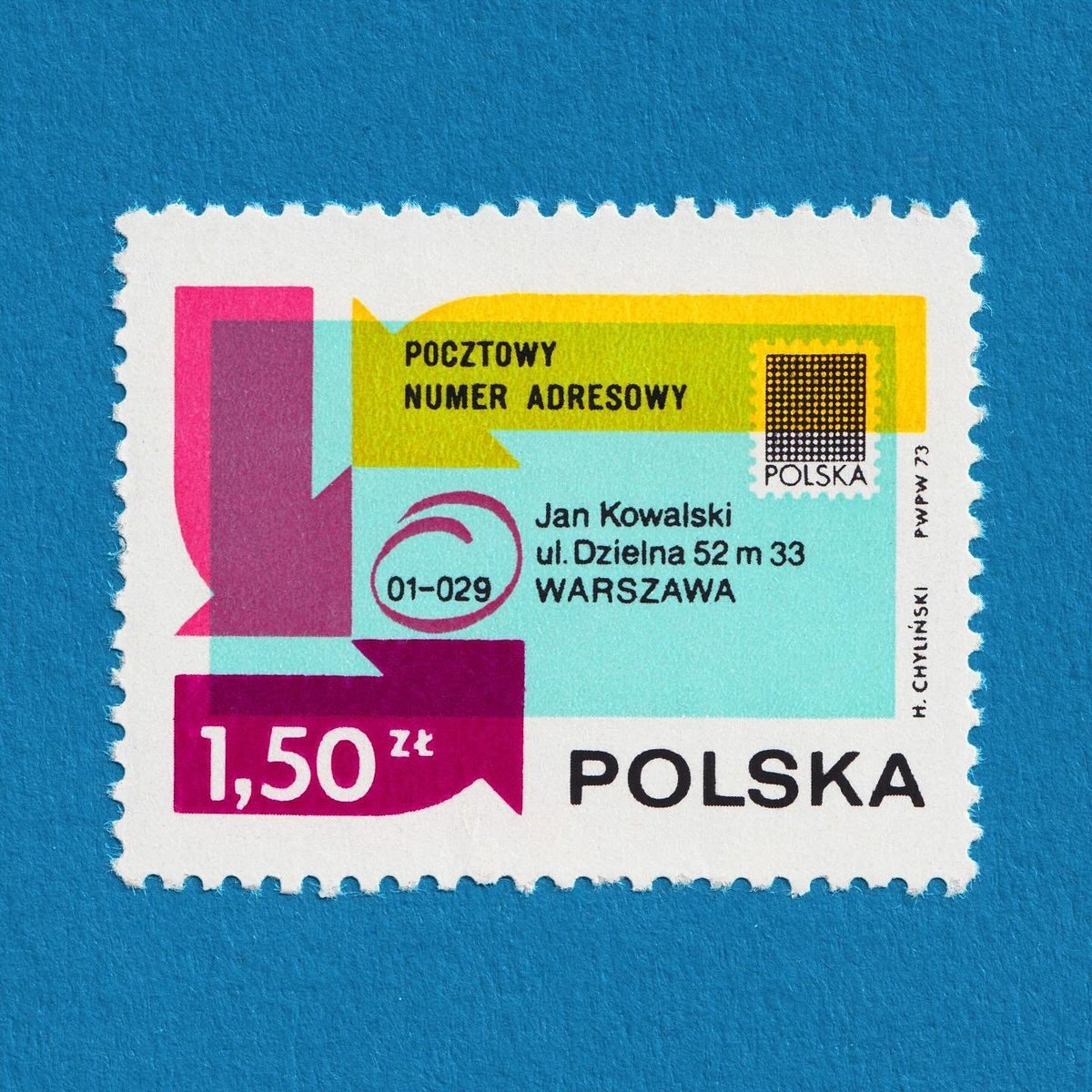
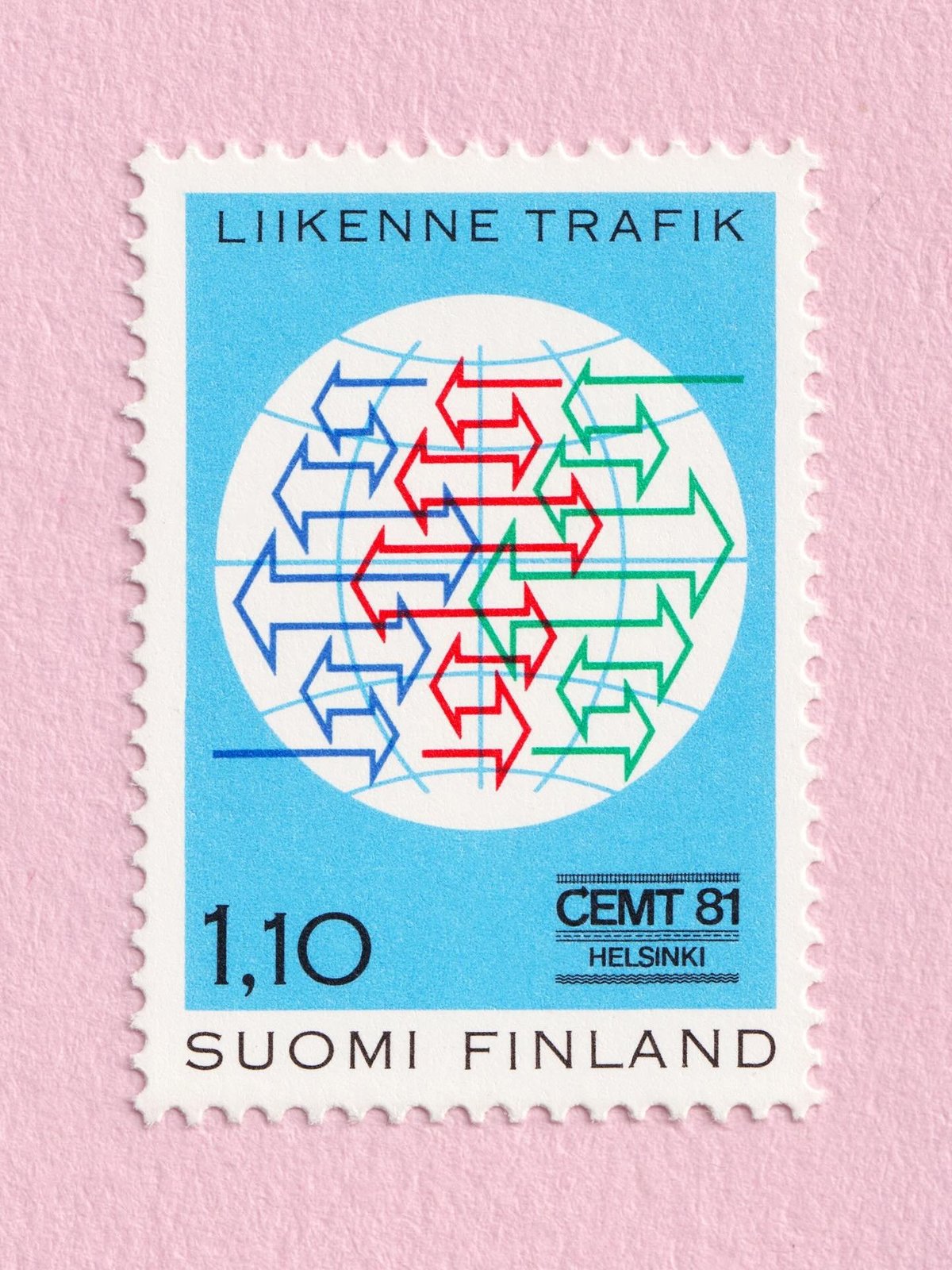
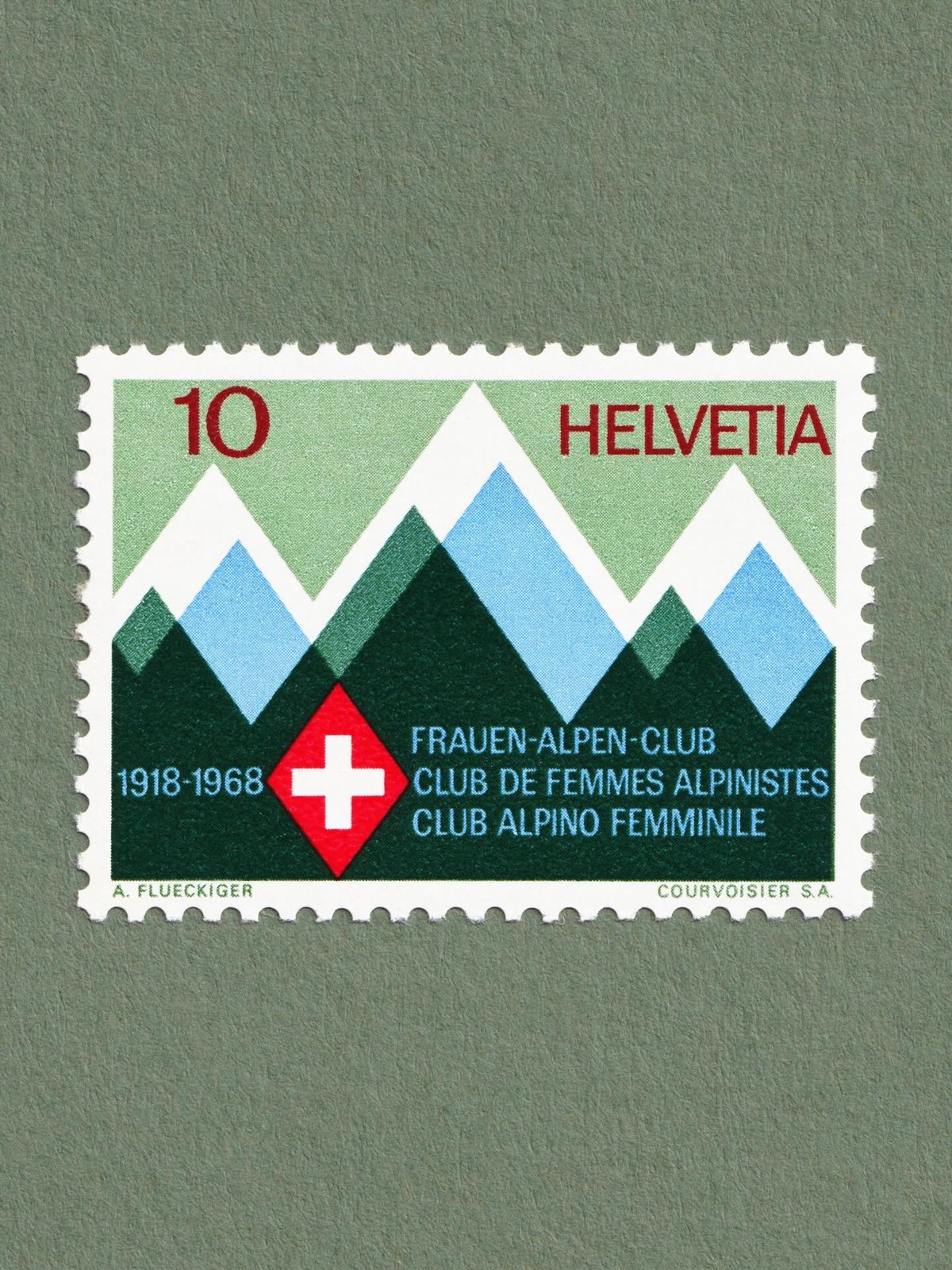
Stamps with beautiful typography

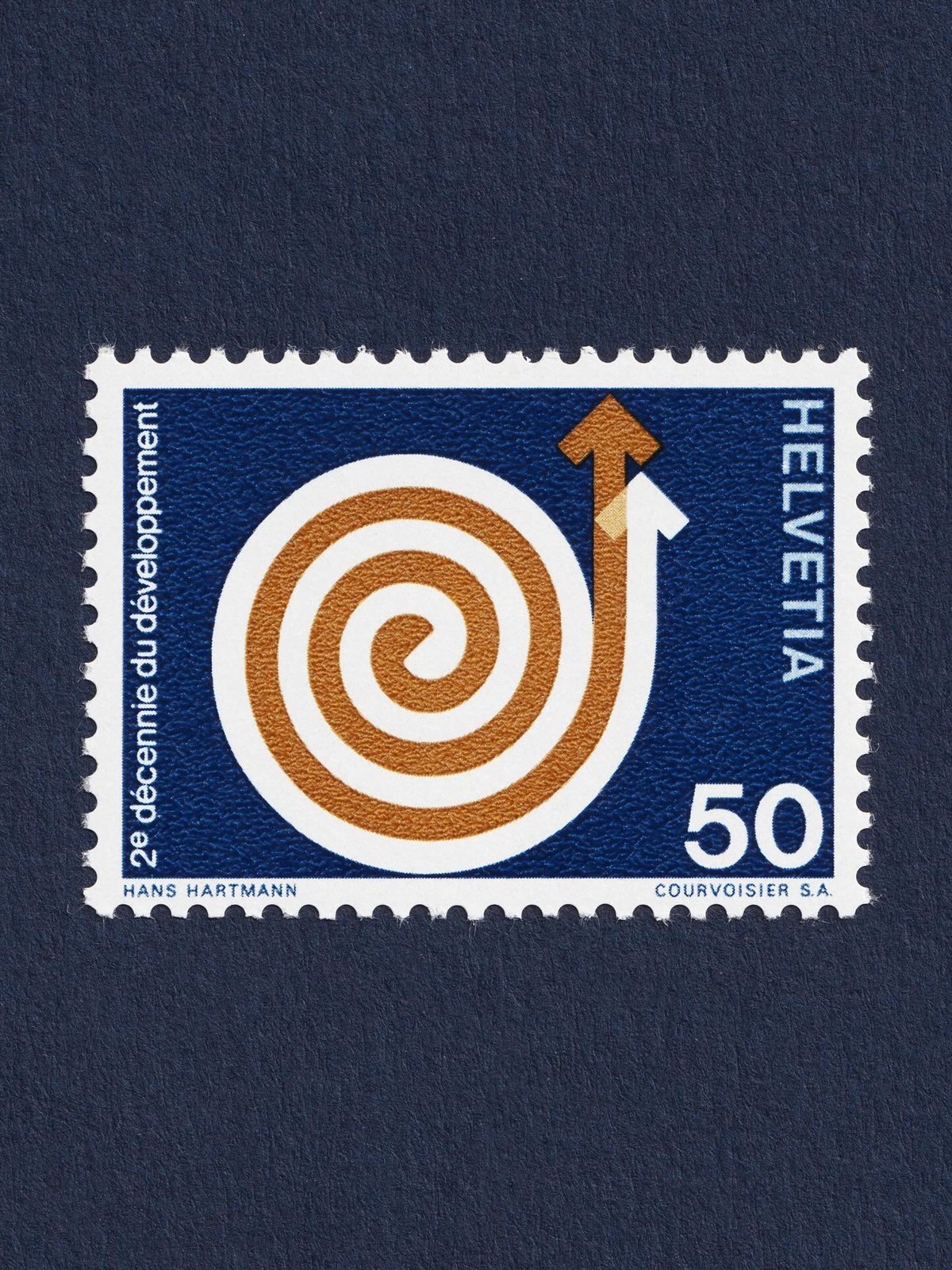
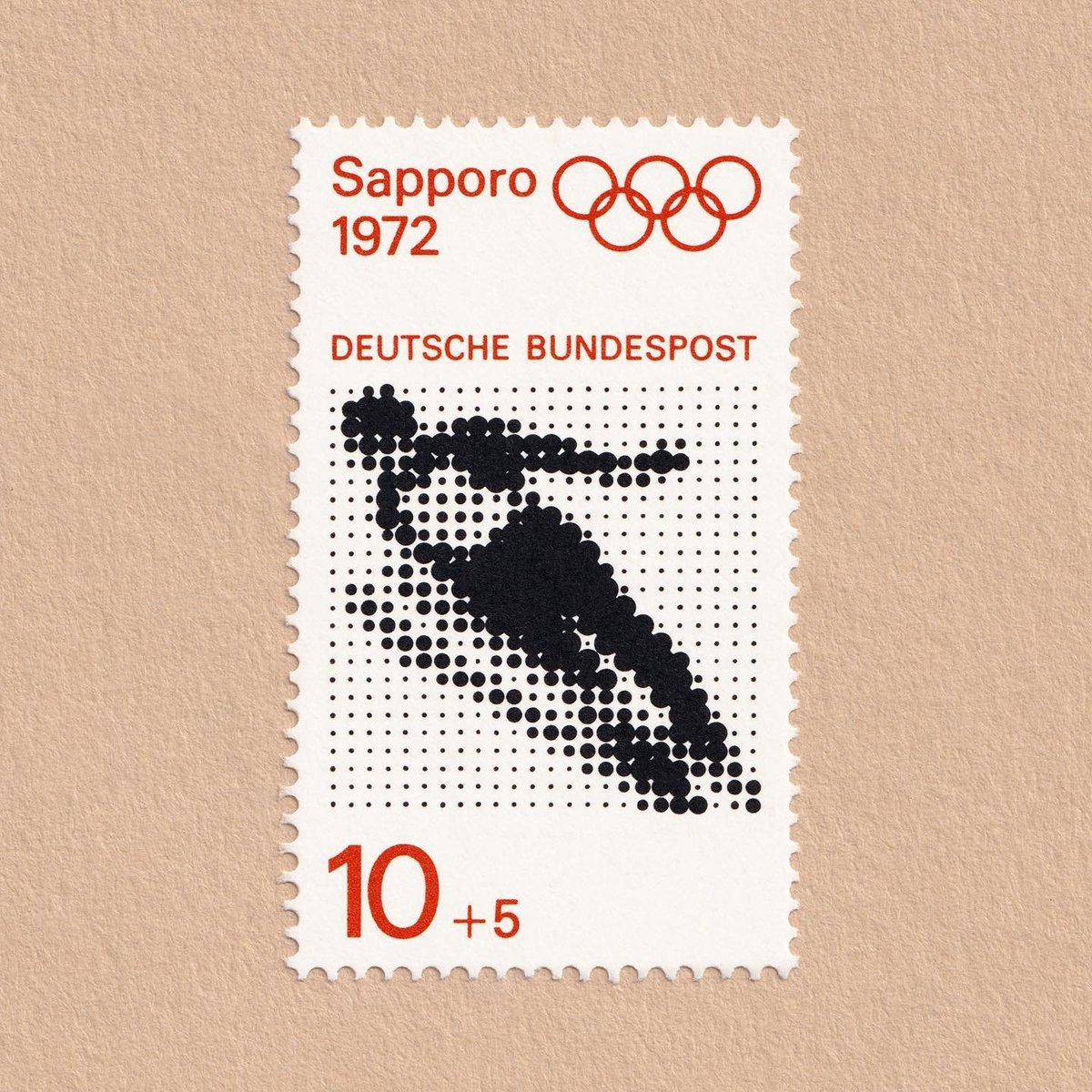
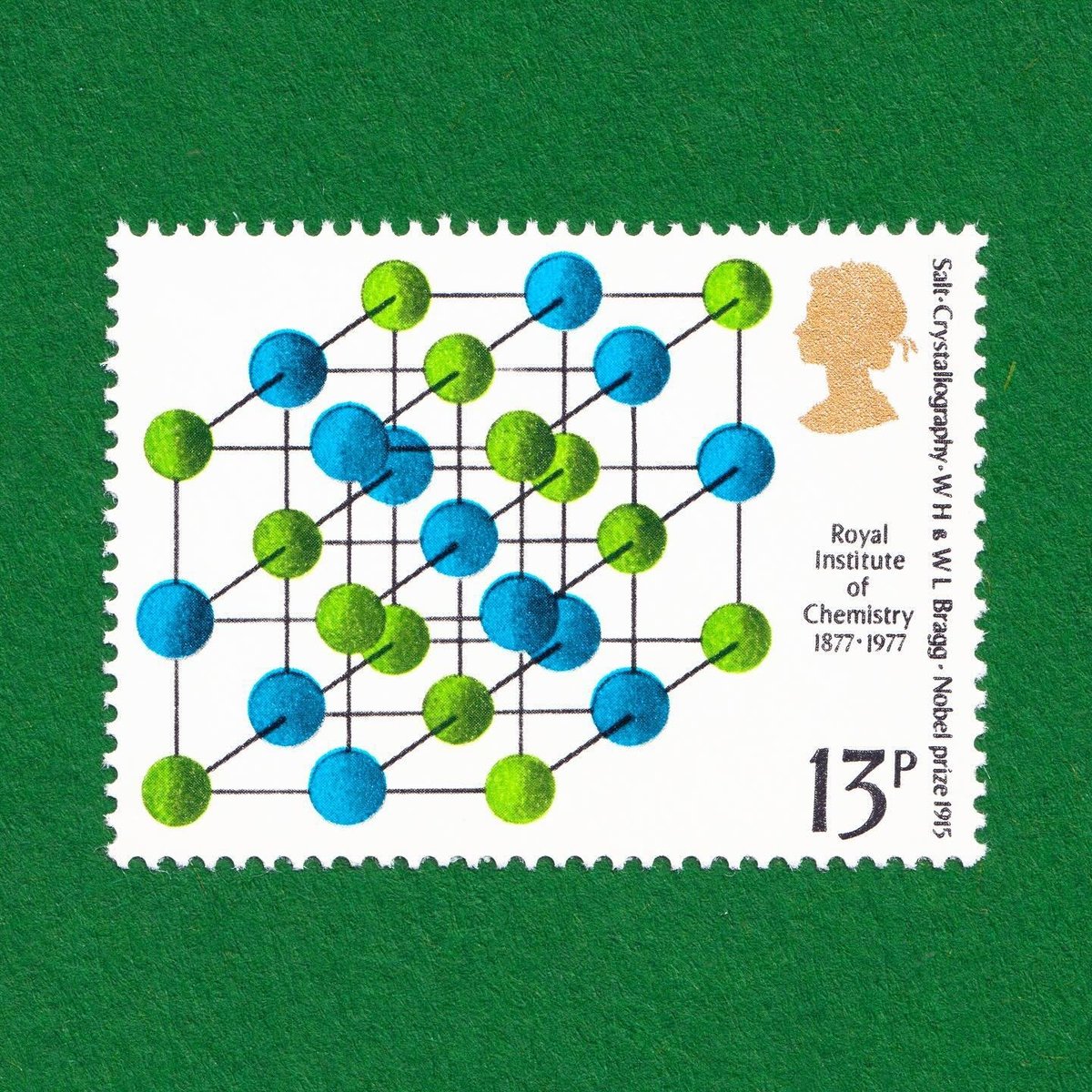
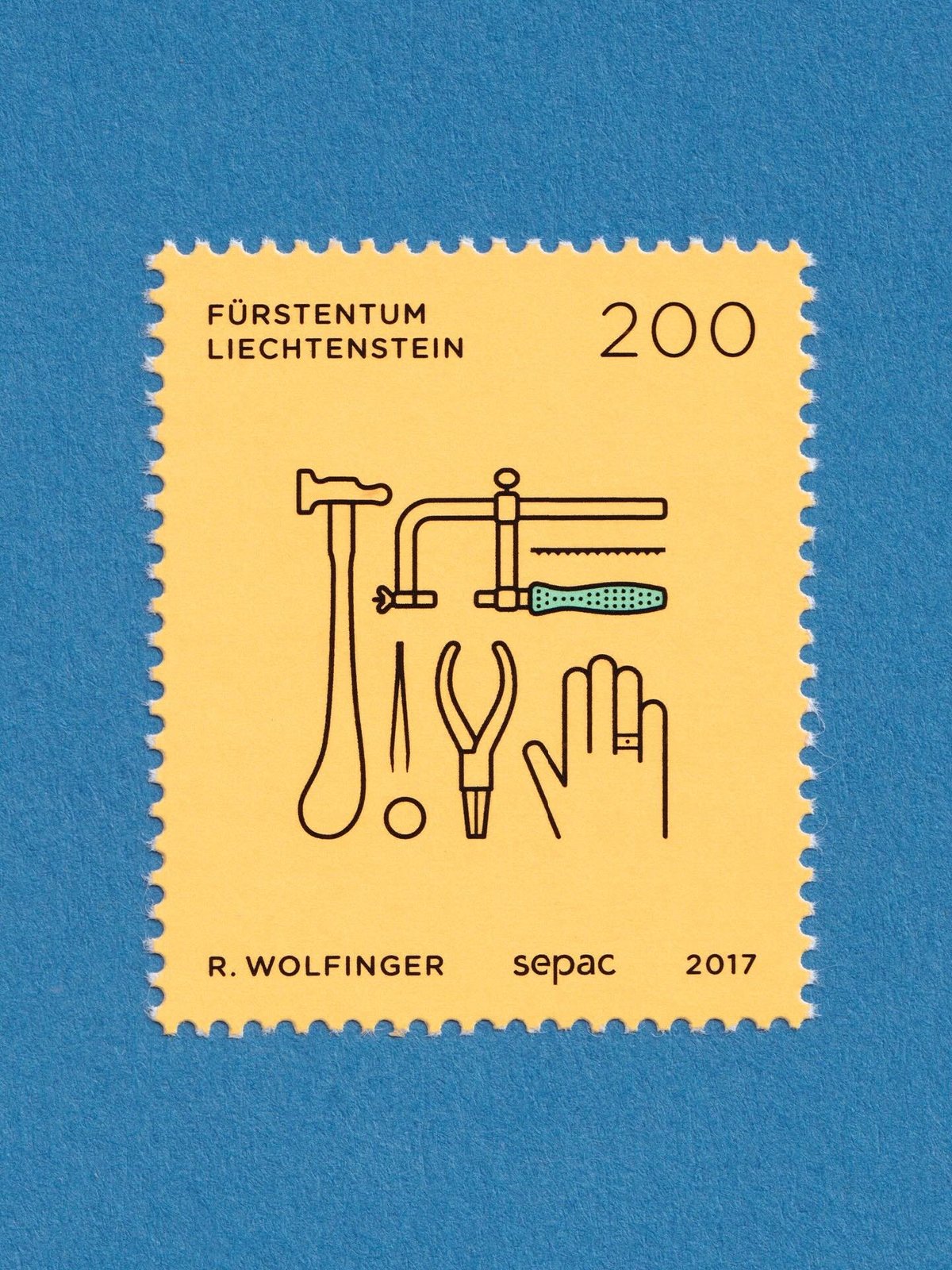
A collection of postage stamps designed by type designers. (via do)

By Jason Kottke    Oct 23, 2008    design   stamps   typography

Tall mountains, long rivers

BibliOdyssey has collected a number of charts which compare the heights of mountains and lengths of rivers by laying them all out next to each other. (Ok, kinda difficult to explain...just go take a look.) I had a chance to buy a copy of one of these maps a few years ago (not sure if it was an original print or what; it looked old) but passed it up because I didn't have the money. Wish I would have bought it anyway. (via quips)

By Jason Kottke    Oct 23, 2008    design   geography   infoviz

Indie Publishing by Ellen Lupton

Indie Publishing

Someday I'm going to make my own book, from start to finish. It's something that I've wanted to do for awhile, a physical parallel to building a web site from scratch. When I do, Ellen Lupton's Indie Publishing will be my guide. At 170-some pages it's not exhaustive, but the book does briefly touch all the bases: typography, cover design, binding types, and examples of several different types of books. There's also a section on handmade books with hands-on directions for making your own book -- folded books, stitched pamphlets, or stab bound -- without having to visit the printer.

By Jason Kottke    Oct 20, 2008    books   design   ellenlupton

Truthful TV title cards

Truthful TV title cards. Heroes becomes No One Dies Ever, Mad Men is Drink Smoke Fuck, and Lost is Winging It.

By Jason Kottke    Oct 20, 2008    design   remix   TV

London tube map video

Nice 25-minute documentary on the London Tube map, "the pinnacle of London Transport's modernist design".

Inspiration for graphic designers

Goodness blog asked a bunch of designers about books that they found helpful in their development as creative people, no graphic design books allowed.

By Jason Kottke    Oct 17, 2008    books   design

The eyeballing game

The eyeballing game tests how good you are at lining things up. I got a 4.46 on my first try, but my hand slipped on one of them so I'm going to try again... Leave your best (or worst) score in the comments. (via core77)

Update: 4.34. I suck at parallelograms and triangle centers.

By Jason Kottke    Oct 16, 2008    115 comments    design   games

New Apple MacBooks

Apple announced new MacBooks and MacBooks Pro today and as Apple's new releases always seem to do, the new models make the old ones look like a pile of puke. (My year-old MacBook Pro suddenly looks like an antique.) To show off their new lineup and manufacturing process, they've produced a little video. Jonathan Ive is one earnest dude.

Brand posters for movies

Movie posters that list all the product placements in the films. (via quips)

By Jason Kottke    Oct 14, 2008    branding   design   movies

Muji Chronotebook

The Muji Chronotebook combines the flexibility of a plain paper notebook with the utility of a daily planner.

For each function or feature you add, you lose a purpose. A blank sheet that could've been used in a million different ways can now only be used for a few. Artists aren't going to buy a calendar if they're looking for something to sketch on. Writers aren't going to pick up to-do lists to use as a journal. This isn't a bad thing per se -- by narrowing down on a purpose, a blank sheet of paper can become more useful and relevant to certain people.

Each page of the Chronotebook has a analog clock in the middle, around which you can freely form appointments (just draw a line to the time for the meeting), sketch, make lists, or anything else the mostly blank page beckons you to do. Fantastic idea.

Update: Here's the same idea in whiteboard form. (thx, michael)

By Jason Kottke    Oct 14, 2008    chronotebook   design   Muji

The Atlantic redesign

The Atlantic is getting a redesign. Changes are already afoot over at the web site and Pentagram's blog has an extensive look at the magazine's new look, designed by Michael Bierut, Luke Hayman, and their team. I love the proposed Helvetica cover. The inspiration for the throw-back logo came in part from an appearance of an old issue of the magazine on Mad Men (Bierut is a fan).

BTW, the new cover tells of an article on blogs -- Will Blogs Kill Writing? -- that you will likely be hearing about from all corners of the web when the issue is released next week.

Mad Men typography

Mark Simonson takes an extensive look at the typography of Mad Men and concludes that a surprising amount of the type is set in fonts that either weren't around in the early 60s or weren't yet popular in the US.

Then there is the Gill Sans (c. 1930) problem. Gill is used quite a lot in the series, mainly for Sterling Cooper Advertising's logo and signage. Technically, this is not anachronistic. And the way the type is used -- metal dimensional letters, generously spaced -- looks right. The problem is that Gill was a British typeface not widely available or popular in the U.S. until the 1970s. It's a decade ahead of its time in American type fashions.

There's also the Arial problem in the ending credits.

By Jason Kottke    Oct 8, 2008    design   Mad Men   marksimonson   TV   typography

Book design competition results

The AIGA has posted their 50 Books/50 Covers selections from 2007. It's worth fighting through the stupid Flash interface to check out these covers (click "View the 365:AIGA Year in..." and then on "Book design"). The covers are on display in NYC until 11/26/2008. (via book design review)

By Jason Kottke    Oct 7, 2008    AIGA   books   design   exhibitions   NYC

How to make a New Yorker cover

Illustrator Bob Staake explains the process behind his cover on this week's politically themed New Yorker, including rejected alternatives and a video progression of the finished design. Staake still uses a copy of Photoshop 3.0 on MacOS 7 to do his illustrations. That was a great version of Photoshop...I remember not wanting to switch myself. (via df)

Update: Staake uses OS X with MacOS 9 running in the background:

Let me clear up today's rumor: I do NOT work in OS 7. I use OSX and run classic (9.0) in the background. Photoshop 3.0? Yes, STILL use that.

Personal identity guidelines

We've seen personal annual reports, but now Christopher Doyle has devised a set of personal identity guidelines for himself.

The image above is from a spread marked Full Colour Vertical_Private. The following 'key identity formats' are, of course, Full Color_Vertical, Full Colour Seated_Casual and Full Colour Seated _Formal.

The incorrect uses are hilarious.

Best magazine covers of the year

Finalists for the 2008 magazine cover of the year competition. That Spitzer one always makes me laugh.

By Jason Kottke    Sep 24, 2008    best of   design   magazines

Nice book covers

Some nice work amongst the finalists of a contest to design the book cover for a novel called The Island at the End of the World. (via book design review)

By Jason Kottke    Sep 23, 2008    books   design

The totem fridge

Totem Fridge

For creator Stefan Buchberger, a design student at the University of Applied Arts in Vienna, the idea grew out of a semester-long theme about keeping personal space clean and tidy. "I decided to create Flatshare fridge because there is nothing more disgusting than a dirty fridge in a shared flat," he says. "At the time, I was living in such a flat!"

The fridge consists of a base station and up to four stackable modules. The modules allow each individual user to have his or her own refrigerator space and can be customized with various colorful skins as well as with add-ons like a bottle opener or a whiteboard.

The Flatshare refrigerator has the perhaps unfortunate side effect of reinforcing which household members hold lower positions on the metaphorical totem pole and therefore always need to bend down to access their unit while higher-status members can easily get at their fruit and veg without genuflection. (via cribcandy)

Every Photoshop filter

Dorothy Gambrell applies every Photoshop filter to an image in order and posted the results, including all the tweens. (via waxy)

True Blood titles

I don't know if I'm interested in watching the show or not, but we might have a new leader in the best TV show main title sequence: True Blood. By the same folks who did the Six Feet Under titles. Perhaps NSFW. (via quips)

Update: Maybe Digital Kitchen was influenced by a documentary called Searching for the Wrong Eyed Jesus in making the True Blood titles?

Word Clock

I love the linear version of the Word Clock. Completely impractical but lovely.

By Jason Kottke    Sep 5, 2008    design   time

All-maleness strikes again

William Drenttel opines on the all-white-male jury of an Adbusters design competition:

Nearly a decade into a new century, I believe it is unacceptable for a design organization, foundation, board of directors, magazine or other enterprise, to mount an initiative with an all male panel of judges -- or, put another way, "white, native English-speaking men from the U.S., British Isles or Australia." Such behavior is no longer acceptable and should not be tolerated by a community of designers (or any other community). Designers around the world should just say no.

The color of bruises

COLOURlovers, the site that takes inspiration from colors in the real world to make design palettes, today has a collection of palettes inspired by some wickedly vibrant bruises.

By Jason Kottke    Sep 5, 2008    color   design

Guilloches

Experiments with Guilloche patterns, those fine geometric patterns you find on European banknotes.

Banknote patterns fascinate me. I can get lost for hours in all the details, seeing how the patterns fit together, how the lettering works, the tiny security 'flaws' -- they're amazing. Central to banknote designs are Guilloche patterns, which can be created mechanically with a geometric lathe, or more likely these days, mathematically. The mathematical process attracted me immediately as I don't have a geometric lathe and nor do I have anywhere to put one. I do, however, have a computer, and at the point I first started playing with the designs (mid-2004) Illustrator and Photoshop had gained the ability to be scripted.

By Jason Kottke    Sep 4, 2008    design   mathematics   money

Hidden radio

The Hidden Radio has no obvious controls...unless you count that the radio *is* the controls...it "has either no user interface...or...is all user interface".

Hidden Radio

The volume is controlled by lifting the lid of the radio (which also reveals the speaker). Tuning is done by twisting the lid. Absurdly clever. (via monoscope)

By Jason Kottke    Sep 3, 2008    design   hiddenradio   radio

Gravestone motif analysis

An analysis of the three major types of gravestone motifs used in eastern Massachusetts during the seventeenth and eighteenth centuries.

The earliest of the three is a winged death's head, with blank eyes and a grinning visage. Earlier versions are quite ornate, but as time passes, they become less elaborate. Sometime during the eighteenth century -- the time varies according to location -- the grim death's head designs are replaced, more or less quickly, by winged cherubs. This design also goes through a gradual simplification of form with time. By the late 1700's or early 1800's, again depending on where you are observing, the cherubs are replaced by stones decorated with a willow tree overhanging a pedestaled urn.

Pay special attention to the graph of the popularity of each motif and the slideshow of example gravestones. (thx, peterme)

Update: A reader writes in:

In regards to your post on Gravestone Motif Analysis, I think that the most important text on the subject is still Graven Images: New England Stonecarving and its Symbols, 1650-1815 by Allen Ludwig. It was originally published in 1966, before the article that you linked to. However, Wesleyan University Press published a new edition in 2000 to help meet the rising demands of Material Culture Studies courses. Lots of helpful images and histograms showing the changing patterns of gravestones over that time period.

I *love* that the collective readership of this site knows what the definitive text on New England gravestone carving is. (big thx, fletcher)

By Jason Kottke    Sep 2, 2008    death   design   infoviz

Saul Bass on film titles

Thirty-five minute video in which Saul Bass talks about some of the iconic movie title sequences he created in his career. (via smashing telly)

By Jason Kottke    Aug 28, 2008    design   movies   saulbass   video

Mad Men's Arial gaffe

Mad Men gets a C- for using Arial in the closing credits instead of original-and-still-champion Helvetica. Time for Sterling to have a chat with the art department.

By Jason Kottke    Aug 28, 2008    arial   design   Helvetica   Mad Men   TV   typography

North Korean anti-US posters

A collection of North Korean anti-US propaganda posters.

Though the dog barks, the procession moves on!

(via fp passport)

By Jason Kottke    Aug 28, 2008    design   North Korea   propaganda   usa

Super-noticing

Interesting interview about "noticing" and how good designers, writers, etc. are adept at "super-noticing".

People carrying people

Print magazine has collected a number of images from movie posters, book covers, etc. that feature a person carrying another person.

Today, variations on this idea have begun to appear. It is very common to see the "hero" (male) in the arms of another "hero," "beauty" in the arms of another "beauty," and ultimately, a male being carried by a female who is no longer depicted as defenseless and childlike but strong. In a sense, it's a return to the theme's origin: The Madonna holding and protecting her child.

By Jason Kottke    Aug 27, 2008    design

Generative book covers

A British company called Faber & Faber is doing print on demand books with a wrinkle: each book has its own distinct cover that's generated at print time.

Generating the borders was just one, if major, task of the final solution, though. The custom software written in Processing, straight Java and PHP works as an internal webservice at Faber which receives new batch orders and then generates complete, print ready PDF files with all copy, branding, spine, ISBN, barcode and optional high-res JPG preview using the book details supplied. Generating a single cover only takes about 1 second, but due to its iterative and semi-random nature can sometime require hundreds of attempts until a "valid" design is created which is judged to be "on brand" by software itself.

What a day it will be when software can determine whether all of us are "on brand" or not. (thx, david)

By Jason Kottke    Aug 26, 2008    books   design   Processing

Infoviz slideshow

Slate has a nice short history of information visualizations, including work from Josh On, Jonathan Harris, and Martin Wattenberg. Many many more examples can be found on kottke.org's infoviz page.

By Jason Kottke    Aug 26, 2008    design   infoviz

Arty bathroom tiles

Christoph Niemann has used some unusual image sources to tile his bathrooms. For the shower, an appropriation of Warhol's Brillo box. For the kids bathroom, a NYC subway map.

By Jason Kottke    Aug 25, 2008    Andy Warhol   art   Christoph Niemann   design   maps   NYC   subway

Daytum, your daily data

Daytum is a site for keeping track of your life, a "home for collecting and communicating your daily data". For a glimpse of how Daytum might work, check out Daytum founder Nicholas Felton's personal annual reports. Somewhat related: Trixie Tracker, the online baby tracking software. The first person I remember tracking their data in this way online was Erik Benson on his Morale-O-Meter.

Update: And Moodstats from K10K...I forgot about (the dearly departed) Moodstats! (thx, nick)

The pretty colors of salt evaporation ponds

COLOURlovers draws out some color palettes from salt evaporation ponds from around the world. If you've ever flown into San Francisco, you may have seen the salt ponds at the south end of the bay.

Vintage business signs

This is a fantastic set of photos of old business signs, many of them neon. As Ben says, "is it possible to favorite every photo in a set at once?"

no caps for vanity fair

Influenced by Modern design trends in Europe, Vanity Fair in 1929 got rid of all capital letters in their headlines. A few months later, the capital letters were reinstated and the design change was accompanied by a letter from the editor called "A Note on Typography", reprinted in full on Design Observer.

The eye and the mind can adapt themselves to new forms with surprising ease. An innovation stands out at first like a sore thumb but before it has passed its infancy it has become invisible to the conscious eye. The unconscious eye, however, is another matter. It is vaguely dulled by the stale and hackneyed, it is antagonized by the tasteless and inept, and it is completely stopped by the involved and illegible. The unconscious eye is a remorseless critic of all art forms, it awards the final fame and final oblivion.

Old airline menus

A large collection of old airline menus. The collection is poorly organized but worth poking through (check out Air France and Pan Am). Tracked this down after reading this short piece in the Times about a private menu collection, complete with a tiny image of some menus that's barely worth the effort of clicking the link.

By Jason Kottke    Aug 4, 2008    design   flying   food

Phone numbers on letterhead

A Bell Telephone pamphlet on how to show telephone numbers on letterhead from the early 1960s. More info at Oddmart. (via quips)

By Jason Kottke    Jul 31, 2008    design   telephony

Objectified, a film about industrial design

Objectified is an upcoming film about industrial design by Gary Hustwit, director of Helvetica.

Objectified is a documentary about industrial design; it's about the manufactured objects we surround ourselves with, and the people who make them. On an average day, each of us uses hundreds of objects. (Don't believe it? Start counting: alarm clock, light switch, faucet, shampoo bottle, toothbrush, razor...) Who makes all these things, and why do they look and feel the way they do? All of these objects are "designed," but how can good design make them, and our lives, better?

The film is due out in early 2009. (via design observer)

Stop sign design

What would happen if there were no stop signs and a large corporation attempted to design one?

"We're targeting women, but we're also targeting men, secondarily."

By Jason Kottke    Jul 25, 2008    design   video

A.G. Low Construction logo

The logo for A.G. Low Construction is the best one I've seen in awhile.

A.G. Low Logo

Nice work by design student Rebecca Low, who I'm assuming is related to the A.G. Low in question. (via monoscope)

By Jason Kottke    Jul 18, 2008    design   logos   rebeccalow

Obama lapel pins

Steven Heller asked a bunch of designers and illustrators to re-imagine the lapel pin for Barack Obama.

Since Mr. Obama promotes himself as the candidate of change, maybe he should start wearing a different kind of lapel pin that signals his patriotism as well as other values he wants to communicate.

One fellow suggests ripping his lapels off and thereby skirting the whole pin issue. (via design observer)

I Was A Mad Man

On the heels of Michael Bierut's rave for Mad Men comes William Drenttel's admission: I Was A Mad Man.

Then the CEO [of Krystal Restaurants] turns to me, ignoring everyone else, and asks me to take out my wallet. He asks me how much money I have. I count about $150, and tell him so. He smiles, looks me squarely in the eye, and asks: "Would you spend your last $150 on this shit?"

The rest of the story involves me telling him to take out his own wallet and me swearing I'd spend not only my money but all of his. And we did. We spent all of Krystal's money, millions of dollars. We made second-rate advertising, and they had second-rate stores with really second-rate hamburgers. We deserved each other.

Page layout video

Time lapse video of a designer laying out an article for a magazine. I could watch stuff like this all day. It's also the type of video I wish were on Vimeo...sometimes YouTube is like watching a UHF station from 200 miles away with the rabbit ears positioned just so. (via quips)

By Jason Kottke    Jul 10, 2008    design   time lapse   video

Clever New York magazine cover

I love this clever New York magazine cover design from 1969...a photo of a too tall mayoral candidate is cropped just below the chin.

Recent classic book covers

Entertainment Weekly recently compiled a list of well-designed book covers from the past 25 years. Not fantastic but a solid list worth browsing.

By Jason Kottke    Jul 8, 2008    best of   books   design   lists

England on maps

How big is England? Mapmakers can't seem to agree.

So for the last two years I've been taking pictures of Britain on world maps. Not accurate maps, but drawings or illustrations of maps. The differences are amazing. You might assume that all maps were accurate, or at least accurate-ish. But no, designers play fast and loose with the truth making the host country bigger, more important or more central. Look at Britain in these photos. Look at the size of it compared to Europe. It's the same, but different.

I love the averaged England near the bottom of the post. (via migurski)

By Jason Kottke    Jul 8, 2008    design   maps   UK

Zadie Smith's writing advice

Writing advice from Zadie Smith: write it then put it in a drawer.

When you finish your novel, if money is not a desperate priority, if you do not need to sell it at once or be published that very second -- put it in a drawer. For as long as you can manage. A year of more is ideal -- but even three months will do. Step away from the vehicle. The secret to editing your work is simple: you need to become its reader instead of its writer. I can't tell you how many times I've sat backstage with a line of novelists at some festival, all of us with red pens in hand, frantically editing our published novels into fit form so that we might go on stage and read from them. It's an unfortunate thing, but it turns out that the perfect state of mind to edit your novel is two years after it's published, ten minutes before you go on stage at a literary festival. At that moment every redundant phrase, each show-off, pointless metaphor, all of the pieces of dead wood, stupidity, vanity, and tedium are distressingly obvious to you.

Top notch advice. I'm currently working on a (mostly visual) redesign for kottke.org. I pretty much finished the Photoshop part of it two months ago and haven't looked at it since, hoping that the distance will give me some much needed perspective on whether the new design is any good or not. I've used this technique on the past couple of designs as well...if you have the luxury of the extra time, I'd highly recommend it.

By Jason Kottke    Jul 8, 2008    design   writing   zadiesmith

Michael Bierut on Mad Men

An appreciation of Mad Men by designer Michael Bierut.

Jesus God in heaven! Not until I know I'm not wasting my time! From the minute Don launched his this-meeting-is-over bluff, I was on the edge of my seat, and my lovely wife Dorothy will tell you that I literally clapped my hands at that line. For me, this sequence is as close to pornography as I ever get to see on basic cable.

Alright, uncle, I give, I give. I will try and find some time in my schedule to watch this show.

World's first album cover

The world's first album cover was designed by Alex Steinweiss for Columbia Records in 1938. Before that, records were sold in generic sleeves. (via quipsologies)

Penguin's Great Ideas

Flickr set of the cover designs for the 3rd installment of Penguin's Great Ideas series of books. As We Made This rightly notes, the cover for The Work of Art in the Age of Mechanical Reproduction is the gem of the collection.

By Jason Kottke    Jul 2, 2008    books   design   penguinbooks

Dark Knight poster

Nicely designed poster for The Dark Knight.

Remixed album covers

CandyKaraoke, a bunch of album covers reimagined by Irish artists. (via ffffound)

By Jason Kottke    Jun 27, 2008    art   design   music   remix

2008 Penguin Design Award

The winners and shortlist of the 2008 Penguin Design Award, a student award in its second year. More info on Penguin's blog. (via book design review)

Stamen interview

Short interview with Mike Migurski and Tom Carden of Stamen about their projects and process.

We try to start from a position of great abundance and information, to show the vastness or the liveness. I think live, vast, and deep is some of the terminology that we've been using lately in a lot of our talks.

TiVo remote control design

The history of the design and manufacture of the TiVo remote control.

Like any remote, the designers were adamant about keeping the remote's button layout as simple as possible. But with the DVR's numerous features, the designers needed to create lots of extra buttons. To keep things straight, each button needed to have a distinctive feel, giving the ability to control the remote without even looking at it, which Newby described as a "key Braille-ability" surprisingly helped by the "blank finger parking spots between keys" that were equally important.

(via waxy)

By Jason Kottke    Jun 22, 2008    design   dvr   Tivo   TV

Exxon logo sketches

Raymond Loewy is well-known as an industrial designer but he was also responsible for some of the world's most iconic logos. Pictured below are several sketches that Loewy did for the new Exxon logo:

Exxon Logo

Big business moved more slowly back then; the sketches were done by Loewy in 1966 but the name change and new logo didn't go into effect until 1972. Loewy was also responsible for several other logos: Shell, Hoover, BP, Nabisco, Canada Dry, and U.S. Mail.

By Jason Kottke    Jun 16, 2008    design   exxon   logos   raymondloewy

Hypnerotomachia Poliphili

This is a page from a book called Hypnerotomachia Poliphili.

Hypnerotomachia Poliphili

Any guesses as to when it was published? The title, Latin text, yellowed paper, and lack of page numbers might tip you off that it wasn't exactly released yesterday. Turns out that Hypnerotomachia Poliphili was published in 1499, more than 500 years ago and only 44 years after Gutenberg published his famous Bible. It belongs to a group of books collectively referred to as incunabula, books printed with a printing press using movable type before 1501.

To contemporary eyes, the HP looks almost modern. The text is very readable. The typography, layout, and the way the text flows around the illustration; none of it looks out of the ordinary. When compared to other books of the time (e.g. take a look at a page from the Gutenberg Bible), its modernity is downright eerie. The most obvious difference is the absence of the blackletter typeface. Blackletter was a popular choice because it resembled closely the handwritten script that preceded the printing press, and I imagine its use smoothed the transition to books printed by press. HP dispensed with blackletter and instead used what came to be known as Bembo, a humanist typeface based on the handwriting of Renaissance-era Italian scholars. From a MIT Press e-book on the HP:

One of the features of the Hypnerotomachia that has attracted the attention of scholars has been its use of the famed Aldine "Roman" type font, invented by Nicholas Jenson but distilled into an abstract ideal by Francesco Biffi da Bologna, a jeweler who became Aldus's celebrated cutter. This font -- generally viewed as originating in the efforts of the humanist lovers of belles-lettres and renowned calligraphers such as Petrarch, Poggio Bracciolini, Niccolo Niccoli, Felice Feliciano, Leon Battista Alberti, and Luca Pacioli, to re-create the script of classical antiquity -- appeared for the first time in Bembo's De Aetna. Recut, it appeared in its second and perfected version in the Hypnerotomachia.

In that way, Hypnerotomachia Poliphili is both a throwback to Roman times and an indication of things to come.

The MIT Press site also notes a number of other significant aspects of the book. As seen above, illustrations are integrated into the main text, allowing "the eye to slip back and forth from textual description and corresponding visual representation with the greatest of ease". In his 2006 book, Beautiful Evidence, Edward Tufte says:

Overall, the design of Hypnerotomachia tightly integrates the relevant text with the relevant image, a cognitive integration along with the celebrated optical integration.

Several pages in the book make use of the text itself to illustrate the shapes of wine goblets. The HP also contained aspects of film, comics, and storyboarding...successive illustrations advanced action begun on previous pages:

Hypnerotomachia Poliphili

All of which makes the following puzzling:

The Hypnerotomachia Poliphili is one of the most unreadable books ever published. The first inkling of difficulty occurs at the moment one picks up the book and tries to utter its tongue-twisting, practically unpronounceable title. The difficulty only heightens as one flips through the pages and tries to decipher the strange, baffling, inscrutable prose, replete with recondite references, teeming with tortuous terminology, choked with pulsating, prolix, plethoric passages. Now in Tuscan, now in Latin, now in Greek -- elsewhere in Hebrew, Arabic, Chaldean and hieroglyphs -- the author has created a pandemonium of unruly sentences that demand the unrelenting skills of a prodigiously endowed polyglot in order to be understood.

It's fascinating that a book so readable, so beautifully printed, and so modern would also be so difficult to read. If you'd like to take a crack at it, scans of the entire book are available here and here. The English translation is available on Amazon.

New ATM interface

Case study: a new interface for Wells Fargo's ATMs.

The new UI still offers the Quick Cash feature, but in a much smarter way. Instead of one Quick Cash button, we introduced a whole column of shortcut buttons that behave somewhat like the History menu in a web browser. It is still possible to customize them through Set My ATM Preferences, but hardly necessary since they always reflect the most recent transactions.

(via magnetbox)

By Jason Kottke    Jun 6, 2008    design   money   wellsfargo

Through the legs

Print Magazine has an awesome roundup of book covers, advertisements, movies posters, etc. using the "cutoff-torso-spread-leg framing device", what Steven Heller calls "the most frequently copied trope ever used".

John Gall, book designer

Video of designer John Gall, who shares his five rules for book cover design.

The other great source of inspiration is the deadline.

By Jason Kottke    May 15, 2008    books   design   johngall   video

The Brannock Foot-Measuring Device

Michael Bierut celebrates the elegantly simple design of the Brannock Foot-Measuring Device.

Charles F. Brannock only invented one thing in his life, and this was it. The son of a Syracuse, New York, shoe magnate, Brannock became interested in improving the primitive wooden measuring sticks that he saw around his father's store. He patented his first prototype in 1926, based on models he had made from Erector Set parts. As the Park-Brannock Shoe Store became legendary for fitting feet with absolute accuracy, the demand for the device grew, and in 1927 Brannock opened a factory to mass produce it. The Brannock Device Co., Inc., is still in business today. Refreshingly, it still only makes this one thing. They have sold over a million, a remarkable number when one considers that each of them lasts up to 15 years, when the numbers wear off.

Bierut also notes that Tibor Kalman was a big fan of the Brannock Device, once saying:

It showed incredible ingenuity and no one has ever been able to beat it. I doubt if anyone ever will, even if we ever get to the stars, or find out everything there is to find out about black holes.

The humble shoe horn is another well designed shoe-related device that may never be bettered.

Outside the album cover

The b3ta folk explore what happens just outside the border of some well-known album covers. The Simon and Garfunkel and Pink Floyd/Kool-Aid ones are pretty good.

By Jason Kottke    May 15, 2008    design   music   remix

US presidential candidate logos

A list of all the US presidential election logos from 1960-2008. That's a whole lot of red and blue. I particularly liked 1988's Dick "Chrysler" Gephardt and Paul Simon's Top Gun homage. (via quips)

By Jason Kottke    May 13, 2008    design   logos   politics

The state of type

A bunch of examples of contemporary typography...lots of ideas to riff off here.

Well-designed tables of contents

A slideshow featuring well-designed tables of contents. There's an associated Flickr group if you fancy sharing your own. (via designnotes)

By Jason Kottke    May 12, 2008    books   design

FontStruct

FontStruct is an awesomely simple online font creation tool. Just draw on a grid with simple Photoshop-like tools, save, and download a TrueType version of the fonts you've just created. If this had been around when I made Silkscreen, it would have taken so much less time.

Ampersands

Over at H&FJ, the H talks about the &.

As both its function and form suggest, the ampersand is a written contraction of "et," the Latin word for "and." Its shape has evolved continuously since its introduction, and while some ampersands are still manifestly e-t ligatures, others merely hint at this origin, sometimes in very oblique ways.

He goes on to describe several ampersands they've designed for their typefaces. When designing the ampersand for Silkscreen, I came up with a solution that many continue to dislike:

Silkscreen Ampersand

If you're logged in to Flickr, you can see it action at a more appropriate size in the "prints & more" label above a photo. The symbol is basically a capital E with a vertical line through the middle...an e-t ligature that's really more of an overstrike. I fashioned it after the way I hand-write my ampersand, which I got from my dad's handwriting1. I don't know where he got it from; it's not a common way to represent that symbol, although I did find a few instances in the list of fonts installed on my computer.

I didn't think about this way at the time, but the odd ampersand is one of the few distinguishing features of Silkscreen. There's only so many ways you can draw letterforms in a 5x5 pixel space so a lot of the bitmap fonts like Silkscreen end up looking very similar. The ampersand gives it a bit of needed individuality. (The 4 is the other oddish character...it's open at the top instead of diagonally closed.)

[1] Now that I think about it, I borrowed several aspects from my dad's handwriting. I write my 7s with a bar (to distinguish them from 1s), my 8s as two separate circles rather than a figure-eight stroke, and my 4s with the open top. Oh, and a messy signature.

Matthew Dent

Interview with Matthew Dent, the chap who designed the fantastic new UK coinage.

There were plenty of technical issues I had to come to terms with in conjunction with the distribution of metal across the coin and the high-speed striking process. At one point I considered suggesting that half the 20 pence's border -- where it met the shield -- be removed. It would have still been a rounded heptagon, only its border wouldn't completely surround the coin. There were potential issues with this; I learnt that the distribution of metal wouldn't be balanced, thereby possibly affecting the striking of the coins and the acceptance of them by cash machines. Oh well... this competition was a learning curve. And as someone who was unfamiliar with the technical aspects of coin manufacture - you have to ask don't you?

(via quipsologies)

By Jason Kottke    May 1, 2008    currency   design   interviews   matthewdent   UK

The 92nd St Y has put the

The 92nd St Y has put the video of a talk called The Art of the Book up on their site. The talk was held in Dec 2006 and featured Milton Glaser, Chip Kidd, and Dave Eggers with Michael Bierut moderating. You may recall that Glaser got into a bit of hot water for some comments he made about the career paths of women in graphic design.

kottke.org, quickly...

The best way to get a sense of what kottke.org is all about is to head to the front page or check out some random entries from the archives.

Tags related to design:

books (758)    video (800)    typography (149)    maps (245)    remix (219)    interviews (262)    art (403)    magazines (101)    photography (855)    sports (503)    football (64)    geography (23)    flags (5)    Apple (249)    London Underground (31)

Looking for work?

See more on the Job Board.

Tags, tags, tags

Many posts on kottke.org have been "tagged" with keywords, which activity results in collections of related posts like sports, infoviz, or best of.

Recently popular tags (last 3 weeks)

post updates (67)    movies (1119)    science (658)    NYC (717)    how to (171)    infoviz (177)    lists (681)    video (800)    photography (855)    video games (292)    books (758)    art (403)   

All-time popular tags

movies (1119)    photography (855)    video (800)    books (758)    NYC (717)    food (697)    lists (681)    science (658)    design (626)    sports (503)    music (415)    art (403)    best of (391)    business (390)    TV (382)

Useful favorites

photography (855)    economics (209)    lists (681)    best of (391)    infoviz (177)    food (697)    NYC (717)    firstworldproblems (4)    cities (138)    restaurants (196)    video (800)    timelapse (5)    interviews (262)    language (280)    maps (245)    fashion (167)    NSFW (65)    remix (219)

Random tags

soupdumplings (2)    Steven Johnson (44)    morganspurlock (2)    reuters (2)    sambrownback (2)    Porsche (3)    mtv (2)    benschott (3)    John Lasseter (7)    basketball (111)    southdakota (2)    James Surowiecki (21)    koyaanisqatsi (3)    weblog (3)    tiger (3)