kottke.org posts about Twitter
In the MIT Technology Review, Mat Honan makes two points about changes in the world of social media with both Bluesky and Threads seeing massive growth in November accelerated by the election and people leaving Twitter. The era of everyone having a uniform social media experience is ending. And that’s good.
The first is that tech and politics are just entirely enmeshed at this point. That’s due to the extreme extent to which tech has captured culture and the economy. Everything is a tech story now, including and especially politics.
The second point is about what I see as a more long-term shift away from centralization. What’s more interesting to me than people fleeing a service because they don’t like its politics is the emergence of unique experiences and cultures across all three of these services, as well as other, smaller competitors.
I loved Twitter early on when it felt like everyone was building their own communities, and then it stopped feeling like that, and then it got worse and worse. For the most part, it seems like my better friends from Twitter went to Threads, but I can’t really figure out the vibe over there, which is annoying because I’m too old to make new friends. I’m on Bluesky and like it very much. One of the more helpful features is letting individual users create their own Starter Packs, so if you want to, for example follow a community of Carly Rae Jepsen fans, you can do that really easily because I made a starter pack for you.
I loved reading Elizabeth Lopatto’s stab at a “unified taxonomy of text-based social media”.
The successful social media network is an aquarium. The influencers and posters are the denizens — jellyfish, filter feeders, sharks, octopuses, rays, squid, clownfish, and so on. The lurkers are the visitors, marveling at the shape and color of the aquarium’s denizens.
Lopatto was spurred to post because she feels that Threads is too much gift shop:
Threads is also unbalanced as an ecosystem, skewed toward Brands, a particularly noxious infraclass of influencer that is nonetheless profitable for the network. But for Threads to be valuable to Brands — more valuable than, say, TikTok — there needs to be a strong base of lurkers. Most lurkers will tolerate Brands, but Brands themselves aren’t a draw. They’re just the gift shop at the aquarium.
This is a heck of a time capsule: back in 2011, Chris Floyd photographed 140 people that he followed on Twitter over the course of a year and made a video featuring their portraits and audio of them “talking about Twitter and it’s effect on the way we communicate and form relationships in the modern era”. It’s almost quaint hearing people talk about the site in the time before Gamergate, 4chan, and other factors helped twist it into a very different place.
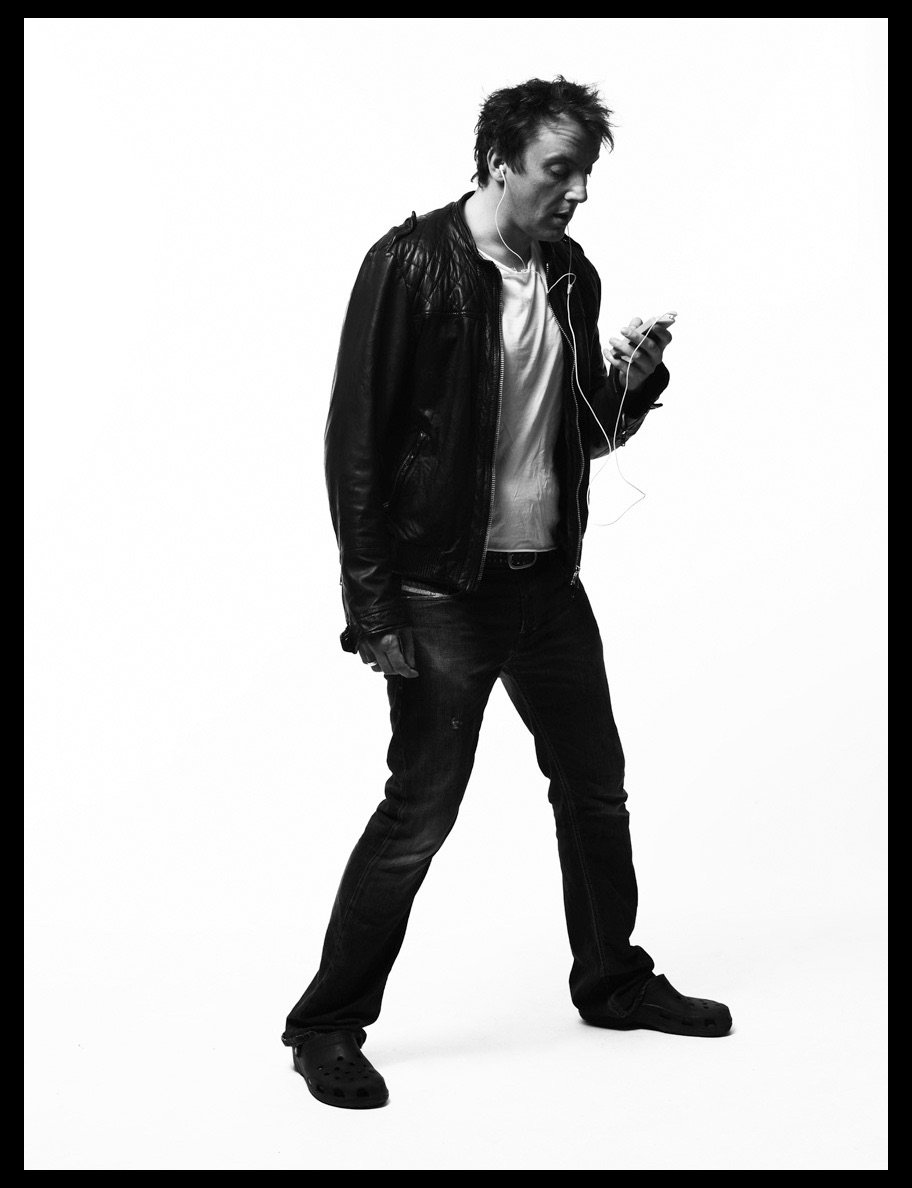
You can check out more of Floyd’s photographs and people’s stories on the One Hundred & Forty Characters blog. (via noah kalina)
Great, long piece from Ronan Farrow for the New Yorker on Elon Musk’s considerable influence over the US government. This doesn’t seem good:
There is little precedent for a civilian’s becoming the arbiter of a war between nations in such a granular way, or for the degree of dependency that the U.S. now has on Musk in a variety of fields, from the future of energy and transportation to the exploration of space. SpaceX is currently the sole means by which nasa transports crew from U.S. soil into space, a situation that will persist for at least another year. The government’s plan to move the auto industry toward electric cars requires increasing access to charging stations along America’s highways. But this rests on the actions of another Musk enterprise, Tesla. The automaker has seeded so much of the country with its proprietary charging stations that the Biden Administration relaxed an early push for a universal charging standard disliked by Musk. His stations are eligible for billions of dollars in subsidies, so long as Tesla makes them compatible with the other charging standard.
In the past twenty years, against a backdrop of crumbling infrastructure and declining trust in institutions, Musk has sought out business opportunities in crucial areas where, after decades of privatization, the state has receded. The government is now reliant on him, but struggles to respond to his risk-taking, brinkmanship, and caprice. Current and former officials from NASA, the Department of Defense, the Department of Transportation, the Federal Aviation Administration, and the Occupational Safety and Health Administration told me that Musk’s influence had become inescapable in their work, and several of them said that they now treat him like a sort of unelected official. One Pentagon spokesman said that he was keeping Musk apprised of my inquiries about his role in Ukraine and would grant an interview with an official about the matter only with Musk’s permission. “We’ll talk to you if Elon wants us to,” he told me.
In a piece from January, Cory Doctorow outlined the enshittification lifecycle of online platforms:
Here is how platforms die: First, they are good to their users; then they abuse their users to make things better for their business customers; finally, they abuse those business customers to claw back all the value for themselves. Then, they die.
…
This is enshittification: Surpluses are first directed to users; then, once they’re locked in, surpluses go to suppliers; then once they’re locked in, the surplus is handed to shareholders and the platform becomes a useless pile of shit. From mobile app stores to Steam, from Facebook to Twitter, this is the enshittification lifecycle.
Taking note of various platforms lighting themselves on fire recently, Mike Masnick offers a list of rules for the leadership of these platforms to follow to avoid turning into dumpster fires. Here’s rule #3:
Create more value than you capture. This one is not mine, but Tim O’Reilly’s, and it’s one that constantly sticks with me. As you’re developing a business model, the best way to make sure that you’re serving your users best, and not enshittifying everything, is to constantly make sure that you’re only capturing some of the value you’re creating, and are instead putting much more out into the world, especially for your community. Your investors will push you to capture more and more of that value, but again, when you start chasing that, you’re also spiraling down the enshittification curve.
IMO, some of what is going on with Twitter & Reddit is not enshittification per se, but more of a pushback against the power of their users. (I always think of Tron in instances like these. “I fight for the users!”) I think these CEOs know on some level that they’re making their product worse, but bringing their user bases to heel is worth the short-term headaches.
Twitter has announced that it will end free access to its API, likely bringing to an end most of the sites’ popular bot accounts (including @kottke, which powers this site’s QuickLinks feature). At BuzzFeed, Katie Notopoulos and Pranav Dixit interviewed some of the bots’ creators.
Daniel, the 23-year-old student in Germany behind @MakeItAQuote, told BuzzFeed News he would have never started it if there were a fee attached. “It’s a step in the wrong direction, as most of the API usage brings a lot of value to the platform,” he said. “And the fact that even myself, operating one of the biggest bots on the platform, has to consider shutting it down is very concerning. There are a lot of awesome, less popular bots. I don’t think any of them can be sustainable.”
I think @oliviataters creator Rob Dubbin may have said it best:
“Vichy Twitter had already stopped being a cool place to put bots or art in general, but the fact that until today you could still run your bots if you wanted to was a tether to a better time in its history, when it was more of a social canvas for goofy experimentation and feedback,” Dubbin told BuzzFeed News. “Is charging for API access a good business idea? Who cares! It’s another castle built on shit.”
You can follow the @kottke bot anywhere on the Fediverse. RSS remains free.
This piece by Cory Doctorow on TikTok’s enshittification (also available at Wired) contains some of the best and simplest descriptions of how online platforms like Amazon, Facebook, Uber, TikTok, Twitter, etc. evolve as they grow and then eventually die.
Here is how platforms die: First, they are good to their users; then they abuse their users to make things better for their business customers; finally, they abuse those business customers to claw back all the value for themselves. Then, they die.
…
This is enshittification: Surpluses are first directed to users; then, once they’re locked in, surpluses go to suppliers; then once they’re locked in, the surplus is handed to shareholders and the platform becomes a useless pile of shit. From mobile app stores to Steam, from Facebook to Twitter, this is the enshittification lifecycle.
The Amazon example he uses is really easy to follow. Early in the company’s history, the site used to be a great place to shop; their customers loved Amazon. But then Amazon’s sellers became their real customers and the user experience started to suffer. And now, much of the value generated by the users and customers goes to the shareholders (which, functionally speaking these days, means several dozen people who run hedge funds or large investment funds).
This strategy meant that it became progressively harder for shoppers to find things anywhere except Amazon, which meant that they only searched on Amazon, which meant that sellers had to sell on Amazon. That’s when Amazon started to harvest the surplus from its business customers and send it to Amazon’s shareholders. Today, Marketplace sellers are handing more than 45 percent of the sale price to Amazon in junk fees. The company’s $31 billion “advertising” program is really a payola scheme that pits sellers against each other, forcing them to bid on the chance to be at the top of your search.
Over at Techdirt, Mike Masnick riffed on Doctorow’s piece, arguing that enshittification, this playing of various parties against each other while siphoning off the value, is bad business because it focuses too much on short term gains.
Because maximizing revenue in the short term (i.e., in the 3 month window that Wall Street requires) often means sacrificing long term sustainability and long term profits. That’s because if you’re only looking at the next quarter (or, perhaps, the next two to four quarters if we’re being generous) then you’re going to be tempted to squeeze more of the value out of your customers, to “maximize revenue” or “maximize profits for shareholders.”
He uses early Amazon as an example of long-term thinking:
Once you go public, and you have that quarterly drumbeat from Wall Street where pretty much all that matters is revenue and profit growth. Indeed, it’s long forgotten now, but Jeff Bezos and Amazon actually were a rare company that kind of bucked that trend, and for a while at least, told Wall Street not to expect such things, as it was going to invest more and more deeply in serving its customers, and Wall Street punished Bezos for it. It’s long forgotten now, but Wall Street absolutely hated Amazon Prime, which locked in customer loyalty, but which they thought was a huge waste of money. The same was true of Amazon Web Services, which has become a huge revenue driver for the company.
They created a tremendous amount of value for their shareholders by playing the long game, which for whatever reason they aren’t willing to do anymore.
After restricting the visibility of the account that tracks the location of Elon Musk’s private jet, Twitter has now completely suspended it. Using publicly available data, @elonjet would tweet where and when the $70 million Gulfstream G650 ER was taking off and landing. (It’s still available on Instagram.)
Musk said in November that the account was a “direct personal safety risk” but that he would not ban it as part of his “commitment to free speech.”
Lol. In recent months, Musk has revealed himself to be conservative, a boring and completely predictable move for someone with a shit-ton of money, but which seemingly flies in the face of his acolytes’ conception of him as a free-thinking maverick genius god being. Banning @elonjet is a pretty minor event in the grand scheme of potentially dangerous things happening over at Twitter since Musk took over, but it demonstrates Musk’s commitment to Frank Wilhoit’s succinct definition of conservatism:
Conservatism consists of exactly one proposition, to wit: There must be in-groups whom the law protects but does not bind, alongside out-groups whom the law binds but does not protect.
So after going on and on about how important free speech is (in society and on Twitter), Twitter essentially shadow-banned @elonjet — shadow-banning on Twitter being something that Musk is trying to censure with the comical “Twitter Files” hogwash — and then just suspended the account altogether. From this and other actions, it’s pretty obvious that in running Twitter, Musk will define which people will be protected by The Twitter Rules and which groups of people will be governed by those same rules. It’s a private company and he has every right to do so, but for the love of god, his governance will not increase the amount of freedom that people using Twitter have. Musk will have freedom to bend and break the Rules, as will others of his choosing, but everyone else will have to toe the line and be subject to the Rules’ consequences and to the actions of those the Rules protect.
Update: Charlie Warzel wrote about Musk’s obvious and self-serving conservatism using a much more dangerous and harmful jumping off point: a recent Musk tweet that reads “My pronouns are Prosecute/Fauci”.
In five words, Musk manages to mock transgender and nonbinary people, signal his disdain for public-health officials, and send up a flare to far-right shitposters and trolls. The tweet is a cruel and senseless play on pronouns that also invokes the right’s fury toward Anthony Fauci, the chief medical adviser to President Joe Biden, for what they believe is a government overreach in public-health policy throughout the pandemic and an obfuscation of the coronavirus’s origins. (Fauci, for his part, has said he would cooperate with any possible investigations and has nothing to hide.)
Beyond its stark cruelty, this tweet is incredibly thirsty. As right-wing troll memes go, it is Dad-level, 4chan-Clark Griswold stuff, which is to say it’s desperate engagement bait in the hopes of attracting kudos from the only influencers who give Musk the time of day anymore: right-wing shock jocks. But that is the proper company for the billionaire, because whether or not he wants to admit it, Musk is actively aiding the far right’s political project. He is a right-wing activist.
Warzel invokes Wilhoit as well:
The hypocrisy at the center of Musk’s Twitter tenure is crucial to the understanding of Musk’s political activism. He has championed ideals of free-speech maximalism and amnesty to those who’ve offended his rules. Twitter, under his management, has let back on organizers of the Unite the Right rally in Charlottesville, Virginia; neo-Nazis such as Andrew Anglin; and January 6-investigation personalities such as Roger Stone. At the same time, Twitter has suspended accounts that have mocked Musk or expressed left-leaning views. Whether intentionally or not, Musk has, in effect, been governing Twitter using the classic Frank Wilhoit maxim: “Conservatism consists of exactly one proposition, to wit: There must be in-groups whom the law protects but does not bind, alongside out-groups whom the law binds but does not protect.” Put differently, the billionaire has been advancing a long-running right-wing political project described recently by my colleague Adam Serwer as a “belief in a new constitutional right. Most important, this new right supersedes the free-speech rights of everyone else: the conservative right to post.”
(via @torrHL)
TheirTube lets you see YouTube recommended videos for preppers, liberals, climate deniers, fruitarians, conservatives, etc. Here’s the climate deniers home page from a couple of days ago:
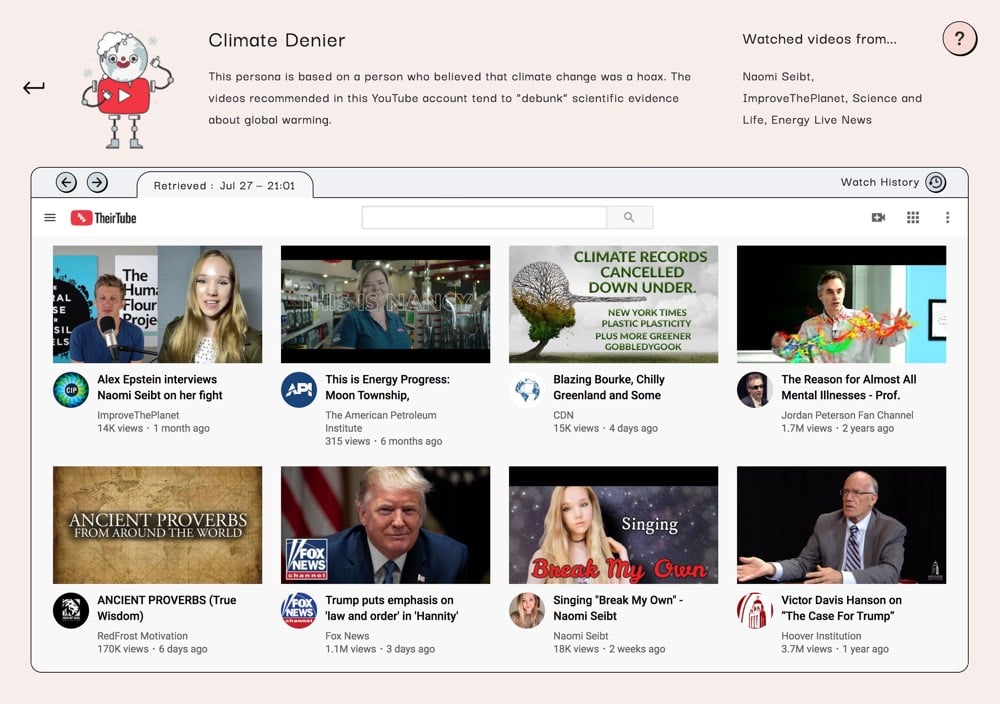
Theirtube is a Youtube filter bubble simulator that provides a look into how videos are recommended on other people’s YouTube. Users can experience how the YouTube home page would look for six different personas. Each persona simulates the viewing environment of real Youtube users who experienced being inside a recommendation bubble through recreating a Youtube account with a similar viewing history.
The simulator was developed by Tomo Kihara after he got into an argument with someone who lived in a completely different filter bubble:
This whole project started when I was in a heated discussion with a person who thought climate change was a hoax and 9/11 was a conspiracy. Through conversations with him, I was surprised to learn that he thought everyone’s YouTube feed had the same information as his own feed. When we showed each other our YouTube homepages, we were both shocked. They were radically different. And it got me thinking about the need for a tool to step outside of information bubbles.
The project is open-sourced on GitHub so you can make your own personas, etc. (via craig mod)
Update: Leveraging Twitter’s lists functionality, Vicariously lets you see the timelines of other Twitter users. And not only that, but you can merge the timelines of several users, only the mutual follows of those users, and other options.
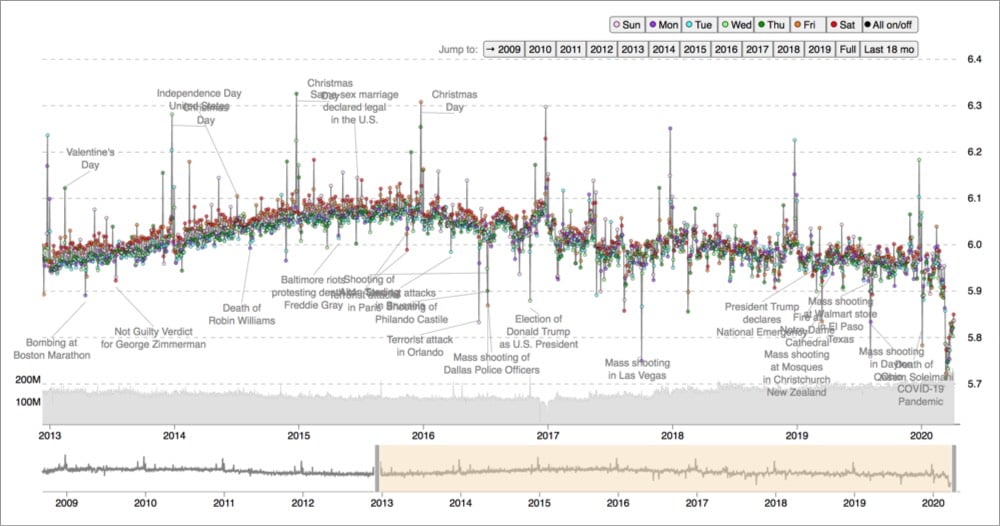
Since 2008, the Hedonometer has been tracking the language we use on Twitter to assign a daily score that measures how collectively happy we are (English tweets only). From the data, you can see that happiness spikes on holidays & after notable news events (same-sex marriage legalization) and unhappiness follows mass shootings, terrorist events, and Trump’s election. But the Covid-19 pandemic has brought Twitter’s collective happiness rating to an overall new low and its first sustained period of unhappiness.
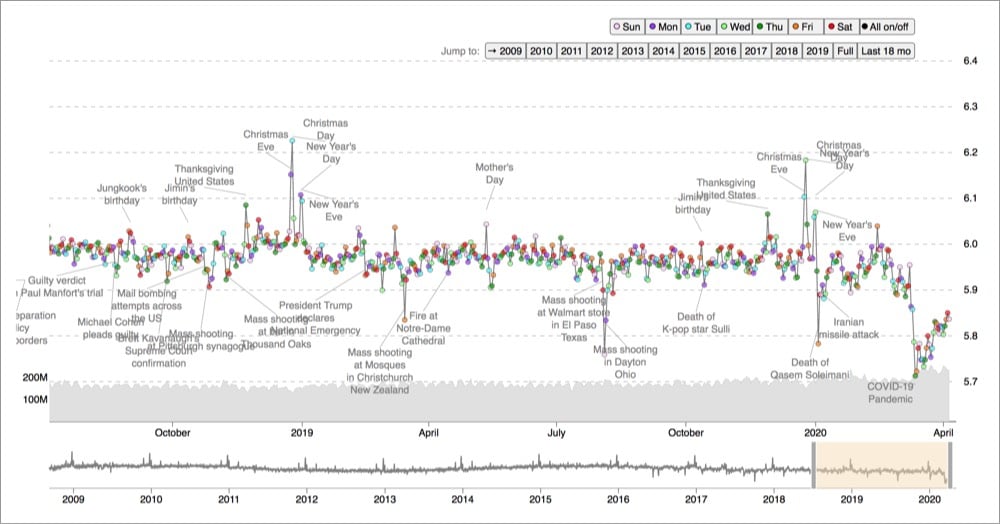
The day they identify as the unhappiest is March 12, 2020, which is the day after Americans finally took Covid-19 seriously. Within the space of a few hours on March 11, the NBA announced it was suspending its season, Tom Hanks revealed that he and his wife Rita Wilson had Covid-19, the WHO declared Covid-19 a pandemic, Donald Trump went on primetime TV to address the nation, and the DJIA closed down 1400 points (it would drop another 2350 points on Mar 12).
See also the previous low point after the Las Vegas shootings and my initial post on the Hedonometer from July 2016. In that initial post, I shared a hunch that Twitter’s happiness seemed to have reached a peak in early 2016. With four years of additional data, it’s obvious that the happiness peaked in late 2015 or early 2016 (at least according to their methodology).
In a keynote address to the Anti-Defamation League, entertainer Sacha Baron Cohen calls the platforms created by Facebook, Google, Twitter, and other companies “the greatest propaganda machine in history” and blasts them for allowing hate, bigotry, and anti-Semitism to flourish on these services.
Think about it. Facebook, YouTube and Google, Twitter and others — they reach billions of people. The algorithms these platforms depend on deliberately amplify the type of content that keeps users engaged — stories that appeal to our baser instincts and that trigger outrage and fear. It’s why YouTube recommended videos by the conspiracist Alex Jones billions of times. It’s why fake news outperforms real news, because studies show that lies spread faster than truth. And it’s no surprise that the greatest propaganda machine in history has spread the oldest conspiracy theory in history- — the lie that Jews are somehow dangerous. As one headline put it, “Just Think What Goebbels Could Have Done with Facebook.”
On the internet, everything can appear equally legitimate. Breitbart resembles the BBC. The fictitious Protocols of the Elders of Zion look as valid as an ADL report. And the rantings of a lunatic seem as credible as the findings of a Nobel Prize winner. We have lost, it seems, a shared sense of the basic facts upon which democracy depends.
When I, as the wanna-be-gansta Ali G, asked the astronaut Buzz Aldrin “what woz it like to walk on de sun?” the joke worked, because we, the audience, shared the same facts. If you believe the moon landing was a hoax, the joke was not funny.
When Borat got that bar in Arizona to agree that “Jews control everybody’s money and never give it back,” the joke worked because the audience shared the fact that the depiction of Jews as miserly is a conspiracy theory originating in the Middle Ages.
But when, thanks to social media, conspiracies take hold, it’s easier for hate groups to recruit, easier for foreign intelligence agencies to interfere in our elections, and easier for a country like Myanmar to commit genocide against the Rohingya.
In particular, he singles out Mark Zuckerberg and a speech he gave last month.
First, Zuckerberg tried to portray this whole issue as “choices…around free expression.” That is ludicrous. This is not about limiting anyone’s free speech. This is about giving people, including some of the most reprehensible people on earth, the biggest platform in history to reach a third of the planet. Freedom of speech is not freedom of reach. Sadly, there will always be racists, misogynists, anti-Semites and child abusers. But I think we could all agree that we should not be giving bigots and pedophiles a free platform to amplify their views and target their victims.
Second, Zuckerberg claimed that new limits on what’s posted on social media would be to “pull back on free expression.” This is utter nonsense. The First Amendment says that “Congress shall make no law” abridging freedom of speech, however, this does not apply to private businesses like Facebook. We’re not asking these companies to determine the boundaries of free speech across society. We just want them to be responsible on their platforms.
If a neo-Nazi comes goose-stepping into a restaurant and starts threatening other customers and saying he wants kill Jews, would the owner of the restaurant be required to serve him an elegant eight-course meal? Of course not! The restaurant owner has every legal right and a moral obligation to kick the Nazi out, and so do these internet companies.
It’s nothing new for people who built tools to later have remorse when seeing those tools abused. Sometimes that remorse is world-historical, like with many of the scientists whose work led to the atom bomb. Sometimes, it’s something less than that, like the guy who built the retweet button for Twitter.
In the retweet button’s case, this guy is named Chris Wetherell. He’s also responsible for leading the team that built Google Reader. This is usually posed as an irony: the guy who built a thing that’s now loathed and everywhere (the retweet) also built the thing that’s beloved after its death. But to me, it’s not so ironic.
See, what Wetherell did in both cases was less invent something from whole cloth than adapt a user behavior (manual retweets and RSS readers) into part of a corporate product. In both case, the corporate versions of each were so successful that they crowded out the original forms of user behavior. The retweet got lucrative but ugly, the RSS reader enabled all new kinds of connections, but grew costly. The retweet lived and Reader died, but the underlying pattern was the same; once it was handed over to the corporation, everyone lost control.
And I think you can argue that there’s a parallel here too with the atom bomb folks. Few of them were upset that the structure of the universe works the way their theories predicted. What terrified them was putting the tremendous power inherent in the structure of the universe at the behest of the state.
This is the builder’s remorse. Not that you invented a thing, not that the consequences were unforeseen. It’s that you gave the thing to a power structure where things were overwhelmingly likely to end in ruin. You gave the power to people who don’t care about what you claim to care about. And that problem, because of the nature and structure of money and power, is extremely hard to avoid.
Every time there’s a new social media app or network that breaks out, someone writes an article about how this new network encourages people to be themselves and have fun without all of the heaviness of other platforms. The latest example of this is Kevin Roose’s NY Times piece about TikTok.
TikTok has none of that. Instead, it’s that rarest of internet creatures: a place where people can let down their guards, act silly with their friends and sample the fruits of human creativity without being barraged by abusive trolls or algorithmically amplified misinformation. It’s a throwback to a time before the commercialization of internet influence, when web culture consisted mainly of harmless weirdos trying to make each other laugh.
In 2016, Jenna Wortham wrote this about Snapchat for the NY Times:
Its entire aesthetic flies in the face of how most people behave on Facebook, Instagram and Twitter — as if we’re waiting to be plucked from obscurity by a talent agent or model scout. But Snapchat isn’t the place where you go to be pretty. It’s the place where you go to be yourself, and that is made easy thanks to the app’s inbuilt ephemerality.
In 2013, Mat Honan wrote this about Vine:
It built a ground up culture that feels loose, informal, and — frankly — really fucking weird. Moreover, most of what you see there feels very of-the-moment. Sure, there’s plenty of artistry that goes into making six second loops, and there are volumes of videos with high production values. But far more common are Vines that serve as windows into what people are doing right now.
Implicit in these pieces is the idea that there’s something intrinsic to these apps/networks that makes them hew closer to real life and/or lightheartedness than older and bigger platforms…the ephemerality of Snapchat, the ease of shooting a Vine video, the fun filters and templates of TikTok. Some part of that is surely true, but what if being small and new is the thing that makes these networks fun? As I wrote in response to Wortham’s article a couple of years ago:
Blogs, Flickr, Twitter, Vine, and Instagram all started off as places to be yourself, but as they became more mainstream and their communities developed behavioral norms, the output became more crafted and refined. Users flooded in and optimized for what worked best on each platform. Blogs became more newsy and less personal, Flickr shifted toward professional-style photography, Vine got funnier, and Twitter’s users turned toward carefully crafted cultural commentary and link sharing. Editing worked its way in between the making and sharing steps.
TikTok probably feels a lot like Flickr or Twitter in the early days, where everyone is exploring and the users are all kind of doing the same things with it. As networks get bigger, they reach a point where there isn’t just one big group exploring the same space together. Instead, you have many big groups who have different goals and desires that all need to fit under one roof (essentially, politics becomes necessary)…and that can get messy, particularly when the companies running these apps want to appeal to the widest possible audience for capitalization purposes.
Novelty is probably the biggest factor though. TikTok is fun because it’s new. When you join up, you get new superpowers and flexing those abilities gives the old brain a shot of dopamine, particularly when the flexing is social. Later, when many of the social possibilities have been explored and even exploited, fun becomes harder to come by. Even Twitter can still be fun — see the replies to Wortham’s recent tweet about fave NYC moments — but the templates for interaction on the platform have long since been set in stone. It would be very surprising if a large & mature social network came along that didn’t also get less fun and “real” as it developed. That would be a special achievement.
Last night, Twitter gave its users the option to switch back to a purely chronological timeline.
Meanwhile, today we updated the “Show the best Tweets first” setting. When off, you’ll only see Tweets from people you follow in reverse chronological order. Previously when turned off, you’d also see “In case you missed it” and recommended Tweets from people you don’t follow.
That’s good! Most users probably benefit from the algorithmic timeline, but not everyone wants to use the service that way (I certainly don’t).
Whenever Twitter changes their mind like this, it always reminds me of a missed opportunity by the company to give people more ways to discover new things on Twitter while keeping the service simple. They’ve tried the Discover feature, sticking likes from friends in the timeline, “in case you missed it”, recommended followers, Moments, Trends, etc. etc. And despite these things being at least somewhat interesting some of the time, many people freak out because they don’t have any control over whether this stuff pops up in their timelines.
What Twitter should do instead1 is use the same simple mechanism people already use to control their timelines: following and unfollowing. Instead of adding tabs to the interface or throwing random stuff into everyone’s timeline for the greater good, those things should be accounts you can follow. Call them Smart Accounts because they would be based on each user’s particular activity. Then users would be able to have a fully chronological timeline but also see tweets from their Smart Accounts according to their particular preferences.
Here’s an example. Seeing likes from people you follow is fun and interesting…the serendipity and relevance factors are high.1 The “Likes from Friends” Smart Account would post tweets that your friends have liked recently and you could set how many you wanted to see each day.
More examples:
- In Case You Missed It. Just like the current feature, except you can follow/unfollow and control the frequency.
- Trends. An account that posts tweets related to trending stories…or maybe it just alerts you that “Mario Kart” is trending. You can see global trends, location-based, or tailored just for you.
- Threads. See X number of the most popular threads posted in my extended network each day.
- Who to Follow. Every day (or X number of times/day), this account would suggest an account to follow.
- Moments. I never ever go to the Moments tab but I would definitely follow an account that periodically tweeted out the five best Moments from my extended network each day.
- Promoted Tweets. This is a Smart Account everyone would have to follow. But maybe you could pay a subscription fee to be able to unfollow?
I would pretty much follow all of those accounts in some way…and they’re just the tip of the iceberg. Twitter has all kinds of interest data that you could slice up in interesting ways and feed back into the system. A “Longreads” account that tweets out a long magazine or newspaper article that’s bubbling up in your network each day before your commute home? A “Book Stack” account that recommends books that people in your network have tweeted about recently. A “Smart Smart Accounts” account that recommends new Smart Accounts to follow (*Inception Horn*). A “Random Follow” account that automagically follows a different recommended account each day…then unfollows them and follows a new account the next day. Likes from My Friends’ Friends. Trending Videos. Meme Factory. Check Out My Soundcloud. So many possibilities.
Twitter wouldn’t want these accounts to get lost in the shuffle — they need to keep that engagement high — so maybe they’d have special status in the app somewhere: a tab that replaces Moments and they’re listed first on the Following page? Perhaps a few Smart Accounts are turned on by default when you make a new account. Maybe users could pin the tweets from select Smart Accounts to the tops of their timelines (much like Twitter was forcing on people with the algorithmic timeline).
But the point of all this is that Twitter would have a way to deliver new & engaging features powered by their algorithmic special sauce to their users in a very familiar and simple way without always mucking up people’s expectations: by simply clicking the follow button.
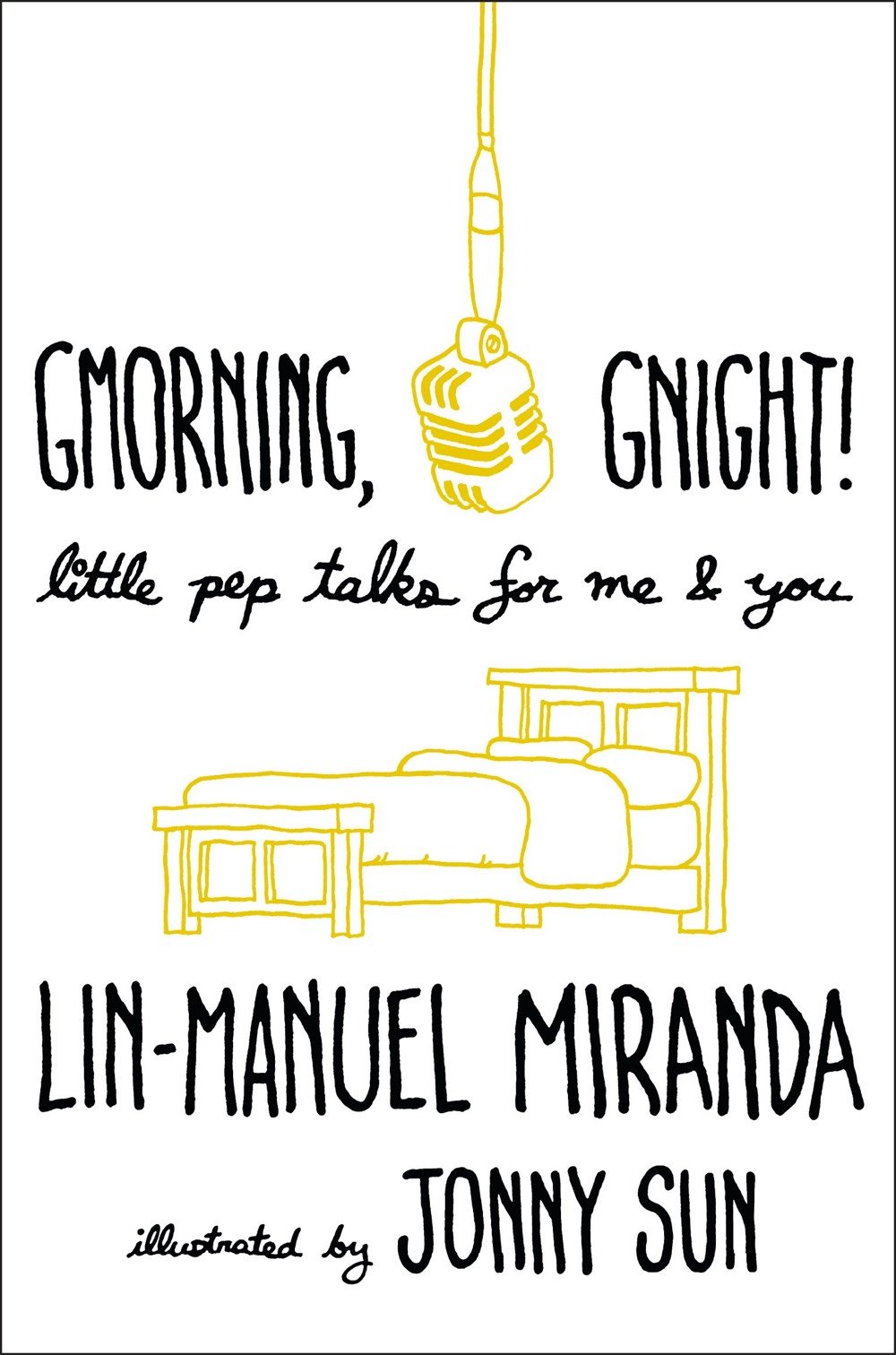
On Twitter, Hamilton creator Lin-Manuel Miranda often begins and ends his days by posting affirmations for his fans & readers. Stuff like:
Good night. Your mind is yours alone and you decide who and what gets in. Draw the curtains. Make yourself at home.
Good morning. Do NOT get stuck in the comments section of life today. Make, do, create the things. Let others tussle it out. Vamos!
Gnight. Don’t forget to look up your work & let real life in. It makes your work better.
Good morning. You are perfectly cast in your life. I can’t imagine anyone but you in the role. Go play.
Miranda has collaborated with illustrator Jonny Sun on a collection of this inspirational tweets called Gmorning, Gnight!: Little Pep Talks for Me & You. It’s out in October, but you can pre-order it now. It doesn’t fit the theme but I hope they found a way to fit this all-time Hall of Fame tweet in there.

One of my favourite Twitter thread style or topic in recent months has been the “history walk.” People picking something they want to see, usually a ruin or forgotten place, documenting their walk there and the things they discover. Admittedly, I don’t have that many examples but the few I have seen are fantastic enough to make the form a favourite.
First one, from just this past weekend, has Paul Cooper setting out in the Norfolk countryside in search of the ruins of the church of St Mary’s, which “local folklore claims as the resting place of the Somerton Witch.” I’m including a few pictures below but read the whole thread, packed with historical tidbits.
(The first picture above is of Neolithic mines, which dot the landscape like lunar craters. The deepest could be as much as 60ft deep.)




If you’re a history buff, you should also check out Paul’s whole feed, he does these regular long threads on various historical topics.
Second example, also in the English country side, is this one by @gawanmac:
I saw this on an OS map and couldn’t not investigate. A place of worship symbol in the middle of bloody nowhere on the edge of a wood. It was a foggy, atmospheric day up on the North Downs, so I decided to walk three sides of a square through the wood to reach it.




Watson is IBM’s AI platform. This afternoon I tried out IBM Watson’s Personality Insights Demo. The service “derives insights about personality characteristics from social media, enterprise data, or other digital communications”. Watson looked at my Twitter account and painted a personality portrait of me:
You are shrewd, inner-directed and can be perceived as indirect.
You are authority-challenging: you prefer to challenge authority and traditional values to help bring about positive changes. You are solemn: you are generally serious and do not joke much. And you are philosophical: you are open to and intrigued by new ideas and love to explore them.
Experiences that give a sense of discovery hold some appeal to you.
You are relatively unconcerned with both tradition and taking pleasure in life. You care more about making your own path than following what others have done. And you prefer activities with a purpose greater than just personal enjoyment.
Initial observations:
- Watson doesn’t use Oxford commas?
- Shrewd? I’m not sure I’ve ever been described using that word before. Inner-directed though…that’s pretty much right.
- Perceived as indirect? No idea where this comes from. Maybe I’ve learned to be more diplomatic & guarded in what I say and how I say it, but mostly I struggle with being too direct.
- “You are generally serious and do not joke much”… I think I’m both generally serious and joke a lot.
- “You prefer activities with a purpose greater than just personal enjoyment”… I don’t understand what this means. Does this mean volunteering? Or that I prefer more intellectual activities than mindless entertainment? (And that last statement isn’t even true.)
Watson also guessed that I “like musical movies” (in general, no), “have experience playing music” (definite no), and am unlikely to “prefer style when buying clothes” (siiiick burn but not exactly wrong). You can try it yourself here. (via @buzz)
Update: Ariel Isaac fed Watson the text for Trump’s 2018 State of the Union address and well, it didn’t do so well:
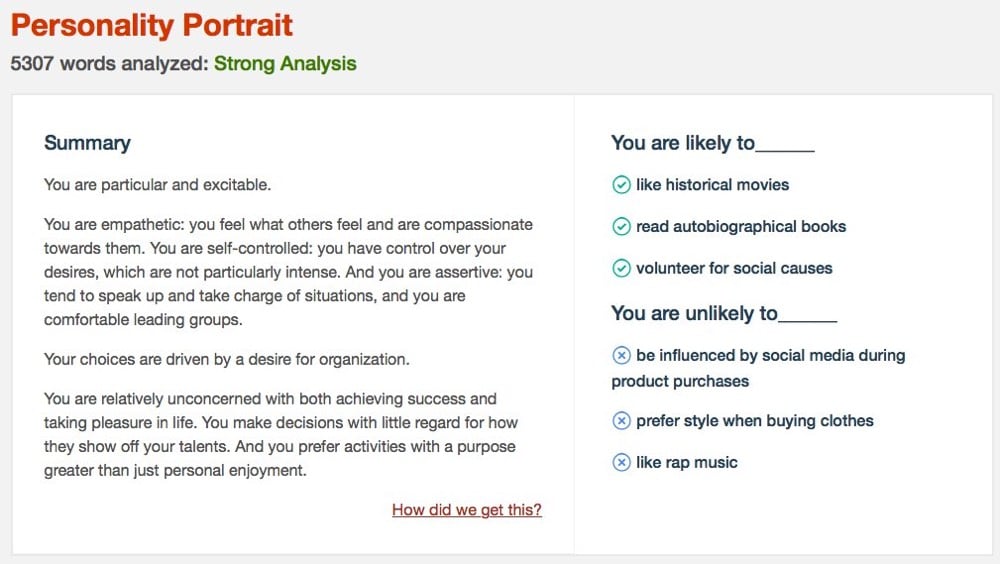
Trump is empathetic, self-controlled, and makes decisions with little regard for how he show off his talents? My dear Watson, are you feeling ok? But I’m pretty sure he doesn’t like rap music…
Dr. Time is a nickname some friends gave me within the last couple of years. Its origin is silly, as nicknames’ often are: “Tim” autocorrects to “Time,” so hasty typing in a private Slack turns into a pseudo-persona. I also like that it’s a slant rhyme on Doctor Doom, my favorite supervillain. And in case you haven’t noticed, I have a pretty strong interest in time.
When Jason and I started talking about different ways we could collaborate on the site, the wildest was his suggestion that I write an advice column called “Ask Dr. Time.” I laughed out loud. The proposition was absurd. I don’t want to wade into the disaster that is my life, but the idea that anyone would ask me for personal advice, and that I would be foolish enough to give it, was laughable. Let’s just say I’ve made some poor choices and had some sad circumstances, and leave it at that.
One of those poor choices, however, was spending a lot of time studying philosophy, literature, mathematics, history, and metaphysics. Jason eventually got me to see that “Ask Dr. Time” didn’t have to be an advice column in a conventional sense. What if readers had problems that didn’t require common sense or finely honed interpersonal skills, but an ability to make sense of abstruse reasoning? What if they didn’t need a fancy Watson but an armchair Wittgenstein? What if kottke.org hosted the first metaphysical advice columnist? That proposition is still absurd, but it’s absurd in an interesting way. And “absurd in an interesting way” is what Dr. Time is all about. Not practical solutions, but philosophical entanglements and disentanglings. That I could do.
So on Fridays, from time to time. Dr. Time is going to appear, to answer reader questions that admit of no answer — sometimes here on Kottke.org, and sometimes at the Kottke newsletter I write, Noticing. For this particular entry, the blog seemed more appropriate — and besides, the newsletter was full.
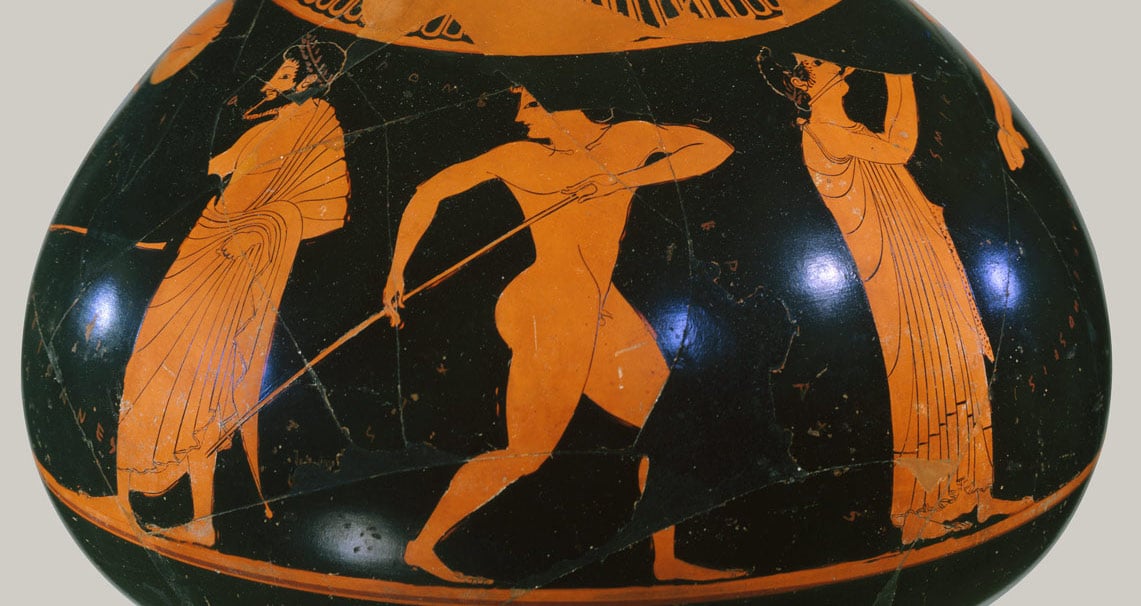
Our first question actually comes from Jason, who, like many of us, is enjoying Emily Wilson’s magnificent contemporary translation of Homer’s The Odyssey.
Jason was struck by this passage in the introduction, on the oral roots and possible oral composition of the Homeric epics:
The state of Homeric scholarship changed radically and permanently in the early 1930s, when a young American classicist named Milman Parry traveled to the then-Yugoslavia with recording equipment and began to study the living oral tradition of illiterate and semiliterate Serbo-Croat bards, who told poetic folk tales about the mythical and semihistorical events of the Serbian past. Parry died at the age of thirty-three from an accidental gunshot, and research was further interrupted by the Second World War. But Parry’s student Albert Lord continued his work on Homer, and published his findings in 1960, under the title The Singer of Tales. Lord and Parry proved definitively that the Homeric poems show the mark of oral composition.
The “Parry-Lord hypothesis” was that oral poetry, from every culture where it exists, has certain distinctive features, and that we can see these features in the Homeric poems—specifically, in the use of formulae, which enable the oral poet to compose at the speed of speech. A writer can pause for as long as she or he wants, to ponder the most fitting adjective for a particular scene; she can also go back and change it afterwards, on further reflection—as in the famous anecdote about Oscar Wilde, who labored all morning to add a comma, and worked all afternoon taking it out. Oral performers do not use commas, and do not have the luxury of time to ponder their choice of words. They need to be able to maintain fluency, and formulaic features make this possible.
Subsequent studies, building on the work of Parry and Lord, have shown that there are marked differences in the ways that oral and literate cultures think about memory, originality, and repetition. In highly literate cultures, there is a tendency to dismiss repetitive or formulaic discourse as cliche; we think of it as boring or lazy writing. In primarily oral cultures, repetition tends to be much more highly valued. Repeated phrases, stories, or tropes can be preserved to some extent over many generations without the use of writing, allowing people in an oral culture to remember their own past. In Greek mythology, Memory (Mnemosyne) is said to be the mother of the Muses, because poetry, music, and storytelling are all imagined as modes by which people remember the times before they were born.
Wilson goes on to consider the implications of the poem’s origins in orality for trying to figure out if there really was an historical Homer, a single author of the great poems — and if so, whether and how we could tell. She also rightly gives some of the Homeric critics a shot in the ribs for their assumptions about oral cultures, which tended not to be drawn from very many historical sources: if Parry had visited with Somali bards rather than singers from the Balkans, he may have come away with very different conclusions.
Orality, even primary orality, before any writing whatsoever, exists in rich and wide varieties. And Homeric orality was probably not so primary as all that: it’s exciting and accessible to us exactly because it’s on that seam between a dominant oral culture and an emerging written one.
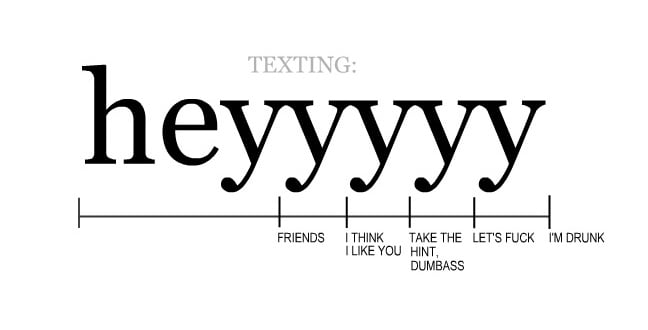
Jason’s question is a little bit different. Since I don’t quite remember what he originally asked, I’ll do a very oral-to-literate thing and paraphrase. What do we make of digital media forms like Twitter that are highly interactive and speechlike? Is this a kind of return to orality? Is there a little bit of the Homeric world in our smartphones, where we both “chat” with our mouths and our thumbs?
The answer to this last question is Yes — but in a different way from how it might first appear. We’re a little Homeric because we’re also on the cusp of multiple media regimes, making a great transformation of great civilizations. However, with some exceptions, we’re not especially oral. We’re exceedingly literate. We’re making written language and literacy do things even our grandparents, raised in the age of industrial print, wouldn’t quite recognize.
I used the phrase “primary orality” earlier, and it’s one I borrow from Walter Ong. Ong was a Jesuit priest and influential scholar of language and literature. He was very much in this Milman Parry tradition of thinking about the relationship of orality and literacy to forms of thought and shared culture. You can draw a line from Parry to Eric Havelock, who wrote the influential Preface to Plato, and to communications scholars Harold Innis and Marshall McLuhan, and from there to Ong, Hugh Kenner, Northrop Frye, and a number of the more dominant media thinkers of the twentieth century in the English language.
What Ong helped conceptualize and popularize, especially in his book Orality and Literacy, was that in cultures with no tradition of literacy, orality had a fundamentally different character from those where literacy was dominant. It’s different again in cultures where literacy is known but scarce.
For instance, we tend to associate writing with official culture. We ask for papers, and papers are official. An official record has an official written form that unofficial forms of writing or any form of speech are considered less proper. Literacy and paper are also widespread enough that we expect everyone to have some paper.
A nonliterate culture, for obvious reasons, doesn’t work that way. You need an entirely different system of conventions to differentiate formal from informal, permanent from ephemeral — those concepts might not have even hold the same relationships to each other. One of those conventions, so common that it even exists outside the species, is song. And the songs we attribute to Homer are, for us, who exist in their shadow, the best songs ever written.
In the Romantic version of the Parry-Lord thesis, the oral world of Homer is a lost paradise, and our post-literate one, a fallen world of lesser creatures. This probably borrows too much from how Homeric poets feigned to feel about themselves relative to the Mycenaean civilizations that preceded them, and how the classical Greeks appeared to feel about Homer. It’s all representation of lost paradises all the way down.
Ong dodges more of this nostalgia than he’s usually given credit for, but there’s still an element of it, one that he sometimes seems to regret. (Regret for Nostalgia would make a good biography title for Ong.) In his case, it’s conflated with a methodological problem — how do we talk about primary orality (the orality of cultures with no knowledge of writing) in a culture that’s saturated with writing, whose entire intellectual edifice is premised on writing? In fact, oral culture never goes away: it persists in its own logic and suborns the existence of writing to its own ends.
Ong’s great example is classical and medieval rhetoric, which used books, book-based scholarly culture, and book-based modes of training to elevate oral argument to exquisite sophistication. You might also look at hip-hop, which seamlessly blends freestyle vocals, dance, graffiti, and turntable manipulation to create new forms of recording and improvisation. It’s never an either-or, but a constant restructuring.

So, as to the original question: are Twitter and texting new forms of orality? I have a simple answer and a complex one, but they’re both really the same.
The first answer is so lucid and common-sense, you can hardly believe that it’s coming from Dr. Time: if it’s written, it ain’t oral. Orality requires speech, or song, or sound. Writing is visual. If it’s visual and only visual, it’s not oral.
The only form of genuine speech that’s genuinely visual and not auditory is sign language. And sign language is speech-like in pretty much every way imaginable: it’s ephemeral, it’s interactive, there’s no record, the signs are fluid. But even most sign language is at least in part chirographic, i.e., dependent on writing and written symbols. At least, the sign languages we use today: although our spoken/vocal languages are pretty chirographic too.
Writing, especially writing in a hyperliterate society, involves a transformation of the sensorium that privileges vision at the expense of hearing, and privileges reading (especially alphabetic reading) over other forms of visual interpretation and experience. It makes it possible to take in huge troves of information in a limited amount of time. We can read teleprompters and ticker-tape, street signs and medicine bottles, tweets and texts. We can read things without even being aware we’re reading them. We read language on the move all day long: social media is not all that different.
Now, for a more complicated explanation of that same idea, we go back to Father Ong himself. For Ong, there’s a primary orality and a secondary orality. The primary orality, we’ve covered; secondary orality is a little more complicated. It’s not just the oral culture of people who’ve got lots of experience with writing, but of people who’ve developed technologies that allow them to create new forms of oral communication that are enabled by writing.
The great media forms of secondary orality are the movies, television, radio, and the telephone. All of these are oral, but they’re also modern media, which means the media reshapes it in its own image: they squeeze your toothpaste through its tube. But they’re also transformative forms of media in a world that’s dominated by writing and print, because they make it possible to get information in new ways, according to new conventions, and along different sensory channels.

Walter Ong died in 2003, so he never got to see social media at its full flower, but he definitely was able to see where electronic communications was headed. Even in the 1990s, people were beginning to wonder whether interactive chats on computers fell under Ong’s heading of “secondary orality.” He gave an interview where he tried to explain how he saw things — as far as I know, relatively few people have paid attention to it (and the original online source has sadly linkrotted away)1:
“When I first used the term ‘secondary orality,’ I was thinking of the kind of orality you get on radio and television, where oral performance produces effects somewhat like those of ‘primary orality,’ the orality using the unprocessed human voice, particularly in addressing groups, but where the creation of orality is of a new sort. Orality here is produced by technology. Radio and television are ‘secondary’ in the sense that they are technologically powered, demanding the use of writing and other technologies in designing and manufacturing the machines which reproduce voice. They are thus unlike primary orality, which uses no tools or technology at all. Radio and television provide technologized orality. This is what I originally referred to by the term ‘secondary orality.’
I have also heard the term ‘secondary orality’ lately applied by some to other sorts of electronic verbalization which are really not oral at all—to the Internet and similar computerized creations for text. There is a reason for this usage of the term. In nontechnologized oral interchange, as we have noted earlier, there is no perceptible interval between the utterance of the speaker and the hearer’s reception of what is uttered. Oral communication is all immediate, in the present. Writing, chirographic or typed, on the other hand, comes out of the past. Even if you write a memo to yourself, when you refer to it, it’s a memo which you wrote a few minutes ago, or maybe two weeks ago. But on a computer network, the recipient can receive what is communicated with no such interval. Although it is not exactly the same as oral communication, the network message from one person to another or others is very rapid and can in effect be in the present. Computerized communication can thus suggest the immediate experience of direct sound. I believe that is why computerized verbalization has been assimilated to secondary ‘orality,’ even when it comes not in oral-aural format but through the eye, and thus is not directly oral at all. Here textualized verbal exchange registers psychologically as having the temporal immediacy of oral exchange. To handle [page break] such technologizing of the textualized word, I have tried occasionally to introduce the term ‘secondary literacy.’ We are not considering here the production of sounded words on the computer, which of course are even more readily assimilated to ‘secondary orality’” (80-81).
So tweets and text messages aren’t oral. They’re secondarily literate. Wait, that sounds horrible! How’s this: they’re artifacts and examples of secondary literacy. They’re what literacy looks like after television, the telephone, and the application of computing technologies to those communication forms. Just as orality isn’t the same after you’ve introduced writing, and manuscript isn’t the same after you’ve produced print, literacy isn’t the same once you have networked orality. In this sense, Twitter is the necessary byproduct of television.
Now, where this gets really complicated is with stuff like Siri and Alexa, and other AI-driven, natural-language computing interfaces. This is almost a tertiary orality, voice after texting, and certainly voice after interactive search. I’d be inclined to lump it in with secondary orality in that broader sense of technologically-mediated orality. But it really does depend how transformative you think client- and cloud-side computing, up to and including AI, really are. I’m inclined to say that they are, and that Alexa is doing something pretty different from what the radio did in the 1920s and 30s.
But we have to remember that we’re always much more able to make fine distinctions about technology deployed in our own lifetime, rather than what develops over epochs of human culture. Compared to that collision of oral and literate cultures in the Eastern Mediterranean that gave us poetry, philosophy, drama, and rhetoric in the classical period, or the nexus of troubadours, scholastics, printers, scientific meddlers and explorers that gave us the Renaissance, our own collision of multiple media cultures is probably quite small.
But it is genuinely transformative, and it is ours. And some days it’s as charming to think about all the ways in which our heirs will find us completely unintelligible as it is to imagine the complex legacy we’re bequeathing them.
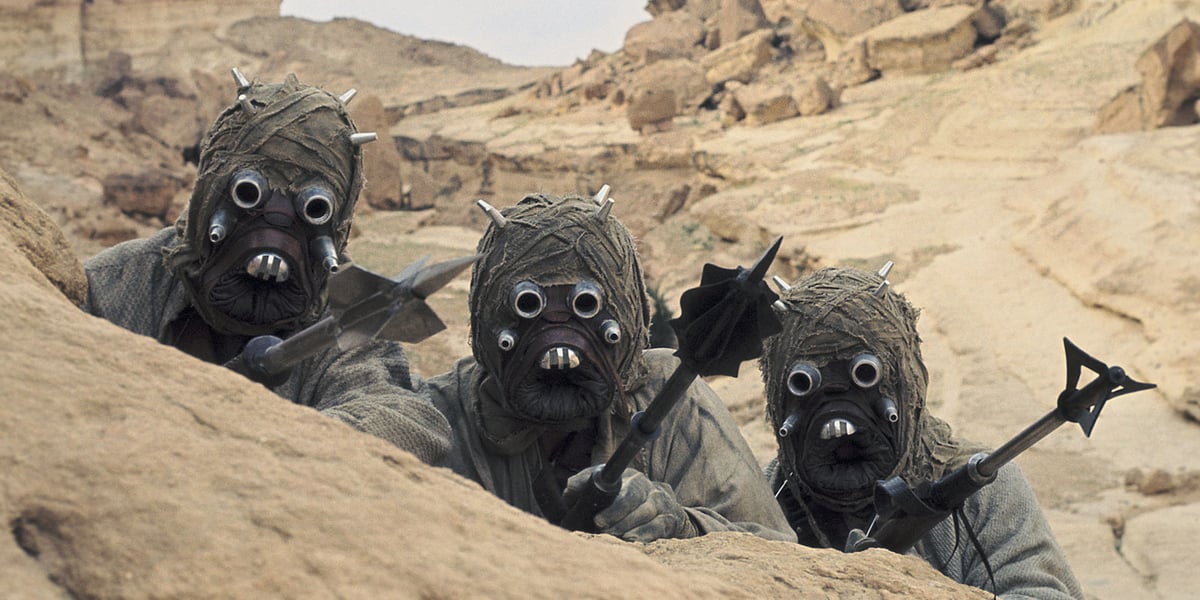
On May 17, 2014, a Saturday morning, a bunch of very bored, very geeky dads on Twitter spontaneously created something weird and fun. Jacob Harris kicked it off, I helped get it going, others joined in. Dan Sinker called it The People’s History of Tatooine, and that name has stuck.
Since Storify has announced that it’s shutting down, I’ve been looking for a permanent home for the People’s History. A lot of the tweets have been deleted, and threads have been broken. I also wanted something without the Twitter-y cruft, but that still preserved the back-and-forth, so I decided to format it kinda like a teleplay. Jason suggested posting it here at Kottke.org. I can’t think of a better home for it.
THE PEOPLE’S HISTORY OF TATOOINE
starring
(in order of appearance)
JACOB HARRIS
TIM CARMODY
FRANCIS HWANG
AZIZ GILANI
JAMES SCHIRMER
SKOTT KLEBE
DAN SINKER
SCOTT KLEIN
ANIL DASH
TED HAN
MICHAEL DONOHOE
MIKE MONTEIRO
and
DARTH
(not pictured)
JACOB HARRIS
What if Mos Eisley wasn’t really that wretched and it was just Obi Wan being racist again?
TIM CARMODY
What do you mean, “these blaster marks are too precise to be made by Sand People?” Who talks like that?
JACOB HARRIS
also Sand People is not the preferred nomenclature.
TIM CARMODY
They have a rich cultural history that’s led them to survive and thrive under spectacularly awful conditions.
JACOB HARRIS
Mos Eisley may not look like much but it’s a a bedroom community with decent schools and affordable housing.
TIM CARMODY
You can just imagine Obi-Wan after years of being a Jedi on Coruscant being stuck in this place and just getting madder and madder.
JACOB HARRIS
yeah nobody cares that the blue milk is so much more artisanal on Coruscant
TIM CARMODY
Obi-Wan only goes to Mos Eisley once every three months to get drunk and he basically becomes like Byron.
JACOB HARRIS
so he clings to things like lightsabers and ancient Jedi religion…
“I’m just saying you can’t trust a man what plays in a cantina band. Not you, Figrin D’ith. You’re one of the good ones!”
I also imagine Tosche Station as some sort of affluent suburban mall where Luke just goes to loiter when bored.
TIM CARMODY
That’s totally true about dudes in cantina bands though
JACOB HARRIS
you don’t get to be Max Rebo overnight. Playing in the cantina is like their version of the Beatles in Hamburg, Tim.
TIM CARMODY
Luke is such a little shit. Imagine Lucas’s direction: “Mark, just reach out and grab the bartender by the sleeve.”
JACOB HARRIS
All I’m saying is that for a place he allegedly hates, Obi Wan sure knows exactly where the best cantina is. Maybe what Obi Wan really hates is himself for having a good time and enjoying the cantina scene
TIM CARMODY
he goes home with one of Jabba’s six-boobed dancers and hates himself for it
JACOB HARRIS
that Obi Wan thinks his little “put the hood over my head and make strange noises” is what scares Sand People is racist too. Maybe they just run because they don’t want to deal with the racist old man who gets violent and complains more will come back
FRANCIS HWANG
You can’t be mad at Obi Wan. That’s just how all the Jedi talked back then.
JACOB HARRIS
“more civilized time?” Check your privilege, Obi Wan
FRANCIS HWANG
“When I was growing up we called the Sand People ‘savage’, but we didn’t mean anything by it… The Sand People used to know their place until those Imperial carpetbaggers came here and started putting ideas in their heads.”
AZIZ GILANI
The ‘sand people’ were really just desert nomads emancipating the massive slave population. #Perspective
JACOB HARRIS
the Tusken People. “Raiders” presumes some malevolent intent. They are trying to preserve the desert habitat and Luke wants to race through it in his speeder. The Tusken are just trying to keep parts of Tatooine wild and undeveloped by heavy industry.
JAMES SCHIRMER
One could argue calling them “Tuskens” is little better than “Raiders.” See: http://starwars.wikia.com/wiki/Fort_Tusken …
JACOB HARRIS
they use it to rob the slur of its power
SKOTT KLEBE
Belatedly realizing that in a crime scene distinguished by precise blaster marks, Storm Troopers are your last suspects. I mean, based on the rest of the movie, should say “These blaster marks are too precise to be made by Storm Troopers.” But who’s right there pawning the guilt off on the Empire? And who used to be a renowned Jedi marksman himself? Obi-wan!
Connect the dots, people! It was Obi-Wan from the beginning!
Face it - Obi-Wan killed Uncle Owen and Aunt Beru in order to let Luke to sell his speeder for funds to leave the planet.
ELON GREEN
A small part of me wishes I understood this.
JACOB HARRIS
it’s a pretty obscure film
DAN SINKER
The People’s History of Tattoine that Jacob Harris and Tim Carmody wrote this morning is an essential document.
JACOB HARRIS
all I’m saying is that I don’t blame the Tusken People for steering clear of the racist, violent and armed old man
DAN SINKER
“he’s making those noises again, honey bring the kids inside.”
JACOB HARRIS
and the Greater Mos Eisley Business Improvement District doesn’t care about the rantings of a separatist hermit
SCOTT KLEIN
Actually they’re so offended by being called “sand people” that they beat up any outsider who wanders by.
DAN SINKER
think of the number of letters he wrote in to the Tattoine Times-Call
SKOTT KLEBE
But traveling in a straight line to conceal their numbers? That’s just plain deceptive.
DAN SINKER
THAT’S JUST HOW THEY *WALK* MAN.
JACOB HARRIS
it’s a nature preserve, Scott, and Luke just thinks he can drive his speeder through it. Like anybody forgets what Luke and his friends did to native womp rat populations at Beggars Canyon Park
SKOTT KLEBE
but how can you trust people who walk like that? They must be up to all kinds of stuff. Tricky walking, ew.
JACOB HARRIS
they’re only concealing their numbers if you have trouble telling them apart
SKOTT KLEBE
If they wanted us to be able to tell them apart, they shouldn’t conceal their faces. Their fault, not mine.
JACOB HARRIS
maybe those are their faces, Skott. Sheesh!
DAN SINKER
Jesus old man, aren’t you late for a pancake breakfast at the Jedi Knights Lodge?
SKOTT KLEBE
is it racist that I don’t think skin can be made out of canvas and metal?
DAN SINKER
Not *All* Jedi.
SKOTT KLEBE
if liking Jedi “no hands” pancakes is wrong, I don’t want to be right.
SCOTT KLEIN
And let’s face it, there’s good reason for them to distrust Skywalkers.
JACOB HARRIS
Child of known felon hanging out with a violent separatist and disturbing the peace of their home
DAN SINKER
it’s not like it was generations ago. The kid’s *dad* was The One Who Killed. Didn’t even change his name.
JACOB HARRIS
so it might seem extreme to knock Luke out and vandalize his annoying speeder, but they’d had enough.
SCOTT KLEIN
If c3po hadn’t fallen off that ledge he’d have translated Tusken. “You’re scaring us! We mean you no harm!”
TIM CARMODY
Luke and Obi-Wan don’t even stand up for their droids, man. Tattooine is so fucking racist.
JACOB HARRIS
no, it’s very diverse. Which is why Obi Wan hates it.
TIM CARMODY
That bartender is no prize either, is all I’m saying. And they let Threepio get kicked out like it’s nothing
SKOTT KLEBE
Now you’re just forcing your affluent Coruscantist cultural standards on them.
TIM CARMODY
My freedom is bound up with everyone’s freedom, whether they’re Jedis or Tuscans or droids or Hutts.
SKOTT KLEBE
You’re hurting the revolution with this talk.
TIM CARMODY
You can have your species-ist *Rebellion*; I’m talking about real revolution.
DAN SINKER
“Used to be that every kind of creature turned out for the podrace. Now we just keep to our own.”
JACOB HARRIS
the Tusken who scares Luke when he’s using his binoculars is just an old man with a walking stick
TIM CARMODY
Mos Eisley hasn’t been the same since the Spaceport Riots in ‘67. Then they built Tosche Station and…
DAN SINKER
can you blame them for rioting? I mean Anakin did come in and “slaughtered them like animals.” His words, man
ANIL DASH
You’re all talking small potatoes. Big story is Palpatine’s equity in Sienar Systems.
TIM CARMODY
Your “Big Story” of the military-imperial complex lets you ignore what’s right in your FACE
ANIL DASH
the economic system is predicated on turning a man born into slavery against persons of sand. NOT ALLDERAAN!
DAN SINKER
YOU GUYS this is the exact thing those crazy old wizards want us to do: fight against each other.
SCOTT KLEIN
I hear they recruited child soldiers to blow up a gov’t building on Endor.
DAN SINKER
don’t even get me started on what they did to the Hothian ice caps.
JACOB HARRIS
you’re walking single-file to avoid damaging gundark nests and some jerk in a speeder races in… of course you’re going to knock him and out and vandalize his speeder to warn him and friends
TED HAN
Hey the Jedi have a multi-generational history of child labor & gambling on children.
MICHAEL DONOHOE
Not fair - Jedi provided shelter, regular meals, education, social mobility
MIKE MONTEIRO
Say what you will about the Empire, but supply ships arrived on time.
TIM CARMODY
You can do a lot of things on time if you don’t even care about your own clones.
MIKE MONTEIRO
The clones knew what they were signing up for.
DAN SINKER
The Rebellion: they get their *one* Mon Calamari general to sell the world on a plan that was *clearly* a trap
TIM CARMODY
I think Akbar, Calrissian, and Mon Mothma were set up to take the fall, frankly.
DAN SINKER
let’s give the drug runner a medal, but have the Wookie that does everything stand around with the Droids.
TIM CARMODY
I was wondering when we’d get here. The clearest evidence racism isn’t just hearts & minds, but institutional. Offstage, R2 shouts “THIS IS SOME BULLSHIT,” and they just turn and laugh right in his face.
JACOB HARRIS
maybe Chewbacca didn’t want to take their bullshit medal. He doesn’t need their approval
DAN SINKER
meanwhile, Da Mayor is all, “Wookie, always do the right thing.”
ANIL DASH
Given the Mon Calamari tendency to treat Bothans as disposable, it’s no wonder why Akbar got to be the token.
TIM CARMODY
Another way the original trilogy is superior to prequels: its characters seem racist, rather than its author.
ANIL DASH
imagine an Ep 1 that was about Palpatine manipulating tensions between Amidala and the Gungans.
JACOB HARRIS
I think Lucas thinks he’s making a deep statement about racism using droids
ANIL DASH
except he never touches it again and they are never liberated. So.
TIM CARMODY
Droids in the OT are almost exactly slaves. Socially, they are treated precisely as slaves were treated. Especially classical slavery (Rome, etc.), the parallels are astonishing.
SKOTT KLEBE
Jawas drive Tuskens away from sustainable agriculture by creating a market for captured droids.
MICHAEL DONOHOE
agreed - attempts to disrupt Jawas crowdsourced droid marketplace point to old ways of thinking
ANIL DASH
and what do we know about environmental impact of extractive factory farming like water evaporation?
MIKE MONTEIRO
Fair. But what about the evaporation farmers? We need to teach that whole sector new job skills.
ANIL DASH
last time someone “disrupted” that sector, we ended up with a bunch of astromechs nobody can repair.
MIKE MONTEIRO
Because the Trade Federation was funding anything they could flip to the Empire. Remember Droidr?
ANIL DASH
well, if you make anything original, they’ll just rip it off on Kamino. In the new R2 units, they can only project holograms you buy from Industrial Automaton.
JACOB HARRIS
can we get back to the Rebellion exploiting native population as soldiers on Endor?
TIM CARMODY
First they totally underestimate them. Then they trick them. Then they send them to die.
JACOB HARRIS
in Clone Wars all Jedi are automatically Generals despite no experience. Clones die.
MIKE MONTEIRO
How did OUR moisture get under THEIR sand?
JACOB HARRIS
highest rank a clone could get was Commander. No wonder they fragged Jedi in the end
ANIL DASH
ORDER 66 WAS AN INSIDE JOB
JACOB HARRIS
Order 66 wasn’t brainwashing, it was the chickens coming home to roost
ANIL DASH
what are the odds the same guy survives Order 66 and *both* Death Stars exploding?
MIKE MONTEIRO
If @darth was awake we’d be looking at a gif of Admiral Akbar reading My Pet Goat right now
ANIL DASH
@darth WAKE UP GREEPLE
MIKE MONTEIRO
Follow the galactic credits. Who was awarded the Death Star contracts? Twice.
SKOTT KLEBE
how deep does the rabbit hole go?
SKOTT KLEBE
here I always thought Kenobi was playin cool, not recognizing R2 and C3PO in Ep 4. Now seems more likely R2 and C3PO were just two of the millions he’d betrayed in his life, and who can keep track?
JACOB HARRIS
“hello there friend” and “I don’t recall owning a droid” are subtle threats to R2 to shut up
SKOTT KLEBE
“And we are friends, right? You wouldn’t want _not_ to be friends, would you?”
MIKE MONTEIRO
Follow the death sticks and you get a death stick case, but follow the galactic credits…
TIM CARMODY
Never forget that the movies aren’t historical documents, but propaganda 1000s years later. If all this is IN legends Republic/Jedi use to justify Rebellion, imagine what’s left OUT.
Mike Monteiro wrote an essay about Twitter that is good and very much worth reading.
Twitter was built at the tail end of that era. Their goal was giving everyone a voice. They were so obsessed with giving everyone a voice that they never stopped to wonder what would happen when everyone got one. And they never asked themselves what everyone meant. That’s Twitter’s original sin. Like Oppenheimer, Twitter was so obsessed with splitting the atom they never stopped to think what we’d do with it.
Twitter, which was conceived and built by a room of privileged white boys (some of them my friends!), never considered the possibility that they were building a bomb. To this day, Jack Dorsey doesn’t realize the size of the bomb he’s sitting on. Or if he does, he believes it’s metaphorical. It’s not. He is utterly unprepared for the burden he’s found himself responsible for.
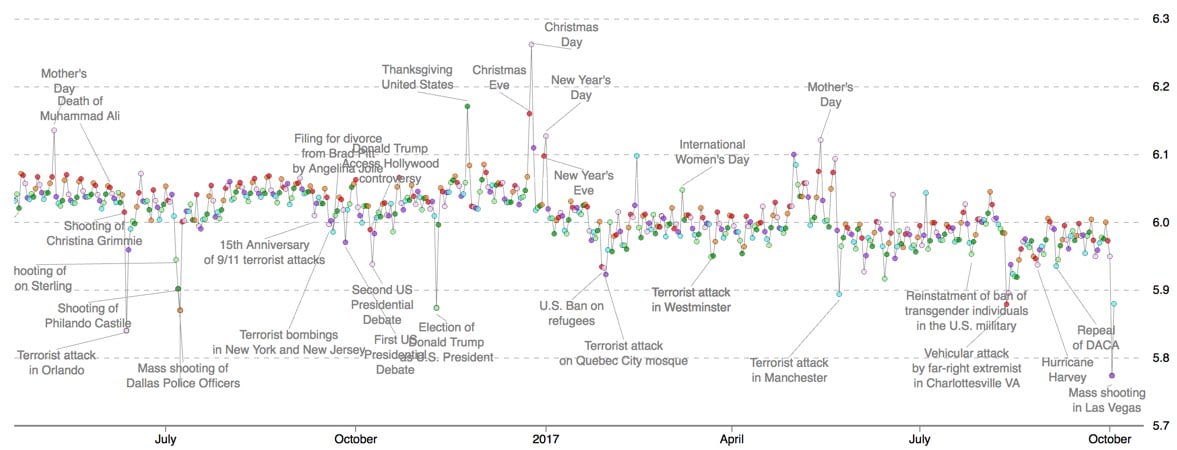
The Hedonometer measures the average happiness of Twitter on a daily basis and the shooting in Las Vegas has pushed the index to a new low. The previous low point was after the terror attack in Orlando last July. The two other lowest scores have occurred in the past year and a half: the mass shooting of Dallas police officers and the election of Donald Trump, which is the only non-shooting or non-terror attack to achieve such a low score in the 9-year history of the index.
Last week (approx. May 7-14), I stopped using social media for an entire week. I logged out of all the sites and deleted the apps from my phone. I didn’t so much as peek at Instagram, which is, with Twitter and old-school Flickr, probably my favorite online service of all time. I used Twitter as minimally as I could, for work only.1 I didn’t check in anywhere on Swarm. No Facebook. As much as I could, I didn’t use my phone. I left it at home when I went to the grocery store. I didn’t play any games on it. I left it across the room when I went to bed and when I worked.
Many people have given up social media and written about it — the digital equivalent of the “Why I’m Leaving New York” essay — but since I didn’t write about leaving New York, I’m going to do this instead.
I used to be very good about using my phone and social media appropriately. More than a decade of working on kottke.org taught me how to not be online when I wasn’t working (for the most part). I tried super hard not to use my phone at all around my kids and if I was out with friends, my phone stayed in my pocket.2
Almost a year ago, after 13+ years in the city, I moved from lower Manhattan3 to rural Vermont. It’s beautiful here. I live in a house in the country surrounded by horse pasture and there’s great skiing in the winter. The nearest town is only five minutes away by car; it has a two-screen movie theater, a handful of restaurants (none of which are typically open after 10pm), two grocery stores, but nowhere to get a proper donut, sushi, or bowl of ramen. (The nearest ramen is an hour’s drive away.) While I was writing this post yesterday afternoon, the power in my house went out and didn’t come back on for three hours, forcing a delay in publication. It’s been difficult to meet people. Folks here are nice, but they mostly remind me of the people in the small town I grew up in (aka why I moved to the city in the first place). I work from home at a desk in my bedroom and some days, the only beings I’ll talk to are Siri, my landlord’s horses, and some days, my kids and their mom.
Social media, mostly through my phone, has been an important way for me to stay connected with friends and goings on in the wider world. But lately I’d noticed an obsessiveness, an addiction really, that I didn’t like once I became fully aware of it. When I wasn’t working, I was on my phone, refreshing Instagram, Twitter, and Facebook repeatedly in an endless series, like a little old lady at Caesar’s Palace working several slot machines at the same time. And I couldn’t stop it — my phone was in my hand even when I was trying to concentrate on my kids, watching a movie, or reading a book. So, I quit for a week to see what would happen. It’s not a super-long time period, but here’s what I noticed:
- Once I’d set my mind to it, it was pretty easy to go cold turkey. Perhaps my Twitter usage and keeping up with the news for kottke.org acted as a nicotine patch, but I don’t think so. Instagram was the toughest to stay away from, but I didn’t crack once.
- As the week went on, it was more and more evident that it wasn’t so much social media as the phone that was the problem. Even now, a few days after the conclusion of my experiment, I’m leaving my phone at home when I go out or across the room when I’m doing something. I’m going to try hard to keep this up.
- Buuuut, when you have kids, there is no such thing as giving up your phone. There’s always the potential call from their school or their mom or their doctor or another parent regarding a playdate or or or. I spend enough time online at my computer for work that I could mostly do without my phone, but with kids, that’s not really an option.
- Not a single person noticed that I had stopped using social media. (Not enough to tell me anyway.) Perhaps if it had been two weeks? For me, this reinforced that social media is actually not a good way to “stay connected with friends”. Social media aggregates interactions between loved ones so that you get industrialized communication rather than personal connection. No one really notices if a particular person goes missing because they’re just one interchangeable node in a network.
- My no-social week, for a variety of reasons, was probably the shittiest week I’d had in more than a year. Total emotional mess. Being off social media didn’t make it any better, but I doubt it made it worse. Overall, it was probably a good thing I wasn’t subjecting my friends and followers to self-subtweets and emo Instagram Stories…I was already scoring enough own goals without social media’s help.
- So, what did I do instead? I wish I could say that I had loads of extra free time that I used to learn Spanish, clean my house, catch up with old friends, cook delicious meals, and finish a couple work projects. Perhaps if shittiest week ever hadn’t been happening, I would have done some of that. Still, I did end up going to bed early every night, read a couple books, and had more time for work and dealing with kid drama.
After the week was up, I greedily checked in on Instagram and Facebook to see what I had missed. Nothing much, of course. Since then, I’ve been checking them a bit less. When I am on, I’ve been faving and commenting more in an attempt to be a little more active in connecting. I unfollowed some accounts I realized I didn’t care that much about and followed others I’ve been curious to check out. Swarm I check a lot less, about once a day — there was a lot of FOMO going on when I saw friends checked in at cool places in NYC or on vacations in Europe. And I’m only checking in when I go someplace novel, just to keep a log of where I’ve been…that’s always fun to look back on.
Mostly, I’ve resolved to use my phone less. Being on my phone was my fidget spinner…this thing that I would do when there was nothing else to do or that I would use to delay going to bed or delay getting out of bed in the morning. Going forward, I’m going to be more mindful about its use. If nothing else, my hands and thumbs might start feeling better.


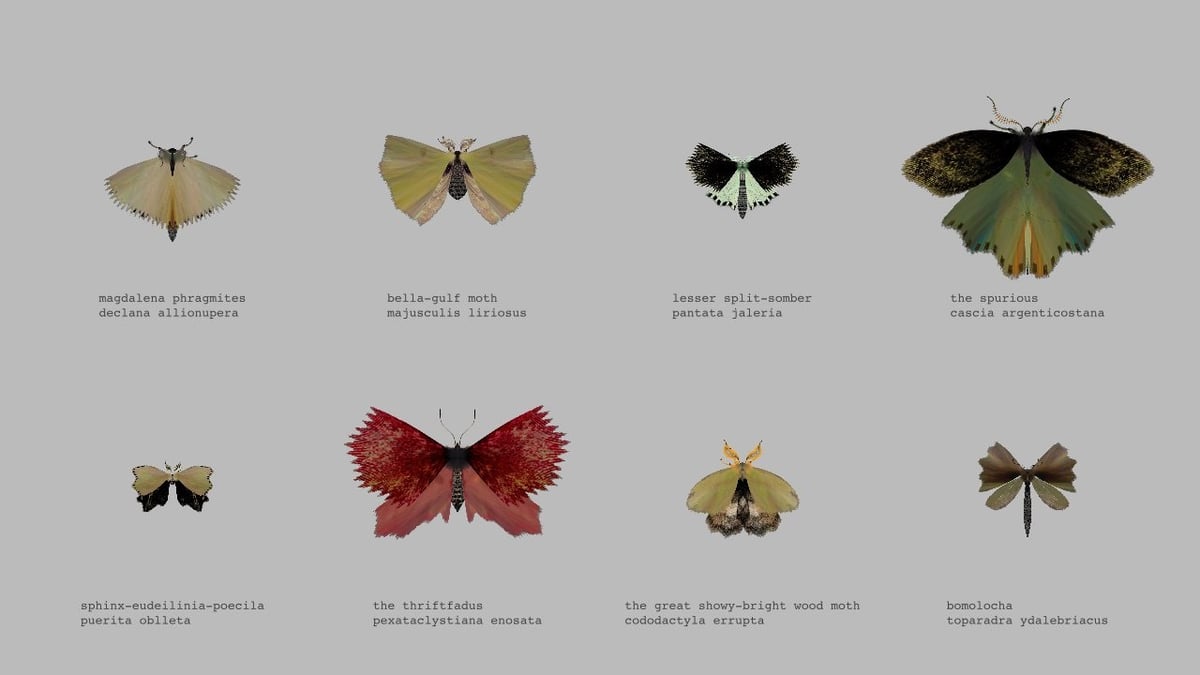
Twitter bot @mothgenerator posts images of computer-generated moths with computer-generated names. From a NY Times article on Twitter science bots:
Also dedicated to winged creatures, this bot tweets make-believe moths of all shapes, sizes, textures and iridescent colors. It’s programmed to generate variations in several anatomical structures of real moths, including antennas, wing shapes and wing markings.
Another program, which splices and recombines real Latin and English moth names, generates monikers for the moths. You can also reply to the account with name suggestions, and it will generate a corresponding moth.
(via @nicolehe, who has a Twitter bot for her fiddle leaf fig plant)
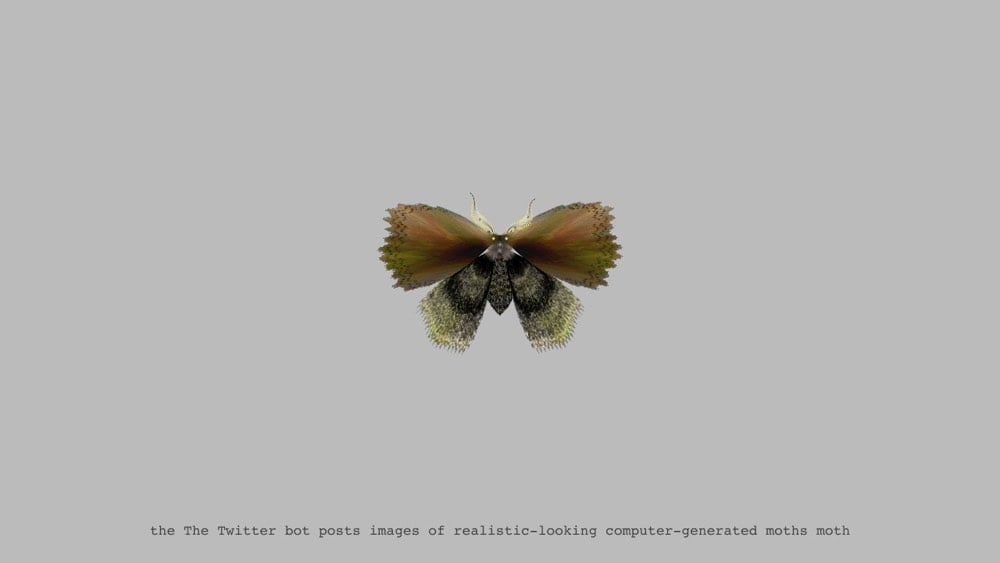
Update: Because of the tweet accompanying this post, Moth Generator generated a new moth called “The Twitter bot posts images of realistic-looking computer-generated moths moth”. Neat!
Twitter, in principle, could have been invented at any point in the history of the internet. A big networked message board with an upper limit of 140 characters? It sounds like something a resource-conserving developer would have invented before web browsers existed. A few hundred people would have used it, and it would have been legendary. Maybe a few thousand.
Instead, Twitter happened in the early days of developing for mobile devices (originally, not even phones but pagers), when there were a critical mass of intense and casual users, and mass network graphs were quickly becoming the new hotness for software companies. You could get scale in a hurry, you needed scale after a certain point to survive.
And so we have this bizarre new communication platform-meets-vernacular art form. Which may end up killing us all. But first…
Jason joined Twitter in early 2007 and naturally, wrote about it intelligently and presciently here on Kottke.org. The first mention is in a kinda-sorta-liveblog of Steve Jobs’s legendary iPhone keynote, and makes Twitter sound like a new tech site. This is where I, personally, found out about it, although I didn’t sign up until a little later.
Playing with Twitter reminds me of blogging circa 2000. Back then, all weblogs were personal in nature and most people used them to communicate with their friends and family. If I wanted to know what my friends were up to back then, I read their blogs. Now I follow Twitter (and Flickr and Vox).
The reaction to Twitter mirrors the initial reaction to weblogs…the same tired “this is going to ruin the web” and “who cares what you ate for dinner” arguments…
When one thing (i.e. Twitter) is easier than something else (i.e. blogging) and offers almost the same benefits, people will use it.
I’d completely forgotten about this post, and it’s totally amazing.
[One] way of thinking about how to choose web projects is to take something that everyone does with their friends and make it public and permanent. (Permanent as in permalinked.) Examples:
- Blogger, 1999. Blog posts = public email messages. Instead of “Dear Bob, Check out this movie.” it’s “Dear People I May or May Not Know Who Are Interested in Film Noir, Check out this movie and if you like it, maybe we can be friends.”
- Twitter, 2006. Twitter = public IM. I don’t think it’s any coincidence that one of the people responsible for Blogger is also responsible for Twitter.
- Flickr, 2004. Flickr = public photo sharing. Flickr co-founder Caterina Fake said in a recent interview: “When we started the company, there were dozens of other photosharing companies such as Shutterfly, but on those sites there was no such thing as a public photograph — it didn’t even exist as a concept — so the idea of something ‘public’ changed the whole idea of Flickr.”
- YouTube, 2005. YouTube = public home videos. Bob Saget was onto something.
Some successful tweets seem predictable given the restrictions on the form — wordplay, pop culture mashups, classic setup-and-punchline jokes. But why are weird little micronarratives so compelling?
And on a platform packed with self-promoting brands, cynical media types, and actual Nazis, why do we love sweet, sincere animals who talk? (Wait, I may have just answered my own question)
Ten years later, I don’t know why Twitter is, but I’m glad that it does.
Consultant Tom Whitwell shared 52 things he learned in 2016. Here are three:
Call Me Baby is a call centre for cybercriminals who need a human voice as part of a scam. They charge $10 for each call in English, and $12 for calls in German, French, Italian, Spanish, Portuguese and Polish. [Brian Krebs]
Twitter has enough money in the bank to run for 412 years with current losses. [Matt Krantz]
Intervision, the 70s Soviet answer to the Eurovision Song Contest, was judge by electricity grid voting: “those watching at home had to turn their lights on when they liked a song and off when they didn’t, with data from the electricity network then being used to allocate points.” [Nick Heady]
It was hard to whittle the list down to just three, so a bonus one:
Instead of batteries, the ARES project in Nevada uses a network of train tracks, a hillside and electric trains loaded with rocks to store wind and solar power. When there is a surplus of energy, the trains drive up the tracks. When output falls, the cars roll back down the hill, their electric motors acting as generators. [Robson Fletcher]
The Economist did a piece — “Sisyphus’s train set” — on ARES this summer.
Using a 5000-word dictionary of words rated on their happiness, the Hedonometer measures the average happiness on Twitter.
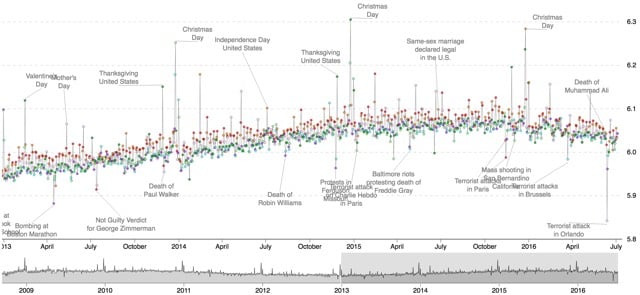
Christmas is always the happiest day of the year (“merry”, “happy”, and “joy” are all pretty positive) while shootings and terrorist attacks are Twitter’s saddest events. The recent mass shooting in Orlando seems to be the least happy Twitter has been over the past 7+ years.
The Hedonometer also analyzes the overall happiness of movies based on their scripts. The happiest movie is Sex in the City while the saddest is Omega Man (followed by The Bourne Ultimatum). Somehow, the fourth happiest movie is Lost in Translation, which might be reason for some overall skepticism about the project’s sensitivity to context.
The happiness over time of individual movie scripts has been analyzed by the Hedonometer too. Pulp Fiction’s happiest moment is when Vincent and Mia go to Jackrabbit Slim’s and the low point is “Bring out the Gimp”.
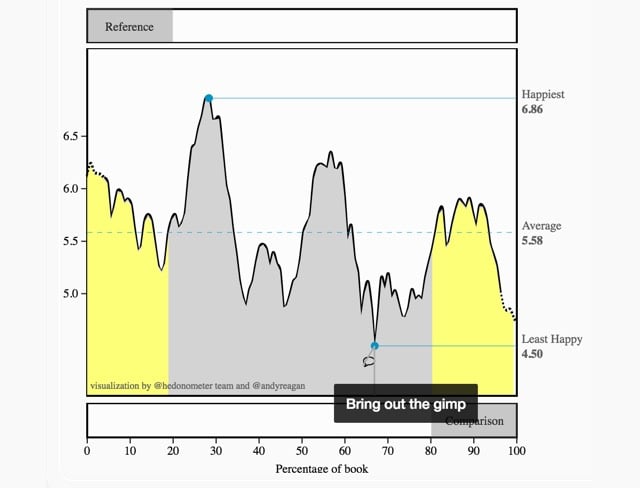
The system has analyzed books as well…the low point of the entire Harry Potter series seems to be the event at the end of The Half-Blood Prince.
Update: Grain of salt and all that, but the shootings of Alton Sterling, Philando Castile, and the Dallas police officers have pushed the happiness quotient on Twitter lower again so that the two least happy days have both occurred in the past month. There’s been a general feeling that 2016 has been a bad year, like George RR Martin is writing it. I wish the data were available for a closer analysis, but if you look at the chart, you can see that Twitter’s overall happiness starts to rise around the end of 2012 but starts to fall again right around the beginning of 2016…the effect is quite clear, even just from eyeballing it.
From the NY Times, the excellent Jenna Wortham on How I Learned to Love Snapchat. This bit caught my eye:
Its entire aesthetic flies in the face of how most people behave on Facebook, Instagram and Twitter — as if we’re waiting to be plucked from obscurity by a talent agent or model scout. But Snapchat isn’t the place where you go to be pretty. It’s the place where you go to be yourself, and that is made easy thanks to the app’s inbuilt ephemerality.
I wonder if Snapchat’s intimacy is entirely due to the ephemerality and lack of a “fave-based economy”. Blogs, Flickr, Twitter, Vine, and Instagram all started off as places to be yourself, but as they became more mainstream and their communities developed behavioral norms, the output became more crafted and refined. Users flooded in and optimized for what worked best on each platform. Blogs became more newsy and less personal, Flickr shifted toward professional-style photography, Vine got funnier, and Twitter’s users turned toward carefully crafted cultural commentary and link sharing. Editing worked its way in between the making and sharing steps. In 2013, Mat Honan wrote of Vine:
It built a ground up culture that feels loose, informal, and — frankly — really fucking weird. Moreover, most of what you see there feels very of-the-moment. Sure, there’s plenty of artistry that goes into making six second loops, and there are volumes of videos with high production values. But far more common are Vines that serve as windows into what people are doing right now.
Sounds familiar, right? I’m almost positive that when Instagram was first blowing up, similar things were written about it in comparison to Flickr. Now, as Wortham notes, Instagram is largely a place to put your heavily curated best foot forward. But scroll back through time on anyone’s Instagram and the photos get more personal and in-the-moment. Even Alice Gao’s immaculately crafted feed gets causal if you go back far enough.
Although more than a year older than Vine and fewer than two years younger than Instagram, Snapchat is a relatively young service that the mainstream is still discovering. It’ll be interesting to see if it can keep its be-yourself vibe or if users tending toward carefully constructing their output is just something that happens as a platform matures.
From 1957, this is a drawing of the synergistic strategy of Walt Disney Productions, or what Todd Zenger of Harvard Business Review calls “a corporate theory of sustained growth”.
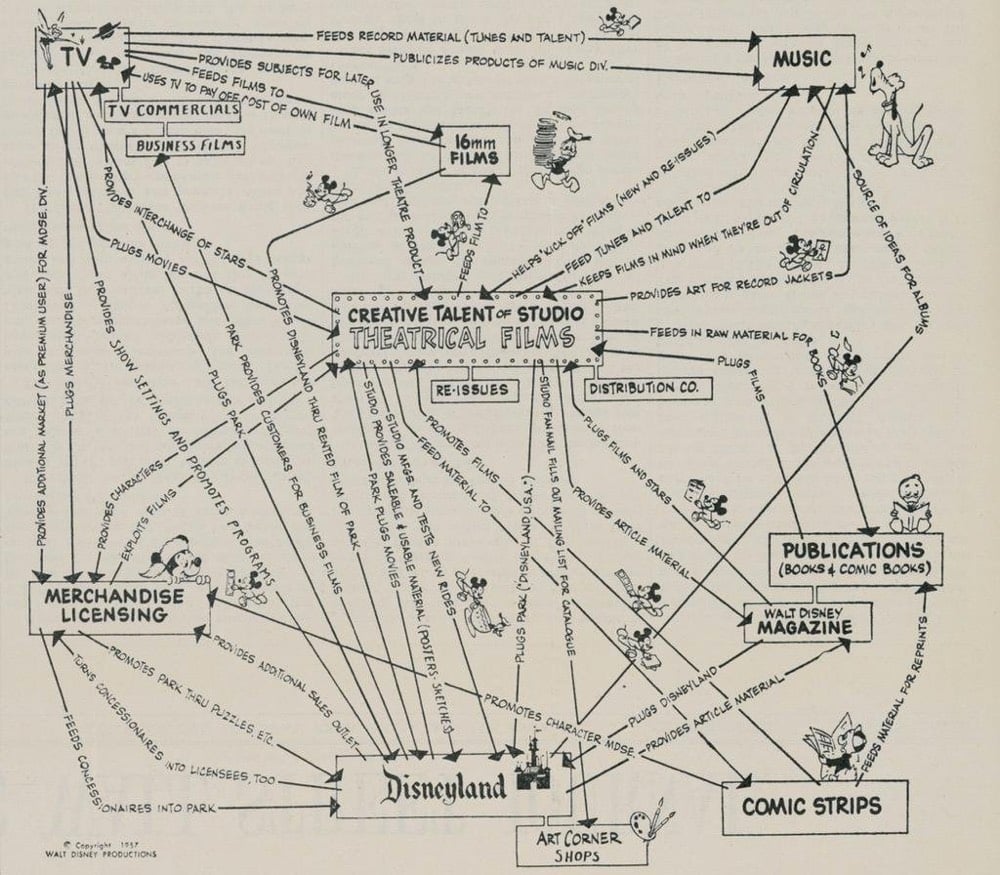
The boxes on the chart have changed, but since the appointment of Bob Iger as CEO, Disney has seemingly doubled down on Walt’s old strategy with their increased focus on franchises.
Disney’s dominance can be boiled down very simply to one word: franchises. Or rather, an “incessant focus on franchises” in the words of former Disney CFO Jay Rasulo.
“Everything we do is about brands and franchises,” Rasulo told a group of financial analysts last September. “Ten years ago we were more like other media companies, more broad-based, big movie slate, 20 something pictures, some franchise, some not franchise. If you look at our slate strategy now, our television strategy, almost every aspect of the company, we are oriented around brands and franchises.”
Franchises are well suited to extend across multiple parts of a big business like Disney, particularly because it’s a repeating virtuous cycle: movies drive merchandise sales and theme park visits, which in turn drives interest for sequels and spin-offs, rinse, repeat, reboot.
I wonder if more tech companies could be using this strategy more effectively. Apple does pretty well; their various hardware (iPhone, iPad, Mac), software (iOS, OS X), and services (iCloud, App Store, iTunes Store) work together effectively. Microsoft rode Office & Windows for quite awhile. Google seems a bit more all over the place — for instance, it’s unclear how their self-driving car helps their search business and Google+ largely failed to connect various offerings. Facebook seems to be headed in the right direction. Twitter? Not so much, but we’ll see how they do with new leadership. Or old leadership…I discovered Walt’s chart via interim Twitter CEO Jack Dorsey.
You can now program by tweeting snippets of Wolfram Language code to their Tweet-a-Program bot, @WolframTaP. To test it out, I tweeted:
And got back:
Cool!
John Emerson has compiled a list of Twitter accounts that periodically tweet out images from the online collections of some of the world’s best museums, including the Met, the Tate, the Rijksmuseum, and MoMA.
Older posts






Socials & More