This weekend I was doing some programming work (comments, another small project) and listening to some old-school electronica (DJ-Kicks by Kruder & Dorfmeister anyone?). When I write, I tend to listen to chill stuff so I can concentrate — classical, vaporwave, soundtracks, Jon Hopkins, Sigur Rós, Tycho, Boards of Canada, things like that — but when designing or programming, I need something faster with a beat to spur me onwards.
So anyway, I was about to switch from electronica to something by kottke.org favorites The Hood Internet when I thought to check their website to see if they’d released any new mixtapes. And lo — they had (sorta). The Lost Mixtape is a 45-minute mix of music from circa 2005-2009, discovered on some dusty old hard drive and recently finished up & released for our listening pleasure.
The bit at around 16:00 where they mix Milkshake and So Electric is just superb. You can find streaming options and a downloadable MP3 on their website.
I’d missed that Philip Glass Solo (previously) came out in January, but I’ve been listening to it while I work this morning and it’s just lovely. He recorded the album in his home on his piano. Here’s a short video of Glass playing on that very piano:
This is my piano, the instrument on which most of the music was written. It’s also the same room where I have worked for decades in the middle of the energy which New York City itself has brought to me. The listener may hear the quiet hum of New York in the background or feel the influence of time and memory that this space affords. To the degree possible, I made this record to invite the listener in.
And here’s a video of him playing the album’s opening piece on his 87th birthday:
R.B. Greaves’ 1969 hit “Take a Letter Maria” has been in my head for weeks now, and while this might be too much of a stretch, I’m realizing it shares something with “Jolene” — both are odd, wonderful songs sung to an initially unromantic female character. Maybe? Anyway, I was pleased to discover this live-audience version on YouTube. Also, is “Maria” due for a cover, or an update? Take a letter, Alexa…
I’ve always been intrigued by the “Jolene” lyrics (are they mature or are they insane?), so I was excited to hear Beyoncé’s version. Ultimately those lyrics didn’t really speak to me, but then I came across novelist Sonora Jha’s twist on the “Jolene” lyrics on Instagram, and I felt an itch had been scratched. I’ve transcribed those lyrics below — her original post is here.
(With apologies to Dolly and Beyoncé)
Jolene Jolene Jolene Jolene
I’m watchin’ you move in on my man
Jolene Jolene Jolene Jolene
I’m sayin you should say “I think I can”
You’re beautiful beyond compare
I hope you’ll pardon while I stare
Just wonderin’ what moisturizer you wear, Jolene
But good for you, oh good for you
You can have my man and my children too
Jolene
Don’t get me wrong, I love my man I love those kids as hard I can
This video is more than 10 years old, but I hadn’t seen it before: a version of Bonnie Tyler’s music video for Total Eclipse of the Heart where the lyrics describe what we literally see.
Pan the room
Random use of candles, empty bottles, and cloth,
and can you see me through this fan?
Slo-mo dove
Creepy doll, a window, and what looks like a bathrobe.
I missed this when it came out two weeks ago, but I’m glad to have found it this morning: Paul Simon unaccompanied, singing “Your Forgiveness” from his new album, Seven Psalms. (The 33-minute album is meant to be listened to all in one go.)
The docuseries Colbert mentions at the end — In Restless Dreams: The Music of Paul Simon, by Alex Gibney — came out on March 17 (trailer here). I haven’t seen it yet but very much want to.
Wolfgang Amadeus Mozart’s first surviving musical composition was created at age five and in this video visualization, you can hear and see how his music evolved from that early piece to those created in his 20s and 30s. Not knowing a whole lot about music or of Mozart in particular, I was shocked at how incredible his compositions were at ages five, six, and seven. Sheesh.
Dolly Parton’s ‘I Will Always Love You’ was released 50 years ago a couple weeks ago and it’s a very good song. We all know Parton famously wrote IWALY and Jolene on the same day, which, like, one time I made 4 batches of ice cream and packed them all into pints and cleaned the machine all in an hour and forty five minutes and that’s kind of the same thing if you squint. She wrote the song to let Porter Wagoner know she was leaving his show and striking out on her own and that makes me mad because imagine working with someone so annoying you have to write one of the best songs ever written to get out of it.
The year after it was released, Elvis was going to record it, but Tom Parker, his manager, insisted on half the publishing rights and Dolly said no, like a G. The whole germ for this post, my entire reason for being at this moment, was seeing that fact about Elvis and knowing Dolly teases IWALY not once, not twice, but, well, OK, only twice, on her duets album. It’s on Wrecking Ball, and she teases it AND sings about the whole episode on I Dreamed About Elvis. Priscilla Presley told Dolly Elvis loved the song so much and sang it to her on the day of their divorce. I do wish we could hear an Elvis recording of IWALY.
Because I don’t hardly blog anymore, I turned the email newsletter for my ice cream shop into kind of a blog where sure I talk about ice cream a good amount, but I also tell stories about when I was a tour manager for a band, document how terribly hostile Intuit is towards their business customer base, and share internet ephemera my customers might not have seen. It’s been feeling a little stale lately, because after three years I think I finally told all my tour stories so I wanted to do something new.
The new thing is Road Snacks, a semi-regular feature where an ice cream shop interviews a touring musician asking questions about the food situation on tour. I think it’s changed a lot and probably not too much since I was doing it. The first interview ran today featuring Cary Ann Hearst from the Charleston band Shovels & Rope, who is great. Click through to read the whole thing. If you’d like to sign up for the newsletter, you can do that here, and we’ll see if it’s interesting even if you don’t live in Boston.
How has eating on tour changed for you since you first started touring?
Eating definitely changes! We used to just eat pizza everyday after the show, but that will kill you eventually so we changed! Everyone watching their water and their fiber intake. It’s wild - we pop vitamins now. But in Indy the other night a man made us pizza in his shop after the show. Sam’s Square Pies?! The best pizza I have ever had. Detroit Style. We literally wrapped and froze individual pieces so that we wouldn’t waste a slice of the 30lbs of pie - thanks Jeff!
It’s 12:30am and you’re at the gas station before a five hour drive to the next city. What snacky treat(s) are you grabbing and why?
My trash snacks from the gas station are an Arizona Green Tea in a can, pork rinds, a bag of lemon heads and pack of bubble gum. We get a gallon of water and fill our canteens. I need a mix of sweet and savory - and since we only get the opportunity to indulge those trashy snack instincts every once in a while I indulge and then remember not to do that once my blood sugar crashes.
Jason doesn’t know it yet, but I’m probably gonna ask if I can run the interviews here, too.
The Boston Typewriter Orchestra is “a collective endeavor which engages in rhythmic typewriter manipulation combined with elements of performance, comedy and satire.” They recently submitted to be on NPR’s Tiny Desk Concerts with Selectric Funeral, their first piece to feature an electric typewriter.
Lately I’ve been hearing a lot about Chappell Roan, a 26-year-old singer-songwriter from Missouri, so I watched her NPR Tiny Desk Concert and loved it.
(Bizarrely, I first heard of her while chasing down info about Sinéad O’Connor: I saw mention that there was a Sinéad-themed Bratz Doll, but it turned out there was just a rendering of Sinéad as a Bratz Doll — no actual physical doll — as part of their Women’s History Month programming. Sinéad was the second female icon to be Bratz-ified; Chappell Roan was the first.)
In an article from earlier this week, Rolling Stone called Roan “the future of pop.” Her musicians are fabulous, too.
Pub Choir is an Australia-based organization that gets large crowds singing popular tunes, in three-part harmony no less.
Everybody can sing. Like, not well, but literally. Why should being average at something stop you from doing it!? It hasn’t yet… Singing is good for you, it’s EASY, and Pub Choir is here to show you how.
With a show that is equal parts music, comedy, and beer, Pub Choir is a euphoric sensation that transforms a crowd of tipsy strangers into a legendary choir.
By the end of the show the YOU will be belting out a popular song in three-part harmony.
In the video above, they get a crowd of 1600 people signing Creep by Radiohead. Beautiful.
You can find more of their performances on their YouTube channel, including Tina Turner’s The Best, Africa by Toto, and Free Fallin’ by Tom Petty.
Several years ago, I heard a performance from the group above while driving. I made a note of their name on my phone — Stile Antico — and later bought tickets to a concert they were having near where I lived at the time. I invited my boyfriend (also at the time), who made a point of letting me know in not so many words that he wasn’t into the music and didn’t really want to go. I think we were also fighting about something else, to be fair. Anyway, we went to the concert. But it didn’t have the magic that had captivated me on the radio, and I was too aware that my companion wasn’t enjoying himself, so we left at intermission. The group dropped off my radar until recently, but this performance of music by William Byrd, written more than 400 years ago, just blows me away (full album streaming here). I wish I had stayed for the second half of that show. I should have just been like, “You go home and let me enjoy my Renaissance music in peace!”
I didn’t know (or had somehow forgotten) that Marlo Thomas’s seminal children’s album Free to Be… You and Me (Spotify, Apple Music) was turned into a TV special that aired in 1974.
The basic concept was to encourage post-1960s gender neutrality, saluting values such as individuality, tolerance, and comfort with one’s identity. A major thematic message is that anyone — whether a boy or a girl — can achieve anything.
The TV show starred Thomas, Mel Brooks, Harry Belefonte, Dionne Warwick, Carol Channing, Michael Jackson, Dustin Hoffman, and many others. You can watch the whole thing (commercials included) on YouTube:
The opening sketch features Thomas and Mel Brooks as cue-ball-headed puppet babies in a hospital nursery, daffily trying to work out which of them is a boy and which is a girl — the Brooks baby declares himself a girl because he wants to be “a cocktail waitress” — and setting up the bigger themes of the special: What is a boy and what is a girl?
As newborns, they’re indistinguishable, just base line people - eyes, ears, hands, mouth. They haven’t yet been programmed with all the lessons about boy things and girl things, boy colors and girl colors, boy games and girl games. The rest of the special gives its young viewers a decoder ring for those messages, and permission to disregard them.
Take “Parents Are People,” a duet with Thomas and Harry Belafonte, which remains one of the most innocently radical things I’ve ever seen on TV. The lyrics explain that your mom and dad are just “people with children,” who have their own lives and a wide range of careers open to both of them.
Mel Brooks’ session was more eventful. Thomas had written to him that the album “would benefit the Ms. Foundation,” and when he came in the morning of his recording, he told her that he thought the material Reiner and Stone had written was funny but that he didn’t know what it had to do with multiple sclerosis. Once set straight about the MS in question, Brooks joined Thomas in the recording booth, where they would both play babies for the album’s first sketch, “Boy Meets Girl.”
“When I directed,” Alda recalls, “I would be meticulous and relentless. I would do a lot of takes. But Mel is not a guy who’s used to doing a lot of takes. He’s not used to taking direction from anybody — you know, he gives direction.” Alda didn’t love the first few takes of “Boy Meets Girl”; in the end it took, Alda remembers, 10 or 15 tries, with Brooks improvising madly all along the way. Rodgers was there that day to record “Ladies First,” and she still remembers standing in the control room laughing harder with each take. “Mel was generous,” Alda allows, “and he let me egg him on.”
We listened to Free to Be… quite a bit in the car when the kids were younger. Nice to see it pop up again.
A couple weeks ago, music writer Hank Shteamer tweeted a link to Tracy Chapman’s 1988 song “Behind the Wall,” from her self-titled debut album, writing:
“Fast Car,” yes, for all eternity, but can we make some room for “Behind the Wall”? Made a huge impression back then and I’ve still never heard anything else like it. 110 seconds of unaccompanied voice. Spellbinding.
I hadn’t heard it in a while and was grateful for the reminder.
A recently resurfaced 2019 New Yorker story on Linda Ronstadt reminded me of this captivating video from her 1969 appearance on the Johnny Cash Show. Her 1977 version of the song, with Dolly Parton, is also great.
This video is 9 years old and has 169 million views so I’m possibly the last person on Earth to see it,1 but I ran across a clip of it on Instagram the other day and just had to share. Steve ‘n’ Seagulls is a country band from Finland that went viral for their covers of classic rock tunes, including AC/DC’s “Thunderstruck”:
I love the way this starts off — and it seems to have become somewhat of a bit in subsequent videos. Open Culture has more in a post from August 2014. Kottke.org: only the freshest viral content for you!
Ok, this video is targeted at a pretty small audience and is super goofy, but it hit me square in the forehead and so I can’t help but post it here: it’s footage from Rowan Atkinson’s Mr. Bean with Bush’s 1994 alternative rock hit Glycerine playing over it. And yes, there is a change of lyrics at a critical point. 100/100, no notes. (via @jamesjm)
I’ve probably listened to “Right Back to It,” the first single from indie folk-rock musician Waxahatchee’s forthcoming album Tigers Blood, at least 40 times since it came out a few weeks ago. The album’s second single, “Bored” (also good), came out last week, and the album itself is due out March 22. I haven’t been this excited for new music in as long as I can remember. I even ordered a t-shirt from the website (two, actually) — the first time I’ve ever done that in my life!
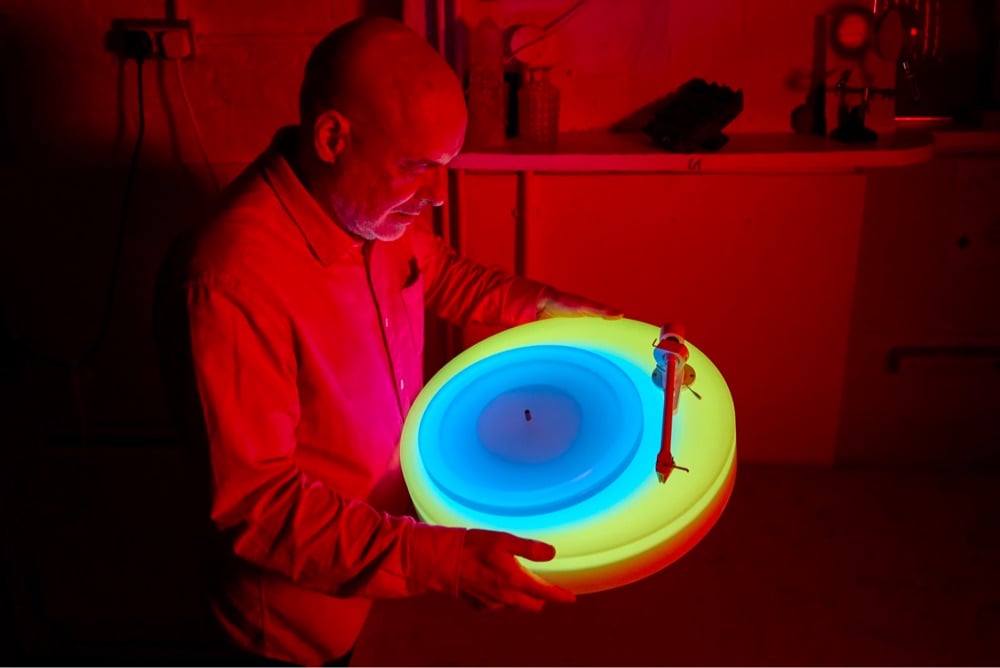
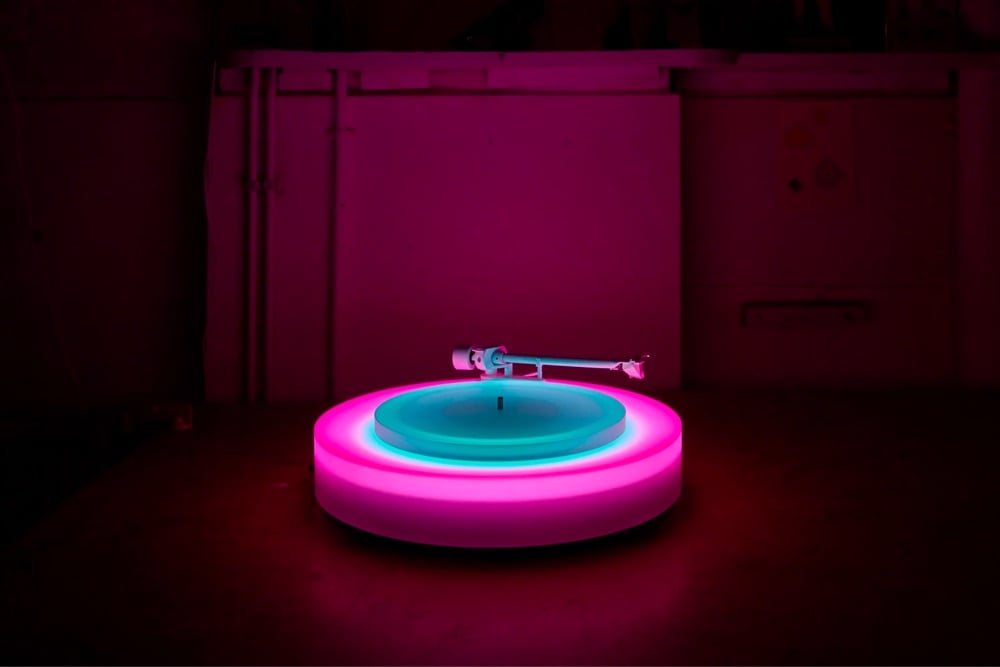
Brian Eno’s Turntable II is made up of a platter and base, which change colours independently, seamlessly phasing through combinations of generative ‘colourscapes’. The pattern of lights, the speed at which they change and how they change are programmed, but programmed to change randomly and slowly. It plays both 33 and 45rpm vinyl.
Only 150 will be sold and they’re £20,000 so hopefully you’ll see one in a museum someday. (via kevin kelly)
The cover is popular in a genre that has long been roiled by racial conflict. Over the past five years, artists and activists have tried to get mainstream Big Country to get with the multiracial program, but they have won little more than nominal, marginal inclusion rather than a reckoning with the industry’s soul. However lovely, Chapman’s and Combs’s performance ties too neat a bow on years of conflict within country music over who gets to play with the genre’s big boys.
The Los Angeles school district runs a shop that maintains and repairs the 80,000 musical instruments used by students in the district. Kris Bowers and Ben Proudfoot made this short documentary about the shop and the people who work there, some of whom have been broken and repaired themselves.
In making “The Last Repair Shop,” my directing partner Ben Proudfoot and I got the chance to tell the tale of four extraordinary master craftspeople who ensure, day in and day out, that L.A.’s schoolchildren have playable instruments in their hands. We were floored and proud to find out that our city, Los Angeles, was home to the last shop of this kind in the country.
Bowers and Proudfoot previously collaborated on A Concerto Is a Conversation, an Oscar-nominated short documentary about Bowers’ grandfather, who was part of the Great Migration.
One of the many reasons that Ferris Bueller’s Day Off works so well as a film is that the music kicks ass *and* it meshes so well with the action. In the heyday of MTV, this was no accident — parts of the movie function almost as elaborate music videos. No scene illustrates this more than when Ferris is hurrying across backyards and through homes to beat his parents & sister back to the house. As good as that scene is, I think Todd Vaziri improved it by re-cutting it to music from Inception. So good!
In 1966, electronic music pioneer Jean-Jacques Perrey was on the game show I’ve Got a Secret and (spoiler!) his secret was he could play a single musical instrument that sounded like a number of other instruments. Perrey’s instrument was called the Ondioline, which was first developed in 1939 and was a forerunner of the modern electronic synthesizer. Perrey was a leading practitioner of the Ondioline:
Thanks to the Ondioline, I could imitate instruments from around the world, such as bagpipes from Scotland, American banjo, Gypsy violin, soprano voice, Indian sitar, and so on. I made a world tour in music and finished it with a gag of whistling a tune. At the end, the whistling was still going on (thanks to the Ondioline), but I was drinking a glass of water. We all laughed.
In the video from the game show, Perrey imitates a bunch of instruments and then plays an original composition with his collaborator Gershon Kingsley, which sounds at once wildly futuristic and laughably dated.
P.S. I first heard of Jean-Jacques Perrey courtesy of his 1970 song E.V.A., which sounds just as modern today as it did when I heard it back in the late 90s remixed by Fatboy Slim.
I reckon most of us have certain books, movies, TV shows, music, podcasts, and other media that we turn to when we need some comfort. These are things we’ve seen, read, or heard before — often many times — and know exactly what we’re going to get from them.
What we reach for depends on our needs. When I just want something familiar on in the background while I’m doing something else, to provide a vibe and the barest hint of a plot to follow, I often turn on Star Trek: TNG or old episodes of Doctor Who on Pluto TV. A few years ago during a really tough period, I read several of Tom Clancy’s novels (The Hunt for Red October, Patriot Games, and Red Storm Rising) to keep my brain reliably engaged but also unfettered by challenging prose or the deep emotional lives of the characters. I rewatch Star Wars and Avengers movies for their reliable entertainment, characters I’m invested in, and predictable-but-satisfying outcomes — these are often good plane movies.
When I’m feeling a lot of relational feelings and need a bit of salt to make them feel even more intense (and punishing), I’ll watch season two of Fleabag or Midnight in Paris or even 50 First Dates (which is as close as I get to rom-coms). Radiohead is a great all-arounder for many situations — I’ve leaned on Everything In Its Right Place, True Love Waits, Videotape, and even Burn the Witch at various times in my life. The Great British Bake Off is reliably low stakes, entertaining, and nothing but good vibes.
I had no idea this existed: back in 2015, rapper Warren G and saxophonist Kenny G came together to perform Warren G’s Regulate. Now, I’m not sure the smooth jazz saxophone improves the song at all, but I love that some mad genius was like, we need to get the two Gs together and then made it happen.
Over the past few months, I’ve had some time away from the computer and have taken several very long plane trips and some shorter car rides, which means a bit more reading, TV & movie watching, and podcast listening than usual. Oh, and holiday movies.
Anyway, here’s my recent media diet — a roundup of what I’ve been reading, watching, listening to, and experiencing over the past few months.
The Killer. The excellent Michael Fassbender portrays a solitary, bored, and comfortable killer for hire who has a bit of a midlife crisis in fast forward when a job goes wrong. (A-)
Fortnite OG. I started playing Fortnite in earnest during Chapter 3, so it was fun to go back to Chapter 1 to see how the game worked back then. (B+)
Edge of Tomorrow. Speaking of video games… Still love this under-appreciated film, despite a third act that falls a tiny bit flat. (A)
The Vaster Wilds by Lauren Groff. I did not enjoy this quite as much as Matrix — especially the last third — but Groff is one hell of a writer. (B+)
New Blue Sun. Good on André 3000 for not doing the expected thing and instead releasing an instrumental album on which he plays the flute. (A-)
Songs of Silence. I can’t remember who clued me into this lovely instrumental album by Vince Clarke (Erasure, Depeche Mode), but it’s been heavily in the rotation lately. (B+)
Trifecta. A.L.I.S.O.N.’s Deep Space Archives is a favorite chill work album for me and this one is nearly as good. (B+)
Shoulda Been Dead. I had no idea that Kevin Kelly appeared on an early episode of This American Life until someone mentioned it offhand on our Thailand walk. What a story…listen all the way to the end. (A)
Train Dreams by Denis Johnson. Oh the writing here is exquisite. (A)
The Mountain in the Sea by Ray Nayler. Are AGI robots intelligent? Are octopuses? Are humans? This novel plays entertainingly with these ideas. (A-)
Myeongdong Kyoja. I stumbled upon this place, extremely cold and hungry, and after a brief wait in line, I was conducted to an open seat by the no-nonsense hostess running the dining room. The menu only has four items, conveniently pictured on the wall — I got the kalguksu and mandu. The hostess took my order and then, glancing at my frozen hands, reached down and briefly gave one of them a squeeze, accompanied by a concerned look that lasted barely half a second before she returned to bustling around the room. A delicious meal and a welcome moment of humanity in an unfamiliar land. (A)
Barbie. Second viewing. Entertaining and funny, but this is a movie that has Something To Say and I still can’t figure out what that is. (B+)
Emily the Criminal. There were a few hiccups here and there, but I largely enjoyed this Aubrey Plaza vehicle. (A-)
Midnight in Paris. Not going to recommend a Woody Allen movie these days, but this is one of my comfort movies — I watch it every few months and love every second of it. (A)
Gran Turismo. Extremely predictable; they could have done more with this. (B)
The Rey/Ren Star Wars trilogy. I have lost any ability to determine if any of these movies are actually good — I just like them. 🤷♂️ (B+)
Loki (season two). This was kind of all over the place for me but finished pretty strong. Glorious purpose indeed. (B)
Home Alone. First time rewatching this in at least a decade? This movie would have worked just as well if Kevin were 15% less annoying. (B+)
The Grinch. My original review stands: “I wasn’t expecting to sympathize so much with The Grinch here. The social safety net constructed by the upper middle class Whos totally failed the most vulnerable member of their society in a particularly heartless way. Those Whos kinda had it coming.” (B+)
Past installments of my media diet are available here. What good things have you watched, read, or listened to lately?
“SpiderHarp started as a large-scale model of an orb spider’s web, with the aim of uncovering the mystery of how spiders sense … vibrations and how it translates into information the spider uses to localize activity on its web.” A recent Oregon Public Broadcasting story [via mefi] led me to this cool video of the SpiderHarp in action. More SpiderHarp here.
And I grew up going to the yearly Christmas Revels concert/play in Cambridge, MA, and while nothing beats the live shows, I also love their albums, especially this spirited 1978 one: The Christmas Revels: In Celebration of the Winter Solstice [spotify]. The Revels also feature the “Abbots Bromley Horn Dance” in every show, and seeing it live usually sends chills up my spine:




Stay Connected