In the most recent episode of the excellent YouTube series Great Art Explained, James Payne expands on an earlier, shorter video on the Mona Lisa with this double-length extended cut.
For Mona Lisa, Leonardo used a thin grain of poplar tree and applied an undercoat of lead white, rather than just a mix of chalk and pigment. He wanted a reflective base. Leonardo painted with semi-transparent glazes that had a very small amount of pigment mixed with the oil, so how dark you wanted your glaze to be depends on how much pigment you use. He used more like a “wash”, which he applied thin — layer by layer. Here you can see two colors of contrast — light and dark. When you apply thin glaze over both of them, you can see it starts to unify the contrast but also brings depth and luminosity. The lead white undercoat reflects the light back through the glazes, giving the picture more depth and in essence, lighting Mona Lisa from within.
This was fascinating, not a wasted moment in the whole thing. I’ve read, watched, and listened to a lot of analysis of the Mona Lisa over the years, but Payne’s detailed explanation both added to my knowledge and clarified what I already knew.
Ok, this post doesn’t have anything to do with boy detective Encyclopedia Brown…I just needed him for the title. In the NY Times, art critic Jason Farago argues that in order to improve the visitor experience at the Louvre, the Mona Lisa and her smile have got to go.
Yet the Louvre is being held hostage by the Kim Kardashian of 16th-century Italian portraiture: the handsome but only moderately interesting Lisa Gherardini, better known (after her husband) as La Gioconda, whose renown so eclipses her importance that no one can even remember how she got famous in the first place.
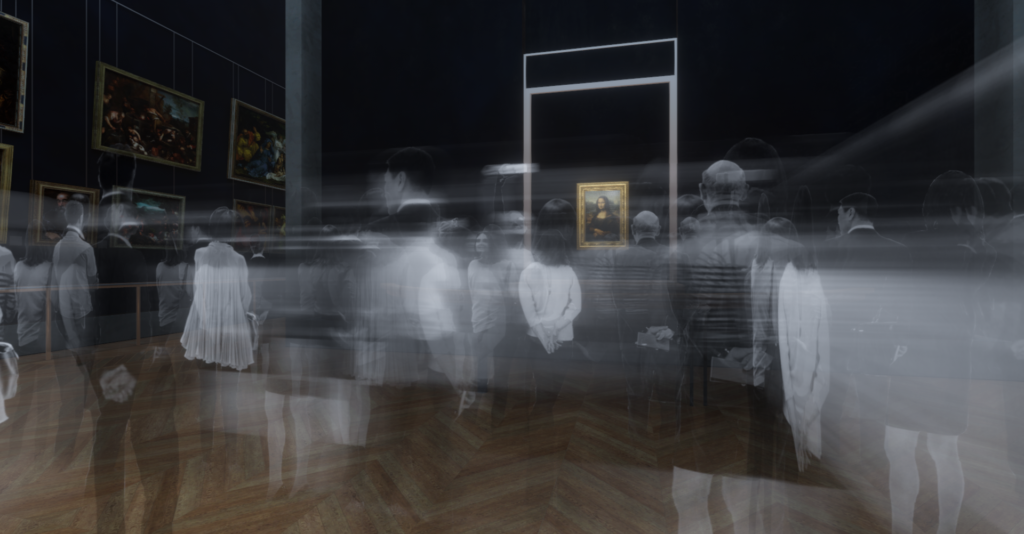
Some 80 percent of visitors, according to the Louvre’s research, are here for the Mona Lisa — and most of them leave unhappy. Content in the 20th century to be merely famous, she has become, in this age of mass tourism and digital narcissism, a black hole of anti-art who has turned the museum inside out.
Enough!
I visited the Louvre back in 2017 and the Mona-driven crowds were very distracting. I wrote a short review for my media diet:
The best-known works are underwhelming and the rest of this massive museum is overwhelming. The massive crowds, constant photo-taking, and selfies make it difficult to actually look at the art. Should have skipped it.
The Louvre is actually not a good place to look at art and if moving the Mona Lisa to a dedicated gallery elsewhere can help solve that problem, they should do it. (via @fimoculous)
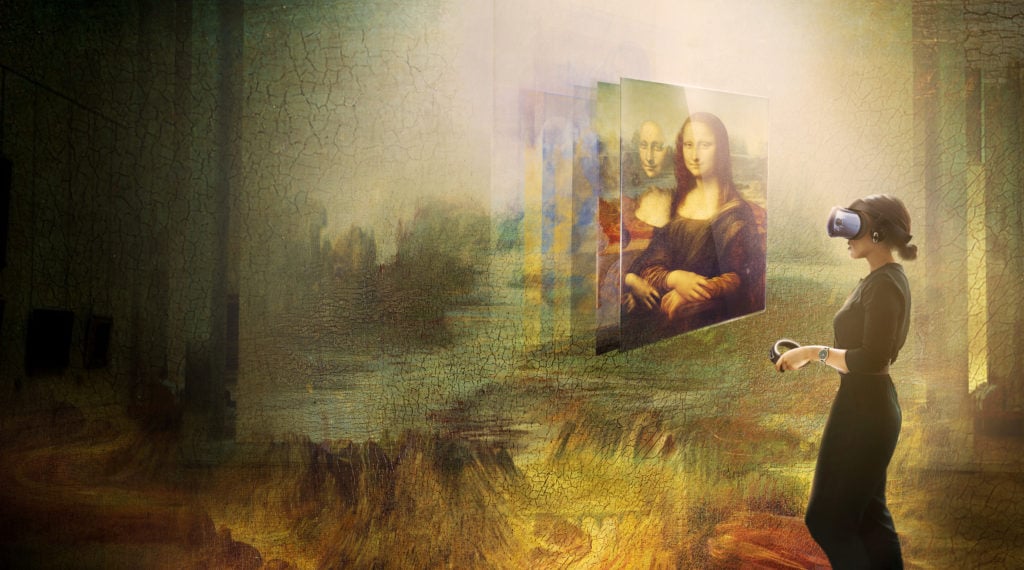
An incredible 80 percent of the Louvre’s 10 million yearly visitors find their way to the Salle des États to catch a glimpse of the Mona Lisa. It’s so popular that it wasn’t included in the ongoing Leonardo da Vinci exhibition, for fear that the bustle to the painting would make it “practically unvisitable.” The curators used the opportunity to put together the museum’s first-ever virtual reality project, offering visitors a seven-minute experience of a work titled Mona Lisa: Beyond the Glass.
Visitors can strap themselves into the state-of-the-art headsets and learn snippets of information about Leonardo’s famous sitter, Lisa del Giocondo, as well as his artistic method and the history of the painting. It will immerse them in what could be the surroundings beyond the frame of what is depicted in Leonardo’s masterpiece, and, at the end, invite them to climb aboard an imagined version of Leonardo’s visionary flying machine—a sketch of which is also included in the exhibition—and soar across the landscape surrounding Mona Lisa’s luxuriant loggia.
An interesting detail to this initiative is that although digital experiences like this are usually meant to broaden a museum’s public and draw more visitors, the Louvre definitely doesn’t need to be better known. They put this project together because “The museum still wants to amplify whatever it does beyond those who can actually set foot in the museum.”
The initiative is part of a broader plan to make culture accessible to a wider public. Efforts have been underway in France to redistribute some of its cultural resources around the country. The French culture minister Franck Riester plans to introduce a number of small-scale digital museums around France that will showcase high-resolution digital copies of works from the country’s 12 national public collections, including the Louvre, with people in remote regions. With more than $3 million invested in the plan, the small digital museums—dubbed “micro-folies”—are expected to number 1,000 within three years.
Leonardo da Vinci’s Mona Lisa is overrated. Why? For starters, the director of the Louvre said that 80% of the museum’s visitors are there just to see the Mona Lisa. 80%! We’re talking about one of the finest museums in the world, overflowing with some of the world’s greatest artworks, and people come to only see one thing. Overrated. The story of how that happened involves a passionate art critic and a crime.
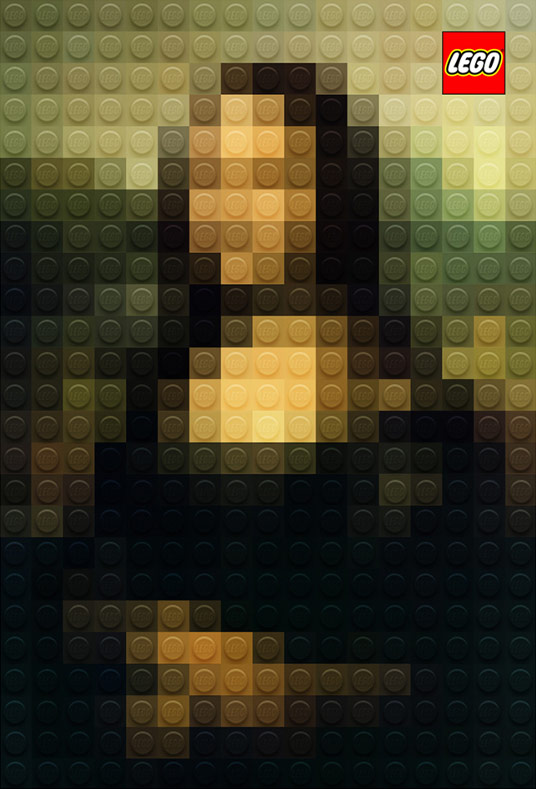
Crazy recognizable even with only ~400 pixels. The Girl With the Pearl Earring is pretty good too. Of course, nothing beats Lego Stephen Hawking. (via mlkshk)
Among the many enduring mysteries of this period is the fate of the world’s most famous painting. It seems that Leonardo da Vinci’s Mona Lisa was among the paintings found in the Altaussee salt mine in the Austrian alps, which was converted by the Nazis into their secret stolen-art warehouse.
The painting only “seems” to have been found there because contradictory information has come down through history, and the Mona Lisa is not mentioned in any wartime document, Nazi or allied, as having been in the mine. Whether it may have been at Altaussee was a question only raised when scholars examined the postwar Special Operations Executive report on the activities of Austrian double agents working for the allies to secure the mine. This report states that the team “saved such priceless objects as the Louvre’s Mona Lisa”. A second document, from an Austrian museum near Altaussee dated 12 December 1945, states that “the Mona Lisa from Paris” was among “80 wagons of art and cultural objects from across Europe” taken into the mine.
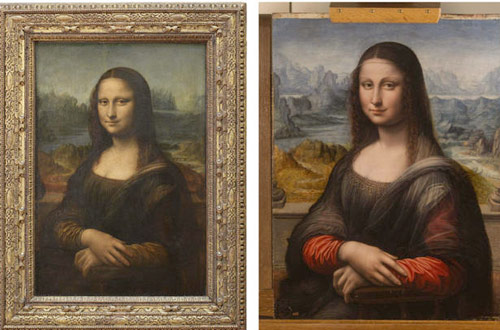
Museum experts are in the process of stripping away a cover of black over-paint which, when fully removed, will reveal the youthfulness of the subject they say. The final area of over-paint will come off in the next few days.
The original “Mona Lisa” hangs in the Louvre but the sitter looks older than her years as the varnish is cracked. The painting is so fragile that restoration or cleaning is deemed too risky. The Prado version, however, will show the sitter as she was: a young woman in her early 20s.
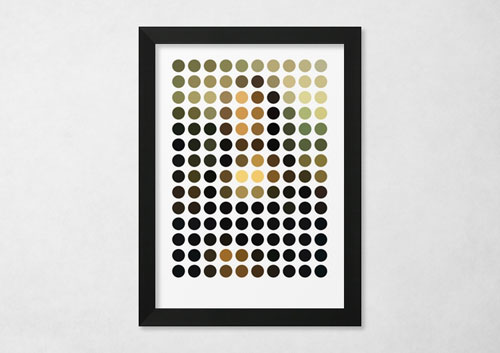
Leonardo da Vinci’s ‘The Mona Lisa’ reduced & remixed down into 140 exact circles of colour. Makes no sense close up. Makes every sense from the other side of the room.
The shocking theft of the Mona Lisa, in August 1911, appeared to have been solved 28 months later, when the painting was recovered. In an excerpt from their new book, the authors suggest that the audacious heist concealed a perfect — and far more lucrative — crime.
Expecting new revelations, I read on but it was the same story told in previous books. Regardless, it’s a great story and worth the read but nothing new if you’ve heard it before.





Stay Connected