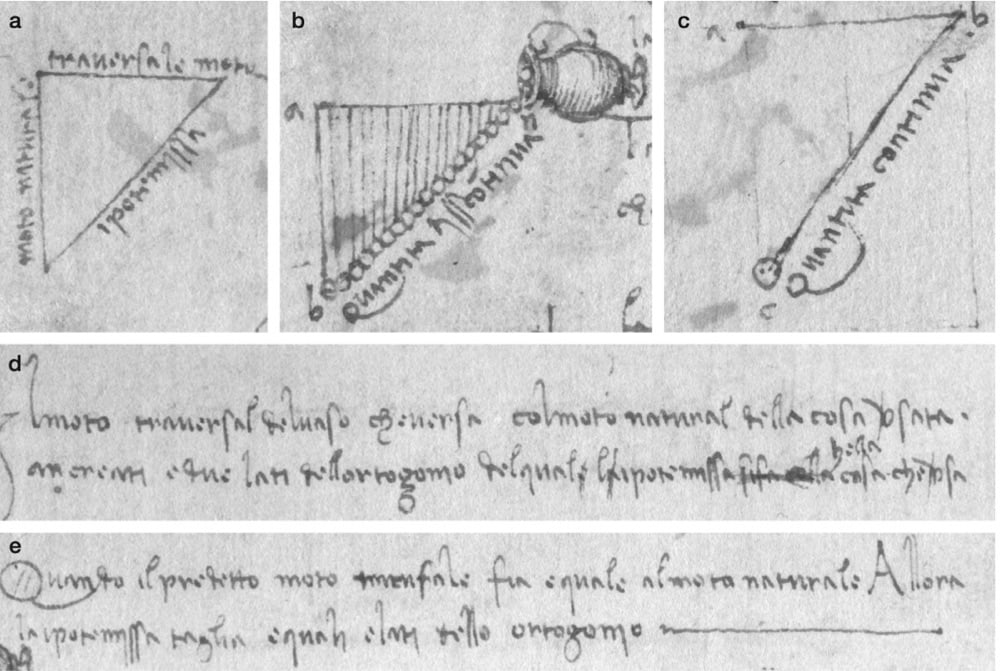
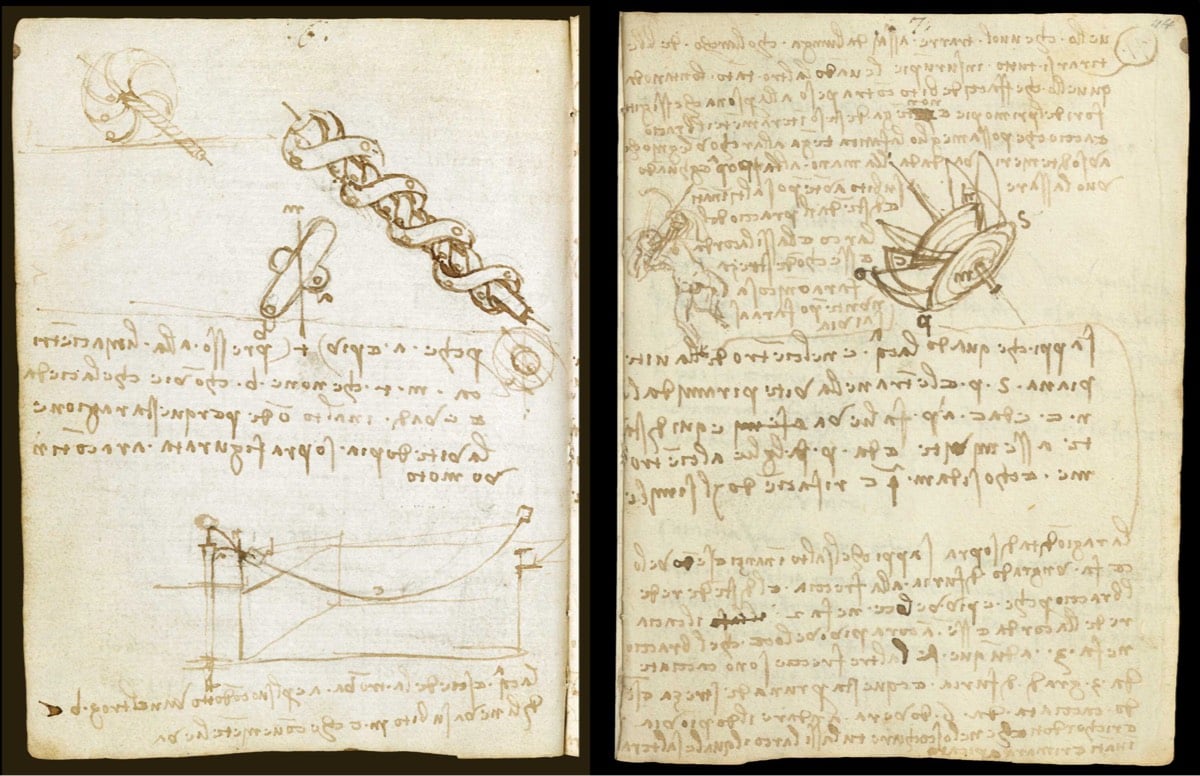
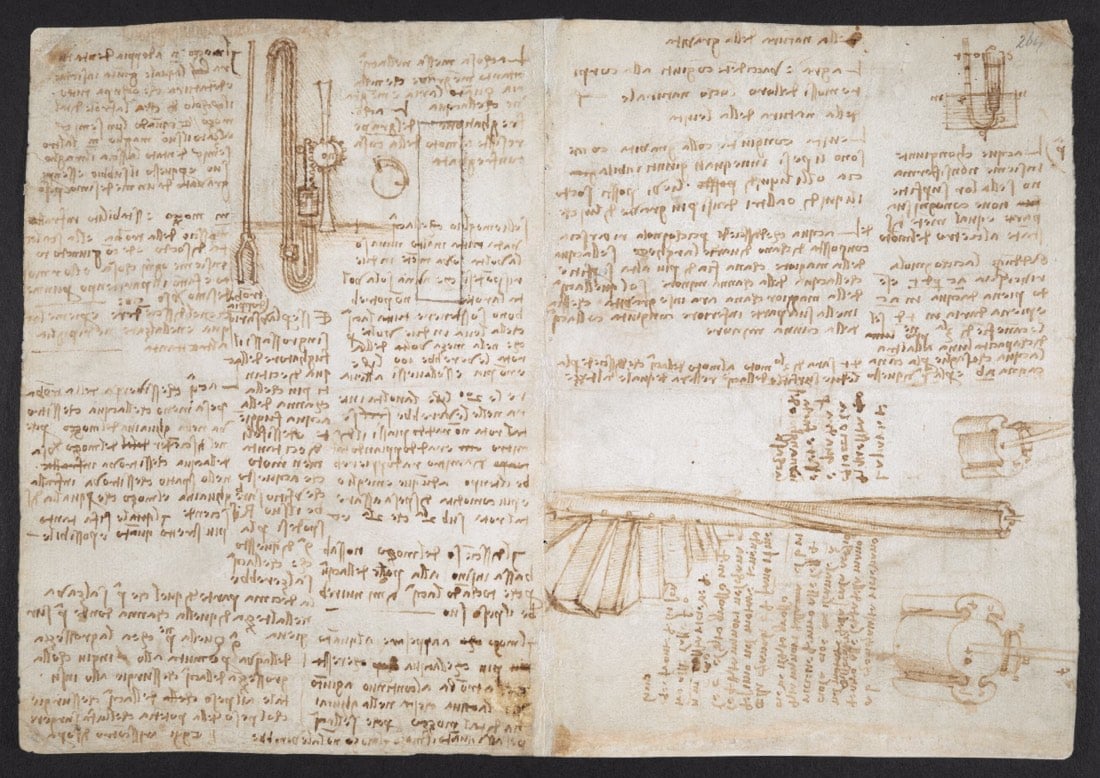
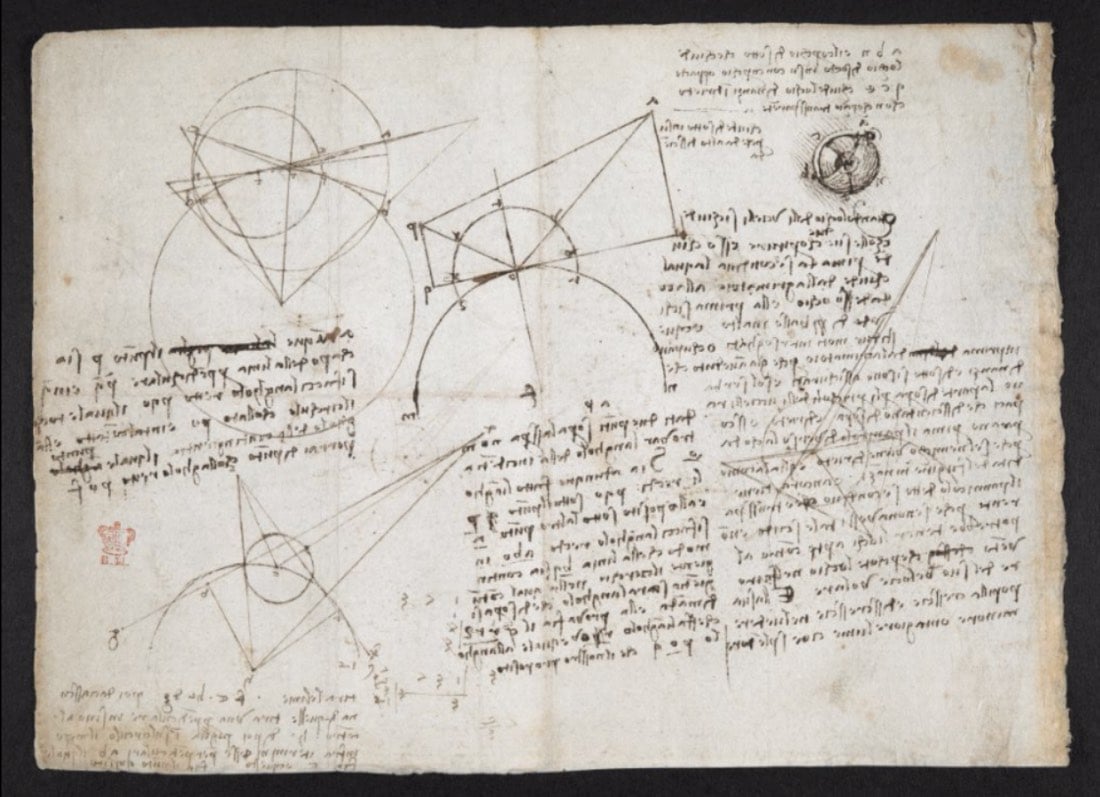
In an article published in the journal Leonardo, the researchers draw upon a fresh look at one of da Vinci’s notebooks to show that the famed polymath had devised experiments to demonstrate that gravity is a form of acceleration — and that he further modeled the gravitational constant to around 97 percent accuracy.
Da Vinci, who lived from 1452 to 1519, was well ahead of the curve in exploring these concepts. It wasn’t until 1604 that Galileo Galilei would theorize that the distance covered by a falling object was proportional to the square of time elapsed and not until the late 17th century that Sir Isaac Newton would expand on that to develop a law of universal gravitation, describing how objects are attracted to one another. Da Vinci’s primary hurdle was being limited by the tools at his disposal. For example, he lacked a means of precisely measuring time as objects fell.
As the piece notes, Leonardo didn’t get things exactly right:
Da Vinci sought to mathematically describe that acceleration. It is here, according to the study’s authors, that he didn’t quite hit the mark. To explore da Vinci’s process, the team used computer modeling to run his water vase experiment. Doing so yielded da Vinci’s error.
“What we saw is that Leonardo wrestled with this, but he modeled it as the falling object’s distance was proportional to 2 to the t power [with t representing time] instead proportional to t squared,” Roh says. “It’s wrong, but we later found out that he used this sort of wrong equation in the correct way.” In his notes, da Vinci illustrated an object falling for up to four intervals of time-a period through which graphs of both types of equations line up closely.
But it’s still pretty impressive how far he did get. The piece also notes that this work was discovered because the codex was made available online to the general public, demonstrating the value of easy access of materials like this.
In the most recent episode of the excellent YouTube series Great Art Explained, James Payne expands on an earlier, shorter video on the Mona Lisa with this double-length extended cut.
For Mona Lisa, Leonardo used a thin grain of poplar tree and applied an undercoat of lead white, rather than just a mix of chalk and pigment. He wanted a reflective base. Leonardo painted with semi-transparent glazes that had a very small amount of pigment mixed with the oil, so how dark you wanted your glaze to be depends on how much pigment you use. He used more like a “wash”, which he applied thin — layer by layer. Here you can see two colors of contrast — light and dark. When you apply thin glaze over both of them, you can see it starts to unify the contrast but also brings depth and luminosity. The lead white undercoat reflects the light back through the glazes, giving the picture more depth and in essence, lighting Mona Lisa from within.
This was fascinating, not a wasted moment in the whole thing. I’ve read, watched, and listened to a lot of analysis of the Mona Lisa over the years, but Payne’s detailed explanation both added to my knowledge and clarified what I already knew.
In this way, moving from the apex of the pyramid to its bottom right corner is actually a trip through time, from the past to the present to the future. And that timeline also extends along a three-dimensional axis — the lamb is in front of Jesus, who’s in front of Mary, who’s in front of Anne. But on this axis, it goes even further — behind Anne, we’re launched into the geological past. These mountains, these bones of the Earth, suggest a deep time — so deep that it conflicts with the Christian sense of the age of the world. Now that reflects a larger conflict in the Renaissance between religion and a growing appreciation for natural science, which is embodied in no person more than Leonardo da Vinci, the insatiably curious polymath.
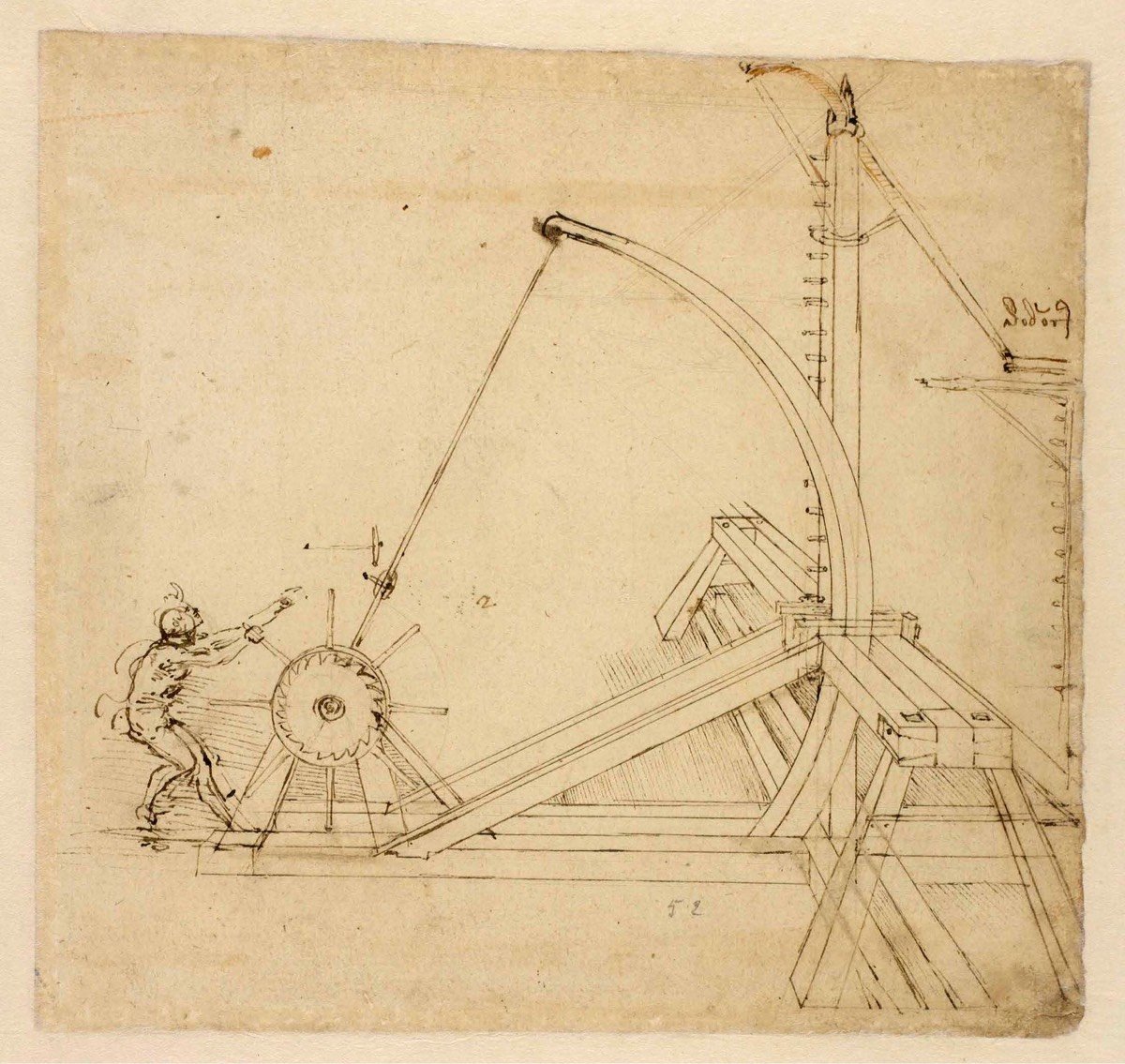
In their series of short videos called Da Vinci Reborn, Dassault Systemes used their software to virtually recreate some of Leonardo’s most intriguing inventions, like the ornithopter (a bird-like human-powered airplane) and odometer (a device that he may have used in making this overhead map). (via open culture)
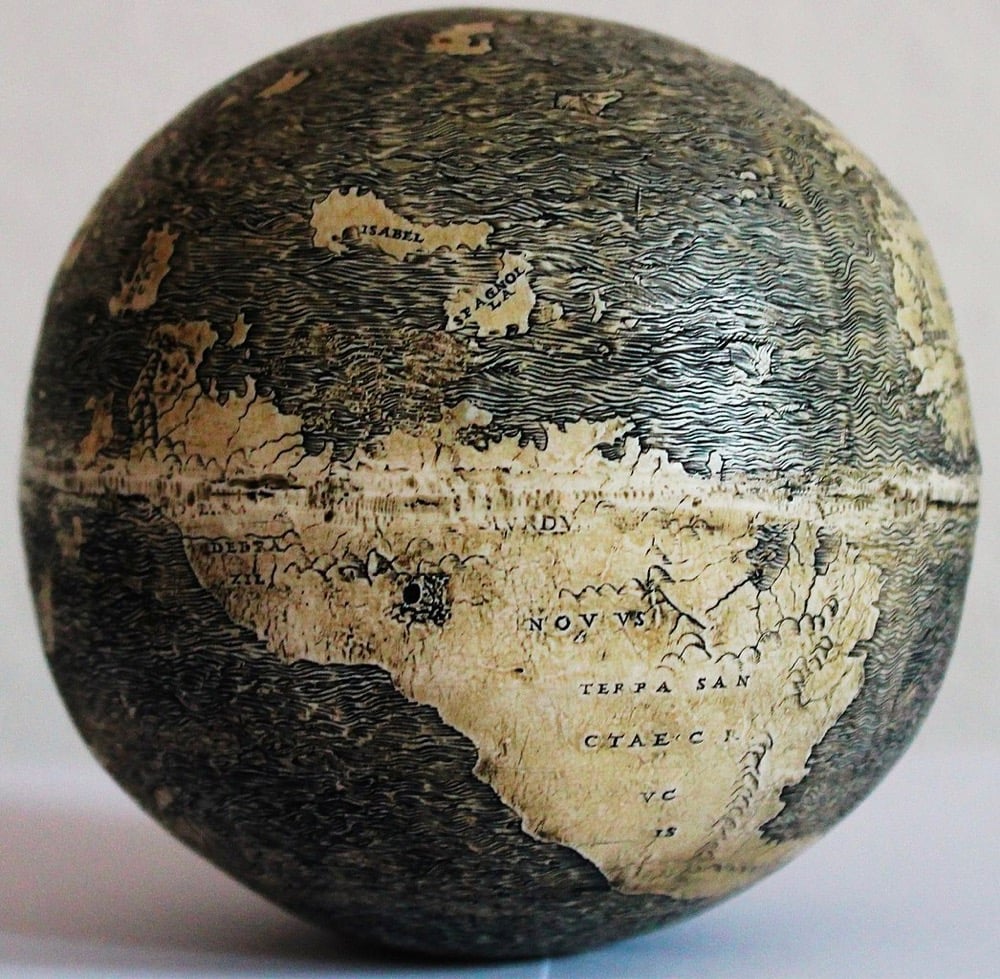
The Ostrich Egg Globe, made in/around 1504, is the earliest-known European globe to depict the Americas. And there’s evidence that it was made by Leonardo da Vinci. Open Culture has the story:
Missinne, a real estate developer, collector, and globe expert originally from Belgium, discovered the globe in 2012 at the London Map Fair. It was purchased “from a dealer who said it had been part of an important European collection for decades,” and its buyer and owner remain anonymous. After the globe appeared, Missinne “consulted more than 100 scholars and experts in his year-long analysis,” putting “about five years of research into one year,” says Sander, calling the research “an incredible detective story.”
Missinne’s investigation seems to substantiate his claims that the globe was made by Leonardo or his workshop. The evidence, some of which you can find on the Cambridge Scholars Publishing site, includes a 1503 preparatory map in da Vinci’s papers; the presence of arsenic, which only Leonardo was known to use at the time in copper to keep it from losing its lustre; “The use of chiaroscuro, pentienti, triangular shapes, the mathematics of the scale reflecting Leonardo’s written dimension of planet earth”; and a 1504 letter from Leonardo himself stating, “my world globe I want returned back from my friend Giovanni Benci.”
As with all things newly attributed to Leonardo in recent decades, there’s disagreement about this claim. You can read about the evidence collected by Stefaan Missinne, the discoverer of the globe and primary champion of its Leonardo connection, and decide for yourself. My brief, amateur take: if the first point in your analysis of a connection between this globe and Leonardo da Vinci is based on Salvator Mundi, which itself has disputed authorship and all but disappeared after its 2017 purchase, you’ve chosen a tough path towards persuasion.
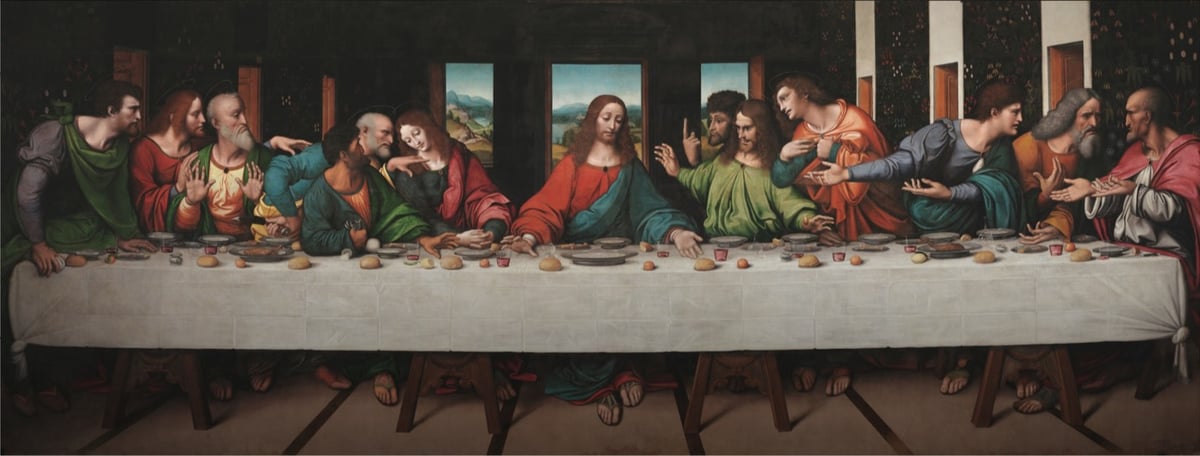
The Royal Academy of Arts and Google teamed up on a high-resolution scan of a copy of Leonardo da Vinci’s The Last Supper painted by his students. Even though the top part of the original is not depicted, this copy is said to be “the most accurate record of the original” and since the actual mural by Leonardo is in poor shape, this copy is perhaps the best way to see what Leonardo intended.
This version was made around the same time as Leonardo made his original. It’s oil paint on canvas, whereas Leonardo’s was painted in tempera and oil on a dry wall — an unusual use of materials — so his has flaked and deteriorated badly. It probably didn’t help that Napoleon used the room where the original hung as a stable during his invasion of Milan.
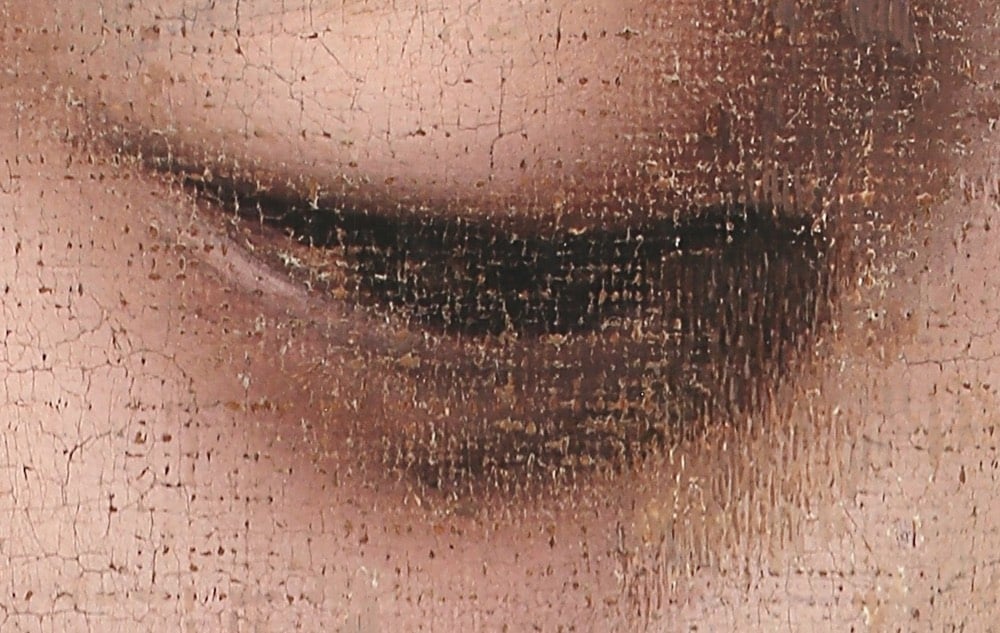
A zoomable version is available here. The resolution on this scan is incredible. The painting is more than 26 feet wide and this is the detail you can see on Jesus’ downcast right eye:
The genius of Leonardo’s composition is much clearer in the RA copy. The apostles are arranged into four groups of three and there are many subtle interactions between the figures. Leonardo believed that gestures were very important in telling the story. He explained that the power of his compositions were such that “your tongue will be paralysed with thirst and your body with sleep and hunger before you depict with words what the painter shows in a moment”.
There are many elements in the copy which are more distinct that the original, such as the figure of Judas clutching his money bag and knocking over the salt. The landscape beyond the windows with its valleys, lakes and paths is well preserved in the copy, but has almost disappeared in the original. Leonardo’s use of colour was was greatly admired, but in the original the colours are very faded — Saint Simon on the extreme right clearly wears a pink cloak, but this is not visible in the original.
Ok, this post doesn’t have anything to do with boy detective Encyclopedia Brown…I just needed him for the title. In the NY Times, art critic Jason Farago argues that in order to improve the visitor experience at the Louvre, the Mona Lisa and her smile have got to go.
Yet the Louvre is being held hostage by the Kim Kardashian of 16th-century Italian portraiture: the handsome but only moderately interesting Lisa Gherardini, better known (after her husband) as La Gioconda, whose renown so eclipses her importance that no one can even remember how she got famous in the first place.
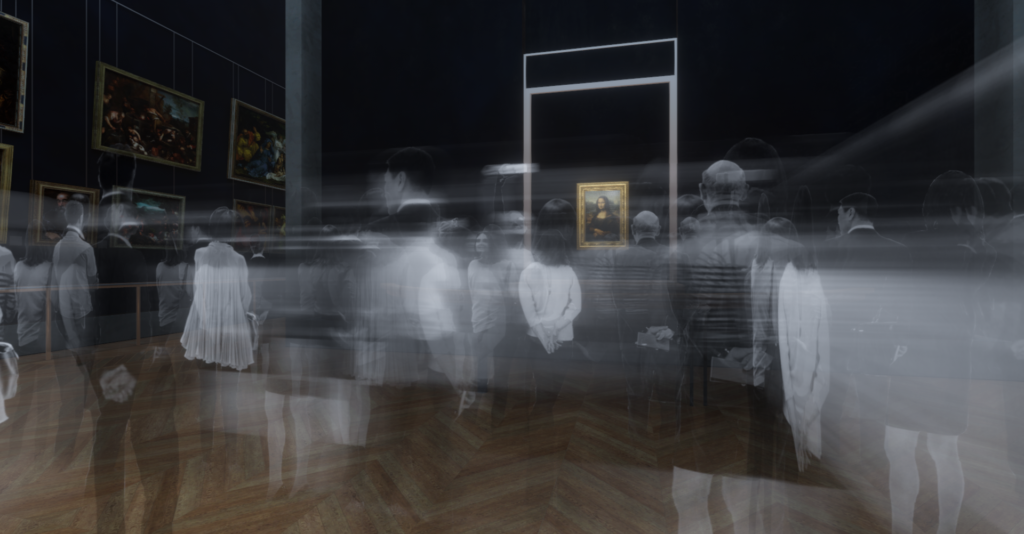
Some 80 percent of visitors, according to the Louvre’s research, are here for the Mona Lisa — and most of them leave unhappy. Content in the 20th century to be merely famous, she has become, in this age of mass tourism and digital narcissism, a black hole of anti-art who has turned the museum inside out.
Enough!
I visited the Louvre back in 2017 and the Mona-driven crowds were very distracting. I wrote a short review for my media diet:
The best-known works are underwhelming and the rest of this massive museum is overwhelming. The massive crowds, constant photo-taking, and selfies make it difficult to actually look at the art. Should have skipped it.
The Louvre is actually not a good place to look at art and if moving the Mona Lisa to a dedicated gallery elsewhere can help solve that problem, they should do it. (via @fimoculous)
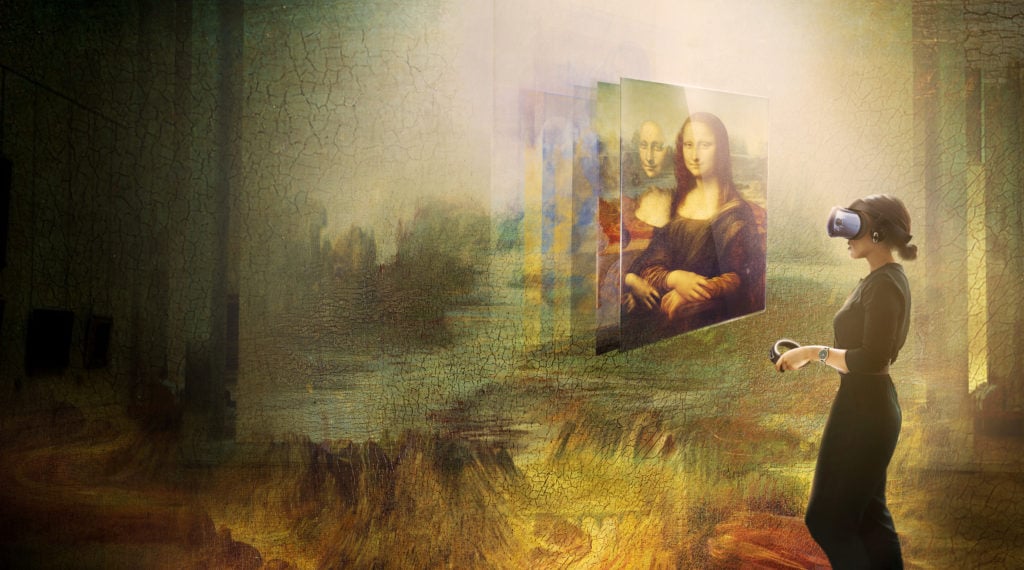
An incredible 80 percent of the Louvre’s 10 million yearly visitors find their way to the Salle des États to catch a glimpse of the Mona Lisa. It’s so popular that it wasn’t included in the ongoing Leonardo da Vinci exhibition, for fear that the bustle to the painting would make it “practically unvisitable.” The curators used the opportunity to put together the museum’s first-ever virtual reality project, offering visitors a seven-minute experience of a work titled Mona Lisa: Beyond the Glass.
Visitors can strap themselves into the state-of-the-art headsets and learn snippets of information about Leonardo’s famous sitter, Lisa del Giocondo, as well as his artistic method and the history of the painting. It will immerse them in what could be the surroundings beyond the frame of what is depicted in Leonardo’s masterpiece, and, at the end, invite them to climb aboard an imagined version of Leonardo’s visionary flying machine—a sketch of which is also included in the exhibition—and soar across the landscape surrounding Mona Lisa’s luxuriant loggia.
An interesting detail to this initiative is that although digital experiences like this are usually meant to broaden a museum’s public and draw more visitors, the Louvre definitely doesn’t need to be better known. They put this project together because “The museum still wants to amplify whatever it does beyond those who can actually set foot in the museum.”
The initiative is part of a broader plan to make culture accessible to a wider public. Efforts have been underway in France to redistribute some of its cultural resources around the country. The French culture minister Franck Riester plans to introduce a number of small-scale digital museums around France that will showcase high-resolution digital copies of works from the country’s 12 national public collections, including the Louvre, with people in remote regions. With more than $3 million invested in the plan, the small digital museums—dubbed “micro-folies”—are expected to number 1,000 within three years.
An 1119-page collection of papers known as the Codex Atlanticus has been completely digitized and put online to explore. The codex showcases Leonardo’s impressive range of interests and abilities, from flying machines to anatomy to weaponry to astronomy to engineering.
Have you ever wondered how mapmakers made bird’s-eye-view maps before the invention of satellites or even hot air balloons? I have and was glad to find Phil Edwards’ video on the subject:
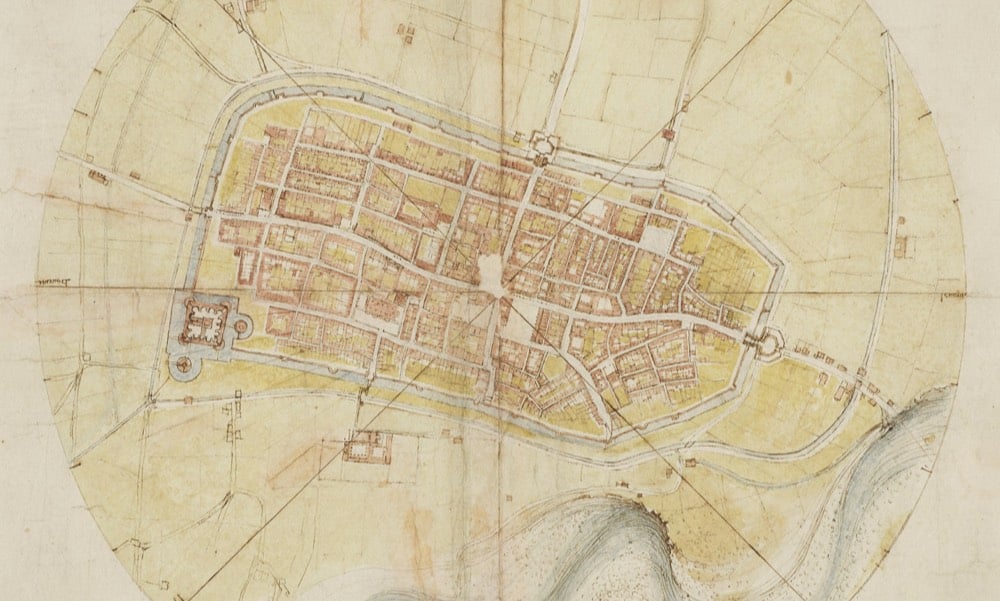
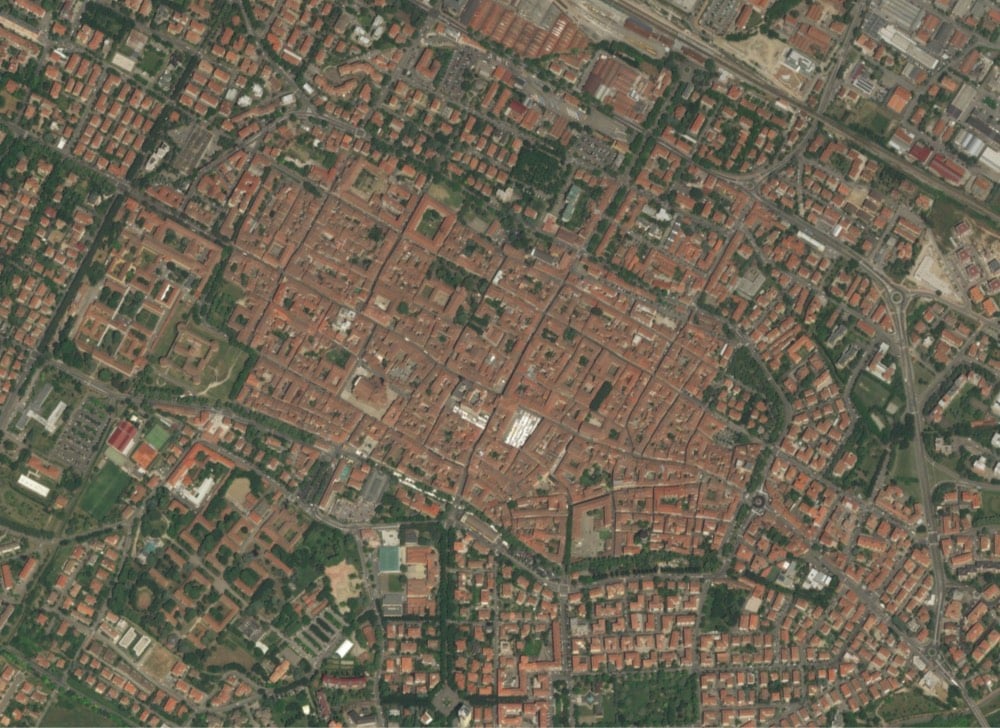
Leonardo da Vinci is justly famous for a lot of different things, but we’ve heard somewhat less about his mapmaking prowess than his painting or mechanical designs. His 1502 map of the Italian town of Imola is the oldest surviving example of an ichnographic (i.e. bird’s-eye-view) map of a place, a type of map that is ubiquitous today in the form of satellite imagery.
Most Renaissance maps are known for their fanciful inclusion of dragons, castles, and undulating mountainsides, and most of them show buildings in elevation, or the “oblique perspective.” But da Vinci’s sought to capture the proportions and relationships between land features more accurately, and he developed new technologies to do so. To make this map of Imola, he may have used the special hodometer and magnetic compass he’d already invented (he’d been fascinated by maps and optics for years). With careful measurements in hand, he drew every “street, plot of land, church, colonnade, gate and square, the whole encompassed by the moat,” writes the Renaissance historian Paul Strathern.
As Edwards notes in the video, Leonardo’s map is not strictly an illustration or drawing of a place but more of an infographic. We take this type of map for granted now, but 500 years ago, that shift was a genuine innovation.
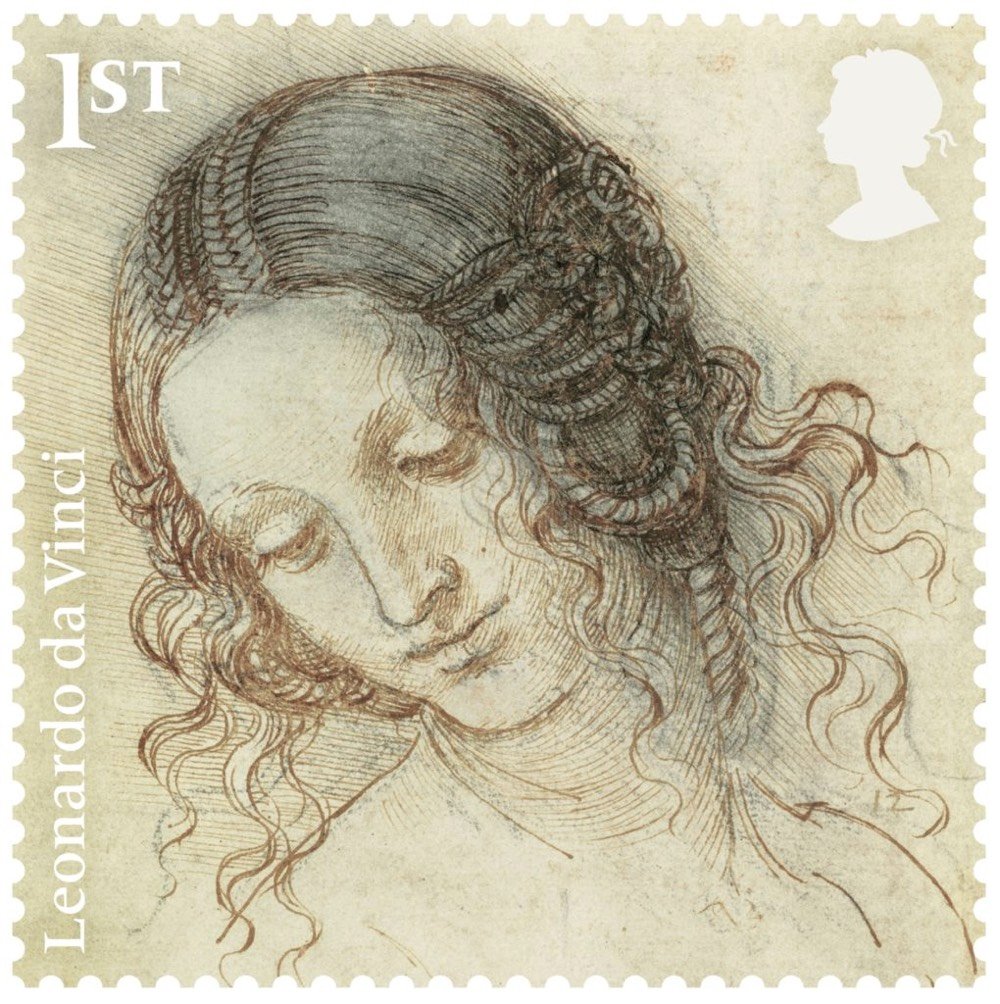
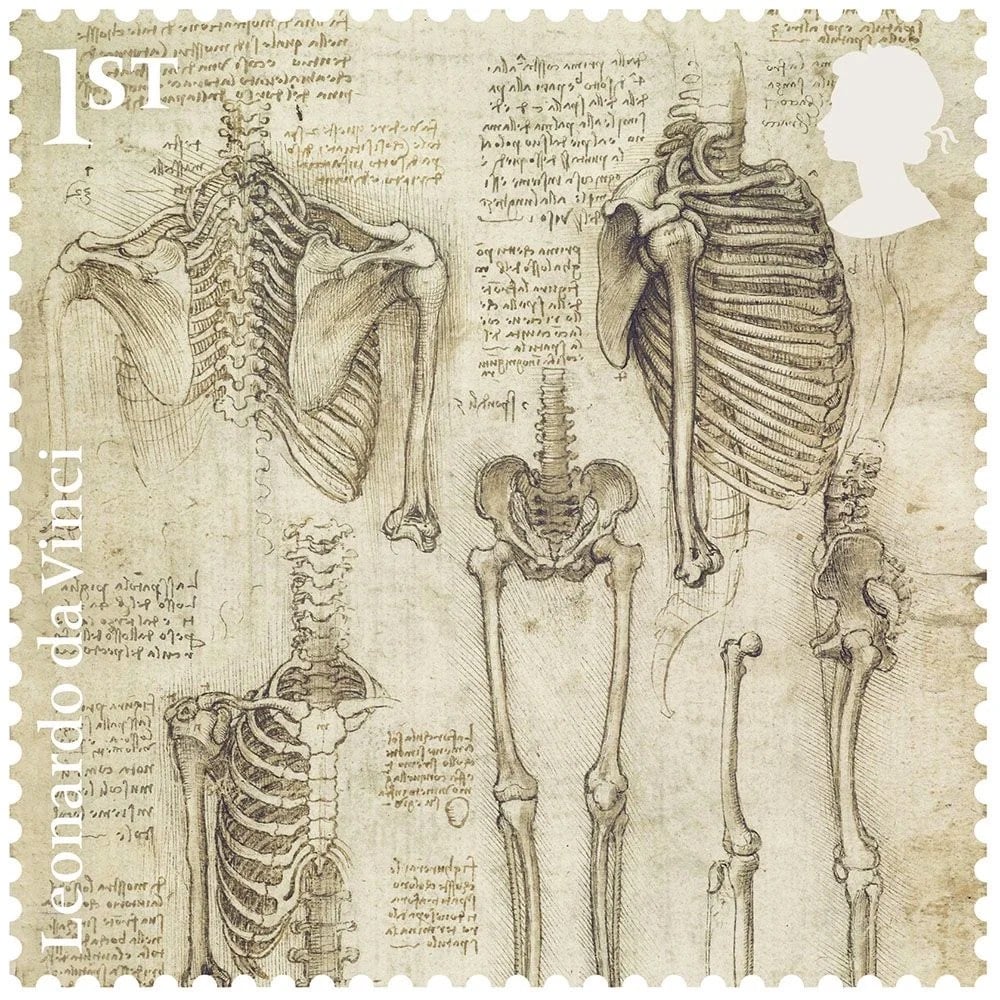
The Royal Collection holds the greatest collection of Leonardo’s drawings in existence, housed in the Print Room at Windsor Castle. Because they have been protected from light, fire and flood, they are in almost pristine condition and allow us to see exactly what Leonardo intended — and to observe his hand and mind at work, after a span of five centuries. These drawings are among the greatest artistic treasures of the United Kingdom.
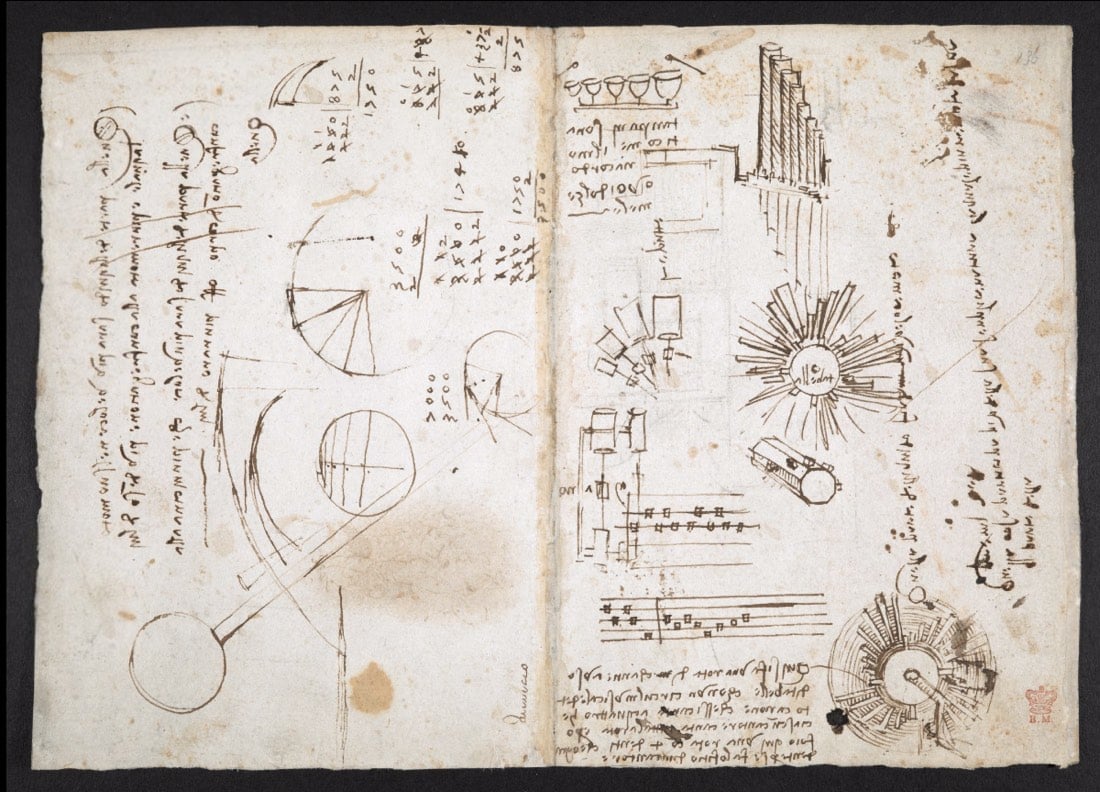
Leonardo seems to have begun recording his thoughts in notebooks from the mid-1480s when he worked as a military and naval engineer for the Duke of Milan. None of Leonardo’s predecessors, contemporaries or successors used paper quite like he did — a single sheet contains an unpredictable pattern of ideas and inventions — the workings of both a designer and a scientist.
This first Forster Codex joins other Leonardo notebooks available online: the Arudel Codex, the Madrid Codices, and Codex Trivulzianus. Bill Gates owns the Codex Leicester and has done high-res scans of it for a CD-ROM released in the 90s but hasn’t put it online anywhere. I asked Gates about it on Twitter and will let you know if I hear anything back… (via open culture)
In a study done by UPenn researchers, first-year medical students who were taught art observation classes at the Philadelphia Museum of Art were more proficient at reading clinical imagery than students who didn’t take the classes.
If you’re unfamiliar or uncomfortable with how art and science can mingle to produce something clinically beneficial, it’s a study premise that might seem far-fetched — but it didn’t seem that way to Gurwin, an ophthalmology resident at Penn, in part because she’d already seen the benefits of art education on a medical career firsthand.
“Having studied fine arts myself and having witnessed its impact on my medical training, I knew art observation training would be a beneficial practice in medical school,” she said. “Observing and describing are skills that are taught very well in fine arts training, and so it seemed promising to utilize their teachings and apply it to medicine.”
Gurwin and Binenbaum’s findings, published in the journal Ophthalmology in September: The medical students who’ve dabbled in art just do better.
It’s a glimpse at how non-clinical training can and does make for a better-prepared medical professional. Not only does art observation training improve med students’ abilities to recognize visual cues, it also improves their ability to describe those cues.
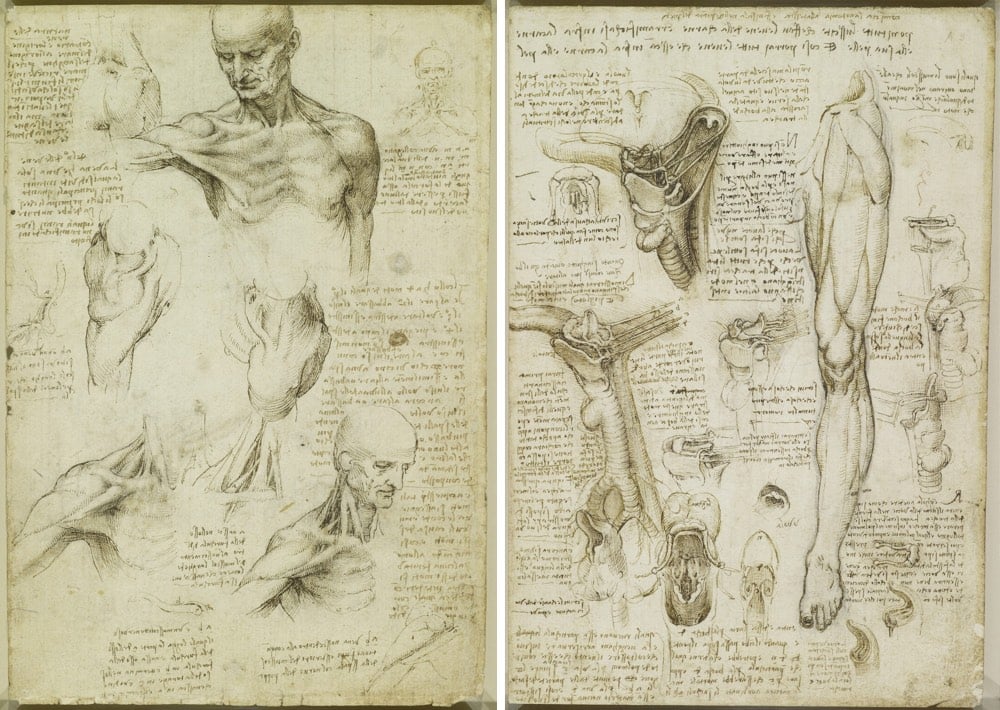
The results of this study reminded me of Walter Isaacson’s assertion in his book that Leonardo da Vinci’s greatest skill was his keen observational ability. Not coincidentally, Leonardo was both an artist and a medical researcher who dissected more than 30 human cadavers to study human anatomy. These dissections helped him to represent the human form more realistically in his paintings and drawings.
It’s easier to draw a hand, particularly a hand that appears to be moving (as Leonardo liked to do), if you know that’s going on underneath the skin. Looking carefully and purposefully at art, at anatomy, at the physical world, at people’s actions, at movies; it’s all the same skill that can be applied to anything.
Isaacson argues that Leonardo’s observational powers were not innate and that with sufficient practice, we can all observe as he did. People talk in a precious way about genius, creativity, and curiosity as superpowers that people are born with but noticing is a more humble pursuit. Noticing is something we can all do.
As kottke.org enters its 21st calendar year of activity (!!!!), it’s time for something new. And old. Email was invented in 1972, the year before I was born, but is still going strong. The email newsletter has re-emerged in recent years as a unique way to connect with readers, distinct from social media or publishing on the web. So Tim Carmody and I have teamed up to launch Noticing, a free email newsletter. You can subscribe here.
Written by Tim Carmody and published by me every Friday, Noticing will contain a curated roundup of the week’s posts from kottke.org as well as some extra stuff that we’ll be introducing in the weeks to come. It most definitely won’t be a replacement for kottke.org…more like something to read alongside it.
The most economically powerful thing you can do is to buy something for your own enjoyment that also improves the world. This has always been the value proposition of journalism and art. It’s a nonexclusive good that’s best enjoyed nonexclusively.
The newsletter is very much a work in progress and a departure from the way I usually do things around here. For one thing, it’s a collaboration…almost everything else I’ve done on the site was just me. We’ve previewed it over the last two weeks just for members, but it’s still more “unfinished” than I’m comfortable with. The design hasn’t been nailed down, the logo will likely change, and Tim & I are still trying to figure out the voice and length. But launching it unfinished feels right…we aren’t wasting time on optimization and there’s more opportunity to experiment and move toward what works as time goes on. We hope you’ll join us by subscribing and letting us know your thoughts and feedback as we get this thing moving.
P.S. A quick note on the name. I thought of it while listening to the last part of Walter Isaacson’s Leonardo da Vinci on audiobook on the drive home from NYC last week. One of Isaacson’s main points in the book was that Leonardo’s accomplishments were due in no small part to his extraordinary powers of observation. By observing things closely and from all possible angles, he was able to make connections and find details that other people didn’t and express them in his work. Isaacson argues that Leonardo’s observational powers were not innate and that with sufficient practice, we can all observe as he did. People talk in a precious way about genius, creativity, and curiosity as superpowers that people are born with but noticing is a more humble pursuit. Noticing is something we can all do.
I also thought about one of my favorite scenes from Greta Gerwig’s Lady Bird. From A.O. Scott’s review:
Sister Sarah Joan (Lois Smith), the principal, has read Lady Bird’s college application essay. “It’s clear how much you love Sacramento,” Sister Sarah remarks. This comes as a surprise, both to Lady Bird and the viewer, who is by now aware of Lady Bird’s frustration with her hometown.
“I guess I pay attention,” she says, not wanting to be contrary.
“Don’t you think they’re the same thing?” the wise sister asks.
The idea that attention is a form of love (and vice versa) is a beautiful insight.
I agree. Drawing honest & straightforward attention to things I love is much of what I do here on kottke.org, so I thought Noticing was a natural name for its newsletter extension.
P.P.S. An additional programming note. In addition to doing the newsletter, Tim is also taking over the posting duties on kottke.org most Fridays. This will free me up to work on other site-related things that I haven’t been able to tackle due to the daily scramble. Again, thanks to member support for making this possible!
He has no work as stunning as Michelangelo’s David, and too many of his commissions he left unfinished or he never started them. The Notebooks display a fertile imagination, but do not contain much real knowledge of use, except on the aortic valve, nor did they boost gdp, nor are they worth reading. Much of his science is weak on theory, even relative to his time.
So Leonardo was perhaps not the best at any one thing but he was very good or great at many different things. He is literally the quintessential “Renaissance man” and yet Cowen fails to evaluate him on that basis. Not surprising…history’s generalists are under-celebrated as a rule. Anyway, I’m looking forward to reading Walter Isaacson’s biography of Leonardo in the next couple of weeks.
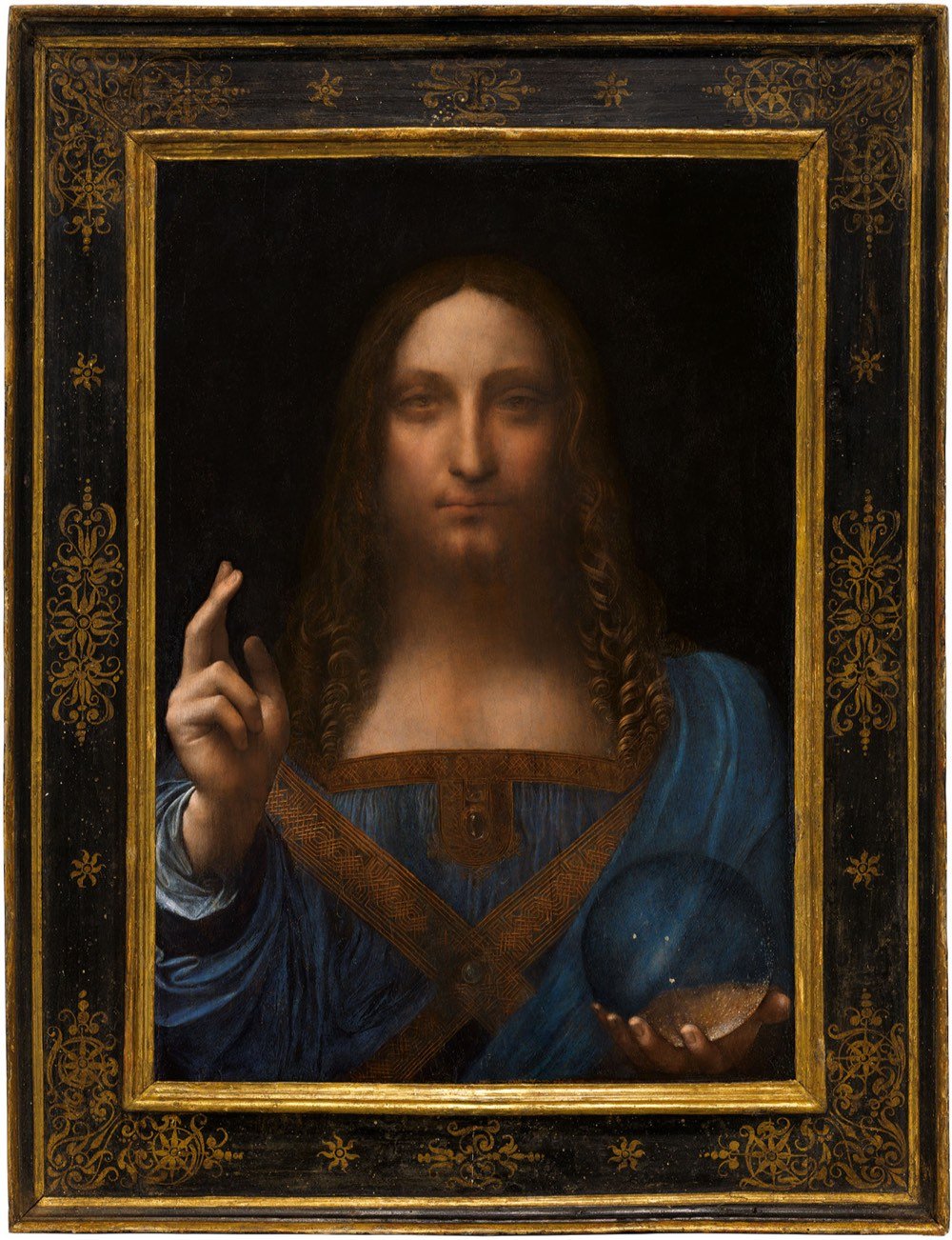
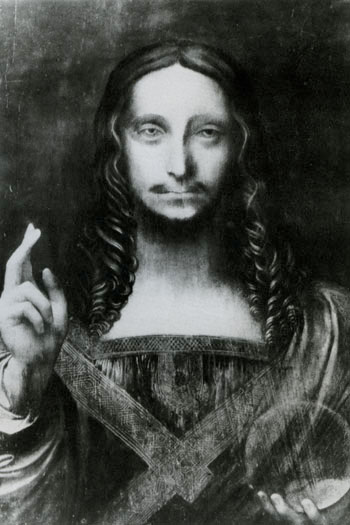
Only fewer than 20 of Leonardo da Vinci’s paintings are known to have survived until the present day. In 2005, a painting of Leonardo’s called Salvator Mundi was rediscovered after its provenance had been forgotten hundreds of years ago, to the point that it sold for £45 at an auction in 1958. In November, Christie’s auction house is selling the painting.
The painting disappeared from 1763 until 1900 when — its authorship by Leonardo, origins and illustrious royal history entirely forgotten — it was acquired from Sir Charles Robinson, who purchased the picture as a work by Leonardo’s follower, Bernardino Luini, for the Cook Collection, Doughty House, Richmond. By this time, Christ’s face and hair had been extensively repainted. A photograph taken in 1912 records the work’s altered appearance.
In the dispersal of the Cook Collection, the work was ultimately consigned to auction in 1958 where it fetched £45, after which it disappeared once again for nearly 50 years, emerging only in 2005 — its history still forgotten — when it was purchased from an American estate.
That estate sale in 2005 sold the painting for only $10,000…it was believed to be a Leonardo copy. The painting is estimated to sell at a price of $100 million but seeing how the last two sales netted $75 million and $127.5 million, it would be easy to see that going higher.
I’m no art historian or any kind of expert in old masters. But I’ve looked at art for almost 50 years and one look at this painting tells me it’s no Leonardo. The painting is absolutely dead. Its surface is inert, varnished, lurid, scrubbed over, and repainted so many times that it looks simultaneously new and old. This explains why Christie’s pitches it with vague terms like “mysterious,” filled with “aura,” and something that “could go viral.” Go viral? As a poster, maybe. A two-dimensional ersatz dashboard Jesus.
Why else do I think this is a sham? Experts estimate that there are only 15 to 20 existing da Vinci paintings. Not a single one of them pictures a person straight on like this one. There is also not a single painting picturing an individual Jesus either. All of his paintings, even single portraits, depict figures in far more complex poses. Even the figure that comes remotely close to this painting, Saint John the Baptist, also from 1500, gives us a turning, young, randy-looking man with hair utterly different from and much more developed in terms of painting than the few curls Christie’s is raving about in their picture.
Update: Salvator Mundi sold for $450 million, “obliterating the previous world record for the most expensive work of art at auction”. On Twitter, Saltz called the buyer “a sucker” and posted an image of the painting with Trump’s face pasted on it. Buuuuuuuurn.
Update: According to this piece in Narativ, this painting might now be lost and could factor into the Mueller investigation into the Trump-Russia connection.
Questions are being raised. First, why did the Crown Prince of Saudi Arabia, an art novice, buy the masterpiece? Secondly, why did he overpay for it by $300 million? Even for the stupendously wealthy Prince Mohammed bin Salman, that’s not just a simple rounding error. How do you misplace a $450 million painting anyway?
We can also reveal Special Counsel Robert Mueller is investigating both the buyer and the seller of the Da Vinci masterpiece as part of the Trump-Russia investigation.
All the intrigue suits Salvator Mundi’s already storied past well, but as I write this, no-one has seen the rare masterpiece in over a year, and its exact whereabouts have been unknown for over 100 days.
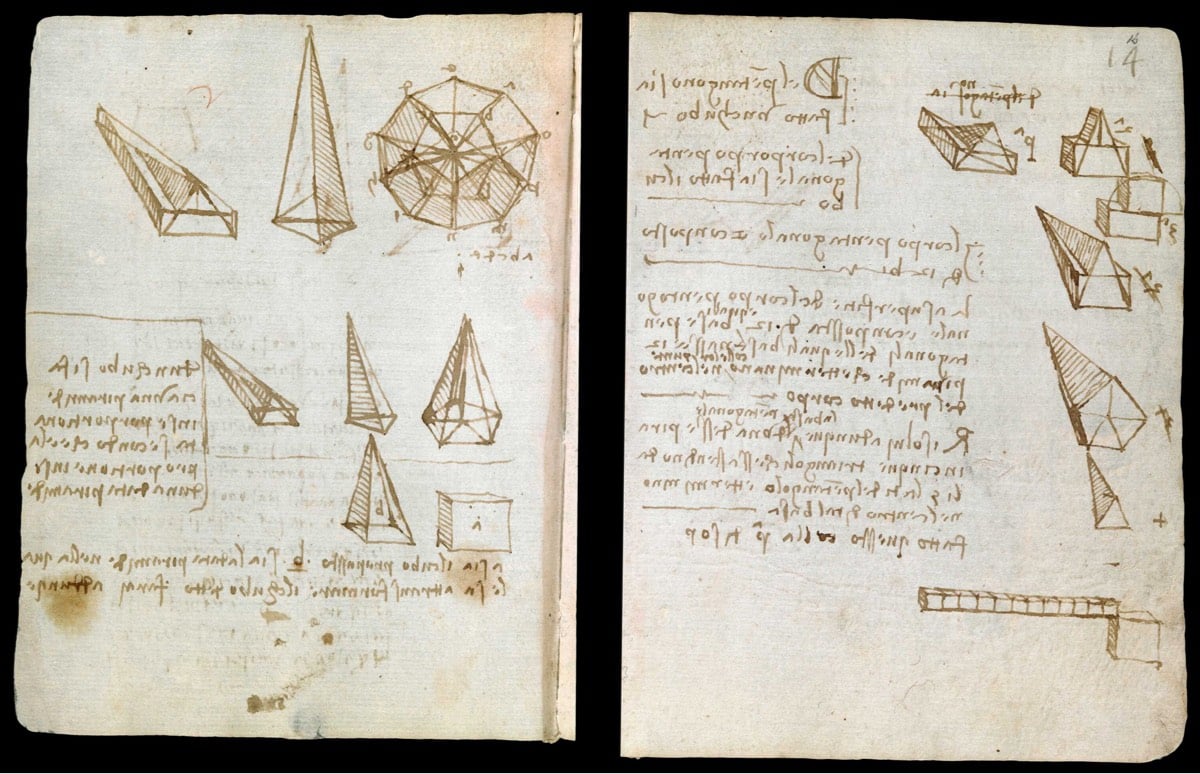
Leonardo da Vinci was an avid taker of notes. Over the course of his working life, he filled thousands of pages with drawings, sketches, equations, and his distinctive mirrored handwriting. The British Library has one of Leonardo’s notebooks and has digitized and put all 570 pages of it online. It’s interesting to see all of the spare geometric line drawings and then every once in awhile there’s this wonderfully rendered 3D-shaded tiny masterpiece in the margin when more detail was required. (via open culture)
Leonardo da Vinci’s Mona Lisa is overrated. Why? For starters, the director of the Louvre said that 80% of the museum’s visitors are there just to see the Mona Lisa. 80%! We’re talking about one of the finest museums in the world, overflowing with some of the world’s greatest artworks, and people come to only see one thing. Overrated. The story of how that happened involves a passionate art critic and a crime.
The Virgin and Child with Saint Anne is one of the most beautiful paintings in the world. It is also one of the most mysterious. Disfigured and even jeopardised by “repairs” and by the successive layers of varnish applied to it over the centuries, it was also in very bad condition. To save the painting, it had to be restored.
The spectacular operation, the likes of which occurs only once a century, took over three years to complete. The complex and outstanding restoration process provided a unique opportunity to get as close as possible to the painting, to how it was originally painted, and to better understand the complex relationship Leonardo da Vinci had with one of his finest masterpieces.
Restorations are fascinating. I only had time today for the first five minutes, but it hooked me enough that I’m going to go back to it tonight. (via @BoleTzar)
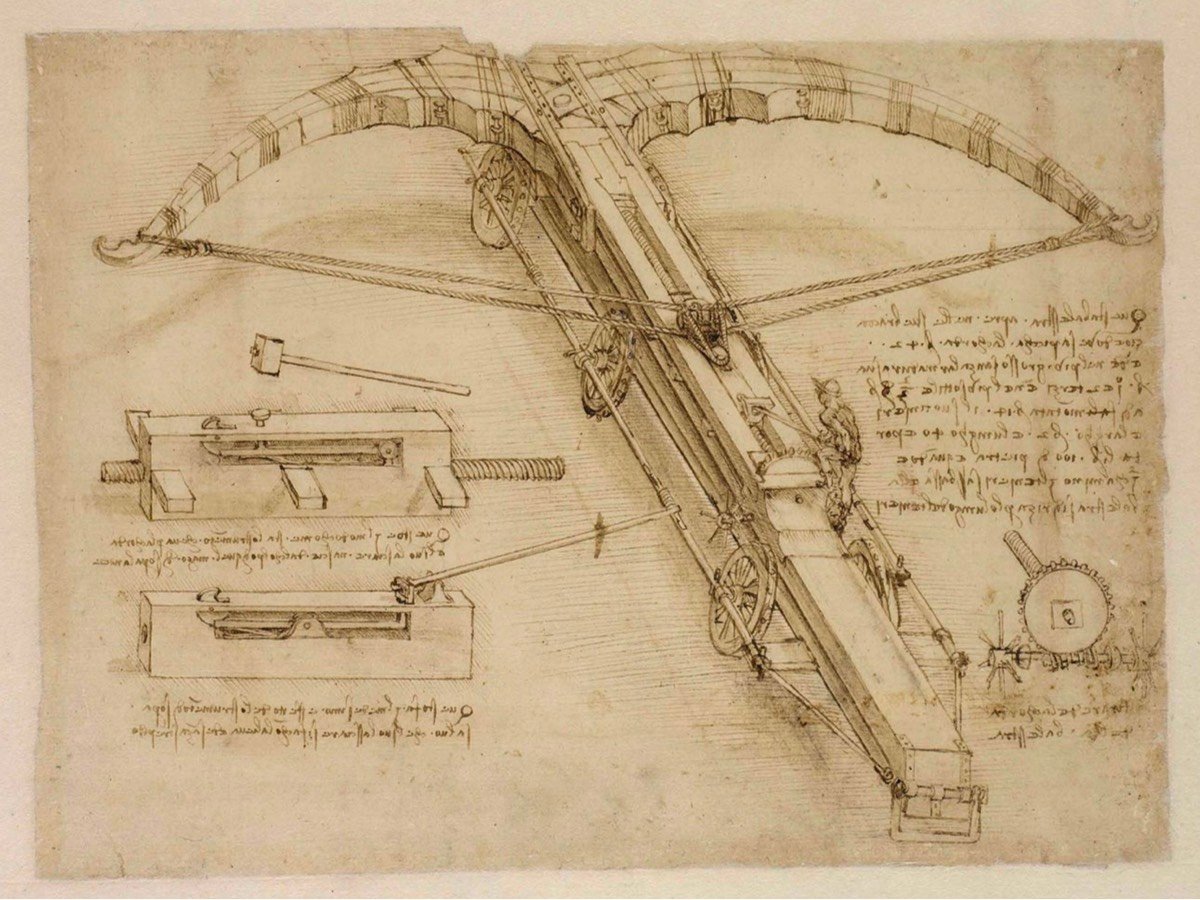
When he was around 32 years old, Leonardo da Vinci applied to the Duke of Milan, Ludovico Sforza, for a job. The duke was in need of military expertise and Leonardo’s 10-point CV emphasized his military engineering skills:
3. Also, if one cannot, when besieging a terrain, proceed by bombardment either because of the height of the glacis or the strength of its situation and location, I have methods for destroying every fortress or other stranglehold unless it has been founded upon a rock or so forth.
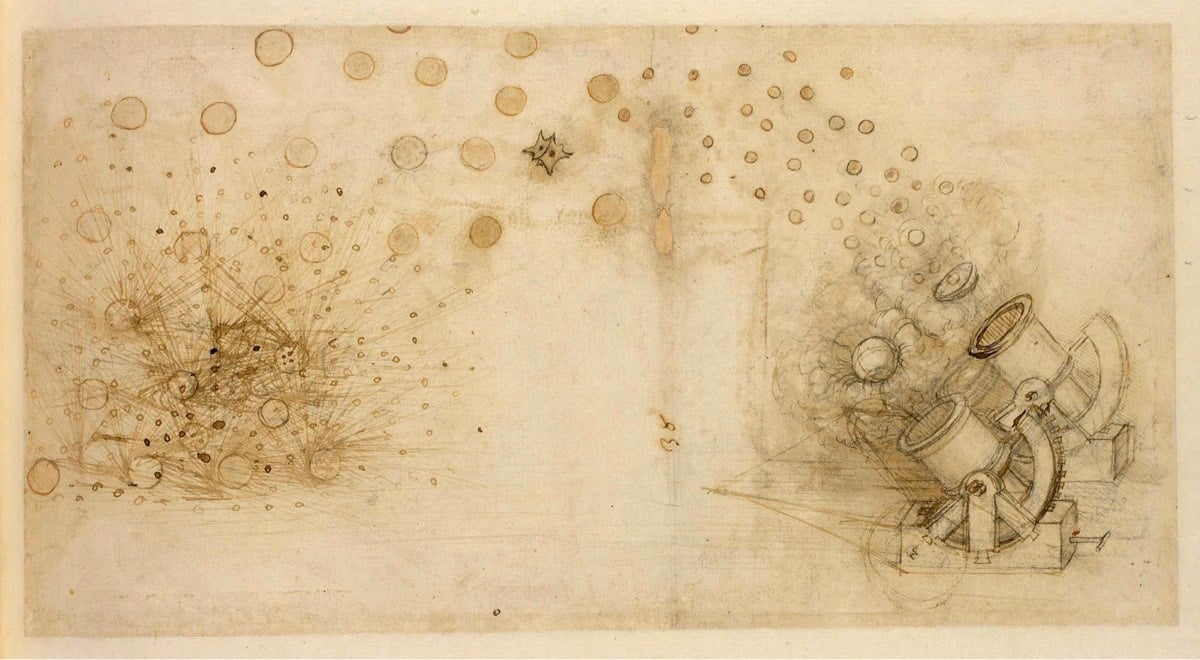
4. I have also types of cannon, most convenient and easily portable, with which to hurl small stones almost like a hail-storm; and the smoke from the cannon will instil a great fear in the enemy on account of the grave damage and confusion.
And I love what is almost an aside at the end of the list:
Also I can execute sculpture in marble, bronze and clay. Likewise in painting, I can do everything possible as well as any other, whosoever he may be.
Oh yeah, P.S., by the way, not that it matters, I am also the greatest living artist in the world, no big deal. Yr pal, Leo. (via farnam street and the letters of note book)
Among the many enduring mysteries of this period is the fate of the world’s most famous painting. It seems that Leonardo da Vinci’s Mona Lisa was among the paintings found in the Altaussee salt mine in the Austrian alps, which was converted by the Nazis into their secret stolen-art warehouse.
The painting only “seems” to have been found there because contradictory information has come down through history, and the Mona Lisa is not mentioned in any wartime document, Nazi or allied, as having been in the mine. Whether it may have been at Altaussee was a question only raised when scholars examined the postwar Special Operations Executive report on the activities of Austrian double agents working for the allies to secure the mine. This report states that the team “saved such priceless objects as the Louvre’s Mona Lisa”. A second document, from an Austrian museum near Altaussee dated 12 December 1945, states that “the Mona Lisa from Paris” was among “80 wagons of art and cultural objects from across Europe” taken into the mine.
The Swiss-based Mona Lisa Foundation is presenting an earlier version of the famed Leonardo da Vinci painting. According to one foundation member, “We have investigated this painting from every relevant angle and the accumulated information all points to it being an earlier version of the Giaconda in the Louvre.” Seems like a good excuse to listen to The Rolling Stones sing Mona (I Need You Baby).
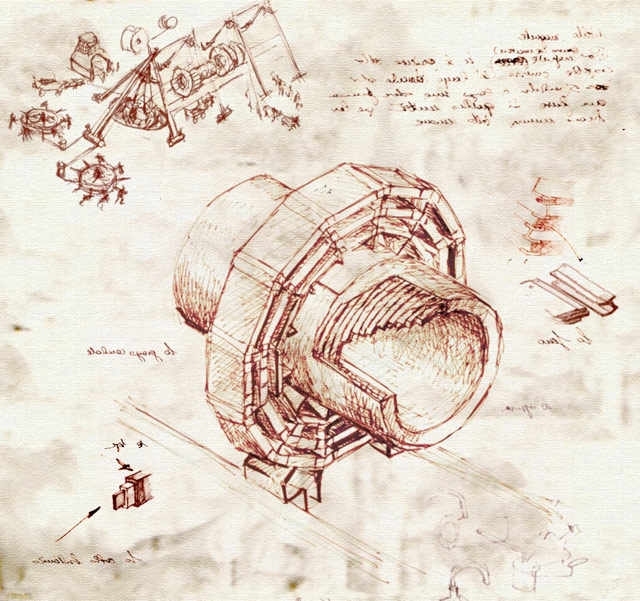
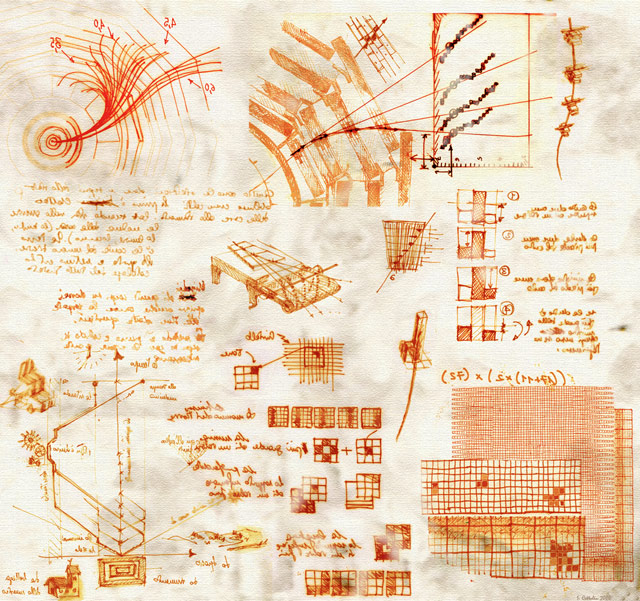
As a naturalist, da Vinci probed, prodded, and tested his way to a deeper understanding of how organisms work and why, often dissecting his object of study with this aim. “I thought, why not present the idea of data analysis to the world within the naturalist world of Leonardo?” Cittolin says. In the drawing below, the CMS detector is the organism to be opened; the particles passing through it and the tracks they leave behind are organs exposed for further investigation.
Cittolin brings a sense of humor to his work. For example, after betting CMS colleague Ariella Cattai that he could produce a quality drawing for the cover of the CMS tracker technical proposal by a given deadline, he included in the drawing a secret message in mirror-image writing-which was also a favorite of da Vinci’s. The message jokingly demanded a particular reward for his hard work. The completed picture was delivered on time and within a few hours Cattai cleverly spotted and deciphered the message. She promptly presented him with the requested bottle of wine.
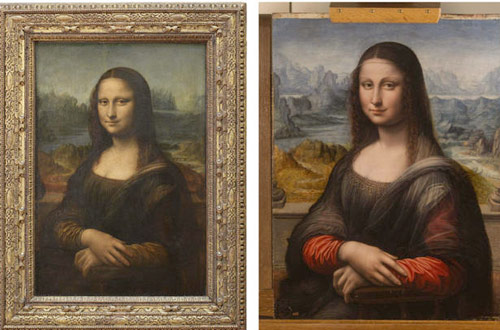
Museum experts are in the process of stripping away a cover of black over-paint which, when fully removed, will reveal the youthfulness of the subject they say. The final area of over-paint will come off in the next few days.
The original “Mona Lisa” hangs in the Louvre but the sitter looks older than her years as the varnish is cracked. The painting is so fragile that restoration or cleaning is deemed too risky. The Prado version, however, will show the sitter as she was: a young woman in her early 20s.
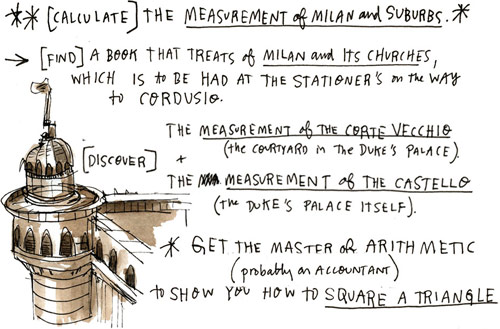
What a jumble! Cannons, wall construction, studying the sun, ice skating in Flanders, optics, and that oh-so-casual, “Draw Milan.” It’s like his mind could wander off in any direction at any time. How did he concentrate? How did he focus?
Maybe he went in and out, plunging into a task that concentrated him fully, and then, once done, he’d spring back to the rough and tumble of Anything Goes. Great minds can go as they please.
Another giant, Michel Montaigne, the inventor of the essay, wrote that no single idea could hold him. “I cannot keep my subject still,” he wrote. “It goes along, befuddled and staggering, with a natural drunkenness.”
Simon brought the panel to the Metropolitan Museum of Art about two years ago to have it examined by several curators and conservators. “It was brought in for inspection in the conservation studio,” said a person close to the Metropolitan who asked not to be identified. “The painting was forgotten for years. When it turned up at auction, Simon thought it was worth taking a gamble. It had been heavily overpainted, which makes it look like a copy. It was a wreck, dark and gloomy. It had been cleaned many times in the past by people who didn’t know better. Once a restorer put artificial resin on it, which had turned gray and had to be removed painstakingly. When they took off the overpaint, what was revealed was the original paint. You saw incredibly delicate painting. All agree it was painted by Leonardo.”
6. I have means by secret and tortuous mines and ways, made without noise, to reach a designated spot, even if it were needed to pass under a trench or a river.
So, Leonardo was pretty much Q from the Bond films or Lucius Fox from Batman. But the artist was in there as well…at the bottom of his list, stuck in almost as an afterthought:
11. I can carry out sculpture in marble, bronze, or clay, and also I can do in painting whatever may be done, as well as any other, be he who he may.
Update: If Leonardo was a programmer, his letter might have read something like this:
4. Again, I have kinds of functions; most convenient and easy to ftp; and with these I can spawn lots of data almost resembling a torrent; and with the download of these cause great terror to the competitor, to his great detriment and confusion.
The shocking theft of the Mona Lisa, in August 1911, appeared to have been solved 28 months later, when the painting was recovered. In an excerpt from their new book, the authors suggest that the audacious heist concealed a perfect — and far more lucrative — crime.
Expecting new revelations, I read on but it was the same story told in previous books. Regardless, it’s a great story and worth the read but nothing new if you’ve heard it before.







Stay Connected